A claim is circulating online that the Digital Satellite Television (DSTV) owned by MultiChoice has set up a new channel to broadcast the Saudi Arabian League.
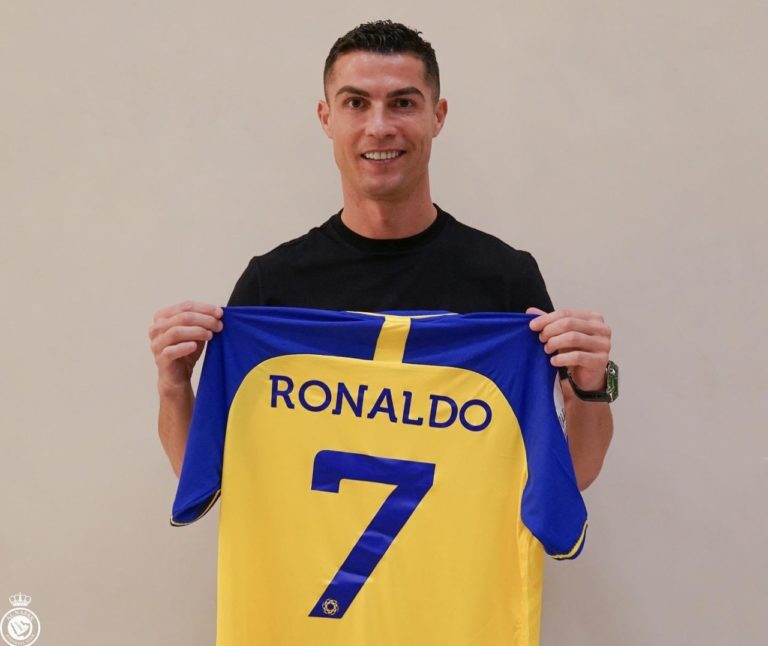
The claim is linked to the recent signing of a top Portuguese footballer, Cristiano Ronaldo by a Saudi Arabian club, Al-Nassr FC.
A fake Al-Nassr FC Facebook account on January 3, 2023, posted the claim with a caption thus:
“Al Nassr FC. DSTV Has Added A Saudi League Channel *240*.Ronaldo Effect(sic).”
The post has garnered more than 3,000 likes and over 1,500 shares on Facebook as of January 7, 2023.
A Twitter user, @AsiimweMiles, had also tweeted the claim earlier on January 1, 2023, with another caption that read:
“DSTV has already added Saudi Arabian league on channel 240. This effect has been impacted on by a player who joined the league this season and thats non other than the GOAT. Ronaldo was given five private cars, stadium, restaurant and a Palace in Riyadh with complete security(sic).”
The tweet has garnered over 20 retweets and over 100 likes as of Saturday, January, 7 2023.
Similarly, another Twitter user, @DocOmeiza tweeted the claim on January 3, 2023 with a caption thus:
“Just In: DSTV Has Added A Saudi League Channel (Channel 240). Ronaldo Effect.My G.O.A.T(sic).”
The tweet has garnered over 40 retweets and 100 likes as of Saturday, 7th of January, 2023.
THE CLAIM
That DSTV added a new channel to broadcast the Saudi Arabian League due to Cristiano Ronaldo’s transfer.
The screenshot of one of the posts
THE FINDINGS
Findings by The FactCheckHub show that the claim is FALSE.
It will be recalled that Ronaldo had in December signed for Al-Nassr after his contract with Manchester United was terminated earlier in November 2022.
The 37-year-old was officially unveiled as an Al Nassr player on Tuesday, January 3, 2023.
The Portuguese national football team captain signed a contract with the Saudi Arabian side that would see him remain at the club until 2025.
However, findings revealed that Channel 240, “Liyu Amharic HD” purported to have been added on DSTV is a horse racing Channel that has been in existence on the cable service provider’s packages prior to Ronaldo’s transfer to Al-Nassr football club.
The TV channel was added on Wednesday, of January 19 2022, on the DSTV.
According to the information obtained from the DSTV website , Racing 240 “is a 24- hour horse racing channel operating under the auspices of 4RacingTV and is available in South Africa to all DStv Premium, Compact Plus , Compact, Family and Access customers on DStv.”
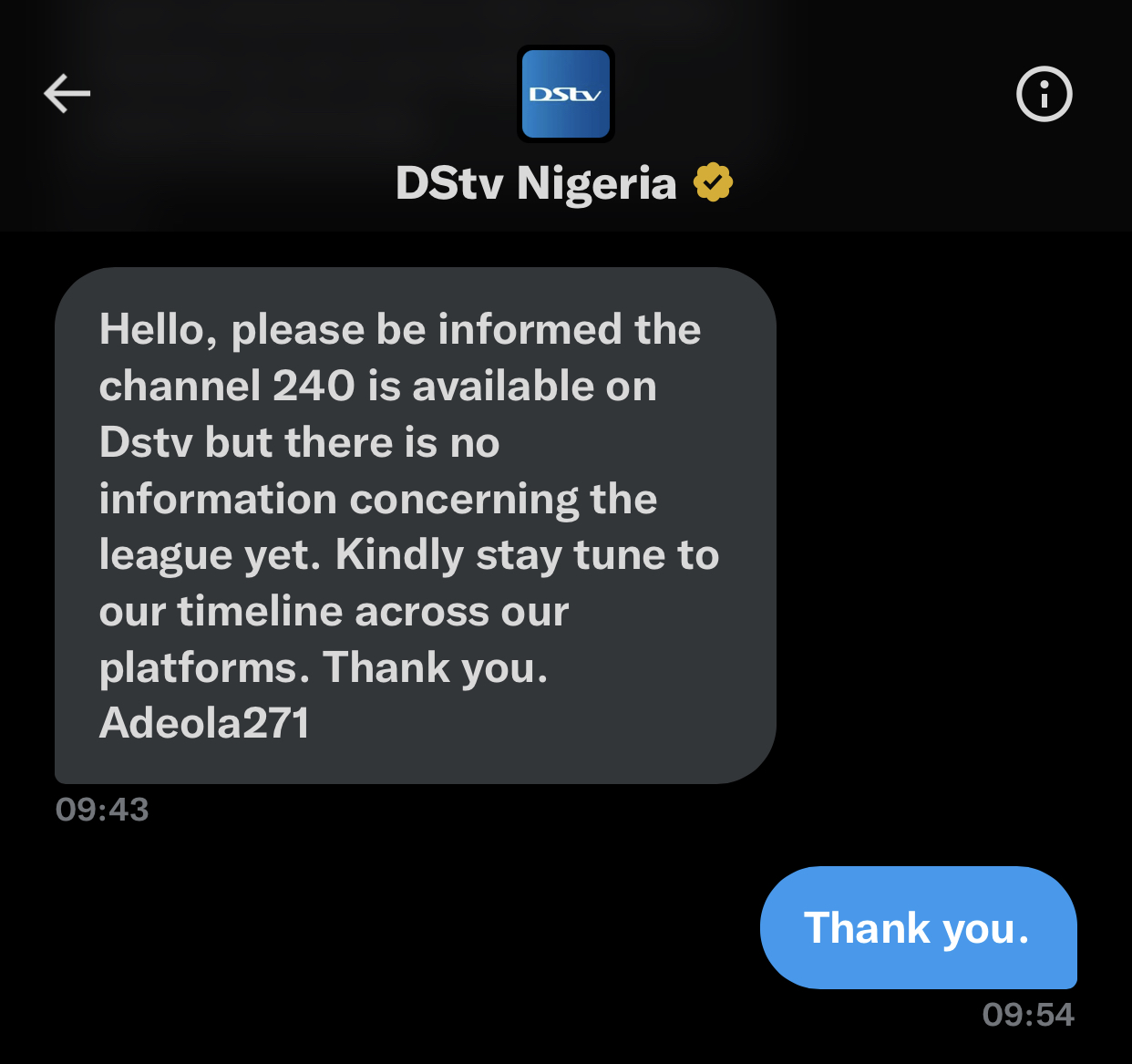
For further confirmation, TheFactCheckHub reached out to the Nigerian branch of DSTV on Twitter, and the company debunked the rumour.
THE VERDICT
The claim that DSTV added Channel 240 to broadcast Saudi Arabian League due to Ronaldo’s transfer is false; findings reveal that the horse racing channel has been in existence before Ronaldo moved to Al-Nassr FC.
THE Independent National Electoral Commission (INEC) said it has captured a total of 93,469,008 eligible voters in its voters register following the final clean-up of double registration and underage voters.
The figure followed the review of 54,264 objections raised by Nigerians following the initial display of the voter register on its website in November 2022.
INEC chairman, Mahmood Yakubu, disclosed this at a meeting with members of political parties at the commission’s headquarters in Abuja.
Yakubu insisted that the 2023 elections would hold as planned as they do not contemplate any adjustment to the election timetable.
He declared, “The 2023 General Election will hold as scheduled. Any report to the contrary is not the official position of the Commission.”
He said the security agencies had repeatedly assured the commission of adequate protection of personnel, materials and processes.
On the demography of the eligible voters, the commission said the total number of eligible voters rose by 9,464,924, or 11.3 per cent, from the 84,004,084 recorded in the 2019 general elections to 93,469,008 eligible voters in 2023.
“Of this cumulative figure, 49,054,162 (52.5 per cent) are male, while 44,414,846 (47.5 per cent) are female,” he said.
On age group distribution, 37,060,399 youths between the age of 18 and 34 constitute the largest population(39.65 per cent), while 33,413,591 (35.75 per cent) are middle-aged persons between the ages of 35 and 49.
In addition, 17,700,270 (18.9 per cent) are elderly voters between the ages of 50 and 69, while 5,294,748 (5.66 per cent) are senior citizens aged 70 and above.
In terms of occupational distribution, students make up the largest category at 26,027,481, or 27.8 per cent, of all registered voters, followed by farmers/fishermen who constitute 14,742,554 or 15.8 per cent of the total population, while 13,006,939 or 13.9 per cent are housewives.
“The data on disability was not collected for previous registration. However, the cumulative figure of 85,362 persons from the recent CVR indicates that there are 21,150 (24.5 per cent) persons with albinism; 13,387 (15.7 per cent) with physical impediment and 8,103 (9.5% per cent) are blind.
Lagos recorded the highest number of voters with 7, 060,195, followed by Kano State with 5,921,370, and Kaduna with 4,335,208 registered voters.
Ekiti State has the least registered voters with 987,647, followed by Bayelsa with 1,056,862, and Yobe with 1,485,146 registered voters.
The INEC chairman reiterated the commitment of the commission to transparent, credible and inclusive 2023 elections.
The process of conducting elections in Nigeria is governed by the Constitution of the Federal Republic of Nigeria and the Electoral Act.
Nigeria operates a presidential system of government, and as such, presidential and parliamentary elections are held separately but simultaneously. Presidential elections are held every four years, while parliamentary elections are held every four years and half a term.
The Independent National Electoral Commission (INEC) is the electoral body responsible for conducting elections in Nigeria. The Commission is independent and has the constitutional mandate to conduct elections and ensure they are free, fair, and credible.
The first step in the election process is voter registration.
Voter registration is conducted by INEC and is open to all Nigerian citizens who are 18 years of age and above.
The registration process includes the capturing of the voter’s personal details, as well as photographs and fingerprints. After the registration process, INEC issues a Permanent Voter’s Card (PVC) to eligible voters. The PVC serves as proof of voter registration and is required to participate in the election.
Once voter registration is complete, INEC conducts the nomination of candidates. Presidential and National Assembly candidates are nominated by political parties, while state assembly and governorship candidates are nominated by their respective political parties. The nominated candidates are then vetted by INEC to ensure they meet the constitutional requirements for holding the office they seek.
The campaign period follows the nomination of candidates. During this period, candidates are allowed to campaign, hold rallies, and make public appearances to solicit votes.
Campaigning is usually a very active period, with candidates travelling all over the country to reach voters. The campaign period is closely monitored by INEC and other stakeholders to ensure that it is conducted in a peaceful and orderly manner.
Voting takes place on election day. On this day, polling units are set up across the country, and voters are required to present their PVCs at the polling unit to vote.
Voters are given the option to vote for the presidential candidate of their choice, as well as the candidate for the National Assembly, State Assembly, and Governorship positions in their respective constituencies.
Polling units are usually open from 8 AM to 2 PM on the day of the election.
After the close of voting, the results from the polling units are collected and collated at the ward, local government, and state levels. The results are then sent to the INEC headquarters for the final collation and announcement of the results.
INEC is responsible for announcing the results of the election, and the candidate with the majority of the votes is declared the winner.
In case of a dispute, candidates have the right to file a petition to the election tribunals to challenge the results of the election. The tribunals are set up by INEC and are responsible for hearing and determining election disputes. The decision of the tribunals is final and binding and can be appealed to the Supreme Court only on points of law.
Nigeria is a country with a diverse population and a variety of ethnicity and cultures, so the process of conducting elections have been, in the recent past, prone to many challenges like violence, rigging, logistic, security, the politicisation of the process etc.
However, INEC has been working to improve the electoral process, including enhancing transparency and increasing citizen participation.
THE PUBLISHER of Premium Times and founder of the Centre for Journalism Innovation and Development (CJID) Dapo Olorunyomi has emerged as the first African Fellow of the Poynter Institute’s Media Transformation Challenge Fellowship.
Olorunyomi became the first African to be selected to join the programme as a fellow seventeen years after the Institute commenced its Media Transformation Challenge Fellowship programme.
He would join 26 other leaders and senior media executives drawn across the globe as 2023 Media Transformation Challenge Fellows.
Introduced in 2007, the Poynter Fellowship is a year-long program which has recorded more than 350 alumni around the globe.
Others selected for the fellowship includes CNN’s Anika Palm, BBC’s Ravin Sampat, and Los Angeles Times’ Angel Jenning.
Fellows began the MTC program on Monday, January 9 with coaching staff who will bring extensive experience in developing for-profit and non-profit journalism business models and mentoring.
Also, selected fellows will identify and pursue their most significant business performance challenges with help from MTC’s trademark tools, concepts, coaches, peer group and alumni network.
Furthermore, the program is focused on helping newer enterprises to deploy quality journalism to strengthen relationships, build audiences, deliver audience impact, build capacity and gain financial strength with innovating new business model across fault lines of race and class.
The Poynter Institute, a leading institute of the media industry, fact checking and media literacy education is a school that extensively teaches and writes about journalism and the media industry.
The Institute is a gold standard in journalistic excellence and dedicated to the preservation and advancement of press freedom in democracies worldwide.
Through the Poynter; Journalists, newsrooms, businesses, big technological corporations and citizens have gathered to address critical issues and find sustainable solutions that promote trust and transparency in news and meaningful public discourse.
Digging into Akwa Ibom’s budget for 7 years (2015-2017), Inspiration FM’s senior correspondent, Dem Imaobong Archibong establishes that there is a noticeable pattern in the budget for the state Fire Service’s capital projects.
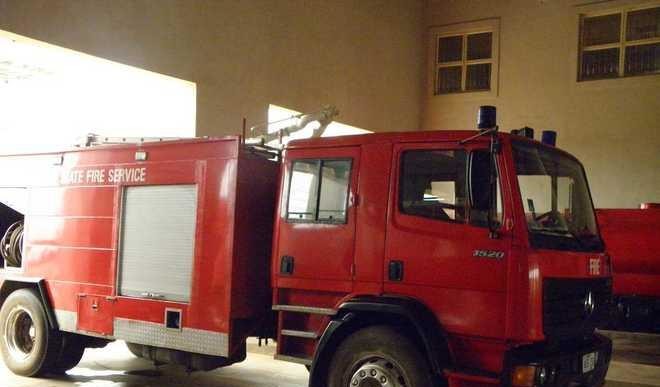
A visit to the Fire Headquarters will give you the creeps, as there is a reflection of outright neglect of this very important Government establishment saddled with the responsibility of responding to fire emergencies and other disasters in Akwa Ibom.
For the 7-year period, facilities, Fire fighting equipment and gears were consistently budgeted for, a facility like the Water hydrant and Elevated Project resurfaces every year.
In spite of how critical the water hydrant is to the functionality of the Fire agency, there hasn’t been release of funds for it.
Borehole hydrant and elevated tank project
There is an obvious need to improve the state of the Fire Service in Akwa Ibom, considering that without the presence of the Federal Fire Service, the situation would have been more dire.
Akwa Ibom’s state Fire Service Public Relations Officer, Emmanuel Udofia says 99 per cent of Fire outbreaks in Uyo are tackled with the Federal Fire service doing most of the work because they have more capacity.
Despite the capacity shown by the Federal Fire Service, Ofonmbuk Nelson, the parastatal’s Commandant and 2IC in Akwa Ibom, says their operations are hampered due to the lack of a Water Hydrant for the refilling of the water tank.
Capital budget for the fire service
*This report is supported by the International Budget Partnership (IBP) and the International Centre for Investigative Reporting (The ICIR)
*The report was edited to reflect the reporter’s name as Dem, Imaobong Akpabio and not Ima Archibong.
ECONOMIC indicators are pointing to a challenging time for Nigerians in 2023. The President Muhammadu Buhari administration, left with barely six months in office, will have to take some hard decisions to address the inclement situation.
The economic headwinds are not unexpected to be compounded by rising inflation, overburdening taxes, expected food price surge, naira deprecation and weak economic growth.
Buckled by inflationary pressure, with the November inflation rate at 21.47 per cent, food prices are expected to surge this year with the country yet to recover from the destructive effects of floods that ravaged its food belt last year.
The World Bank has cut Nigeria’s 2023 economic growth projection to 2.9 per cent, from a previous projection of 3.1 per cent. This, the bank explained, was informed by production challenges in the oil sector, rising insecurity and flooding.
Also, a Fitch Solutions Country Risk and Industry Research report has predicted that the Nigerian economy would continue to slump in 2023 due to activities leading to the general election.
To fix up this concern, the government is targeting intense borrowing to fund its 2023 deficit budget, which has remained a problem to the economy. Analysts say that with the budget to be funded largely by borrowing, projected revenues and macroeconomic fundamentals, if not met, would put the country in huge economic distress.
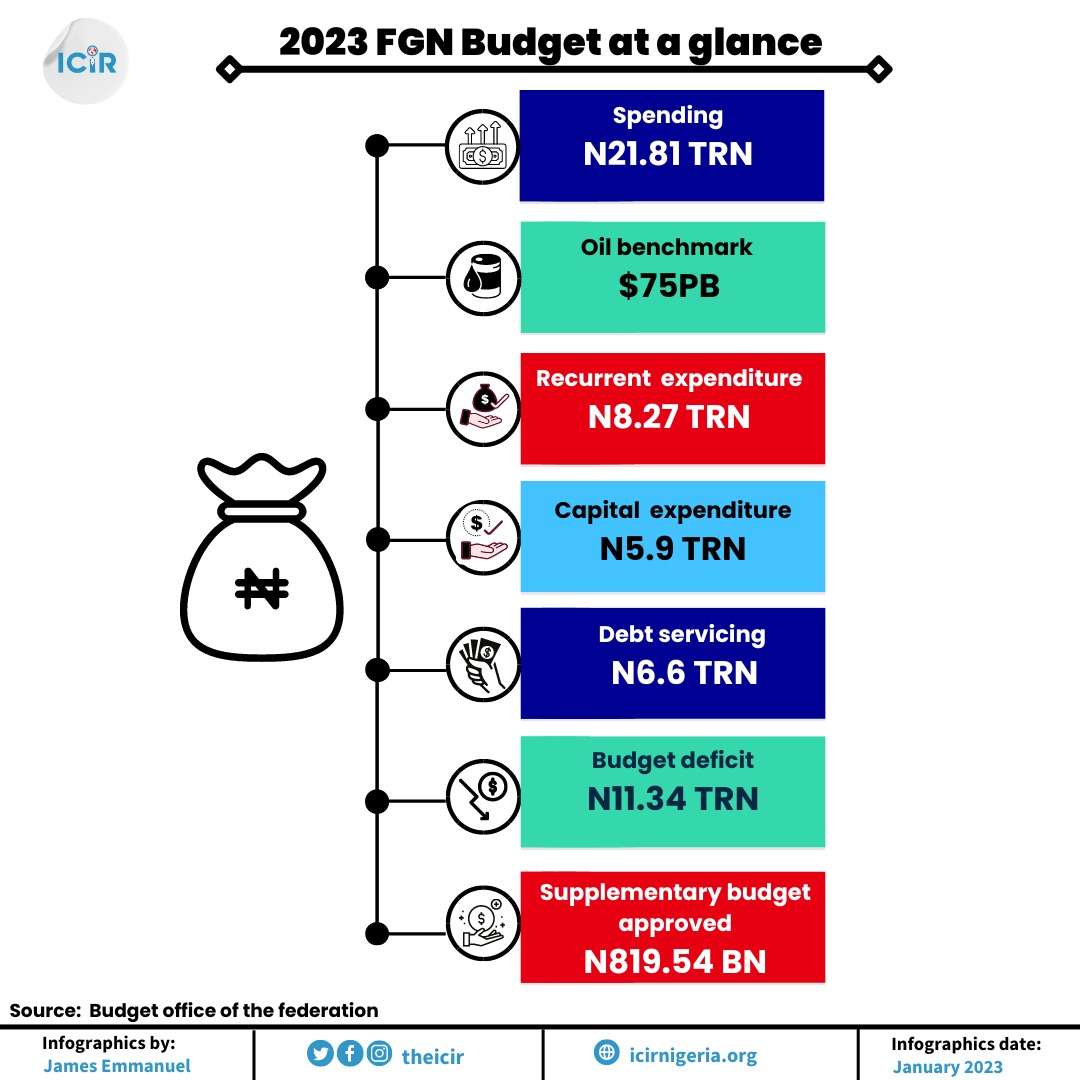
From the 2023 budget, the sum of N11.34 trillion is to be used to finance the budget deficit. The deficit figure is to be largely financed by N7 trillion of domestic debt, N1.76 trillion from foreign debt and N1.77 trillion from multilateral lending agencies like the World Bank and the African Development Bank. The sum of N206.1 billion will be sourced from privatisation proceeds.
The macroeconomic fundamentals in the budget also showed an oil production target of 1.69 million barrels per day, the official exchange rate pegged at N435.57/US$1 and inflation at 17.16 per cent. The macroeconomic fundamentals are subject to key global and economic factors like the Russia-Ukraine war, and crude theft in the Niger-Delta.
Budget analysts have allayed the fear that the Federal government would be leaning on heavier taxation to shore up its projected revenue.
Economic watchers say such a move would put the private sector into more uncertainties.
The Finance Bill passed by the National Assembly in December 2022 amended several laws, namely the capital gains, Tax Act, Companies Income Tax Act, Personal Income Tax Act, Petroleum Profit Tax Act, Stamp Duties Act, Value Added Tax, and Procurement Act.
There are concerns that businesses could be overburdened with taxes, which could see many in further distress, amid double-digit inflation of 21.47 per cent in November.
“This is a piece of legislation which has profound implications for investment, citizens’ welfare and the Nigerian economy. It is serious and puzzling that the Senate gave just 24 hours’ notice for stakeholders to attend a public hearing in December 2022.There is no better expression of deliberate exclusion from this important legislative process,” said the Executive Director for Centre for the Promotion of Private Enterprise, Muda Yusuf.
Besides the issue of increasing taxation, there is also a major factor of currency problems, spurred largely by naira deprecation and exchange rate volatility.
It is widely agreed government’s unregulated borrowing from the Central Bank to the tune of N23.7 trillion has wider implications on Nigeria’s currency, inflation, and even Nigeria’s quoted companies that have foreign debt exposure.
2023 budget at a glance
The World Bank has urged Nigeria to have a stable exchange rate, something the apex bank has not been able to achieve, with the wide gap in official and parallel markets causing problems for businesses and investments.
A research by the Economic Intelligence Unit (EIU) projected the 2023 Nigerian economic and political outlook as one of instability.
The EIU, like the World Bank, has revised down its real gross domestic product (GDP) growth estimate for 2023 to 2.8 per cent from 3.1 per cent, owing to tighter credit conditions, floods and widening insecurity.
On currency and lending problems, the intelligence outfit said hard currency remains in short supply, although the Central Bank of Nigeria (CBN) has reiterated its resolve to tame the parallel foreign exchange market.
“Inflation is expected to remain in double digits, and monetary conditions will be tight, with the central bank’s policy rate expected to peak at 17 per cent by end-2022 or early 2023, and to be maintained at this level throughout the year,” the EIU forecast.
Economic watchers agreed with the EIU’s position on inflation, saying Nigeria’s double-digit inflation figure has taken a deep cut at Nigerians’ earnings, plunging more people into economic difficulties.
“As at January this year, headline inflation was 15.60 per cent, and rose to a peak of 21.47 per cent in November 2022. Meanwhile, food inflation consistently outpaced headline inflation and core inflation during the year. For the basket of goods and services consumed by the average Nigerian, costs have accelerated by between 50 per cent and 100 per cent in 2022,” Yusuf said.
Yusuf: worried about inflation, tax hike in 2023
He said that the Buhari administration would need to address key drivers of inflation, boost productivity in the economy to drive output growth, stem the depreciation of the naira, and address the illiquidity in the foreign exchange market to soften the ground for his successor.
For a restaurant manager Oluchukwu Mgbemena, who does her trade in Abuja, high food prices are already taking their toll on her business.
Oluchukwu said, “I have noticed a sharp rise in prices this first week in the year that I went to the market. Rise in prices of stockfish, crayfish, dry fish and meat of assorted types is a major worry for us.”
She said she had had to readjust prices on her food menu to enable her to sustain the business.
2023 budget could worsen inflation with rise in borrowing
The government’s passage of the 2023 budget should ordinarily offer hope to many Nigerians. However, the realisation that a large chunk of the budget will be financed by massive borrowings is not offering optimism.
The N21.83 trillion budget has a recurrent expenditure of approximately N8.2 trillion and a capital expenditure of N5.9 trillion, while debt servicing increased from N6.31 trillion to N6.6 trillion.
Economists say the rise in debt servicing and massive borrowings to fund fuel subsidy have negative effects on the economy, especially the real sector.
This, in turn, has massive implications for the cost of funds for businesses and the private sector.
The Chief Executive Officer of Cowry Assets Management Limited, Johnson Chukwu, posited that if the government did not exercise caution on borrowing to fund its budget deficit, the private sector would be suffocated by the cost of funds for business.
Chukwu: borrowing starving real sector of funds
Chukwu said, “When we talk of the budget deficit of N12 trillion today, we are also talking of a national debt of more than N22 trillion. If the Federal government continues to borrow, the implication is that you are going to crowd out private sector funding for the real sector.
“The increase in projected revenue only gives incentives to spend more even when we haven’t met up with it in the last five years. Now, this has made us to increase the budget deficit, which is putting lots of pressure on our funding the private sector.”
The economist warned that Nigeria may head the way of Ghana if it failed to address its appetite on “unregulated borrowing.”
The Debt Management Office (DMO) spoke in a similar vein during a budget presentation to the federal legislators, stressing that massive borrowing to fund the budget could see the Buhari administration leave a whopping N77 trillion for the incoming administration.
Experts’ concern on overburdening tax in 2023
The Nigeria Employers’ Consultative Association (NECA) has expressed worry over the number of taxes imposed on businesses in the country.
Smart-Oyerinde: ‘organised businesses overburdened by many taxes’
According to the Director-General of NECA, Adewale-Smatt Oyerinde, organised businesses are burdened by over 50 different taxes, levies and fees, both legally and illegally.
Smart-Oyerinde frowned at some of the provisions of the Finance Bill 2022 recently passed by the National Assembly, particularly the increase in Tertiary Education Tax (TET), from 2.5 cent to 30 per cent, saying it was increased without regard for the economic woes businesses are facing.
“Taxes being paid by businesses in Nigeria include company income tax, stamp duties, petroleum profit tax, capital gains tax, value added tax, personal income tax, withholding tax and tertiary education tax. Increasing the Tertiary Education Tax is another burden too much.
“Also, increasing the Company Income Tax rate for a gas-flaring company from the standard 30 per cent to 50 per cent is also worrisome, considering the fact these companies are already covered in the Petroleum Industry Act. This can be a recipe for further divestment.
“Also, imposition of excise duty at rates to be specified via presidential order on all services, including telecommunication services, is too broad and vague. This can be subjected to abuse and further strangulation of the business community,” he said.
He urged President Buhari to request the National Assembly to take into cognisance the concerns of organised businesses. He also mentioned the need to expunge all anti-business provisions in the bill.
The Director-General of the Budget Office of the Federation, Ben Akabueze, also identified taxes as a hedge to inflation, although he did not see the Nigeria context as that terrible.
Akabueze said, “It is not right to overburden investors with taxation. However, the situation is not as dire as it seems. In Germany, corporate tax is 29.8 per cent. When we compare ours with the global standards, we would be surprised that 30 per cent on corporate tax is not that high.”
Experts suggestions, way forward in 2023
To unlock growth and investment in 2023, the government must undertake some urgent reforms, analysts say.
Yusuf, describing the enactment of the Petroleum Industry Act as a major step towards the reform of the oil gas sector, said the government, however, needs to demonstrate greater commitment to its implementation.
“The deregulation of the petroleum downstream sector is a major economic reform imperative. This is inevitable if we must unlock investment in the sector and put an end to the perennial fuel scarcity and the monopolistic structure of the sector,” he said.
On power reforms, he called for an enabling environment that would enable the private sector to drive results.
“An enabling environment must be created to sustain current private sector investment in the sector and attract new private capital to the electricity sector. Urgent reforms are vital with respect to electricity tariff, metering and deepening of energy mix. We need robust incentives (fiscal and monetary) to boost private investment in renewable energy.
“We should reform the budget and appropriation processes to prioritise infrastructure financing and human capital development. This would boost productivity and competitiveness of the economy,” he added.
Adoption of these reform initiatives, Yusuf was positive, would guarantee progression towards fiscal consolidation and reduction in fiscal deficit, while diminishing the need for borrowing and abating the debt service burden.
The consensus is that Buhari has not, in his seven and a half years as president, exhibited the will, if not competence, to tackle economic turbulence. Under his watch, the economy has been taking a tumble rather than stability. So, would he be able to bring some progress to the economy in only five months,? The time ticks.
In Nigeria’s Federal Capital Territory (FCT) as with other parts of the country, the new year will be characterised by political activities due to the general elections to start from February 25, 2023. But beyond political issues, certain other factors are bound to shape the year for residents.
WITH the general elections less than two months away, Nigerians living in the FCT, eager to participate in the voting process, have been trooping in and out of designated collection centres to obtain their permanent voter cards (PVCs).
Residents, mostly youths, can be spotted in clusters at the Independent National Electoral Commission (INEC) collection centres, wanting to obtain their cards.
Across Nigeria, young people make up over 71 per cent of the nine million new registrants recorded by the INEC. This is reflected in the large number of youths found at PVC collection centres within the FCT, where over 183,000 valid registrations were completed.
A resident of the Jabi area of the city, Amaka Okoye, recounted, in an interview with The ICIR, her experience at the collection centre.
“It did not take me too much trouble to get my PVC, although I think adequate information was not given concerning collection centres. I had to visit the INEC office in Karu first, before I was redirected to the one in Area 10. But once I got there, getting the card was not too difficult, just that the place was crowded,” Amaka said.
As the January 22 deadline for the distribution of PVCs draws closer, crowds at INEC collection centres have continued to increase, making the process more cumbersome for other registrants.
Registrants at a PVC collection centre in Abuja
While this may suggest a massive turn-out of voters during the elections, some residents have experienced difficulty with the process as their cards were unavailable at the time of collection.
Another resident of the FCT, Abosede Korede, confirmed that she had attempted to get her PVC from the INEC office on two occasions without success.
“I went to the INEC office at Area 10 to collect my PVC, but they told me my card was not available. I don’t know why they couldn’t find it. They just asked me to write my name and phone number in a paper and check back in two weeks,” Abosede said.
She expressed concern over a possible disenfranchisement ahead of the forthcoming elections.
Beyond the PVC card challenge, other residents have also expressed concern over likely cases of violence during the election. This fear stems from cases of the insecurity recorded within the FCT in 2022.
The cases include the invasion by terrorists of the Kuje Medium Security Custodial Centre, and attack on the Presidential Guards Brigade in July.
Some FCT residents like Tolu Oyelade have, however, vowed they would not be deterred by the insecurity threats from participating in the voting exercise.
“Attacks at the polling units are my biggest fear concerning these elections, but it is not a limitation for me,” Oyelade said.
Women participation in politics
Women in the FCT are also determined to continue the struggle for equal representation in political issues in the new year.
In March 2022, women across the FCT spent days at the National Assembly gate, protesting against the rejection of five gender-inclusive bills, including one which would allow women occupy 35 per cent of all appointive positions in government.
The National Assembly rejected the bills during a constitutional amendment vote held in 2022, and this attracted a lot of criticism from women groups nationwide.
The protests had ravaged the FCT for days until it was suspended after three of the bills were recommitted for reconsideration by the legislators.
Although not much has been heard of the bills since then, Angel Ugben, who represented women with disabilities during the protests in March, told The ICIR that the struggle for representation was still on.
“There has not been much done on the issue, but we are still lobbying. The 35 per cent affirmative action is something that will foster democracy and we want that bill passed,” she said.
Also speaking on the issue, the president, Women in Politics Forum, Ebere Ifendu, said the women were determined to see the bills reconsidered, even after the elections.
“This is an election year, and they have not had time to reconvene and look at the bills, but we are hoping that even after the elections they will address this. We are planning on re-presenting the bill in the new year,” Ifendu said.
Continued demolition
More residents of the FCT are expected to lose their homes and businesses to demolition, as removal of structures deemed illegal by the authorities is set to continue in 2023.
In his new year message to residents, the FCT Minister Muhammad Musa Bello made this known, while urging residents to cooperate with the authorities to achieve restoration of the Abuja master plan.
“It must be understood that these corrective measures are absolutely essential if truly our city is to evolve into one of the most aesthetically pleasing and functional cities in the world. The presence of illegal settlements and shanties will only draw us further away from attaining this goal,” Bello noted.
Demolition exercises have become commonplace in the FCT, with hundreds of residents losing businesses and property to the development in 2022.
Economic and political activities have led to an influx of Nigerians into the FCT, worsening housing challenges in the city and leading to illegal purchase and construction of buildings by residents.
The ICIRreported that this has led to an increase in shanty towns and structures that distort the original plan of the city, resulting in regular demolition exercises.
While many residents purchase land from local chiefs, the FCT Administration has warned that the Abuja Geographic Information System (AGIS) retains the sole responsibility to allocate land in the city.
THE Labour Party (LP) has condemned the attitude of some officials of the Independent National Electoral Commission (INEC) in the ongoing collection of Permanent Voters Cards (PVCs) nationwide.
Spokesperson of the LP presidential campaign council, Yunusa Tanko, in a statement released on Wednesday, January 11, accused INEC staff of frustrating most PVC collectors in several parts of the country.
Tanko said reports available to the party indicate that the exercise is moving at a slow pace. According to him, if nothing was done to remedy the situation, many Nigerians will be disenfranchised during the election.
Although INEC has decentralised the exercise to ward levels for seamless collection, the LP campaign spokesperson said many Nigerians who registered for the PVCs “are still finding it difficult to collect their voter’s cards”.
“We have received reports from all the geo-political zones in Nigeria and the messages are all the same – people complaining of the snail pace at which the PVCs are being dispatched to collectors,” he said.
“If you take a close look at the INEC timetable, you have less than 12 days left for collection of PVCs. People go and queue for hours out of about 500 PVC collectors; only 20 or less than 50 people will be given their cards in wards designated for collection.
“What kind of miracle is INEC going to perform that will ensure Nigerians get their PVCs within this short period if there’s no sinister motive underneath?
“The process for collection started on December 12th and is expected to end on Sunday the 22nd of January yet out there across the country many of our members are complaining that the process is cumbersome and INEC staff leisurely stroll in and out of the wards.
“They resume by 9am and close by 3pm and from information reaching us the INEC staff in most cases resume as from 11am daily.
“Today is the 11th of January and by the 22nd of this month the process will collapse. Ehat’s going to be the fate of those who couldn’t get their voter card?”
The party insisted that on no account should Nigerians be denied their inalienable rights to vote in the forthcoming election.
The LP further called on INEC to open up on “these deliberately designed weak operations to Nigerians before people start believing the apex electoral body has a hidden script unknown to us”.
The party also urged security agencies to beef up security around INEC facilities nationwide to check the activities of vandals and arsonists who want to scuttle the elections.
CANDIDATE of the Peoples Democratic Party (PDP) for the Abia North Senatorial District, Mao Ohuabunwa, has called on Nigerians to reject lawmakers that voted against electronic transmission of election results during the debate on the amended Electoral Act, 2022.
Ohuabunwa made the call while speaking on his adoption by some youths in the Arochukwu area of Abia State on Wednesday, January 11.
According to him, the lawmakers who opposed the introduction of technology in the country’s electoral system are the real enemies of Nigeria’s democracy.
Such anti-democratic elements should not be rewarded with a return ticket to the National Assembly, Ohuabunwa stressed.
He thanked the group of Arochukwu youths for their unwaivering support for his senatorial bid, and pledged to restore the dignity and prestige of Abia North if returned to the Senate.
Speaking further, he noted that since his exit from the red chamber in 2019, Abia North has lost its voice in the Senate.
Ohuabunwa also noted that those elected to speak for Abia North abandoned the people to their fate at the peak of insecurity in the zone. He vowed to leverage on his national contacts to fight insecurity in the area if elected.
In the same vein, Ohuabunwa urged the people to collect their Permanent Voter Cards (PVCs) to enable them exercise their franchise in the forthcoming polls.
Ohuabunwa will be contending the Senatorial ticket against the former governor of the state and the Chief Whip of the Senate, Orji Kalu.
During voting on various sections of the Electoral Act in 2021 in the Senate, Kalu was among several lawmakers of the All Progressives Congress (APC) that opposed the electronic transmission of results by the Independent National Electoral Commission (INEC).
FULL LIST: Senators who voted against electronic transmission of election results
The action of the lawmakers was roundly condemned by Nigerians before the Sebate made a U-turn and eventually allowed the introduction of electronic transmission of results in the amended Electoral Act.
A FORMER Resident Electoral Commissioner (REC) of the Independent National Electoral Commission (INEC), Mike Igini, has said the National Youth Service Corps (NYSC) adhoc staff list for the 2023 general elections must be certified by the Director General to ensure transparency and credibility.
Igini expressed his dissatisfaction with INEC’s preparations for the election while speaking on Arise TV on Wednesday.
He said the Director General of the NYSC must approve the adhoc staff list to avoid electoral malpractices.
The former REC alleged that politicians usually connive with NYSC officials to influence the selection of adhoc staff for elections.
“Those to be used as NYSC corps members on the list must be certified by the current DG and given to the Commission down to the states because our politicians in time past have blocked them but you know you never can tell which angle they are going to come from.
“What they used to do before is that those who have passed out of service maybe last year or just two months ago in connivance with some officials and the NYSC would be used as Adhoc Staff. NYSC give out the batch number and telephone numbers of ex-corpers and the batch number which is no longer useful.”
In the same vein, Igini frowned at reports that prospective voters are being forced to offer money to INEC officials before collecting their PVCs.
“It is not expected that somebody in Nigeria who has registered and wanted to collect his PVC should offer INEC money and those who are accepting it especially officials should know that it is a clear deviation from the the ethical standards of electoral practices.”