THE Reuters Institute for the Study of Journalism (RISJ) is seeking to appoint two post-doctoral researchers to work on a project aimed at the quantitative analysis of news audiences across a sample of more than forty countries, with a particular emphasis on digital media, news, and politics.
The purpose of the larger project is to develop a better understanding of media developments in different countries (and their implications), including the interplay between analog and digital media and the relationship between news provision and news consumption.
The organisation said the individuals appointed will be working with the Institute Director Rasmus Nielsen and with the Director of Research Richard Fletcher as part of the wider project.
The deadline for submission of applications is February 6, 2023. Interested applicants can apply here.
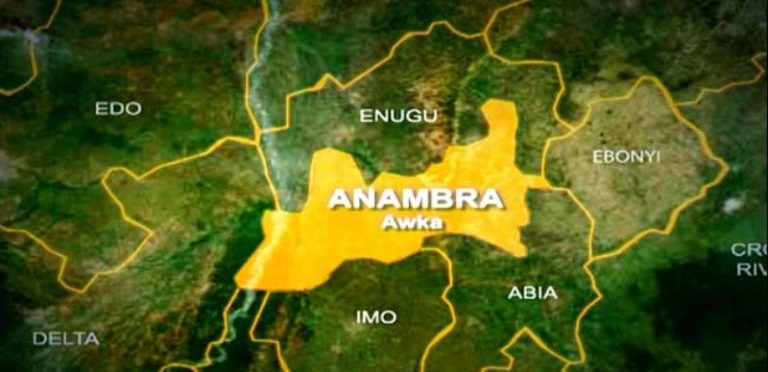
THE Anambra State Police Command has confirmed that yet to be identified gunmen killed four persons on Nzomiwu Street, Eziani community, in Ihiala Local Government Area of the state.
The incident occurred on Tuesday, January 11.
It was gathered that the gunmen invaded the community and started shooting into the air, killing three males and a female, who was said to be pregnant.
The gunmen immediately fled the scene after killing the victims.
In a chat with The ICIR, the state police spokesman, Tochukwu Ikenga, confirmed the incident and said the Police are on the trail of the perpetrators.
“Yes,it is confirmed. It happened on Tuesday.The Police and other security agencies are presently at the location,” he said.
Ikenga added that the gunmen are yet to be apprehended.
In a press statement released earlier, the Anambra State Police Command said the bodies of the victims had been deposited at the mortuary.
The statement also noted that the attack was unprovoked.
“Police/military operations have been intensified in Ihiala and its neighbouring town as operatives responded to a distress call in the early hours of Tuesday on Nzomiwu Street, Eziani, Ihiala, recovered lifeless bodies, three males and one female at the scene.”
This is coming a few days after some yet-to-be-identified assailants killed four persons in a compound at Nodu Town Square, Nodu Okpuno, near Awka, Anambra State, on January 2.
It was gathered that the gunmen had pursued someone into the compound where the other victims were already sitting down and opened fire on them.
Anambra and other states in the South-East have been experiencing a high level of insecurity in recent months.
When Okon Emannuel, 56, fell ill in June 2021, he visited a local chemist (drug store) four blocks from his residence in Midim, Abak Local Government Area of Akwa Ibom State.
“I think it was malaria. But after taking the tablets the chemist mixed for me, I still felt fever(ish) again,” he said.
As his situation got worse, he sought care at “Polyclinic” – the Primary Healthcare Centre (PHC) Operational Base – situated some three kilometres away, despite the existence of the Midim PHC in his community.
Emmanuel said his preference for Polyclinic is shared by many other residents of the area. “The one you talk about (Midim PHC); how many people go there that time?” he asked.
“Maybe pregnant women for antenatal,” a woman, who had been listening to the conversation quickly added. “Many people here go to Polyclinic, because it is better,” Emmanuel said.
The low patronage at PHC Midim was not unconnected with its dilapidated state at the time. According to a 2021assessment reportby UDEME, a social accountability initiative of the Centre for Journalism Innovation and Development, the PHC had broken ceilings, crumbling roofs and doors and windows affected by termite infestation.
However, this is not the situation at PHC Midim today, courtesy of the Nigerian government’s intervention through the Basic Healthcare Provision Fund (BHCPF). A visit to the PHC in August showed that it had been renovated and repainted.
“The fund has helped to transform this place. We have replaced the doors and the wood in the ceiling that were destroyed by termites and fumigated the place from the ceiling up and down,” Itohowo Duncan, the officer in charge of the PHC, stated. “We have more patients coming in here now than before.”
A generator was also procured to provide power supply at the PHC, putting an end to the long years of borrowing the village head’s generator.
Sylvester Ibanga, the village head, was full of praise for the federal government’s intervention.
“It has helped to improve the health centre a lot. They were able to repair a lot of things in the place. They even procured a generator to fix the electricity and water issues there. We are happy and we thank the government for this project,” he said.
About BHCPF
The Nigerian government introduced BHCPF under the National Health Act (NHAct) 2014 to provide free minimum basic healthcare to the most vulnerable populations through PHCs across Nigeria and reduce personal out-of-pocket payments and associated financial risks, through health insurance.
The initiative is funded with a minimum of one per cent of the Consolidated Revenue Fund (CRF), grants from international partners and other donors. The fund is disbursed via three gateways: 50 per cent for the provision of Basic Minimum Package of Health Services (BMPHS) to citizens via the National Health Insurance Scheme (NHIS), five per cent for treatment of medical emergencies and 45 per cent to improve PHCs’ service delivery through the National Primary Health Care Development Agency (NPHCDA).
Of the 45 per cent, 20 per cent is for the provision of essential drugs, vaccines and consumables for eligible PHCs, 15 per cent is for the maintenance of PHC facilities and equipment and 10 per cent is for the development of PHC staff.
Some payment receipts on BHCPF spending
For the NHIS Gateway, citizens and healthcare providers are expected to be enrolled as beneficiaries of the BHCPF, to enable them to access preventive, protective, promotive, curative, and rehabilitative health services at designated PHCs. However, these health services shall be funded through the State Health Insurance Agencies and State Health Insurance Schemes (SHIA, SHIS), at an agreed premium.
In 2018, President Muhammadu Buhari flagged off the Basic Health Care Provision Fund (BHCPF) with an appropriation of N55.1 billion from the Consolidated Revenue Fund (CRF), in addition to $2 million from the Bill and Melinda Gates Foundation, $20 million from Global Financing Facility (GFF) and £50 million donated by the Department for International Development (DFID) to cover 2018 – 2023.
Multiple reports had previously documented the decrepit conditions of PHCs across the state, citing insufficient drug supplies, understaffed, ill-equipped and dilapidated facilities occasioned by neglect, lack of political will and poor health financing.
However, following the launch of the BHCPF in Akwa Ibom in the second quarter of 2021, and subsequent disbursement of funds in 2022, a visit to Essien Udim, Uruan, Abak, Eket and Esit Eket council areas, revealed that PHCs have been revitalised, particularly with regards to the rehabilitation of previously dilapidated structures and facilities.
The reporter gathered that a total of 231 PHCs had benefited from the fund, each receiving around the sum of ₦611,000. It was observed that many of the beneficiary PHCs had been renovated and repainted; each spotting uniform yellow and green colours.
PHC Nwaniba, renovated
At PHC Nwaniba in Uruan LGA, the bad doors and windows have been replaced while the building has been repainted and the borehole repaired. A member of staff, Mfon Charles, commended the government for introducing the scheme.
“The doors and windows which were bad before have been changed and the borehole that was not working before,” she said. “As you can see, the building was also repainted to make it look better.”
The Fund served a similar purpose at PHCs in Ekpene Ibia and Ndon Ebom, covering the cost of painting, repair of ceilings that were previously falling off and replacement of wooden doors and windows with metal ones to improve security at the facilities. It also facilitated the purchase of a Sumo pump and a new signpost at PHC Ekpene Ibia.
PHC Ekpene Ibia, renovated thanks to BHCPF
“The fund we got has really helped to fix many of our needs here. Like the former door that fell off one morning after I had night delivery, we have changed it and others to iron doors which are more durable to protect the vaccine cooler, solar batteries and freezer from theft,” Anthonia Attah, who heads the facility, said.
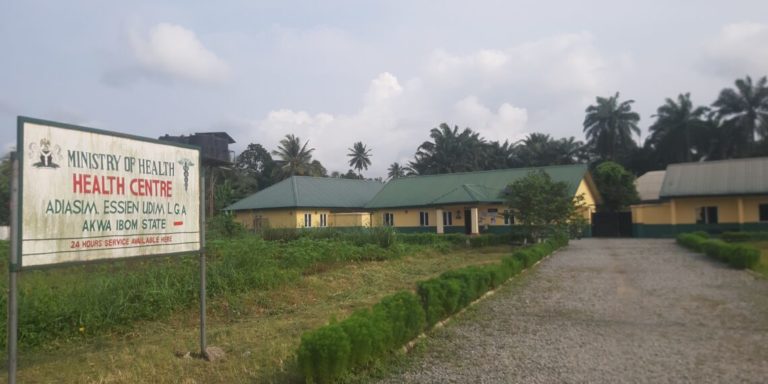
Before the advent of the BHCPF, only the PHC Adiasim was in good shape in Essien Udim LGA, having been demolished and rebuilt to standard by a philanthropist in the community, Oliver Ebong, in 2018. Mfonobong Sam, the OIC of the PHC, said she did not have full knowledge of how funds from the BHCPF were utilised as she was “just posted there in March 2022.”
The BHCPF is also responsible for the recent renovation of the previously dilapidating structures at PHC Odoro Ikot I and II – the other beneficiary PHCs in the Essien Udim LGA. Catherine Icho, the OIC, thanked the government for the initiative, adding that it had improved conditions at the facility.
PHC Adiasim
“If you see this health centre before, the roof was leaking and falling off. I used the money to buy zinc, ceiling and the new doors,” she said.
She lamented the shortage of staff, and lack of water and power supply at the facility and appealed to the Rural Electrification Agency (REA) to repair the solar-powered generator it donated to the facility.
In Abak LGA, BHCPF has equally brought succour to beneficiary-PHCs. At the operational base, Ime Udo, the monitoring and evaluation officer, commended the government for the Fund, saying it has improved the condition of many of the PHCs. He however added that “more needs to be done.”
Blessing Ime, who used to attend antenatal care at PHC Ibanang Ediene, was delighted by the renovation of the PHC.
“Before now, we could not use the toilet but now they have repaired it,” she said. The broken roofs and ceilings have also been replaced, courtesy of the BHCPF.
Crumbling ceiling at Abak LG PHC Base supported with sticks
The head of the facility at PHC Midim, Itohowo Duncan, was also full of praise for the BHCPF. Through the Fund, the facility, which had been ravaged by termites, had been rescued.
“The fund has helped to transform this place. We have replaced the doors and the wood in the ceiling that were destroyed by termites and fumigated the place from the ceiling up and down,” she said. A generator was also purchased to provide power supply at the PHC, putting an end to the long years of borrowing the village head’s generator.
PHC Okudomo, Eket
There were signs of recent renovations at PHC Afaha Obong, including the newly installed gate, windows, iron doors, ceilings and electrical equipment. The OIC, Mfon Nseyo, said “the fund has assisted in rehabilitating the PHC.”
From Ikot Okudomo to Ikot Ukpong, Mkpok and Afaha Atai, there are tales of rehabilitation of PHCs in Eket LGA, courtesy of the BHCPF.
New seats at PHC Idua, Eket courtesy of BHCPF
Nwaiwu Florence, a patient at PHC Idua in Eket LGA, acknowledged recent changes at the facility courtesy of the BHCPF intervention.
“The last time I was here for my vaccine last year, this place was not like this. I noticed that the broken floors, bad roof, doors and windows have been worked on. They have also purchased more seats,” she said.
At the PHC Idung Iniang, the OIC, Mfon Batta, urged the government to sustain the project so that some of the challenges facing the facilities can be a thing of the past.
PHC Idug Iniang, Eket wears new look, courtesy BHCPF
“This is the first renovation of this PHC since it was built. If they can continue like this before you know, many of the issues we have been having will be solved,” she said.
The story is no different for PHCs in Esit Eket LGA. PREMIUM TIMES found that all the beneficiary-PHCs had received various levels of renovation, and could be easily identified by their recently painted yellow and green walls.
The PHC in Etebi was doubly lucky. A new building was recently constructed by a former Minister of the Niger Delta, Godswill Akpabio, but the old building in the facility also got renovated through the BHCPF.
Charlie Hannah, the head of the facility, said the PHC had been selected as a beneficiary of the BHCPF “before the new building was constructed by the minister.”
Unlike many of its kind, the PHC has water and power supply, just like the PHC in Iko-Effak Akpautong, another beneficiary of the BHCPF.
Apart from the renovation of the building and purchase of furniture, a new generating set was recently purchased for the PHC Ikpa Town. According to the OIC, Ekaette Bassey, the decision to make the purchase was made to tackle the facility’s long-drawn challenge with irregular power supply.
Findings revealed that the development strides at the PHCs are a product of the synergy with their respective Ward Development Committees (WDCs) – a group of community members selected to support the heads of the PHCs in the administration of the Fund.
There is also a culture of record-keeping for accountability by the heads of the PHCs. Each maintains a folder where all documents – including payment receipts, pictures of the PHC’s previous condition and bank statements – are kept.
Controversies over beneficiary PHCs selection
Meanwhile, the selection of the PHCs to receive the funds in the state sparked controversies, stemming from the inequitable distribution of beneficiary PHCs across the LGAs. PREMIUM TIMES gathered that some LGAs received more beneficiaries than others.
In Uruan LGA, for instance, only three out of nine PHCs were selected to receive funding. Of the 19 PHCs in Essien Udim LGA, only three were selected, and 10 out of 14 PHCs were selected in Abak LGA. In Eket LGA, 11 of the 15 PHCs benefited from the Fund, just as nine out of the 13 PHCs in Esit Eket LGA were selected.
The criteria employed in the selection of beneficiaries remain a mystery to the public.
PHC Ekpenyong Attai, Essien Udim LGA
“It is unfortunate. Here in Essien Udim, only three out of almost 20-something facilities were selected. So, I wonder what criteria they used in selecting the facilities. How come other local governments have more beneficiaries and we have just three?” a nurse working in one of the PHCs queried.
There are also concerns that some dilapidated PHCs, critically in need of intervention, were left out.
A visit to the non-beneficiary PHCs across the five LGAs revealed that most of the facilities are grossly understaffed, ill-equipped and dilapidated.
Facilities like PHC Mkpatak and the PHC Operational Base, Ikot Ebak in Essien Udim LGA, reek of dilapidation and long years of neglect, especially PHC Ekpenyong II which is totally in shambles. The ceilings at the PHC had crumbled, forcing staff and even patients who were receiving treatment, to always run for cover.
Head, PHC Ekpenyong Attai calls for urgent intervention
In Abak LGA, the ceilings of many of the wards and offices at the PHC Operational Base are prevented from crumbling with the support of sticks, just as the health post at Abak Itenge requires urgent intervention.
There is a need to provide intervention for PHCs in Esit Urua and Ikot Abia in Eket LGA, which operate from single classrooms in schools – Apostolic High School Esit Urua and Government Primary School Ikot Abia, respectively.
Others requiring attention also include the PHCs Odoro Nkit, Ntak Inyang and Akpasong in Esit Eket LGA.
Apart from the issue of structural deficiency observed, many of these PHCs are also plagued with a shortage of drug supplies. When they can, PHC staff stock up the pharmacies with drugs and essentials from their personal pockets, in a bid to make the drugs readily available for patients at a cost. Apart from availability, patients who spoke said it saves them the risk of buying counterfeit drugs.
“Most times it is better to buy the drugs at the health centre because you are sure that it is original instead of going by yourself to the chemist or pharmacy and buying fake,” Esther Monday, a patient, said.
The situation is the same across the state. Apart from antimalarial drugs and antiretrovirals (ARVs), patients bear the costs of drugs and other medical treatments, despite the implementation of the Basic Healthcare Provision Fund (BHCPF) in the state.
Dilapidated Health Post, Abak Itenge
PHCs’ task of revenue generation
Despite efforts to improve rural healthcare with initiatives like the BHCPF, findings by PREMIUM TIMES revealed that PHCs across the state are tasked to generate and remit revenues by LGA councils.
Councils maintain revenue registers at every facility, with which PHC staff are mandated to record the details of every patient and the fees collected. Charges differ across LGAs. At PHCs in Uruan LGA, adults pay ₦100, children ₦50, while pregnant women pay ₦100 and ₦200 after delivery. It is slightly different for PHCs in Essien Udim LGA, where pregnant women pay ₦500 before and after delivery, and Eket LGA, where adults are charged ₦50.
Patients charged to generate revenue for LGAs
Revenue collector’s registers seen by PREMIUM TIMES showed evidence of revenue payment by PHCs across the state. For instance, between April and June 2022, PHC Nwaniba remitted ₦5,070 to the Uruan LGA and ₦1,910 in July. In August 2022, Essien Udim LGA received ₦4,050 as revenue from PHC Odoro Ikot.
The story is largely the same in all the PHCs across the five LGAs visited.
PHC revenue sheet
PREMIUM TIMES also found that despite these tax payments, PHCs receive no support from LGA councils in form of imprest or subventions to assist the facilities for better service delivery. Instead, staff often rely on personal contributions and sometimes donations from kind-hearted members of communities to run the facilities.
We are doing our best — Govt
The Chairman of the Akwa Ibom State Primary Healthcare Development Agency (AKSPHCDA), Martins Akpan, said the poor state of the PHCs stems from years of neglect under the control of the LGAs. He said the state governor, Emmanuel, was doing his best to revive the primary healthcare system in the state to deliver quality healthcare to citizens.
“We must recognise the fact that these problems did not just start overnight. It is a product of neglect over the years. We just have to be thankful to the current governor, Deacon Udom Emmanuel, who has given visibility to the primary healthcare sector. Before now the PHCs were under the local government system. Everything was in shambles.
“It was just a couple of years ago that the FG decided to enact the National Health Act, which shifted the responsibility of the PHCs from LGAs to the state government under the provision of the Primary Health Care Under One Roof (PHCUOR). We are still in the process of the migration from the Local Government Service Commission to the state agency which will take care of these problems,” he said.
Akpan said that plans were underway by the state government to engage quality health personnel to address the issue of staff shortage.
Addressing the issue of inequitable selection of PHCs, he revealed that the AKSPHCDA was not involved in the selection of the beneficiary PHCs, but noted that the PHCs that were not previously captured, especially the most affected ones, will be considered in the second phase.
While Akwa Ibom currently enjoys its share of 45 per cent of the BHCPF, the state is yet to access funds from the 50 per cent NHIS gateway meant for the provision of Basic Minimum Package of Health Services (BMPHS) to citizens, following the failure of the government to provide counterpart funding and the establishment of a health insurance agency. However, Akpan assures that that would soon be a thing of the past.
“Health insurance is a part of the BHCPF. Now we have 45 per cent (NPHCDA gateway), we still need the 50 per cent which is even more than what we have already and you know his excellency (the state governor) understands and is working on it. I think what is left now is the nitty-gritty of setting up the agency so that they can have their own board and management,” he said.
*This report is supported by the International Budget Partnership (IBP) and the International Centre for Investigative Reporting (The ICIR)
ON Wednesday January 4, President Muhammadu Buhari signed the N21.83 trillion 2023 appropriation bill into law, an increase of N1.32 trillion over the initial Executive Proposal for a total expenditure of N20.51 trillion.
The ICIR gathered that the National Assembly introduced new projects into the 2023 budget proposal, for which it has appropriated N770.72 billion. The National Assembly also increased the provisions made by ministries, departments and agencies (MDAs) by N58.55 billion.
A review of the 2023 approved budget shows that the Federal Ministry of Environment has budgeted over N43.7 billion for new projects associated with erosion and flood control out of the approved N49.7 billion for the capital expenditure of the ministry.
The amount is a 141.6 per cent increase on the sum of N18.1 billion budgeted for erosion and flood control in 2022.
In the budget, the ministry is allocated N86.4 billion for personnel, overhead and capital development fund for the entire 2023.
While scrutinising and passing the budget into law, the National Assembly directed a committee to introduce N200 billion in the budget to ecological funding under the Presidency to prepare and plan further ahead for recurrent flood.
This development may not be disconnected from the 2022 torrential floods that left the country in chaos.
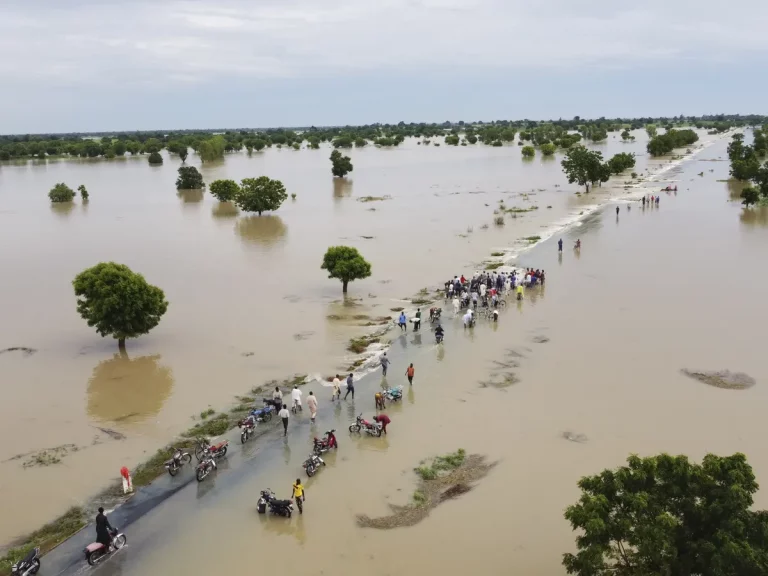
Nigeria experienced extreme flooding across the country in 2022. The flooding, which occurred across 35 states, resulted in many deaths, while thousands of people were displaced, farmlands submerged and millions of naira in property destroyed.
Known to be the worst flooding incident in the past 10 years, the disaster resulted in more than 600 deaths, and no fewer than 2,776 persons were injured.
Allocation of 49 per cent of the Environment ministry’s budget to erosion and flood control is being seen as Federal government’s commitment to avoiding the reoccurrence of the 2022 and 2012 flooding incidents.
It could be recalled that President Muhammadu Buhari inaugurated a committee on flood prevention and disaster management on November 3, 2022.
The committee was expected to work on preventive measures, and also draft action plans that will mitigate the effect of flood in the future.
According to a report, the chairman of the committee and Minister of Water Resources Suleiman Adamu, who spoke with journalists in Abuja, disclosed that the committee would within 90 days create action plans for preventing floods and disasters in Nigeria.
An expert who spoke to The ICIR said it was not clear if Nigeria is targeting an end to flooding in 2023.
According to the Team Lead, GIFSIP, and Africa Regional Coordinator of Citizens Climate, David Mike Terungwa, the Federal government’s approach to flooding incidents had been responsive rather than preventive, noting that most of the funds released during the 2022 flood were for relief and emergency materials.
On whether the money the government budgeted to mitigate flood control in 2023 would be adequate for the purpose, Terungwa said “No, because of the approach. If we are planning for flood control in 2023, then we have missed the target. I can assure you that if there would be flooding this year, we may experience the same devastation we had last year, or it may even be worse because it appears that our approach is more of responsive rather than preventive.
“So most of this sum would rather go for relief materials, and the fact is that there’s a lot that needs to be done. Firstly, I know that the presidential committee on flood is still working and am not sure if they have presented their report yet. But solving the issues of flooding in Nigeria has to be two approaches -one will be short-term and then the other will be long-term.”
He stressed that the impact and effect of climate change would not stop now as it is increasing by the day, adding that it is a weakness of many other countries around the world.
Terungwa also bemoaned the lack of awareness in most regions affected by flood, stating that many people are relocating to their houses despite the locations still prone to flood.
He advised that the displaced persons should be relocated to safer grounds rather than be returned to the flood-prone locations.
Speaking on the responsibility of state and local government leaders, the GIFSIP head said state governments should also take measures and execute flood control related projects.
“This, for me, should be where the solutions should start from. The state governments should come together, especially in those states that are prone to flooding, by increasing their budgets. First, it will be important to check how much Kogi, Anambra, Bayelsa, Benue and Jigawa states have budgeted for flood control, and see if there is a need to build head dams and quick dams,” he said.
He, however, noted that these projects can not be completed in one, two or three years.
The Presidency has questioned how the state governments have been utilising money received from the Ecological Fund since the beginning of the incumbent administration.
According to a report by Daily Trust, about N1 trillion, representing 2.2 per cent of the total budgets for 2018, 2019 and 2023, was budgeted for ecological and disaster management.
The report stated, “In 2018, 2.2 per cent of the estimated N9.120 trillion budget, amounting to N198 billion, was set aside for the Ecological Fund. In 2019, 2.2 per cent of the budget of N132 billion was allocated for the fund, while in July 2021, the Federal Executive Council (FEC) reportedly approved N16.04 billion Ecological Fund for projects across 12 states for the third and fourth quarters of 2020.”
In 2023, 2.2 per cent of the N21 trillion budget indicates a N462 billion allocation for the Ecological Fund.
Petrol consumers have been condemning the Nigerian National Petroleum Company Limited (NNPCLtd) over arbitrary hike in the price of the product across the country.
The consumers decried the disparity in the price of petrol, which is a sharp departure from the old practice when the product sold at the same price at all filling stations.
Independent marketers had since last year declared they would not be able to match the pump price of major marketers because of operational logistics. So while retail NNPCLtd filling stations and other major marketers like Total sell at N169-N179 per litre in Lagos and N174-N180 in Abuja, independent marketers have been selling at prices ranging from N250 per litre to N500, depending on the state.
The Federal government has been battling to peg petrol price by subsidising payments, and has earmarked N3.6 trillion in the 2023 budget for the first half of the year.
In December 2022, the group chief executive officer of NNPCLtd, Mele Kyari, said that without subsidy, the actual pump price would be N410 per litre.
To drivers, the prevailing rates are as expensive as make no difference.
“I do inter-state travel as a commercial bus driver. I buy fuel for N380 in Owerri, the Imo State capital, and N285 in Enugu. In Kogi, it is a different price. You can only get the normal price of N179 and N180 at NNPCLtd-owned filling stations,” a driver told The ICIR.
A commercial motorcycle rider in Enugu municipality, Onyemaechi Onyebuchi, pointed out that to obtain petrol at cheaper prices is always a hard task because of long queues, and even unavailability almost always, whereas independent marketers don’t always have long queues, with fuel always available.
For the Lead Director, Centre for Social Justice Eze Onyekpere, helpless consumers in states where prices are higher are already accustomed to the situation.
“Go to many southeastern states, they have moved on from this subsidy issue. In Owerri, we are buying at N300 per litre,” Onyekpere said.
The ICIR checks showed that fuel sells for between N350 and N500 per litre in most filling stations in Port Harcourt, the Rivers State capital, and in Abuloma, Woji, Elelenwo and parts of Aba Road.
Reacting to the development, the chairman of the Independent Petroleum Marketers Association of Nigeria (IPMAN) in Rivers State, Joseph Obele, attributed the hike in fuel price to the landing cost of petrol in the country.
Obele said it would be unrealisable for even government to sell fuel at N165 per litre when landing cost is over N500 per litre.
“There is no uniform buying source for us marketers. Some of us (marketers) are buying from Lagos, where depot price ranges from N280 to N310 per litre. The only depot that was selling in Rivers State has run out of stock. It’s quite unfortunate that Nigerians are made to be experiencing this,” he said.
Kyari said marketers, the independent ones especially, would rather sell at places with price differentials to make gains.
“We don’t have supply problems. We have distribution challenges, and the distribution challenges are coming as a result of price differentials.
Kyari says marketers targeting areas with price differentials
“Some marketers take products from where prices are low to where they are high. This is what is spiking price. We are working with partners and marketing companies to ensure proper balance sheet,” Kyari said.
The president of the Petroleum Products Retail Outlets Owners Association of Nigeria (PPROOAN), Billy Gilly Harry, said the government would gradually need to phase out subsidy to address these concerns.
Harry stressed that the rising cost of moving products from one point to the other is also influencing price hike.
“The marketers need to be in business and logistics cost remains a source of worry to them,” he added.
NIGERIA’S National Boundary Commission has reiterated its commitment to complete the demarcation of the Nigeria-Niger border and enhance peace and security in the region in line with the African Union’s goals on cross-border cooperation.
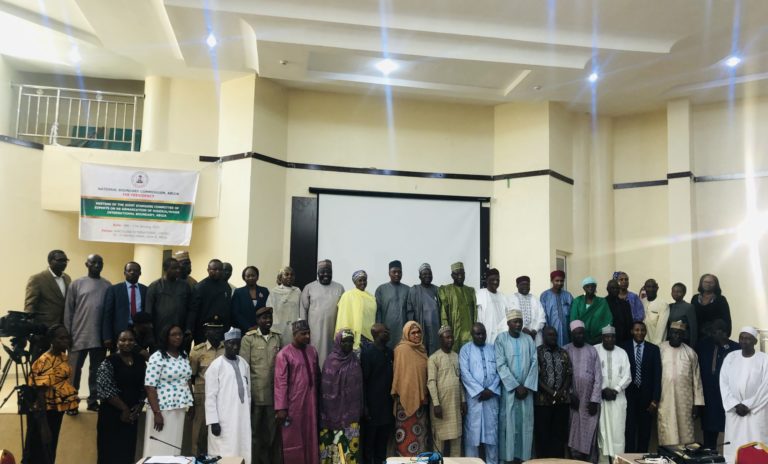
The Director-General of the Commission Adamu Adaji, gave the assurance on Tuesday while addressing a joint meeting of the Standing Committee of Experts on the Re-demarcation of the Nigeria-Niger International Boundary.
He disclosed that 128 out of the 148 pillars designed to demarcate the boundary had been re-constructed, and expressed appreciation to the security personnel in the border area for their dedication and commitment which has provided an enabling environment for the work to thrive.
“Our aim is to make the boundary more visible to border inhabitants, and not to separate the people who share the same history and culture.
“With the continued support of our governments and indeed development partners, we will soon conclude all outstanding works on the re-demarcation of the boundary,” Adaji said.
The Director-General also assured the committee of Nigeria’s commitment to the project and promotion of cross-border development activities for both countries.
On his part, the Head of Delegation of the Niger Republic Bala Pate, noted that there was need to maintain a climate of sustainable peace in the border areas and promotion of cross-border cooperation for benefit of the border population.
He noted that this cooperation had led to the adoption of the framework document of the national border policy, which takes into account all the issues relevant to cross-border governance and is in line with the spirit and guidelines defined by the African Union Convention on Cross-Border Cooperation, known as the Niamey Convention, adopted in, 2014.
“In view of the demarcation, there were areas to be looked into in trans-border cooperation. We are indeed grateful to the government of Nigeria on the effort of strengthening the cooperation,” Pate said.
Nigeria is the first ECOWAS country to officially launch the ECOWAS Fund for Cross-Border Cooperation and Free Movement and Migration called the Regional Program for Support to Cross-Border Cooperation (PRACT 2021-2025).
Pate called on both countries to seize the opportunity offered by the PRACT to create cross-border cooperation initiatives in order to develop the cross-border areas into spaces of peace and security for the promotion of sustainable development and cross-border cooperation.
THE Yoruba socio-political group, Afenifere, has warned the Independent National Electoral Commission (INEC) against plans to postpone or cancel the 2023 general elections.
Afenifere gave the warning while reacting to INEC’s suggestion that the election may be cancelled or postponed due to the high level of insecurity in parts of the country.
INEC chairman, Mahmood Yakubu, had, while speaking at the validation of election security training resources held in Abuja on Monday, January 9, lamented the growing wave of election-related violence across the country.
Yakubu, represented by the Chairman of the Board of The Electoral Institute (TEI), INEC’s training arm, Abdullahi Abdu Zuru, expressed fears that the trend, if not checked, could lead to the cancellation or postponement of the polls.
“Moreover, if the insecurity is not monitored and dealt with decisively, it could ultimately culminate in the cancellation and/or postponement of elections in sufficient constituencies to hinder the declaration of elections results and precipitate a constitutional crisis, ” he said.
Stating that elections are conducted through the provision of enabling environment, the Commission assured that it will not leave anything to chance in ensuring that security is provided for election personnel and materials during the polls.
“Consequently, in preparations for the 2023 general elections, the Commission is not leaving anything to chance in ensuring that intensive and extensive security is provided for election personnel, materials and processes.
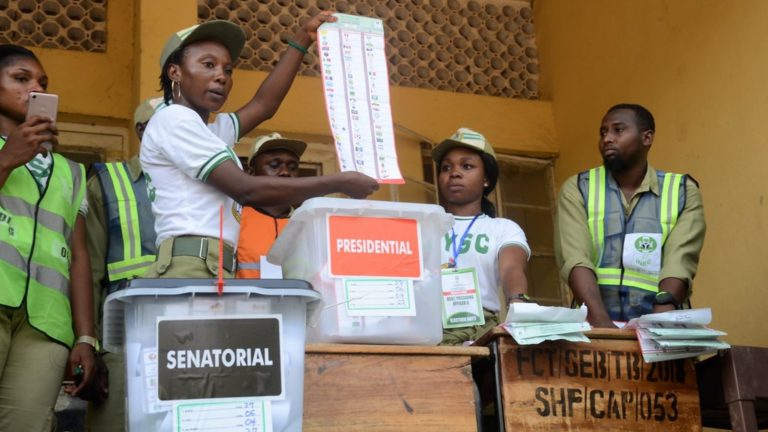
“This is particularly significant to the Commission given the current insecurity challenges in various parts of the country and the fact that the National Youth Service Corps members constitute the core of the Polling Unit Election officials.”
Mahmoud charged all security personnel in particular and all elected officials in general to be security-conscious and alert to unusual activities in their environment, adding that they must be fully equipped to deal with any challenge at all times.
Reacting in a statement by its national publicity secretary, Jare Ajayi, on Tuesday, January 12, Afenifere said attempts to cancel the polls will not be unacceptable.
Ajayi said that the polls slated for February and March this year should not only be conducted successfully, but winners must be sworn into office on May 29, 2023, as stipulated in the Amended 1999 Constitution.
“But we feel that there is the need to let anyone thinking of postponement or cancellation of the elections that such a thing is and will remain unacceptable, no matter the reason,” Afenifere said in the statement.
“We recall that in 2015, there was insecurity too, to the extent that some local government areas, specifically in Borno State, were in the hands of Boko Haram terrorists. Yet elections were held. There was also insecurity in 2019 and elections were not stopped.
“Afenifere felt the need to sound this note of warning so that whoever may be thinking of postponing or altering the election calendar should know that such a thing would not be accepted.”
The group added, “In Nigeria, there is often the tendency to fly a kite. Most of the times, such kites are on policies or steps that were usually not in the best interest of the Nigerian public. This is why it is very important to clearly sound this note of warning without any ambiguity.
“This is why we are stating clearly that Nigerians are prepared for the elections just as the whole world is awaiting the elections. Nothing whatsoever should alter the schedule or cause postponement let alone cancellation.”
THE chief executive of CFG Advisory, Adetilewa Adebajo, says borrowings by the Debt Management Office (DMO) have exceeded the limit, and have consequently contravened the Central Bank of Nigeria (CBN) Act and Fiscal Responsibility Act put in place to guide and regulate foreign borrowings.
Adebajo, expressing his displeasure with the country’s debt profile during an interview on Arise TV on Tuesday, described the securitization of the Ways and Means as “illegal”, saying the DMO violated its mandate not to borrow more than N1 trillion.
“There is no law that says the CBN can transfer its debts to the DMO. If there is any requirement on the National Assembly on domestic debts, the DMO is already empowered to raise money on domestic debts.
“The DMO is not mandated to go to the National Assembly before they borrow abroad, but the Ways and Means give them the right. But it is not supposed to exceed N1 trillion. It is at N22 trillion, which indicates that they have exceeded the limit. This is where the illegality comes in,” he said.
Adebajo argued that the DMO could be sued for violating the Act that guides and regulates its activities.
He said, “Don’t forget that the DMO can also be sued in its own capacity. It can be taken to court for breaking the law. It is clear. There is a doctrine of necessity; you are not supposed to borrow more than N1 trillion, so why N22 trillion? That is excessive.
“That means that you should have approached the National Assembly a long time ago and sent an Emergency Economic Rescue Bill, which will seek to amend both the Fiscal Responsibility Act and the CBN Act to allow the DMO to borrow more. You do not go into an act of illegality and then come to rectify it.”
He emphasized the need to punish violators of the Fiscal Responsibility Act and the CBN Act.
“First, all heads must roll. People must take responsibility for this mistake; we cannot continue like this. If we do, that means we don’t respect the law. This is impunity. We have a system in place, but you are now arguing that you want to securitize something.
“There are reasons why these laws were put in place; it is a financial circuit breaker. The solution is very simple, people who made this mistake must pay the price,” he maintained.
Three weeks to the expiration in legal tender of the N200, N500 and N1000 old currencies, the Central Bank of Nigeria (CBN) said it would be monitoring commercial banks to ensure they comply with the directive of loading the redesigned naira notes in their automated teller machines (ATMs).
The rested notes would cease to be legal tender from January 31. However, there are serious concerns of poor circulation of the notes across the country.
The CBN Director, Currency Operations, Ahmed Umar, however, allayed, at a training session in Abuja on Monday, January 9 for State Directors, National Orientation Agency (NOA) on ‘Redesign of Currency Notes Policy’, the concern, with the reassurance that the apex bank had enough of the redesigned notes to go round.
Umar said, “We, CBN management, have mandated banks to stop putting old notes in their ATM machines. They should only put the new notes. There is serialisation of the policy that they can put either the N500, N1000 or N200 note – whichever the denomination they have or a combination of any of those notes, they should just put a new note in their machines.”
He warned that banks that failed to comply with the directive would be penalised, as the expiry date for the rested notes draws nearer.
He stated that long use of the old notes had created an avenue for the spread of counterfeit notes, fuelling unregulated currency flow.
“If you notice the N1000 note that was introduced in 2005, it took 17 years for us to redesign it. N500 and N200 notes were also redesigned after 21 years and 22 years respectively.
“If currency notes stay too long in the system, there is tendency that people who counterfeit make a lot of efforts to produce the same notes,” he said.
Another reason the apex bank gave for the redesign was that the N500 and N1000 notes constituted 99 per cent of the currency being targeted for counterfeiting.
“It is simple logic, the effort you put to counterfeit N1000 is the same effort you put to counterfeit N5. So, why will they waste their energy doing small notes; they always target the higher notes, particularly N1000 because of the values attached to it,” he said.
The Director-General of the NOA, Garba Abari, explained that the agency partnered with the CBN to educate NOA staff at the 774 local government areas to assist in enlightening Nigerians on the redesign policy.
Abari expressed hope that the training session would go a long way in addressing any misconception and misunderstanding around the policy.
He called on all participants to pay serious attention to the training in order to represent the CBN well in enlightenment programmes at the grassroots.
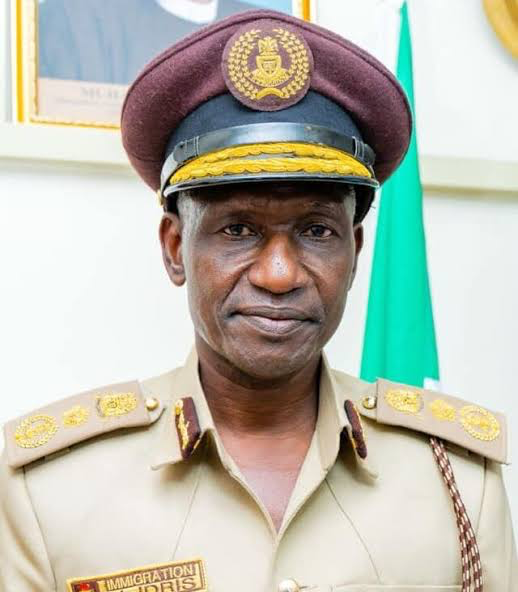
THE Nigeria Immigration Service (NIS) has dismissed four personnel and demoted 14 others over corruption and other forms of unethical misconduct.
The development is coming roughly two months after the service reportedly dismissed eight officers, sanctioned 18 and redeployed 100 others over unprofessional conducts.
The Public Relations Officer ( PRO) of the Service, Tony Akuneme, said in a statement on Tuesday, January 10, that the personnel were sanctioned after appearing before the Orderly Room Trial Committee of the Service.
He said the step is part of measures taken to rid the Service of bad eggs and reinforce the Federal Government’s commitment to the fight against corruption.
“As part of efforts to rid the Service of bad eggs and in furtherance of the Federal Government’s fight against corruption, the Nigeria Immigration Service has dismissed four personnel and demoted 14 for various offenses for which they appeared before the Orderly Room Trial Committee of the Service”, he stated.
According to him, four other personnel were discharged and acquitted, while two were redeployed to other locations.
“Eleven were issued warning letters and one was compulsorily retired. According to the Committee, 11 personnel are still awaiting trial.”
Akuneme added that the Comptroller-General of Immigration assured the general public that all offenders in the Service would be appropriately sanctioned.
“He is also urging members of the public to be vigilant and support the Service to deliver more on its mandate by contacting us for feedback, inquiries and complaints on any of these channels:(a) phone: +2348033074681; +2348021819988(b) twitter: @nigimmigration(c) email: nis.pro@immigration.gov.ng”, Akuneme added.
An earlier investigation by The ICIR revealed how Nigerians suffer frustration and extortion due to widespread corruption in the Immigration Service.
The report exposed the high level of racketeering, touting and other unprofessional conducts by personnel of the NIS.