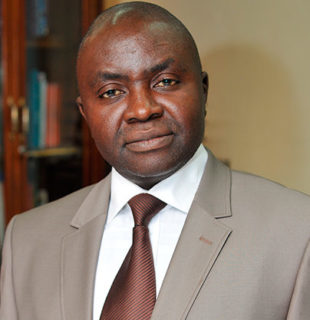
THE PUBLISHER of Premium Times and founder of the Centre for Journalism Innovation and Development (CJID) Dapo Olorunyomi has emerged as the first African Fellow of the Poynter Institute’s Media Transformation Challenge Fellowship.
Olorunyomi became the first African to be selected to join the programme as a fellow seventeen years after the Institute commenced its Media Transformation Challenge Fellowship programme.
He would join 26 other leaders and senior media executives drawn across the globe as 2023 Media Transformation Challenge Fellows.
Introduced in 2007, the Poynter Fellowship is a year-long program which has recorded more than 350 alumni around the globe.
Others selected for the fellowship includes CNN’s Anika Palm, BBC’s Ravin Sampat, and Los Angeles Times’ Angel Jenning.
Fellows began the MTC program on Monday, January 9 with coaching staff who will bring extensive experience in developing for-profit and non-profit journalism business models and mentoring.
Also, selected fellows will identify and pursue their most significant business performance challenges with help from MTC’s trademark tools, concepts, coaches, peer group and alumni network.
Furthermore, the program is focused on helping newer enterprises to deploy quality journalism to strengthen relationships, build audiences, deliver audience impact, build capacity and gain financial strength with innovating new business model across fault lines of race and class.
The Poynter Institute, a leading institute of the media industry, fact checking and media literacy education is a school that extensively teaches and writes about journalism and the media industry.
The Institute is a gold standard in journalistic excellence and dedicated to the preservation and advancement of press freedom in democracies worldwide.
Through the Poynter; Journalists, newsrooms, businesses, big technological corporations and citizens have gathered to address critical issues and find sustainable solutions that promote trust and transparency in news and meaningful public discourse.
Digging into Akwa Ibom’s budget for 7 years (2015-2017), Inspiration FM’s senior correspondent, Dem Imaobong Archibong establishes that there is a noticeable pattern in the budget for the state Fire Service’s capital projects.
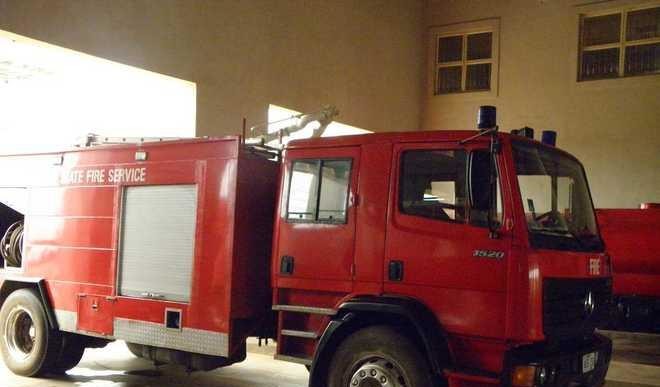
A visit to the Fire Headquarters will give you the creeps, as there is a reflection of outright neglect of this very important Government establishment saddled with the responsibility of responding to fire emergencies and other disasters in Akwa Ibom.
For the 7-year period, facilities, Fire fighting equipment and gears were consistently budgeted for, a facility like the Water hydrant and Elevated Project resurfaces every year.
In spite of how critical the water hydrant is to the functionality of the Fire agency, there hasn’t been release of funds for it.
Borehole hydrant and elevated tank project
There is an obvious need to improve the state of the Fire Service in Akwa Ibom, considering that without the presence of the Federal Fire Service, the situation would have been more dire.
Akwa Ibom’s state Fire Service Public Relations Officer, Emmanuel Udofia says 99 per cent of Fire outbreaks in Uyo are tackled with the Federal Fire service doing most of the work because they have more capacity.
Despite the capacity shown by the Federal Fire Service, Ofonmbuk Nelson, the parastatal’s Commandant and 2IC in Akwa Ibom, says their operations are hampered due to the lack of a Water Hydrant for the refilling of the water tank.
Capital budget for the fire service
*This report is supported by the International Budget Partnership (IBP) and the International Centre for Investigative Reporting (The ICIR)
*The report was edited to reflect the reporter’s name as Dem, Imaobong Akpabio and not Ima Archibong.
ECONOMIC indicators are pointing to a challenging time for Nigerians in 2023. The President Muhammadu Buhari administration, left with barely six months in office, will have to take some hard decisions to address the inclement situation.
The economic headwinds are not unexpected to be compounded by rising inflation, overburdening taxes, expected food price surge, naira deprecation and weak economic growth.
Buckled by inflationary pressure, with the November inflation rate at 21.47 per cent, food prices are expected to surge this year with the country yet to recover from the destructive effects of floods that ravaged its food belt last year.
The World Bank has cut Nigeria’s 2023 economic growth projection to 2.9 per cent, from a previous projection of 3.1 per cent. This, the bank explained, was informed by production challenges in the oil sector, rising insecurity and flooding.
Also, a Fitch Solutions Country Risk and Industry Research report has predicted that the Nigerian economy would continue to slump in 2023 due to activities leading to the general election.
To fix up this concern, the government is targeting intense borrowing to fund its 2023 deficit budget, which has remained a problem to the economy. Analysts say that with the budget to be funded largely by borrowing, projected revenues and macroeconomic fundamentals, if not met, would put the country in huge economic distress.
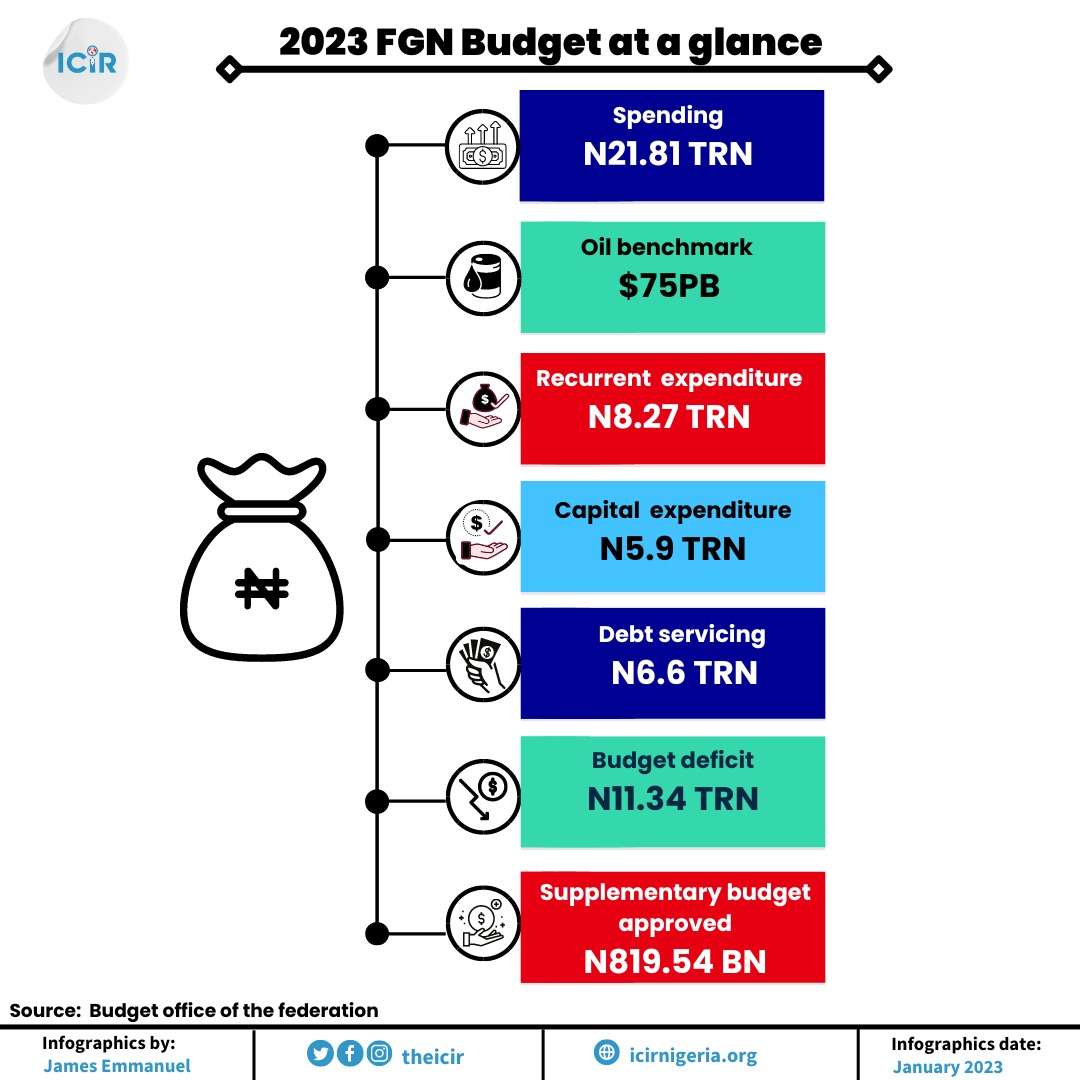
From the 2023 budget, the sum of N11.34 trillion is to be used to finance the budget deficit. The deficit figure is to be largely financed by N7 trillion of domestic debt, N1.76 trillion from foreign debt and N1.77 trillion from multilateral lending agencies like the World Bank and the African Development Bank. The sum of N206.1 billion will be sourced from privatisation proceeds.
The macroeconomic fundamentals in the budget also showed an oil production target of 1.69 million barrels per day, the official exchange rate pegged at N435.57/US$1 and inflation at 17.16 per cent. The macroeconomic fundamentals are subject to key global and economic factors like the Russia-Ukraine war, and crude theft in the Niger-Delta.
Budget analysts have allayed the fear that the Federal government would be leaning on heavier taxation to shore up its projected revenue.
Economic watchers say such a move would put the private sector into more uncertainties.
The Finance Bill passed by the National Assembly in December 2022 amended several laws, namely the capital gains, Tax Act, Companies Income Tax Act, Personal Income Tax Act, Petroleum Profit Tax Act, Stamp Duties Act, Value Added Tax, and Procurement Act.
There are concerns that businesses could be overburdened with taxes, which could see many in further distress, amid double-digit inflation of 21.47 per cent in November.
“This is a piece of legislation which has profound implications for investment, citizens’ welfare and the Nigerian economy. It is serious and puzzling that the Senate gave just 24 hours’ notice for stakeholders to attend a public hearing in December 2022.There is no better expression of deliberate exclusion from this important legislative process,” said the Executive Director for Centre for the Promotion of Private Enterprise, Muda Yusuf.
Besides the issue of increasing taxation, there is also a major factor of currency problems, spurred largely by naira deprecation and exchange rate volatility.
It is widely agreed government’s unregulated borrowing from the Central Bank to the tune of N23.7 trillion has wider implications on Nigeria’s currency, inflation, and even Nigeria’s quoted companies that have foreign debt exposure.
2023 budget at a glance
The World Bank has urged Nigeria to have a stable exchange rate, something the apex bank has not been able to achieve, with the wide gap in official and parallel markets causing problems for businesses and investments.
A research by the Economic Intelligence Unit (EIU) projected the 2023 Nigerian economic and political outlook as one of instability.
The EIU, like the World Bank, has revised down its real gross domestic product (GDP) growth estimate for 2023 to 2.8 per cent from 3.1 per cent, owing to tighter credit conditions, floods and widening insecurity.
On currency and lending problems, the intelligence outfit said hard currency remains in short supply, although the Central Bank of Nigeria (CBN) has reiterated its resolve to tame the parallel foreign exchange market.
“Inflation is expected to remain in double digits, and monetary conditions will be tight, with the central bank’s policy rate expected to peak at 17 per cent by end-2022 or early 2023, and to be maintained at this level throughout the year,” the EIU forecast.
Economic watchers agreed with the EIU’s position on inflation, saying Nigeria’s double-digit inflation figure has taken a deep cut at Nigerians’ earnings, plunging more people into economic difficulties.
“As at January this year, headline inflation was 15.60 per cent, and rose to a peak of 21.47 per cent in November 2022. Meanwhile, food inflation consistently outpaced headline inflation and core inflation during the year. For the basket of goods and services consumed by the average Nigerian, costs have accelerated by between 50 per cent and 100 per cent in 2022,” Yusuf said.
Yusuf: worried about inflation, tax hike in 2023
He said that the Buhari administration would need to address key drivers of inflation, boost productivity in the economy to drive output growth, stem the depreciation of the naira, and address the illiquidity in the foreign exchange market to soften the ground for his successor.
For a restaurant manager Oluchukwu Mgbemena, who does her trade in Abuja, high food prices are already taking their toll on her business.
Oluchukwu said, “I have noticed a sharp rise in prices this first week in the year that I went to the market. Rise in prices of stockfish, crayfish, dry fish and meat of assorted types is a major worry for us.”
She said she had had to readjust prices on her food menu to enable her to sustain the business.
2023 budget could worsen inflation with rise in borrowing
The government’s passage of the 2023 budget should ordinarily offer hope to many Nigerians. However, the realisation that a large chunk of the budget will be financed by massive borrowings is not offering optimism.
The N21.83 trillion budget has a recurrent expenditure of approximately N8.2 trillion and a capital expenditure of N5.9 trillion, while debt servicing increased from N6.31 trillion to N6.6 trillion.
Economists say the rise in debt servicing and massive borrowings to fund fuel subsidy have negative effects on the economy, especially the real sector.
This, in turn, has massive implications for the cost of funds for businesses and the private sector.
The Chief Executive Officer of Cowry Assets Management Limited, Johnson Chukwu, posited that if the government did not exercise caution on borrowing to fund its budget deficit, the private sector would be suffocated by the cost of funds for business.
Chukwu: borrowing starving real sector of funds
Chukwu said, “When we talk of the budget deficit of N12 trillion today, we are also talking of a national debt of more than N22 trillion. If the Federal government continues to borrow, the implication is that you are going to crowd out private sector funding for the real sector.
“The increase in projected revenue only gives incentives to spend more even when we haven’t met up with it in the last five years. Now, this has made us to increase the budget deficit, which is putting lots of pressure on our funding the private sector.”
The economist warned that Nigeria may head the way of Ghana if it failed to address its appetite on “unregulated borrowing.”
The Debt Management Office (DMO) spoke in a similar vein during a budget presentation to the federal legislators, stressing that massive borrowing to fund the budget could see the Buhari administration leave a whopping N77 trillion for the incoming administration.
Experts’ concern on overburdening tax in 2023
The Nigeria Employers’ Consultative Association (NECA) has expressed worry over the number of taxes imposed on businesses in the country.
Smart-Oyerinde: ‘organised businesses overburdened by many taxes’
According to the Director-General of NECA, Adewale-Smatt Oyerinde, organised businesses are burdened by over 50 different taxes, levies and fees, both legally and illegally.
Smart-Oyerinde frowned at some of the provisions of the Finance Bill 2022 recently passed by the National Assembly, particularly the increase in Tertiary Education Tax (TET), from 2.5 cent to 30 per cent, saying it was increased without regard for the economic woes businesses are facing.
“Taxes being paid by businesses in Nigeria include company income tax, stamp duties, petroleum profit tax, capital gains tax, value added tax, personal income tax, withholding tax and tertiary education tax. Increasing the Tertiary Education Tax is another burden too much.
“Also, increasing the Company Income Tax rate for a gas-flaring company from the standard 30 per cent to 50 per cent is also worrisome, considering the fact these companies are already covered in the Petroleum Industry Act. This can be a recipe for further divestment.
“Also, imposition of excise duty at rates to be specified via presidential order on all services, including telecommunication services, is too broad and vague. This can be subjected to abuse and further strangulation of the business community,” he said.
He urged President Buhari to request the National Assembly to take into cognisance the concerns of organised businesses. He also mentioned the need to expunge all anti-business provisions in the bill.
The Director-General of the Budget Office of the Federation, Ben Akabueze, also identified taxes as a hedge to inflation, although he did not see the Nigeria context as that terrible.
Akabueze said, “It is not right to overburden investors with taxation. However, the situation is not as dire as it seems. In Germany, corporate tax is 29.8 per cent. When we compare ours with the global standards, we would be surprised that 30 per cent on corporate tax is not that high.”
Experts suggestions, way forward in 2023
To unlock growth and investment in 2023, the government must undertake some urgent reforms, analysts say.
Yusuf, describing the enactment of the Petroleum Industry Act as a major step towards the reform of the oil gas sector, said the government, however, needs to demonstrate greater commitment to its implementation.
“The deregulation of the petroleum downstream sector is a major economic reform imperative. This is inevitable if we must unlock investment in the sector and put an end to the perennial fuel scarcity and the monopolistic structure of the sector,” he said.
On power reforms, he called for an enabling environment that would enable the private sector to drive results.
“An enabling environment must be created to sustain current private sector investment in the sector and attract new private capital to the electricity sector. Urgent reforms are vital with respect to electricity tariff, metering and deepening of energy mix. We need robust incentives (fiscal and monetary) to boost private investment in renewable energy.
“We should reform the budget and appropriation processes to prioritise infrastructure financing and human capital development. This would boost productivity and competitiveness of the economy,” he added.
Adoption of these reform initiatives, Yusuf was positive, would guarantee progression towards fiscal consolidation and reduction in fiscal deficit, while diminishing the need for borrowing and abating the debt service burden.
The consensus is that Buhari has not, in his seven and a half years as president, exhibited the will, if not competence, to tackle economic turbulence. Under his watch, the economy has been taking a tumble rather than stability. So, would he be able to bring some progress to the economy in only five months,? The time ticks.
In Nigeria’s Federal Capital Territory (FCT) as with other parts of the country, the new year will be characterised by political activities due to the general elections to start from February 25, 2023. But beyond political issues, certain other factors are bound to shape the year for residents.
WITH the general elections less than two months away, Nigerians living in the FCT, eager to participate in the voting process, have been trooping in and out of designated collection centres to obtain their permanent voter cards (PVCs).
Residents, mostly youths, can be spotted in clusters at the Independent National Electoral Commission (INEC) collection centres, wanting to obtain their cards.
Across Nigeria, young people make up over 71 per cent of the nine million new registrants recorded by the INEC. This is reflected in the large number of youths found at PVC collection centres within the FCT, where over 183,000 valid registrations were completed.
A resident of the Jabi area of the city, Amaka Okoye, recounted, in an interview with The ICIR, her experience at the collection centre.
“It did not take me too much trouble to get my PVC, although I think adequate information was not given concerning collection centres. I had to visit the INEC office in Karu first, before I was redirected to the one in Area 10. But once I got there, getting the card was not too difficult, just that the place was crowded,” Amaka said.
As the January 22 deadline for the distribution of PVCs draws closer, crowds at INEC collection centres have continued to increase, making the process more cumbersome for other registrants.
Registrants at a PVC collection centre in Abuja
While this may suggest a massive turn-out of voters during the elections, some residents have experienced difficulty with the process as their cards were unavailable at the time of collection.
Another resident of the FCT, Abosede Korede, confirmed that she had attempted to get her PVC from the INEC office on two occasions without success.
“I went to the INEC office at Area 10 to collect my PVC, but they told me my card was not available. I don’t know why they couldn’t find it. They just asked me to write my name and phone number in a paper and check back in two weeks,” Abosede said.
She expressed concern over a possible disenfranchisement ahead of the forthcoming elections.
Beyond the PVC card challenge, other residents have also expressed concern over likely cases of violence during the election. This fear stems from cases of the insecurity recorded within the FCT in 2022.
The cases include the invasion by terrorists of the Kuje Medium Security Custodial Centre, and attack on the Presidential Guards Brigade in July.
Some FCT residents like Tolu Oyelade have, however, vowed they would not be deterred by the insecurity threats from participating in the voting exercise.
“Attacks at the polling units are my biggest fear concerning these elections, but it is not a limitation for me,” Oyelade said.
Women participation in politics
Women in the FCT are also determined to continue the struggle for equal representation in political issues in the new year.
In March 2022, women across the FCT spent days at the National Assembly gate, protesting against the rejection of five gender-inclusive bills, including one which would allow women occupy 35 per cent of all appointive positions in government.
The National Assembly rejected the bills during a constitutional amendment vote held in 2022, and this attracted a lot of criticism from women groups nationwide.
The protests had ravaged the FCT for days until it was suspended after three of the bills were recommitted for reconsideration by the legislators.
Although not much has been heard of the bills since then, Angel Ugben, who represented women with disabilities during the protests in March, told The ICIR that the struggle for representation was still on.
“There has not been much done on the issue, but we are still lobbying. The 35 per cent affirmative action is something that will foster democracy and we want that bill passed,” she said.
Also speaking on the issue, the president, Women in Politics Forum, Ebere Ifendu, said the women were determined to see the bills reconsidered, even after the elections.
“This is an election year, and they have not had time to reconvene and look at the bills, but we are hoping that even after the elections they will address this. We are planning on re-presenting the bill in the new year,” Ifendu said.
Continued demolition
More residents of the FCT are expected to lose their homes and businesses to demolition, as removal of structures deemed illegal by the authorities is set to continue in 2023.
In his new year message to residents, the FCT Minister Muhammad Musa Bello made this known, while urging residents to cooperate with the authorities to achieve restoration of the Abuja master plan.
“It must be understood that these corrective measures are absolutely essential if truly our city is to evolve into one of the most aesthetically pleasing and functional cities in the world. The presence of illegal settlements and shanties will only draw us further away from attaining this goal,” Bello noted.
Demolition exercises have become commonplace in the FCT, with hundreds of residents losing businesses and property to the development in 2022.
Economic and political activities have led to an influx of Nigerians into the FCT, worsening housing challenges in the city and leading to illegal purchase and construction of buildings by residents.
The ICIRreported that this has led to an increase in shanty towns and structures that distort the original plan of the city, resulting in regular demolition exercises.
While many residents purchase land from local chiefs, the FCT Administration has warned that the Abuja Geographic Information System (AGIS) retains the sole responsibility to allocate land in the city.
THE Labour Party (LP) has condemned the attitude of some officials of the Independent National Electoral Commission (INEC) in the ongoing collection of Permanent Voters Cards (PVCs) nationwide.
Spokesperson of the LP presidential campaign council, Yunusa Tanko, in a statement released on Wednesday, January 11, accused INEC staff of frustrating most PVC collectors in several parts of the country.
Tanko said reports available to the party indicate that the exercise is moving at a slow pace. According to him, if nothing was done to remedy the situation, many Nigerians will be disenfranchised during the election.
Although INEC has decentralised the exercise to ward levels for seamless collection, the LP campaign spokesperson said many Nigerians who registered for the PVCs “are still finding it difficult to collect their voter’s cards”.
“We have received reports from all the geo-political zones in Nigeria and the messages are all the same – people complaining of the snail pace at which the PVCs are being dispatched to collectors,” he said.
“If you take a close look at the INEC timetable, you have less than 12 days left for collection of PVCs. People go and queue for hours out of about 500 PVC collectors; only 20 or less than 50 people will be given their cards in wards designated for collection.
“What kind of miracle is INEC going to perform that will ensure Nigerians get their PVCs within this short period if there’s no sinister motive underneath?
“The process for collection started on December 12th and is expected to end on Sunday the 22nd of January yet out there across the country many of our members are complaining that the process is cumbersome and INEC staff leisurely stroll in and out of the wards.
“They resume by 9am and close by 3pm and from information reaching us the INEC staff in most cases resume as from 11am daily.
“Today is the 11th of January and by the 22nd of this month the process will collapse. Ehat’s going to be the fate of those who couldn’t get their voter card?”
The party insisted that on no account should Nigerians be denied their inalienable rights to vote in the forthcoming election.
The LP further called on INEC to open up on “these deliberately designed weak operations to Nigerians before people start believing the apex electoral body has a hidden script unknown to us”.
The party also urged security agencies to beef up security around INEC facilities nationwide to check the activities of vandals and arsonists who want to scuttle the elections.
CANDIDATE of the Peoples Democratic Party (PDP) for the Abia North Senatorial District, Mao Ohuabunwa, has called on Nigerians to reject lawmakers that voted against electronic transmission of election results during the debate on the amended Electoral Act, 2022.
Ohuabunwa made the call while speaking on his adoption by some youths in the Arochukwu area of Abia State on Wednesday, January 11.
According to him, the lawmakers who opposed the introduction of technology in the country’s electoral system are the real enemies of Nigeria’s democracy.
Such anti-democratic elements should not be rewarded with a return ticket to the National Assembly, Ohuabunwa stressed.
He thanked the group of Arochukwu youths for their unwaivering support for his senatorial bid, and pledged to restore the dignity and prestige of Abia North if returned to the Senate.
Speaking further, he noted that since his exit from the red chamber in 2019, Abia North has lost its voice in the Senate.
Ohuabunwa also noted that those elected to speak for Abia North abandoned the people to their fate at the peak of insecurity in the zone. He vowed to leverage on his national contacts to fight insecurity in the area if elected.
In the same vein, Ohuabunwa urged the people to collect their Permanent Voter Cards (PVCs) to enable them exercise their franchise in the forthcoming polls.
Ohuabunwa will be contending the Senatorial ticket against the former governor of the state and the Chief Whip of the Senate, Orji Kalu.
During voting on various sections of the Electoral Act in 2021 in the Senate, Kalu was among several lawmakers of the All Progressives Congress (APC) that opposed the electronic transmission of results by the Independent National Electoral Commission (INEC).
FULL LIST: Senators who voted against electronic transmission of election results
The action of the lawmakers was roundly condemned by Nigerians before the Sebate made a U-turn and eventually allowed the introduction of electronic transmission of results in the amended Electoral Act.
A FORMER Resident Electoral Commissioner (REC) of the Independent National Electoral Commission (INEC), Mike Igini, has said the National Youth Service Corps (NYSC) adhoc staff list for the 2023 general elections must be certified by the Director General to ensure transparency and credibility.
Igini expressed his dissatisfaction with INEC’s preparations for the election while speaking on Arise TV on Wednesday.
He said the Director General of the NYSC must approve the adhoc staff list to avoid electoral malpractices.
The former REC alleged that politicians usually connive with NYSC officials to influence the selection of adhoc staff for elections.
“Those to be used as NYSC corps members on the list must be certified by the current DG and given to the Commission down to the states because our politicians in time past have blocked them but you know you never can tell which angle they are going to come from.
“What they used to do before is that those who have passed out of service maybe last year or just two months ago in connivance with some officials and the NYSC would be used as Adhoc Staff. NYSC give out the batch number and telephone numbers of ex-corpers and the batch number which is no longer useful.”
In the same vein, Igini frowned at reports that prospective voters are being forced to offer money to INEC officials before collecting their PVCs.
“It is not expected that somebody in Nigeria who has registered and wanted to collect his PVC should offer INEC money and those who are accepting it especially officials should know that it is a clear deviation from the the ethical standards of electoral practices.”
THE Reuters Institute for the Study of Journalism (RISJ) is seeking to appoint two post-doctoral researchers to work on a project aimed at the quantitative analysis of news audiences across a sample of more than forty countries, with a particular emphasis on digital media, news, and politics.
The purpose of the larger project is to develop a better understanding of media developments in different countries (and their implications), including the interplay between analog and digital media and the relationship between news provision and news consumption.
The organisation said the individuals appointed will be working with the Institute Director Rasmus Nielsen and with the Director of Research Richard Fletcher as part of the wider project.
The deadline for submission of applications is February 6, 2023. Interested applicants can apply here.
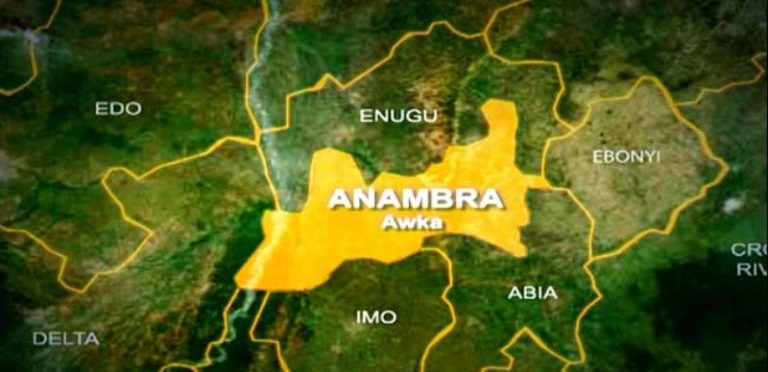
THE Anambra State Police Command has confirmed that yet to be identified gunmen killed four persons on Nzomiwu Street, Eziani community, in Ihiala Local Government Area of the state.
The incident occurred on Tuesday, January 11.
It was gathered that the gunmen invaded the community and started shooting into the air, killing three males and a female, who was said to be pregnant.
The gunmen immediately fled the scene after killing the victims.
In a chat with The ICIR, the state police spokesman, Tochukwu Ikenga, confirmed the incident and said the Police are on the trail of the perpetrators.
“Yes,it is confirmed. It happened on Tuesday.The Police and other security agencies are presently at the location,” he said.
Ikenga added that the gunmen are yet to be apprehended.
In a press statement released earlier, the Anambra State Police Command said the bodies of the victims had been deposited at the mortuary.
The statement also noted that the attack was unprovoked.
“Police/military operations have been intensified in Ihiala and its neighbouring town as operatives responded to a distress call in the early hours of Tuesday on Nzomiwu Street, Eziani, Ihiala, recovered lifeless bodies, three males and one female at the scene.”
This is coming a few days after some yet-to-be-identified assailants killed four persons in a compound at Nodu Town Square, Nodu Okpuno, near Awka, Anambra State, on January 2.
It was gathered that the gunmen had pursued someone into the compound where the other victims were already sitting down and opened fire on them.
Anambra and other states in the South-East have been experiencing a high level of insecurity in recent months.
When Okon Emannuel, 56, fell ill in June 2021, he visited a local chemist (drug store) four blocks from his residence in Midim, Abak Local Government Area of Akwa Ibom State.
“I think it was malaria. But after taking the tablets the chemist mixed for me, I still felt fever(ish) again,” he said.
As his situation got worse, he sought care at “Polyclinic” – the Primary Healthcare Centre (PHC) Operational Base – situated some three kilometres away, despite the existence of the Midim PHC in his community.
Emmanuel said his preference for Polyclinic is shared by many other residents of the area. “The one you talk about (Midim PHC); how many people go there that time?” he asked.
“Maybe pregnant women for antenatal,” a woman, who had been listening to the conversation quickly added. “Many people here go to Polyclinic, because it is better,” Emmanuel said.
The low patronage at PHC Midim was not unconnected with its dilapidated state at the time. According to a 2021assessment reportby UDEME, a social accountability initiative of the Centre for Journalism Innovation and Development, the PHC had broken ceilings, crumbling roofs and doors and windows affected by termite infestation.
However, this is not the situation at PHC Midim today, courtesy of the Nigerian government’s intervention through the Basic Healthcare Provision Fund (BHCPF). A visit to the PHC in August showed that it had been renovated and repainted.
“The fund has helped to transform this place. We have replaced the doors and the wood in the ceiling that were destroyed by termites and fumigated the place from the ceiling up and down,” Itohowo Duncan, the officer in charge of the PHC, stated. “We have more patients coming in here now than before.”
A generator was also procured to provide power supply at the PHC, putting an end to the long years of borrowing the village head’s generator.
Sylvester Ibanga, the village head, was full of praise for the federal government’s intervention.
“It has helped to improve the health centre a lot. They were able to repair a lot of things in the place. They even procured a generator to fix the electricity and water issues there. We are happy and we thank the government for this project,” he said.
About BHCPF
The Nigerian government introduced BHCPF under the National Health Act (NHAct) 2014 to provide free minimum basic healthcare to the most vulnerable populations through PHCs across Nigeria and reduce personal out-of-pocket payments and associated financial risks, through health insurance.
The initiative is funded with a minimum of one per cent of the Consolidated Revenue Fund (CRF), grants from international partners and other donors. The fund is disbursed via three gateways: 50 per cent for the provision of Basic Minimum Package of Health Services (BMPHS) to citizens via the National Health Insurance Scheme (NHIS), five per cent for treatment of medical emergencies and 45 per cent to improve PHCs’ service delivery through the National Primary Health Care Development Agency (NPHCDA).
Of the 45 per cent, 20 per cent is for the provision of essential drugs, vaccines and consumables for eligible PHCs, 15 per cent is for the maintenance of PHC facilities and equipment and 10 per cent is for the development of PHC staff.
Some payment receipts on BHCPF spending
For the NHIS Gateway, citizens and healthcare providers are expected to be enrolled as beneficiaries of the BHCPF, to enable them to access preventive, protective, promotive, curative, and rehabilitative health services at designated PHCs. However, these health services shall be funded through the State Health Insurance Agencies and State Health Insurance Schemes (SHIA, SHIS), at an agreed premium.
In 2018, President Muhammadu Buhari flagged off the Basic Health Care Provision Fund (BHCPF) with an appropriation of N55.1 billion from the Consolidated Revenue Fund (CRF), in addition to $2 million from the Bill and Melinda Gates Foundation, $20 million from Global Financing Facility (GFF) and £50 million donated by the Department for International Development (DFID) to cover 2018 – 2023.
Multiple reports had previously documented the decrepit conditions of PHCs across the state, citing insufficient drug supplies, understaffed, ill-equipped and dilapidated facilities occasioned by neglect, lack of political will and poor health financing.
However, following the launch of the BHCPF in Akwa Ibom in the second quarter of 2021, and subsequent disbursement of funds in 2022, a visit to Essien Udim, Uruan, Abak, Eket and Esit Eket council areas, revealed that PHCs have been revitalised, particularly with regards to the rehabilitation of previously dilapidated structures and facilities.
The reporter gathered that a total of 231 PHCs had benefited from the fund, each receiving around the sum of ₦611,000. It was observed that many of the beneficiary PHCs had been renovated and repainted; each spotting uniform yellow and green colours.
PHC Nwaniba, renovated
At PHC Nwaniba in Uruan LGA, the bad doors and windows have been replaced while the building has been repainted and the borehole repaired. A member of staff, Mfon Charles, commended the government for introducing the scheme.
“The doors and windows which were bad before have been changed and the borehole that was not working before,” she said. “As you can see, the building was also repainted to make it look better.”
The Fund served a similar purpose at PHCs in Ekpene Ibia and Ndon Ebom, covering the cost of painting, repair of ceilings that were previously falling off and replacement of wooden doors and windows with metal ones to improve security at the facilities. It also facilitated the purchase of a Sumo pump and a new signpost at PHC Ekpene Ibia.
PHC Ekpene Ibia, renovated thanks to BHCPF
“The fund we got has really helped to fix many of our needs here. Like the former door that fell off one morning after I had night delivery, we have changed it and others to iron doors which are more durable to protect the vaccine cooler, solar batteries and freezer from theft,” Anthonia Attah, who heads the facility, said.
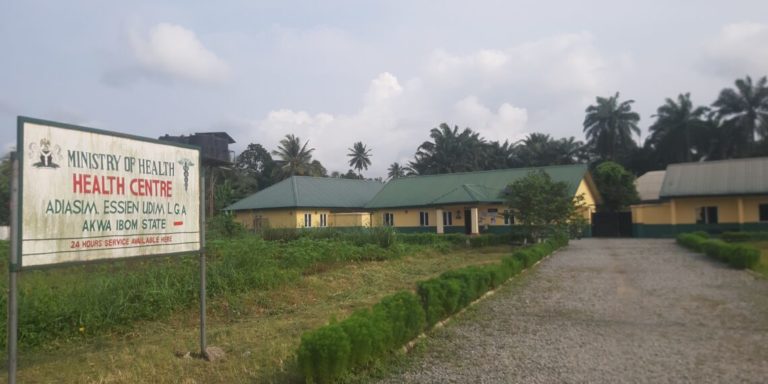
Before the advent of the BHCPF, only the PHC Adiasim was in good shape in Essien Udim LGA, having been demolished and rebuilt to standard by a philanthropist in the community, Oliver Ebong, in 2018. Mfonobong Sam, the OIC of the PHC, said she did not have full knowledge of how funds from the BHCPF were utilised as she was “just posted there in March 2022.”
The BHCPF is also responsible for the recent renovation of the previously dilapidating structures at PHC Odoro Ikot I and II – the other beneficiary PHCs in the Essien Udim LGA. Catherine Icho, the OIC, thanked the government for the initiative, adding that it had improved conditions at the facility.
PHC Adiasim
“If you see this health centre before, the roof was leaking and falling off. I used the money to buy zinc, ceiling and the new doors,” she said.
She lamented the shortage of staff, and lack of water and power supply at the facility and appealed to the Rural Electrification Agency (REA) to repair the solar-powered generator it donated to the facility.
In Abak LGA, BHCPF has equally brought succour to beneficiary-PHCs. At the operational base, Ime Udo, the monitoring and evaluation officer, commended the government for the Fund, saying it has improved the condition of many of the PHCs. He however added that “more needs to be done.”
Blessing Ime, who used to attend antenatal care at PHC Ibanang Ediene, was delighted by the renovation of the PHC.
“Before now, we could not use the toilet but now they have repaired it,” she said. The broken roofs and ceilings have also been replaced, courtesy of the BHCPF.
Crumbling ceiling at Abak LG PHC Base supported with sticks
The head of the facility at PHC Midim, Itohowo Duncan, was also full of praise for the BHCPF. Through the Fund, the facility, which had been ravaged by termites, had been rescued.
“The fund has helped to transform this place. We have replaced the doors and the wood in the ceiling that were destroyed by termites and fumigated the place from the ceiling up and down,” she said. A generator was also purchased to provide power supply at the PHC, putting an end to the long years of borrowing the village head’s generator.
PHC Okudomo, Eket
There were signs of recent renovations at PHC Afaha Obong, including the newly installed gate, windows, iron doors, ceilings and electrical equipment. The OIC, Mfon Nseyo, said “the fund has assisted in rehabilitating the PHC.”
From Ikot Okudomo to Ikot Ukpong, Mkpok and Afaha Atai, there are tales of rehabilitation of PHCs in Eket LGA, courtesy of the BHCPF.
New seats at PHC Idua, Eket courtesy of BHCPF
Nwaiwu Florence, a patient at PHC Idua in Eket LGA, acknowledged recent changes at the facility courtesy of the BHCPF intervention.
“The last time I was here for my vaccine last year, this place was not like this. I noticed that the broken floors, bad roof, doors and windows have been worked on. They have also purchased more seats,” she said.
At the PHC Idung Iniang, the OIC, Mfon Batta, urged the government to sustain the project so that some of the challenges facing the facilities can be a thing of the past.
PHC Idug Iniang, Eket wears new look, courtesy BHCPF
“This is the first renovation of this PHC since it was built. If they can continue like this before you know, many of the issues we have been having will be solved,” she said.
The story is no different for PHCs in Esit Eket LGA. PREMIUM TIMES found that all the beneficiary-PHCs had received various levels of renovation, and could be easily identified by their recently painted yellow and green walls.
The PHC in Etebi was doubly lucky. A new building was recently constructed by a former Minister of the Niger Delta, Godswill Akpabio, but the old building in the facility also got renovated through the BHCPF.
Charlie Hannah, the head of the facility, said the PHC had been selected as a beneficiary of the BHCPF “before the new building was constructed by the minister.”
Unlike many of its kind, the PHC has water and power supply, just like the PHC in Iko-Effak Akpautong, another beneficiary of the BHCPF.
Apart from the renovation of the building and purchase of furniture, a new generating set was recently purchased for the PHC Ikpa Town. According to the OIC, Ekaette Bassey, the decision to make the purchase was made to tackle the facility’s long-drawn challenge with irregular power supply.
Findings revealed that the development strides at the PHCs are a product of the synergy with their respective Ward Development Committees (WDCs) – a group of community members selected to support the heads of the PHCs in the administration of the Fund.
There is also a culture of record-keeping for accountability by the heads of the PHCs. Each maintains a folder where all documents – including payment receipts, pictures of the PHC’s previous condition and bank statements – are kept.
Controversies over beneficiary PHCs selection
Meanwhile, the selection of the PHCs to receive the funds in the state sparked controversies, stemming from the inequitable distribution of beneficiary PHCs across the LGAs. PREMIUM TIMES gathered that some LGAs received more beneficiaries than others.
In Uruan LGA, for instance, only three out of nine PHCs were selected to receive funding. Of the 19 PHCs in Essien Udim LGA, only three were selected, and 10 out of 14 PHCs were selected in Abak LGA. In Eket LGA, 11 of the 15 PHCs benefited from the Fund, just as nine out of the 13 PHCs in Esit Eket LGA were selected.
The criteria employed in the selection of beneficiaries remain a mystery to the public.
PHC Ekpenyong Attai, Essien Udim LGA
“It is unfortunate. Here in Essien Udim, only three out of almost 20-something facilities were selected. So, I wonder what criteria they used in selecting the facilities. How come other local governments have more beneficiaries and we have just three?” a nurse working in one of the PHCs queried.
There are also concerns that some dilapidated PHCs, critically in need of intervention, were left out.
A visit to the non-beneficiary PHCs across the five LGAs revealed that most of the facilities are grossly understaffed, ill-equipped and dilapidated.
Facilities like PHC Mkpatak and the PHC Operational Base, Ikot Ebak in Essien Udim LGA, reek of dilapidation and long years of neglect, especially PHC Ekpenyong II which is totally in shambles. The ceilings at the PHC had crumbled, forcing staff and even patients who were receiving treatment, to always run for cover.
Head, PHC Ekpenyong Attai calls for urgent intervention
In Abak LGA, the ceilings of many of the wards and offices at the PHC Operational Base are prevented from crumbling with the support of sticks, just as the health post at Abak Itenge requires urgent intervention.
There is a need to provide intervention for PHCs in Esit Urua and Ikot Abia in Eket LGA, which operate from single classrooms in schools – Apostolic High School Esit Urua and Government Primary School Ikot Abia, respectively.
Others requiring attention also include the PHCs Odoro Nkit, Ntak Inyang and Akpasong in Esit Eket LGA.
Apart from the issue of structural deficiency observed, many of these PHCs are also plagued with a shortage of drug supplies. When they can, PHC staff stock up the pharmacies with drugs and essentials from their personal pockets, in a bid to make the drugs readily available for patients at a cost. Apart from availability, patients who spoke said it saves them the risk of buying counterfeit drugs.
“Most times it is better to buy the drugs at the health centre because you are sure that it is original instead of going by yourself to the chemist or pharmacy and buying fake,” Esther Monday, a patient, said.
The situation is the same across the state. Apart from antimalarial drugs and antiretrovirals (ARVs), patients bear the costs of drugs and other medical treatments, despite the implementation of the Basic Healthcare Provision Fund (BHCPF) in the state.
Dilapidated Health Post, Abak Itenge
PHCs’ task of revenue generation
Despite efforts to improve rural healthcare with initiatives like the BHCPF, findings by PREMIUM TIMES revealed that PHCs across the state are tasked to generate and remit revenues by LGA councils.
Councils maintain revenue registers at every facility, with which PHC staff are mandated to record the details of every patient and the fees collected. Charges differ across LGAs. At PHCs in Uruan LGA, adults pay ₦100, children ₦50, while pregnant women pay ₦100 and ₦200 after delivery. It is slightly different for PHCs in Essien Udim LGA, where pregnant women pay ₦500 before and after delivery, and Eket LGA, where adults are charged ₦50.
Patients charged to generate revenue for LGAs
Revenue collector’s registers seen by PREMIUM TIMES showed evidence of revenue payment by PHCs across the state. For instance, between April and June 2022, PHC Nwaniba remitted ₦5,070 to the Uruan LGA and ₦1,910 in July. In August 2022, Essien Udim LGA received ₦4,050 as revenue from PHC Odoro Ikot.
The story is largely the same in all the PHCs across the five LGAs visited.
PHC revenue sheet
PREMIUM TIMES also found that despite these tax payments, PHCs receive no support from LGA councils in form of imprest or subventions to assist the facilities for better service delivery. Instead, staff often rely on personal contributions and sometimes donations from kind-hearted members of communities to run the facilities.
We are doing our best — Govt
The Chairman of the Akwa Ibom State Primary Healthcare Development Agency (AKSPHCDA), Martins Akpan, said the poor state of the PHCs stems from years of neglect under the control of the LGAs. He said the state governor, Emmanuel, was doing his best to revive the primary healthcare system in the state to deliver quality healthcare to citizens.
“We must recognise the fact that these problems did not just start overnight. It is a product of neglect over the years. We just have to be thankful to the current governor, Deacon Udom Emmanuel, who has given visibility to the primary healthcare sector. Before now the PHCs were under the local government system. Everything was in shambles.
“It was just a couple of years ago that the FG decided to enact the National Health Act, which shifted the responsibility of the PHCs from LGAs to the state government under the provision of the Primary Health Care Under One Roof (PHCUOR). We are still in the process of the migration from the Local Government Service Commission to the state agency which will take care of these problems,” he said.
Akpan said that plans were underway by the state government to engage quality health personnel to address the issue of staff shortage.
Addressing the issue of inequitable selection of PHCs, he revealed that the AKSPHCDA was not involved in the selection of the beneficiary PHCs, but noted that the PHCs that were not previously captured, especially the most affected ones, will be considered in the second phase.
While Akwa Ibom currently enjoys its share of 45 per cent of the BHCPF, the state is yet to access funds from the 50 per cent NHIS gateway meant for the provision of Basic Minimum Package of Health Services (BMPHS) to citizens, following the failure of the government to provide counterpart funding and the establishment of a health insurance agency. However, Akpan assures that that would soon be a thing of the past.
“Health insurance is a part of the BHCPF. Now we have 45 per cent (NPHCDA gateway), we still need the 50 per cent which is even more than what we have already and you know his excellency (the state governor) understands and is working on it. I think what is left now is the nitty-gritty of setting up the agency so that they can have their own board and management,” he said.
*This report is supported by the International Budget Partnership (IBP) and the International Centre for Investigative Reporting (The ICIR)