Home Blog Page 1119

FG budgets N43.7bn for erosion and flood control, plans to mitigate effects in 2023

ON Wednesday January 4, President Muhammadu Buhari signed the N21.83 trillion 2023 appropriation bill into law, an increase of N1.32 trillion over the initial Executive Proposal for a total expenditure of N20.51 trillion.

The ICIR gathered that the National Assembly introduced new projects into the 2023 budget proposal, for which it has appropriated N770.72 billion. The National Assembly also increased the provisions made by ministries, departments and agencies (MDAs) by N58.55 billion.

A review of the 2023 approved budget shows that the Federal Ministry of Environment has budgeted over N43.7 billion for new projects associated with erosion and flood control out of the approved N49.7 billion for the capital expenditure of the ministry.

The amount is a 141.6 per cent increase on the sum of N18.1 billion budgeted for erosion and flood control in 2022.

In the budget, the ministry is allocated N86.4 billion for personnel, overhead and capital development fund for the entire 2023.

While scrutinising and passing the budget into law, the National Assembly directed a committee to introduce N200 billion in the budget to ecological funding under the Presidency to prepare and plan further ahead for recurrent flood.

This development may not be disconnected from the 2022 torrential floods that left the country in chaos.

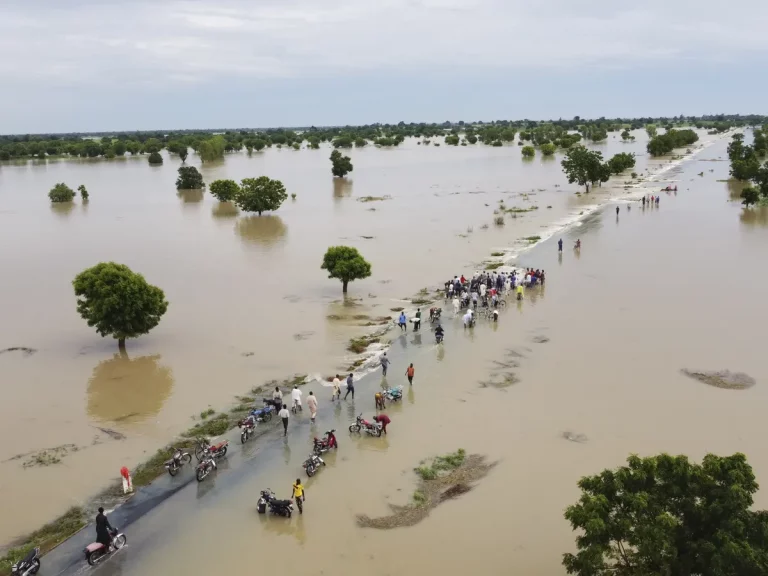
Nigeria experienced extreme flooding across the country in 2022. The flooding, which occurred across 35 states, resulted in many deaths, while thousands of people were displaced, farmlands submerged and millions of naira in property destroyed.

Known to be the worst flooding incident in the past 10 years, the disaster resulted in more than 600 deaths, and no fewer than 2,776 persons were injured.

Allocation of 49 per cent of the Environment ministry’s budget to erosion and flood control is being seen as Federal government’s commitment to avoiding the reoccurrence of the 2022 and 2012 flooding incidents.

It could be recalled that President Muhammadu Buhari inaugurated a committee on flood prevention and disaster management on November 3, 2022.

The committee was expected to work on preventive measures, and also draft action plans that will mitigate the effect of flood in the future.

According to a report, the chairman of the committee and Minister of Water Resources Suleiman Adamu, who spoke with journalists in Abuja, disclosed that the committee would within 90 days create action plans for preventing floods and disasters in Nigeria.

An expert who spoke to The ICIR said it was not clear if Nigeria is targeting an end to flooding in 2023.

According to the Team Lead, GIFSIP, and Africa Regional Coordinator of Citizens Climate, David Mike Terungwa, the Federal government’s approach to flooding incidents had been responsive rather than preventive, noting that most of the funds released during the 2022 flood were for relief and emergency materials.

On whether the money the government budgeted to mitigate flood control in 2023 would be adequate for the purpose, Terungwa said “No, because of the approach. If we are planning for flood control in 2023, then we have missed the target. I can assure you that if there would be flooding this year, we may experience the same devastation we had last year, or it may even be worse because it appears that our approach is more of responsive rather than preventive.

“So most of this sum would rather go for relief materials, and the fact is that there’s a lot that needs to be done. Firstly, I know that the presidential committee on flood is still working and am not sure if they have presented their report yet. But solving the issues of flooding in Nigeria has to be two approaches -one will be short-term and then the other will be long-term.”

He stressed that the impact and effect of climate change would not stop now as it is increasing by the day, adding that it is a weakness of many other countries around the world. 

Terungwa also bemoaned the lack of awareness in most regions affected by flood, stating that many people are relocating to their houses despite the locations still prone to flood.

He advised that the displaced persons should be relocated to safer grounds rather than be returned to the flood-prone locations.

Speaking on the responsibility of state and local government leaders, the GIFSIP head said state governments should also take measures and execute flood control related projects.

“This, for me, should be where the solutions should start from. The state governments should come together, especially in those states that are prone to flooding, by increasing their budgets. First, it will be important to check how much Kogi, Anambra, Bayelsa, Benue and Jigawa states have budgeted for flood control, and see if there is a need to build head dams and quick dams,” he said.

He, however, noted that these projects can not be completed in one, two or three years.

The Presidency has questioned how the state governments have been utilising money received from the Ecological Fund since the beginning of the incumbent administration.

According to a report by Daily Trust, about N1 trillion, representing 2.2 per cent of the total budgets for 2018, 2019 and 2023, was budgeted for ecological and disaster management.

The report stated, “In 2018, 2.2 per cent of the estimated N9.120 trillion budget, amounting to N198 billion, was set aside for the Ecological Fund. In 2019, 2.2 per cent of the budget of N132 billion was allocated for the fund, while in July 2021, the Federal Executive Council (FEC) reportedly approved N16.04 billion Ecological Fund for projects across 12 states for the third and fourth quarters of 2020.” 

In 2023, 2.2 per cent of the N21 trillion budget indicates a N462 billion allocation for the Ecological Fund.

Despite huge subsidy spend, official fuel pump price not obtainable outside Abuja, Lagos

Petrol consumers have been condemning the Nigerian National Petroleum Company Limited (NNPCLtd) over arbitrary hike in the price of the product across the country. 

The consumers decried the disparity in the price of petrol, which is a sharp departure from the old practice when the product sold at the same price at all filling stations.

Independent marketers had since last year declared they would not be able to match the pump price of major marketers because of operational logistics. So while retail NNPCLtd filling stations and other major marketers like Total sell at N169-N179 per litre in Lagos and N174-N180 in Abuja, independent marketers have been selling at prices ranging from N250 per litre to N500, depending on the state.


READ ALSO:

FG shifts fuel importation deadline to 2024

NANS threatens nationwide protest over fuel scarcity

2023: Why protest will not stop me from removing fuel subsidy – Tinubu

Airline operators warn on flight cancellation over aviation fuel scarcity

Fuel scarcity: Oil marketers urge FG to consider deregulation in phases


The Federal government has been battling to peg petrol price by subsidising payments, and has earmarked N3.6 trillion in the 2023 budget for the first half of the year.

In December 2022, the group chief executive officer of NNPCLtd, Mele Kyari, said that without subsidy, the actual pump price would be N410 per litre.

To drivers, the prevailing rates are as expensive as make no difference.

“I do inter-state travel as a commercial bus driver. I buy fuel for N380 in Owerri, the Imo State capital, and N285 in Enugu. In Kogi, it is a different price. You can only get the normal price of N179 and N180 at NNPCLtd-owned filling stations,” a driver told The ICIR.

A commercial motorcycle rider in Enugu municipality, Onyemaechi Onyebuchi, pointed out that to obtain petrol at cheaper prices is always a hard task because of long queues, and even unavailability almost always, whereas independent marketers don’t always have long queues, with fuel always available.

For the Lead Director, Centre for Social Justice Eze Onyekpere, helpless consumers in states where prices are higher are already accustomed to the situation.

“Go to many southeastern states, they have moved on from this subsidy issue. In Owerri, we are buying at N300 per litre,” Onyekpere said.

The ICIR checks showed that fuel sells for between N350 and N500 per litre in most filling stations in Port Harcourt, the Rivers State capital, and in Abuloma, Woji, Elelenwo and parts of Aba Road.

Reacting to the development, the chairman of the Independent Petroleum Marketers Association of Nigeria (IPMAN) in Rivers State, Joseph Obele, attributed the hike in fuel price to the landing cost of petrol in the country.

Obele said it would be unrealisable for even government to sell fuel at N165 per litre when landing cost is over N500 per litre.

“There is no uniform buying source for us marketers. Some of us (marketers) are buying from Lagos, where depot price ranges from N280 to N310 per litre. The only depot that was selling in Rivers State has run out of stock. It’s quite unfortunate that Nigerians are made to be experiencing this,” he said.

Kyari said marketers,  the independent ones especially, would rather sell at places with price differentials to make gains.

“We don’t have supply problems. We have distribution challenges, and the distribution challenges are coming as a result of price differentials.

Kyari says marketers targeting areas with price differentials

“Some marketers take products from where prices are low to where they are high. This is what is spiking price. We are working with partners and marketing companies to ensure proper balance sheet,” Kyari said.

The president of the Petroleum Products Retail Outlets Owners Association of Nigeria (PPROOAN), Billy Gilly Harry, said the government would gradually need to phase out subsidy to address these concerns.

Harry stressed that the rising cost of moving products from one point to the other is also influencing price hike.

“The marketers need to be in business and logistics cost remains a source of worry to them,” he added.

Nigeria, Niger recommit to cross-border cooperation

0

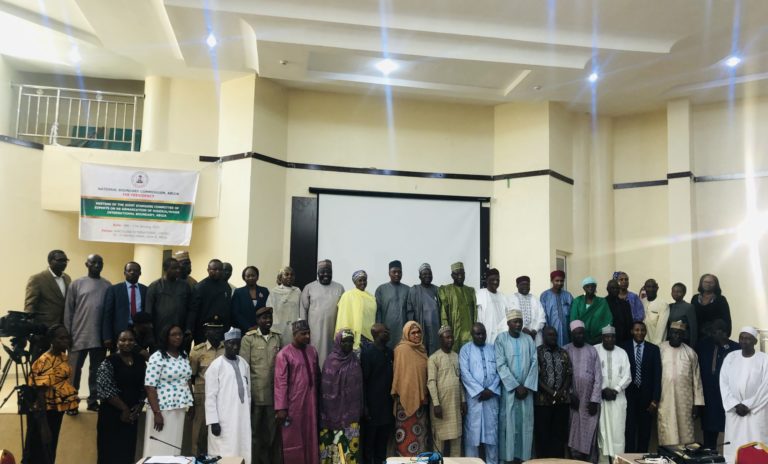
NIGERIA’S National Boundary Commission has reiterated its commitment to complete the demarcation of the Nigeria-Niger border and enhance peace and security in the region in line with the African Union’s goals on cross-border cooperation.

The Director-General of the Commission Adamu Adaji, gave the assurance on Tuesday while addressing a joint meeting of the Standing Committee of Experts on the Re-demarcation of the Nigeria-Niger International Boundary.

He disclosed that 128 out of the 148 pillars designed to demarcate the boundary had been re-constructed, and expressed appreciation to the security personnel in the border area for their dedication and commitment which has provided an enabling environment for the work to thrive.

“Our aim is to make the boundary more visible to border inhabitants, and not to separate the people who share the same history and culture.

“With the continued support of our governments and indeed development partners, we will soon conclude all outstanding works on the re-demarcation of the boundary,” Adaji said.

The Director-General also assured the committee of Nigeria’s commitment to the project and promotion of cross-border development activities for both countries.

On his part, the Head of Delegation of the Niger Republic Bala Pate, noted that there was need to maintain a climate of sustainable peace in the border areas and promotion of cross-border cooperation for benefit of the border population.

He noted that this cooperation had led to the adoption of the framework document of the national border policy, which takes into account all the issues relevant to cross-border governance and is in line with the spirit and guidelines defined by the African Union Convention on Cross-Border Cooperation, known as the Niamey Convention, adopted in, 2014.

“In view of the demarcation, there were areas to be looked into in trans-border cooperation. We are indeed grateful to the government of Nigeria on the effort of strengthening the cooperation,” Pate said.

Nigeria is the first ECOWAS country to officially launch the ECOWAS Fund for Cross-Border Cooperation and Free Movement and Migration called the Regional Program for Support to Cross-Border Cooperation (PRACT 2021-2025).

Pate called on both countries to seize the opportunity offered by the PRACT to create cross-border cooperation initiatives in order to develop the cross-border areas into spaces of peace and security for the promotion of sustainable development and cross-border cooperation.

Afenifere kicks as INEC says elections may be postponed, cancelled due to insecurity

THE Yoruba socio-political group, Afenifere, has warned the Independent National Electoral Commission (INEC) against plans to postpone or cancel the 2023 general elections.

Afenifere gave the warning while reacting to INEC’s suggestion that the election may be cancelled or postponed due to the high level of insecurity in parts of the country.

INEC chairman, Mahmood Yakubu, had, while speaking at the validation of election security training resources held in Abuja on Monday, January 9, lamented the growing wave of election-related violence across the country.


READ ALSO:

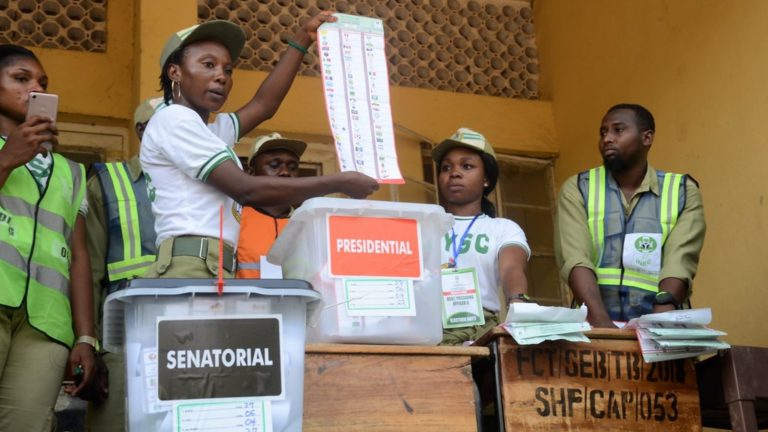
INEC assures corps members maximum security during 2023 elections

INEC unveils collation centre for presidential election

Court stops DSS, others from arresting INEC Chairman

Attack on INEC facilities: IG advises electoral body to relocate offices, materials

2023: Nobody can vote with bought PVCs – INEC


Yakubu, represented by the Chairman of the Board of The Electoral Institute (TEI), INEC’s training arm, Abdullahi Abdu Zuru, expressed fears that the trend, if not checked, could lead to the cancellation or postponement of the polls.

“Moreover, if the insecurity is not monitored and dealt with decisively, it could ultimately culminate in the cancellation and/or postponement of elections in sufficient constituencies to hinder the declaration of elections results and precipitate a constitutional crisis, ” he said.

Stating that elections are conducted through the provision of enabling environment, the Commission assured that it will not leave anything to chance in ensuring that security is provided for election personnel and materials during the polls.

“Consequently, in preparations for the 2023 general elections, the Commission is not leaving anything to chance in ensuring that intensive and extensive security is provided for election personnel, materials and processes.

“This is particularly significant to the Commission given the current insecurity challenges in various parts of the country and the fact that the National Youth Service Corps members constitute the core of the Polling Unit Election officials.”

Mahmoud charged all security personnel in particular and all elected officials in general to be security-conscious and alert to unusual activities in their environment, adding that they must be fully equipped to deal with any challenge at all times.

Reacting in a statement by its national publicity secretary, Jare Ajayi, on Tuesday, January 12, Afenifere said attempts to cancel the polls will not be unacceptable.

Ajayi said that the polls slated for February and March this year should not only be conducted successfully, but winners must be sworn into office on May 29, 2023, as stipulated in the Amended 1999 Constitution.

“But we feel that there is the need to let anyone thinking of postponement or cancellation of the elections that such a thing is and will remain unacceptable, no matter the reason,” Afenifere said in the statement.

“We recall that in 2015, there was insecurity too, to the extent that some local government areas, specifically in Borno State, were in the hands of Boko Haram terrorists. Yet elections were held. There was also insecurity in 2019 and elections were not stopped.

“Afenifere felt the need to sound this note of warning so that whoever may be thinking of postponing or altering the election calendar should know that such a thing would not be accepted.”

The group added, “In Nigeria, there is often the tendency to fly a kite. Most of the times, such kites are on policies or steps that were usually not in the best interest of the Nigerian public. This is why it is very important to clearly sound this note of warning without any ambiguity.

“This is why we are stating clearly that Nigerians are prepared for the elections just as the whole world is awaiting the elections. Nothing whatsoever should alter the schedule or cause postponement let alone cancellation.”

Nigeria’s debts have exceeded limit, contravened law – Adebajo

THE chief executive of CFG Advisory, Adetilewa Adebajo, says borrowings by the Debt Management Office (DMO) have exceeded the limit, and have consequently contravened the Central Bank of Nigeria (CBN) Act and Fiscal Responsibility Act put in place to guide and regulate foreign borrowings.

Adebajo, expressing his displeasure with the country’s debt profile during an interview on Arise TV on Tuesday, described the securitization of the Ways and Means as “illegal”, saying the DMO violated its mandate not to borrow more than N1 trillion.


READ ALSO:
2023 budget: Sanwo-Olu to spend N759bn on personnel cost, debts

MRA asks NBC to disclose licence fees payments, debts owed by TV stations

Government’s indiscipline stunts power reform as N500bn MDAs debts linger

TCN confirms discussions with West African neighbours to clear outstanding power debts


“There is no law that says the CBN can transfer its debts to the DMO. If there is any requirement on the National Assembly on domestic debts, the DMO is already empowered to raise money on domestic debts.

“The DMO is not mandated to go to the National Assembly before they borrow abroad, but the Ways and Means give them the right. But it is not supposed to exceed N1 trillion. It is at N22 trillion, which indicates that they have exceeded the limit. This is where the illegality comes in,” he said.

Adebajo argued that the DMO could be sued for violating the Act that guides and regulates its activities.

He said, “Don’t forget that the DMO can also be sued in its own capacity. It can be taken to court for breaking the law. It is clear. There is a doctrine of necessity; you are not supposed to borrow more than N1 trillion, so why N22 trillion? That is excessive.

“That means that you should have approached the National Assembly a long time ago and sent an Emergency Economic Rescue  Bill, which will seek to amend both the Fiscal Responsibility Act and the CBN Act to allow the DMO to borrow more. You do not go into an act of illegality and then come to rectify it.”

He emphasized the need to punish violators of the Fiscal Responsibility Act and the CBN Act.

“First, all heads must roll. People must take responsibility for this mistake; we cannot continue like this. If we do, that means we don’t respect the law. This is impunity. We have a system in place, but you are now arguing that you want to securitize something.


READ ALSO:


“There are reasons why these laws were put in place; it is a financial circuit breaker. The solution is very simple, people who made this mistake must pay the price,” he maintained.

Redesigned Currency: CBN to monitor, enforce circulation by commercial banks

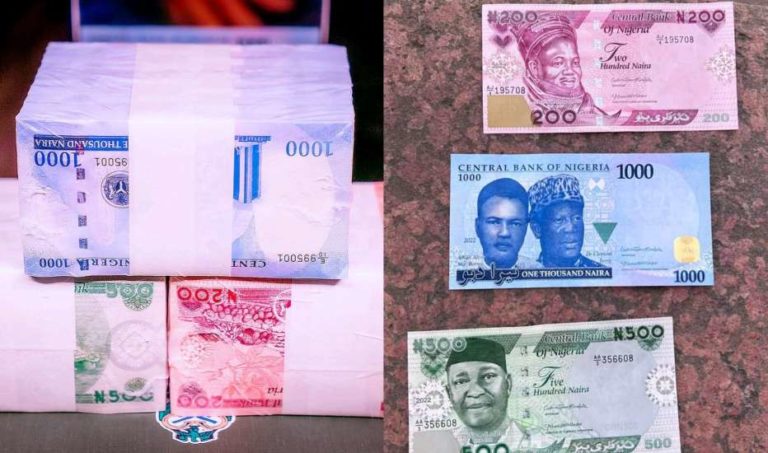
Three weeks to the expiration in legal tender of the N200, N500 and N1000 old currencies, the Central Bank of Nigeria (CBN) said it would be monitoring commercial banks to ensure they comply with the directive of loading the redesigned naira notes in their automated teller machines (ATMs).

The rested notes would cease to be legal tender from January 31. However, there are serious concerns of poor circulation of the notes across the country.


READ ALSO:

Godwin Emefiele: CBN governor in the eye of the storm

How we will protect PoS operators from cash withdrawal policy – CBN

Condemned naira notes in viral video released by CBN – Police

CBN blames limited time for ‘simple’ design of new naira notes


The CBN Director, Currency Operations, Ahmed Umar, however,  allayed, at a training session in Abuja on Monday, January 9 for State Directors, National Orientation Agency (NOA) on ‘Redesign of Currency Notes Policy’, the concern, with the reassurance that the apex bank had enough of the redesigned notes to go round.

Umar said, “We, CBN management, have mandated banks to stop putting old notes in their ATM machines. They should only put the new notes. There is serialisation of the policy that they can put either the N500, N1000 or N200 note – whichever the denomination they have or a combination of any of those notes, they should just put a new note in their machines.”

He warned that banks that failed to comply with the directive would be penalised, as the expiry date for the rested notes draws nearer.

He stated that long use of the old notes had created an avenue for the spread of counterfeit notes, fuelling unregulated currency flow.

“If you notice the N1000 note that was introduced in 2005, it took 17 years for us to redesign it. N500 and N200 notes were also redesigned after 21 years and 22 years respectively.

“If currency notes stay too long in the system, there is tendency that people who counterfeit make a lot of efforts to produce the same notes,” he said.

Another reason the apex bank gave for the redesign was that the N500 and N1000 notes constituted 99 per cent of the currency being targeted for counterfeiting.

“It is simple logic, the effort you put to counterfeit N1000 is the same effort you put to counterfeit N5. So, why will they waste their energy doing small notes; they always target the higher notes, particularly N1000 because of the values attached to it,” he said.

The Director-General of the NOA, Garba Abari, explained that the agency partnered with the CBN to educate NOA staff at the 774 local government areas to assist in enlightening Nigerians on the redesign policy.

Abari expressed hope that the training session would go a long way in addressing any misconception and misunderstanding around the policy.

He called on all participants to pay serious attention to the training in order to represent the CBN well in enlightenment programmes at the grassroots.

Immigration sacks four personnel, demotes 14 over misconduct

0

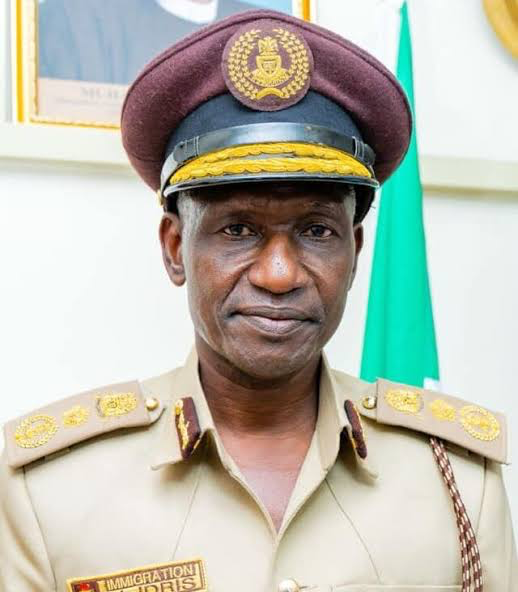
THE Nigeria Immigration Service (NIS) has dismissed four personnel and demoted 14 others over corruption and other forms of unethical misconduct.

The development is coming roughly two months after the service reportedly dismissed eight officers, sanctioned 18 and redeployed 100 others over unprofessional conducts.

The Public Relations Officer ( PRO) of the Service, Tony Akuneme, said in a statement on Tuesday, January 10, that the personnel were sanctioned after appearing before the Orderly Room Trial Committee of the Service.

He said the step is part of measures taken to rid the Service of bad eggs and reinforce the Federal Government’s commitment to the fight against corruption.

“As part of efforts to rid the Service of bad eggs and in furtherance of the Federal Government’s fight against corruption, the Nigeria Immigration Service has dismissed four personnel and demoted 14 for various offenses for which they appeared before the Orderly Room Trial Committee of the Service”, he stated.

According to him, four other personnel were discharged and acquitted, while two were redeployed to other locations.

“Eleven were issued warning letters and one was compulsorily retired. According to the Committee, 11 personnel are still awaiting trial.”

Akuneme added that the Comptroller-General of Immigration assured the general public that all offenders in the Service would be appropriately sanctioned.

“He is also urging members of the public to be vigilant and support the Service to deliver more on its mandate by contacting us for feedback, inquiries and complaints on any of these channels:(a) phone: +2348033074681; +2348021819988(b) twitter: @nigimmigration(c) email: nis.pro@immigration.gov.ng”, Akuneme added.

An earlier investigation by The ICIR revealed how Nigerians suffer frustration and extortion due to widespread corruption in the Immigration Service.

The report exposed the high level of racketeering, touting and other  unprofessional conducts by personnel of the NIS.

Nigerian doctors threaten to embark on strike

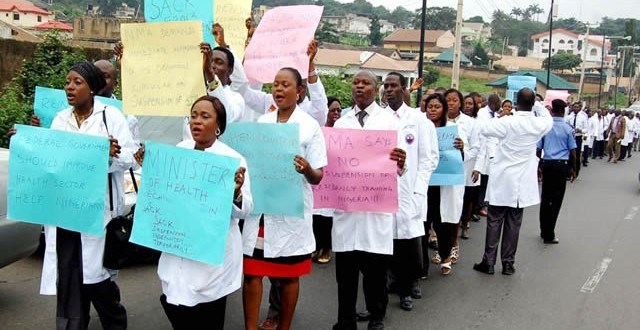
MEDICAL doctors in Nigerian government hospitals, under the aegis of the Nigerian Association of Resident Doctors (NARD), have threatened to embark on a nationwide strike if the Federal Government fails to meet their demands.

The association in a letter addressed to the Minister of Health, Osagie Ehanire, signed by its President, Dr Emeka Innocent Orji, said processes for the strike would commence if the issues are not addressed before its National Executive Council (NEC) meeting slated for January 24th to 28th.

Parts of the letter read: “Sir, our January 2023 National Executive Council meeting has been scheduled for January 24th to 28th, 2023, and we can confirm very clearly feelers that if these issues are not sorted out before that meeting, our members will likely give us a mandate to immediately kick-start processes that will lead to a nationwide industrial disharmony in the health sector.”

The association had earlier issued an ultimatum to the Federal Government six months ago over irregularities in the new circular on an upward review of the Medical Residency Training Fund (MRTF), outstanding payment of the arrears of the new hazard allowance, non-payment of the skipping arrears for 2014, 2015 and 2016, and non-payment of the consequential adjustment of the minimum wage to some of its members.

Other issues include the delay in the upward review of the Consolidated Medical Salary Structure(CONMESS), salary arrears of its members in state tertiary health institutions running into several months, including Abia, Imo, Ondo, Ekiti and Gombe States, and non-domestication of the Medical Residency Training Act (MRTA) in most states across the Federation.

However, NARD appreciated the government for its efforts in resolving some of the issues raised and asked that attention be given to other pending issues.

The association said the major ones amongst them are; “Omitted 2020 MRTF payment, irregularities in the new MRTF circular inconsistent with the Medical Residency Training Act, existing collective bargaining agreements and current economic realities and review of CONMESS salary structure.”

“Sir, we know how critical this period is and the chaos that will ensue if the government does not take steps to prevent this from happening, and so we humbly implore you to use your good office to resolve these issues before our January NEC meeting. Sir, we trust in your fatherly disposition and believe that you will come to our aid and save this nation from this imminent industrial disharmony,” the letter added.

The letter was also forwarded to the Senate President, Speaker of the House of Representatives, Secretary to the Government of Federation, Minister of Labour and Finance respectively, as well as the Chairman of the Nigerian Governor’s Forum( NGF), among others.

ICFJ seeks nominations for 2023 Knight International Journalism Award

THE International Center for Journalists (ICFJ) is seeking nominations for the 2023 ICFJ Knight International Journalism Award.

Nominees can be reporters, editors, technologists, media managers, or citizen journalists who are from and work in Africa, Asia, Central/Eastern Europe, Latin America/Caribbean, or the Middle East.

The award reflects the mission of ICFJ’s Knight Fellowships, which create and spread news innovation to better engage communities and improve lives. The program is supported by John S. and James L. Knight Foundation.

Journalists whose reporting or innovations are making an impact on the lives of people in their countries or regions can be nominated for an award.

The winners will be honored on November 2 at ICFJ’s 2023 Tribute to Journalists.

Candidates who meet the awards criteria may nominate themselves.

The deadline for submission of nominations is February 5. Interested applicants can apply here.

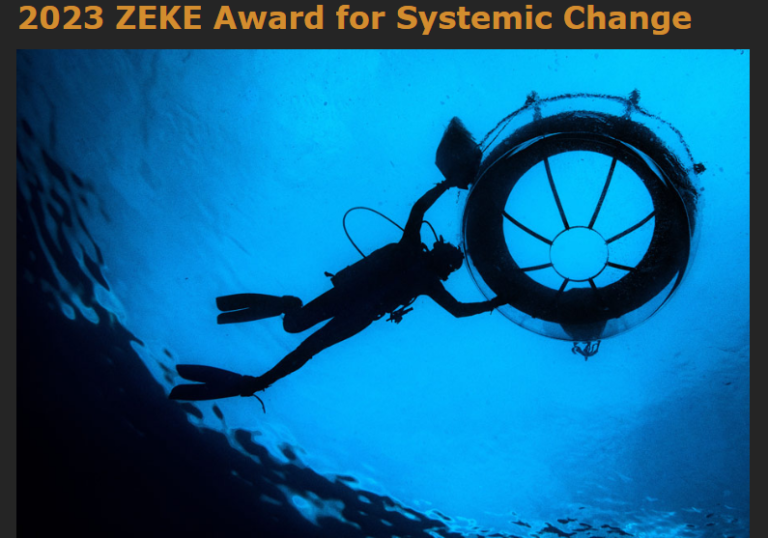
Social Documentary Network offers 2023 ZEKE award for systemic change

IN partnership with the Foundation for Systemic Change, the Social Documentary Network (SDN) is accepting entries for the ZEKE Award for Systemic Change.

The competition recognises outstanding visual stories documenting systemic changes leading to sustainable solutions to global issues.

All entries must have between six and 30 photographs related to a specific theme. The submission may also have a multimedia component to supplement the still images.

The entry fee is US$30. Scholarships are available for photographers from countries without access to credit cards or where there the entry fee would be prohibitive.

Professional and amateur photographers around the world can compete for a US$2,500 award.

First-place winners will be featured in ZEKE magazine and in a traveling exhibition.

The deadline for the submission of entries is January 21, 2023. Interested applicants can apply here.