Home Blog Page 14

ICIR alerts police over threats to reporter who exposed HIV cure scam

0

FOUR months after an investigation by The International Centre for Investigative Reporting (ICIR) exposed a network that promotes false claims of HIV cure online, a man identified in the report as Terlumn Joseph Korayom has threatened physical harm, legal action and reputational damage on the reporter unless his name is removed from the said publication. 

The report titled “HIV cure scams: How fraudsters mask false claims on social media,” and published by the ICIR on February 26, 2026, exposed how vulnerable people living with HIV were being targeted with false claims online. At the heart of the false claim is the idea that a product known as K28 Xleya could cure the virus, despite there being no scientifically proven cure for HIV.

As part of the undercover investigation, The ICIR’s reporter paid ₦60,000 for the product after being directed through websites and social media channels promoting the alleged cure. Records obtained during the investigation show that she transferred ₦40,000 on October 9, 2025, and another ₦20,000 on October 10, 2025, after someone called “Pharmacist Joe” insisted on full payment before delivery. The product was never supplied. The investigation had identified evidence linking Korayom to multiple online identities, including “Gist World” and “Pharmacist Joe.”

Now, four months later, Korayom has issued a 48-hour ultimatum to the reporter and The ICIR to take down the report that indicted him.

He had contacted the reporter on June 4, 2026, through a WhatsApp number previously linked to the online identity “Gist World,” one of the aliases identified during the investigation. His first message to the reporter was a screenshot of a bank transfer receipt showing that he had sent ₦20,000 to an Opay account linked to her phone number.

The payment was a partial refund of the N60,000 she spent during the undercover investigation. Korayom had then initiated a conversation with the reporter and demanded that references to him be removed from the February ICIR report.

However, the reporter informed him that the amount paid during the investigation was ₦60,000 and that the issue extended beyond a refund to the promotion of unverified HIV cure claims.

Rather than address questions about the undelivered product or explain why he was refunding money paid to an individual he initially claimed had no connection with, Korayom accused the reporter of fabricating evidence and using her position at The ICIR to blackmail him.

“By Monday, if you don’t take my name off your blogs, I will make sure all your business associates, both in Abuja and Lagos, will know what happened,” he wrote. He later escalated the threats, warning that he would damage the reporter’s reputation and seek legal action against both her and The ICIR.

“I only pity your mother. Thank God you used The ICIR platform. If you no get money ICIR go get nah. I overlooked all those things for four months because of the election primaries. Now it’s over. When they get to you, you will know,” he said in another message.

In a separate message that further heightened concerns about the reporter’s safety, he wrote: “Alhamdulillah, at least I know where I can find you, so I am not bothered.”

Korayom also threatened to sue ICIR and the reporter for alleged defamation, claiming he would seek ₦100 million in damages and petition security agencies, including the State Security Services (SSS).

When asked why he was refunding money connected to a transaction with “Pharmacist Joe” if he had no connection to that identity, and why the product paid for during the investigation was never delivered, he did not directly respond to the questions.

ICIR files police report against threat to life

In response to the threats, The ICIR on Thursday, June 11, filed a formal complaint with the Nigeria Police Force at the Pyakassa Divisional Police in Abuja.

The organisation reported the threatening messages and requested that the matter be investigated, particularly statements suggesting knowledge of the reporter’s whereabouts and the possibility of harm.

The development comes against the backdrop of documented cases of intimidation against media professionals in Nigeria.

According to data released by the Committee to Protect Journalists (CPJ) on May 29, 2026, at least 91 journalists have been arrested, physically attacked or harassed across Nigeria since May 29, 2023.

The ICIR also reports that the 2026 World Press Freedom Index released by Reporters Without Borders (RSF) ranked Nigeria 149th out of 180 countries on the security indicator, describing the country as one of the most dangerous and difficult places for journalists in West Africa.

Overall, Nigeria ranked 112th globally and 12th in Africa, with an overall score of 48.11, placing it in RSF’s ‘difficult’ category for press freedom conditions.

The report highlighted repeated arrests, intimidation, attacks and detentions of journalists, particularly investigative reporters covering corruption, insecurity and governance issues.
Record security spending in Nigeria fails to halt school kidnappings, other crimes

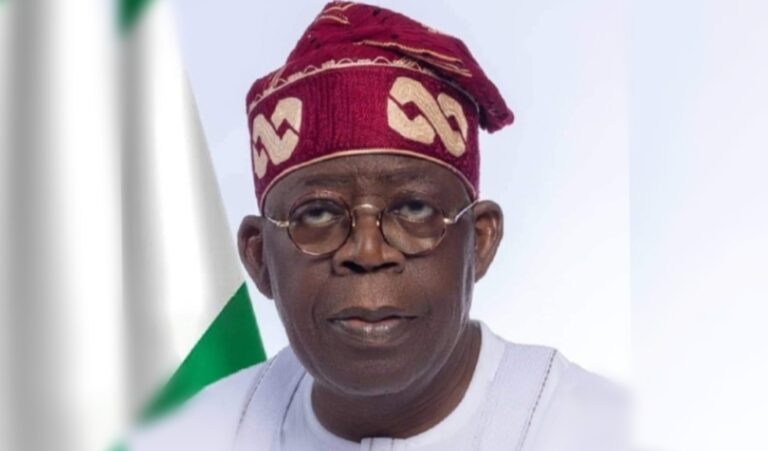
PRESIDENT Bola Tinubu on Friday announced that Nigeria will spend a record N5.41 trillion on defence and security in 2026, describing the allocation as the largest in the country’s history and reaffirming his administration’s commitment to tackling insecurity.

In his Democracy Day address, Tinubu acknowledged that the national mood had been overshadowed by the abduction of schoolchildren in Oyo and Borno states, declaring that democracy without security is a mirage.

“Though this year’s mood is dampened by the abduction of our children in Oyo and Borno, we remain hopeful for their safe return,” Tinubu said, adding that the government had declared a security emergency and approved the recruitment of more than 50,000 police officers and thousands of military personnel.

Despite record spending and repeated assurances, kidnappings and bandit attacks continue to fuel concerns about whether security spending is delivering results. For many years, a substantial share of the nation’s budget has been allocated to security.

The ICIR reported on May 15, that armed men attacked three schools in Oriire Local Government Area of Oyo State, abducted 39 pupils and seven teachers. They killed a teacher during the assault and beheaded another later. Families have spent weeks anxiously awaiting the return of the remaining victims.

Reports indicate that the kidnappers are demanding the release of their detained members, among others, as a condition for freeing the captives.

The incident marked one of the most significant school abductions in southern Nigeria and revived memories of previous mass kidnappings that have plagued northern states for more than a decade.

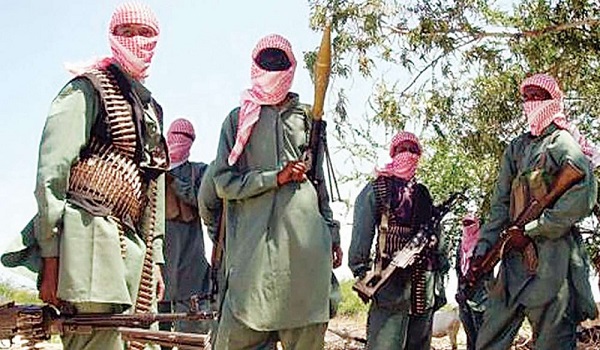
In Borno State, insurgency-linked kidnappings remain a major threat. The Nigerian military recently announced the rescue of 360 civilians, mostly women and children, abducted earlier this year by Boko Haram fighters in Gwoza. Two infants died during the operation because of the harsh conditions endured in captivity.

The rescue came amid protests in Abuja over the abduction of children and renewed concerns over the persistence of insecurity despite years of military campaigns.

Beyond Oyo and Borno, kidnappings and banditry have continued across several parts of the country.

Last week, armed bandits in Zamfara State abducted dozens of villagers who had gathered for what was supposed to be peace talks, with authorities confirming that at least 39 people were taken.

Data compiled by local media show that at least 551 students and school workers have been kidnapped in nine major incidents since President Tinubu assumed office in 2023, highlighting the continued vulnerability of schools despite repeated assurances from government.

The persistence of these attacks has fueled debate over the effectiveness of Nigeria’s security spending.

However, Tinubu insists progress is being made, noting that terror-related deaths have fallen by 81 per cent since 2015, more than 13,000 terrorists were neutralised in the last year, and over 124,000 fighters and their dependants have surrendered through Operation Safe Corridor since 2023.

The president blamed insecurity in the country on failure of the states to grant local governments autonomy, despite a landmark ruling by the Supreme Court mandating it.

“Recognising that democracy is undermined when people do not feel its impact, my administration has sought financial autonomy for our 774 local councils. A fundamental challenge to our nation’s advancement has been ineffective local government administration. The insecurity we are addressing is partly due to the collapse of grassroots governance,” he stated.

The ICIR reports that many states in Nigeria appropriate funds meant for local government administration and end up allocating only a paltry portion to the officials they installed as elected local government chairmen. This habit has worsened unemployment, underdevelopment, poverty, and crime in communities across the country.

Why child labour persists despite Nigeria’s legal protection

As Nigeria joins the world to mark World Day Against Child Labour, poverty, weak enforcement, and systemic failures keep thousands of children trapped in labour across the country.

This year’s global campaign to mark World Day Against Child Labour is led by the International Labour Organisation (ILO) alongside the United Nations Children’s Fund (UNICEF) and the UN Food and Agriculture Organisation (FAO). The theme: “Red card to child labour: Fair play for children, decent work for adults,” utilises the universal sports symbolism of a red card, in which global health and human rights bodies say it signals that systemic economic exploitation of minors is completely unacceptable and therefore must be structurally penalised.

ILO estimates that nearly 138 million children remain trapped in child labour globally, including 54 million in hazardous work.

This reality is reflected in the lives of minors like Blessing Imeh, who is now 20 but recalled being sent away to work as a textile sales attendant in Balogun Market, Lagos State. Then 15 years old, Imeh said the decision was driven by the economic strain of the COVID-19 pandemic in 2021. As one of five children, she was forced to abandon her education after completing Junior Secondary School, and on January 21, 2021, she moved to Lagos.

“I’ve always dreamt of living in Lagos, but I never knew it would be because of work,” she said. “My parents sent me to work with an Alhaja who sells Ankara in Balogun Market after my junior secondary school exams. I told them that I would like to further my studies, but my father said he couldn’t afford it.”

She explained that while she was technically in her dream city, the reality was nothing to write home about. “It pained me then, but the thought of living in Lagos made it bearable. I remember calling my mother just five days after I arrived, begging her to come back to Ikot Udoma, in Akwa Ibom, because the work was so stressful.”

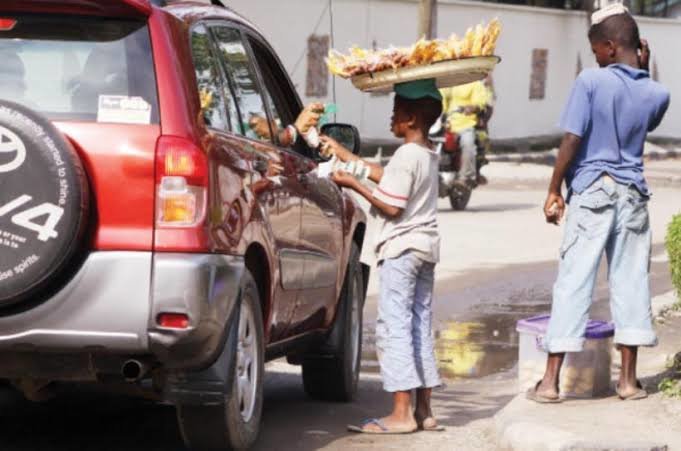
Unlike Imeh, Maryam Abubakar was introduced to the labour market as a primary four pupil in 2009. Alongside her elder sister, Kifayah, she spent her childhood hawking sachet water in Ilorin, Kwara State, to support her family.

“My elder sister, Kifayah, and I would hawk pure water at the Oja Tuntun Market,” Maryam recalled. “We were always so happy whenever our white transparent bucket was empty, because it meant we had sold everything,” she recalled.

By 2011, she was in junior secondary school, and financial demands forced the sisters to take on domestic work for university students to fund their academic needs.

“My sister and I would go to Agbooba to help the university students living behind the Blue Mist water factory to wash plates and fetch water. The money was used to buy books and stationery, while my father paid the school fees. We ate from the money my mum made from selling water at home.”

She noted that while her peers enjoyed childhood pastimes like reading or watching television, hers was defined by a hustle for survival.

“Throughout my secondary school days, while other children watched TV or read books, my sibling and I would go to Agbooba, knocking on hostel doors, shouting, ‘Omo onise yin re o’, meaning, ‘Your errand girls are here.’”

FG committed to empowering children—Women Affairs Minister

The ICIR attempted to speak with the Ministry of Women Affairs and Social Development regarding current child labour enforcement strategies, but the attempt was unsuccessful. However, in May 2025, the Minister, Imaan Sulaiman-Ibrahim, highlighted the Federal Government’s long-term targets for child protection.

Speaking at the first regional meeting of the Pathfinder African Countries on the global alliance to end violence against children, the minister clarified that the targets include supporting services for two million at-risk children by 2030, elimination of harmful practices in 18 states by 2028 and strengthening of legal frameworks through enforcement of the Child Rights Act and Violence Against Persons Prohibition Act. She also restated the importance of expansion of the Safe Schools Programme and increased budgetary allocation for child protection.

Also, the Minister of State for Labour and Employment, Nkeiruka Onyejeocha, restated Nigeria’s alignment with global frameworks, emphasising that the country remains fully committed to its international treaty obligations on child welfare.

According to Onyejeocha, the fight against child exploitation requires a unified front that transcends demographic boundaries, alongside a deliberate shift towards youth empowerment. “Violence against children knows no age, race, or colour,” Onyejeocha stated, adding that, “we have ratified International Labour Organisation conventions on child labour nationwide and are committed to empowering our children through education, skill development, and digital technology access.”

Why child labour persists- Expert 

However, Human Rights Lawyer and Gender Justice Advocate, Gladys Emmanuel, says the challenge goes beyond writing laws or ratifying international labour conventions to funding and institutional independence. Emmanuel noted that Nigeria’s Child Rights Act is clearly derived from international conventions, but actual enforcement requires specialised personnel and sustained funding.

“Currently, state-level task forces are treated as temporary, ad-hoc committees rather than permanent law enforcement or social welfare institutions, leaving them completely disconnected from the main judicial and enforcement systems,” she said.

The Human Rights Lawyer explained that Nigeria’s intricate blend of constitutional, statutory, religious, and customary laws often creates conflicts, making it essential for interventions to be tailored in ways that resonate with the local cultural context of the different regions to ensure understanding.

While such implementation requires significant resources, Emmanuel says, unfortunately, the state ministries of women’s affairs and social development, which handle child protection, consistently receive some of the lowest budgetary allocations in the country.

“Without a dedicated statutory fund for task forces, temporary shelters, maintenance, long-term rehabilitation, and conditional cash transfers. Without consistent funding, we might not be able to implement any of these strategies,” she warned.

Speaking on the delicate link between population dynamics and child protection, Emmanuel explained that societal expectations often demand that a woman get her spouse’s permission for family planning, which frequently leads to domestic disagreements where husbands argue that resources will “miraculously appear” for every child born. This mindset, according to the lawyer, directly results in larger families where some children are inevitably left out of school.

She emphasised the need to hold corporate supply chains accountable, especially when child labour in agriculture and informal mining is hidden deep within an unmonitored informal economy, highlighting the EU’s due diligence laws and Ghana’s blockchain tracking as useful models. She said Nigeria must adopt digital monitoring and grassroots support to protect vulnerable families.


Tinubu honours June 12 heroes, names institution after Shehu Yar’Adua

0

PRESIDENT Bola Tinubu on Friday announced the revitalisation and renaming of the Institute of Petroleum Studies, Kaduna, after the late Shehu Yar’Adua, a retired general.

Tinubu made the announcements in his Democracy Day address to Nigerians.

The president also approved national honours for several pro-democracy activists and military officers who played key roles in the June 12 struggle.

He described Yar’Adua as one of the architects of modern democratic Nigeria whose vision helped shape the country’s democratic evolution.

“Among the architects of modern democratic Nigeria, we honour Gen. Shehu Musa Yar’Adua for his vision of national partnership.

“In recognition of his contributions, the Federal Government has approved the revitalisation and renaming of the completed Institute of Petroleum Studies, Kaduna, as General Shehu Musa Yar’Adua University of Geological Sciences and Engineering Technology,” he said.

Tinubu also announced national honours for several Nigerians who, he said, endured persecution, exile, incarceration and other hardships in the struggle for democracy.

Those listed for national recognition include Ayoka Lawani, Tunde Fagbenle, Oladele Alake, Olatunji Bello, Louis Odion, Segun Babatope, Sam Omatseye, Ademola Osinubi, Bola Bolawole, Lade Bonuola, Femi Kusa, Debo Adeniran and Ayo Opadokun.

Others are: Ralph Obiora, Ose Osayande, Osa Director, Sylvester Odion-Akhaine, Arthur Nwankwo (Posthumous), Osagie Obayuwana, Joe Okei-Odumakin, Titus Mann, Joe Igbokwe, Richard Akinnola and Ben Charles-Obi (posthumous).

George Mbah, Niran Malaolu, Ishola Williams, a retired general, Femi Aborisade, Jenkins Alumona, Gbemiga Ogunleye, Muyiwa Adekeye, Babajide Kolade-Otitoju and Ike Okonta were also honoured.

The president also recognised the military officers he described as “soldier-democrats” who supported the June 12 struggle.

They include M.A. Garba, a Maj. Gen.; Jaafaru Isa, Brig.-Gen; Farouk Ahmed, Col; Sambo Dasuki, Col.; Lawan Gwadabe, Col.; Jonathan Temlong, Brig.-Gen., Musa Shehu, Col.; Chris Eze, Maj.-Gen.; and Harris Dzarma, Maj.-Gen..

Others are: Isa Jibrin, Col.; Joseph Oshanupin, Maj.-Gen.; Olusegun Oloruntoba, Col.; Kefas Bulus, Lt.-Col.; J. Okai, Col.; Emmanuel Ndubueze, Col.; Yakubu Muazu, Lt.-Col.; and Yahaya Abubakar, Brig.-Gen., now the Etsu Nupe.

Tinubu said the full honours list would be released in the coming days.

Reflecting on Nigeria’s democratic journey, the president said the country’s diversity, once seen as a challenge, had become one of the pillars sustaining democracy in the country.

“Twenty-seven years ago, many doubted democracy would survive here because of our diversity. Today, our diversity sustains our democracy. The road ahead is steep. But June 12 reminds us: Nigerians do not break. We bend, we bleed, but we do not break,” he said.

He urged Nigerians to renew their commitment to the ideals of democracy and nation-building.

“Let us renew our covenant that the labours of our heroes past shall never be in vain, and that government of the people, by the people, for the people, shall not perish from this land,” he said.

The president prayed for God’s blessings on the heroes of democracy and the Federal Republic of Nigeria, while wishing citizens a happy Democracy Day celebration. (NAN)

Tinubu to Nigerians: Electricity is a democratic dividend we owe you

PRESIDENT Bola Tinubu has said access to reliable electricity remains a key democratic dividend his administration is committed to delivering to Nigerians, describing power supply as central to economic growth, national development and improved living standards.

Tinubu gave this assurance on Friday, June 12, in his Democracy Day address marking Nigeria’s 27 years of uninterrupted civilian rule since 1999. He pointed to the ongoing economic and governance reforms under his administration as part of his efforts to deliver stable electricity and other basic amenities to Nigerians.

According to him, the country’s electricity sector had long been burdened by chronic generation shortfalls, weak gas supply, transmission constraints and heavy commercial losses that made it impossible for the system to meet national demand.

“By 2023, when we came on board, the electricity sector was characterised by chronic generation shortfalls, an unreliable gas supply, and transmission infrastructure so fragile that it could not evacuate available power,” he said.

The president added that distribution companies were struggling with massive losses and a metering deficit of over four million customers, while the entire value chain was weighed down by legacy debts.

Tinubu said the sector, at the time, generated far below its installed capacity of about 13,500 megawatts, while transmission and distribution networks were also operating below acceptable levels.

To address the challenges, the president noted that his administration signed the Electricity Act, which decentralises power generation and allows states to participate in electricity production, transmission and distribution.

He explained that the reform was designed to open up the sector for greater efficiency, investment and competition, stressing that electricity remained a critical component of national development.

“The Presidential Power Sector Task Force is working hard to reduce the metering deficit. It has also been authorised to raise a N4 trillion bond to settle verified legacy debts,” Tinubu said.

He further disclosed that the Rural Electrification Agency, with support from the World Bank and African Development Bank, had expanded off-grid and mini-grid projects to underserved communities, including schools, markets and hospitals.

“Electricity is a democratic dividend we owe every Nigerian. We intend to deliver it,” the president declared.

Tinubu also linked power sector reforms to broader economic recovery efforts, saying improved electricity supply would boost productivity, support small and medium enterprises, and attract investments across key sectors such as agriculture, manufacturing and technology.

Across the country, he said infrastructure development was being expanded to connect producers to markets, while over 1,000 small and medium enterprises had been certified for export under ongoing economic initiatives.

He acknowledged that despite the reforms, many Nigerians were still facing economic hardship, but insisted that the administration remained focused on stabilising the economy and ensuring that the benefits of democracy reach households across the country.

“We are moving from uncertainty to stability. The next phase is about accelerating growth and ensuring the benefits are felt in every home, every community, and every region,” Tinubu said.

The president maintained that democracy must be felt in the lives of citizens, particularly through improved infrastructure, job creation and access to basic services such as electricity.

Nigeria’s fragile power sector

The ICIR reports that Nigeria’s electricity sector has remained one of the country’s most persistent governance challenges over the years, particularly under the current administration.

Data from the Nigerian Electricity Regulatory Commission shows that while the country has an installed generation capacity of about 13,500 megawatts (MW), actual power delivered to the national grid often falls below half of that figure. In October 2025, for instance, only about 5,500MW was transmitted at peak periods, while early 2026 averages dipped further to around 4,900MW—far short of national demand estimated at over 20,000MW.

The shortfall is largely driven by gas supply constraints, ageing infrastructure, and weak transmission capacity operated by the Transmission Company of Nigeria, which continues to struggle with grid stability.

System collapses have also remained frequent, with multiple nationwide outages recorded in recent years.

The ICIR also reported that government interventions, channeled through the Nigerian Bulk Electricity Trading Plc, are meant to cover the difference between cost-reflective tariffs and regulated consumer prices. However, these subsidies have ballooned significantly, with about ₦2.8 trillion reportedly spent in 2024 alone.

In the fourth quarter of 2025, the Federal Government paid an estimated ₦418.79 billion in electricity subsidy, according to regulatory filings, even as experts warned that the intervention failed to tranlate into improved supply.

The sector is also burdened by legacy debts running into trillions of naira, further constraining investment in metering, network expansion, and infrastructure upgrades.

Tariff reforms introduced in recent years, including the Band A classification system, have attempted to reduce subsidy exposure by requiring higher-paying consumers to fund a greater share of electricity costs. While this has slightly improved revenue inflows, critics argue that it has not significantly improved service delivery for most households and small businesses still facing prolonged outages.

Democracy without security is a mirage, Tinubu says

0

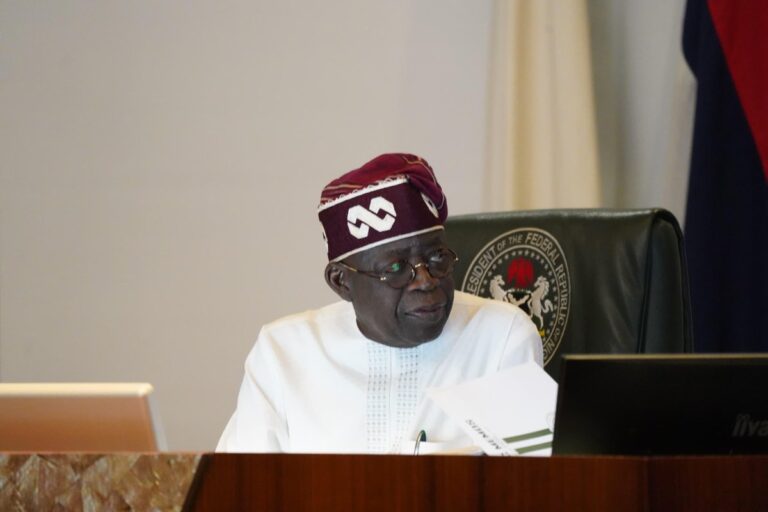
PRESIDENT Bola Tinubu on Friday, June 12, said that democracy cannot thrive in an atmosphere of insecurity, vowing his administration would intensify efforts to combat terrorism, banditry and kidnapping across Nigeria.

In his Democracy Day address, Tinubu said the recent abduction of schoolchildren in Oyo and Borno states have shown the need to strengthen national security, stressing that democratic gains would remain fragile if citizens could not live safely.

“Though this year’s mood is dampened by the abduction of our children in Oyo and Borno, we remain hopeful for their safe return. Democracy without security is not solid enough,” the [resident said.

He said the Federal Government had responded to the current insecurity crisis by declaring a security emergency and approving the recruitment of more than 50,000 police officers as well as thousands of military recruits.

Tinubu also pointed to the fact that the 2026 budget earmarked N5.41 trillion for defence and security, while describing it as the largest allocation ever made to the sector.

According to him, Nigeria’s security agencies have recorded significant gains against insurgents and other criminal groups in recent years.

The president said military operations had shifted from routine training exercises with international allies to precision-targeted operations against terrorist groups.

“We have moved from training with our allies, the United States, France and other European countries, to precision targeting. In Arege, Borno State, we degraded ISWAP’s command centre,” he said.

Tinubu claimed that terror-related deaths had fallen by 81 per cent since 2015 and that more than 13,000 terrorists had been neutralised within the past year.

The president acknowledged that insecurity remained one of the country’s biggest challenges and linked it partly to governance failures at the grassroots.

He argued that weak local government administration had contributed to the rise of insecurity in many communities, adding that efforts to secure financial autonomy for the country’s 774 local councils were aimed at improving governance and strengthening local institutions.

“A fundamental challenge to our nation’s advancement has been ineffective local government administration. The insecurity we are addressing is partly due to the collapse of grassroots governance,” he said.

The president urged Nigerians not to politicise crime or attach criminal activities to ethnic identities.

He warned that such narratives could undermine national unity.

“At a time like this, let us not assign blame or point fingers. Crime has no ethnicity. We must stand united and be assured that the enemies of our nation shall soon be history,” he stated.

Tinubu further asked terrorists, kidnappers, bandits and their sponsors, to surrender or face decisive action from the government.

“To bandits, kidnappers and sponsors of terror: surrender or face the full force of the Nigerian State. These windows of surrender will not remain open forever. No mercy will be shown to those who trade in the blood of Nigerians,” he said.

Tinubu’s remarks came against the backdrop of persistent insecurity across the country despite repeated military offensives, increased defence spending and government assurances since he assumed office in May 2023.

Data compiled by the Mass Atrocities Tracker and analysed by The ICIR show that at least 4,416 people were killed across Nigeria in 2023. The figure rose to 5,353 in 2024 and climbed further to 6,518 in 2025, reflecting a steady increase in fatalities linked to insurgency, banditry, communal violence and separatist-related attacks.

The trend has continued in 2026, with at least 3,693 people killed between January and April alone, according to the data.

The killings have been accompanied by widespread abductions. While kidnapping cases dropped to 2,653 in 2023, the crime surged again in 2024 with 5,171 recorded abductions. Although the figure fell to 3,033 in 2025, at least 1,505 people were kidnapped between January and April 2026.

Recent attacks on schools in Oyo and Borno states have further heightened concerns over the security situation.

On May 15, gunmen attacked Government Day Junior Secondary School in Askira-Uba Local Government Area of Borno State and abducted dozens of pupils. On the same day, armed men invaded three schools in Oriire Local Government Area of Oyo State, abducting pupils and teachers and killing at least one teacher.

The incidents revived memories of the Chibok and Dapchi school kidnappings and sparked nationwide protests by the Nigeria Union of Teachers and civil society groups demanding stronger protection for schools.

Borno, the epicentre of the Boko Haram and Islamic State West Africa Province insurgency, remains the deadliest state in the country. According to The ICIR’s analysis, the state recorded 5,706 deaths between 2021 and 2026, the highest in Nigeria.

The security crisis has also spread beyond the North-East. Zamfara recorded 4,396 deaths within the same period, while Benue, Kaduna and Plateau states collectively accounted for more than 8,000 deaths linked to banditry, communal violence and farmer-herder conflicts.

Kidnapping has remained particularly prevalent in the North-West, with Zamfara leading the country with 5,676 abduction victims between 2021 and 2026, followed by Kaduna with 4,394 cases and Niger State with 3,597.

Hope rises for state police as Reps approve constitutional amendment bill

0

THE HOUSE of Representatives has endorsed a constitutional amendment proposal that would pave the way for the creation of state police forces, marking a significant development in efforts to reform Nigeria’s security system.

The legislation, known as the Constitution of the Federal Republic of Nigeria (Sixth Alteration) Bill, 2026, received overwhelming backing from lawmakers during plenary on Thursday after it was considered by the Committee of the Whole.

According to Daily Trust’s account of the proceedings, the proposal was presented by the Deputy Speaker, Benjamin Kalu, who also heads the House Committee on Constitution Review. Following deliberations, members voted overwhelmingly in support of the measure.

A manual vote conducted on the floor of the chamber showed that 289 lawmakers backed the bill, while one member abstained. No vote was recorded against the proposal.

The amendment seeks to introduce a two-tier policing structure consisting of a federal police service and separate police organisations operated by state governments. Supporters of the proposal argue that a decentralised system would improve security management and strengthen responses to criminal activities in different parts of the country.

If enacted, the amendment would revise Section 214 of the Constitution to formally recognise both federal and state policing institutions. While the National Assembly would retain responsibility for setting operational standards, powers and administrative guidelines for the federal police, it would also establish minimum requirements that states must meet before creating their own police services.

The proposal stipulates that a state police outfit cannot begin operations unless the relevant State House of Assembly passes an enabling law and the organisation is certified as meeting nationally approved standards.

It also provides that federal police officers will continue carrying out policing duties in any state until the state’s police service is fully established and operational.

To prevent misuse of the system, the bill outlines conditions under which federal authorities may step into state policing matters. Such intervention would only be allowed during a breakdown of public order, at the request of a state governor, or where a state police organisation is unable to function because of financial, administrative or operational difficulties.

The measure also proposes adjustments to police leadership appointments.

Under the arrangement, the Inspector-General of Police would be appointed by the President based on the recommendation of the Nigeria Police Council and subject to confirmation by the National Assembly.

At the state level, governors would appoint commissioners of police from among serving state police officers, following recommendations from the Nigeria Police Council and confirmation by the relevant State House of Assembly.

Governors would also be empowered to issue lawful directives on public safety and security matters. However, where a commissioner believes such instructions are unlawful or conflict with established policing standards, the matter may be referred to the Nigeria Police Council for a final determination.

The amendment further seeks to update constitutional references by replacing the National Police Council and Federal Police Service Commission with the Nigeria Police Council and Police Service Commission.

Speaking during consideration of the proposal, Kalu said the reform was intended to address persistent security threats across the country by bringing policing closer to local communities.

He argued that a command structure concentrated in Abuja often slows emergency responses, adding that officers with better knowledge of local environments, languages and culture would be more effective in tackling crime.

Speaker Abbas Tajudeen, who presided over the sitting, said lawmakers chose to give priority to the security-related amendment because of its urgency and national importance.

The House relied on a manual voting process after the electronic voting system developed technical problems during proceedings.

With the House’s approval secured, the proposal will now proceed to the Senate for consideration. If endorsed by the Upper Chamber, it must then be ratified by at least two-thirds of the 36 State Houses of Assembly before being transmitted to the President for assent.

Should it eventually become law, the amendment is expected to establish a multi-layered policing structure aimed at improving efforts to combat kidnapping, terrorism, banditry and other security challenges through greater involvement of state governments and local communities.

Xenophobic attacks: 258 Nigerians evacuated from South Africa

0

THE Ministry of Foreign Affairs has received the first batch of Nigerian nationals evacuated from the Republic of South Africa due to recent xenophobic attacks.

The Minister of State for Foreign Affairs, Sola Enikanolaiye, said the evacuation of the 258 nationals demonstrated Federal Government’s commitment to the welfare and safety of Nigerians abroad.

This is contained in a statement issued on Thursday by the ministry’s spokesperson, Kimiebi Ebienfa.

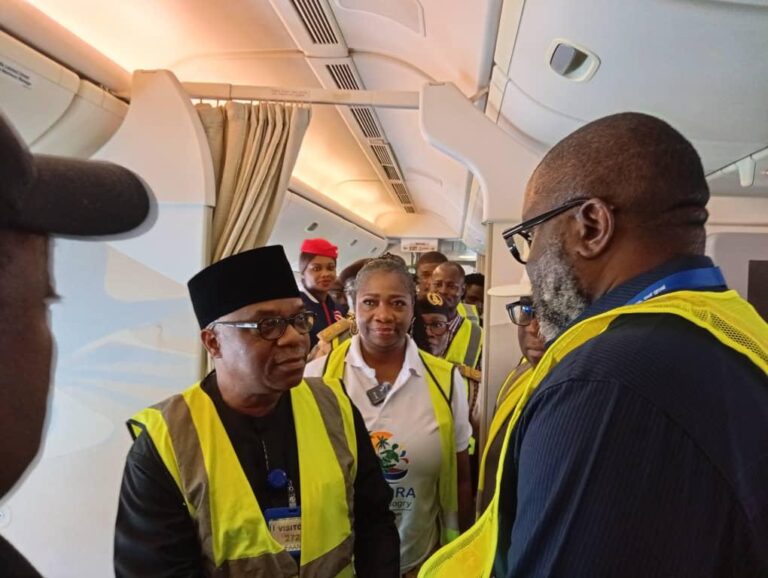
The special evacuation flight operated by Air Peace Airline arrived at the International Wing of the Murtala Mohammed International Airport, Lagos, on Thursday at 10.25 a.m.

The nationals were escorted by officials of the Nigerian Mission in South Africa, led by the Acting High Commissioner, Temitope Alexander Ajayi.

They were officially received at the airport by Enikanolaiye on behalf of the Federal Government.

Addressing the returnees, Enikanolaiye said that the government would not tolerate subjecting Nigerians to attacks and harassment wherever they might be.

The minister commended effective coordination of the process by the High Commission of Nigeria in Pretoria.

He urged all Nigerians in South Africa to remain law-abiding, vigilant, and report any threats to the Nigerian mission.

“The Federal Government remains fully engaged with the South African authorities at the highest levels to ensure protection of Nigerian nationals and to address the root causes of these unfortunate incidents,” he said.

He noted that the evacuation was coordinated by the Ministry of Foreign Affairs in collaboration with the Nigerian High Commission in Pretoria.

Other stakeholders include the Federal Ministry of Humanitarian Affair, Ministry of Aviation, Federal Ministry of Health, Nigeria Immigration Service, and the nation’s security agencies.

“This exercise underscores the government’s proactive and decisive response to protect Nigerians’ lives and dignity in the face of violence and intolerance. No Nigerian should live in fear simply because of their nationality,” he said.

He said that the evacuation did not signal defeat but showed the proactive and citizen-centred foreign policy of the President Bola Tinubu administration.

“More flights carrying returnees are expected to arrive in the country in the coming days as the evacuation exercise continues,” he said, adding that the returning nationals were undergoing the process of documentation, profiling and necessary medical checks.

He said that they would be provided with temporary accommodation before reuniting them with their families.

The ICIR reported that xenophobic attacks in South Africa have led to several African countries evacuating their citizens from the southern African nation.

The attacks have led to the deaths of many immigrants and destruction of their businesses. Many of the victims are tagged by South Africans as illegal immigrants despite holding valid papers. Many South Africans, especially the youths, believe immigrants take over their jobs and other means of livelihoods.

South African President, Cyril Ramaphosa, recently vowed to crack down on groups behind the latest wave of violence in the country, as renewed anti-immigrant protests continued to trigger regional concern, diplomatic tensions and evacuation plans by affected countries.

Ramaphosa, in a televised address, said the government would not allow individuals or groups to exploit public frustration over illegal immigration to incite violence, lawlessness or political instability.

Nigeria, Ghana, Malawi, and Mozambique are among the countries that have evacuated their citizens.

According to reports, Mozambique said at least five of its citizens were killed during the unrest.

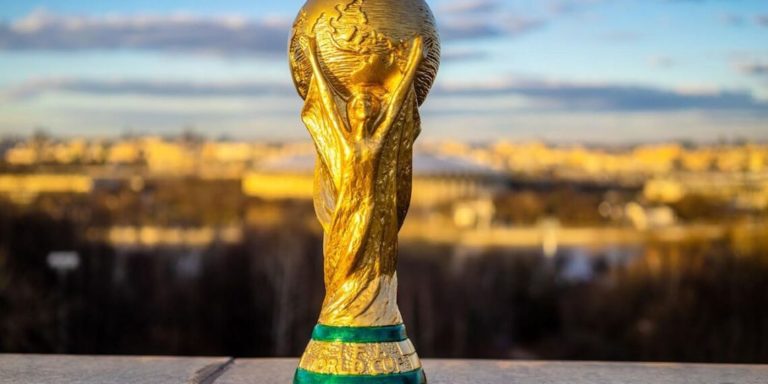
Ronaldo, Messi headline stars as World Cup 2026 kicks off in North America

AFTER a two-year qualification campaign involving hundreds of matches across six continents, the FIFA World Cup 2026 is set to kick off today, as co-hosts Mexico will face South Africa at the iconic Azteca Stadium in Mexico City.

Forty-Eight nations will compete for football’s most coveted trophy, with the United States, Canada and Mexico jointly hosting the month-long spectacle. The expanded tournament will feature 104 matches across 16 host cities before culminating in the final on July 19 at MetLife Stadium in New Jersey.

Nigeria’s quartet of superstar singers Burna Boy, Davido, Rema and Ayra Starr will perform at the World Cup.

Defending champions Argentina arrive in North America aiming to retain the title they won in Qatar four years ago. Much attention will once again focus on Argentine captain Lionel Messi, who could be appearing in his final World Cup.

Messi, 38, and Ronaldo, 41, have competed in five World Cup tournaments, with only Messi’s Argentina winning the title in 2022.

Traditional powerhouses Brazil, Germany, France, Spain, England and Uruguay are also among the favourites to challenge for the title.

Brazil, the most successful nation in World Cup history with five titles from 1958, 1962, 1970, 1994 to 2002, will seek to end a 24-year wait for another championship. Germany and Italy have won four titles each, while Argentina have notched three wins and France, two with Uruguay, the inaugural champions at home in 1930 and in Brazil 20 years later, have two World Cup titles.

England have a solitary title, which they won on home soil in 1966. Spain triumphed at South Africa 2010.

Biggest World Cup ever

The 2026 edition represents a historic expansion of the competition.

From the inaugural tournament in 1930, which featured just 13 invited teams, the World Cup has steadily grown into a global sporting phenomenon, as the competition expanded to 16 teams in 1934, increased to 24 teams in 1982 and then to 32 teams in 1998.

Now, FIFA has expanded the field to 48 teams, creating a significantly larger tournament that offers more opportunities for countries from Africa, Asia, North America and Oceania to compete on football’s biggest stage.

A total of 104 matches will be played during the tournament, nearly doubling the number contested in previous editions.

Africa will have its strongest-ever representation, with 10 teams participating after FIFA increased the continent’s allocation of qualification slots.

The financial stakes are higher than ever, as FIFA has increased the jackpot to $770 million from the $440 million in Qatar 2022, as every finalist is guaranteed at least $10.5 million, and FIFA has set aside $355 million for clubs with players in the tournament.

The winners will receive $50 million from FIFA. The cost to host the finals this time is estimated at $12 billion, far lower than the $200 billion Qatar spent to host the 2022 finals, largely due to massive infrastructure projects completed in advance.

However, before the kick-off, the tournament has been overshadowed by geopolitical tensions and controversies that threaten to blur the line between football and politics.

As the football world turns its attention to North America, several traditional football powers will be watching from home, because questions have emerged over visa restrictions and travel arrangements affecting some participating delegations and supporters.

Iran, one of Asia’s representatives at the tournament, has raised concerns over ticket access for some of its fans amid ongoing tensions with the United States, and reports have also surfaced regarding entry complications involving match officials from countries affected by diplomatic restrictions.

The controversies have reignited debates about the growing intersection of politics and international sport, particularly as FIFA President Gianni Infantino has maintained close public engagements with political leaders from host nations in recent years.

One of the most controversial cases of such restrictions is the deportation of award-winning Somali referee Omar Artan by U.S. authorities. Artan had already arrived in the United States when he was denied entry and returned to his country of departure.

Despite these distractions, anticipation remains high for a tournament expected to deliver memorable football moments, emerging stars, and dramatic storylines.

Among the most notable absentees is Italy, one of the most successful nations in World Cup history. The four-time champions have now missed multiple recent editions, extending one of the most surprising downturns ever experienced by a football giant.

Several other established football nations also failed to navigate the qualification process, underlining the increasingly competitive nature of international football.

For Nigeria, another World Cup absence will be particularly painful. The Super Eagles, once regular participants at the tournament, were unable to secure qualification despite boasting a squad filled with players competing in Europe’s top leagues.

Can Africa make history?

Africa’s best World Cup performance remains Morocco’s remarkable run to the semi-finals in Qatar in 2022, the furthest any African nation has advanced in the tournament’s history.

Before Morocco’s breakthrough, Cameroon reached the quarterfinals in 1990, while Senegal matched that feat in 2002.

With an increased number of African representatives and several highly competitive squads entering the tournament, hopes are once again high that the continent could produce another historic campaign.

Whether Morocco can repeat its heroics or another African nation emerges as a surprise package remains one of the tournament’s most intriguing questions.

As football’s biggest-ever festival begins, the countdown to crowning a new world champion has finally come to an end.

Senate orders arrest of Ex-NNPCL boss Mele Kyari over ₦210tn audit query

THE Senate Committee on Public Accounts has ordered the arrest of former Group Chief Executive Officer of the Nigerian National Petroleum Company Limited (NNPCL), Mele Kyari, over his repeated failure to appear before lawmakers investigating an alleged N210 trillion discrepancy in the company’s financial records.

The directive was issued on Wednesday, June 10, after Kyari allegedly failed, for the ninth time, to honour invitations from the Nigerian Senate Public Accounts Committee, which is probing audit queries raised by the Office of the Auditor-General covering the period between 2017 and 2023.

Chairman of the committee, Ibrahim Dankwambo, a senator from Gombe North, said Kyari should be compelled to appear before the panel, following a voice vote by lawmakers who rejected further delays.

Anywhere Mele Kyari is, he should be arrested and brought before this committee,” he declared.

Background to the probe

The investigation stems from audit queries flagged by the Office of the Auditor-General of the Federation, which raised questions about discrepancies running into ₦210 trillion in NNPCL’s accounts over a six-year period.

The matter first became public in 2025, when the Senate Public Accounts Committee began reviewing the national oil company’s audited financial statements and requested explanations for the figures submitted.

Lawmakers subsequently issued multiple invitations to Kyari and other senior officials of NNPCL to appear before the committee. 

However, his repeated absence led to multiple adjournments, with senators stating that the committee had held at least nine sittings without resolution.

Kyari was removed from office in April 2025 by President Bola Tinubu as part of a broader restructuring of the national oil company amid increasing scrutiny of its operations.

Since his exit, the Senate has continued its probe, while NNPCL’s management has provided partial explanations to the committee, including claims that portions of the disputed figures represent accrued expenses and receivables rather than missing funds.

Arguments at the hearing

At Wednesday’s session, some senators appealed for caution, citing reports that Kyari was receiving medical treatment in Germany.

Tony Nwoye, a senator representing Anambra North said he had spoken with the former NNPCL chief and was informed of his condition abroad, while Saliu Mustapha of Kwara Central urged the committee to grant him more time.

However, several lawmakers opposed any further delay.

Abdul Ningi (Bauchi Central) insisted that claims of illness must be supported with documentary evidence, while Victor Umeh (Anambra Central) argued that Kyari’s continued absence showed disregard for the committee.

“This matter has been on for sometime. We have been expecting Mr Mele Kyari to appear before us for one year or more and for us to receive information that he’s abroad. It shows that he’s not taking us seriously,” ” Umeh said.

Deputy Chairman of the committee, Peter Nwaebonyi (Ebonyi North), noted that the panel had already met nine times on the matter.

“This is the ninth time this committee is meeting on the 19 queries raised against NNPCL by the Office of the Auditor-General of the Federation, three of which were chaired by me.

“Mr Chairman, the time to issue a warrant of arrest against Mele Kyari is now because the committee must conclude its assignment and report back to the Senate.”

Also, the senator representing Edo North, Adams Oshiomhole backed enforcement action, warning that failure to compel compliance would weaken the authority of the legislature.

Following deliberations, the committee resolved through a voice vote that Kyari should be arrested and produced before it.

Dispute over ₦210 trillion figure

During the session, former NNPCL Chief Financial Officer, Umar Ajiya, challenged the allegation that ₦210 trillion was missing, describing the figure as inconsistent with the company’s financial capacity.

He said NNPCL’s total revenue within the period under review stood at about ₦54.5 trillion, making it mathematically impossible for ₦210 trillion to be unaccounted for.

 “To be clear, if money had gone missing at NNPC during our tenure, we would not have had the courage to publish audited accounts. For over 40 years, those accounts were either not prepared, not made public, or not even shared with the Auditor-General.

“₦210 trillion is an enormous sum. NNPC’s total revenue in the period under review was about ₦54.5 trillion, even before deducting production costs. It’s impossible for ₦210 trillion to be missing or unaccounted for,” he said.

Ajiya maintained that the disputed figures likely arose from accounting classifications such as receivables and accrued expenses rather than missing funds.

He urged anti-corruption agencies, including the Economic and Financial Crimes Commission (EFCC) and the Nigerian Financial Intelligence Unit (NFIU), to conduct a forensic audit to establish clarity.

He also warned that unverified allegations could damage Nigeria’s reputation and investor confidence.

The committee subsequently directed Ajiya and former Chief Upstream Investment Officer, Bala Wunti, to reappear before it within two weeks as the investigation continues.