Home Blog Page 1971

Senators call for reform, say SARS are agents of corruption

Nigerian Senators have on Wednesday condemned the recent misconducts of operatives of the Special Anti-Robbery Squad (SARS) of the Nigeria Police Force.

This followed a motion by the Senator representing Lagos Central, Oluremi Tinubu, on the need to check the culture of brutality by security operatives against Nigerians.

“SARS members are agents of corruption. They extort money from innocent people and lock people up arbitrarily. They are not VIOs; they will go ahead to ask for a driving license. That is not their function. They must face their functions.

“SARS has turned back against the nation. This is the right time to do something about them,” said George Sekibo representing Rivers East senatorial district.

Taking similar position, Sabi Abdullahi, senator representing Niger North senatorial district said: “the only difference between SARS and criminals is that they are holding AK47. Some very wicked Nigerians go to SARS to tell them to harass their fellow citizens’.

He added that the National Assembly must ensure that SARS has a rule of engagement that everyone is aware of.

Elisha Ishaku said the Inspector General of Police must come with a plan to reform SARS so they can look like decent law enforcement officers and not armed robbers in their dressing.

“These people go about killing people for no just reason. Once they suspect somebody, they chase and kill the person. It is unfortunate. You see these SARS people (sic)  and you wonder if they are armed robbers,” he noted.

Philip Aduda commended the Abba Kyari group of the NPF, adding that they have shown commitment and loyalty “but all the others (special squads) have lived short of their responsibilities. I support this motion and we must ensure the lives of the citizens are safe”.

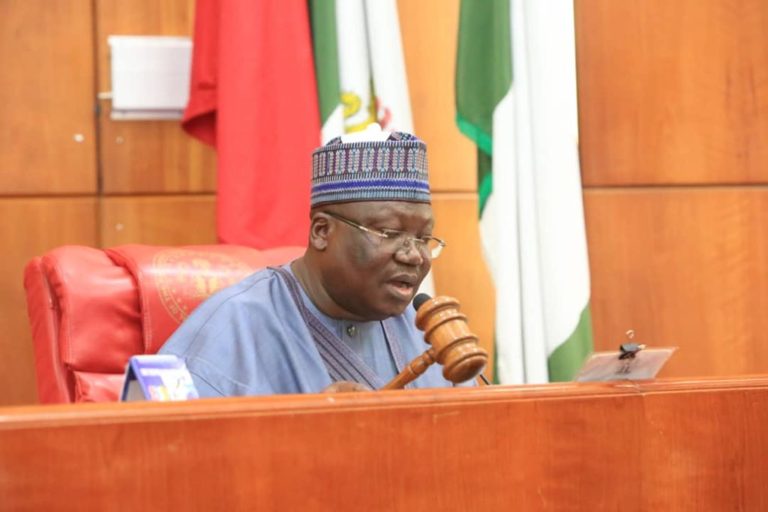
Speaking on the motion, the Senate President, Ahmad Lawam said “this is something that concerns our day-to-day lives and it is something that is all over the country. I think this is a situation that should be properly investigated those involved in the recent incidents should be arrested and prosecuted. Senator Oluremi Tinubu, thank you very much for bringing this motion”.

The Senate resolved to mandate the Committee on Judiciary, Human Rights and Legal Matters to investigate human rights abuses by Nigerian security agencies and urged the various security agencies to establish hotlines to enable Nigerians to report abuses by their agents.

Other resolutions of the Senate on the motion include: urging the various security agencies to establish a Special Bureau Unit that monitors the contacts of officers, arresting and charging erring ones, mandating the Committee on Police Affairs and Judiciary, Human Rights and Legal Matters to investigate allegation on extrajudicial killings and make recommendations, mandating the Committee on Police Affairs to organize stakeholders meeting to investigate the implementation of the Police Trust Fund.

US court discharges Nigeria of $1.5b suit, orders oil company to pay $660,000 – Malami

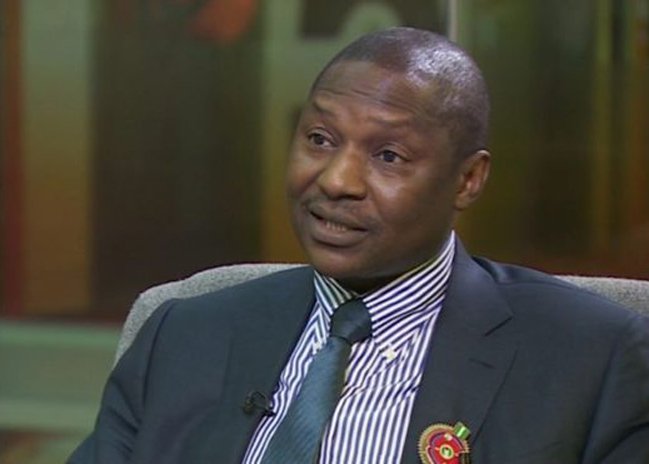
ABUBAKAR Malami, the Minister of Justice and Attorney-General of the Federation (AGF) has disclosed that a US-based court International Centre for Settlement of Investment Dispute has absolved Nigeria of a $1.5 billion suit by InterOcean Oil Company.

Malami made this known in a statement on Wednesday signed by Umar Gwandu, the Special Assistant on Media and Public Relations, Office of the Minister of Justice.

The tribunal absolved the Federal Government of Nigeria from any liability maintaining that Nigeria did not breach any of its obligations in the contract agreement with Interocean Development Company and InterOcean Oil Exploration Company.


Read Also:

“The tribunal finds no liability on the part of Respondent in connection with Claimants’ loss of control over their investment, Pan Ocean,” the statement quoted part of the judgment.

According to the statement, William Park, the Head of the U.S. based tribunal ordered InterOcean Oil Company to pay the Federal Government of Nigeria $660,129 as reimbursement of its share of the arbitration costs.

Gwandu said the judgment was an addition to the multiple success stories recorded in international litigations by the Federal Ministry of Justice.

According to NAN, a former Attorney General of Lagos State, Olasupo Shasore is among the legal team of the oil companies that requested the Nigerian Government to pay $1.5 billion damages.

The ICIR had reported how Shashore compromised Nigeria’s case against Process and Industrial Development (P&ID), a British engineering firm that has engaged the federal government in a legal tussle for years.

Stop media trial, conduct 90 per cent investigation before arrest- Senate tells EFCC

The Senate Committee on Anti-Corruption and Financial Crimes has charged the Economic Financial Crimes Commission (EFCC) to stop the media trial of persons under investigation, but conduct 90 per cent investigation before carrying out the arrest.

“Ninety per cent of investigation should be done before an arrest is effected,” said Suleiman Kwari, Chairman of the Committee on Tuesday, at the commencement of the 9th Senate Legislative Anti Corruption Strategy Implementation Session at the National Assembly Complex, Abuja.

“Media hype must stop. If you want to be effective forget the media, do the work and let your work speak for you.”

Kwari disclosed that the 9th Senate was determined to see that there was a constant flow of information and engagement between the Senate and the EFCC.

 Aliyu Wamakko, Deputy Chairman of the Committee and former Governor of Sokoto State expressed concern on the Commission’s lean budgetary allocation for legal fees, noting that there must be adequate provision for legal fees in the EFCC budget for effective prosecutorial activities.

Addressing the Committee, Mohammed Umar Abba, the acting Chairman of the EFCC, noted that the Commission has earned the confidence and trust of Nigerians because of its unblemished professional disposition.

“The EFCC is doing remarkably well above all other law enforcement agencies in the country and that is why the UNODC and National Bureau of Statistics in the 2017 survey they conducted ranked EFCC as the most effective government agency in Nigeria,” Abba said.

He disclosed that the Commission has recorded 646 convictions and recovered over N11billion in monetary assets this year, despite the restriction imposed by the COVID-19 pandemic.

Reacting to the senators’ enquiry on the state of seized vehicles by the Commission, Abba expressed pain at the deteriorating state of assets in the custody of the EFCC.

“We are working on this challenge and I am sure the Attorney General of the Federation is coming out with a gazette so that this issue will be a thing of the past, not only vehicles, but landed properties,” he said.

He also weighed in on the worry of the legislators on the waning impact of the Whistle-blowing policy of the Federal Government.

Abba blamed the situation on mischief and misinformation by members of the public who turned it to a tool for settling personal scores.

 “It is true that the whistle-blowing policy has gone down, unlike what it was at the beginning of the policy, where we received several reports from whistle-blowers. People started being mischievous with the policy. So we have to tread carefully as people turned it into a personal vendetta tool against individuals,” he said

He however revealed that the policy was being fine-tuned by the Ministry of Finance to make it more efficient.

The EFCC boss used the occasion to acquaint the legislators with the challenges confronting the agency.

These, according to him, include lack of adequate personnel and office accommodation, (especially in the Commission’s zonal offices); lack of internet facility; and Information and Communication Technology equipment, among others.

He canvassed for the support of the Committee in overcoming these challenges through appropriation.

Other members of the Senate committee present at the session were  Senators Michael Nnaji, Aliyu Abubakar, Kola Balogun, Abba Moro, Abubakar Yusuf and Dauda Binos Yaroe.

Four days to election, Akeredolu, Jegede, Ajayi others sign peace accord

AS the Ondo election draws closer, candidates contesting in the governorship election have on Tuesday gathered in Akure, Ondo State capital to sign a Peace Accord.

The candidates who signed the peace accord includes Rotimi Akeredolu of the All Progressives Congress (APC), Eyitayo Jegede of the People’s Democratic Party (PDP) and Agboola Ajayi who is contesting under the banner of Zenith Labour Party (ZLP).

The Peace Accord ceremony was organized by the National Peace Committee in preparation for the polls.

Giving his welcome address virtually, a former Nigeria’s military head of state, Abdulsalami Abubakar (Retired), says responsibility and accountability are key to promoting peaceful election.


READ ALSO:

He added that since 2015, NPC has contributed immensely to a peaceful election in Nigeria and nothing can be achieved without peace.

Mahmood Yakubu, chairman of the Independent National Electoral Commission (INEC) during his address said without peace, the credibility of the election would be undermined.

“Without peace, our deployment plans, new innovations in result management, the safety of personnel, the security of materials and above all, the credibility of elections will be undermined,” Yakubu said.

The Inspector-General of Police, Mohammed Adamu, represented by Adeleye Oyabade, emphasized that peace must be maintained before, during and after the Ondo election.

Muhammad Sa’ad Abubakar, the Sultan of Sokoto, noted that the essence of the Peace Accord by the governorship candidates is that it reaffirms that the candidates must conduct themselves in a professional and peaceful manner.

“Youth, do not be vulnerable to the political manoeuvring of the politicians. Their children will not join you. There is no life that is so cheap as millions of dollars. So cast your vote and ensure that your vote counts,” Sultan added.

Nigeria defies predictions of huge coronavirus deaths but real reason is a mystery

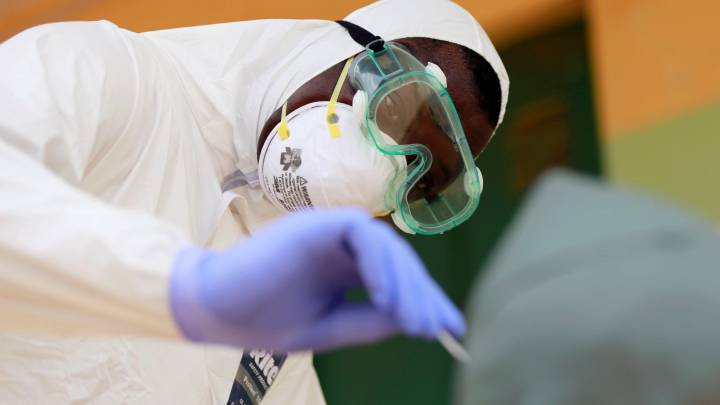
OLAOLUWA Oluwo, 27, confirmed her suspicions in June that she had contracted the coronavirus after the medical result of a COVID-19 test she took at the Lagos University Teaching Hospital, LUTH revealed she was positive.  

Before Oluwo went for the test, she was already battling with an asthmatic condition but in early June she could barely perceive the aroma of the food she ate or the fragrance of her body spray. 

She also noticed an unusual discomfort whenever she attempts to breathe as the rush of air through her lungs leaves a sharp pain that made breathing a difficult task. Along with the severe fatigue and constant headaches she felt, Oluwo blamed her stress on the Lagos traffic. 


Read Also:

“I was not sure what was wrong with me until I started reading about symptoms of COVID-19 online which made me doubt if what I was feeling was mere fever until my health started deteriorating with each passing day,” she said.

After she took the COVID-19 test, an official of the COVID-19 team had asked her to return in two days for the result but after visiting the hospital three times later that week, she was still told the result of her test was not yet ready and this made her very anxious. 

Most Nigerians who had been tested for COVID-19 do not get to know the outcome of their tests results or taken into isolation centres, according to a Cable undercover investigation.

However, but through the intervention of a senior health official at LUTH she finally confirmed her worst fear that she was COVID-19 positive.

An official of the Nigeria Centre for Disease Control, NCDC contacted Oluwo on phone three days later, enquiring about her welfare assuring her the NCDC would take her into an isolation centre for further treatment and monitoring.

That day never arrived, despite the repeated calls, she placed to the NCDC helpline for several weeks they never responded or called in to take her into the isolation centre.

“I could not self-quarantine at home effectively because my sibling would always invade my space and the NCDC officials never answered my calls so I had to resort to taking my destiny in my own hands by taking malaria drugs.

Despite the absence of conclusive scientific evidence to support the use of malaria drugs for COVID-19 treatment, she decided to take a chance on it.

“It hasn’t been easy taking the necessary precautions of wearing masks and social distancing for me because people rarely adhere to these rules but the speed of my recovery has surprised me even without taking another test to confirm my status. My breathing is currently normal and I am doing great without fever or complications,” she said.

Thousands of Nigerians infected with COVID-19 like Oluwo may have resorted to self-medication, but the low recorded rates of COVID-19 fatalities in the country tells an entirely different story.

As several Nigerians have abandoned social distancing and wearing of masks that saw moderate compliance in the early months of the outbreak.

Doomsday predictions proved wrong

As the virus ravaged other parts of the world, Nigeria propped up for the worst impact of the pandemic, ramping up ventilators, stockpiling protective equipment and building isolation centres as it prepared for a potential health crisis.

The World Health Organisation, WHO in a predictive model study published in August had stated that countries with a population ranging from 29 to 44 million people could be infected and between 83,000 and 190,000 Africans could die of Covid-19 if it was not controlled.

A similar prediction by the United Nations, UN, in April also projected that without adequate intervention, about 300, 000 Africans were likely to die from the virus social distancing and wearing of masks were in place.

Contrary to the predictions, Africa’s fatality rates stand at 2.4 per cent with an estimated 35,000 deaths with more than 1.4 million people infected with COVID-19 based on data obtained from  WHO dashboard on COVID-19

The percentage death rates on the African continent from COVID-19 is low when compared to North America which has a fatality rate at 2.9 per cent and Europe whose percentage death rates is pegged at 4.5 per cent.

Also, the worst-hit countries in Europe which include Italy and Britain both have fatality rates at 11.6 per cent and 9.0 per cent respectively. South Africa is Africa’s worst-hit country with a fatality rate of 2.4 per cent while pales in comparison to Ethiopia’s COVID-19 death rate at 1.6 per cent and Nigeria at 1.9 per cent.

A study published in the Scientific World Journal says the low rates in Nigeria could be partly because of the relatively young population where more than 60 per cent are under the age of 25.

Experts also say expertise in epidemic control from tackling other outbreaks, cross-immunity from other coronaviruses, low travel and outdoor living could also be contributing to Africa coping better.

In terms of the proportion of people who get Covid-19 that go on to die, there were 12 African countries with rates comparable with or higher than the global average rate of 3 per cent as of October, 1.

An unanswered question

Data obtained from Our World in Data, a UK project that collates Covid-19 information revealed that Africa accounts for 4.4 per cent of COVID-19 global cases and 3.6 per cent of the total deaths globally, despite, the low testing rates.

John Nkengasong, Director General of the African Center for Disease Control, CDC, he warned that Africa is not out of the woods despite the low fatality rates.

“I don’t think we are over the first wave yet, we have not yet hit the bottom at all,” he said in a report.

Nigeria had carried out 2.5 tests per 1,000 people by September 29, while Kenya had done 10 tests per 1000 people by September, 28.

On September 30, South Africa was conducting 71 tests per 1,000 people, but that pales into insignificance when compared with 305 tests per 1000 people in the UK or the US with 342 tests per 1000 people as of September, 27.

Speaking to The ICIR, Chikwe Iheakweazu, Director General of the Nigeria Center for Disease Control, NCDC, said it was too early to assume the coronavirus was a thing of the past in the country because the Nigerians were not experiencing the virus en masse.

“The epidemiological situation in Nigeria varies across states. In some states like Lagos and Kaduna, testing has continued at a high rate but the number of people who test positive has reduced. However, in most other states, the rate of testing has declined as a result of poor demand for testing.

“Therefore, it is still too early to reach a conclusion on the overall epidemiological situation in the entire country. Some countries that recorded a decline a few months ago have begun to record a spike,” he said.

Nigeria has a poor record on health spending which is ussually less than 3 per cent of its GDP, however, the Federal Government has spent N30.5 billion on its COVID-19 emergency response between April to June from a total of N36.3 billion received from donations, according to a report.

“We are working very closely with all states to increase both demand for and access to testing. Many states are setting up more sample collection sites so that Nigerians can be encouraged to get tested if they have symptoms or are at risk due to contact with a confirmed case,” Iheakweazu said.

Again, India records highest COVID-19 daily death rate as 884 die in 24 hours

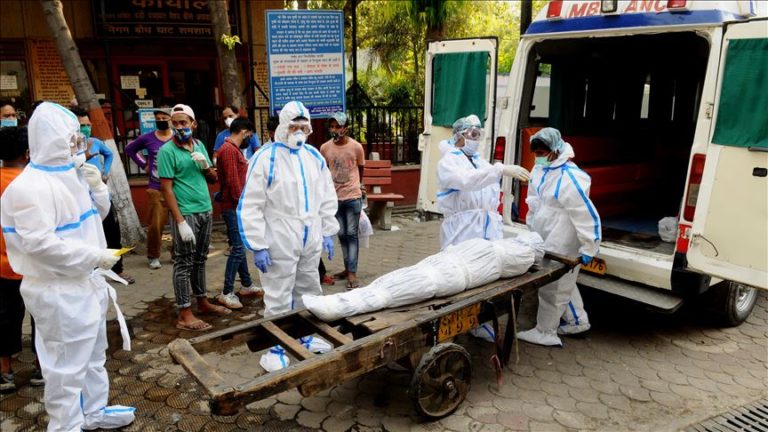
IN 24 hours, India has recorded a total of 884 deaths from the COVID-19, the World Health Organisation (WHO) database of the global pandemic has revealed.

So far, India has recorded a total of 6,685,082 cases and has had more than 100, 000 COVID-19 related deaths in the country.

In September, the country recorded 97,894 new COVID-19 cases and 1,132 deaths in just 24 hours.

Maharashtra, the second largest state in India has the highest number of cases and death in the country as 1.44 million persons have been infected, 1.15 million have recovered while 38,084 have died of the virus.


READ ALSO:

Reports from the Indian Ministry of Health state that Maharashtra represents 27.50 per cent of all the active cases in the state.

The Ministry said on Tuesday that the country has conducted more than 80 million of its population.

According to Ministry data, the country has recorded over 1,000 deaths each day since September 2.

However, the government said ‘it is too early to take a call on the trend of active COVID-19 cases in Maharashtra, whether it is stabilising or not.

Followed by India in the number of a daily death record in the past 24 hours is the US where 369 deaths have been recorded in 24 hours.

The US has recorded 208,433 deaths while 7,341,406 persons including the US President, Donald Trump have been infected with the virus.

Education Minister, Adamu orders investigation into N2.67b school feeding fund

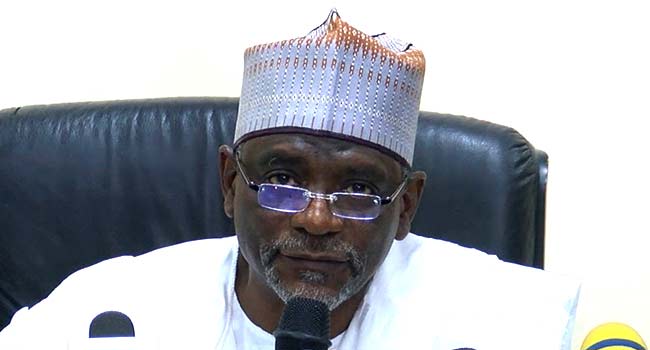
ADAMU Adamu, the Minister of Education has ordered a full investigation to unravel more facts about the controversial N2. 67billion meant for the school feeding programme that was traced to bank accounts belonging to some public officials.

The Independent Corrupt Practices and other Related Offences Commission (ICPC) had earlier revealed that it traced the sum of N2.67 billion released to the 104 Unity Colleges during the COVID-19 lockdown for meal subsidies to some individuals account.

Reacting to the revelation, the Minister on Tuesday, in Abuja, noted that further investigation would establish the veracity of the claims to ensure that there is no diversion of public funds or misappropriation of the same.

Adamu had earlier queried the principal of the Unity Schools, asking them to explain how payments on meal subsidies to the Colleges, which is usually facilitated by the Government Integrated Financial Management Information System, (GIFMIS) could be violated.

However, the principals in their responses stated that the payments were made into individual accounts because of difficulties encountered by farmers, local food vendors, and market women who do not have Tax Identification Numbers (TIN), PENCOM and other requirements to access the payment platform themselves.

They explained further that payments made during the lockdown period had to do with debts owed food vendors even before COVID 19, some of which are still pending, adding that these debts arose from irregular and inadequate budgetary allocations and releases over the years.

The minister, however, said that the ministry would collaborate effectively with officials of the ICPC to unearth the facts as well as find a lasting solution to the payment system for meal subsidies that would ensure accountability and transparency.

Ondo election: US charges INEC, stakeholders on credible poll

THE United States Embassy in Nigeria has urged the Independent Electoral Commission (INEC), political parties, security operatives and other stakeholders to ensure a credible process in the forthcoming governorship election in Ondo State.

“The United States urges all stakeholders to continue to work toward free, fair, transparent, and peaceful elections in Ondo State,” a statement by the US Embassy issued on Tuesday read.

“We reiterate our hope that all participants in the democratic process, including the INEC, political parties, and the security services, will take concrete steps to ensure a peaceful election that reflects the will of the people of Ondo.”

It pledged its commitment to continually work together with Nigeria to achieve the shared goals of peace and prosperity for both countries.

In a statement last month, the US announced that it has imposed visa restrictions on politicians whose actions undermined the November 2019 Kogi and Bayelsa states elections, and also on those who would undermine the September and October 2020 Edo and Ondo states elections.

After the election, there was a general belief among Nigerians on social media that the peaceful and credible outcome of the Edo polls was due to an earlier announcement of these sanctions by the US.

The Ondo State governorship election scheduled to hold on Saturday, October 10 is a contest mainly between the incumbent governor, Rotimi Akeredolu of the All Progressive Congress (APC) and Eyitayo Jegede of the Peoples Democratic Party (PDP).

FG to ASUU: You can leave teaching for farming, Nigeria needs more farmers ‎

IN a development that suggested that there is no imminent end in sight to the industrial action that had grounded Nigerian public universities‎, the Federal Government has told members of the Academic Staff Union of Universities to leave the lecturing job for farming, if they are no longer interested in the teaching profession.

The Federal Government, which appears to have run out of patience with the university lecturers, noted that Nigeria has a greater need for farmers at the moment. ‎

ASUU commenced ‎its ongoing indefinite strike on March 23, largely to protest a Federal Government directive that academic staff in all Nigerian public universities must enrol on the Integrated Payroll and Personnel Information System (IPPIS).

President Muhammadu Buhari had directed that all ministries, departments and agencies of the Federal Government drawing their salary from the Consolidated Revenue Funds should enrol on the IPPIS platform by the end of October 2019.‎

The strike was still ongoing when the Federal Government shut universities and other educational institutions in the country in order to curb the spread of the coronavirus disease in the country.

The government has now approved the reopening of the educational institutions ‎on October 12 but ASUU is bent on continuing the strike, saying, among other complaints, that its members are being owed, a claim that has been denied by the Federal Government.

Minister of State for Education, Emeka Nwajiuba, did not mince words in stating the Federal Government’s views on the protracted strike by ASUU when he appeared as a guest on ARISE NEWS Channel, a television station, on Monday.

The minister, who insisted that ‎ASUU members cannot dictate how they should be paid by their employer – the government – advised that the lecturers are free to leave their jobs and take up other professions such as farming.

‎Nigeria was in need of more farmers, Nwajiuba observed.

‎The minister said, “ASUU is within its rights as a union of lecturers. We didn’t start a strike with ASUU on the basis of COVID-19.

“ASUU was already on strike way before COVID-19. Just before COVID-19 we shut down schools, they gave notice of an indefinite strike.

“We are not in any contention with them.

“Government is actually not holding anyone to ransom. It says this is how I want to pay and it has to be through IPPIS.

“You can leave the employment. You can opt out of it and say ‘I no longer want to teach’. You can find other professions. What we need now are probably more farmers.

“You cannot keep forcing your employer and tell him, ‘I will like you to pay me my money through my pillow. Or, I will like you to pay it through this mailbox’.

“ASUU has a lot of complaints and dissipation around it. That is legitimate but doesn’t mean you should force yourself on the man who has the money.”

Nigeria’s public university system, which has suffered disruptions over the years due to a series of strike actions, appears set for more problems. ‎

Already, barely a week to the October 12 resumption date for all educational institutions in the country, two other university staff unions – the Non-Academic Staff Union (NASU) and the Senior Staff Association of Nigeria Universities (SSANU) have begun a 14-day warning strike, also to protest against the adoption of the IPPIS in the universities.

Despite the complaints by the university workers concerning the IPPIS, the Federal Government says the scheme has helped to reduce corruption in the public sector. ‎

In May 2020, the Office of the Accountant General of the Federation said the IPPIS had saved over N361 billion for the Federal Government “despite opposition and sabotage” from some quarters.

The Federal Government had also described ASUU’s opposition to the enrolment of its members on the IPPIS as an “open endorsement of corruption”.

Created in 2007, the IPPIS secretariat is a department under the Office of the Accountant General of the Federation responsible for payment of salaries and wages directly to government employees’ bank accounts with appropriate deductions and remittances of third-party payments such as taxes and health insurance. ‎

Ondo Election: CDD identifies positive, negative trends that could shape poll

AS voters in Ondo State make last-minute preparations in readiness for the October 10 Governorship election, the Centre for Democracy and Development (CDD) has identified a number of positive and negative trends, which it projects could shape the election and the credibility of its outcome.

In its pre-election assessment, the CDD through its dedicated Election Analysis Centre (EAC) listed what it described as a groundswell of citizens demands for good governance through specific debates on specific policy issues as one of the encouraging signs in the campaign period.

The Centre observed that although the threat of misinformation and disinformation remains potent, especially in the final stretch of the campaign, its observation of the pre-election environment indicated that citizens in Ondo State have largely shown a strong resolve to take political actors to task on key programmes and policies.

Idayat Hassan, CDD Director, in a statement obtained by The ICIR, lauded the resolve of citizens in Ondo State to make the election a referendum on some of the core governance issues directly affecting their everyday living conditions.

“An example of the resolve of citizens to demand answers to the key governance issues they face would be seen in the debates on school fees and the maternal health policy of the government. On the issue of increment in school fees for students in the state-owned higher institution, CDD observers report that many youths are airing their views on social media platforms like Whatsapp,” she said.

“From the way they are discussing how the policies have rubbed off on them, it is apparent that they were mobilised to engage the matter as an election issue, which should determine which direction voting should go. The impact of these debates has been in turn affecting policies, with reversals of initial positions by the government.

“Another instance of the prevalence of governance issues in the election is the debate on the status of the free maternal healthcare programme (Abiye), which was introduced by the administration of Governor Olusegun Mimiko. Citizens have been using the conversation around the election as an entry point to interrogate the incumbent on his administration’s handling of the free maternal care programme (Abiye) introduced by his predecessor.

“It is refreshing to see citizens using the electoral process as a basis to institutionalise democratic accountability. As a matter of fact, CDD projects that the role of fake news and misinformation in the Ondo election will be relatively low compared to other states, partly because citizens are busy interrogating core governance issues.

“CDD hopes citizens will put these governance issues in perspective as they go to cast their ballot on Saturday. CDD believes that if citizens remain focused on these issues as they go out to vote on Election Day, incidents of vote buying will be reduced.”

Transport Unions, armed non-state Actors wield influence on poll

However, CDD warned that the partisan disposition of transport unions, including the National Union of Road Transport Workers and the Motorcyclists Association, could pose challenges, which may create credibility and logistics problems.

Its observation of the political environment in Ondo State indicates that the NURTW, and the Okada riders’ union will play a major role in the complex web of partisan alliances, which will influence the outcome of the election.

“One of the worrisome realities is that NURTW, one of the major unions, is depicted to be a highly partisan association, which tries to use its influence to enforce electoral outcomes. The NURTW played a prominent albeit partisan role in previous elections and remains on course to leverage its presence towards the realisation of partisan objectives. The closeness of the union to partisan interests could impact on the credibility of key processes. The leaders of the NURTW in some sense would be fighting for their own survival because the tradition is that every NURTW Leadership leaves with any administration voted out.

“Incidentally, the NURTW is the body INEC relies on for transportation of electoral materials. This may create a problem for INEC in the area of getting materials to all voting areas in the state. Apart from the NURTW, the militants are another group of actors which would wield influence on the poll.”

CDD observers report the increase in the activities of armed non-state actors, particularly militants and pirates in riverine areas of the state. These armed groups according to the organization have a history of making the creek areas ungovernable and have strong links with wider networks of militants in the Niger-Delta. These groups will certainly have their preferred candidate and agenda and will be ready to mobilise the force necessary to make their preferences prevail. Our observers have also reported the influx of arms and armed non-state actors in the state.

CDD observation of the electoral process has also been picking up early warning signs of violence. The CDD pre-election report notes that the prevailing political situation ahead of the 2020 Ondo governorship election has the potential to escalate in ways that could cause widespread violence.

Since political campaigns began, CDD has been monitoring news reports to document and analyse the pre-election environment. The Centre observes an upsurge of political tensions in at least 11 of the 18 local government areas of the State with several reported cases of election-related violence.

A trend analysis of data gathered so far indicates that group clashes, attacks on party secretariat and political rallies and campaigns by thugs and party supporters escalated in most LGAs across the State with the highest number of cases reported in Akure South and Idanre LGAs. Of the 34 incidents of electoral violence reported between August and early October 2020, at least 12 cases of clashes during campaigns were reported.

While these early warning signs are not definite indicators to give 100 percent certainty that there will be violence in the areas highlighted, they nonetheless call for a strategic deployment of security.

CDD is of the view that the presence of security in areas with a history of election violence will deter elements which would be inclined to resort to violence,” the Centre advised.