Home Blog Page 330

Commissioner confirms 12 inmates escaped from Kogi jailbreak

0

TWELVE inmates have escaped from the Correctional Centre in Kotonkarfe, Kogi State.

The prison break occurred early in the hours of Monday, March 24.

According to Channels TV, the Kogi State Information Commissioner, Kingsley Fanwo, in a statement, described the jailbreak asunfortunate’ and assured citizens that the government, in collaboration with security agencies, would take steps to prevent a repeat.

Fanwo said authorities had recaptured one of the escaped inmates and launched a thorough investigation into the incident.

The probe aims to uncover the circumstances surrounding the escape, apprehend the remaining inmates, and identify potential collaborators within the system.

He added that the governor, Usman Ododo, has instructed security agencies to prevent similar breaches in the future.

Fanwo urged the public to report suspicious individuals around them to law enforcement agents.

He encouraged residents of the state to remain calm and go about their lawful businesses.

He assured everyone that the government’s top priority remained the security of lives and property.

In a chat with The ICIR on Monday, the spokesperson of the Kogi State Police Command, William Ovye Aya, said he was on his way to the facility.

He promised to give further details after assessing the facility.

The ICIR reports that prison breaks have been recurring in Kogi State. The ICIR reported that the Nigerian Correctional Service (NCoS) confirmed a daring attack on one of its facilities in Kabba, Kogi State, by gunmen in September 2021.

The former NCoS Spokesperson, Francis Enobore, said that no fewer than 240 inmates escaped from the Medium Security Custodial Centre (MSCC) after the attack.

He noted that the attackers arrived at the custodial centre heavily armed and immediately engaged the guards in a fierce gun battle.

The jailbreak comes months after gunmen attacked the Nigerian Correctional Service and the police headquarters in Imo State, freeing 1,844 inmates, after which the hoodlums set the facilities ablaze.

The gunmen also razed the Imo State Police Command headquarters and burnt almost all the vehicles parked at the command’s headquarters. No fewer than 50 cars were set ablaze in the process.

In April 2021, similar attack was carried out at the correctional centre in Ubiaja, Edo State, but was foiled by officers at the facility.

Democracy is dying in Africa, not just failing – Obasanjo

0

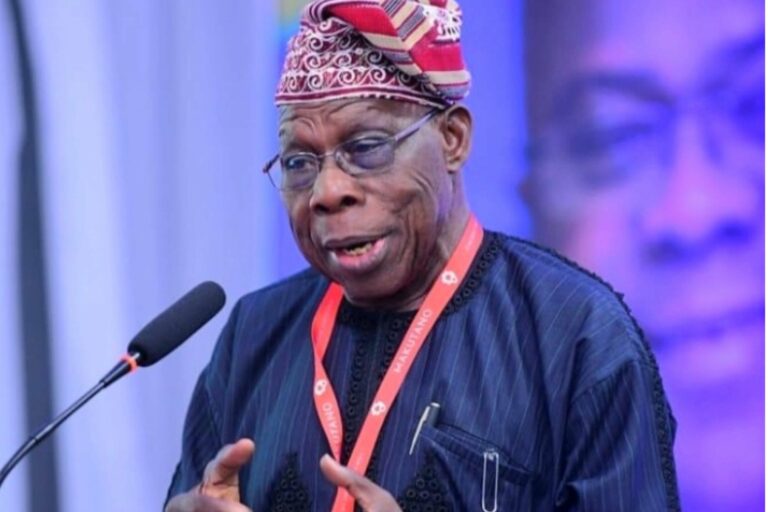
FORMER President Olusegun Obasanjo has said that democracy in Africa is not just failing but on the verge of collapse.

He blamed its failure on the adoption of liberal democracy which he said did not align with African values.

Obasanjo, who spoke at the 60th birthday celebration of former Imo State Governor, Emeka Ihedioha, in Abuja, on Monday, March 24, argued that before colonial rule, Africa had its governance systems that effectively catered to the needs of the people. 

He described these systems as a form of democracy that was more inclusive and community-driven.

“When we talk of democracy, we should remember that in Africa before the colonial rule and the colonial power, we had a forum of government which attended to the needs of our people and whatever you called it, to me it’s democracy. Because of what democracy is about, (former) American President Abraham Lincoln defined it as the government of the people, by the people, and for the people.

“Democracy is meant to be a system of government that delivers and delivers to all the people, not just a section of the people, not just a few,” Obasanjo said. 

The former president criticised modern democracy in Africa. He said the system had become an exclusive system where a small group of elites governed at the expense of the majority. 

He lamented that the system was riddled with corruption, injustice, and a lack of accountability, leaving ordinary citizens powerless.

“Democracy has now become representative democracy. And representative democracy has not taken care of everybody. Today we have democracy which is a government of small numbers of people by small numbers of people over large numbers of people who are deprived of what they need to have in life,” he added.

He further condemned the judiciary’s role in sustaining this system, arguing that corruption had made it nearly impossible for ordinary citizens to get justice.

“What sort of democracy brings you and you grab everything, and then illegally, and you say ‘go to court’ when you know that even in court, you can’t get justice.”

Obasanjo warned that if Africa continued to operate under this system, democracy on the continent would not survive. 

He called for a re-evaluation of governance structures and leaders to create a system that reflects Africa’s unique cultural and social realities.

His remarks were at the heel of several African countries grappling with governance crises, military takeovers, and growing controversies on democratic presidents’ excessive interference in sub-regional politics. 

In the past few years, military putsches abruptly terminated democracy in three African countries namely Burkina Faso, Niger and Mali. Their leaders consequently had strained relationships with their colonial master – France, forcing them to terminate diplomatic relations with the European nation.

The nations also pulled out of the Economic Community of West African States (ECOWAS) and formed a new bloc.

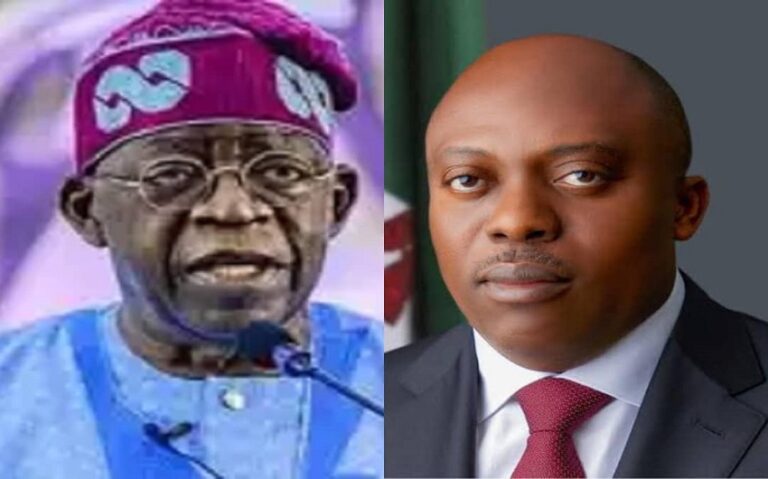
Most recently, President Bola Tinubu, on Tuesday, March 18, declared a state of emergency in Rivers State and suspended the state Governor Siminalayi Fubara, his deputy Ngozi Odu, and all members of the state House of Assembly for six months.

He said the protracted political crisis between Fubara and his predecessor – the Minister of the Federal Capital Territory (FCT), Nyesom Wike – was responsible for the decision.

He particularly criticised Fubara for failing to take action after an oil facility was blown up in the state a day before the declaration.

The president appointed Ibok Ekwe Ibas, a retired rear admiral, as the state administrator.

Many Nigerians, especially leading opposition figures condemned the decision, as they said it subverted the true principles of federalism.

They posited that the president abused the Constitution by suspending elected officials.

Meanwhile, Obasanjo’s government also had a tense relationship with state governors who allegedly refused to align with his political agenda.

In 2006, he suspended Plateau State Governor Joshua Dariye and allegedly orchestrated the removal of Oyo State Governor Rashidi Ladoja through questionable legislative manoeuvres.

US begins ceasefire talks with Russia in Saudi Arabia day after meeting Ukraine 

UNITED States officials began talks with Russia in Saudi Arabia around 07:30 GMT on Monday, March 24, on the need for a ceasefire in the latter’s war in Ukraine.

The meeting followed separate talks between the US and Ukrainian delegates a day earlier.

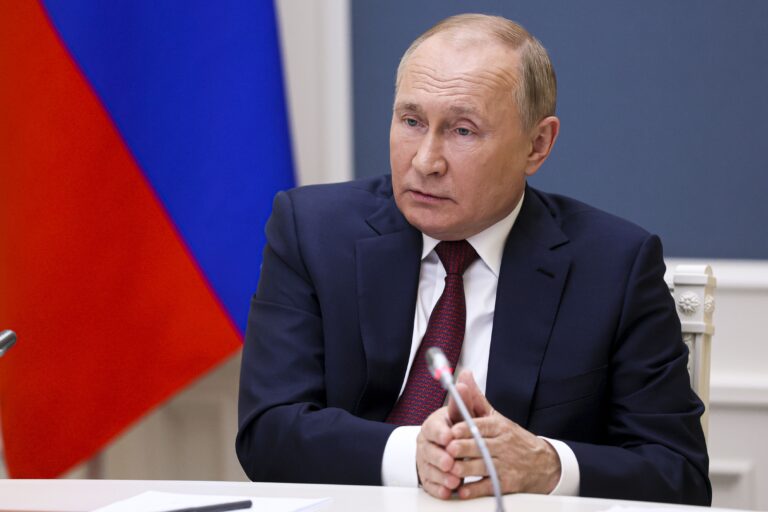
The ICIR reports that the US negotiation with Ukraine in Saudi Arabia on Sunday was part of President Donald Trump’s efforts to end the three-year conflict, after speaking with Ukrainian President Volodymyr Zelenskiy and Russian President Vladimir Putin last week.

Trump expressed satisfaction with the progress of the talks and lauded Putin’s involvement in the process so far.

However, major European powers remain sceptical about whether Putin is willing to make meaningful concessions or will maintain what they view as his maximalist demands, which have remained unchanged since he deployed tens of thousands of troops to Ukraine in 2022.

Putin has stated that he was open to peace talks but insisted that Ukraine must formally abandon its North Atlantic Trade Organisation (NATO) membership ambition and withdraw its troops from four Ukrainian regions that Russia has conquered.

White House National Security Adviser Mike Waltz told CBS on Sunday that US, Russian, and Ukrainian delegations were gathered in the same facility in Riyadh.

In addition to discussing a Black Sea ceasefire, he said the teams would address “the line of control” between the two countries, which involves “verification measures, peacekeeping, and freezing the lines where they are.”

Waltz also noted that “confidence-building measures” were on the agenda, including the return of Ukrainian children taken by Russia.

Recall that in July 2022, Turkey and the United Nations mediated the Black Sea Grain Initiative, which enabled the safe export of nearly 33 million metric tons of Ukrainian grain across the Black Sea despite the ongoing war.

However, Russia withdrew from the agreement in 2023, citing significant obstacles to its food and fertilizer exports.

Despite these complaints, Russia is not currently experiencing major difficulties in exporting its grain through the Black Sea.


How FG can position SMEs to achieve $1 trillion economy target

ACHIEVING the Federal Government’s ambitious goal of a $1 trillion economy in the coming years hinges on strategically positioning small and medium-sized enterprises (SMEs), a recent report by The ICIR has highlighted. This sector already makes a significant contribution to the nation’s economy.

President Bola Tinubu has repeatedly stated his confidence in reaching this milestone, first mentioning it at the 2023 Nigeria Economic Summit, where he envisioned a $1 trillion economy within three years and a $3 trillion economy by the end of the decade in 2030. He reiterated this stance in his 2025 New Year message, urging Nigerians to support efforts in establishing the country as a $1 trillion economy.

In a recent conversation with The ICIR, Anthony Chinwe, the Chief Executive Officer of De-SME Facilitators Limited, offered insights into how the government can maximise the potential of SMEs to achieve this economic target.

Chinwe, a former group head of SME banking at Fidelity Bank, suggested that the government needs to establish a regulatory environment that facilitates SMEs’ access to appropriate funding, whether through equity, debt, or hybrid options.

He believes that creating this enabling environment, through a robust legal and regulatory framework, would allow SMEs to access markets more smoothly, particularly international ones. He explained that this would benefit Nigeria through increased foreign exchange earnings contributing to the Gross Domestic Product (GDP), job creation, and the overall positive impact SMEs can bring.

“For instance, a friend who conducted research revealed that if you go to African markets in the United States, most of the goods in stock are from Ghana.

“He informed me that 60 per cent of the goods sold in that market, coming from West Africa, are from Ghana,” Chinwe recalled.

He questioned why it is easier for commodities to be exported from Ghana to the United States (US) than from Nigeria, expressing concern about Nigeria’s failure to fully leverage the African Growth and Opportunity Act (AGOA), which grants duty-free access to the US market for Nigerian exports.

He further inquired, “What are the bottlenecks in the export of products of the agricultural value chain in Nigeria? Is it that the goods don’t meet international standards? Then, what are we doing to create a proper certification framework that makes our goods acceptable in the international market?”

Chinwe emphasised that these are crucial issues the government should address, finding solutions and collaborating with the private sector to overcome them. He also noted the potential of the African Continental Free Trade Area (AfCFTA) agreement, a treaty aimed at boosting trade and economic integration across Africa, for Nigeria to maximise its benefits.

Another key suggestion from Chinwe to position SMEs for a $1 trillion economy is for the government to adopt a cluster approach, creating dedicated workspaces for businesses operating in similar sectors.

He highlighted Japan’s success with its “one-village, one-product” policy, which enabled the development of unique agricultural or mineral products specific to different villages.

“That’s the law of comparative advantage. Sometime between 2010 and 2011, when Modupe Adelaja was the Director-General of Small and Medium Enterprises Development Agency of Nigeria (SMEDAN) she came up with an amended version of that policy that would be domesticated in Nigeria.

“That is, one local government, one product, but it was never driven to a conclusion by way of implementation,” Chinwe said.

He argued that when the government establishes clusters for businesses, it fosters valuable linkages and facilitates access to shared services, which in turn improves technology and innovation and reduces the cost of doing business.

The government needs to take concrete steps to establish clusters for different products in various regions, he asserted, stressing that every region, state, and local government in Nigeria possesses unique produce that gives it a strategic advantage.

He believes that if this cluster creation is allowed to run and merge with the larger economy, it will boost the entire Nigerian economy.

“Those are the areas – cluster creation, market access, and access to suitable funds – that the government should look into,” he maintained.

Chinwe emphasised the importance of cluster creation because many SMEs currently have to generate their own electricity and water, build their own roads, and provide their own security, all of which present significant challenges that hinder business growth.

“The present government seems to be doing a lot and working on reforms. But if the right things are in place and there’s a segment of the capital market dedicated to SMEs even if you have a furniture company and you retired and your children are not interested in running it, you should have a platform that will enable you to sell it not as a scrap but as an ongoing business just as one will sell a big company in the capital market,’ he added.

In Rivers State, a republic of anomaly renews its methods

0

By Chidi Anselm ODINKALU

IN Nigeria, history tends to repeat itself with unerring accuracy and in tiresome syntax. When he wrote his Report on the Amalgamation of Northern and Southern Nigeria and Administration in 1919, Frederick Lugard described Nigeria as an “anomaly… of a country with aggregate revenue practically equal to its needs, but divided into two by an arbitrary line of latitude.” While one portion was fiscally viable, he suggested, the other “was dependent on a grant paid by the British taxpayer.” Through the Amalgamation in 1914, Lugard created a Customs Union in which extraction could be sustained by administering mechanisms of fiscal compensation to smooth over these disparities.

From the get-go, the invention of Nigeria was about the exploitation of resources and property. Rivers State is at the centre of these resources. Towards this goal, the powers of government have historically been mobilised. More than 111 years after the Amalgamation, this raison d’être of the Nigerian estate remains resilient. It is both evident and explicit in the machinations that have now eventuated in the declaration of a state of emergency over Rivers State.

When he addressed the country on March 18, 2025 to proclaim a state of emergency in Rivers State, Bola Ahmed Tinubu, Nigeria’s president, claimed that he acted on “security reports made available to [him]” showing “disturbing incidents of vandalisation of pipelines by some militant without the governor taking any action to curtail them.” Importantly, he had not bothered to speak to the State Governor to hear his own side of the story, nor did he indicate that any humans had been injured or killed.

Security reports in such situations are provided by the State Security Service, (SSS). It is currently headed as Director-General by Oluwatosin Ajayi, whose stint as State Director of Security (SDS) in Rivers State coincided with the tenure as governor of Nyesom Wike, a principal belligerent in the political conflict in the State.

As a result, the President continued, “no good and responsible President will standby and allow the grave situation to continue without taking remedial steps prescribed by the Constitution to address the situation in the state, which no doubt requires extraordinary measures to restore good governance, peace, order and security.”

These words were not new. When he moved the motion in the federal parliament on 29 May 1962 for the declaration of a state of emergency in the old Western Region, Prime Minister, Abubakar Tafawa-Balewa uttered the original version of the same sentence. After rendering his version of the events in the regional parliament in Ibadan the previous week, the Prime Minister declared: “No responsible Government of the Federation could allow an explosive situation such as that which now exists in Western Nigeria to continue without taking adequate measures to ensure that there is an early return to the Region of peace, order and good Government.”

Then in the Western Region, as today in Rivers State, there was a political dispute between a predecessor and his successor, both of them of the same party. The predecessor was Obafemi Awolowo, leader of the Action Group, who had transitioned from the office of regional Premier to being leader of the Opposition in the federal parliament. His successor as Premier was Ladoke Akintola. Although both lawyers, these men had fundamental differences of both provenance and ideology. Awolowo was Ijebu from the south of Yoruba-land. Akintola, who grew up in Northern Nigeria, was from Ogbomosho in the north of Yoruba-land. Ideologically, Akintola’s politics tended towards conservative populism; Awolowo was more towards democratic socialism.

In May 1962, the National Executive Committee of the Action group resolved to request Akintola to resign as both deputy leader to Awolowo in the party and as premier of the Western Region. Rival factions emerged in the party claiming a majority in the regional parliament. Akintola sought to have the parliament convened for the purpose of procuring a vote of confidence on his government. Both the regional governor and the Speaker of the parliament rebuffed his overtures. Instead, outside the parliament, some party officials led by Bola Ige, secured the signatures of a majority of elected members withdrawing support from Akintola’s administration.

The party presented these signatures to the Governor, Oba Adesoji Aderemi, then the Ooni of Ife who thereafter invited Dauda Adegbenro to form a new government as regional Premier. Attempts to re-convene the regional parliament ended in fracas. As recalled by Awolowo, “one Mr. Oke, a supporter of Chief Akintola, a Member from Ogbomosho, jumped on the desk and was running about on the desk and then lifted a chair and struck somebody on the head. That is how it started, and then thereafter one Mr. Ebubedike, the Member for Badagry, who lives in Ajeromi, took the Mace and then in an attempt to strike the Speaker with the Mace, the Mace struck the table and broke into two.”

On receiving notification of the governor’s decision removing him and designating Adegbenro as regional premier on 21 May 1962, Akintola began proceedings at the High Court of the Western Region. The Chief Justice of the Region – they were called Chief Justice then –Samuel Okai Quashie-Idun, had acted as Chief Justice of Ghana under the government of Kwame Nkrumah. He headed to Nigeria after resigning from Ghana’s judiciary in 1958 over disagreements with the Nkrumah government in the first flush of post-colonial authoritarianism. In 1960, Quashie-Idun became Chief Justice of the Western Region in succession to Robert Yorke Hedges. As Chief Justice, he was said to enjoy the support and patronage of Premier Akintola.

The expectation of Akintola was reportedly that the Chief Justice would afford him expedited hearing and a favourable verdict, handing him under colour of law the boost he needed in this battle of his political life. Instead, Chief Justice Quashie-Idun decided to distil the legal issues and, rather than rule on them, transmitted those to the then Federal Supreme Court for decision. The case eventually travelled up to the Privy Council where Akintola lost the legal dispute. It is said that a disappointed Ladoke Akintola withdrew patronage from Quashie-Idun and their relationship never recovered. The following year, Quashie-Idun left the judiciary of the Western Region to East Africa, becoming the President of the East African Court of Appeal, where he died in 1966.

It is thought that Quashie-Idun tried, albeit unsuccessfully, to recover the relationship. In June 1963, he dismissed the action by Adegbenro of the Action Group seeking to invalidate the appointment of Odeleye Fadahunsi as regional governor, and denied Adegbenro leave to appeal to the Federal Supreme Court. 

The disagreement between Quashie-Idun and Akintola was in reality unbridgeable. As Chief Justice, he saw a legal dispute which deserved judicial dispassion. For Akintola, it was a political dispute in which the role of the judiciary was to serve as his instrument. In 1962, Quashie-Idun chose to stick with his judicial brief. Today in Nigeria, judges at the highest levels have chosen to discard judicial robes and purchase sides in the political dispute in Rivers State, becoming shamefully complicit in instrumentalising the highest courts for a proverbial mess of political pottage.

When he addressed the country this past week, therefore, the President was not content with merely plagiarising Tafawa-Balewa; he found comfort in the partisanship of a wilful judiciary.

On 28 February, the Supreme Court restrained the Central Bank from releasing the federal allocations of Rivers State until the State House of Assembly had passed a lawful budget. In his address declaring the state of emergency, the president said his newly appointed military administrator in Rivers State would not be able to make any laws. In effect, he could not pass a budget to implement the Supreme Court judgment.

Yet, the day after he was installed, the Central Bank released the withheld allocation to the military administrator. On the same day, the National Assembly approved the emergency proclamation on an unlikely voice vote after what was reported to be a splurge of money to sweeten that outcome. If the statutory allocation of Rivers State was used to purchase an emergency proclamation over the state, it is entirely in keeping with the project originated by Frederick Lugard to preserve Nigeria as a proposition in extractive anomaly.

A lawyer and a teacher, Odinkalu can be reached at chidi.odinkalu@tufts.edu

Security forces rescue naval officer, 2 others, recover N3.2m ransom from Fulani camp

0

SECURITY Forces, comprising the Federal Capital Territory (FCT) Police Command and the military, have rescued a kidnapped naval officer and two civilians abducted by gunmen in Mpape, Abuja, on Friday, March 21.

The FCT Police Command disclosed this in a statement by its spokesperson, Josephine Adeh, on Sunday, March 23.

The statement noted that at about 7:35 p.m. on Friday, gunmen stormed the Maman Vatsa Estate gate, obstructed Mpape Road, and fired at motorists before whisking away three people, including the naval officer.

Following the attack, the kidnappers contacted the victims’ families and demanded ₦500 million for the naval officer and ₦200 million each for the two civilians.

“Upon receiving the distress report, the Deputy Commissioner of Police (Operations) FCT Police Command, DCP Isyaku Sharu, in collaboration with military authorities, mobilised a joint operation led by the Police Command’s Anti-Kidnapping Unit and comprising personnel of the Nigerian military, DSS hunters, and members of the local Hunters’ Group.

An intense search-and-rescue operation was conducted across Mpape, Gidan Bawa, Anguwan Mu’azu, and Yelwa Hills, covering areas in the FCT and Nasarawa State,” the statement read in part.

The police further noted that acting on credible intelligence, security operatives conducted a raid between 2:00 a.m. and 5:30 a.m. on March 23, and traced the suspects to a Fulani resettlement in Anguwan Mu’azu and Yelwa Hills, Nasarawa State.

During the operation, four suspects were arrested, and the kidnapped victims were safely rescued.

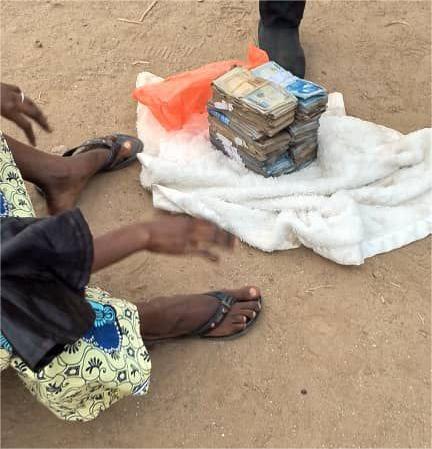
It also disclosed that ₦3.2 million, suspected to be ransom proceeds from previous kidnappings, was recovered from the suspects. The victims were said to be in stable condition and had been placed on medical care at the Nigerian Army Clinic.

The police further assured the public that efforts were underway to apprehend the remaining suspects and that security deployments had been reinforced in Mpape and its environs to prevent future attacks.

Residents were urged to continue their lawful businesses without fear and to stay alert while promptly reporting any suspicious activities to the following emergency numbers for assistance: 08032003913, 08028940883, and 07057337653.

The ICIR reports that Mpape is among communities in Nigeria’s capital that have been under the siege of kidnappers, armed robbers and other criminals.

There have been several cases of kidnappings in all six area councils in the FCT, including Bwari, Kwali, Abaji, Gwagwalada, Kuje, and the Abuja Municipal Area Council (AMAC), notably in the past five years.

However, while the government, under the FCT Minister, Nyesom Wike, has been able to rein in the criminals in five area councils, the menace of kidnapping has persisted in Bwari Area Council.

This report highlights some of the insecurity incidents in the city as of December 2023.


FAAN shuts Ibadan Airport

0

THE Federal Airports Authority of Nigeria (FAAN) has announced the temporary closure of Samuel Ladoke Akintola Airport in Ibadan, Oyo State.

In a statement on Sunday, FAAN’s Director of Public Affairs and Consumer Protection, Obiageli Orah, said the Federal Government approved the closure to enable critical infrastructural upgrade at the facility.

Consequently, the Nigerian Airspace Management Agency has shut the runway and suspended airport operations in compliance with International Civil Aviation Organisation regulations.

The upgrade is part of the Oyo State government’s efforts to elevate the airport to international status.

The FAAN urged stakeholders and passengers to bear with the government during the closure, emphasising that the move aligned with aviation safety recommendations.

The statement read in part, “The Federal Government of Nigeria has approved the temporary closure of Samuel Ladoke Akintola Airport (SLAA), Ibadan, due to ongoing upgrade works.

“As part of the Oyo State Government’s initiative to upgrade Ibadan Airport from a domestic to an international airport, various improvements and remodelling works are currently underway.   

“In compliance with aviation safety recommended standards and processes, the closure became imperative to ensure the safety of passengers as well as airport personnel.”

The closure came two weeks after FAAN shut down a neighbouring airport in Akure, Ondo State, after rainstorms destroyed some if its infrastructure.

Presidency faults Jonathan, Soyinka over stance on Rivers emergency rule

0

THE Nigerian Presidency has criticised former President Goodluck Jonathan and Nobel Prize winner, Wole Soyinka, regarding their stance on President Bola Tinubu’s declaration of a state of emergency in Rivers State.

The Senior Special Assistant to the President on Media and Publicity, Temitope Ajayi, in a statement on Sunday, March 22, said Jonathan and Soyinka had the right to their respective opinions but should recognise that President Tinubu had a country to govern.

“Professor Wole Soyinka and former President Goodluck Jonathan are respected statesmen. Like many Nigerians who have offered varied opinions on the president’s declaration of a state of emergency in Rivers State, the two distinguished Nigerians have also offered their own opinions.

“President Tinubu has a country to govern, and he has exercised his power under the 1999 Constitution as amended,” the Presidency stated.

It maintained that Tinubu had a responsibility to uphold Nigeria’s unity and would not permit any region or state to slip into disorder.

The ICIR reported that Jonathan criticised the suspension of elected officials in Rivers state, following the emergency rule declared by Tinubu on Tuesday, March 18.

The suspended officials include the state governor, Siminalayi Fubara, his deputy, Ngozi Odu, and all House of Assembly members in the state.

According to the president, the declaration was occasioned by a protracted political crisis between Fubara and lawmakers loyal to his predecessor and current Minister of the Federal Capital Territory, Nyesom Wike.

While Jonathan warned that the suspension of elected officials dented Nigeria’s image, Soyinka argued that the decision contradicted the principles of federalism.

Soyinka also criticised the action and pointed out that the manner of its enforcement betrayed federalism.

On March 18, Tinubu declared a state of emergency in Rivers State, citing an alleged governance breakdown caused by the ongoing conflict between Fubara and state lawmakers loyal to Wike, including the reported attack on oil facilities in the state hours before the. pronouncement.

Tinubu suspended Fubara, his deputy, and the state lawmakers. He appointed Ibok-Ette Ibas, a retired vice admiral, as the state’s sole administrator, citing Section 305 of the 1999 Constitution.

Despite opposition to the decision from Nigerians, the National Assembly endorsed the emergency rule on Thursday, March 20.

Several stakeholders, including opposition Peoples Democratic Party (PDP) governors, the Nigerian Bar Association (NBA), the Nigeria Labour Congress (NLC), former Vice President Atiku Abubakar, former Anambra State Governor and presidential candidate of the Labour Party (LP) Peter Obi, and over 200 civil society organisations (CSOs), were among Nigerians who opposed the emergency rule.


Father accuses Imo landlord of shooting son while jumping fence to retrieve ball

0

Jonathan Odikanwa, a 70-year-old indigene of Ikeduru Local Government Area of Imo State has expressed grief over the death of his 19-year-old son, Paul, who was allegedly shot while attempting to retrieve a ball from a landlord’s compound near his school in Owerri.

Speaking with Sunday Punch on the circumstances surrounding the incident, Odikanwa who described the act as ‘animalistic’ recounted that he was at home last Monday afternoon when a group of teachers and students from his son’s school – Urban Development Secondary School – visited him with the sad news.

“They told me that my son had a problem. When I asked them what kind of problem it was, they were hesitant, but I insisted they tell me exactly what happened.”

He learned that his son, a JSS 1 student who started school late, was playing football with his schoolmates when the ball landed in a neighbour’s compound. Paul, with the help of his friends, climbed the neighbour’s fence to retrieve the ball but was allegedly shot by the landlord.

“In the process, they heard a gunshot, and my son fell from the fence. The other students rushed to where he had fallen. It was then that they noticed he had a bullet wound, and there was blood all over his body. They immediately rushed him to the hospital, and the matter was reported to the school management.”

Upon receiving the distressing news, he rushed to the hospital where Paul was taken and then proceeded to the police station where he met the landlord.

“The police organised a meeting between me and the man. The purpose of the meeting was for him to narrate exactly what happened. He tried to deny it, but it was clear that he shot the boy because the students who were there also gave statements at the police station, confirming that he shot the gun.

“Moreover, after shooting the boy, he fired more gunshots sporadically into the air, which indicated that it was deliberate. That was what I was told.”

While the landlord denied shooting Paul, claiming he only tried to scare him by making a noise with a polythene bag, Odikanwa strongly refuted this version of events.

“The man also said that while my son fell, a stick on the ground caused an injury to him. But that was a lie because the position of the wound on my son’s buttocks showed that something had pierced through from one side to the other.

“I told him to pray for my son to recover. That was my only concern – that my son would get better,” he recalled.

He lauded the school authorities and the police for making frantic efforts to save the boy’s life. “One of the teachers even called her husband, and he rushed down to intervene,” Odikanwa added.

Medical efforts were, however, not enough to save Paul. Multiple scans and X-rays were conducted as doctors suspected internal injuries beyond the initial wounds. “On Wednesday, they took him into surgery and said he had a cut in his intestine,” said the bereaved father.

“I can’t imagine anyone, especially someone who is about 65 years old, acting in such a way. I feel pained that my son was shot just for going to retrieve a ball from a man’s compound,” he added.

When asked if he suspected the bullet caused the internal injuries, Odikanwa’s response provided a twist to the issue, indicating the risk his son took to reclaim the ball. “I am not a medical expert, but given the height of the wall, if someone falls from it, it could damage their spinal cord or bones. The impact could cause internal injuries. Also, my son lost a lot of blood.

“It is now a police matter, and the government is involved. The school authorities and the State Education Management Board are handling it, and even the Imo State Commissioner for Health has contacted me. They assured me that they were looking into my son’s case. After he was pronounced dead, I informed the Commissioner for Health about the development. I believe that since it is a police matter, an autopsy will be carried out.”

On the whereabouts of the landlord, Odikanwa said the matter has been transferred to the Homicide Unit of the Police Criminal Investigation Department in the state. “I can’t say for certain if he has been released; I am not involved in those details,” he said.

He described his late son as a well-mannered and passionate teenager. He said further of the deceased, “He was a very good boy. He was intelligent, respectful, and loved football. Even at his young age, he had football boots and was passionate about the game.”

Paul was a student at Urban Development Secondary School, World Bank, Owerri. His father said the boy aspired to continue his education and possibly learn a trade after completing his studies.

Odikanwa, who has been single-handedly raising his son following the death of Paul’s mother, acknowledged that the landlord’s sister had been supportive. “To be honest, the man’s sister has been contributing to my son’s medical expenses. She has shown a lot of concern.”

However, he did not state whether he wanted the matter taken to court.

Telcos want to introduce different tariff plans for different states

0

TELECOMMUNICATION operators (Telcos) in Nigeria are thinking about introducing different pricing plans for different regions of the country. They say this is because the challenges and costs of running their businesses vary significantly from state to state.

Currently, phone companies in Nigeria have a single national tariff for their services, meaning everyone pays the same amount no matter where they live. However, the telcos argue that this system doesn’t account for the fact that some states have higher operating costs due to issues like attacks on their equipment and multiple taxes.

At a recent forum in Lagos on Saturday, March 22, the telecom operators explained that a regional pricing system would allow them to charge more in states where it’s more expensive to operate and potentially offer better deals in states where it’s easier to do business.

Gbenga Adebayo, the head of the Association of Licensed Telecommunications Operators of Nigeria (ALTON), specifically pointed out that the high cost of doing business in some states is a major concern and increases their expenses. He suggested that if negotiating with certain states to reduce these costs is impossible, then the added expense of operating there should be reflected in the service prices in those areas.

“We may have to reconsider the issue of our national tariffs and look at regional tariffs. If you are aware that the cost of doing business is high in a particular state and it’s impossible to negotiate with them, factor the cost of deployment in those areas into the cost of providing services,” he said.

Tony Emoekpere, the President of the Association of Telecommunications Companies of Nigeria (ATCON), agreed that the current national tariff is unfair because operational costs are not the same across the country. He believes that states that make it easier for telecom companies to operate should be rewarded, while those that create difficulties should see higher service costs.

“If it costs me extra to haul diesel from one part of the country to another, I should be able to add that cost to the service or you compensate me for that by making your environment attractive for me to operate,” he said.

Earlier at the conference, the organiser, Omobayo Azeez, while speaking on the theme “Strengthening Protection of Critical Information Infrastructure through Proactive Implementation and Strategic Coordination”, emphasised the need for cooperation among stakeholders to protect Nigeria’s digital economy. He highlighted the recent signing of the Critical National Information Infrastructure (CNII) Order by President Bola Tinubu as an important step in strengthening the country’s digital infrastructure.

It’s worth noting that the Nigerian Communications Commission (NCC), the regulatory body for the telecom industry, recently approved a 50 per cent increase in tariffs for telecom operators. This came after years of the companies complaining about rising operational costs.

While the idea of regional tariffs is being considered by the telecom operators, it’s important to remember that the NCC ultimately needs to approve any changes to pricing plans.