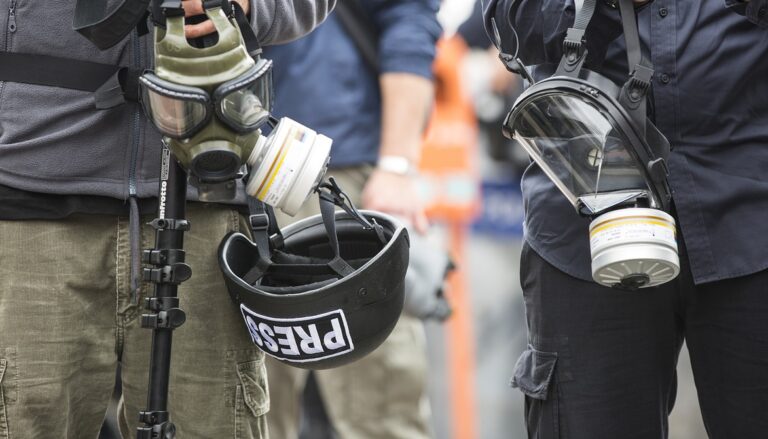
Section 22 of the 1999 Constitution of the Federal Republic of Nigeria (as amended) mandates the media to ensure the government’s accountability to the people through reporting. However, other laws passed by the Nigerian government fail to protect journalists carrying out this responsibility and are often deployed as tools to suppress the free press.
DURING the 29th Convocation Ceremony of Kwara State Polytechnic held in November 2023, the institution’s Rector, Abdul Jimoh Mohammed, made a passionate appeal to the government for funds.
Mohammed stated that the institution had funding problems and needed support for course accreditation and rehabilitation of old structures.
According to some reports, he also pleaded that the state government take over salary payments for six months while bragging about infrastructure already developed with the school’s Internally Generated Revenue (IGR).
Three months after this passionate appeal, a journalist with online media outlet The Informant 27, Abdulrahman Taye Damilola, reported that Mohammed had been less than truthful about his claims on inadequate funding, as the institution generated over N1 billion annual revenue surplus during the year.
The report also stated that Mohammed’s claims of infrastructural development were inaccurate as some of the projects were shoddy and incomplete.
Following the publication, some staff of the newsroom were arrested by the police. The writer and three of his colleagues, Adisa-Jaji Azeez, Salihu Ayatullahi, and Salihu Shola Taofeek, were arraigned before a magistrate in the state.
The charges brought against them at the time of the arraignment include cyberstalking and conspiracy under sections 24(1b) and 27 of the Cybercrimes Act. They were also charged with defamation under section 393 of Nigeria’s Penal Code.
Although the Act was established to prohibit cybercrime in Nigeria, some parts of the law have been weaponised against online journalists, regardless of the constitutional mandate to perform watchdog responsibilities.
Section 22 of the 1999 constitution of the Federal Republic of Nigeria as amended provides that “the press, radio, television and other agencies of the mass media shall at all times be free to uphold the fundamental objectives contained in this Chapter and uphold the responsibility and accountability of the Government to the people.”
However, until it was recently amended, Section 24 of the Cybercrimes Act, especially subsection 1b, which provides that “any person who knowingly or intentionally sends a message or other matter by means he knows to be false, for the purpose of causing annoyance, inconvenience, danger, obstruction, insult, injury, criminal intimidation, enmity, hatred, ill will or needless anxiety to another or causes such a message to be sent, commits an offence under this Act,” has been repeatedly used to obstruct the achievement of this goal.
The Economic Community of West African States (ECOWAS) Court of Justice also declared the section inconsistent with Article 9 of the African Charter on Human and People’s Rights.
Ayattullahi, who serves as The Informant247’s Editor, told The ICIR that the charges were later changed to criminal defamation and conspiracy, and described the ongoing process as draining, as it is taking a toll on both the author of the report and newsroom.
“When you know that even if you have facts they can lock you up at any time on the instruction of powerful people, definitely, even if you have evidence and you want to publish something in the future, you are going to think twice,” Ayatullahi said.
He also noted that delays by the prosecution was further frustrating the productivity of the newsroom and the progress of the case.
“On Monday, we were in court, and they told us that they could not get fuel to appear in court. The magistrate had to adjourn the case till the 15th of this month. Before this last sitting, they told us that they are yet to conclude the investigation, and once they finish the investigation, they are going to bring the evidence to court.
“When they were supposed to bring the evidence to court, they said they don’t have fuel,” he said.
More concerns despite amendment
In February 2024, Nigerian President Bola Tinubu signed an amendment to some sections of the bill, including section 24.
Section 24 (1b) now only punishes a person who sends a message that “he knows to be false, for the purpose of causing a breakdown of law and order, posing a threat to life, or causing such message to be sent.”
While Civil Society Organisations (CSOs) have commended this amendment, there are still concerns that the Act can be deployed to stifle freedom of expression.
A press release by six CSOs: Paradigm Initiative, Gatefield, ResearcherNG, FollowTaxes, North-East Humanitarian Hub and Anvarie Tech, urged the federal government to further amend the Act to reduce the chances of abusing citizens’ rights.
“We call on the Federal Government of Nigeria to take decisive action in further amending the Act to address these challenges and enact legislation and policy that are rights-respecting with particular interest in Sections 24, 38, 40, and others. We also call for safeguards against possible abuse by more explicitly requiring judicial oversight,” the statement co-signed by the organisations read.
The threat to press freedom and the civic space in Nigeria has been a matter of concern for several years, as journalists and other civic actors are targeted via several means, including laws like the Cybercrime Act, unlawful or prolonged detention and outright attacks by both state and non-state actors.
In 2023, The ICIRtraced 39 journalists who had been harassed during the year in the line of duty through media reports, though the list is not exhaustive.
Of the 39, four journalists were staff members of The ICIR.
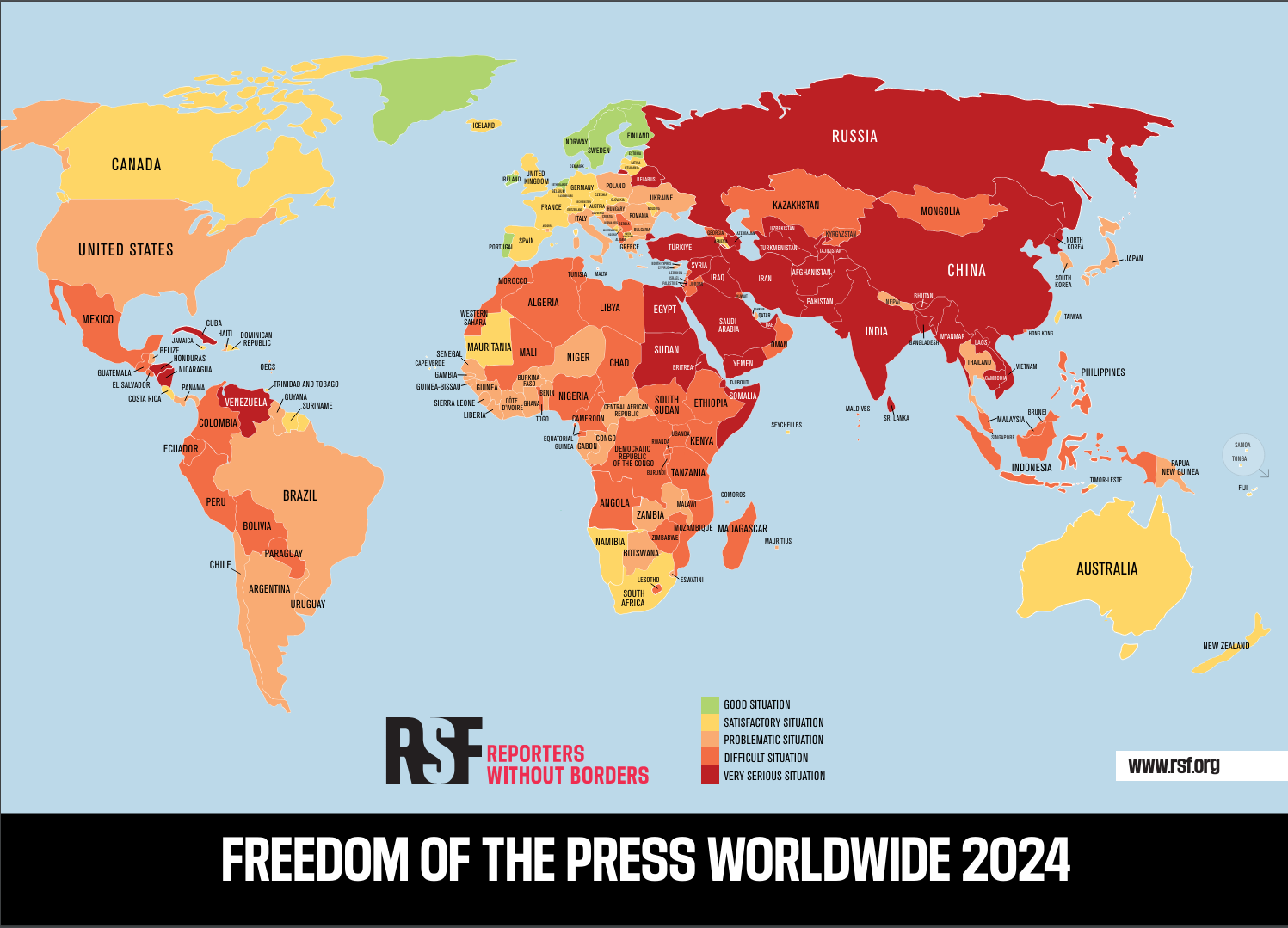
THE latest data on the 2024 World Press Freedom Index by Reporters Without Borders (RSF) has placed Nigeria as one of West Africa’s most dangerous and difficult countries for journalists.
By this, Nigeria ranks 112th out of 180 countries where journalists are regularly monitored, attacked and arbitrarily arrested. However, the 2024 figure is lower than the 123rd position the country had in 2023.
The ranking assed several indicators such as political, legislative, economic, social and security indices.
According to RSF, “The level of governmental interference in the news media in Nigeria is significant. It can involve pressure, harassment of journalists and media outlets, and even censorship. This interference is even stronger during electoral campaigns. Addressing political issues in a balanced way can also be difficult, depending on the media outlet’s owner. To a large extent, government officials have a say in the appointment and dismissal of media officials, whether in the public or private sector.”
On the legal framework, RSF said that Nigeria’s constitution protects freedom of expression and opinion, but many laws’ provisions make it possible to obstruct journalists’ work.
Some of these laws are the laws on cybercrime, anti-terrorism, state secrets, and the penal code.
2024 Press Freedom Index
For the economic and socio-cultural context, the ranking showed that while there are many media outlets in the country, poor remuneration makes journalists vulnerable to corruption.
It added that media outlets in the county have also been the targets of attacks based on religion, gender, or ethnicity.
On security, RSF said, “In recent years, most of West Africa’s violent attacks, arbitrary detentions, and shooting of journalists have taken place in Nigeria, especially during the country’s electoral periods. Nearly 20 journalists and media outlets were attacked during the general elections in February and March 2023.
“Crimes committed against journalists continue to go unpunished, even when the perpetrators are known or apprehended. There is almost no state mechanism for protection. The authorities keep journalists under close surveillance and do not hesitate to threaten them.”
However, according to the ranking, the top five safest countries for journalists are Norway, Denmark, Sweden, Netherlands and Finland. On the other hand, the countries unsafe for journalists are Eritrea, Syria, Afghanistan, North Korea and Iran.
In West Africa, countries like Benin socred 89, Togo ranked 113th, Ghana ranked 50th, Ivory Coast ranked 53rd, Niger ranked 80th, Burkina Faso ranked 86th and Liberia 60th.
Others include Mali: 114th, Guinea: 78th, Guinea Bussau: 92nd, Serria Leone: 64th and Senegal: 94th.
The ICIR reported several attacks on the media including its journalists while carrying out their responsibility.
SOME stakeholders have highlighted the importance of youth inclusion and adoption of technology as prerequisites to robust governance and accountability.
The stakeholders, including President Bola Tinubu’s Senior Special Assistant on Youth Initiative, Titi Gbadamasi, Founder and Africa Director of MacArthur Foundation, Kole Shetima, Global Director of Budgit, Oluseun Onigbinde, Executive Director of Yiaga Africa, Samson Itodo, spoke at the Promad’s Accelerating Youth Participation in Governance (AYPG) on Thursday, May 2, in Abuja.
The event featured a cohort of 18 young leaders from the six Area Councils of the Federal Capital Territory who received training on participation in governance.
The session’s highlight was a panel discussion on artificial intelligence, with insights shared by panellists and the African director of the MacArthur Foundation, Kole Shetimma, who delivered the keynote address.
The stakeholders charged youths with being intentional about politics and governance and urged them to embrace Artificial Intelligence to hold political leaders accountable.
Speaking on the role of youths in governance, the SSA to the President on Youths Initiative, Gbadamasi, noted that Nigerians, both at home and abroad, shared the same aspiration for a better Nigeria, adding that their active involvement in governance was a critical tool for progress.
Addressing concerns about youth representation in positions of power, Gbadamasi stressed the importance of intentionality and consistency in pursuing leadership roles.
She said that governance was not a passive endeavour but required proactive engagement and strategic participation from youth.
Gbadamasi also urged the youth to remain steadfast in their commitment to effecting positive change, emphasising the need for sustained involvement in the political process.
“So young people cannot take a back seat. They cannot be relaxed in their approach. We must show consistency. Most importantly, we cannot be here today and there tomorrow if we want a better Nigeria. We have to continually show up for a better Nigeria.”
When asked about President Tinubu’s commitment to mainstreaming youth representation, Gbadamasi explained that significant strides had been made in this regard, noting that the president’s cabinet had a convincing number of youths.
She also highlighted the administration’s efforts to prioritise youth-centric policies and initiatives across various sectors, including education and agriculture.
Responding to questions about achievements within Tinubu’s administration in its first year, particularly concerning youth-focused initiatives, she said, “we have very significant strides. For instance, we have the Student Loan that has now been signed into an act and that gives priority to education, young peoples’ education. So we no longer have issues with you cannot go to school because you don’t have funds. You can apply, and it’s devoid of any kind of who-knows-who process.”
Addressing the implications of AI in elections and governance, the Executive Director of Promad, Daisi Omokungbe, emphasised the inevitability of technology in shaping electoral processes and overall development.
“Essentially, whether we like it or not, AI and other technologies will shape our elections. It will shape our development and businesses…So for us not to be on the wrong side of technology and AI, that is why we put this event together.”
Less than 10 per cent of youths engaged their elected leaders in FCT
Drawing from recent research conducted by the organisation, Omokungbe highlighted the ‘alarming’ lack of engagement between young people and their elected representatives in the FCT.
According to him, less than 10 per cent of those interviewed never had the opportunity to engage their elected representatives.
“On the other side, their elected representatives have also not engaged them in town hall meetings or called for a consultative forum where they will be able to shape development issues,” he said.
The Promad boss, therefore, called for urgent need for proactive youth involvement in governance and democracy.
“We cannot be passive about governance and democracy and expect to have sustainable development. So we need all of us to be active about governance, about democracy, to attain certain development, “ he said
Panelist weigh in
Speaking on rethinking youths’ participation in governance with AI in Nigeria, the Executive Director of YIAGA, Itodo, recommended re-evaluating traditional approaches to civic engagement and leveraging technology to enhance democratic processes.
He further explained the multifaceted role of AI in mobilising voters and countering misinformation during elections.
“We can use AI to mobilise people to show up for an election, and to do so, one of the things AI tends to do is to detect fake news. You can use AI to counter misinformation…Another thing AI can do is examine and analyse images to detect and make informed decisions about the existence of images.
“The second thing AI can do is fast-tracking decision-making,” he added.
While acknowledging AI’s transformative potential, he sought a balanced approach to technology adoption and its use for societal benefit.
Also emphasising the importance of AI and its threat, Budgit Global Director, Onigbinde said AI emerged like other technology tools, with benefits and challenges.
THE Nigeria Police Force (NPF), on Thursday, May 2, announced the arrest of Ibrahim Abdullahi, one of the suspects involved in the violent attack on the Abuja-Kaduna passenger train in March 2022.
The Force Public Relations Officer (FPPRO), Olumuyiwa Adejobi, disclosed this during a press briefing in Kaduna State.
According to Adejobi, Abdullahi, known as “Mandi,” was also involved in the abduction of students from Greenfield University in 2021.
The Police spokesperson also revealed that 48 AK-47 rifles were found with the suspect during his arrest.
Adejobi said Abdullahi masterminded and participated in the kidnapping and murder of students of Greenfield University and most of the kidnappings along the Abuja-Kaduna highway.
He said the suspect was arrested based on credible information at the Abuja-Kaduna Road flyover by Rido Junction in Chikun Local Government Area.
He explained that the suspect confessed to being a leader of a kidnap syndicate terrorising the Kaduna-Abuja Expressway and ranked among notorious bandits like Dogo Gide and Bello Turji, who had terrorised the North.
He added that investigations were underway to determine his weapons’ sponsor(s) and supplier(s).
The ICIR reported in 2023 that another suspect linked to the Abuja-Kaduna train attack, Bello Yellow, was arrested by vigilantes in Abuja.
The suspect was reportedly arrested by vigilantes in the Zuba area of the Federal Capital Territory (FCT).
It was gathered that he was apprehended in the early hours of Sunday, January 22, when he alighted from a car around Dan-Kogi Motor Park.
A vigilante, who refused to disclose his name, said members of the Miyetti Allah sighted the suspect in the area.
Reports say N103,000 cash, three sticks of cigarettes, and a lighter were found in his possession.
The vigilante source stated that the Divisional Police Officer in Zuba came to the vigilante office with his men to pick up the suspect.
The ICIR reported that terrorists attacked an Abuja-Kaduna train in March 2022. Several passengers were abducted in the incident.
This organisation gathered that the terrorists used an improvised explosive device to derail the train.
According to a passenger on the train, who was identified as Anas Iro Dansuma, the explosives destroyed the train’s engines around Katari to Rijana.
Dansuma said the terrorists attacked the train and shot sporadically.
Pictures and videos from the attack seen by The ICIR show passengers who sustained injuries, while some parts of the train were destroyed.
Earlier in October 2021, terrorists attacked the Abuja-Kaduna train with explosives, forcing a suspension of operations on the rail line.
For years, Kaduna State has been the centre of violent attacks in Nigeria, with several incidents of kidnapping for ransom, attacks on villages and abductions.
In 2022, the Kaduna International Airport was attacked by terrorists and a staff of the Nigerian Airspace Management Agency (NAMA), Shehu Na’Allah, was killed.
Terrorists, numbering over 200, invaded the Kaduna International Airport located in Igabi Local Government, disrupting the operation and killing one security personnel of the Nigerian Airspace Management Agency.
The attack caused panic at the airport and reportedly grounded a Lagos-bound AZMAN aircraft scheduled to take off at 12:30 p.m.
THE Federal Ministry of Industry, Trade, and Investment has extended the deadline for companies interested in managing the $10 billion diaspora fund to apply.
The deadline has been moved from May 6 to May 13, 2024.
The minister, Doris Nkeiruka Uzoka-Anite, disclosed this in a circular on Thursday, May 2, in Abuja.
Uzoka-Anite stated that the extension was designed to allow stakeholders additional time to adequately prepare their applications following the guidelines established for the fund.
The minister urged prospective applicants to utilise the extra time to complete their submissions, ensuring they are thorough and competitive.
“The Federal Ministry of Industry, Trade, and Investment wishes to inform all interested parties that the deadline for the submission of expressions of interest (EOI) for the Nigeria diaspora fund has been extended.
“The new submission deadline is May 13, 2024. This extension is intended to accommodate stakeholders who require more time to prepare their applications by the guidelines provided for the $10 billion Nigeria diaspora fund,” the minister stated.
She noted that the EOI was open to fund managers interested in developing and establishing a multisectoral, multilateral private sector-led investment fund.
“We encourage prospective applicants to use this additional time to finalise their submissions that meet the outlined criteria, ensuring comprehensive and competitive proposals. For further inquiries or additional information, please contact the Federal Ministry of Industry, Trade, and Investment during office hours (8:00 AM to 5:00 PM),” she further said.
The minister had earlier invited eligible firms to indicate interest in providing services as Nigeria diaspora fund managers.
The minister made the announcement on her X account.
She disclosed that the fund managers would be responsible for developing and establishing a multi-sectoral, multilateral, private sector-led investment fund to form the $10 billion Nigeria diaspora fund.
Last year, Nigeria was estimated to have received more than $20 billion in diaspora remittances, according to the World Bank.
Informed analysts said the fund could serve as Nigeria’s support facility and hedge fund, supporting Nigeria’s naira appreciation amid the current foreign exchange fluctuation.
“The fund will support the strengthening of Nigeria’s foreign reserve and serve as a hedge for Nigeria’s fluctuating exchange rate,” a development economist, Celestine Okeke, told The ICIR.
ECONOMISTS have expressed divergent views on adopting a fixed Customs duty exchange rate following frequent changes in the rate, which they believe are creating volatility and hurting the Nigerian economy.
The Central Bank of Nigeria (CBN) has adjusted the Customs duty exchange rate about 38 times since the beginning of this year.
In its latest adjustment, The ICIR reported that the CBN raised the rate by 14 per cent to N1,327.35/$ on Monday, April 29.
The report noted that the frequent changes significantly burdened the business community and dashed importers’ hopes.
As of May 1, the rate had jumped to N1,373.65/$ from less than N1,200/$ a few days earlier.
The frequent changes have led to high volatility in cargo clearing costs, worsening inflationary pressures and aggravating investment risk, especially in the real sector of the economy.
In recent conversations, renowned economists Bismarck Rewane and Muda Yusuf differed on whether the apex bank could fix exchange on Customs duty.
Yusuf, the chief executive officer (CEO) of the Centre for the Promotion of Private Enterprise (CPPE), issued a statement on Wednesday, May 1, urging the apex bank to adopt a quarterly framework starting at the rate of N1,000/$ to minimise volatility in the Customs duty exchange rate.
He suggested that the adoption be carried out in line with the present administration’s commitment to bolstering investors’ confidence and driving economic growth.
“Such framework should adopt a quarterly Customs duty exchange rate after due consultation with the fiscal authorities. We propose a commencement rate of N1,000/$ Customs duty exchange rate.
“Consultation with the fiscal authorities is imperative because of the trade policy implications of such decisions. It is also consistent with the commitment of the present administration to effective coordination between fiscal and monetary authorities.”
Yusuf buttressed that it took a lot of work for investors to plan under these unstable circumstances as the situation has introduced unprecedented uncertainty and unpredictability to the international trade dynamics.
According to him, investment risk has become elevated, planning has become difficult, risk management has become challenging, and investors’ confidence is being weakened.
He added that it was a double whammy for investors to grapple with volatility in the foreign exchange market and contend concurrently with high unpredictability in the international trade ecosystem, stressing that it differed from Nigeria’s current growth aspirations.
However, in his view, Rewane, CEO of Financial Derivative Limited, said fixing the exchange rate on Customs duty would mean returning to fixing the unregulated exchange rate market when he spoke on Channels Television on Tuesday, May 2.
He said, “I have listened to the question on Customs duty whether you can fix it.
“You cannot fix an exchange rate for a Customs duty. What you can do is take the average for the entire month and say that this is the average.”
“The CBN could set an average for the month,” Rewane said, adding, “but to fix it is the beginning of going back to fix the unregulated exchange rate. The free market system and price mechanism allocate resources efficiently. So, let’s not decide ourselves.”
STAKEHOLDERS in Nigeria’s educational sector have urged tertiary institutions to publicise confirmed cases of sexual harassment in schools to encourage students further to report such incidents.
This appeal was made during a progress review meeting of Independent Sexual Harassment Prohibition Committees (ISHPCs) in various tertiary institutions held in Abuja on Monday, April 29.
The meeting was organised by the Anti-Sexual Harassment Advocacy (ASHA) Cluster, an initiative funded by Palladium.
Executive Director of Gender Mobile Initiative, Omowunmi Ogunrotimi, who spoke at the event, stated that making reports of sexual harassment cases handled by the committee regularly available to the school authorities and students would help victims know that their situations could be fairly treated if reported.
She also urged institutions not to mete out punishments that might be inadequate and, therefore, encourage perpetrators.
“When you say that you reduce the classes that lecturer is taking from ten to five because he committed an act of sexual harassment and you are still paying the person’s salary, you’ve reduced the person’s burden. That is an incentive,” she said.
Ubong Ekpe, who moderated the plenary session, also noted that resolving cases was a significant step in encouraging students to speak up, as unresolved cases give students no reason to come forward when abused.
“When there is closure to cases, it will bolster the confidence of students. If we have cases and someone is being reprimanded, someone is being punished, I think it will build confidence,” he said.
Others also agreed that the reluctance of students to report sexual harassment could only be changed over time through persistent sensitisation.
The Independent Sexual Harassment Prohibition Committee is part of the provisions of a bill for an Act to Prevent, Prohibit, and Redress Sexual Harassment of Students in Tertiary Educational Institutions and for Matters Connected Therewith.
Although the bill has yet to be passed into law, various institutions have proceeded to institute the committee as part of measures to curb sexual violence in schools.
Sexual harassment has remained a matter of urgent concern for Nigerians, especially parents and students of higher institutions.
About a week ago, a professor at the University of Nigeria, Nsukka (UNN) in Enugu State, was caught on camera trying to sexually abuse his student within the school premises.
Oga Lecturer also reported that at least 43 lecturers were indicted for sexual harassment between 2018 and 2023.
This report is republished from Oga Lecturer. Read the original report here.
The “NDIC’s Interim Management Committee (IMC), during its 18th meeting held on April 24th and 25th, approved an increase in the maximum deposit insurance coverage levels for all licensed deposit-taking financial institutions with immediate effect.
“The maximum deposit insurance coverage has been elevated from N500,000 to N5,000,000. This change will now fully cover 98.98 per cent of depositors, significantly up from the current 89.20 per cent,” Hassan said.
The NDIC also increased the deposit insurance coverage for other financial institutions.
It raised the coverage for microfinance banks (MfBs) to N2 million from N200,000 to protect 99.27 per cent of depositors, compared to 98.76 per cent under the previous limits.
Primary mortgage banks’ (PMBs) coverage was increased from N500,000 to N2 million to ensure 99.34 per cent of depositors are covered, up from 97.98 per cent.
The corporation also adjusted the payment service banks (PSBs) coverage from N500,000 to N2 million, covering nearly all depositors at 99.99 per cent of the coverage. It increased mobile money operators (MMOs) to N5 million per subscriber.
The NDIC boss said, “In terms of the value of deposit covered, the revised coverage would increase the value of deposits covered by deposit insurance to 25.37 per cent compared with the current cover of 6.31 per cent of total value of deposits.”
Hassan said the revised coverage struck a strategic balance between protecting depositors and ensuring the financial system’s stability. The changes aim to extend protection to a larger percentage of the population, enhance financial inclusion, and mitigate the potentially destabilising effects of bank operations.
The ICIR reports that deposit insurance coverage is a system established by the government to protect depositors against the loss of their insured deposits, as the banking sector and other financial institutions that accept deposits from the public are vulnerable to liquidity and solvency problems, among other things, hence the need to protect customers’ deposits.
THE Federal Capital Territory (FCT) Police Command has arrested two women attempting to traffick five children.
The FCT Police Command’s public relations officer (PRO), Josephine Adeh, disclosed this in a statement released on Thursday, May 2.
Adeh said the suspects, Kulu Dongonyaro and Elizabeth Ojah, had escaped arrest by the Sokoto State Police Command when security operatives apprehended them in the FCT.
“The suspects who attempted to escape arrest from Sokoto police operatives were intercepted and arrested by FCT police operatives at Kagini junction, Abuja, while suspiciously conveying five children into the Federal Capital Territory.
“The FCT police command, in the spirit of oneness, has now handed the suspects and victims over to Sokoto State police command for further investigation and onward prosecution,” she noted.
Adeh also explained that the FCT Commissioner of Police (CP) Benneth Igweh urged parents to pay closer attention to their children.
“He also calls on residents to be vigilant and take advantage of the police emergency lines in reporting suspicious activities through: 08032003913, 08028940883, 08061581938, and 07057337653 PCB: 09022222352, CRU: 08107314192,” the statement read.
In February 2024, the FCT Police Command arrested three men who attempted to traffic 12 children.
The suspects had been conveying the children to Ogun state from Kaduna when the security operatives intercepted them.
Child trafficking has remained a significant challenge in Nigeria, with many young children sold into forced labour, prostitution, and other forms of exploitation.
A 2020 report by the United Nations Office on Drugs and Crime (UNODC) noted that Nigeria was a major source, transit, and destination country for human trafficking.
According to another report, 80 per cent of children forced into labour are victims of child trafficking.