Home Blog Page 606

Suspected killer of British-Nigerian teenager charged with murder

A SPANISH-Brazilian man, 36, identified as Marcus Aurelio Arduini Monzo, has been charged to court following the sword attack in Hainault, East London, on Tuesday, April 30.

The sword attack led to the death of a 14-year-old British-Nigerian teenager, Daniel Anjorin.

Monzo was charged with two counts of attempted murder, two counts of grievous bodily harm, aggravated burglary and possession of a bladed article On the order of the homicide division of the Crown Prosecution Service (CPS). He will appear at Barkingside Magistrates Court today, Thursday, May 2.


Read Also:


“The Crown Prosecution Service has authorised the Metropolitan police to charge Marcus Arduini Monzo with the murder of 14-year-old Daniel Anjorin, who was fatally stabbed in Hainault on Tuesday April 30. Our thoughts remain firmly with the family of the Daniel and all those who have been impacted by this horrific incident.

“We remind all concerned that criminal proceedings against the defendant are active and that they have a right to a fair trial. It is extremely important that there should be no reporting, commentary or sharing of information online which could in any way prejudice these proceedings,” said, the chief crown prosecutor for CPS London North, Jaswant Narwal.

The Metropolitan police said they were called on Tuesday shortly before 7 a.m. after a vehicle was reported to have collided with a house in Thurlow Gardens, Hainault, East London.

They noted that a suspect armed with a sword then stabbed people during a series of attacks, wounding two police officers, who sustained significant injuries, and two members of the public.

The suspect had hit a 33-year-old man before stabbing him in the neck, after which a 35-year-old man was then attacked inside a nearby property, causing lacerations to his arm, before 14-year-old Anjorin was killed.

Police arrived at the scene within 12 minutes of the initial emergency call and attempted to subdue the suspect using incapacitant spray and a Taser gun, but these had little effect.

The suspect seriously injured two police officers, both of whom required surgery on Tuesday and remain in hospital.

One of the police officers, a woman sustained serious injuries to her arm, narrowly escaping the loss of her hand. The assailant fled once more, prompting terrified witnesses to seek shelter in nearby residences until police eventually subdued him using a Taser.

Speaking on the demise of their late teenager, Anjorin’s family said he was “a wonderful child who was well-loved and hard-working, adding that his death left a gaping wound in the family.

“No family should have to go through what we are experiencing today,” they told the London newsmen.

Also, Anjorin’s heartbroken friends and schoolteachers described him as a “true scholar with a positive nature and gentle character”.

Daniel Anjorin was a pupil of Bancroft’s private school in Woodford Green, the school also attended by Nottingham attack victim Grace O’Malley-Kumar, who was killed in June 2023 after trying to save her friend, Barnaby Webber, from their killer Valdo Calocane.

Alia dumps Ortom’s Volunteer Guards, set to launch own outfit

BENUE State Governor Hyacinth Alia is to launch another local security outfit to complement the efforts of other security agencies in tackling insecurity in the state.

This is coming despite the launch of Benue Volunteer Guards (BVGs) in 2022 by the state’s former governor, Samuel Ortom.

The ICIR reports that Ortom had boasted that the outfit would save the state residents from frequent attacks by gunmen.

Sources said since Alia assumed office as the governor, nothing much had been heard about the Community Volunteer Guards.

Alia disclosed the launch of his new outfit during the All Progressives Congress (APC) expanded stakeholders meeting, held at Government House, Makurdi, on Wednesday, May 1.

The governor said the outfit would assist in securing Benue communities and enable rural farmers to access their farmlands without fear.


Read Also:

He stated that his administration was already working towards procuring Hilux vans and motorcycles for the outfit’s personnel to use for patrols across the state.

Meanwhile, a group under the aegis of Defenders of Democracy (DoD) has condemned the governor’s planned launch of the outfit, describing the move as a duplication of the existing guard and a waste of taxpayers’ money.

In a statement signed by its president, Amos Uchiv, in Makurdi on Wednesday, May 1, the group alleged that the government might use the security outfit to attack its political opponents.

Uchiv described the decision as ill-conceived.

He noted that the move was a waste of resources, which would have been channelled to other security agencies, even as he alleged that the governor might be planning to recruit the youths to harass his political opponents.

Uchiv urged Alia to reconsider the decision and work towards strengthening existing security structures, including the state Community Volunteer Guards and other conventional security agencies, for the greater good of the state.

Nigerian workers commemorate Workers Day in pains

0

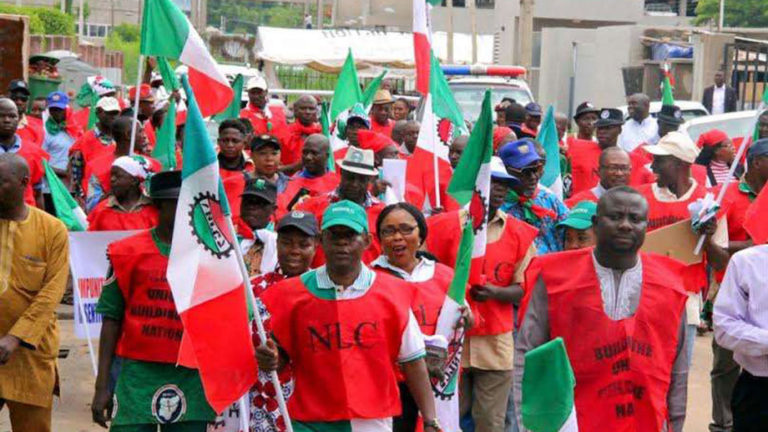
NIGERIAN workers join their contemporaries worldwide today, May 1, to commemorate 2024 International Labour Day, also known as Workers Day.

The Workers Day, backed by the International Labour Organisation (ILO), started in the 19th century when workers worldwide called for more equitable pay, shorter workdays, and better working conditions.

In Nigeria, workers from all industries, including the public and private sectors, celebrate it as a national holiday marked with marches, parades, speeches, and other events.


Read Also:

The day is for honouring the labour force and acknowledging their contributions to global and national economies.

Challenges confronting Nigerian workers

Poor wage is one of Nigerian workers’ biggest challenges. 

The current minimum wage is N30,000, but some workers still receive less than this amount, and several others are not paid when due.

Lack of adequate transportation also affects Nigerian workers. Many find it hard to commute to and from work due to the shortage of staff buses and the high cost of transportation.

This problem has been compounded since President Bola Tinubu removed the subsidy on petrol on the day he assumed office on May 29, 2023.

Another issue confronting Nigerian workers is the high inflation rate. Due to low wages, most workers find it challenging to pay for basic needs like food, housing, and medical care. The situation is considerably worse for individuals employed in the unregulated sector, where pay is meagre.

The National Bureau of Statistics (NBS) reported that in March 2024, the inflation rate increased to 33.2 per cent from 31.7 per cent in February. Moreover, food inflation increased from 30 per cent in February to 31.7 per cent in March.

In addition to the high inflation rate, Nigerian workers battle long working hours. Many employees work up to 12 hours a day without overtime compensation, which affects their health and general well-being, leaving them with no time for family or friends.

Many Nigerian workers lack access to social security programmes like health insurance and pension plans, which exposes them to financial shocks in the event of illness or injury. In places where these are available, they have been characterised by poor services and corruption.

Unfavourable working conditions also pose a great danger to Nigerian workers. Many workers are compelled to work in hazardous and unhygienic conditions. In Nigeria, factories still have inadequate safety gear and poor ventilation for their employees.

Labour’s demand

The federal government and the Nigeria Labour Congress (NLC) are negotiating a new minimum wage to address growing food prices and inflation.

A new minimum wage of N615,000 was demanded by the National Labour Council (NLC) and the Trade Union Congress (TUC) as the government has set up a committee for the new wage.

The labour unions agreed to continue with the status quo following Vice President Kashim Shettima’s formation of a 37-person panel in the Council Chamber of the State House in Abuja on January 30 on behalf of President Bola Tinubu.

The panel’s mandate was to recommend a new national minimum wage, and its membership included representatives from organised labour, the corporate sector, and both federal and state governments.

Government intervention

At various levels of government in Nigeria, major labour organisations like the TUC and the NLC are always at loggerheads with the authorities over issues that affect labour.

The government raised the minimum wage from 18,000 to N30,000 monthly in 2019, which many considered too low.

Perhaps Edo State workers can celebrate as their government approved a new minimum wage of N70,000 for them on Monday, April 29. 

Similarly, the Lagos State Governor Babajide Sanwo-Olu said no worker earned less than N70,000 in the state.

President Bola Tinubu, on Wednesday, May 1, reaffirmed his commitment to enhancing workers’ welfare.

In a Workers’ Day message released by his media aide, Ajuri Ngelale, Tinubu congratulated Nigerian workers and assured them of his dedication to improving their welfare and working conditions.

He also affirmed his commitment to providing the necessary tools for them to succeed.

He noted that he firmly believed that the custodians of the nation’s machinery deserved a fair wage and enhanced welfare.

The President had earlier approved a salary increase of between 25 per cent and 35 per cent for civil servants on the remaining six Consolidated Salary Structures.

The head of press, National Salaries, Incomes and Wages Commission (NSIWC), Emmanuel Njoku, announced the development in a statement on Tuesday, April 30.

According to the statement, the increase was to take effect from January 1, 2024.

Labour rejects wage increase

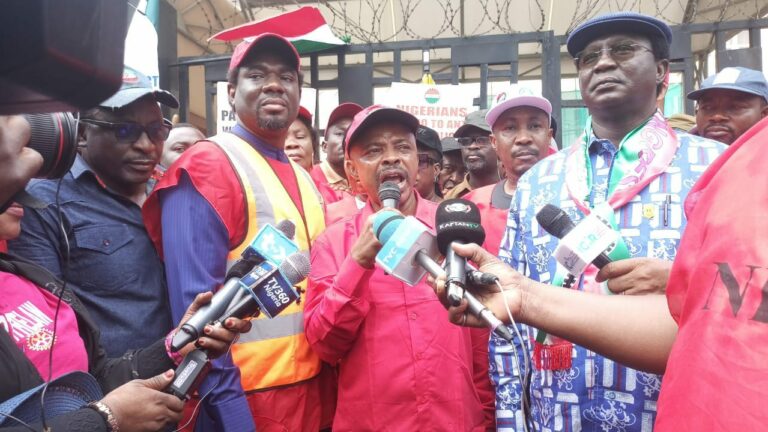
Reacting to the salary increase on Wednesday, May 1, while speaking on Channels Telivision’s Sunrise Daily, the President of the NLC, Joe Ajaero, described the decision as a ‘mischievous’ move.

Ajaero noted that the last minimum wage of N30,000 expired on April 18.

“I think the announcement now appears mischievous because there is no wage increase that the government is announcing. For them to announce it now is an issue that we are worried about at the NLC and even at the TUC,” Ajaero said.”

He added: “We have housing and accommodation of N40,000. We asked for electricity of N20,000 — of course, that was before the current tariff increase. Nobody can spend this amount currently. We have a utility that is about N10,000. We looked at kerosene and gas which is about N25,000 to N35,000.

“We looked at food for a family of six, that is about N9,000 in a day. For 30 days, that is about N270,000. Look at medical, N50,000 provided there will be no surgery or whatever.


Ajaero also stated that N20,000 was allocated for clothing, N50,000 for education, and N10,000 for sanitation.”

He said another bulk of the money was for transportation, noting that the workers stay on the fringes because of the cost of PMS, which amounted to N110,000.

“That brought the whole living wage to N615,000 and I want anyone to subject this to further investigation and find out whether there will be any savings when you pay somebody on this rate.”

New minimum wage will take effect from May 1 – FG

While addressing the concerns raised by the NLC on Wednesday, the federal government stated that although the Tripartite Committee on National Minimum Wage was yet to conclude its negotiations, workers would not incur any losses.

It added that the new minimum wage would take effect from May 1, 2024, as earlier agreed upon.

The Minister of State Labour, Nkeiruka Onyejeocha, stated this while addressing Nigerian workers at the May Day celebration in Abuja.

She expressed regret that the new national minimum wage wasn’t prepared before today but assured that extensive consultations were underway to expedite the compilation of the document.

Kenya floods kill over 100, scores missing

HEAVY downpours have killed over 100 people in Kenya’s capital, Nairobi, leaving at least 91 missing, said the East African country’s government on Tuesday, April 30.

The floods displaced over 190,000 people, damaging roads and other infrastructure.

The rains resulted from different factors, including the country’s seasonal weather patterns, human-induced climate change, and natural weather phenomena.

Since the rains started in March, there have been torrential rains and deadly floods which have destroyed homes, swept away bridges and left dozens injured.


Read also:


Kenya President William Ruto extended his sympathies to the families affected by the floods. He emphasised ongoing efforts for mass search and rescue operations across the nation.

“We condole with the families that have lost their loved ones due to the floods in the country. We pray for a quick recovery for the injured and pledge total government support at all levels.

A multi-agency rescue operation, including the military, is underway in all affected areas. It will help offer temporary shelter, food, clothing and medical care, besides carrying out emergency evacuations and searches”, he said.

The ICIR reported cases of floods in some East African countries including Tanzania, Burundi and Kenya. In Tanzania, over 100 people have died from floods and landslides caused by El Niño, leaving at least 236 injured.

Kenya and some other parts of eastern Africa have two main rainfall periods, the “long rains” season of March to May and the “short rains” season of October to December.

The “long rains” season is when most of the country’s average annual rainfall occurs, and torrential rains often characterise it.

The Kenya Meteorological Department predicted above-average rainfall in many parts of the country, with occasional storms in some, and warned of flash floods, landslides, mudslides, and other impacts.

FG’s 35% pay rise for workers mischievous – NLC

0

PRESIDENT of the Nigeria Labour Congress, Joe Ajaero, has described the Federal government’s latest salary increase for workers in the remaining six salary structures as a ‘mischievous’ move.

He said this on Wednesday, May 1, while speaking on Channels Telivision’s Sunrise Daily programme.

Ajaero noted that the last minimum wage of N30,000 expired on April 18.


Read Also:


“The federal government, through the National Assembly, legislated on it. But we saw that the discussion entered voice mail because the federal government refused to reconvene the meeting that was adjourned.

“I think the announcement now appears mischievous because there is no wage increase that the government is announcing. For them to announce it now, is an issue that we are worried about at the NLC and even at the TUC,” Ajaero said.”

The ICIR reports that the federal government on the eve of Workers’ Day (April 30) announced that it had approved a salary increase of between 25 per cent and 35 per cent for civil servants on the remaining six Consolidated Salary Structures.

The head of press, National Salaries, Incomes and Wages Commission (NSIWC), Emmanuel Njoku, made the announcement of the development in a statement.

The increase applies to the Consolidated Public Service Salary Structure (CONPSS), Consolidated Research and Allied Institutions Salary Structure (CONRAISS), Consolidated Police Salary Structure (CONPOSS), Consolidated Para-military Salary Structure (CONPASS), Consolidated Intelligence Community Salary Structure (CONICCS) and Consolidated Armed Forces Salary Structure (CONAFSS).

The federal government also approved pension increases of between 20 per cent and 28 per cent for pensioners on the Defined Benefits Scheme in respect to the above six consolidated salary structures with effect from January 1, 2024.

However, reacting to the development, Ajaero said that organised labour agreed on N615,000 as the living wage for civil servants.

Giving the breakdown of the figure, he said “We have housing and accommodation of N40,000. We asked for electricity of N20,000 — of course, that was before the current tariff increase. Nobody can spend this amount currently. We have a utility that is about N10,000. We looked at kerosene and gas which is about N25,000 to N35,000.

“We looked at food for a family of six, that is about N9,000 in a day. For 30 days, that is about N270,000. Look at medical, N50,000 provided there will be no surgery or whatever.

Ajaero also stated that N20,000 was allocated for clothing, N50,000 for education, and N10,000 for sanitation.

He said another bulk of the money was for transportation, noting that the workers stay on the fringes because of the cost of PMS, which amounted to N110,000.

“That brought the whole living wage to N615,000 and I want anyone to subject this to further investigation and find out whether there will be any savings when you pay somebody on this rate.”

New minimum wage will take effect from May 1 – FG

While addressing the concerns raised by the NLC, the federal government stated that although the Tripartite Committee on National Minimum Wage was yet to conclude its negotiations, workers would not incur any losses.

It added that the new minimum wage would take effect from May 1, 2024, as earlier agreed upon.

The Minister of State Labour, Nkeiruka Onyejeocha, stated this on Wednesday while addressing Nigerian workers at the May Day celebration in Abuja.

She expressed regret that the new national minimum wage wasn’t prepared before today but assured that extensive consultations were underway to expedite the compilation of the document.
Workers Day: Tinubu reiterates commitment to improving workers’ welfare

0

PRESIDENT Bola Tinubu has, on Wednesday, May 1, reaffirmed his commitment to enhancing workers’ welfare.

In a Workers’ Day message released by his media aide, Ajuri Ngelale, Tinubu congratulated Nigerian workers and assured them of his dedication to improving their welfare and working conditions.

He also affirmed his commitment to providing the necessary tools for them to succeed.


Read Also:


The President saluted Nigerian workers for their commitment to the nation’s peace, progress, and development, which he said was evident in their “tireless efforts and patriotic zeal to keep the national engine running.”

He noted that he strongly believed that the custodians of the nation’s machinery deserved a fair wage and enhanced welfare.

“President Tinubu celebrates Nigerian workers across all spheres – from the clerical officer who ensures the proper documentation and distribution of correspondence; the security officer who remains ever dutiful through all seasons; the teacher who secures the future of our nation by imparting knowledge to the next generation; the doctor who works relentlessly to save precious lives, and to all Nigerian workers who keep the candle aflame.

“The President affirms that his administration remains committed to improving the welfare of all workers, noting the various relief programmes, including the wage award and the imminent minimum wage review,” the statement read.

He emphasised that not only do labourers deserve rewards, but they also deserve fair and commensurate wages.

Earlier on the eve of Workers’ Day, his administration announced that it had approved a salary increase of between 25 per cent and 35 per cent for civil servants on the remaining six Consolidated Salary Structures.

The head of press, National Salaries, Incomes and Wages Commission (NSIWC), Emmanuel Njoku, made the announcement of the development in a statement.

The increase applies to the Consolidated Public Service Salary Structure (CONPSS), Consolidated Research and Allied Institutions Salary Structure (CONRAISS), Consolidated Police Salary Structure (CONPOSS), Consolidated Para-military Salary Structure (CONPASS), Consolidated Intelligence Community Salary Structure (CONICCS) and Consolidated Armed Forces Salary Structure (CONAFSS).

According to the statement, the increases take effect from January 1, 2024.

The federal government also approved pension increases of between 20 per cent and 28 per cent for pensioners on the Defined Benefits Scheme in respect to the above six consolidated salary structures with effect from January 1, 2024.

Over 90% of Nigerians not enrolled in health insurance – Health Minister

0

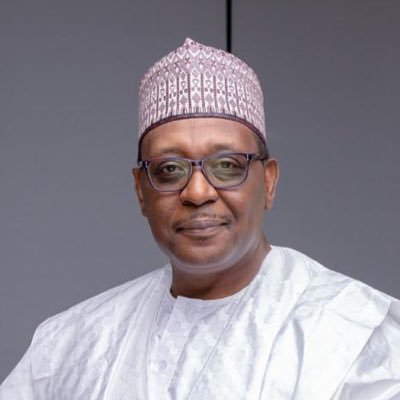
THE Minister of Health and Social Welfare, Muhammad Pate, on Tuesday, April 30, bemoaned the rising cost of drugs in the country.

He noted that the prices of drugs were high while less than 10 per cent of the population had health insurance, putting much financial burden on citizens to pay out-of-pocket for health.

Pate, joined by other stakeholders, including the Director General of the National Agency for Food and Drug Administration and Control (NAFDAC) Mojisola Adeyeye and former Minister of Health Adewale Adelusi-Adeluyi, highlighted the major problems associated with the continuous rise in drug prices during a webinar organised by The Cable.


Read Also:


The webinar, with the theme: ‘Addressing The Escalating Cost of Medicines and Medical Consumables’ identified possible solutions that could alleviate the situation and ensure equitable access to essential healthcare.

The ICIR reports that Nigerians currently face the challenge of paying more for drugs.

Some of the reasons are ballooning inflation and exit of pharmaceutical companies from the country because of skyrocketing costs of doing business.

For instance, in 2023, a major pharmaceutical firm, GlaxoSmithKline(GSK), producer of prescribable medicine such as Augmentin and Amoxil, disclosed its strategic plan to stop the commercialisation of its prescription medicine and vaccines in Nigeria and transition to a third-party distribution model for its pharmaceutical products, citing foreign exchange concerns.

The company was one of the firms that left the nation that year.

The development, according to a report, were traced to the steady depreciation of the naira against major global currencies since President Bola Tinubu took office, along with the deregulation of the foreign exchange market, which has triggered a series of economic crises. 

Speaking on the challenges, Pate noted that many Nigerians financed their health out-of-pocket.

“The financing of healthcare in Nigeria and affordability has been a longstanding issue for more than 40 years. Less than 10 per cent of Nigerians have no health insurance or any insurance to speak of, which means most of them are financing out-of-pocket,” Pate said.

He also stated that the issue of high drug costs was of great concern to the government, noting that since November 2023, the ministry had engaged with industry players, practitioners, and different stakeholders to address it. 

Pate further explained that if Nigeria had built an industrial base to manufacture APIs (Active Pharmaceutical Ingredients) decades ago, the country would have experienced much less impact from the increasing global price of APIs and other disruptions in the supply chain.

“But nonetheless, we are focused on solving the issue. And we’ll be working hard to do so through the presidential initiative to unlock the health care, which, as you recall, Mr. President, announced,” he added..

Pate also said plans were underway to reform the health insurance landscape, adding that the President had directed the ministry to find solutions to the underlying problem.

The ICIR reports that the administration of former President Olusegun Obasanjo launched the National Health Insurance Scheme (NHIS) which metamorphosed into the National Health Insurance Authority (NHIA), and less than 10 per cent of nearly 230 million Nigerians are yet to be enrolled in the programme since then.

In his earlier remark, the chairman of the event, former minister of health, Adewale Adelusi-Adeluyi, said as long as the pharma industry was involved, in the long run, the country had to go into industrialisation.

“Many African countries make long speeches and write long policies. Some of the policies are as good as anywhere in the world, but when it comes to implementation, many African countries fall flat on the face, including Nigeria.”

He also emphasised improved funding for the health sector, adding that whatever was available should be used effectively.

Other issues highlighted

The panelists at the webinar explained some of the underlying causes of the high cost of drugs and its implications for Nigerians while also proffering solutions.

The panelists were the NAFDAC boss, President Nigerian Medical Association, Uche Ojinma, Executive Secretary of the Pharmaceutical Manufacturers Group of MAN, Frank Muonomeh; Executive Secretary of Anambra State Primary Healthcare Development Agency, Chisom  Uchem.

Speaking on drug insecurity, the NAFDAC DG said Nigeria must focus on local manufacturing to avoid continuous drug insecurity.

According to Adeyeye, manufacturers import everything they use in the production process except water.

She stated that NAFDAC was leading in Africa and second in the world with technology to track and trace.

“We are doing hand-holding to ensure local manufacturers are using international standards that adds quality to the lives of Nigerians, and their products are fit for export,” she added.

Uchem, on her part, argued that the inability to access drugs resulted in therapeutic failure, adding that the government must encourage experts to research the use of our local herbal remedies for production.

N200bn debt: petrol marketers threaten to cripple PMS supply amid scarcity

THE Independent Petroleum Marketers Association of Nigeria (IPMAN), has threatened to cripple the supply of Premium Motor Spirit (PMS), over non-payment of ₦200 billion bridging claims.

The threat is coming on the heel of the current nationwide petrol scarcity which has seen prices of PMS, also known as petrol, surge to between N610 and N900 at the pump, and between N1,000 and N1,300 at the black market.

The association’s unit chairman and spokesperson, Aba Depot, Mazi Oliver Okolo who made the threat, said it was with the backing of the IPMAN’s national leadership.


Read Also:

He claimed that the debt was being owed by the Nigerian Midstream and Downstream Petroleum Regulatory Commission (NMDPRA).

In a communique released after a press conference on Tuesday, April 30, Okolo said NMDPRA failed to pay the ₦200 billion debt despite a directive for payment from the Petroleum Minister (Oil) Heineken Lokpobiri.

The IPMAN deport chairman claimed that since the directive by the minister in February, only ₦13 billion had been paid to their members, saying that the unpaid claim had crippled their businesses.

“We are extremely distressed and depressed by the laidback attitude of the leadership of the Nigerian Midstream Downstream Petroleum Regulatory Authority (NMDPRA), towards the survival of our members’ businesses, arising from NMDPRA’s deliberate delay and refusal to offset the debt of over N200 billion owed our members, which has consequently led to the deaths of many of our members and the unfortunate collapse of their businesses.”

He blamed the Nigerian National Petroleum Company Limited (NNPCL), the sole importer of petroleum products, for the current nationwide petrol scarcity, adding that some of its members have “completely” shut down their businesses, and retrenched their employees.

“We have watched with apprehension also, the unpatriotic attitude of the leadership of the NMDPRA to offset this debt that has been accrued to us since September 2022.

“As businessmen and women, our members acquired bank loans to keep their fuel retail outlets running daily across the nooks and crannies of Nigeria, to serve the teeming population of Nigerians.

“However, it is demoralizing to know that many of our members have gone bankrupt and have become financially insolvent as a result of their inability to meet their financial obligations to their banks, arising wholly from their inability to get their monies from the NMDPRA.”

He also claimed that the banks had taken over the business premises of many of their members.

According to him, as indigenous organisations, and depot chairmen, they are sad that rather than receiving support from the government to boost their businesses, they face discouragement from NMDPRA.

“It is noteworthy to recall and state here that at a stakeholders meeting held on the 20th of February, 2024 with Mr. Heineken Lokpobiri, the Honourable Minister of Petroleum Resources (Oil), and the NSA Nuhu Ribadu, Engr. Farouk Ahmed, the Chief Authority of NMDPRA, was mandated by Mr. Heineken Lokpobiri to clear the entire debt in 40 days.

“However today, we have crossed the 40-day time-lapse given to the NMDPRA to clear the debt, and it is shameful to state that only the paltry sum of N13 billion has been paid, thus going the whole length to ignore our plight without remorse and recourse to the Honourable Minister’s directive,” he added.

Okolo also claimed that the NNPCL importer the products, and supplied to private depots who then sold to them at exorbitant prices of between ₦820 and ₦950 per litre, adding that IPMAN members paid an extra huge cost to transport the  product to other parts of the country, making it difficult for them to sell to Nigerians at the agreed pump price.

The group called on President Bola Tinubu to closely look into the matter, which according to it, was highly detrimental to their businesses.

“We see no reason why there should be an increment of over 500 per cent on the sales and storage license by the NMDPRA. We totally reject it. We also hereby call on the federal government of Nigeria to wholly intervene forthwith in these lingering issues between the Independent Petroleum Marketers Association of Nigeria (IPMAN) and the Nigerian Midstream & Downstream Petroleum Regulatory Authority (NMDPRA).

“We are poised to take far-reaching decisions that may cripple the supply and sales of petroleum products across Nigeria, if our demands are not met within the shortest period,” the group said.

Meanwhile, there was not response from calls put through to NMDPRA as of time of filing this report.

In its submission, the National President of the Petroleum Products Retail Owners Association of Nigeria (PETROAN), Billy Gillis Harry, told  The ICIR that the bridging cost could be settled systematically without the IPMAN heating up the system further with threats.

“NNPC is responding and and NMDPRA has continued to issue depot licenses to ensure efficiency. There is hope and sanity will return to the system in few days. I think the issue of bridging gap could be systematically sorted out without causing more crisis to Nigerians, “he said.

He also disclosed that massive loading of petroleum products  by marketers had not commenced from depots despite claims in some quaters of loading currently going on, but assured that marketers were working with the Nigeria National Petroleum Company Limited (NNPCL) to track supply across the country and halt smuggling.

“We shall come out of the storm quicker as we are currently working out a lasting solution to the current crisis, “he said.


FG approves salary increase for workers

0

AHEAD of Workers’ Day, the federal government has approved a salary increase of between 25 per cent and 35 per cent for civil servants on the remaining six Consolidated Salary Structures.

The head of press, National Salaries, Incomes and Wages Commission (NSIWC), Emmanuel Njoku, announced the development in a statement on Tuesday, April 30.

The increase applies to the Consolidated Public Service Salary Structure (CONPSS), Consolidated Research and Allied Institutions Salary Structure (CONRAISS), Consolidated Police Salary Structure (CONPOSS), Consolidated Para-military Salary Structure (CONPASS), Consolidated Intelligence Community Salary Structure (CONICCS) and Consolidated Armed Forces Salary Structure (CONAFSS).


Read Also:


According to the statement, the increases take effect from January 1, 2024.

This was as the federal government approved pension increases of between 20 per cent and 28 percent for pensioners on the Defined Benefits Scheme in respect to the above six consolidated salary structures with effect from January 1, 2024.

This development came over a year after the Nigerian government approved a 35 per cent salary increase for professors in the nation’s federal universities and a 23.5 per cent increase for lecturers in the institutions, both under the Consolidated University Academic Salary Structure (CONUASS) and Consolidated Tertiary Institutions Salary Structure (CONTISS).

For Polytechnics and Colleges of Education, it involved the Consolidated Polytechnics and Colleges of Education Academic Staff Salary Structure (CONPCASS) and Consolidated Tertiary Educational Institutions Salary Structure (CONTEDISS). 

The Health Sector through the Consolidated Medical Salary Structure (CONMESS) and Consolidated Health Sector Salary Structure (CONHESS) had also saw their salaries increased by the federal government in 2023.

In 2023, the federal government also announced that it approved the payment of the new 40 per cent pay rise for only 144,766 federal civil servants under the Consolidated Public Service Salary Structure (CONPSS).

Uzodimma appoints self as Commissioner for Lands in Imo

0

IMO State Governor Hope Uzodimma has appointed himself as Commissioner for Lands in the state.

Uzodimma made the announcement on Tuesday, April 30, during the inauguration of 24 newly appointed commissioners at the Government House, Owerri.

He said he assumed the position to avert corruption scandals that had rocked the sector.

“I will be in charge of the Ministry of Lands that has caused a lot of confusion and corruption. We will sanitise the land system in Imo state,” Uzodimma was quoted as saying.


Read Also:


He noted that appointments to his government were still ongoing and urged the newly appointed commissioners to shun corruption.

“I have set up a monitoring unit in my office to monitor your office and any score below average must be regarded as a failure. There will be quarterly performance assessments on you, and there will be no excuses. We must leave a legacy… We will work harder than what we did in the first term,” he said.

In November 2023, the governor suspended the former Commissioner of Lands, Survey and Physical Planning in the state, Noble Atulegwu.

Atulegwu was arrested after his suspension and detained for 40 days before his release.

The issue of governors appointing themselves as commissioners has generated controversy in recent times.

In 2023, the All Progressives Congress (APC) in Osun sued the State Governor Ademola Adeleke for appointing himself as Commissioner for Works.

Adeleke also appointed his deputy Kola Adewusi as Commissioner for Sports and Special Needs, prompting the Osun APC, which is also the leading opposition party in the state, to sue the government.

The party urged the court to determine whether Adeleke and his deputy could serve as commissioners despite occupying positions of governor and deputy governor, based on the country’s laws.