DATAPRO Limited, Nigeria’s technology-driven credit rating agency (CRA), has unveiled its 2023 International Rating Webinar structure.
The event will spotlight the “pivotal role of sub-nationals and credit rating agencies in infrastructure development,” said the agency’s Chief Executive Director, Oladele Adeoye, in a statement on Monday, October 9.
Scheduled to take place virtually on October 12, 2023, the webinar aims to engage key stakeholders deeply involved in Africa’s infrastructure development, primarily focusing on Nigeria.
The event will see active participation from various stakeholders, including capital market operators, credit rating agencies, financial market regulators, subnational governments, institutional investors, private equity firms, and development banks.
The webinar will emphasize exploring sustainable infrastructure development at the subnational level through the capital market.
“The role of subnational governments in driving infrastructure development is well-established, particularly in developed countries. However, in developing nations like Nigeria, subnational governments face challenges in expanding their involvement in infrastructure projects, mainly due to a lack of long-term financing options. To address this, the webinar will seek a road map for sustainable infrastructure development at the subnational level through the capital market.
“Extensive research highlights several viable options for subnational governments to consider, such as development transfers, accessing the capital (debt) market, public sector lending, and public-private partnerships. However, the effectiveness of these options hinges on the implementation of robust policies and frameworks that will improve fiscal responsibility, accountability, transparency, good governance, and creditworthiness at the Subnational level in developing countries, including Nigeria,” the statement added.
According to the convener, the webinar will also address the crucial role of credit rating agencies in evaluating the creditworthiness of subnational governments and additionally delve into discussing policies and frameworks that can enhance the fiscal responsibility of subnational governments, along with exploring developmental finance options for subnational governments in infrastructure projects.
The Director-General Securities & Exchange Commission, Lamido Yuguda, is one of the special guests, while the Managing Director, Nigeria Mortgage Refinance Company, NMRC, Kehinde Ogundimu, is the keynote speaker.
“The webinar will also host an interactive panel discussion involving Director, UCML Capital, Egie Akpata; Managing Director, Africa Plus Partners, Adeniran Ajakaiye; Chairman, Africa Infra Plus Fund, Anhad Narula, among other notable professionals within the capital market.
JOURNALISTS from all across the world are invited to submit applications for the True Story Award 2024.
The True Story Award is the first international journalism honour designed to encourage and support journalists worldwide in their profession.
This award seeks to expand the range of perspectives given in the media by making reporters’ voices heard beyond the limits of their nations.
The panel will select the 36 most significant texts of the year before deciding on a winner. While the winner will receive 25,000 Swiss francs, all nominated readers will receive 1,000 each.
Meanwhile, all the 36 nominees (one per text) will be invited to the True Story Festival in Bern, Switzerland. All works can be submitted in the following ten languages: Arabic, Chinese, English, French, German, Persian, Portuguese, Russian, and Spanish.
The deadline for the submission of the application is November 5, 2023. Interested individuals can apply here
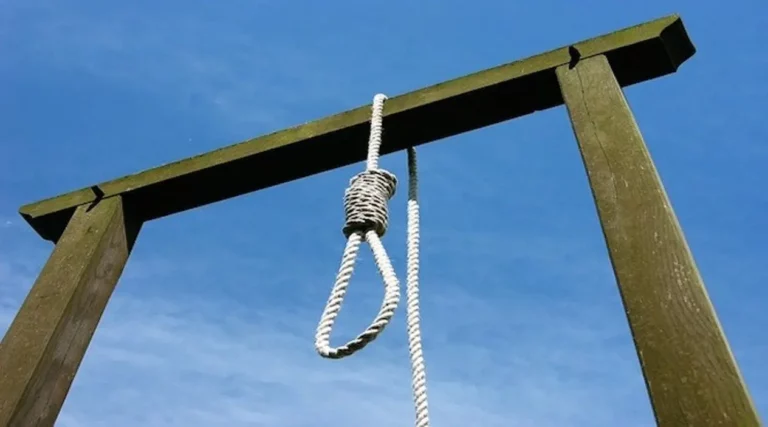
A HIGH Court in Lagos State has sentenced Drambi Vandi, a suspended Assistant Superintendent of Police involved in killing Bolanle Raheem, a lawyer, to death by hanging.
In her ruling on Monday, October 9, the trial judge, Ibironke Harrison, convicted Vandi of a one-count charge of murder for the death of the pregnant lawyer.
According to Harrison, the prosecution established its case beyond a reasonable doubt.
The judge concluded that the offender shot the victim at close range.
On April 3, The ICIRreported that a Lagos High Court dismissed the ‘no case submission’ filed by Vandi, accused of killing Lagos-based lawyer Bolanle Raheem.
Vandi shot and killed Raheem on December 25, 2022, while she was returning from Christmas Day church service in the Ajah area of Lagos.
He was subsequently arraigned before the court days after the Police Service Commission (PSC) approved his immediate suspension.
At the resumption of the case on Monday, April 3, Justice Ibironke Harrison ordered the defendant to open his defence as a ‘prima facie’ case has been made against him.
Vandi had asked the court to dismiss the case and discharge him, stating that he had no case to answer.
In the no-case submission, Vandi’s lawyer, Adetokunbo Odutola, argued that none of the eyewitnesses saw the defendant fire the gunshot.
He added that the ballistic report of the gun allegedly fired stated that the bullet could not be linked with any firearms recovered from the police officers at the scene.
Odutola also pointed out that the pathologist who testified mentioned that the bullet penetrated from the left through the armpit, while the prosecution stated that the deceased was shot in the chest.
The prosecution, led by the Attorney General of Lagos State, Moyosore Onigbanjo (SAN), countered the defence counsel’s arguments and urged the court to order the defendant to defend himself. He insisted that the prosecution had successfully made its case against the cop.
Ruling on the matter, the court dismissed the ‘no case’ submission and ordered the alleged killer cop to defend himself.
Residents of the Lugbe Area of Abuja have mobbed two people after they were accused of genital theft.
The incident occurred in the early hours of Monday, October 9, 2023, in the Zone 9 area of the community.
The ICIR gathered that a resident, Abdulrasheed Jeje, raised an alarm claiming that his genital was missing after having contact with two young men who asked him for directions in the area.
“The two young men approached him and asked him for directions to a school (name withheld). One of them touched him, and his penis disappeared,” Abdulwasiu, one of the people at the scene, said.
It was gathered that the two young men fled the scene after Abdulrasheed raised the alarm but were chased by the residents.
They were nabbed and beaten up by the angry residents before the intervention of local security operatives, also known as vigilantes.
The ‘victim’ and accused were taken to the Police Station at Zone 4, Lugbe, where they were subsequently taken to the Federal Medical Centre, Jabi.
It is expected that medical experts will examine the situation and give reports of their findings to the Police.
Cases of genital theft alarms have increased in Nigeria’s capital – Abuja. They occur mainly in areas dominated by low-income earners. There have been no confirmed cases that it really occurs.
On October 3, The ICIR reported the Police warning against false alarm on the issue after arresting 14.
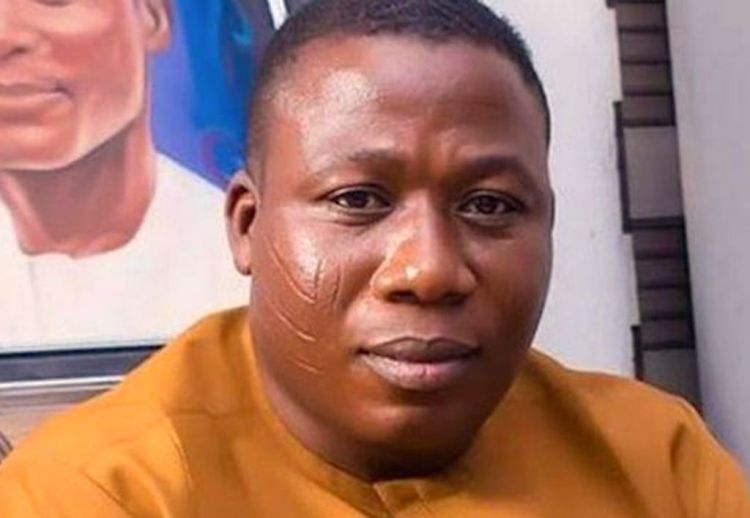
YORUBA nation agitator Sunday Adeyemo, also known as Sunday Igboho, has regained freedom from the Beninese authorities.
The agitator said on Sunday that he was legally free to return to Nigeria and travel to any country from Cotonou, the capital of the Benin Republic.
He was released after a two-year trial by the Beninese government.
According to the leader of the umbrella body of Yoruba self-determination groups, Ilana Omo Oodua (IOO), Banji Akintoye, Igboho left Benin for Germany to reunite with his family Sunday evening.
The background
Adeyemo ran into trouble in March 2021 when he declared the Yoruba nation’s sovereignty.
His declaration sparked mixed reactions from Nigerians.
He alleged that much of Nigeria’s wealth was in the hands of Northerners, stressing that Yorubas were being killed and their land taken over by herders.
He also launched a campaign to drive killer herders and kidnappers out of the South-West states.
“We want all Fulani on Yoruba land to leave. I will monitor compliance with the eviction notice.
“I don’t issue an order without ensuring compliance. As from Monday, we don’t want to hear of any kidnapping in Yorubaland again. I will show them the stuff Yoruba people are made of,” he saidin an interview anchored by his spokesperson, Oluyomi Koiki.
SSS raided Igboho’s house
However, he left Nigeria in July 2021 after operatives of the State Security Service (SSS) broke into his home in Ibadan at night.
At least one person died from the attack, and some of his possessions were damaged.
However, Akintoye disclosed in a statement sent to reporters by his Communications Manager, Maxwell Adeleye, that several people were killed in the incident.
Akintoye blamed the incident on former President Muhammadu Buhari.
During the raid, the SSS said it found seven AK-47 rifles, pump-action guns, 5,000 rounds of ammunition, charms and other weapons in Igboho’s home.
Briefing journalists, the spokesman of SSS Peter Afunanya disclosed that the raid was based on intelligence gathering.
He added that Igboho was stockpiling arms to cause chaos within the South-West region.
Igboho’s arrest in the Benin Republic
The self-acclaimed agitator later attempted to flee Nigeria to Germany but was stopped at the Cardinal Bernardin International Airport in Cotonou, Benin Republic.
The International Criminal Police Organisation detained him on Monday, July 19, 2021.
His supporters immediately took to the streets to protest his arrest and detention.
The protesters were seen gathered at the activist’s residence located in the Soka area of Ibadan, Oyo State capital, with various placards.
Graphic footage of the placards shared on Facebook and seen by The ICIR read, “Igboho is not a criminal”; “I stand with Igboho,” and so on.
Igboho freed in Benin, IPOB’s leader, Kanu in Nigeria’s detention
Apart from Igboho, Nnamdi Kanu, the leader of the Indigenous People of Biafra (IPOB), a group seeking Nigeria’s South-East secession, has been in detention.
Kanu, currently in SSS custody, has led to frequent sit-at-home in the region.
Kanu has been in detention since he was arrested by Nigerian security forces in June 2021.
He was first arrested and detained in Kenya before being deported to Nigeria, where he is facing charges of treason and terrorism.
Through the former Attorney-General and Minister of Justice Abubakar Malami, the Nigerian government claimed Kanu was deported two days before he was brought to an Abuja court on Tuesday, June 29.
He faces an 11-count charge of treason, treasonable felony, terrorism, and illegal possession of firearms.
With at least two people dying daily from insecurity fueled by Kanu’s detention and many businesses crippled, IPOB said it was ready to negotiate with the Federal Government on a peaceful exit of Biafra from Nigeria.
The secessionists sought a referendum – which they called a referendum – to be supervised by the United Nations.
In a statement on Saturday, October 7, by its spokesman, Emma Powerful, the pro-Biafran group claimed that IPOB had lost over 5,000 members and properties worth over $1 billion “due to the extreme use of force by the Nigerian security forces.”
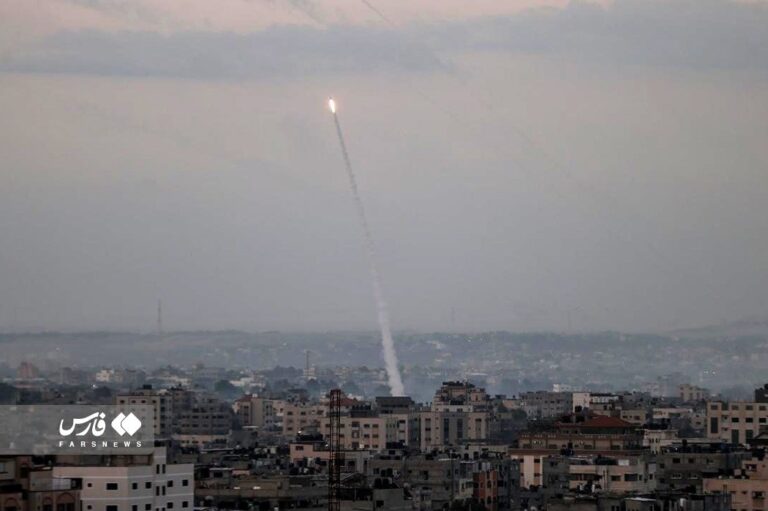
In hindsight, the drivers of Hamas’s startlingly well-planned, land-sea-air attack on Israel on Saturday were in plain sight.
The operation reflects a pattern of four wars and regular outbreaks of violence between Israel and Hamas militants in Gaza since 2005, when Israel withdrew its military posts and forcibly removed 9,000 Israeli settlers from the territory.
Each time Hamas has launched rockets at Israel or engaged in similar provocations, it has drawn heavy retaliation from Israel in the form of major bombings on the Gaza Strip. Hamas, however, seems to regard this as a cost of doing business.
An important factor motivating Hamas towards violence is that it has to watch its flanks. Other smaller, but increasingly extremist groups, are contesting its authority in Gaza, notably Palestinian Islamic Jihad.
These groups have, at times, independently launched rocket attacks on Israel, which bring retribution on the whole territory.
On top of this, the Israeli government formed by Prime Minister Benjamin Netanyahu last December is the most right wing in Israeli history. This government has made no secret of its desire to annex the West Bank and has permitted significant expansion of Jewish settlements in the territory, which are illegal under international law.
That has led to conflict between settlers and young West Bank Palestinians, who in the past year have formed a loose grouping known as the “Lions’ Den”.
This grouping, comprising independent militants with apparently no central control, has scant regard for the Palestinian Authority, which governs the West Bank and is led by the octogenarian Mahmoud Abbas. The Palestinian Authority has little real administrative, security or moral authority in the territory.
The “Lions’ Den” also vies with Gaza militant groups for influence among Palestinian youth – both in Gaza and the West Bank.
Added to this, a minister in Netanyahu’s coalition, Itamar Ben-Gvir, has visited the Temple Mount, the site of the Al-Aqsa Mosque, one of the holiest shrines in Islam. This was considered a provocation by all Palestinians – both in the West Bank and Gaza. Further angering Palestinians, Israeli tourists also travelled to the site over the recent Sukkot holiday.
A visit to the Temple Mount by Ariel Sharon in 2000, then the leader of the opposition in Israel’s government, is generally regarded as the spark that ignited the Second Intifada from 2000-2005.
Under an agreement predating Israel’s foundation, Jordan has custodianship of the Al-Aqsa religious complex. Israel aimed to respect Jordan’s role when it signed the Israeli-Jordanian peace treaty in 1994. But Palestinians see the visits by Israeli ministers and non-Muslim tourists as disrespectful of the sanctity of the site and counter to this undertaking.
Hamas has also claimed these visits have led to the desecration of the Al-Aqsa site, an argument obviously aimed at winning support from Muslims throughout the Arab and wider Islamic world.
Why attack now?
Significantly, Hamas has named its action “Operation Al-Aqsa Flood”. This provides some clues to the primary reason for striking at this time, which emphasises what Hamas sees as Israeli acts of desecration of a holy Islamic site.
However, an additional motivating factor was likely the increasing tendency of Arab states to make peace agreements with Israel, as evidenced by the 2020 Abraham Accords, involving the United Arab Emirates, Bahrain, Sudan and Morocco.
There has recently been strong speculation that Saudi Arabia is about to make its own agreement with Israel.
This is of great concern to all Palestinians, not just those in the West Bank, as it further reduces pressure on Israel to reach a settlement with them. Netanyahu has made clear in his public statements that he prioritises peace with Arab states over eventual peace with the Palestinians.
Hamas does not recognise Israel, but has said it would observe a truce if Israel withdrew to its 1967 borders. Israel would be unlikely to take Hamas’s word on this and withdraw as demanded. But there would be even less chance of that condition ever being realised if Saudi Arabia were to conclude its own deal with Israel.
Another aspect of the timing is that it coincides almost precisely with the 50th anniversary of the start of the Yom Kippur or Ramadan War in October 1973, when Egypt and Syria attacked Israel together. The significance of a Palestinian entity being able to surprise Israel in the same way would not be lost on Hamas.
So there were several objectives for Hamas to launch an attack at this time – and possibly a combination of them.
Hamas is likely to gain much sympathy from the wider Arab world, but little in the way of material assistance. Hamas’s military operation will likely cause Saudi Arabia to hold back from normalising relations with Israel for now. That said, it’s unlikely any of the Arab states that have signed the Abraham Accords will withdraw from them now in protest over Israeli retaliation against Gaza.
Where the conflict is headed?
Where the conflict is headed is unclear. The Hezbollah militant group in Lebanon has already fired on positions in Israel’s north. But the extent to which it will become seriously involved will depend on its sponsor, Iran.
Tehran has generally been seen to want to keep Hezbollah’s considerable rocket and missile strength in reserve in case of an Israeli strike on Iranian nuclear facilities.
There is also the question of whether “Lions’ Den” militants in the West Bank will launch their own attacks, effectively creating a third front against Israel. And a possible fourth front could come from attacks on Jewish Israelis by Arab Israelis living in Israel.
US President Joe Biden has already promised support for Israel, so there can be little doubt Israel will eventually get on top of these challenges. Netanyahu has warned of a long war, but it may prove reasonably short if Israel goes all out in its retaliation.
The main constraint on Israeli action against Gaza will be the fact that an unknown number of Israeli citizens have been kidnapped by Hamas militants and taken to the strip. Indiscriminate Israeli bombing would certainly put those lives at risk.
Israel will also be reluctant to put its defence forces in Gaza because of the risk of heavy casualties. However, it may send special forces if it gains intelligence on the whereabouts of its kidnapped citizens.
A further risk for Israel in its retaliation is that too brutal an assault on Gaza could turn Western opinion against it. So far, however, Western governments are strongly supportive of Israel and unsympathetic towards Hamas.
The overall lesson for Israel is that it has to develop a policy for managing the Palestinians living in the areas it controls.
The current situation, in which hardline militants are contained in Gaza, while Israeli forces curtail the actions of Palestinians living in Israel and the West Bank, has suited the Israeli government for many years. It has been able to ignore Arab and international pressure to negotiate a two-state solution or to acquiesce in a one-state solution.
The real significance of Hamas’s operation is that such a non-policy can no longer continue.
In 2019, to improve the condition of public schools and Islamiyya Kano state government disbursed millions of naira for constructing classrooms in state-owned secondary schools through the Kano State Ministry of Works, Housing, and Transportation. However, the contractors have not executed the projects, leaving students to suffer learning under unfavourable conditions, Aisha Ahmad reports.
ON Monday, May 15, 2023, it was 9.00 and across secondary schools in Kano State, students had settled down to the business of learning. But the case was different at Government Senior Secondary School (GSSS) in Ajingi local government area (LGA). Students of the school were doing anything but learning. While some were spotted hawking, others were on farms helping their parents do ridges ahead of the rainy season farming.
This disinterest in learning can be partly traced to the conditions under which students at the school are expected to get an education. When the reporter visited, students at the GSSS Ajingi were found learning in a suffocating environment, as over 200 students were cramped into a single classroom being taught mathematics with inadequate ventilation.
Abubakar Haliru, a Mathematics teacher in the school, said the lack of classrooms and a conducive learning environment in the school is seriously affecting both the students and the teachers.
“The school has over 10 blocks of two classrooms, but all are dilapidated and uninhabitable for students because a quality building can help or hinder learning and teaching. Well-designed buildings and pleasant surroundings can lead to better attendance and concentration among students, as well as motivation and self-esteem, factors that can improve performance,” he reasoned.
It appeared that the government understood exactly this as the Kano State Ministry of Works, Housing, and Transport in 2019 awarded a contract worth N7,577,267.04 million for the construction of two classroom buildings with an office and a store to improve learning conditions in the school. The contract was awarded to Danyarimawa Synergy Global.
However, investigation reveals that the project has been abandoned since 2019.
GSS Ajingi
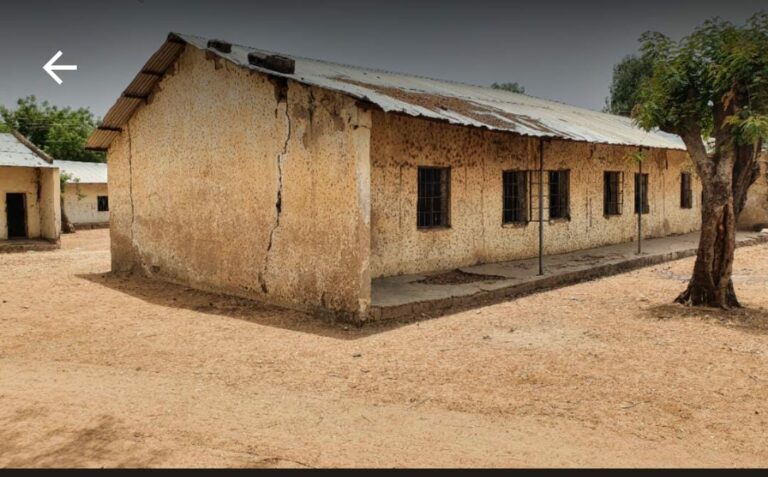
During a visit to the school, this reporter observed an abandoned and incomplete structure. The construction of two classroom buildings with an office and a store was lacking in roofing, floors, or plaster; the building was just erected to the lintel level.
Zakari Aminu, a school teacher at GSSS Ajingi, drew a correlation between the poor condition of learning in the school and the high number of student drop-outs
“All the classrooms we have in this school are useless. Some are even risky to study in, as the walls have sustained severe cracks that, at any moment, can crash and claim students’ lives.
“Sometimes, during the rainy season, whenever there’s heavy wind and thunderstorms, we can feel some buildings shaking, which means the foundation structures are weak, so we started praying to God for safety, while sometimes we leave the classroom to find cover.”
Aminu added that in 2019, when the construction of the two classroom blocks, office, and store commenced, both teachers and students were happy that finally, the state government had considered both their plights, but they were soon disappointed.
“Despite the fact that the classrooms won’t be enough to contain the students of the school, at least we believed some students would have enjoyed safe learning,” he said.
Inadequate classroom is not the only challenge in the school.
“Another challenge is that the staff rooms are not enough for the teachers; we have only one staff room with over 15 teachers in the school. The lack of completion of the staff office has made many teachers hang around the school compound after teaching their subjects, or some will close for the day without waiting for closing time.
“In addition to these direct problems with lack of space, a more crowded classroom or school is also likely to be noisier and more difficult to ventilate, problems that can interfere with the learning of the students, and honestly, most of the students don’t even understand what the teacher is teaching”, Aminu explained.
Usman Abdullahi, a student at the school, said learning has been difficult as all their classes are in bad shape. Also, with the large number of students in the classrooms, most students find it hard to comprehend what they are being taught.
A dilapidated classroom in GSS Ajingi
More Sordid Tales in Ajingi
It is not only in GSSS Ajingi that Danyarimawa Synergy Global failed to deliver the constituency project. The same fate has been suffered by Falankawar Gafasa Primary School, where pupils also suffer unsafe learning environments in uninhabitable buildings.
On a visit to the site, the reporter observed that some students at this school learn at classrooms made of zinc with no chairs and appropriate wall boards.
Ammar Ismail, village head of Falankawar Gafasa, explained that for over eight years, there has been no construction of new classrooms in the school by the state government.
“Our pupils are learning in an untidy environment; we have raised motions with our representatives, and they always promise to intervene, but there is still nothing to prevail about as the education system of our local community is in danger.”
“This primary school is the only school in Falankawar Gafasa; it serves both primary and secondary schools. The primary session has over 600 students, as does the secondary school, with over 400 students. The school has only two blocks of classrooms, totalling four classrooms.
Falankawar Gafasa Primary and Secondary in Ajingi Lga
“These classrooms are not enough to contain the students due to each class containing over 50 to 60 students. So we decided to structure the learning hours into batches. The first batch will be available from 8 a.m. to 12 p.m., the second batch from 12 p.m. to 3 p.m., and the third batch from 3 p.m. to 5 p.m.
“These learning hours are not enough for our pupils to learn tangibly in the school. Due to the insufficient classrooms, the community members decided to construct a classroom with wood and zinc for our pupils.”
Again, Danyarimawa Synergy Global got a contract worth N7,577,267.04 to construct a classroom with an office and store at Falankawar Gafasa Primary School. The same contractor has failed to deliver on the completion of a classroom with an office and store at Dundun Primary School in Ajingi Local Government, at a cost of N7,592,005.66 million. Like all the others, the contract was awarded by the Kano State Ministry of Works, Housing, and Transportation in 2019.
Usmar Rabilu, a teacher at Dundun Primary School, said there has never been such a project as a classroom with an office and store started or completed in the school.
Dundun at Ajingi
“For over 12 years I have been teaching in this school, there has been no new project of classroom construction by the state government, not to mention the completion of classroom blocks with an office and store. That is a ghost project.
“We, the teachers, have been exercising patience just because we regard the pupils as our children, but with the bad impression given to education, we would not have been here teaching under these frail conditions.
Lawmaker gets contract
A search for the contractor, which unearthed the beneficial owner of Danyarimawa Synergy Global, soon explained the reason behind the award and release of funds for the construction of educational facilities without delivery by the contractor. It appears that there was never any plan to do any job, as the contract was awarded to a politician.
After a full check on the company’s status on NG-Check, an online search engine that records the activities of companies in Nigeria, it was discovered that Danyarimawa Synergy Global belongs to a Kano lawmaker identified as Abdulaziz Garba Gafasa, who is listed as a director of the company.
Not only did the politician influence the award of the contract, but he also probably set up the company for the specific purpose of getting the contract, as it was registered shortly before the contract was awarded. The Public Procurement Act stipulates that for any company to get a contract, it has to have been in existence for three years, during which it would have been paying taxes and filing returns, among other obligations.
Abdul’aziz Garba Gafasa, the politician who influenced the contract, was born in Gafasa Ajingi Local Government Area in 1962. He was elected twice as a councillor in Gafasa Ajingi Local Government. As a grassroots politician, Gafasa was elected to the Kano State House of Assembly in 2023 to represent his constituency under the All Nigerian Peoples Party (ANPP) and served for two terms from 2003 to 2011.
He was the Speaker of the Kano State House of Assembly from 2007 to 2011. And during Governor Abdullahi Umar Ganduje’s administration in 2019, he served his fifth term as a member of the House and was elected as the 9th Assembly Speaker.
Discreet investigations revealed that he was awarded the contract when he was Speaker of the Kano State Assembly.
In an effort to get clarification from Gafasa, after placing several calls on May 21, his network line has been busy.
In a text message that was sent to him on the allegation, Gafasa called back this reporter and claimed that he executed the project of constructing the classrooms.
He added that, “I can assure you that whoever told you that is lying; the project was done. If I want to lie or cheat the government, I do things that are perishable, but for a capital project like this, if anyone told you it was not done, I swear he is lying.
The lawmaker, who did not believe this reporter visited the site, said both Dundun and Falankawa projects were carried out without fail.
However, during a visit to the school by this reporter, the school discovered there was no construction of a classroom block with an office and store in either school.
Non-existent contractor abandons, executes shabby works in Kunchi
In Nawala, Kunchi LGA of Kano state, students trek for over 15 kilometres to access education as there is no school in their community. Because they find it difficult to trek such a distance, the majority of students in Nawala village quit school.
Many residents of Nawala were happy when in 2019, a contract worth N5,975,752.56 was awarded to N-Dazz Resources Ltd to construct one block of Islamiyya type “E”, as a means for the students of Nawala village to stop trekking far to get an education.
But their joy was short-lived. A visit to the site showed that the building had collapsed due ti what residents describe as shoddy construction.
Nawala in Kunchi Lga
According to Musa Ishaq, an Islamic teacher at the school, the wind blew away the roofing shortly after it was constructed. A week later, the whole building collapsed.
Usman Adamu, the village head of Nawala in Kunchi said, “We started enjoying the building, but not until about three months after construction, when the whole building came down. We thank God it wasn’t during classes; we would have lost most of our children due to the shoddy job done by the contractor.
“This clearly showed that the building materials used were of poor quality because after the wind took away the roof, we then had a temporary place for them to learn, which was also destroyed by the wind.”
He said they wrote many complaints to authorities, but no action was taken.
Giving an expert opinion, Abubakar Abdullahi, a civil engineer, said the reasons a building collapses can be due to poor structural design, poor compliance with specifications, poor quality control, faulty construction methodology, foundation failure, and corruption by the contractor or government.
It was discovered that it was not only at Nawala village that the same company, N-Dazz Resources Ltd., had failed to deliver on other contracts.
For example, the company either abandoned or failed to execute the contracts for which it received payments of over N10 million at two other schools.
First, it abandoned a contract for the construction of one block of Islamiyya Type “E” at a cost of N5,975,752.56 at Garin Labo in Kunchi LGA. No such project was found in the school.
Garin Labbo in Kunchi Lga
The village Head of Garin Labbo in Garin Sheme Ward of Kunchi LGA said, “Whoever told you they built a classroom in this community is lying.”
Barely containing his disappointment, he said, “Our pupils usually study under the trees no matter how soft or harsh the weather is.”
The Village Head said that the projects done in the school—a block of classrooms and a borehole—were constructed by a non-governmental organisation (NGO).
“With my effort, I wrote to an NGO, Crystal Muslim Organisation (CMO), seeking help. With the help of God, they built a block of classrooms and a borehole.”
“This structure has been standing for about two years, and we have about 400 pupils; the classrooms are too small to contain the students, so they are crammed together here,” he lamented.
While speaking to this reporter, the headmaster of G/Labbo Islamiyya, Abdullahi Dan Agwai, said they are yet to see government projects in the school. He appealed to the incoming administration to provide them with benches or even mats for their students to learn comfortably.
Residents built Zinc classrooms after failed constituency project
N-Dazz Resources Ltd. also received the sum of N5,975,752.56 for the construction of a block of classroom type ‘E’ for islammiya students of Mahauta Unguwar Gyartai community in Kunchi LGA. However, no such project was ever done at the school, in spite of a promise to the people.
Garba Lawan, the Village Head of Mahuta Unguwar Gyartai, said for over 20 years there have not been any constituency projects in the community, adding that the promised classroom has also not been delivered.
Village head Mahauta Kunchi Lga
He lamented that “due to the non-availability of classrooms, we decided to build some classrooms with zinc and wood.”
An Islamiyya student of the school, Umar Naabba, cried out that during the summer we can barely stay in the zinc classrooms for two hours due to the zinc used to be hot. We used to study in discomfort, which makes us hard for us to comprehend what they are teaching us, we are in serious need for help from the government to construct classrooms for us,” she stated
A search at the Corporate Affairs Commission (CAC, showed that N-Dazz Resources Ltd. is not a registered entity and is ineligible for contract awards under the law. The award of a contract to N-Dazz Resources Ltd., a non-existent contracting company, contravenes Sections 417–424 of the Companies and Allied Matters Act, 2020, which state that “every company must make and deliver their annual returns to the CAC every year”.
Therefore, the award of a contract to N-Dazz Resources Limited contravenes the Public Procurement Acts, under Section 16 of the Public Procurement Act 2007. Section 16 Subsection 6(d) states: “All bidders, in addition to requirements contained in any solicitation documents, shall have fulfilled all their obligations to pay taxes, pensions, and social security contributions.
Also, the agency contravenes Section 31 (4d), of the Kano Public Procurement Law, KPPL, which stipulates that “the bidder is in arrears regarding payment of due taxes, charges, pensions, or social insurance contributions, unless such bidder has obtained a lawful permit with respect to the allowance or difference of such outstanding payments in instalments.”
Expert sheds light
A lecturer, Dan Lami Aminu of the Aminu Kano College of Islamic Legal Studies, said environments matter a lot in education, and they are almost as important as the subjects being taught.
“Among the integral parts that make learning conducive is the environment, and in this case, to be specific, we can narrow down the environment to that of the classroom.
“Consequently, a classroom is a very important component of the physical material resources that make learning conducive,” he said.
He said children often lose concentration in dilapidated buildings, adding that it is a threat to their lives.
“Imagine pupils in a dilapidated classroom during the rainy season. Uncomfortable settings during unfriendly weather like extreme heat or cold weather would make them lose their minds.”
Dan Lami added that there would be a serial suspension of class and learning activities due to the fact that whenever there is a challenge, that will not allow the class to hold.
“Series of learning loss that, if care is not taken, can accumulate into days, weeks, or even months, as the case may be. Learning loss, especially a prolonged one, can hamper the progress of pupils, which in the long run will lead to their inability to catch up with their colleagues who have a better classroom environment,” he added.
Kano Ministry of Works keeps mum
When approached to provide further information and clarifications on the findings of this investigation, the Kano Ministry of Works, Housing, and Transport requested a formal letter stating what the reporter needed. A Freedom of Information Act, FOIA, request was written and sent to the ministry on May 19, 2023, seeking explanation on the non-execution of the constituency projects and also why the contract was awarded to a lawmaker as well as a non-existent company.
The FOI was acknowledged, but the ministry and institute had yet to provide feedback regarding the questions as of the time of filing this report.
This report is supported by the John D. and Catherine T. MacArthur Foundation and the International Centre for Investigative Reporting (ICIR).
THE National Drug Law Enforcement Agency (NDLEA) arrested 8,561 drug traffickers between January and August 2023.
The anti-drug trafficking agency also seized 888,743 drugs and secured 2,224 convictions.
These figures were contained in data exclusively obtained by The ICIR from the spokesperson of the NDLEA, Femi Babafemi.
According to the data, 1,985 males and 239 females were convicted.
Previous data
The NDLEA in December 2022 said it arrested 23,907 traffickers and seized drugs worth over N450 billion within 22 months.
According to the NDLEA, the arrest and seizure took place between January 2021 to October 2022
NDLEA chairman Mohammed Buba Marwa disclosed these details in Abuja on Tuesday, December 20, 2022.
“Within the period under review, the agency arrested 23,907 drug traffickers, including 29 barons. Our seizure was over 5,500 tons or 5.5 million kilograms of assorted illicit drugs, which together with cash seized are worth over N450 billion,” Marwa said.
He added that the agency also destroyed 772.5 hectares of cannabis farms within the period.
Marwa said in these 22 months, NDLEA recorded convictions of 3,434 offenders and rehabilitated 16,114.
In other data from the agency, from January to October 2022, the NDLEA arrested 891 women for drug trafficking and related crimes.
This number is far too low compared to the 11,710 males arrested within the same period.
NDLEA expressed concern over drug use among women.
According to the NDLEA, the latest records on drug use show that one in four drug abusers in the country is a woman.
The Ogun State Commander of the NDLEA, Ibiba Odili, stated this during the War Against Drug Abuse launch in collaboration with Lions Club International in Abeokuta.
The official revealed that 14.3 million Nigerian drug abusers are 15 to 64 years old, adding that more women are now involved.
“One out of every four drug users is a woman. In 2018, data shows that more women are going into drug use. If more women are going into drug use, it is a source of worry for us because it means that the traditional role of women in families and communities as caregivers, role models, and life moulders will be threatened because what quality of children are these women going to raise,?” she said.
Some arrests made by the NDLEA in 2023
On May 16, operatives of the NDLEA confiscated a substantial shipment of methamphetamine at the export shed of the Murtala Muhammed International Airport (MMIA) Ikeja Lagos.
The illicit substance was concealed within powdered custard containers, forming part of a combined cargo destined for London, United Kingdom (UK).
Operatives at the airport detected and seized the illicit drug consignment weighing 30.10 kilograms with a street value of N567 million.
NDLEA operatives in Adamawa on Monday, May 15, also arrested a 32-year-old notorious drug dealer, Ikechukwu Uzoma, in the Mubi area of the state with 1kg of skunk.
In the same vein, a trans-border trafficker, Faisal Mohammed, 27, was on Wednesday, May 17, arrested in Mubi following the interception of a truck from Onitsha, Anambra State, where a total of 2,376 sachets of tramadol comprising 23,760 pills were found concealed in three blue rubber jerrycans which were hidden underneath the body part of the trailer.
In June, agents of the NDLEA arrested two Qatar-based drug kingpins, Eyah Celestine Nnamdi, alias Murphy, and Peter Oluchukwu Ugwuoke, following the interception of their methamphetamine consignment at the Murtala Muhammed International Airport (MMIA), Ikeja, Lagos.
The agency said it arrested Ugwuoke on June 9 during the outward clearance of Qatar Airways passengers at the departure point, Terminal 2 of the Lagos airport.
The NDLEA said the suspect was travelling to Doha with an Ivorian international passport with the name Hien Narcisse when scrutiny of his black carry-on luggage led to the discovery of a false bottom concealment of two parcels of crystalline substance that tested positive for methamphetamine, weighing 1 kg.
Similarly, the agency arrested a female pharmacist, Ikwebe Ori Helen, in Kaduna following her attempt to use forged documents to purchase and distribute six cartons of pentazocine injection with 2,000 ampules.
Operatives of the NDLEA in July intercepted over 64 863.5kg of nitrous oxide, otherwise known as ‘laughing gas’, at the Apapa seaport in Lagos and in Imo State.
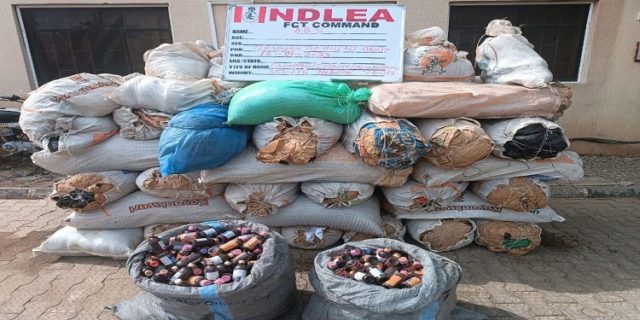
Consignment of drugs seized by FCT command of NDLEA.
A statement by Babafemi on Friday, July 14, stated that the development followed an intelligence-based joint examination by the agency’s operatives and officers of the Nigeria Customs Service.
While searching the two containers, cartons of Nitrous Oxide, containing 16,366 packages weighing 64,852kgs, were recovered along with the paraphernalia for recreational use.
The importer of the consignment, 30-year-old Stephen Eze and his agent, Michael Chukwuma, were arrested and detained for further investigation.”
Similarly, NDLEA operatives on Thursday, July 13, intercepted three cartons containing 18 canisters of the same substance weighing 11.5kg along the Owerri – Onitsha expressway in Imo State.
According to the statement, the suspects arrested with the consignment were heading to Port Harcourt, Rivers State.
In August, operatives of the NDLEA arrested a fake couple and other drug dealers in some parts of the country.
The couple, Ilonzeh Kingsley Onyebuchi and Ilonzeh Roseline Nonyelum, who were purportedly going for medical treatment in India, ingested 184 wraps of cocaine weighing 3.322 kilograms with another 100 grammes of the drug also concealed in the woman’s private part.
The agency said the two suspects were intercepted at Screening Point 1, Terminal 1 of the international wing of the Lagos airport on Tuesday, August 1 2023, while attempting to board an Ethiopian airline flight to India.
NDLEA plans measures to halt illicit drug production
The NDLEA has announced its plan to develop strategies to take drug cartels out of business and protect the environment from the damaging effects of illicit drug cultivation and production.
Marwa stated this while outlining efforts by Nigeria to curb the menace of substance abuse and illicit drug production and trafficking in his presentation at the third committee session of the ongoing 8th United Nations General Assembly, UNGA, in New York, USA, on Monday, October 2.
Mohammed Buba Marwa, NDLEA Chairman
According to him, cartels involved in illicit drug cultivation were causing deforestation and environmental degradation.
He said this would provide cannabis farmers with better options, like agricultural loans and improved seedlings.
He added that Nigeria was adopting a whole-of-society approach to countering the challenges of drug trafficking in line with the 2030 SDGs agenda, which seeks to promote the rule of law, health, peace, and justice.
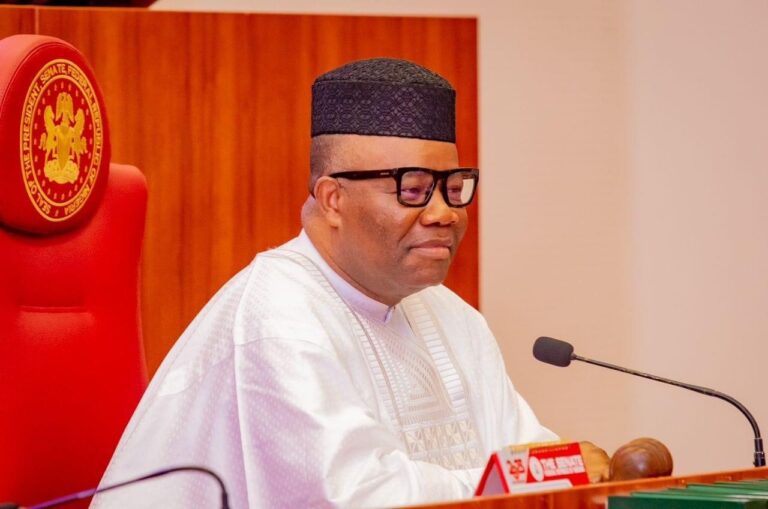
THE Socio-Economic Rights and Accountability Project (SERAP) has sued the Senate President, Godswill Akpabio, and nine other former governors in the 10th Senate for allegedly collecting salaries and pensions as senators.
Joined in the suit as respondents are Abdulaziz Yari, Aminu Tambuwal, Adamu Aliero, Adams Oshiomole, Ibrahim Gaidam, Seriake Dickson, Ibrahim Dankwambo, Aliyu Wammako, Gbenga Daniel.
The Minister of Works, Dave Umahi, is also joined as respondent in the suit number FHC/ABJ/CS/1360/2023 filed on Friday, October 6, at the Federal High Court in Abuja.
In a statement issued by its deputy director, Kolawole Oluwadare, on Sunday, October 8, SERAP argued that the double emoluments are a fundamental breach of their fiduciary duties and detrimental to the public interest.
It seeks an order of mandamus to direct and compel the respondents to clarify and disclose if they have collected and are collecting salaries and pensions as former governors.
A non-governmental organisation, SERAP, said it is also seeking an order of mandamus to direct and compel the respondents to stop collecting salaries and pensions and to return any allowances accumulated to their respective state treasuries.
According to the group, it is absurd for the respondents to collect double emoluments while over 137 million Nigerians live in extreme poverty, exacerbated by the removal of fuel subsidies.
“Collecting pensions as former governors and salaries while serving as public officers is a flagrant violation of the letter and spirit of the Nigerian Constitution and the public trust,” it said.
“An order of mandamus to direct and compel Mr. Akpabio, nine other senators and Mr. Umahi to disclose the details and amounts of the pensions so far received by them.”
SERAP cited that the Seventh Schedule to the Nigerian Constitution 1999 (as amended) requires the former governors to stop collecting salaries and pensions and return any collected pensions.
“Unless the reliefs sought are granted, the former governors would continue to both enjoy life pension packages, and collect salaries as serving public officers, and the travesty and private self-interest would continue,” the group said.
The suit filed on behalf of SERAP by its lawyers, Kolawole Oluwadare and Valentina Adegoke, read in parts: “The UN Convention against Corruption requires public officials to discharge a public duty truthfully and faithfully.
“The UN Convention also implicitly prohibits large severance benefits for public officials. The convention, specifically in Article 8, requires public officers to promote integrity and responsibility in the management of public resources.
“Paragraph 2 (a) of the Code of Conduct for Public Officers in the Fifth Schedule, Part 1 of the Nigerian Constitution provides in part: a public officer shall not receive or be paid the emoluments of any public office at the same time as he receives or is paid the emoluments of any other public office.'”
It further stated: “Justice Oluremi Oguntoyinbo, in a landmark judgment dated 26 November 2019, also indicated that double emoluments for former governors are unacceptable, unconstitutional and illegal.
“Constitutional oath of office requires public officials, including former governors in the Senate and serving as ministers, to abstain from all improper acts, including collecting life pensions. A false oath lacks truth and justice. The oath statements require the oath takers to commit to uphold and defend the Constitution.
SERAP asserted that fourteen former governors in the Senate and as ministers may be collecting pensions running into billions of naira from their states.
The former governors include Godswill Akpabio (Akwa-Ibom State); Adams Oshiomhole (Edo State); Adamu Aliero (Kebbi State); Dave Umahi (Ebonyi State); Aminu Tambuwal (Sokoto State); and Abubakar Sani Bello (Niger State).
Others are: Ibrahim Danwkambo (Gombe State); Danjuma Goje (Gombe State); Abdulaziz Yari (Zamfara State); Gbenga Daniel (Ogun State); Aliyu Wammako (Sokoto State); Orji Kalu (Abia State); Ibrahim Gaidam (Yobe State); and Seriake Dickson (Bayelsa State).
Also, it stated that at least seven former governors in President Bola Tinubu’s cabinet may be collecting salaries and pensions.
SERAP pointed out that the states currently implementing life pensions for former governors reportedly include Akwa-Ibom, Abia, Edo, Jigawa, Niger, Kebbi, Kano, Ogun, Sokoto, Jigawa, Cross River, Ebonyi, Enugu, Benue, Gombe, Yobe, Taraba, Kaduna, Plateau, Katsina, Rivers, and Delta.
“Under Akwa Ibom Life Pension law [as amended] a former governor is entitled to an annual pay of N200 million, two official vehicles with chauffeurs, furniture allowance of 300 per cent of basic salary replaceable every four years, an aide, a cook, and lifetime security guards worth N5 million monthly, and N2.5 million for their deputies.
“There is also state-sponsored annual medical service of about N100 million for ex-governors and their spouses and N50 million for the ex-deputy governors, five-bedroom mansions in Abuja and Akwa Ibom,” it pointed out.
Other benefits include 300 per cent of the annual basic salary as a severance gratuity, 300 per cent of the annual basic salary for ‘car maintenance’; 100 per cent of the annual basic salary for ‘entertainment’; and 100 per cent of the annual basic salary for ‘utility, SERAP said,
In Abia, a former governor is entitled to 100 per cent of the salary of the incumbent., it said, adding that benefits for former governors include an official car, a police orderly, two operatives of two policemen for the security of his house and allowances for cooks, stewards, drivers and gardeners.
“In Gombe State, there are N300 million executive pension benefits for the ex-governors. Ex-governor and deputy governor are also entitled to a 30-day paid travel expenses annually to any country of their choice alongside their wives.”
“A former governor is also entitled to two utility cars, while his deputy is entitled to one car to be replaced periodically. Both the governor, deputy governor and their wives are entitled to paid medical treatment at home or abroad,” SERAP stated.
In Sokoto State, former and deputy governors will receive N200 million and N180 million, respectively, monetisation for other entitlements, including domestic aides, accommodation and vehicles replaceable every four years.
“According to the 2013 life pension law, the pension should be charged upon the consolidated revenue fund of the state.
“Former governors and their deputies are also entitled to other privileges, such as free medical treatment anywhere for themselves, their spouses and biological children, and the payment of all their utilities,” SERAP further posited.
The group also explained that under the life pension law in Jigawa, former governors are entitled to the same salary as the incumbent: two vehicles replaceable every four years, a six-bedroom apartment, a furnished office, two personal assistants, and two drivers.
In Edo, former governors and their deputies are entitled to a house in any location of their choice, pension for life at 100 per cent of their last salary, three brand new cars after five years, drivers, domestic members of staff, medical bills for them and their immediate families, amongst many other benefits, SERAP added.
A date has yet to be fixed for the hearing of the suit.
In a February 28, 2023 report, The ICIR beamed its searchlight on the National Assembly as becoming a retirement home for former governors who rode on the power of incumbency to win elections into the red and green legislative chambers.
FOLLOWING the suspension of the N-Power programme, the federal government says it will open an investigation into the operations of the social intervention initiative’s past administrators.
In a statement issued on October 8,2023 by the humanitarian ministry, the government said the action was to give room for a detailed investigation into the operations of the programme in the last twelve months.
“It is imperative to inform Nigerians, particularly beneficiaries of the N-Power programme across the country, of the temporary suspension of the programme.
“This action has become necessary to give room for a detailed investigation into the operations of the N-Power in the last twelve months. The total number of persons enrolled on NPOWER since inception to date is 960,000 people. Most of them have exited from NPower 1.0 and NPower 2.0 batch A and B.”
There has been concerns about the social safety register for Nigeria’s intervention programmes, with lots of eyebrow raised on how the registration is conducted across different geopolitical zones in the country.
On assumption of office in 2015, President Muhammadu Buhari established the National Social Investment Programme (NSIP) to address the immediate and long-term socio-economic imbalance, alleviate poverty and act as a stimulant to further economic growth.
The NSIP includes a range of programmes like the Government Enterprise and Empowerment Programme (GEEP loans – MarketMoni, FarmerMoni and TraderMoni), N-Power, National Home-Grown School Feeding Programme (NHGSFP), and Conditional Cash Transfer (CCT).
The former Minister of State for Budget and National Planning, Clement Agba, revealed that the Buhari administration had invested a sum of N500 billion annually since 2016 in its NSIP.
The N-Power initiative is Nigeria’s work-for-cash social assistance programme. It was launched in 2016 by former President Muhammadu Buhari, and has thousands of direct beneficiaries working in the programme’s primary target industries: agriculture, health, education, and tax.
The ministry said it found instances whereby participants of the programme whose enrollment has lapsed since 2022, but who have stayed in the programme and are still expecting payments from the government.
It also said its findings revealed that some consultants are holding on to beneficiaries’ funds disbursed to them long ago.
“There is a need to audit the number of people in the programme, those who have exited the program, those who are being owed, whether the reported to work or not and how funds have been utilised over this period of time.
“Recently, we discovered instances of programme beneficiaries whose participation has lapsed since 2022 but have remained on and continue to expect payments from the government. In addition, some beneficiaries must honour their obligation to the programme: They do not report to their places of primary assignments as required but still receive monthly payments. Some have other jobs and have left this bracket but are still benefiting from the payments, while those who truly worked are not paid.
“These instances have made the need for a thorough audit imperative, as we also look into claims of those being owed for up to eight to nine months’ stipends to ascertain the veracity of their claims. The graduates & non-graduate volunteers Batch C1 & C2 are in this category. We want to establish the exact number of people owed and the total amounts, thereby eliminating ghost beneficiaries.
“Preliminary findings of our audit have shown that some consultants are holding on to beneficiaries’ funds disbursed to them long ago, even when their contract ended in March 2023 without any renewal. We condemn this practice and will not tolerate it going forward. Work is ongoing to identify those involved, understand why the payments didn’t get to the final beneficiaries, and recall the funds to pay those owed.”
The federal government, therefore, appealed to Nigerians to support the suspension of the programme, saying it was in effort to restore the nation’s confidence in the programme.
“We appeal to Nigerians to understand the rationale behind the temporary suspension and investigation of the programme as we work to restore the nation’s confidence in the programme and for the new N-Power to serve Nigerians better. Things have to be properly done for us to move forward.
“This restructuring and transformation will also birth an expanded programme to reach beneficiaries aged 18-40 (the previous age limit was 35). We are targeting 5 million beneficiaries in 5 years at a pace of 1 million per year under the graduate and non-graduate stream.
“In addition, the restructuring will accommodate some new programmes, in Education, Health, Works, Agriculture, Technology, fashion, entertainment, and other relevant areas of skill acquisition and employability.
“To earn the confidence of Nigerians in the expanded programme, transparency and accountability will be the benchmark. It shall no longer be business as usual as we make concerted efforts to put the nation on the right footing, ensuring that no one directly or indirectly unleashes suffering on Nigerians.
The government assured all beneficiaries with genuine claims that it will resolve their cases once the verification exercise, stressing that nobody will be owed.