NIGERIAN digital content creators and social media influencers including Mr Macaroni, Aproko Doctor and Taaoma have emerged winners in different categories at the third edition of Trendupp Awards.
The event which was held at The Balmoral Hall, Federal Palace Hotel, Lagos on Sunday, July 9, recognised and celebrated the outstanding efforts of creatives, content creators, influencers, brands and organisations who have contributed immensely to the social media space in Nigeria.
In recent years, the Nigerian content creators, social media influencers and other creatives have leveraged digital platforms to engage with a large audience in diverse ways. This has also contributed to the growth of the country’s entertainment industry.
Since it’s inception in 2021, the Trendupp Awards has been held annually to spotlight creators who brighten lives through hearty comedies, educators who shape audiences through valuable knowledge and insights, enthusiastic creators who defy the odds to use social media for activism and the public good, as well as innovative brands that leverage impactful partnerships with these influencers.
The theme for this year’s edition was ‘The Force of Influence’ with 16 categories, 96 nominees and 16 winners. The event was hosted by Bukunmi Adeaga-Ilori popularly known as Kiekie with Doyinsola David as the red carpet host.
Mr Macaroni with his award. Source: Instagram
Adebowale Debo Adebayo, widely known as Mr Macaroni, took home a brand new car for clinching the ‘Force of Influence’ award, the biggest award of the night. He took to his social media to express his gratitude.
“I am indeed honored and grateful to receive the TrendUpp Africa 2023 Force of Influence Award @thisistrendupp which comes with a brand new car from @mikanomotors. This is definitely one I didn’t see coming as all other nominees are great Men and Women that I have so much respect and admiration for and any of them would have equally been deserving.
“My deepest gratitude to God, family, friends and all lovers of Mr Macaroni. Thank you all for your love and support, I do not take it for granted. Big shoutout to @thisistrendupp, thank you for supporting creatives. Thank you @mikanomotors for the brand new car. This one is dedicated to every Nigerian youth pushing abs working hard to succeed despite all odds. Don’t get tired!!! Soon, the world will celebrate you. I love you”, he stated.
In a similar vein, Chinonso Egemba, widely known as Aproko Doctor, won the award of ‘Force of Wellness’ for the third time in a row. Other winners include Layiwasabi, Taooma and Sheggz.
Here is the full list of winners
Force of Influence: Mr Macaroni (Adebowale Debo Adebayo)
Force of Lifestyle Content: Thisthingcalledfashion ( Nonye Udeogu)
Force of Creative Arts: Frank iTom (Frank Ileogben)
Force of Instagram: Sheggz (Segun Daniel Olusemo)
Force of Twitter: Benjamin Hundeyin
Force of Virality: Legemiamii (Adams Kehinde)
Force of Online sensation: Phyna (Ijeoma Josephina Otabor)
Force of YouTube: Brainjotter (Chukwuebuka Emmanuel Amuzie)
Force of Tech Content: Kagan (Oladapo-Ogunsanya Segun)
Force of Wellness: Aproko Doctor (Dr Chinonso Egemba)
THE All Progressives Congress (APC) candidate in the Adamawa State governorship election, Aisha Dahiru, also known as ‘Binani’, has again dragged the Independent National Electoral Commission (INEC) to court for voiding of her declaration as governor-elect.
Binani filed the new lawsuit before an Abuja Federal High Court presided by Donatus Okorowo. The suit was filed through her lawyer, Michael Aondoaka, a Senior Advocate Of Nigeria (SAN).
The Peoples Democratic Party (PDP), its candidate Governor Ahmadu Fintiri, and INEC were named as the first, second, and third respondents, respectively, in the ex-parte motion numbered FHC/ABJ/CS/935/2023.
Aondoaka moved the motion on Monday, July 10, arguing that the election petition tribunal had the authority to decide Binani’s fate in accordance with Section 149 of the Electoral Act 2022.
Binani also sought a judicial review of the decision by INEC to reverse her earlier announcement as the winner of the election by the then Adamawa State Resident Electoral Commissioner (REC), Hudu Yunusa Ari.
According to Aondoaka, Binani would lose the 180-day window provided by Section 285(6) to file a petition before the tribunal on May 6 due to INEC’s decision.
The senior lawyer noted that the court had earlier ordered Binani to go to a tribunal because her action was an election-related matter, even though a similar case had previously been brought before another Federal High Court presided by Inyang Ekwo.
He requested a review of INEC’s decision to void the declaration as a result.
In order to show the court that the current lawsuit was not frivolous, Andoaka stated that if the court deemed the case to be frivolous, they would be willing to bear any costs.
The ICIRreported that a Federal High Court in Abuja on Tuesday, April 18, refused to hear an ex-parte motion filed against INEC by Binani.
Binani had asked the court to stop INEC from declaring any other result in the Adamawa governorship poll after the Commission nullified her declaration as winner of the election by the REC, Ari.
When the ex-parte motion came up, the judge, Inyang Ekwo, refused to hear the application and instead ordered the APC candidate’s counsel Mohammed Sheriff, to address the court on the issue of jurisdiction before the substantive motion could be heard.
Afeez Matomi appeared for Fintiri in the suit.
Ekwo asked Matomi if he had been served with the motion, to which the lawyer responded that he had not been served, but had gone ahead to file a motion to counter Binani’s prayers.
Matomi said his client got the hint about the ex-parte motion through social media and decided to file a motion.
Thereafter, Binani’s lawyer, Sheriff, said the ex-parte motion was filed on April 17, adding that he was ready to move it.
However, the judge noted that though he was ready to hear Sheriff, he would only do so once the lawyer addressed the court on the issue of jurisdiction.
Ekwo held that the motion would be taken together with the issue of jurisdiction on the next adjourned date and consequently adjourned the matter until April 26 for a hearing of the motion and an address on jurisdiction.
When the case resumed on April 26, Binani withdrew the matter, saying following her declaration as the governor-elect, “any dissatisfied candidate is to resort to the tribunal for redress if any”.
According to her, the action was filed pursuant to Order 34 Rules 1(a), Section 251 of the 1999 Constitution, sections 149 and 152 of the Electoral Act 2022.
Dahiru and the APC, in the motion ex-parte marked: FHC/ABJ/CS/510/2023, had sued INEC, the PDP and its candidate, Fintiri, as 1st, 2nd and 3rd respondents, respectively.
She said that the electoral umpire lacks the requisite power to declare an election in which she was declared winner, null and void.
The senator sought a judicial review of the decision of INEC on April 16 regarding her declaration as the winner of the governorship election held on March 18 and the supplementary poll of April 15.
She also sought an order preventing INEC and its agents from taking any further steps towards the declaration of the winner of the election pending the determination of her application for judicial review.
The application was brought pursuant to Order 34 Rules 1a, Order 3(1) & 3(2) a, b, c, Order 6 of the Federal High Court (Civil Procedure Rules), 2019 and Section 251 (1)q & r of the 1999 Constitution, as well as Section 149 & 152 of the Electoral Act, 2022.
Stating grounds as to why the motion should be granted, Binani noted that after the collation of results, INEC declared her as the winner of the elections, but the PDP and its candidate resorted to fighting and causing a public disturbance which led to the beating and manhandling of an INEC staff.
The crisis, she said, led INEC to cancel the initial declaration. Binani argued that INEC could not withdraw the declaration as only the election petition tribunal was vested with such powers.
She further maintained that INEC, being an agency of the government, could have its actions, records and decisions checked by the court, and only a court could nullify the actions of an INEC official and not INEC itself.
She said that the electoral umpire lacks the requisite power to declare an election in which she was declared winner, null and void.
Although Ari, the suspended REC, did not call out the exact results for each candidate, Binani had previously accepted the result proclaimed in her favour.
After the supplementary election was called off on April 15, Yunusa entered the collation centre and declared Binani the victor.
Ari was subsequently disqualified from further participation in the state election after the INEC headquarters in Abuja rejected the exercise and declared the results invalid.
AN Abuja Federal High Court on Monday, July 10, stopped the Independent National Electoral Commission (INEC) from prosecuting the suspended Adamawa State Resident Electoral Commissioner (REC), Hudu Yunusa Ari.
INEC has sued Ari over his declaration of Aisha Dahiru (Binani) of the All Progressives Congress (APC) as the winner of the March 18 governorship election in Adamawa State.
According to Vanguard Newspaper, the court presided by Donatus Okorowo, a Justice, halted plans by INEC to prosecute the suspended REC while ruling on an ex parte application brought by Dahiru’s counsel, Michael Aondoaka (SAN).
The APC candidate in the election sued INEC, the Attorney-General of the Federation (AGF), and another party as respondents in the ex-parte action numbered FHC/ABJ/CS/935/2023.
Aondoaka made the application on Monday, July 10, and stated that the prosecution of the suspended REC can only be regarded as legitimate once the election petition tribunal renders a decision regarding Dahiru’s fate in accordance with Section 149 of the Electoral Act, 2022.
He argued that since the tribunal had not yet decided on Dahiru’s petition, INEC’s decision to take legal action against anyone connected to her declaration as the winner of the Adamawa supplementary election on April 15 would deprive her of the 180-day deadline provided by Section 285(6) of the law for disposing of the petition she filed on May 6.
After listening to Aondoaka, Okorowo instructed the parties to maintain the status quo until the hearing and resolution of the case.
The judge directed the defendants to justify why the reliefs requested by Dahiru should not be granted.
The matter was then postponed until July 18 for a hearing.
The ICIRreported that INEC filed a six-count charge against Ari on July 6.
The charge was filed at the High Court in Yola, Adamawa State capital.
The development was disclosed in a statement signed by INEC spokesperson Festus Okoye on Thursday, July 6.
INEC said it took action after reviewing the case file from the Police, which established a prima facie case against the suspended REC.
The Commission said it is working with the Nigerian Bar Association (NBA) for diligent prosecution of the case.
The ICIR reportedon July 5 that the INEC said it is ready to prosecute the suspended REC for his role in the 2023 elections.
The Commission also said it would work with the Economic and Financial Crimes Commission (EFCC) and Independent Corrupt Practices, and other related Offences Commission (ICPC) to prosecute persons engaged in vote buying during the general elections.
The Chairman of the Commission, Mahmood Yakubu, disclosed this while addressing RECs from the 36 states and the Federal Capital Territory (FCT).
The ICIR also reported in April that former President Muhammadu Buhari approved the Adamawa REC’s suspension after he illegally declared the winner of the state governorship election while the collation of results had yet to conclude.
According to Electoral Act (2022), the Returning Officer for the election, rather than the REC, has the power to declare the winner of an election.
ON Sunday, July 9, 2023, Nigerian President Bola Tinubu was elected as Chairman of the Economic Community of West African States (ECOWAS) Authority of Heads of States and Government.
His election was announced at the 63rd Ordinary Session of the Authority held in Bissau, Guinea-Bissau. Tinubu is taking over from President of the Republic of Guinea-Bissau Umaro Sissoco Embaló.
Upon his emergence as Chairman, Tinubu promised to actualise the goals of the ECOWAS.
“We will take Democracy seriously, Democracy is very tough, but it is the best form of government.
“On peace and security, the threat has reached an alarming level, and needs urgent actions in addressing the challenges. Indeed, without a peaceful environment, progress and development in the region will continue to remain elusive. In this regard, we must remain committed to the utilisation of all regional frameworks at our disposal to address the menace of insecurity,” Tinubu said.
As Chairman, he is to oversee all ECOWAS affairs for one year and preside over statutory meetings.
The Chairman’s role differs from that of the President of the ECOWAS Commission, who only heads the organisation’s Executive Arm for a non-renewable period of four years, and is appointed by the Authority of Heads of State and Government, which Tinubu now leads.
Authority of Heads of State and Government, the supreme institution of ECOWAS, comprises leaders of states and governments of member states.
This means that Tinubu oversees the functions of the Authority, including general direction and control of the ECOWAS Community and determination of policies and significant guidelines within the organisation.
His duties also include coordinating the economic, scientific, technical, cultural, social and other guidelines for member states, overseeing institutions within the Community and implementing the Community’s aims and objectives.
According to the ECOWAS Treaty, the aims of the Community, whose implementation Tinubu should oversee as Chairman, are “to promote co-operation and integration leading to the establishment of an economic union in West Africa in order to raise the living standards of its peoples, and to maintain and enhance economic stability, foster relations-among member states and contribute to the progress and development of the African Continent”.
The objectives are “harmonisation of national policies and promotion of integration programmes, projects and activities; co-ordination of policies for the protection of environment; establishment of a common market through liberalisation of trade by the abolishing customs duties levied on imports and exports, and non-tariff barriers in order to establish free trade among member states,” among others.
Previous Nigerian leaders who have held the office
Nigeria’s former Head of State Yakubu Gowon was one of the founding fathers of the ECOWAS Community in 1975. Since then, the country has produced chairmen for the Community nine times.
While serving as Nigeria’s Head of State, Olusegun Obasanjo was ECOWAS Chairman between 1978 and 1979, while Muhammadu Buhari headed the Community in 1985.
Nigeria’s former Head of State Ibrahim Babangida was also Chairman between 1985 and 1989, while Sani Abacha led the ECOWAS between 1996 and 1998.
After Abacha died, Abdulsalami Abubakar succeeded him as Head of State and took over his role as ECOWAS Chairman till 1999.
In 2008 during civilian rule, Umaru Musa Yar’Adua became Nigeria’s first democratically elected President to be ECOWAS Chairman. He died in 2010, and his successor Goodluck Jonathan continued leading the Community till 2012.
Buhari, again, was elected ECOWAS Chairman in 2018 and served till 2019.
A FEDERAL High Court sitting in Abuja has ordered the Nigerian government to disclose how the $5 billion Abacha loot was spent.
The court, in a judgment delivered on July 3, directed the administration of President Bola Tinubu to “disclose the exact amount of money stolen by General Sani Abacha from Nigeria, and the total amount of Abacha loot recovered and all agreements signed on same by the governments of former presidents Obasanjo, Yar’Adua, Jonathan and Buhari”.
Joined as defendants in the suit are the Minister of Finance and the Attorney General of the Federation and Minister of Justice.
The court presided by James Kolawole Omotosho gave the judgment in a Freedom of Information Act suit numbered FHC/ABJ/CS/407/2020, filed by the Socio-Economic Rights and Accountability Project (SERAP).
Omotosho ordered that the Federal Government through the Ministry of Finance should provide SERAP with the full spending details of about $5 billion Abacha loot within seven days of the judgment. The government was also ordered to disclose details of the projects executed with the money recovered.
The judge equally ordered the government to “disclose details of specific roles played by the World Bank and other partners in the execution of any projects funded with the Abacha loot under the governments of former presidents Obasanjo, Yar’Adua, Jonathan and Buhari”.
According to Omotosho, the excuse by the former Minister of Finance, Ahmed Zainab, for failing to furnish SERAP with the details, following the FOI request,, was not tenable in view of the provisions of Section 7 of the Freedom of Information Act.
The former finance minister had told SERAP that the Ministry does not have the details of the exact amount of public funds stolen by Abacha and how the funds have been spent.
Following the minister’s explanation, SERAP approached the court to compel the government to provide the information.
Parts of the judgment read: “The failure of the Minister of Finance to write to SERAP informing it of where the said information exists or to transfer the request to a public office who has custody of such information is fatal to their case under Section 5 of the Freedom of Information Act.
“The Ministry cannot use a blanket statement that it was not in possession of the said records of about $5 billion Abacha loot sought by SERAP. The government failed to provide details of the projects executed with the money. It also failed to provide locations of the projects and the names of the companies and contractors that carried out or are carrying out the projects funded with the money.
“I hold that by the clear wordings of Section 7 of the Freedom of Information Act, 2011, access to information about spending details of $5 billion Abacha loot was denied SERAP by the Federal Government.”
The Federal Government had in a 14 paragraph counter affidavit deposed to by Abah Sunday, Litigation Officer in the office of the Attorney General of the Federation, argued that SERAP’s suit was frivolous. The affidavit further argued that SERAP did not show that the government denied it the information it sought.
The government also stated that SERAP did not establish sufficient interest in its application and urged the court to dismiss the suit.
However, disagreeing with the government, the judge added, “For the sake of emphasis, possession of locus standi has been the bane of the citizens’ advocates, in the public interest litigation, to query transparency and accountability in governance in Nigeria.
“In a democratic dispensation, such as in Nigeria, the citizens have been proclaimed the owners of sovereignty and mandates that place leaders in the saddle.
“The requirement is a serious fracture of the citizens’ inalienable right to ventilate their grievances against poor governance vis-à-vis expenditure of public funds generated from their taxes.
“The sacrosanct provision of Section 1(2) of the Freedom of Information Act, which has ostracised this disturbing requirement, has, admirably, remedied the harmful mischief appurtenant to it.
“Clearly, Section 1 gives a person the right to access any information from any public institution in Nigeria. SERAP is an organisation registered in Nigeria and thus a juristic person. As a juristic person, SERAP need not show any specific interest in the spending details of about $5 billion Abacha loot to be entitled to the same.
“I therefore hold that SERAP is entitled to the information on the spending details of about $5 billion Abacha loot, and need not show any special interest in the information sought.”
According to the court, the provision of Section 4 of the Freedom of Information Act is quite clear and mandates that public institutions or public officers such as the Minister of Finance and the Attorney General of the Federation and Minister of Justice must make available the information requested within seven days of the request.
Reacting to the ruling, in a letter dated July 8, 2023, and directed to Tinubu, SERAP Deputy Director, Kolawole Oluwadare, urged the President to demonstrate his commitment to the rule of law by immediately obeying and respecting the judgment.
Oluwadare stressed that immediate enforcement and implementation of the judgment by Tinubu’s government will be a victory for the rule of law, transparency and accountability in the governance processes and management of public resources including the $5 billion Abacha loot.
“By immediately complying with the judgment, your government will be demonstrating to Nigerians that it is different from the Buhari government, which persistently and brazenly defied the country’s judiciary, and sending a powerful message to politicians and others that there will be no impunity for grand corruption,” SERAP noted.
IN this concluding part of the investigation on how officials are issuing the certificate without due process, TheCable’s JAMES OJO and SAMAD UTHMAN examine how the situation is prevalent in other parts of the country. You can read the first part of the story HERE.
NASARAWA
With Usman as the surname and Aminu as the first name, this reporter wended his way into Kokona LGA in Nasarawa state claiming to be a Togolese in search of a certificate of origin for a job offer from the state government.
The reporter bumped into a young staffer at the LGA who pointed him to an office. There, he met a short man in a brown Kaftan holding a national identification number (NIN) slip with two teenagers conversing in their local language in a tone suggesting an argument.
The short man would later introduce himself as Oga Alex. He prided himself in solving all issues around NIN registration, land, origin, birth and death certifications. Just name it, and Alex will crack it for a fee.
In less than 15 minutes of discussion, Alex requested N6,000 to process a duly signed certificate of origin by the local government chairman, one of the district heads in the LGA and a local king. He also asked the reporter to pay another N2,000 for “recharge card and transport”.
Oga Alex walks out of his office… Photo credit: Samad Uthman/TheCable
He was not done yet. Alex demanded an additional N2,000 to “fortify the certificate of origin” and also prove that “Usman Aminu” is truly from a lineage within the LGA.
“You will get it before Friday. I will put all my machinery on the move and you will get it. I will take the certificate to the district head and the paramount ruler. I will have to put more energy into your job because you came from a far place,” he said.
Alex promised to make the two certificates ready within 48 hours after being paid. He did not ask for the reporter’s passport photograph or any other information. All he asked for was his cooperation and trust.
Alex was a man of his word. At the agreed time, he called the reporter to inform him that the certificate of origin was ready and pleaded for more time to process the birth certificate.
Alex provided this certificate with a fake passport.
A dispatch rider called in later in the afternoon to deliver a package from Alex. The package contained a certificate of origin with the reporter’s fictitious name, someone else’s passport photograph with the stamp of the secretary of the local government; signature and office stamp of Garaku Kokona LGA district head, Garaku village head; the emir and another signature of the secretary of the LGA all affirming that the Togolese Usman Aminu is a certified indigene of Kokona LGA of Nasarawa state.
Hours later, Alex called again to appreciate the reporter for his trust and patience as he also bided for referrals.
From indigene certificate to residency… welcome to Keffi
Again, this reporter made contact with two staffers of the Keffi local government with the fictitious “Usman Aminu” as the cover name.
The reporter was ushered into an office housing a rusty file cabinet, shattered glass windows and a faded floor rug. The atmosphere reeks of the smell of old papers, too many that some had to be placed on the bare floor outside the entrance of the office.
At the entrance of the office was a short inscription which reads: “NYSC desk office/indigene certificate office”. A man with tribal marks on his cheeks welcomed the reporter.
His name is Awwal Yusuf and he works as the “assistant indigene officer” at the LGA. After listening to the reporter who said he was not an indigene of the LGA, Yusuf said to get a certificate of origin in the office, one needs to go through some herculean tasks; but with N8,000, the prospective indigene can circumvent the process.
The money was paid into Yusuf’s bank account. After confirming the payment, he called on his colleague Muhammad Na’allah, a senior executive admin officer at the LGA, to start working on the certificate for it to be ready before the close of work.
Yusuf filling out the certificate of origin request form for the reporter… Photo credit: Samad Uthman/TheCable
Yusuf would later get busy with some other administrative work and left Na’allah to handle the reporter’s request. When they realised the certificate of origin won’t be signed by either the chairman or the secretary of the LGA before the close of work, they worked out a letter of attestation asking “to whom it may concern” to “kindly accept this letter pending when the residence certificate is issued, please”.
In the attestation letter filed on behalf of the LGA chairman, Na’allah attested that Usman Aminu is a resident of “Keffi local government area of Nasarawa state from Sabon Gari, Jigwada ward”.
Na’allah promised to get the certificate of origin ready in four days. By then, what he produced was not what was paid for.
He provided a residency certificate instead of a certificate of origin. The residency certificate is N2,000 while a certificate of origin is N3,000.
The residency certificate
“Aminu (referring to this reporter), no one will give you an origin certificate in this council without you going through the due process. We tried it. But it will amount to a waste of effort because our chairman will not sign it. They will ask you to speak our local language. If you can’t do that, that means you are not qualified, and that shows you are not from here,” Na’allah said persuasively when the reporter queried the discrepancy.
FCT
In Abuja Municipal, just have a Gbagyi/Christian name and hold N15,000
It was 12 pm on February 13. Conversations on the general election dominated the atmosphere at the Abuja Municipal Area Council (AMAC).
AMAC gate
But Bashiru Shuaibu – who would be called Bash — was standing all by himself in front of the pensions office waiting for potential customers to fleece by posing to solve their problems through the back door.
Bash is one who does every job in the local council. As he sighted this reporter walking through the blocks of the council, he approached him seeking to know the purpose of his visit.
Upon hearing that his visit was to get a certificate of origin, Bash asked if he is of Gbagyi descent or can speak the language.
The Gbagyis are traditionally regarded as the indigenes of the Abuja.
When he was told that the reporter is from the south-western part of the country, Bash told him not to worry, assuring him that he would fix a certificate of residency for just N3,000 and an origin certificate for N15,000. The money for the certificate was sent to his bank account.
Bash rests his body on the front rail of his office building calmly waiting for prey to fleece.
“I can mention four names of politicians here in Abuja that we have provided with origin certificates. The N15k you sent to me now is not for me alone. The document will pass a lot of desks. Do you know how stressful this thing is? Can you speak Gbagyi? Can you take the form to the local chief? But don’t worry. I will help you,” Bash said grinning.
This reporter had adopted “Elisha Ajewole” as a pseudo-name.
Bash requested two passport photographs, and the name and address of his ‘client’. It was on a Monday and he promised to deliver the certificate duly signed by either the secretary or chairman of the local council before the close of work the next day.
A week later, Bash called to explain how he was arrested by a groom who paid him for a marriage certificate but he wasn’t able to deliver it due to the absence of the local council chairman who was meant to sign the certificate. He asked the reporter to exercise patience as he was still working on it.
By March 11, Bash said the reporter’s certificate was not signed by the council’s secretary due to the “Ajewole” in his name. He advised the reporter to change the surname to a Gbagyi or another Christian name which can be repealed with a court affidavit. The reporter agreed, while Bash requested another N10,000 processing fee.
At this time, Bash had introduced one Elkana, who was said to be working in the certificate of origin issuing office, into the show.
On March 15, Bash finally sent the certificate wherein the reporter, addressed as “Elisha Yohana”, was certified “an indigene of Lugbe-Abuja in Abuja municipal area council of the FCT”.
Why certificate of origin issuance should be digitised
Speaking on the outcome of the investigation, Festus Ogun, a human rights lawyer, said the fraud and irregularity in the issuance of an origin certificate stem from a lack of a proper framework.
Ogun said many LGAs in Nigeria do not have the birth and death data of people, which would have formed the base data for certifying one’s origin.
“I honestly think that the outcome of the investigation has clearly shown the inefficiency of our system and the greatest problem that is ravaging it. I mean that the local government system is not efficient and may not be until we have a proper framework in place,” the lawyer told TheCable.
“We must also ensure that the record of birth and death are in place. Ordinarily, there should be proper documentation to identify who is an indigene or not an indigene. We shouldn’t just have a system whereby anyone can get into a local government and get this certificate for a fee. This is not just about corruption, it is also about a system that is designed not to work; it is also about a system that is inefficient.”
Corroborating him, Inibehe Effiong, a human rights lawyer, told TheCable that there should be mechanisms in place to checkmate corruption among officials in charge of the certificate at the local government level.
“That is happening due to corruption and officials at the local government level see it as a revenue-generating process. As a result, the process has been commercialised, and that is why anyone can now pay money to get it without being subjected to the necessary check to determine if someone actually hails from the particular community being claimed. So, it’s a corruption issue that can be addressed,” he said.
“Both the officials issuing such a certificate and the person receiving it can be prosecuted. One way to fix that is to digitalise the process. Every local government should have a portal or platform where anyone that wants to collect the certificate is required to submit some essential details before getting the document.
“Also, there should be a task force in place to checkmate corruption among officials across the LGAs. The state house of assembly should also streamline the process by way of legislation. The review process is what is currently lacking.”
THE National Drug Law Enforcement Agency (NDLEA) says its operatives seized 4,560 kilogrammes of skunk during an interdiction operation in Lagos, Adamawa and Osun states.
The anti-narcotic agency disclosed this in a statement issued by its Director of Media and Advocacy, Femi Babafemi, on Sunday, July 9 in Abuja.
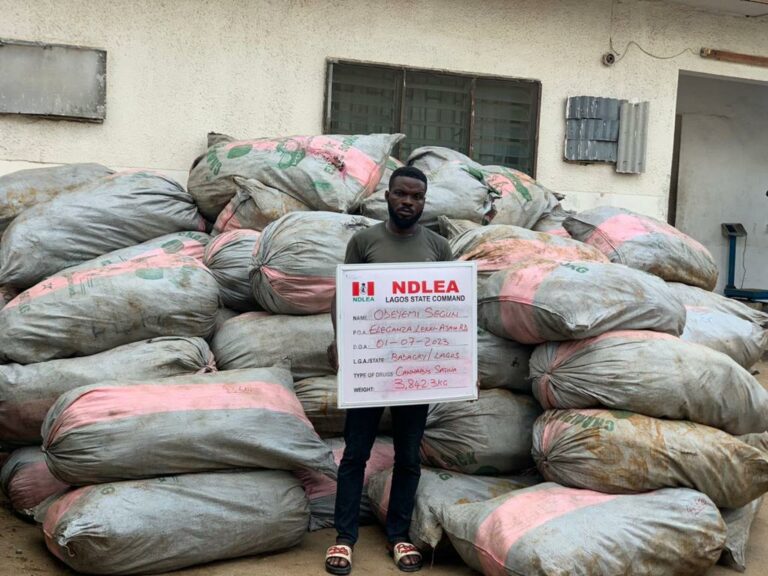
According to the statement, the Lagos NDLEA operatives seized 89 jumbo bags of skunk weighing 3,842kg in a truck belonging to a certain Segun Odeyemi. He was arrested in the Eleganza area of Ajah, Lagos, on Saturday, July 1.
On Wednesday, July 5, operatives of the agency in Adamawa intercepted a Toyota Hilux vehicle with 118 cartons of Indomie noodles used to conceal 544 blocks of compressed cannabis sativa, weighing 408kg, hidden in a false compartment.
The van was occupied by Kelvin Efe, 51, and Christian Ogaga, 42. The drugs were meant for distribution in Yola, Mubi and Gombe.
Kelvin Efe
In Osun state, an abandoned J5 Peugeot bus marked AAA 521 SQ with bags of fresh pepper used to conceal 25 bags of cannabis sativa weighing 300.5kg was recovered along the Akure-Ilesa expressway after its occupants sighted NDLEA officers on patrol on Friday, July 7. Operatives also raided a skuchies factory in Ogun and arrested four drug syndicate members, including two church officials.
Two officials of Christ Mercyland Deliverance Ministries (aka Mercy City Church), Warri, Delta state – Adewale Abayomi Ayeni, 39, and Ebipakebina Appeal, 41 – allegedly linked to two intercepted consignments of the illicit drug have been arrested in Warri.
Abayomi Ayeni
The NDLEA also arrested a female courier company staff and another lady involved in trafficking the lethal opioid fentanyl.
The NDLEA chairman, Mohammed Buba Marwa, commended the team of NDLEA officers tracking the fentanyl opioid syndicate in Nigeria.
Marwa also applauded the NDLEA operatives in Adamawa, Lagos, Osun and Ogun states for their efforts. He urged them to “continue to set their eyes on the goal of ridding the nation of substance abuse and illicit drug trafficking.”
HENNA, renowned for its ornate designs and cultural significance, has become increasingly popular among individuals seeking temporary body art.
The art of henna has been an integral part of Muslim culture for centuries, especially during auspicious occasions, including Eid el-Fitr and Eid el- Kabir. Originating in the ancient civilizations of the Middle East and South Asia, henna, also known as mehndi, holds deep cultural significance for Muslim women.
During the recently concluded Eid-el-Kabir celebration, numerous Muslim women were seen embellishing their hands with exquisite henna patterns. For them, this practice serves as a means to enhance their inherent beauty and express their cultural heritage.
According to a Henna artist, Laila Mustapha, many women eagerly seek various henna designs to elevate their appearances, particularly during significant events like Salah. As a result, her schedule becomes remarkably busy during these occasions.
“Eid period is always a rush of excitement and creativity for me. With the influx of ladies wanting henna, it can be hectic, but seeing their faces light up when they see my designs makes it all worth it. It’s a time of connection and celebration, and I’m grateful to be a part of it through my art,” Laila said.
A Muslim lady who preferred to remain anonymous revealed her motivations for using henna tattoos. She said she employs henna to enhance the aesthetics of her hands, particularly when attending events or during special festive occasions.
“For me, it’s majorly for beautification. I use it during weddings, family parties and festivals”, she said.
Henna-adorned hands reflect cultural heritage and serve as a visual celebration of unity and shared traditions. However, the use of henna may have unintended consequences, leading to skin damage.
Henna reaction on a lady’s hand
Rashes as a result of henna reaction on a lady’s hand
These images are evidence of the skin damage caused by henna adornments. Redness, itching, swelling, and blistering are just a few of the potential side effects reported by individuals who have had negative experiences with henna application.
A lady who got a skin reaction from using henna shared her experience with The ICIR.
“I realised I’m allergic to hydrogen peroxide, so I asked the lady that made mine when I noticed the weird growth on my skin, and she said it had hydrogen peroxide in it,” she said.
She explained that she immediately visited a pharmacist who provided her with an allergy medication. Although the medicine she received stopped the itching and pain, it took some time for the spots caused by the reaction to disappear fully, even after trying other medications.
Another lady who also shared her experience with The ICIR recounted that she decided to get henna done after seeing it on her friend’s hand and finding it beautiful. However, when she did hers, she could not find the person who did it for her friend, so she ended up going to someone else.
A few days later, she began experiencing intense itching and developed an extremely bothersome rash on her hands. Seeking relief, she visited a pharmacy where she received a topical solution to apply. Her anxiety escalated when she was informed that the rash spots might be permanent.
“I was even more scared when I entered the bus on my way back from work, and some ladies told me that the spots from the rash would be permanent,” she added.
According to her, it took approximately a month for the spots to completely clear up after the constant use of different medicines.
In an interview with The ICIR, Adekeye Adeola, a medical doctor in the Dermatology Unit at the National Hospital, Abuja, emphasised that the henna dye derived from the henna tree, scientifically known as Lawsonia inermis, as well as ordinary henna, is predominantly natural and not inherently hazardous. In fact, these substances offer several benefits.
“Henna, especially natural and pure henna has some benefits: it has anti-inflammatory properties, and reduces blemishes and dark spots on the skin. It can also be used as a camouflage for some skin conditions,” Adeola said.
But she warned that the henna dye can harm the skin when combined with other substances.
“When other substances like coal tar or strong oils like cloves or eucalyptus oil are added to it to preserve it and make it long-lasting, it can cause allergic reactions leading to redness, itching, burning sensation, swelling, blisters and eventual scarring of the skin,” she added.
She advised individuals who experience adverse reactions after using henna to seek prompt medical attention from a dermatologist for proper and effective treatment. Additionally, she strongly recommended promoting the use of pure henna.
“The use of pure henna should be encouraged. A test dose is important before each application; the individuals applying the henna should always do so with gloves,” she advised.
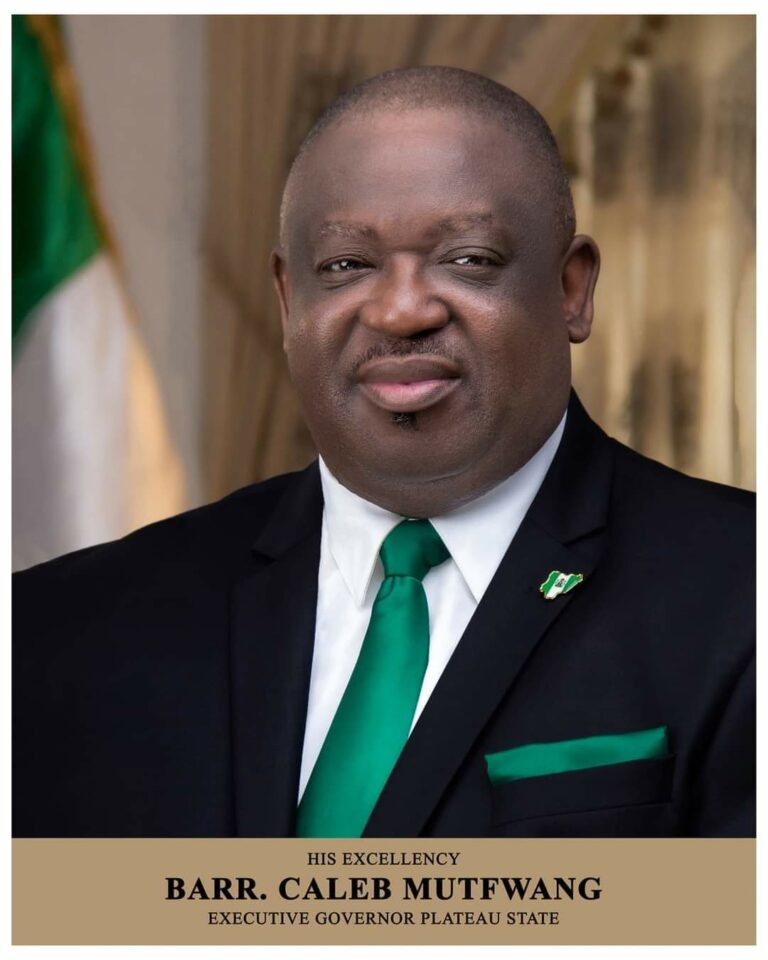
GOVERNOR Caleb Mutfwang of Plateau State has imposed a 24-hour curfew on the Mangu local government area (LGA) of the state following recent attacks.
Mutfwang gave the directive on Sunday, July 9 in Jos, according to a statement issued by his Director of Press and Public Affairs, Gyang Bwre.
Fresh attacks were reportedly unleashed on some communities in Mangu LGA on Saturday night, resulting in loss of nine lives and properties, and many persons were displaced.
The statement emphasised that the Governor, in consultation with the State Security Council, imposed the curfew to restore law and order.
“Consequently, movements within the Local Government have been banned until further notice except for security personnel and persons on essential duties.
“Security agencies have, therefore, been directed to ensure total enforcement of the curfew,” the statement read.
The governor assured the people that the government was working round the clock to restore peace and security in the state.
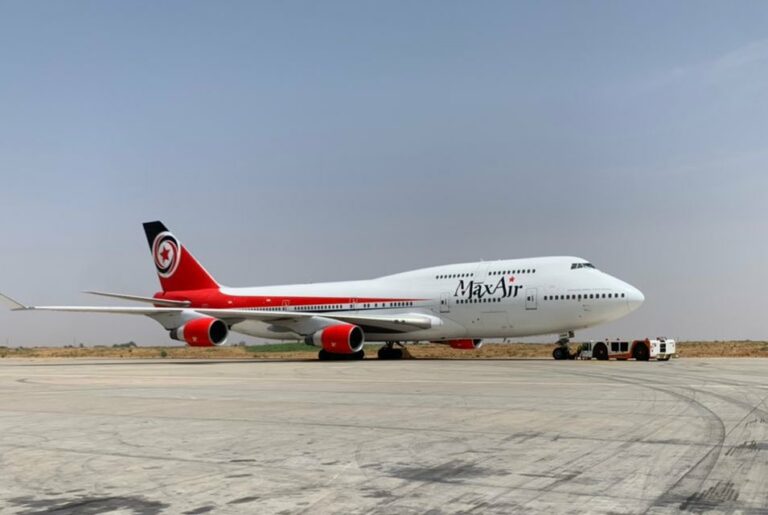
The Nigerian Civil Aviation Authority (NCAA) has disclosed that Air Peace and Max Air accounted for the highest number of domestic flight delays between January and March 2023.
The report, released on Thursday, July 6 by the aviation authority, said that 10,128 domestic flights were delayed of the 18,288 domestic flights in the first quarter of 2023.
The NCAA, noting that the delayed flights represented 55 per cent of the total flights, added that 284 flights were cancelled.
The report said that Aero Contractors, Arik Air, Azman Air, Dana Air, Air Peace, Max Air, Ibom, United Nigeria Airlines, Green Africa, Value Jet and Overland Airways operated during the period of review, with Air Peace having the highest number of flights operation with 6,521 flights and 3,754 delays.
It said that Max Air accounted for 1,565 flights with 1,013 delays (60 per cent) and Arik Air 1,619 flights with 926 (47 per cent) delays.
The report stressed that United Nigeria Airlines recorded 910 delays out of 1,243 flights, while Ibom Air, which operated 2,312 flights, accounted for 746 delayed flights.
Aero Contractors recorded 1,123 flights, with 264 delayed.
Other delay cases were Overland Airways with 719 flights and 605 delays, Dana Air with 711 flights with 474 delays, and Green Africa with 1182 flights and 443 delays.
While Azman Air airlifted passengers 527 times with 385 delays, Value Jet operated 766 flights with 248 delays.
Similarly, the NCAA noted 11 domestic airlines operating in the country had 284 flight cancellations in the first quarter of the year.
The report informed that Air Peace had the highest number of cancelled flights in the first quarter of 2023 with 63 flights, followed by Max Air with 56.
Other airlines with cancelled flights included Arik, 43; Aero Contractors, 40; Azman Air, 20; Green Africa, 16; Overland, 15; Value Jet, 15; Ibom Air, 9; Dana Air, 5; and United Airlines, 2.
The NCAA further mentioned that the Nigerian aviation market recorded 2,791,591 passengers, adding that passenger traffic indicated 1.40 million as outbound passengers, while 1.39 million were inbound air travellers.
According to the report, “The breakdown shows that while inbound passenger traffic of 375,700 was recorded, outbound traffic was 495,076 on the international routes.
“In the first quarter, 25 foreign airlines operated 3,073 flights on the international routes, while 11 domestic airlines operated 182,88 flights on domestic routes.”
In one instance, The ICIR had reportedhow Max Air dumped Lagos passengers in Abuja for hours without any explanation.
The flight, which took off from the Aminu Kano International Airport, Kano, on Wednesday, June 28, arrived at the Nnamdi Azikiwe International Airport, Abuja, at about 6:10pm.
The ICIR reported that the airline’s crew allegedly asked the passengers to disembark and promised to put them on another aircraft some minutes later.
The passengers, however, remained at the airport till 2:09am the following morning before a flight flew them to the Lagos airport by 2:56 am.