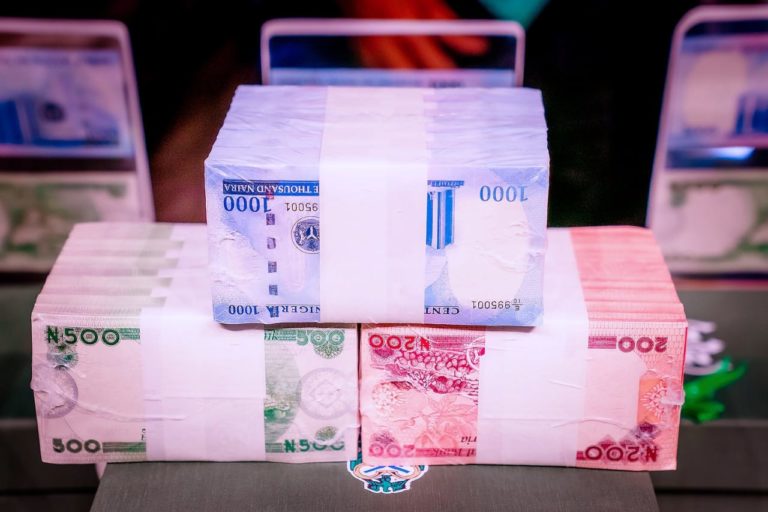
THE Nigerian Security Printing and Minting Plc (NSPM) has addressed concerns raised by the public about the quality of the redesigned naira notes.
In a statement on Friday January 6, NSPM’s managing director, Ahmed Halilu, said the company’s attention had been drawn to various concerns and comments on diverse platforms regarding the quality of the redesigned notes.
Halilu clarified that the new naira notes passed through the same printing processes and finishing procedures as the old ones.
Shedding light, he said, “It is, therefore, basically the same as the other notes in circulation. It also leaves traces of intaglio inks when rubbed on plain white surfaces.”
He explained that new banknotes are generally light when issued, then become heavier in circulation on getting in contact with dirt and moisture.
Ahmed Halilu
“In addition, the second stage of currency printing (intaglio) requires a heavy deposit of special inks with fairly large particles to give a tactile feeling of the portraits, as well as other raised prints by way of design,” he said.
The NSPM, also referred to as the Mint, was contracted by the Central Bank of Nigeria (CBN) in 2014 to print the Naira in order to end years of importation of the notes.
Since then, Halilu said, “Nigeria has achieved zero importation of currency, developed local capacity and, to an extent, conserved foreign exchange within this period.”
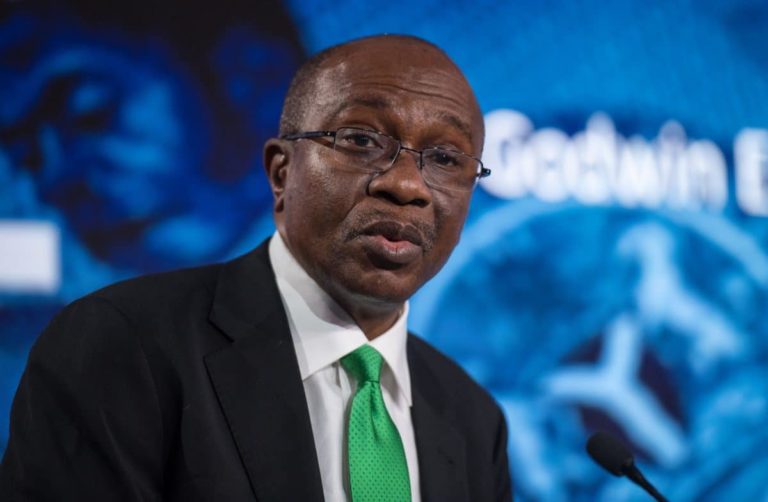
The Governor of the CBN, Godwin Emefiele, had on October 26, 2022 announced the institution’s plan to redesign the N200, N500 and N1,000 notes.
It directed that the old notes would cease to be legal tender by January 31, paving way for the redesigned notes.
In a recent Twitter post, the CBN advised Nigerians to ensure they deposit all the N200, N500 and N1,000 banknotes in their possession before the January 31, deadline.
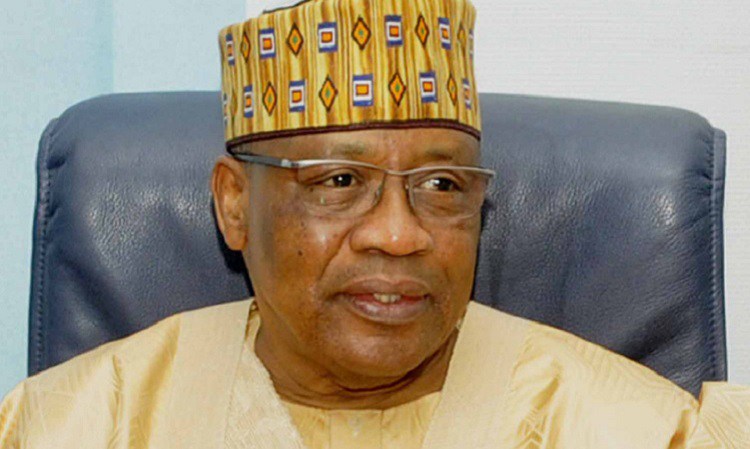
THE public has been urged to disregard fake social media accounts in the name of former military president Ibrahim Badamasi Babangida because he has none.
An aide to the former military leader, Salman Yusuf, advised Nigerians to beware of fraudsters using the name and picture of the former military president to send wrong signals in the name of politics.
Yusuf said this yesterday in Minna, the Niger State capital.
Several social media accounts had emerged recently in Babangida’s name, commenting on various political issues.
But Yusuf said Babangida could not have sent those messages since he does not operate any social media account.
“Our attention has been drawn to a plethora of fake social media accounts, especially Facebook, bearing General Babangida’s name and photos. We wish to state that IBB has never owned nor operated any social media account, and he does not intend to operate any now or in the near future.
“The surfeit of Facebook accounts bearing his photos and names are fake. The fake accounts are the creation of identity thieves and cyber fraudsters, local and international, who steal the identity of prominent people to defraud, misinform and commit heinous crimes against Nigerians and foreigners alike,” Yusuf said.
Saying Babangida does not comment on national issues on social media, his aide added, “That is absolutely unnecessary because there are official channels available to him to communicate his stand on any national issue to the authorities.”
Yusuf added that the retired general has access to several credible mainstream media that he can talk to whenever he wants to discuss any issue.
He appealed to the general public to ignore the “warped imaginations and antics of cyber criminals who do not mean well for the country.”
THE Chairman of the Independent National Electoral Commission (INEC), Mahmood Yakubu, has assured corps members on election duty of premium security, noting that the National Youth Service Corps (NYSC) plays a critical role in the election process.
Yakubu disclosed this on Friday in Abuja during a courtesy visit on the acting Director-General of the NYSC, Christy Uba.
The commission, he said, would continue to place a premium on the security of corps members on election duty.
The INEC chairman stated that the corps members operate at the polling units where citizens vote, which he described as the most important level of election.
“So, for that reason, we will also extend insurance cover in case of injury or other emergencies to all corps members involved in election duty.
“Working with the security agencies, we will also extend protection and security to the youth corps members’ lodges when they are deployed to the field on election days.
“This is because we have had some unhappy experiences before when some hoodlums raided the corps members’ lodges in some places, while they were on election duty.
“So, we will continue to take whatever step that is necessary to protect and guarantee the security and welfare of the corps members,’’ the chairman said.
Yakubu assured that the commission would continually operate within the framework of the existing Memorandum of Understanding (MoU) between the commission and the NYSC.
According to him there would be training and retraining of the ad hoc staff on how to handle technology during the 2023 elections.
“They will be responsible for the management of the polling units, management of election resources, including sensitive materials, accreditation of voters and using the Bimodal Voter Registration System (BVRS) on election days,” he said.
THE Central Bank of Nigeria (CBN) has given its position over approval for the sale pf Polatid Bank to Stratrgic Capital Investment Limited (SCIL).
The apex bank explained that it approved the sale of Polaris Bank to Strategic Capital Investment Limited (SCIL) because it made the highest purchase offer of N1.355 trillion.
The apex bank said, the new core investor followed due process in the acquisition of 100 per cent equity stakes in the bank.
The clarification CBN said followed a report that the CBN failed to sell the bank to Fairview Acquisition Partners (FAP), which offered a higher purchase price of N1.2 trillion.
But the CBN in a statement signed by Osita Nwanisobi, director of CBN’s corporate communications, refuted the claims, saying it was inaccurate.
“For the records, the public is referred to the statement dated October 20, 2022 by CBN and AMCON announcing the sale of 100 percent equity in Polaris Bank to a new core investor, Strategic Capital Investment Limited (SCIL), wherein it provided copious details of the process by which the sale was conducted.
“Contrary to claims in the aforementioned online publication, the divestment from Polaris Bank was supervised by a divestment committee (committee) comprising senior representatives of AMCON and CBN and supported by reputable legal and financial advisers. In addition, the divestment mode, process and decision received requisite board and regulatory approvals,” the statement read.
The CBN also said the offer made by FAP significantly discounted the existing debt owed by Polaris Bank to AMCON and that the company did not make a binding purchase offer on Polaris Bank.
“At no time did any other party make a higher purchase offer as falsely claimed by the online publication.
“The entity in question, Fairview Acquisition Partners, had indicated an interest in acquiring two banks, including Polaris Bank, for a total sum of 1.2 trillion, an indicative offer which significantly discounted the existing 1.305 trillion debt owed by Polaris Bank to AMCON and so represented a material loss to the federal government.
“Notwithstanding, along with twenty-four (24) other parties, Fairview Acquisition Partners was invited by the financial advisors to participate in the sale process via the execution of a non-disclosure agreement (NDA), the first stage of the process,” the CBN said.
The apex bank further stated that financial advisors informed the committee that Fairview Acquisition Partners neither executed nor returned the NDA despite verbally confirming receipt of the agreement and after follow-up from the financial advisors.
“Therefore, Fairview Acquisition Partners did not take the opportunity to update their offer by participating in the divestment process and thus did not make a binding purchase offer for Polaris Bank.
“The divestment was executed based on the relevant laws, global best practices for bank resolutions, and requisite regulatory approvals.
“The committee, along with its legal and financial advisers, conducted a rigorous technical and financial evaluation of the purchase proposals, assessing promoters’ fitness and propriety, offer price received vs. reserve price, funding structure and financial capacity, strategy and growth plans, amongst others,” it added.
The CBN further stated that following evaluation, the promoters of the strategic purpose vehicle, SCIL, emerged as the preferred purchaser, having presented the most comprehensive technical/financial purchase proposal and that the company also presented the highest-rated growth plans for Polaris Bank.
“In addition to passing all fitness and propriety tests, the promoters also made the highest financial offer for the bank, which was significantly above its core valuation and reserve price,” it said.
“SCIL’s binding offer involved an immediate upfront consideration of N50 billion and full responsibility for the debt of N1.305 trillion owed to AMCON, essentially a total purchase consideration of N1.355 trillion.
“This offer was the most competitive and provided taxpayers and the federal government with more than full recovery of its intervention cost.
“By the sale, the CBN and federal government achieved a successful, value-driven resolution of a strategic financial institution.”
CBN also emphasised that the divestment from Polaris Bank was an institutional decision, adding that the “curiously-timed online publication deliberately misrepresents” the circumstances surrounding the sale of a strategic asset of the federal government.
According to bank, its misleading statements are obviously intended to undermine the credibility of the divestment process.
“It also portends negatively on the stability of Polaris Bank and risks derailing the progress made by the monetary authorities,” CBN added.
THE 2023 general election is the issue that will dominate the year until a new president is sworn in by May and a new National assembly is inaugurated in June. The Judiciary and other Paramilitary agencies, apart from playing a significant role in the success of the election, will also look to better their performances of 2022
Judiciary
Supreme Court
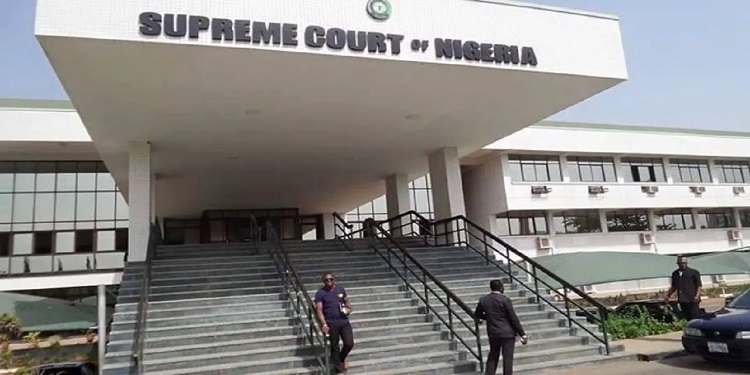
The Chief Justice Of Nigeria (CJN), Justice Ariwoola, recently lamented over the depletion of the apex court bench following some Justices’ retirement and the deaths of Justices Samuel Oseji and Sylvester Ngwuta between 2021 and 2022. The reduction in the number of these judges has raised concerns about the considerable workload the remaining justices have to contend with because, in Nigeria, almost all cases from the magistrate and high courts end up at the Supreme court. Senior lawyers have also complained about the deficit in the number of Justices of the Supreme Court from the 21 stipulated in the Constitution to 13 and pointed out the adverse implications of such a shortage of access to justice in the country. A senior lawyer Kunle Adegoke (SAN), told the press three months ago, that the depletion in the number of Justices of the Supreme Court is alarming.
CJN, Kayode Ariwoola
He also pointed out the implication of their depletion to the health and productivity of the apex court justices, noting that the remaining senior jurists “are overworked with overflowing dockets daily.” According to him, with the depleted number of justices currently sitting at the Supreme Court, the remaining senior jurists would become more overwhelmed with work as the election season of 2023 approaches. Another Senior lawyer Joe-Kyari Gadzama while commenting on the issue, pointed out that any recommendation by the Nigerian Bar Association (NBA) should be subjected “to further scrutiny by an independent panel for the suitability, intellectual and character evaluation before their eventual appointment.”.
Post-election cases in 2023
As the 2023 election approaches, it is obvious that appointing more justices would strengthen the apex court’s capacity to deal effectively with the magnitude of post-election cases. This is because most Presidential elections in Nigeria always end at the Supreme Court, with the recent being the 2019 election, where the Supreme Court dismissed Atiku Abubakar’s petition and upheld the Tribunal’s judgement which gave victory to President Buhari. In 2023, it is not unlikely that the election will also end at the apex court like previous ones. The composition of the Election Tribunal for Governorship, National Assembly and other election levels will be another critical issue to look out for in the new year.
Upward review of Salaries of Judicial officers
The need to improve the salaries and service conditions of Judicial Officers in Nigeria will also dominate the judiciary circle in 2023. On November 18, 2022, The ICIR reported that President Buhari approved immediate salary increments for judges. The Attorney General of the Federation and Minister of Justice Abubakar Malami, a Senior Advocate Of Nigeria (SAN), disclosed this during the official commissioning and handing over ceremony of Nabo Graham-Douglass Campus of the Nigerian Law School, Port Harcourt, to the Council of Legal Education by the Rivers State Government. This was sequel to a court ruling by Justice Osatohanmwen Obaseki-Osaghae of the national industrial court of Nigeria. Justice Obaseki-Osaghae gave the verdict on Friday, July 15, stating that the failure to review salaries over 14 years is unlawful and unconstitutional. In the judgement, Justice Obaseki-Osagie ordered that the CJN be paid N10 million monthly, while Supreme Court Justices should receive N9 million monthly. Likewise, the court increased the salaries of Court of Appeal Justices, Chief Judges, President of the Industrial Court, Grand Khadis and President of Customary Courts to N8 million and ordered the Federal Government to pay N7 million to other judges monthly. It is left to be seen if the approved salary package will be implemented this year or is already being implemented.
Nigeria Correctional Service (NCoS)
Kuje Prison attack and security measures to forestall a repeat
The Kuje Prison attack was a big challenge for the Nigeria Correctional Service (NCoS) in 2022. The Kuje prison attack generated widespread condemnation. The NCoS said 879 inmates escaped from the Kuje Prison in a statement concerning the attack.
The NCoS Spokesperson Umar Abubakar in an exclusive chat with The ICIR said adequate measures had been made to ensure the security of all Custodial Centres through Proper deployment of staff. He, however, said he would prefer to keep their strategy private for security reasons. He reiterated the stance of the Honourable minister of interior, Ogbeni Rauf Aregbesola, that anyone that attempts to break or attack any custodial centre should be shot on sight. “Adequate measures have been made to ensure the security of all Custodial Centres through Proper deployment of staff. “Above all, the CG reiterates the stance of the Honourable minister of interior, Ogbeni Rauf Aregbesola that Custodial Centres are ‘red zones’ and any attempt by the enemies of the state to defile it must not live to tell the story,” he said.
Nigeria Police Force
Standardisation of the police investigation process
One major reform of the Nigeria Police Force (NPF) in 2023 will be the standardisation of the investigation process. In this regard, the Inspector-General of Police (IGP), Usman Alkali Baba, issued a directive against duplicating cases and parallel investigations in the NPF.
The NPF spokesperson Olumuyiwa Adejobi disclosed this on his Twitter page on Tuesday, January 2.
Police PRO, Olumuyiwa Adejobi
He said it would strengthen the criminal justice system and standardise investigation processes in the Force.
The police and the 2023 Election
In terms of security in the coming elections, the Spokesperson for the Police, Olumuyiwa Adejobi, in a chat with The ICIR, said the Police would do everything to ensure a peaceful environment for the conduct of the elections.
“We have been meeting with all the stakeholders and INEC to make sure we uphold the sanctity of our electoral values and peaceful elections in Nigeria. “The police as the lead agency in elections security management, has taken the bull by the horn to make sure we enforce the law, provide a peaceful environment for the conduct of the elections, and defend Nigeria’s democracy,” he said. He added that the Force would bequeath to Nigerians a secure process that will produce a free, fair, and credible election in 2023.
The police and extra Judicial Killings
Towards the end of 2022, there was outrage as Lagos police officers allegedly killed two persons within three weeks. Social media users expressed anger over the death of a female lawyer, Bolanle Raheem, who was shot by a Policeman, Drambi Vandi, attached to Ajiwe Police Station in the Ajah area of Lagos on Christmas Day and a young man, Gafaru Buraimoh, who was shot dead few weeks before. Coincidentally, they were both killed by police officers attached to the same station.
Suspected killer of Bolanle Raheem, ASP Drambi Vandi
The Police authorities condemned the actions of the police officers; it is, however, important that in 2023, the focus will be on the Police to see how and measures put in place to prevent extra Judicial killings
The NDLEA
The National Drug Law Enforcement Agency (NDLEA), in the year 2022 from January to October 2022, arrested a total of 12,601 persons for drug trafficking and associated crimes. The Agency has, however, promised to do more in 2023. The NDLEA through its Spokesperson, Femi Babafemi, told The ICIR that the Agency would adopt multi-pronged strategies in tackling drug-related crimes this year.
NDLEA Chairman Mohammed Buba Marwa
“We’re intensifying our multi-pronged strategies based on a whole society approach.
…To Control Drug Supply
The Agency said to suppress or control drug supply; it will deploy more assets for intelligence gathering and broadening networks.
…Partnerships
The anti-drug Agency said it would partner with stakeholders and other security agencies at home and counterparts across the globe and, at the same time, build the confidence of citizens to continue to support the Agency with information.
…Drug Demand Prevention
In drug demand prevention and reduction, the NDLEA promised to roll out many advocacy initiatives to educate the citizenry on the dangers of drug abuse and expand partnerships to bring help to those already afflicted with the scourge. “More than ever before, more assets are also being deployed to dismantle more drug cartels, rein in the barons, mop up the mules and go after their assets in terms of properties and bank accounts to deny them the benefits of the proceeds of their criminal trade,” the Agency promised in 2023.
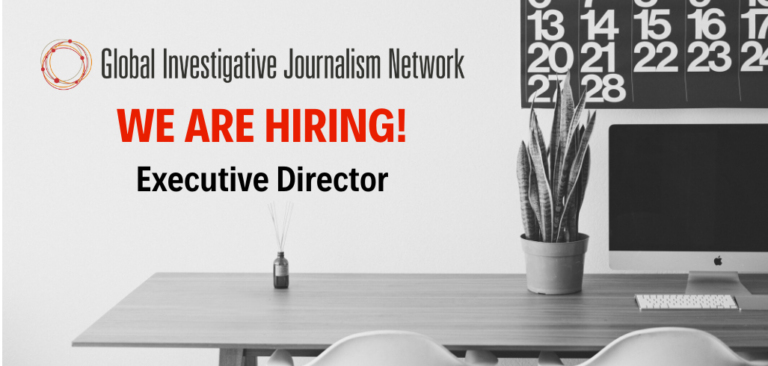
THE Global Investigative Journalism Network (GIJN) has called for applications for its vacant Executive Director (ED) position.
A statement released by the organisation said the opportunity provides the qualified persons with a chance to be on the frontlines of strengthening watchdog media around the world.
GIJN serves as the global hub for investigative journalists, and its core mission is to support and strengthen investigative reporting around the world. With a team of 38 staff in 25 countries, GIJN works in a dozen languages a day to link together the world’s most enterprising journalists, giving them the tools, technology and training to go after abuses of power and lack of accountability.
GIJN supports journalists around the world and is governed by an international association of 235 nonprofit journalism organisations in 89 countries.
The executive director will report to the Board of Directors and oversee GIJN’s largest program areas, including development, finances, and staff.
GIJN is a distributed organisation, with no brick-and-mortar office. Management is largely online, through collaborative software and video meetings.
The position is fully remote.
A Bachelor’s Degree, a minimum of 10 years of senior leadership experience in a journalism environment, strong knowledge of investigative and data journalism, financial management experience, strong fundraising skills and experience, and knowledge of nonprofit media donors are some of the qualifications the intended ED must possess
The deadline for the submission of applications is March 30, 2023. Prospective candidates can apply here.
The award honours the late Power, a journalist who reported empathetically on the human condition and died on assignment in Uganda in March 2014.
The winner will receive US$12,500, NYU ID, and full online and onsite NYU Bobst Library research and reference privileges.
Early-career nonfiction writers who want to focus on a story that uncovers truths about the human condition can apply for funding.
The organiser says the award will not fund proposals to report on armed conflicts where journalists are already imperiled, nor projects that are mainly investigatory.
The application deadline is March 2, 2023. Interested applicants can apply here.
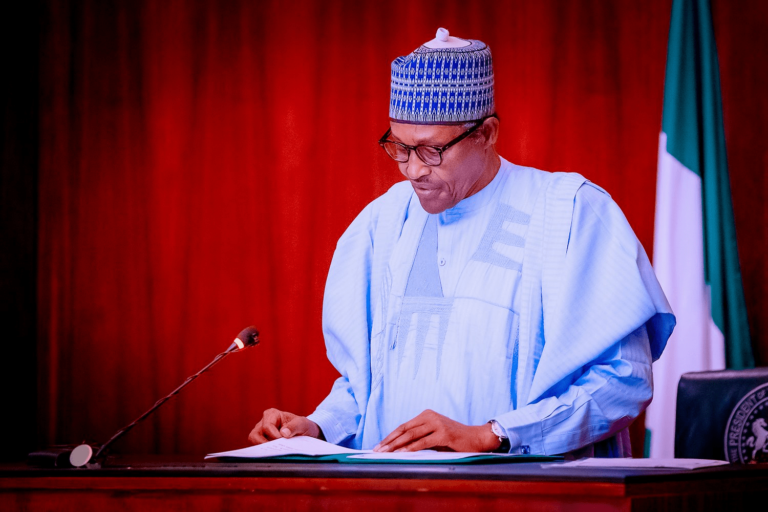
PRESIDENT Muhammadu Buhari has signed into law the Mental Health Bill harmonised by the National Assembly in June, 2021.
The Mental Health Bill seeks to establish human rights protections for those with mental health conditions against discrimination in housing, employment, medical, and other social services.
Following the signing the bill into law, it will be illegal to subject mentally ill persons to forced treatment, seclusion and other methods of restraint in mental health facilities.
The long awaited signing by the President means the law will replace the Lunacy Act of 1958 condemned by mental health experts as “outdated and inhuman”.
The President of the Association of Psychiatrists of Nigeria, APN, Prof Taiwo Obindo described the signing as “victory for Mental Health Care and practice in this nation”.
He said the law is the “final culmination to over two decades of several efforts by the Association of Psychiatrists of Nigeria now has an Act/Law on Mental Health governance and we are now part of the global space with best global practice”.
Reacting, the immediate past President of APN, Prof Taiwo Shielk said: “Congratulations to APN for our tenacity and advocacy for the voiceless. Our profound gratitude to Senator Dr. Ibrahim Oloriegbe, Senator Ahmad Abubakar, Dr. Ibrahim Gambari (COS), CBM International, Johnson & Johnson and all our partners. After several attempts, We pray that The Lord will reward all those who contributed to the success of this project.”
Some provisions of the National Mental Health Bill include creating a Department of Mental Health Services in the Federal Ministry of Health and a Mental Health Fund.
Two failed attempts
A Civil Society Organisation known as the Nigerian Mental Health, last year called on President Muhammadu Buhari to assent the bill which was submitted to his office by the Clerk of the National Assembly, Olatunde Ojo.
The group, in a statement said the bill was finally passed by the National Assembly after two failed attempts since 2003.
According to the group, “mental health regulatory reforms have languished in Nigeria’s legislative chambers for almost two decades, with failed attempts at overhaul in 2003 and 2013”.
“In 2019, mental health legislation was again advanced, with the Senate passing it for second reading in November of that year and holding public hearings in 2020.
“Harmonisation of the bill concluded between both legislative chambers in June 2021. Since last year, mental health practitioners have been waiting for the bill to be finalised and transmitted to the President,” the group added.
Explaining why the bill failed in the past, founder of the group, Chime Asonye said; “There have been different types of conversations about why it hasn’t been passed, but the major conclusions were that it wasn’t high in terms of the political agenda and the roles and responsibilities of psychiatrists versus psychologists, etc”.
He added that finance was also an issue. “When you think about health in general, we don’t finance health budget. And only a very small percentage goes to mental health, so it wasn’t even a priority in the health”, he said.
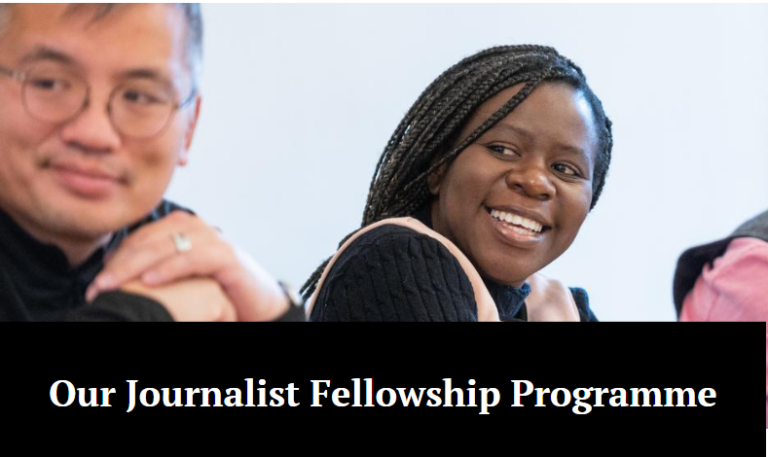
THE Reuters Institute for the Study of Journalism seeks applicants for its Journalist Fellowship Program, which will begin in October 2023, January 2024, and April 2024, and last three or six months.
The program gives visiting journalists from around the world an opportunity to critically reflect upon their profession, research a subject of their choice under the supervision of an academic specialising in that area, and enjoy the breadth of academic, cultural, and social life at the University of Oxford.
Applicants must have at least five years of journalism experience and strong English skills.
Mid-career journalists can apply for a fellowship at Oxford University, United Kingdom.
Most Journalist Fellowships are fully-funded and cover living costs and accommodation.
The deadline for the submission of the application is February 6, 2023. Interested applicants can apply here.
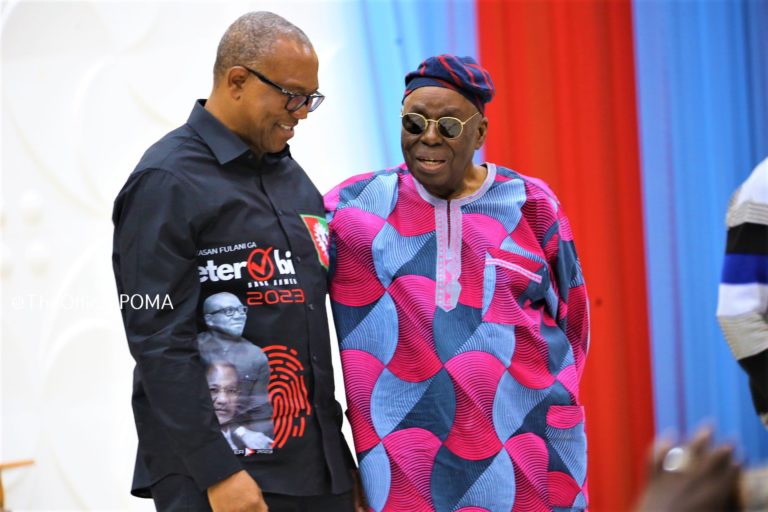
FOUNDER and Chancellor of Afe Babalola University, Ado Ekiti, Afe Babalola, has said that the Labour Party (LP) presidential candidate, Peter Obi, is the most qualified person to lead in Nigeria in 2023.
The Senior Advocate of Nigeria (SAN) stated this when he hosted the former Anambra governor in Ado Ekiti, on Thursday, January 5.
He said the only people opposed to Obi are those who participated in plunging the country into the state of underdevelopment it is at present.
“Unless you are part of the old system that has brought us to where we are, there is no way you will oppose a young man like Mr Peter Obi, an untainted, young, educated man with ideas from being the President of Nigeria,” he said.
Babalola, who will mark 60 years of his call to the Nigerian Bar as a lawyer this year, said he and Obi share a common passion in their love for quality education.
“We have a common ground, and that common ground is that he will give education a rightful place in his administration. Unlike all of you, I never had a conventional education. I never went to secondary school or university but due to determination and courage, I endured.
“I studied privately through correspondence and obtained my A Level by correspondence, passed the entrance into university by correspondence.
“But for education I would not be where I am today and that is why by the grace of God after a successful practice, I am what I am today. I will celebrate 60 years of my call to Bar this year and by the grace of god, peter obi will be there. He is the most qualified to lead this country”.
Meanwhile, Obi, who was in Ekiti to solicit votes from electorates in the state, has vowed to end the established political structures that have put Nigerians in the bondage of hunger and poverty.
He said Nigerians would witness a new lease of life if they voted for him in the forthcoming February 25 presidential election.
The LP presidential candidate promised massive jobs for the teeming unemployed youths of the country.
“I want to assure you that if you vote for me as the next President of Nigeria, I will unite and secure this country,” he said.
“I will end hunger, poverty and provide good jobs for numerous unemployed graduates in Nigeria.
“My administration will turn this country from consuming to producing nation and bring the dividends of good governance to the people.
“I will not only stop corruption, I will eradicate poverty in every States of the federation because our youths will be properly taken care of and they will no longer be travelling out of the country for greener pastures.
“Ekiti Kete please vote for Labour Party in the forthcoming presidential election.”