THEGombe State Police Command have beefed up security around Independent National Electoral Commission (INEC) facilities across the state.
The state Police Public Relations Officer ASP Mahid Muazu disclosed on Tuesday, that the development followed a directive by the Commissioner of Police, Oqua Etim.
He said the commissioner ordered the immediate deployment of the Command’s operational apparatus to safeguard INEC’s critical assets and facilities.
The commissioner issued the directive in line with orders given by the Inspector-General of Police Usman Baba.
“To ensure that enemies of the state do not destroy the ongoing peaceful political process towards the 2023 general election in the state, the deployments are to deter all criminal elements from having access to INEC facilities and to prevent any attempt to undermine the security around INEC facilities and to coordinate a swift response to emergencies,” a statement released by the Gombe State police spokesman said.
Divisional Police Officers and their supervisory Area Commanders were also directed to ensure strategic deployment of tactical teams at INEC offices within their respective areas of responsibility.
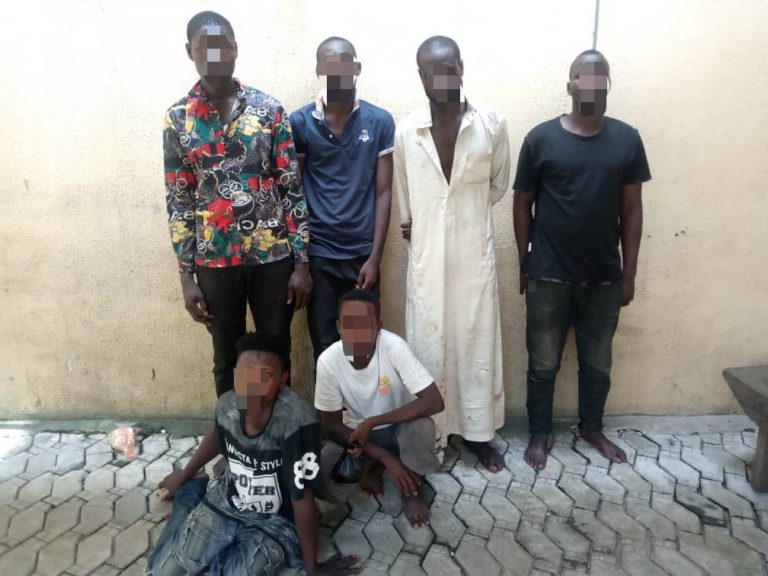
Hundeyin added that investigations by the police have proved that all six kidnappers are colleagues of the victim’s father in the same district.
“These six conspired and kidnapped the eight-year&old child of a BDC operator.
“The child was released three days later bound hands and feet in a sack. Preliminary investigation reveals that all the suspects are fellow BDC operators in the same business district of Lagos, ” he tweeted.
He, however, stressed that the six suspects will be charged to court at the end of investigations.
A LinkedIn user alleged that Orji Uzor Kalu, a serving Senator and former Governor of Abia State, is hiding stacks of money in his house.
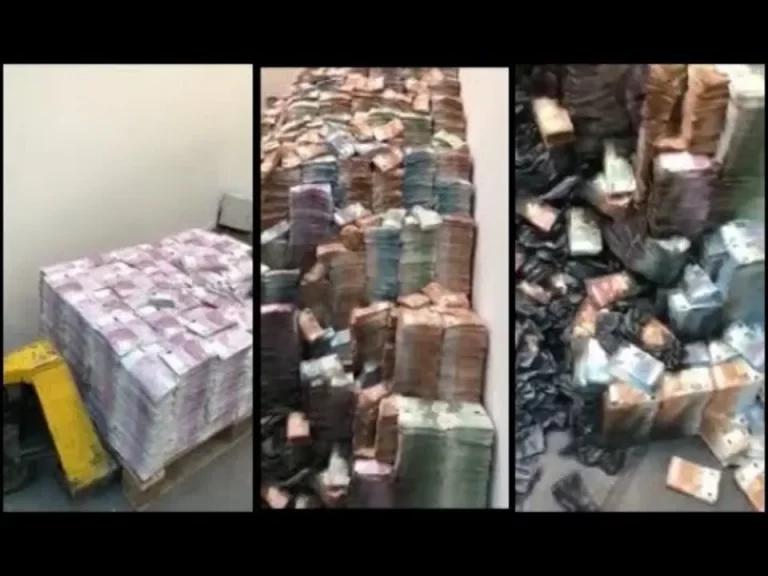
A screenshot from the alleged video.
Verdict
Video of an alleged stack of money linked to Orji Uzor Kalu, a serving Senator and former Governor of Abia state, is FALSE. The alleged clip has been in circulation since 2019 and was originally crafted by Alejandro Monge, a Spanish artist.
Full text
From sensational stories about a “tribe where the bride’s aunt must have sex with the groom to test his potency-Bayonkole Tribe”, to controversial pro-China-Russia propaganda riddled on his LinkedIn timeline, EkeneDiliChukwu Okafor, who described himself as an independent Journalist and Entrepreneur has shared several false information in recent times.
His latest, a video depicts stacks of cash piled in a room which, according to Mr Ekene, were discovered in the home of Orji Uzor Kalu, a former governor of Abia, a state in the southeastern parts of Nigeria. Mr Ekene shared alongside the video a short caption calling the Economic and Financial Crimes Commission (EFCC) to go after Kalu.
“EFCC needs to go after @Orji Uzo Kalu, former governor of Abia state. Look at how he starched European currency in his house.”
Within 24 hours, the post attracted diverse remarks. While many users who commented on the post expressed doubts, others affirmed it, expressing satisfaction with the recent decision by the Central Bank of Nigeria to change the Nigerian currency.
One Twitter user, Temitope Kade, who probably believes the claim, gave a sigh of resignation.
“Oh my days!!! What a nation,” she remarked.
Marc-Oliver Nguenti, another user, described the post as fake news. In his view, the claim is a made-up movie.
“Fake news!!! This was made up for a movie,” he challenged.
Orji Uzor Kalu is a Nigerian politician with a controversial past. He is a current Senator representing Abia North Senatorial District, and Senate Chief Whip. The senator was also a two-term Governor of Abia State from 29 May 1999 to 29 May 2007.
In December 2019, a court of law convicted and sentenced Kalu to 12 years imprisonment for N7.65 billion fraud. However, on Friday, 8th May 2020, the Supreme Court of Nigeria ruled that his trial was wrongly executed and freed him. Being a member of the ruling party, the All Progressives Congress (APC), false allegation as widely spread on social media about can trigger public condemnation about Kalu and his party
Verification
When the Nigerian Fact-Checkers Coalition (NFC) subjected the alleged video to analysis on the InVid video verifier tool, results showed the clip had surfaced in different contexts with similar narrative.
In 2019, the video appeared in the Cameroonian social media space, alleging that the Cameroonian minister of defence was hiding money in his house and his wife was attempting to burn it before police discovered it. The claim referred to Edgar Alain Mebe Ngo’o, former Cameroonian minister of defence, suspected of embezzlement.
The same video also made headlines in Russia in the same year, alleging that Rauf Arashukov, a Russian Senator, had discreetly tried to burn money he had embezzled and stashed in his office. The claim came around the time when Arashukov was arrested on the accusations of murder.
However, none of these narratives was true. The actual story links back to Alejandro Monge, a Spanish artist who crafted a three-metre-tall sculpture of money stashed in a room. The art was titled the “European Dream” and was entirely hand-painted to give it a money-like look. Since then, it has been displayed in the 3-Punts gallery in Barcelona and somewhere in Madrid, the Spanish capital.
Monge’s post on Instagram debunking the claim (translated).
Monge posted this video on his Instagram page and further debunked the heralding claims. His post, originally in Spanish, highlights the need for people to question whatever they see on the internet before believing it. He expressed dismay, adding that it is essential for people to know who first shared a post and the reason behind it before sharing it.
“Monge_art: It’s what the internet has that something is not known because it goes viral… and then no one knows what it is or to whom it belongs… thank you for sending me where you are going to see them from NY to WhatsApp groups all over the world.. well if people knew it’s a sculpture and the notes are hand painted.. @monge_art.”
In 2019, Monge told France24 that the way his art was depicted on social media came to him with mixed feelings. Admitting that, he felt flattered and at the same terrified.
“When I saw that my installation had been misappropriated in Russia, I had mixed feelings about it. At first, I laughed a lot and was flattered that my sculpture could fool so many people, which meant it was really realistic. But then I started to get a bit afraid because it was connected with a scandal in Russia, and I didn’t want to be associated with that in any way,” Monge said.
He explained that his art speaks about modern society and money’s influence in almost everything people do.
“My installation is a commentary on modern society and how everything revolves around money. I believe that money is the god of contemporary society.”
Monge clarified that the money is not real and it’s, in fact, hand-painted.
“My sculpture is made up of about 500,000 hand-painted fake bills made out of resin,” he stated.
Monge in 2018 working on his sculpture of the stacks of euros. Photo credit: @monge_art.
Conclusion
The alleged video depicting a room stashed with money, said to be hidden by Orji Kalu, in his house is mis-contextualised. Monge, a Spanish artist originally shared the video on his Instagram page to showcase a piece of art he crafted as money stashed in a room. This claim is FALSE.
* This fact-check was done by members of the Nigerian Fact-checkers’ Coalition.
In mid-November 2022 the eight billionth person will be born, according to the United Nations. In its analysis of this milestone, the UN makes two key observations. The first is that the global population has been expanding at its slowest rate since 1950. The growth rate dropped below 1% in 2020, a trend that is likely to continue. The second is that the growth in population has been due to the gradual increase in human lifespan owing to improvements in public health, nutrition, personal hygiene and medicine. It’s also the result of high and persistent levels of fertility in some countries. According to the UN, just eight countries are expected to be behind 50% of the population growth over the next 30 years. Five are in Africa: the Democratic Republic of Congo, Egypt, Ethiopia, Nigeria and Tanzania. Demographers Akanni Akinyemi, Jacques Emina and Esther Dungumaro unpack these dynamics.
What’s the significance of the eight billionth birth?
It raises concerns – scientists estimate that Earth’s maximum carrying capacity is between nine billion and 10 billion people.
Appreciating these numbers requires an understanding of the distribution and demographic structure of the population. Where are these people across regions, countries, and rural and urban geographies?
There is a potential upside to growing populations. It’s known as a demographic dividend. Population growth can be a blessing, spurring economic growth from shifts in a population’s age structure. This is a prospect if working-age people have good health, quality education, decent employment and a lower proportion of young dependants.
But realising this dividend depends on a host of things. They include the structure of the population by age, level of education and skills, and living conditions, as well as the distribution of available resources.
The consequences of population growth are socioeconomic, political and environmental. Some of them can be negative. How these unfold is determined by the characteristics of the population and its distribution.
Why are birth rates so high in five African countries?
The major factors driving population growth in these countries include low contraceptive use, high adolescent fertility rates and a prevalence of polygamous marriages. There’s also the low education status of women, low to poor investment in children’s education, and factors related to religion and ideas.
The use of modern contraceptives is generally low across sub-Saharan Africa. The overall prevalence is 22%. In the Democratic Republic of Congo, however, the uptake of short-acting contraceptives is at 8.1%. In Nigeria, it is at 10.5%. The uptake in Ethiopia is 25%, in Tanzania it’s 27.1% and in Egypt 43%.
For long-acting family planning methods, apart from Egypt with over 20% uptake, the other four countries driving population growth in the region recorded very poor uptake. This low uptake will logically lead to a population explosion.
Some of the factors associated with high contraceptive use in Africa are women’s education, exposure to news and mass media, good economic status and urban residency.
The adolescent fertility rate in sub-Saharan Africa – while showing a downward trend – is still relatively high. The adolescent fertility rate captures the number of births per 1,000 girls aged 15 to 19. In sub-Saharan Africa, it stands at an average of 98 births per 1,000 girls.
There is a wide variation in this rate across the five countries: from 52 in Egypt and 62 in Ethiopia to 102 in Nigeria, 114 in Tanzania and 119 in the DRC.
Outside the continent, the adolescent fertility rate is 21 in Asia and the Pacific, and 26 in Eastern Europe and Central Asia. In the US, it’s at 15, five in France and 42 globally.
The adolescent fertility rate has huge implications for population growth because of the number of years between the start of childbearing and the end of a woman’s reproductive age. A high fertility rate in this age group also has a negative influence on the health, economic and educational potential of women and their children.
Another factor driving population growth in these five African countries is polygamous marriage. Women in polygamous unions living in rural areas with low socio-economic status are likely to have higher fertility rates than women in other areas.
Polygamy is illegal in the DRC. Nevertheless, it’s common. About 36% of married women in Nigeria, one-quarter of married women in rural Tanzania and 11% of those in Ethiopia are in polygamous marriages.
Finally, a woman’s education status has a significant impact on fertility. For instance, in Tanzania, women with no formal education have as many as 3.3 more children than women with secondary or tertiary education.
Are rising populations a cause for major concern in these countries?
Yes.
One of the biggest concerns is the scale of these countries’ development.
The World Bank classifies the DRC among the five poorest nations in the world, with nearly 64% of the population living on less than US$2.15 a day. One in six of sub-Saharan Africa’s poorest people is found in the DRC.
In Nigeria, about 40% of the population lives below the poverty line. The west African nation also faces issues of insecurity, poor infrastructure and high unemployment.
Steady population growth in these five countries will exert further stress on already inadequate infrastructure and services.
Also, the age structure of the populations of these five countries reflects high levels of dependency. The population of young people who aren’t in the labour force and that of older people is far higher than of those in their prime ages (18 to 64) who are gainfully employed.
There is also a potential shortage of working-age people with high skills compared with the population of those who depend on them for survival in these five countries.
This is because these countries have a very youthful population. The median age ranges from 17 in the DRC to 17.7 in Tanzania and 18.8 in Nigeria. There is also the prospect of many young people living in unfavourable socioeconomic realities and poverty.
In most countries, population growth is the slowest since 1950. Why?
Most countries, particularly in America, Asia, Europe, Oceania and North Africa, have completed the fertility transition. In other words, they are experiencing below-replacement fertility levels – fewer than two children are being born per woman.
The main drivers of low fertility include the increased use of modern contraceptives, increased age at first marriage and higher numbers of educated women.
What should the next steps be for African countries with high fertility rates?
Government policies and programmes need to take into account population growth and align interventions with sustainable use and access to resources.
Governments at regional, national and sub-national levels also need to invest in infrastructure and education. They need to create employment if they are to benefit from a growing population. There is also need to continue investing in family planning.
The age structure of the population is also of concern. The expected growth in population numbers is likely to increase the concentration of young people and those of prime ages. With limited socio-economic opportunities for young people, countries are more likely to be subject to the forces of international migration.
The proportion of older people is also likely to increase in the five countries in focus. This increases the need for investment in social security, infrastructure and innovative support for older people. Unfortunately, issues around older people have not gained prominence on the continent.
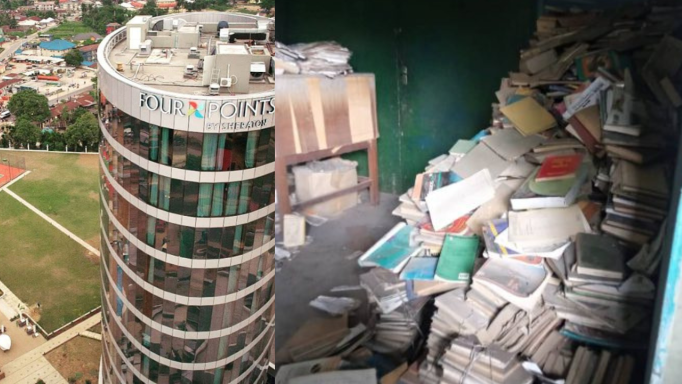
ONCE a citadel of research and learning, where people thronged to access quality books and good reading ambience, especially for publications and documents that held historical information on colonial administration, the divisional library at Ikot Ekpene, the first local government area in British West Africa is now a shadow of itself after years of neglect by the Government of Akwa Ibom State led by Udom Gabriel Emmanuel.
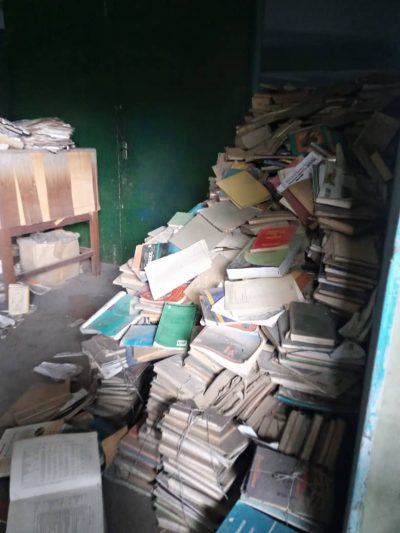
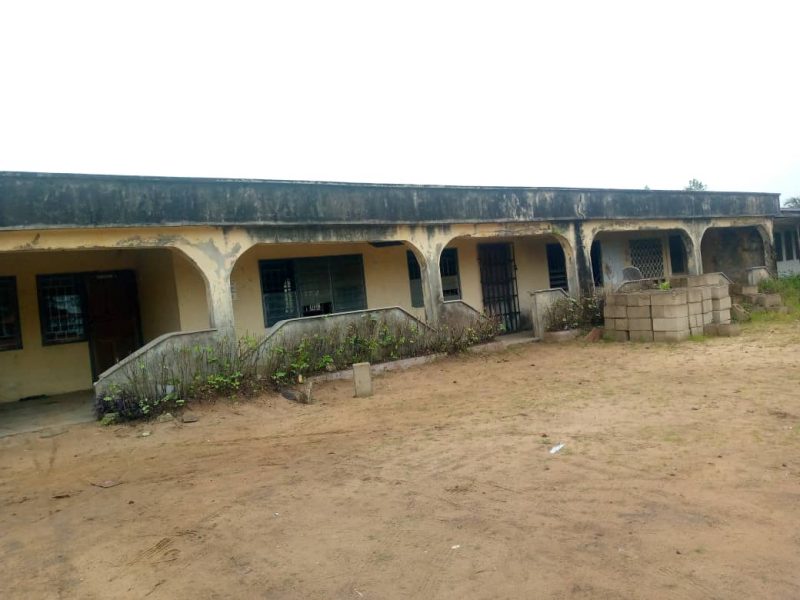
The library built in the 1960s has badly degenerated into a haven for dangerous reptiles and criminals. The books in this facility have been lost to the effects of rainfall from the leaking roof, termites and the vagaries of the weather. For over a decade, the facility has remained under lock and deteriorated.
The Paramount Ruler of Ikot Ekpene, Obong Okon Udo Ukut says that by abandoning the library, his people have been deprived of the opportunity to remain the custodians of colonial historical records.
“The library was established when Akwa Ibom was under the South-Eastern States. We had rich colonial records there. Successive governments maintained it until the civilian government came and neglected it”, Obong Ukut said.
The traditional ruler said the presence of public and private polytechnic in Ikot Ekpene should give the government adequate reasons to resuscitate the library.
Yet, the decay at the divisional library, Ikot Ekpene shows the neglect of government-owned libraries in the oil-rich State.
Official documents show that the government of Akwa Ibom State had planned to situate a library in each of the 10 Federal Constituencies in the state.
Checks into the state budgets confirm that all the federal constituencies except Ikono/Ini and Itu/Ibiono Ibom federal constituencies have a library or library project. Among the eight libraries in the government records, three sited at Oron, Ukanafun and Ikot Abasi local government areas have been categorised as uncompleted projects, while that of Ikot Ekpene has turned into a historical site. Yet, the remaining four divisional libraries are derelict.
Etinan Library in Poor State
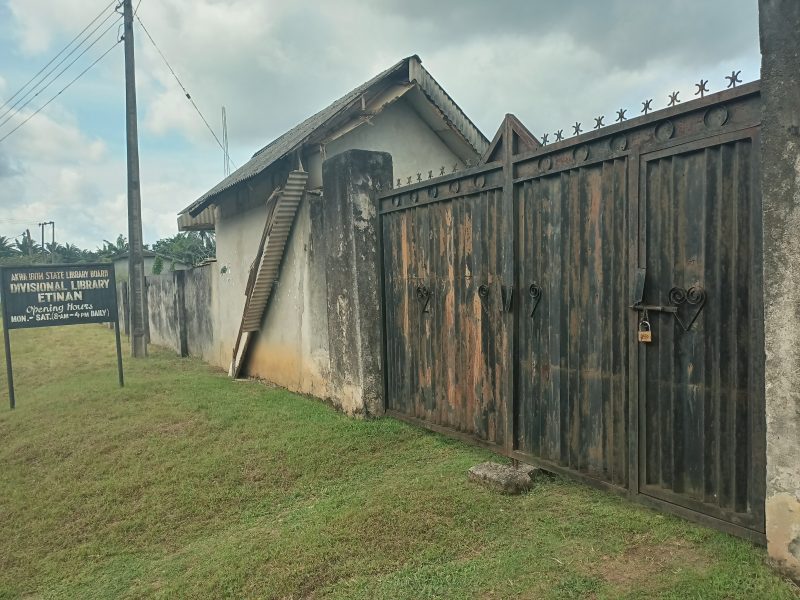
Although the divisional library at Etinan local government area still has a signpost and the premises are maintained, its operation is questionable. When TheMail Newspaper visited the library thrice between September and October, the facility remained closed. No staff, including security personnel, was sighted.
Community members said the facility is no longer in use but is only visited by staff for maintenance.
”The few books left there are very old and worn. You rarely find a good chair to sit on, and you can’t see electricity while reading. So, what would really make someone go there? Due to the poor state of the library, people had to stop using it, and their staff no longer opened the place”, says Udeme Akpan, a community member who lives near the library.
The member representing Etinan State Constituency at the State Assembly, Aniefiok Dennis said he is unaware of the deplorable state of the library but will contact the relevant authorities for immediate action.
Uyo, Eket, Abak Libraries
Akwa Ibom State has only three libraries in operation; divisional libraries in Uyo, Eket and Abak. These libraries were last rehabilitated by the immediate past administration. Though libraries in Eket and Uyo are operational, they are in a poor state.
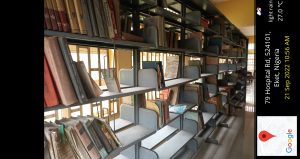
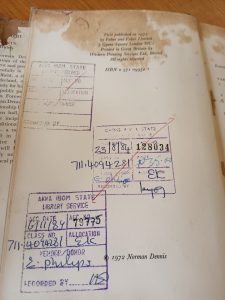
For instance, Eket library was last rehabilitated in July 2013; now the old shelves are almost empty. The few remaining books on the shelves are dusty and worn-out, published in August 1984.
The fans and lighting are not functional. There are only a few broken plastic chairs left in the library. Throughout the four hours this reporter stayed in the library to observe, only one reader visited the library. It was also observed that only one staff member was available on duty when TheMail visited in September.
Even though there is a twin 2-bedroom semi-detached staff quarters and 3-bedroom quarters for chief librarians that were reconstructed in 2013, the buildings are left to waste.
A staff of the library who refused to be named on print for fear of victimisation told TheMail that although they have written severally to the Ministry of Education about the lack of modern books, among other infrastructural decay, the requests were ignored.
The staff said the poor condition of the library may have been the reason why few readers visit the library despite the large population of polytechnic students in the area.
The situation is the same at the divisional library in Uyo which also serves as the headquarters of libraries in the State.
Uyo, the capital city of Akwa Ibom State, has a Federal University and several polytechnics.
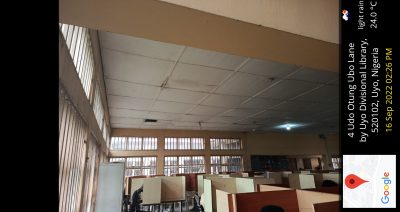
Poor lighting at Divisional Library, Uyo.
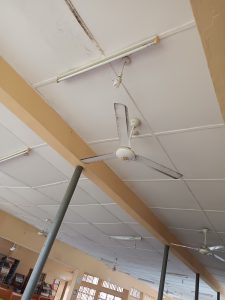
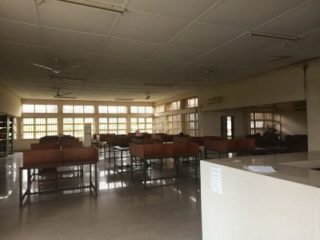
Although reconstructed in May 2008, the library is dilapidated and not study-friendly. Users of the library told our reporter that the library rarely fulfils their information needs. The wet ceiling reveals the roof is leaking. The lighting is poor as most electrical bulbs and fans are inoperative.
The staff of the facility told this newspaper that the generating set available at the library has remained down for over six years now, leaving the library to rely on epileptic public electricity.
It was observed that the most recent books on the scanty shelves of the library are dated 2009 and mostly tagged as gifts. Periodicals like newspapers were mainly dated 2020. The most recent periodical in the library was the State-owned newspaper, Pioneer, dated May 2022 whereas this reporter visited in September 2022.
Leaking roof at Divisional Library, Uyo.Poor lighting at Divisional Library, Uyo.
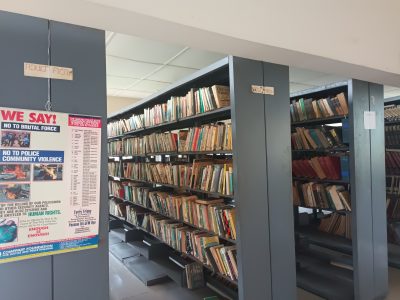
Among the divisional libraries in the state, Abak library, rehabilitated in September 2011, is the only library with almost full books on the shelves and a relatively convenient reading environment. Regardless, readers in the library said that electricity has not been regular.
A student of Federal Polytechnic, Ukana, who gave his name as Jackson, met at the library by our reporter, and expressed frustration.
Poor lighting condition at Divisional Library, Abak.Full books on the shelves at Divisional Library, Abak.
He said it is nearly impossible to undertake quality research in the library because most books are outdated.
Abandoned Library Projects
In addition to several rundown libraries in Akwa Ibom state, there are many other library projects abandoned by the state government. These projects are located in Ukanafun, Oron and Ikot Abasi local government areas.
When TheMail Newspaper visited the facility designated for the library at Ukanafun, the building was under lock. Although situated at the council Secretariat and inaugurated for use in February 1997, the council staff told our reporter that the facility had only a few books but stopped functioning about 10 years ago when the state government stopped paying attention.
The Council Chairman, Godwin Inyieng and the House of Assembly member of the area, Charity Ido, when contacted, declined comment on the state of the library.
Library Building, Ukanafun.
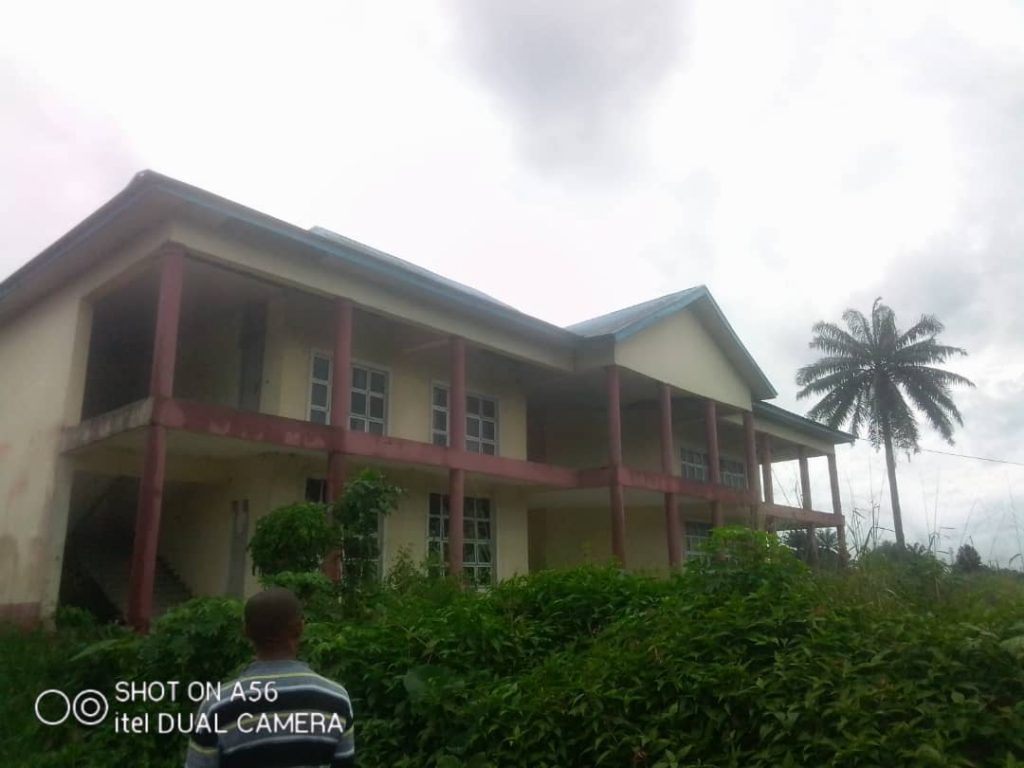
At Ikot Abasi local government area, a storey building is provided for the divisional library. Yet, it has remained abandoned. The surrounding of the facility has been overgrown by weeds.
Checks reveal that books and furniture were not provided for the library to commence operation. When contacted, the Member, Ikot Abasi/ Eastern Obolo State Constituency, Uduak Odudoh said he was as helpless and concerned as his people that the structure was abandoned.
” I hope to ensure that there is budgetary provision and releases for the library in 2023, especially now that Ikot Abasi has a Federal University of Technology”, Odudoh who is also Chairman of the House of Assembly Committee on Appropriation and Finance, said.
The abandoned library building, Ikot Abasi.
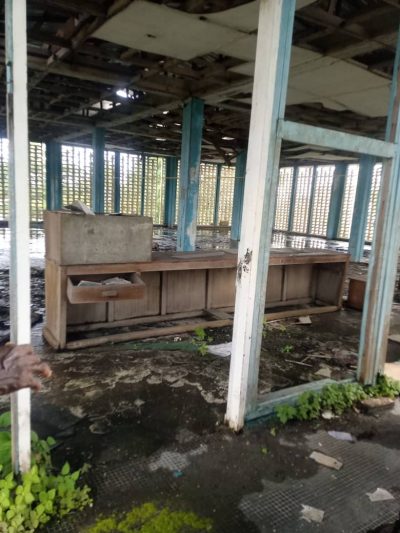
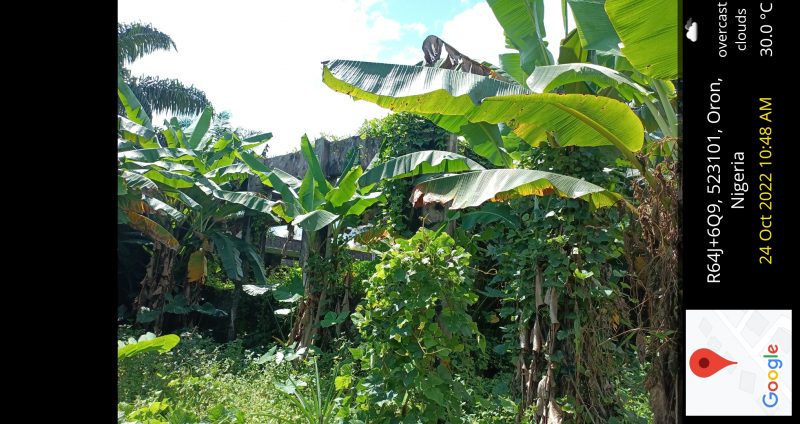
At Oron local government area, which plays host to a Federal Government Maritime Academy, the structure designated to house the divisional library Oron lays waste. The roofless structure has been covered by bushes.
The abandoned Oron library building now overtaken by bush.
A chief, Asuquo Effiong Otuakak, the Village Head of Udung Anwan Village, Eyoabasi where the library structure is located said the State government, during the administration of Governor Victor Attah provided a structure for the library but without furniture and books.
” When Governor Attah left without providing books for the library, it was abandoned, and years later, people started stealing things like the roof, and since then, it has remained the way you have seen,” he said.
The traditional ruler called on the state government to complete the building and provide a library for the area noting that continuous abandonment of the library project by two successive administrations is a subtle way of suppressing the literary advancement of the people of Oron federal constituency.
Curiously, an analysis of successive budgets presented by the administration of Governor Udom Emmanuel (2016 through 2022) does not have provisions for the completion or furnishing of Ikot Abasi and Ukanafun libraries.
It was only in the 2019 approved budget that a provision of N5m was made for the completion of the divisional library at Oron. However, checks into the financial statements for that year show that funds were not released for the project.
Library decay caused by misplaced priority
The poor condition of the libraries in Akwa Ibom state is not a happenstance. It reflects Akwa Ibom state government’s spending priority in education, most importantly, the level of importance attached to reading.
Analysis of the Appropriation Laws of the state shows that the state government is aware of the deplorable condition of libraries in the State and understands the need to address the decay. Yet, misplaced priority has been the reason for the neglect.
Checks into the budget of Akwa Ibom State from 2015 through 2022 show that in eight years, the State Government budgeted a total of N995.55m for library development across the state.
The line items which have been recurring in successive year budgets for the library development include the provision of books/equipment and furniture for each of the five divisional libraries in Ikot Ekpene, Abak, Eket, Etinan and Uyo.
Others are renovation/rehabilitation of each of the aforementioned libraries, provision of equipment/facilities for the library on wheels programme, purchase of 50 number of computers sets with accessories for the five divisional libraries mentioned, provision of internet facilities at each of the five libraries, provision of binding equipment/facilities in the five libraries, and construction of a new central library in Uyo and new divisional libraries.
Yet, analysis of the Accountant General’s reports and audited financial statements for 2015, 2016, 2018, and 2019 shows that no dime was released for any of the items/projects under library development.
Yet, analysis of the Accountant General’s reports and audited financial statements for 2015, 2016, 2018, and 2019 shows that no dime was released for any of the items/projects under library development.
Analysis of financial statements shows that the last capital expenditure made for library development in the State was in 2014, and N6m was spent for the ” provision of books/ equipment for libraries in the state”.
TheMail Newspaper, through the Freedom of Information Act (2011) and Fiscal Responsibility Law of Akwa Ibom state sought to know the expenditure the state made on library development from 2015 to the second quarter of 2022. This request was ignored.
However, a senior civil servant in the ministry of education who cannot be named in this report for safety concerns disclosed that there had been no capital expenditure for library development from 2015 till date. The source said the N6m spent in 2014 was used to procure chairs across the libraries.
Yet, despite neglecting divisional libraries, the state government continues to spend millions of naira yearly for the salaries and wages of library staff in Akwa Ibom state.
Analysis of the financial statements from 2015 to 2021 shows that the government of Akwa Ibom State spent N301.5m on personnel costs under Akwa Ibom State Library Board.
This implies that for each of the seven years, Akwa Ibom State Government spent an average of N43.07m to pay salaries of staff made redundant due to non-functional libraries.
Amount spent yearly on controversial hotels after inauguration could have fixed Akwa Ibom Libraries
Less than a kilometre from the ruins of the divisional library in Ikot Ekpene is a state-owned four-star hotel project called Four Points by Sheraton. Although inaugurated by the immediate past administration for use in 2015 with all the physical compliments of a hotel during its commissioning, the luxury hotel, seven years after, is yet to be opened for business.
Surprisingly, Governor Udom Emmanuel who witnessed the inauguration in 2015 as Secretary to the State Government has continued to budget billions on the construction and maintenance of the hotel.
Governor Emmanuel (Right) at the inauguration of the hotel.
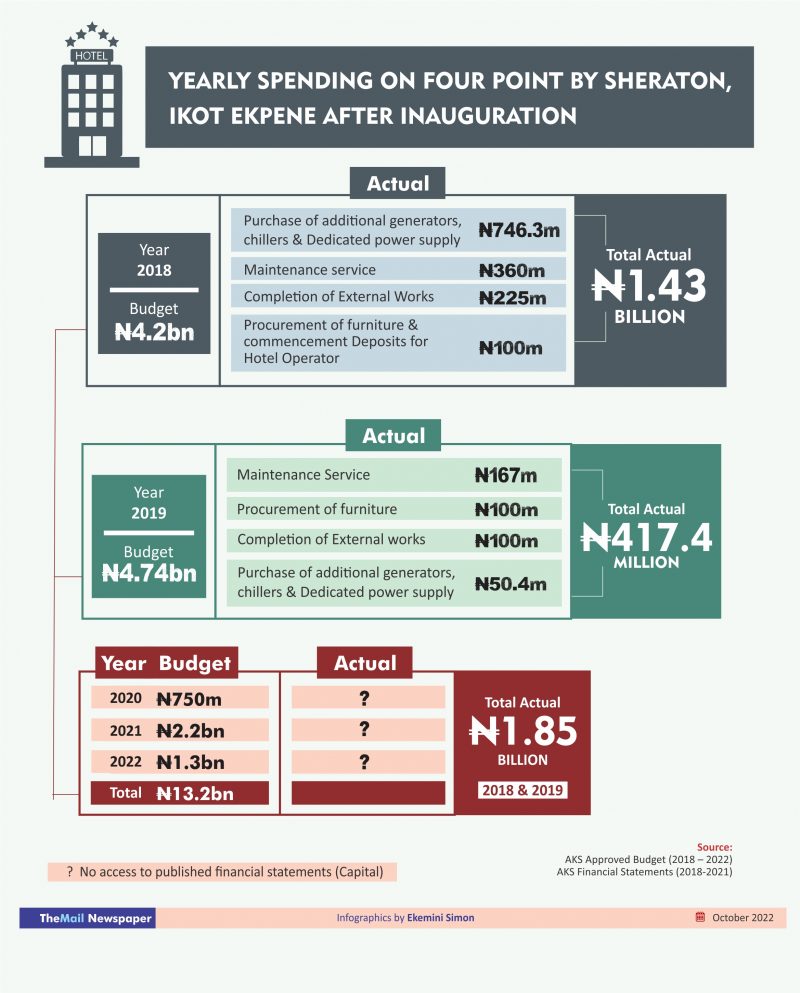
For instance, between 2018 and 2022, Udom’s administration budgeted a total of N13.2bn for the ” Four Points by Sheraton Hotel -Ikot Ekpene” project.
In two years alone (2018 and 2019) which TheMail Newspaper could access the capital expenses, the hotel gulped N1.85billion.
In these two years, N796.7million was disbursed for the “purchase of additional generators, chillers and dedicated power supply”, N527m spent on maintenance, while N200m was spent on furniture and deposit for the hotel operator.
A subhead tagged completion of external works at the hotel gulped N325m for two years.
TheMail Newspaper on September 13, 2022, filed an FOI request to the Ministry of Special Duties seeking detailed information about the expenses made on the hotel between 2015 and 2021.
The newspaper specifically requested evidence of expenditures, the amount spent each year, the identity of the contractor(s) and copy of contractual agreements on the project.
The request despite acknowledgement of receipt by the ministry has not gotten a response till date, thus raising suspicion about the management of state resources by Udom’s administration.
Curiously, on October 18, 2022, 33 days after the ministry received TheMail’s FOI request asking for evidence of spending for the hotel, the State Executive Council of Akwa Ibom State government for the first time after the inauguration of the hotel in 2015 considered a report on the state of the hotel.
According to the excerpts of the executive council meeting published by the Akwa Ibom State Commissioner for Information, Ini Ememobong, immediately after the meeting, the hotel has now been handed over to Marriot Group and is ready for commercial use.
“Exco received a report on the Four Points by Sheraton hotel at Ikot Ekpene from Honourable Commissioner-Special Duties, intimating that the Hotel, which was previously at 68% completion level in 2015 (according to the Hotel evaluation report), has been fully completed and handed over to Marriot Group and that the test run of the hotel will soon begin. The total number of rooms in the new hotel is 146 and are fully ready for commercial use”, the excerpts read.
But what difference could the controversial billions of naira spent on the Sheraton Hotel in Ikot Ekpene make in renovating libraries across the State?
Since the State government budgeted N121.48m for library development across the State in 2019 and this budget captures all the libraries needs across the state as highlighted earlier, including the completion of the library at Oron, TheMail Newspaper calculated what N417.4m spent for the hotel in 2019 alone can do for libraries.
Analysis shows that only 29.1 per cent of the N417.4m would be needed to cater for library development as budgeted in 2019.
Regarding the abandoned library projects at Ikot Abasi and Ukanafun, since these two projects only need renovation, and provision of furniture and books, N16m will be adequate to address these needs. The State Government budgets N5m for the renovation of each library while N3m is earmarked for the provision of books/equipment, furniture for each library.
Despite the estimated expenses in favour of library development, the State Government will still be left with a balance of N279.9m from the N417.4m spent in 2019 alone.
Akwa Ibom state government keeps mum over poor library condition
Besides not responding to the FOI request for key documents and information required for this investigation, the Commissioner for Education, Idongesit Etiebet was not on seat when TheMail visited her office on October 21 and October 24. She also did not respond to calls and text messages throughout this investigation.
Also, the Chairman of House Committee on Education, Godwin Ekpo did not respond to calls and text messages seeking information on the oversight responsibility the House of Assembly has played to revive libraries in the State.
Take emergency action, salvage our libraries – Organisation tells Akwa Ibom government
A literary organisation in Akwa Ibom State, Uyo Book Club has called on the government of Akwa Ibom State to take urgent action on revitalising libraries across the State.
In an interview, the Founder of the Club, Udeme Nana said the State has lost so much history by allowing almost all of its libraries to rot.
“Take, for instance, Ikot Ekpene; the library there is completely down. This is a library that housed documents on the first experimental local government administration in British West Africa. We have lost history because of the abandonment of libraries,” he said.
He added,” Government should take emergency action to salvage our libraries. They should pay special attention to equipping it with new books, furniture that make reading convenient and also provide around-the-clock services at the library.”
THE National Broadcasting Commission (NBC) has imposed a N2 million fine on Arise Television for alleged violation of the Nigeria Broadcasting Code.
The Commission announced the fine in a statement released in Abuja on Monday.
In the statement, the NBC noted that on Saturday, November 12, 2022, it monitored the use of a press release by Arise News, purportedly signed by Independent National Electoral Commission (INEC) spokesperson Festus Okoye, alleging that the Commission was investigating an order of forfeiture issued by a United States court against the presidential candidate of the All Progressives Congress (APC) Bola Tinubu, with a view to prosecuting him.
The NBC used the opportunity to warn all broadcasters to adhere to provisions of the broadcasting code, saying it will not hesitate to sanction any offender.
Earlier on Monday, the Presidential Campaign Council of the ruling All Progressives Congress (APC PCC) had urged NBC to take punitive measures against Arise News and Channels TV.
It alleged that the media outfits defamed and assassinated Tinubu’s character over the controversial $460,000 forfeiture judgment.
The APC campaign council, in a petition addressed to NBC Director General, Balarabe Shehu Ilelah, accused the organisations of breaching broadcast codes by their actions on the matter.
In the petition, APC PCC Special Adviser (Media, Communications and Public Affairs), Mr. Dele Alake, argued that the issue relating to Tinubu’s purported indictment had already been cleared in a correspondence between then Inspector General of Police, Tafa Balogun, and the US government.
Parts of the petition read: “The US Justice Department, in a letter dated February 4, 2003, issued by the Lagos Consulate of the United States Embassy, cleared our candidate.
“The letter was signed by Michael Bonner, the Consulate’s legal attaché.
“The campaign council was, therefore, surprised that certain media houses, such as Arise News and Channels TV, among others, went ahead to transmit and broadcast issues purportedly indicting our candidate, in violation of Section 3,3 I of the Code, which says:
“The broadcaster shall (a) ensure that any information given in a programme in whatever form is accurate.
“We believe that the operators of the stations, by their professional standing, should have access to research platforms to verify information before dishing it to the public.”
It added “These breaches attract a sanction of Class B, and we implore the NBC to invoke the aforementioned sections to penalise Arise TV and Channels TV for breach of the Broadcast Code.
“Our presidential candidate was vilified and denigrated as an indicted offender and law breaker in the U.S. court case.
“We, hereby, request the NBC to sanction the offending stations in the name of justice and in protection of the rights of our candidate, as well as avoidance of future reoccurrence.”
AN aide to the presidential candidate of the Labour Party (LP) Peter Obi, Katch Ononuju, has accused All Progressives Congress (APC) flagbearer, Bola Tinubu and his running mate, Kashim Shettima, of violence against opposition candidates in APC-controlled states.
Ononuju said this when he appeared alongside Oluwaseun Faleye, a supporter of the former Lagos State governor, on Channels Television’s Sunrise Daily programme on Monday.
According to him, “We are very disturbed about it. When Tinubu and Shettima emerged, we knew their history with violence, but we were surprised when we saw the violence visited at a rally in Kaduna, also now repeating itself in Maiduguri. We are very worried, we are also aware that the APC supporters in Lagos have used violence repeatedly,” Ononuju said.
LP’s Katch Ononuju on Channels Television’s Sunrise Daily programme on Monday, November 14, 2022 Credit: ChannelsTV
He also denied the claim that Obi supporters, known as ‘Obedients’, are also guilty of attacking opposition parties.
Ononuju said LP supporters are emotional crusaders but are not violent.
“Labour Party supporters are vehement, emotional crusaders. These are supporters that were on the streets before Mr Peter Obi provided a face for their struggle.
“These are not normal politicians; these are Nigerian youths, and Nigerian youths are not known to be violent. When they were protesting two years ago when this revolution took shape, the government tried to violently suppress them, but the government was not able to,” he said.
According to the LP chieftain, ‘Obidients’ have suffered more in the hands of the government than any other group of people.
“That is why we seek to build a new Nigeria that will be inclusive in the rights of citizens not to be violated and molested by the government as were the case,” he said.
APC Oluwaseun Faleye Credit: ChannelsTV
Reacting to Ononuju’s comments, Faleye described the allegations as unfounded, noting that Lagos has a history of free and fair elections.
“They (the allegations) are unfounded, and that is just it because I don’t understand where he got that from. Historically, Lagos has been the bastion of free and fair elections without violence. Lagos is where all the states look up to the conduct of elections. Asiwaju (Tinubu) has been at the forefront of campaigns for peaceful elections,” the APC member said.
AMID rising concerns of the trillions of naira the Federal government spends on subsidising fuel imports, the Nigerian Economic Summit Group (NESG) has called on the President Mugammadu Buhari administration to revisit the issue of subsidy removal before it leaves office in May next year.
The chairman of the NESG, Asue Ighodalo, who made the call today at the ongoing 28th edition of the summit in Abuja, said the government cannot sustain the payment in the face of Nigeria’s current economic situation.
The Federal government has earmarked N3.6 trillion for subsidy payments in 2023, even when it has proposed to borrow N11 trillion to fund 2023 budget deficit.
International financial institutions like the World Bank, as well as some economists at home had condemned the subsidy option, describing it as “unsustainable”, and regarding it as Nigeria “eating away its future.”
The government’s budget deficit next year is expected to exceed N12.42 trillion if the federal government keeps the petroleum subsidy for the entire 2023 fiscal cycle.
Ighodalo also urged a review of the foreign exchange management to give more certainty to the business community.
Speaking on the theme, ‘2023 and Beyond: Priorities for Shared Prosperity’, the NESG chief maintained that the incoming administration must have a proper understanding of the issues at stake and tackle them appropriately.
Earlier, the Minister of Finance, Budget and National Planning, Zainab Ahmed, had remarked that the government, though challenged by a shortfall in revenues, had kept its pact by prioritizing capital releases in favour of critical ongoing infrastructural projects in the power, roads, rail, agriculture, health and education sectors.
Ahmed said the government was focused on unlocking the economic potential of the non-oil and high employment generating sectors to achieve sustainable and inclusive growth and development.
Also, the Minister of State, Budget and National Planning, Clem Agba, said the National Development Plan was designed to lift 35 million people out of poverty and generate 21 million full-time jobs by 2025.
Agba said the plan required the collaboration of the private and public sectors to be actualized.
Vice President Yemi Osinbajo had on Tuesday November 8, 2022 told a delegation of the NESG, ahead of the summit, that the gathering should focus on few pressing national issues like inflation and exchange rate control.
THE Federal Government has expressed concerns that the growth recorded in Nigeria’s Gross Domestic Product (GDP) had not impacted on the lives of Nigerians.
Minister of Finance, Budget and National Planning, Zainab Ahmed, who spoke at the 28th edition of the Nigerian Economic Summit in Abuja on Monday, November 14, said rising food inflation in the country has taken the shine off the seventh consecutive quarterly growth in the economy.
She said, “We constantly say we have witnessed seven consecutive quarters of growth, it is the truth. But the growth has not permeated to the citizens as they are still buying food in high prices from the market so we need to look at how we can reduce the high cost of food prices.
“That means we need to look at how we can better handle inflation in Nigeria today.
“The highest push of inflation is the food components and the food inflation is driven largely by high cost of transportation, which is also driven by high cost of energy. So we must address that energy source by diversifying the type of energy that we use, not just generally, but for transportation and also be able to expand the transportation sector itself,” the minister said.
Speaking further, Ahmed stressed the need for Nigeria to diversify its economy so different sectors could contribute to the country’s economic growth.
According to her, none of the sectors are thriving as expected “except for Information and Technology (ICT) sector that continues to grow on a consistent way”.
“Agriculture sector has been reporting growth but it has been slow, that is what we believe. We need to be able to really grow agriculture on an exponential basis and it means we have to concentrate on not only production but also processing and exporting agricultural produce to be able to earn foreign exchange,” she added.