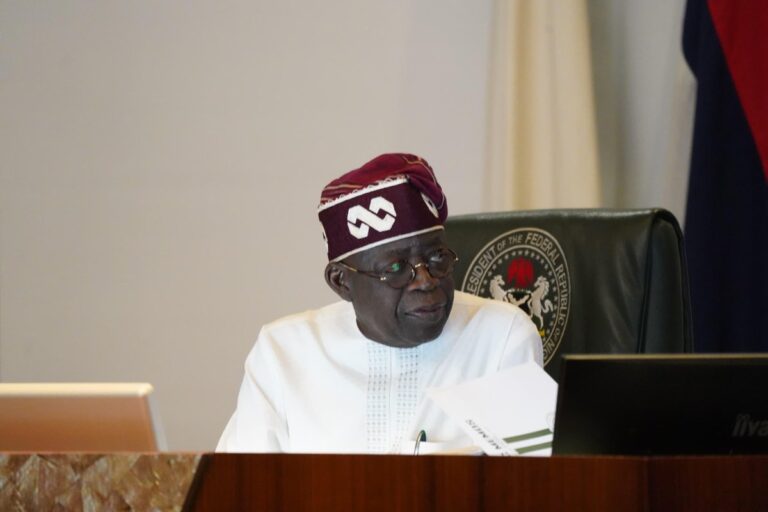
PRESIDENT Bola Tinubu has said access to reliable electricity remains a key democratic dividend his administration is committed to delivering to Nigerians, describing power supply as central to economic growth, national development and improved living standards.
Tinubu gave this assurance on Friday, June 12, in his Democracy Day address marking Nigeria’s 27 years of uninterrupted civilian rule since 1999. He pointed to the ongoing economic and governance reforms under his administration as part of his efforts to deliver stable electricity and other basic amenities to Nigerians.
According to him, the country’s electricity sector had long been burdened by chronic generation shortfalls, weak gas supply, transmission constraints and heavy commercial losses that made it impossible for the system to meet national demand.
“By 2023, when we came on board, the electricity sector was characterised by chronic generation shortfalls, an unreliable gas supply, and transmission infrastructure so fragile that it could not evacuate available power,” he said.
The president added that distribution companies were struggling with massive losses and a metering deficit of over four million customers, while the entire value chain was weighed down by legacy debts.
Tinubu said the sector, at the time, generated far below its installed capacity of about 13,500 megawatts, while transmission and distribution networks were also operating below acceptable levels.
To address the challenges, the president noted that his administration signed the Electricity Act, which decentralises power generation and allows states to participate in electricity production, transmission and distribution.
He explained that the reform was designed to open up the sector for greater efficiency, investment and competition, stressing that electricity remained a critical component of national development.
“The Presidential Power Sector Task Force is working hard to reduce the metering deficit. It has also been authorised to raise a N4 trillion bond to settle verified legacy debts,” Tinubu said.
He further disclosed that the Rural Electrification Agency, with support from the World Bank and African Development Bank, had expanded off-grid and mini-grid projects to underserved communities, including schools, markets and hospitals.
“Electricity is a democratic dividend we owe every Nigerian. We intend to deliver it,” the president declared.
Tinubu also linked power sector reforms to broader economic recovery efforts, saying improved electricity supply would boost productivity, support small and medium enterprises, and attract investments across key sectors such as agriculture, manufacturing and technology.
Across the country, he said infrastructure development was being expanded to connect producers to markets, while over 1,000 small and medium enterprises had been certified for export under ongoing economic initiatives.
He acknowledged that despite the reforms, many Nigerians were still facing economic hardship, but insisted that the administration remained focused on stabilising the economy and ensuring that the benefits of democracy reach households across the country.
“We are moving from uncertainty to stability. The next phase is about accelerating growth and ensuring the benefits are felt in every home, every community, and every region,” Tinubu said.
The president maintained that democracy must be felt in the lives of citizens, particularly through improved infrastructure, job creation and access to basic services such as electricity.
Nigeria’s fragile power sector
The ICIR reports that Nigeria’s electricity sector has remained one of the country’s most persistent governance challenges over the years, particularly under the current administration.
Data from the Nigerian Electricity Regulatory Commission shows that while the country has an installed generation capacity of about 13,500 megawatts (MW), actual power delivered to the national grid often falls below half of that figure. In October 2025, for instance, only about 5,500MW was transmitted at peak periods, while early 2026 averages dipped further to around 4,900MW—far short of national demand estimated at over 20,000MW.
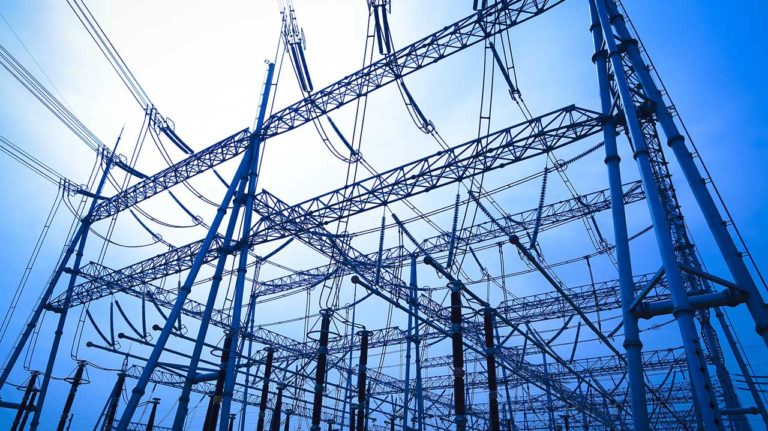
The shortfall is largely driven by gas supply constraints, ageing infrastructure, and weak transmission capacity operated by the Transmission Company of Nigeria, which continues to struggle with grid stability.
System collapses have also remained frequent, with multiple nationwide outages recorded in recent years.
The ICIR also reported that government interventions, channeled through the Nigerian Bulk Electricity Trading Plc, are meant to cover the difference between cost-reflective tariffs and regulated consumer prices. However, these subsidies have ballooned significantly, with about ₦2.8 trillion reportedly spent in 2024 alone.
In the fourth quarter of 2025, the Federal Government paid an estimated ₦418.79 billion in electricity subsidy, according to regulatory filings, even as experts warned that the intervention failed to tranlate into improved supply.
The sector is also burdened by legacy debts running into trillions of naira, further constraining investment in metering, network expansion, and infrastructure upgrades.
Tariff reforms introduced in recent years, including the Band A classification system, have attempted to reduce subsidy exposure by requiring higher-paying consumers to fund a greater share of electricity costs. While this has slightly improved revenue inflows, critics argue that it has not significantly improved service delivery for most households and small businesses still facing prolonged outages.