A FEDERAL High Court in Port Harcourt, Rivers State, has sentenced a South American man from Suriname, Dadda Lorenzo Harvy Albert, to 13 years in prison for drug trafficking.
The ICIR reported that operatives of the National Drug Law Enforcement Agency (NDLEA) arrested 34-year-old Lorenzo at the Port Harcourt International Airport, Port Harcourt, Rivers State, for bringing into Nigeria 117 parcels of cocaine concealed in extra-large latex condoms packed inside bottles of 100ml body spray.
His arrest was announced in a statement by the spokesperson of the NDLEA, Femi Babafemi, on Sunday, April 9.
According to the NDLEA, “The suspect claimed he departed his country, Suriname, located in the North Eastern coast of South America on April 2 for Sao Paulo, Brazil and from Sao Paulo, he came to Nigeria on Friday, April 7, on board a Qatar Airways flight in search of his long-lost Nigerian father whom he called Omini.”
He was arraigned before the Federal High Court 2, Port Harcourt, on June 1 on two counts of importation and unlawful possession of 9.9kgs cocaine in charge number FHC/PH/181C/23.
He, however, pleaded guilty to the two-count charge. But after the review of the facts of the case on Thursday, July 20, he was convicted and sentenced to 13 years imprisonment on both counts without an option of fine.
In his ruling, the judge, E. A Obile declared, “You, Dadda Lorenzo Harvy Albert, is hereby sentenced to 13 years imprisonment without option of fine on Counts 1 and 2 also. And both shall run concurrently.”
The trial judge also ordered the forfeiture of the sum of ninety United States Dollars and ten Brazilian Real recovered from the convict at the time of his arrest to the Federal Government.
The court equally refused the application by Lorenzo’s Counsel for him to be deported back to his country.
As a result, the convict is now serving his term of imprisonment at the Correctional Centre, Port Harcourt, Rivers State.
NDLEA, in a statement by its spokesperson Femi Babafemi on Wednesday, August 2, said the successful prosecution and conviction of Lorenzo is one of the many drug cases concluded at the Federal High Court across the country between January and June 2023 by the Directorate of Prosecution and Legal Services of NDLEA.
“Out of the 1,445 convicts, 221 of them are female, while the balance of 1,541 are male.
“Of the 11,166 pending cases, 10,626 of them are men while the rest, 540 are women,” the Agency stated.
The anti-narcotics agency added that the 1,445 convicts and 11,166 suspects who are still facing trial were arrested and charged to court over the seizure of 555,953.70 kilograms of cocaine, heroin, methamphetamine, cannabis, tramadol and others linked to them between January and June 2023.
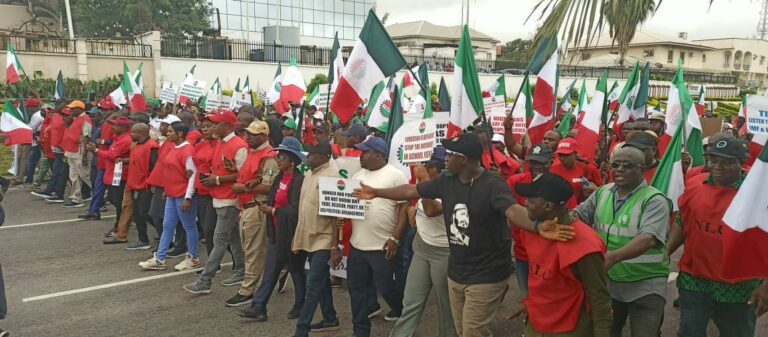
OPERATIVES of the the Department of State Services (DSS) have occupied the Lagos State Assembly complex, where members of the Nigeria Labour Congress (NLC) are currently protesting.
This protest is part of a nationwide demonstration against the removal of petrol subsidy by the Federal Government. Fuel prices and cost of transportation tripled after the President, Bola Tinubu, said his administration would no longer subsidise gasoline for citizens in June.
As a result, on July 26, the NLC threatened to stop work in protest should the Federal Government refuse to reverse all anti-poor policies, such as the recent petrol pump price hike, within seven days.
The ultimatum expired on Monday, July 1. Labour union members have taken to the streets across states in protest as planned.
DSS operatives in Lagos were seen at the state assembly premises as the demonstrators converged at the entrance gate.
The ICIR earlier reported that police officers were deployed in Ilorin to prevent a breakdown of law and order as workers in Kwara State join the nationwide protest.
In Abuja, aggrieved protesters pulled down the National Assembly Complex’s first gate after security operatives stationed at the legislative building refused to open the gates to allow the angry workers to express their displeasure.
THE Senate has set up a three-man committee to dialogue with members of Organised Labour who stormed the National Assembly on Wednesday, July 2, to protest against economic hardship occasioned by the removal of petrol subsidy.
The committee is led by Senate Chief Whip Ali Ndume and included senators representing the Federal Capital Territory (FCT) and Anambra North Ireti Kingibe and Tony Nwoye.
While the Chief Whip addressed the protesters, a letter of protest was handed over to the Senate by the President of the Nigeria Labour Congress (NLC) Joe Ajaero.
The letter demanded an end to the arbitrary increase in the cost of fuel and education. It also called for a reduction in transport costs and the fixing of the non-functional refineries in the country.
Members of the NLC and Trade Union Congress (TUC) took to the streets of Abuja and other states across the country on Wednesday in protest over hardship faced by Nigerians following the Federal Government’s decision to discontinue subsidy on petrol.
The demonstrators have not clearly stated how long the protests would last. However, NLC President suggested on Wednesday that the demonstration could go on for as long as the Congress decides.
“It is equally in our own enlightened self-interest, based on the interest of the state, to determine whether the protest will be for today or tomorrow or next or till thy kingdom come. It is not by mere using forces to stop people from expressing their views,” Ajaero said.
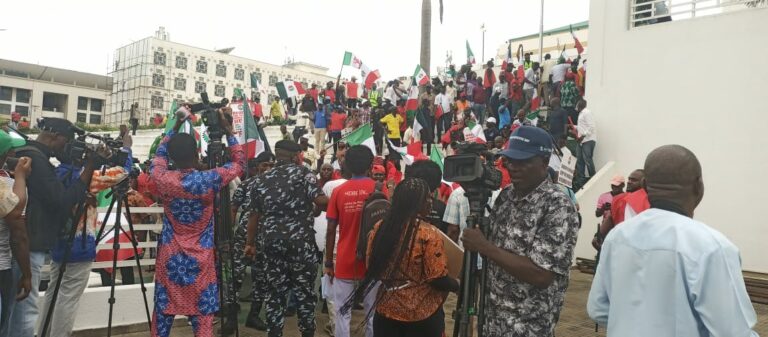
The protesters pulled down one of the National Assembly Complex gates during the protest and gained access to the premises in defiance of security operatives, who earlier denied them entry.
The protests took off after negotiations between members of Organised Labour and the Nigerian government ended in a stalemate.
While Nigerian President Bola Ahmed Tinubu assured the country that measures will be put in place to mitigate the hardships during an address on Monday, July 31, NLC insisted that the promises made were not in tune with the hardships confronting citizens.
They also stated that Tinubu failed to speak to the problem of nonfunctional refineries in the country, considered to be the solution to the problems confronting the oil sector in Nigeria.
A FORMER President of the Nigeria Labour Congress (NLC), Ayuba Wabba, has stated that the only solution to the country’s lingering fuel crisis is for the refineries to begin production.
Ayuba spoke during the ongoing protest by the organised labour in Abuja on Wednesday, August 2.
He blamed the crisis on the few elites deliberately refusing to fix the refineries.
“It has been a vicious cycle, and it will continue to be a vicious cycle and will continue to affect our economy and therefore government must come up with three plans immediate, medium and long-term plans; I have not seen that on the table.
“It’s a fire brigade approach, it’s a weak pill that will leave only pain for now, but the pain will remain with us perpetually.
“What will address this issue is, is actually the issue of production, but the elites, not more than 10% of them, don’t want production; they want importation because why they benefit from importation, this is the real issue, and therefore we must insist, we must continue to insist that our refineries must work. Those elites must tell us when our refinery will work,” Ayuba stated.
He said past governments have promised to fix the refineries to no avail.
“They told us if we are refining, the price will not be more than, the price will not be more than N8 per litre; that is the last solution that can resolve this issue.”
He claimed that the palliatives promised by President Bola Tinubu will only serve as a temporary solution and urged the government to look more into the fuel price increase issue.
“Here we are today in the same vicious cycle, and Nigerians are suffering, we are suffering, every worker on fixed wages is feeling the impact, I didn’t see how the palliatives will address this problem because the palliative is only a temporary measure, but the issue of the price increase will be a permanent solution.
“I am telling you, once the exchange rate goes up and continues to go up, the price will increase; once the price of crude oil at the international market goes up, they will continue to increase because these are the two variables,” Ayuba added.
The ICIR reported that the protests declared by organised labour, comprising the NLC and the Trade Union Congress (TUC), over economic challenges in the country occasioned by the removal of petrol subsidy commenced in Abuja on Wednesday, August 2.
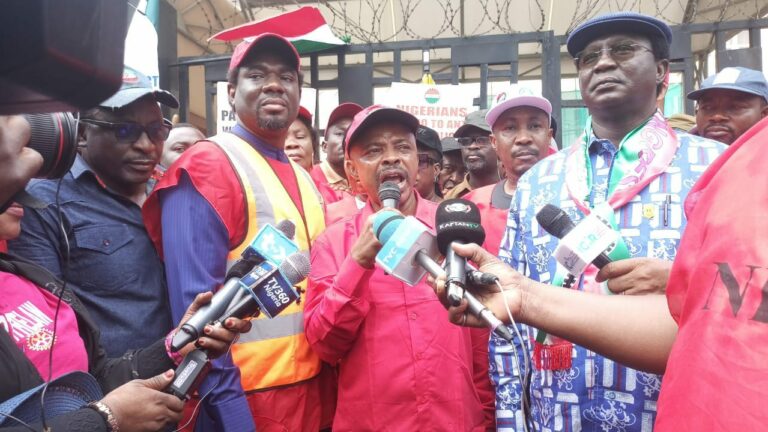
On Wednesday morning, NLC President Joe Ajaero told journalists at the Unity Fountain in Abuja that the protests have also commenced in other states nationwide.
Ajaero said the Police have tried to stop the protests in some states.
But the labour leader vowed that nothing will stop the exercise.
“The protest is on; it has taken off in all the states of the federation, barring some constraints, including police efforts to equally stop it in some areas.
“But to be candid with you, nothing is stopping the protest. Not even an overture or promise of commitment or offer from the government. So I don’t understand why people feel that it will not hold. The protest is on, and it will hold,” Ajaero said.
The NLC President did not clearly state how long the protests would last. He suggested that the demonstration could continue for as long as the Congress decides.
Ajaero noted that the protest was necessary because negotiations between the Federal Government and labour have not yielded any positive results.
“It is equally in our own enlightened self-interest, based on the interest of the state, to determine whether the protest will be for today or tomorrow or next or till thy kingdom come.
“It is not by mere using forces to stop people from expressing their views.
“So we are here for the protest and to make a statement to Nigerians that since we started even negotiations, there is nothing we have in our hands,” he said.
The protesters, including the NLC and TUC affiliate unions, gathered at the Unity Fountain in Abuja, where the protest kicked off on Wednesday.
The acting Inspector General of Police, Kayode Egbetokun, had on Tuesday, August 1, warned labour against embarking on protests that could be hijacked by hoodlums.
Egbetokun said the warning was issued due to recent unpleasant experiences with such protests in most of the country’s main cosmopolitan cities.
MEMBERS of the Nigeria Labour Congress (NLC) and Trade Union Congress (TUC) protesting against the hardship in the country caused by the removal of petrol subsidy have pulled down the entrance gate of the National Assembly.
The protesters, led by the leaders of organised labour, Joe Ajaero of the NLC and Festus Osifo of the TUC, had asked security operatives stationed at the entrance of the National Assembly to open the gate for the angry workers to enter the complex and express their displeasure to the lawmakers.
The security operatives refused and the protesters entered the complex by pulling down the gate while chanting solidarity songs.
VIDEO: NLC takes protest to National Assembly, pull down gate
Protesting members of the National Labour Congress (NLC) have pulled down the gates of the National Assembly in Abuja.
As of the time of filing this report, the protesters are gathered in the premises of the National Assembly complex as stern-looking security personnel look on.
The NLC commenced the protests on Wednesday, August 2, amid biting hardship caused by President Bola Tinubu’s decision to discontinue petrol subsidy.
On Wednesday morning, NLC President Joe Ajaero told journalists at the Unity Fountain in Abuja that the protests have commenced nationwide.
Ajaero said the Police have tried to stop the protests in some states.
But the labour leader vowed that nothing will stop the exercise.
“The protest is on; it has taken off in all the states of the federation, barring some constraints, including police efforts to equally stop it in some areas.
“But to be candid with you, nothing is stopping the protest. Not even an overture or promise of commitment or offer from the government. So I don’t understand why people feel that it will not hold. The protest is on, and it will hold,” Ajaero said.
The NLC President did not clearly state how long the protests would last. He suggested that the demonstration could continue for as long as the Congress decides.
Ajaero noted that the protest was necessary because negotiations between the Federal Government and labour have not yielded any positive results.
“It is equally in our own enlightened self-interest, based on the interest of the state, to determine whether the protest will be for today or tomorrow or next or till thy kingdom come.
“It is not by mere using forces to stop people from expressing their views.
“So we are here for the protest and to make a statement to Nigerians that since we started even negotiations, there is nothing we have in our hands,” he said.
The protesters, including members of affiliate unions of the NLC and TUC, gathered at the Unity Fountain in Abuja, where the protest kicked off on Wednesday.
The Inspector General of Police had on Tuesday warned labour against embarking on protests that could be hijacked by hoodlums.
POLICE officers have been deployed in Ilorin to prevent a breakdown of law and order as workers in Kwara State join the nationwide protest declared by the National Labour Congress (NLC) over removal of fuel subsidies.
Members of the labour union have taken to the streets across the state in protest, seven days after the national leadership of the NLC threatened a nationwide strike over the hike in the cost of living caused by the removal of petrol subsidy.
The umbrella body for civil servants and public sector workers issued a seven-day ultimatum for Federal Government to reverse all anti-poor policies, such as the recent petrol pump price hike.
“Yes, we issued the Federal Government a seven-day deadline to conclude all negotiations with labour or risk industrial action by the Central Working Committee,” said Hakeem Ambali, the NLC’s national treasurer.
In Kwara, the protesting workers were seen on Ahmadu Bello Way, Ilorin, Wednesday, August 2. At the same time, police officers have been deployed to strategic locations in Ilorin to maintain peace during the protest.
The NLC continued with the protest despite the Senate’s appeal to suspend the exercise. The action is also against the order of the Industrial Court of Nigeria, which prohibited the congress from going on strike.
A protest against subsidy removal was once planned in June. However, it was suspended after the leadership of the NLC met with government officials.
THOUSANDS of workers in Kano, Kaduna, Bayelsa and other states across the country on Wednesday, August 2, joined the protests declared by the Nigeria Labour Congress (NLC) over economic challenges faced by Nigerians following the removal of petrol subsidy.
In Kano State, workers from various sectors, dressed in red and green caps, and carrying placards with different inscriptions, marched through major streets, chanting slogans and ‘aluta songs’ to demand improved welfare and an end to the current economic hardship.
On July 26, the NLC had threatened an industrial action to express its discontent over the rising cost of living, inadequate social amenities, and the general decline in the standard of living of workers and Nigerians at large.
The labour union vowed that it will commence a nationwide strike from August 2, despite the order of the Industrial Court of Nigeria, which prohibited the congress from going on strike.
The ICIR reports that the government asked the industrial court to prevent members of the labour union from withdrawing their services as it can “disrupt economic activities, the health and education sector”.
Despite the court granting the order pending a date that will be fixed for a hearing of the government’s arguments, the NLC directed all its affiliates and state chapters to begin mobilisation of workers and other Nigerians for a protest and an indefinite industrial strike.
Showing their displeasure over the government’s action, some workers and residents in Kaduna State also took to the street to join the labour protest and demanded for a review of policies introduced by the Federal Government.
Some of the protesters voiced their dissatisfaction through solidarity songs and placards. The State chapter of Nigeria Labour Congress (NLC) had on Tuesday, August 1, called on workers and other citizens to come out in mass to protest against the Federal Government’s poor policies.
In the same vein, workers in Bayelsa State, trooped to the streets, condemning the government’s handling of the economic challenges facing the country.
The protesters, led by the state NLC chairman Simon Barnabas, marched along the Mbiama-Yenagoa Road to the gate of Government House, Yenagoa.
Meanwhile, the protest across these states have been peaceful so far with security forces monitoring the activity.
Protest in FCT
Earlier today, August 2, The ICIRreported that NLC President Joe Ajaero led the protest in the Federal Capital Territory (FCT). The protesters gathered at the Unity Fountain in Abuja before moving around some streets to protest against the negative impact of fuel subsidy removal.
Ajaero disclosed that the Police tried to stop the protests in some states, but vowed that nothing will stop the exercise.
“The protest is on; it has taken off in all the states of the federation, barring some constraints, including police efforts to equally stop it in some areas.
“But to be candid with you, there is nothing stopping the protest. Not even an overture or promise of commitment or offer from the government. So I don’t understand why people feel that it will not hold. The protest is on and it will hold,” Ajaero said.
The Inspector General of Police had on Tuesday, August 1, warned labour against embarking on protests that could be hijacked by hoodlums.
NLC president, however, disclosed that the protest was necessary because negotiations between the Federal Government and labour have not yielded any positive results.
“It is equally in our own enlightened self-interest, based on the interest of the state, to determine whether the protest will be for today or tomorrow or next or till thy kingdom come.
“It is not by mere using forces to stop people from expressing their views.”
THE protests declared by organised labour, comprising the Nigeria Labour Congress (NLC) and the Trade Union Congress (TUC), over economic challenges in the country occasioned by the removal of petrol subsidy commenced in Abuja on Wednesday, August 2.
NLC President Joe Ajaero told journalists at the Unity Fountain in Abuja on Wednesday morning that the protests have also commenced in other states across the country.
He disclosed that the Police have tried to stop the protests in some states.
But the labour leader vowed that nothing will stop the exercise.
“The protest is on; it has taken off in all the states of the federation, barring some constraints, including police efforts to equally stop it in some areas.
“But to be candid with you, there is nothing stopping the protest. Not even an overture or promise of commitment or offer from the government. So I don’t understand why people feel that it will not hold. The protest is on and it will hold,” Ajaero said.
The protesters, including affiliate unions of the NLC and TUC, gathered at the Unity Fountain in Abuja, where the protest kicked off on Wednesday.
The ICIR observed that the protest is taking place amid heavy heavy security beef up. The Inspector General of Police had on Tuesday warned labour against embarking on protests that could be hijacked by hoodlums.
The NLC President, who did not clearly state how long the protests would last. He suggested that the demonstration could go on for as long as the Congress decides.
Ajaero noted that the protest was necessary because negotiations between the Federal Government and labour have not yielded any positive results.
“It is equally in our own enlightened self-interest, based on the interest of the state, to determine whether the protest will be for today or tomorrow or next or till thy kingdom come.
“It is not by mere using forces to stop people from expressing their views.
“So we are here for the protest and to make a statement to Nigerians that since we started even negotiations, there is nothing we have in our hands,” he said.
However, the organised private sector is warning against prolonged protests.
Speaking in an interview with Channels Television on Wednesday, Chief Executive Officer of Centre for the Promotion of Private Enterprise (CPPE) Muda Yusuf warned against prolonging the protests to avoid disrupting small businesses and limit the risk of violent outbreaks.
“The nature of protests is such that most times, you cannot predict how it will end because labour was not specific about the number of days and from experience, the longer the number of days, the greater the risk of losing control of the whole protests, and we know what the consequences are for businesses, especially for small businesses.
“So making the protest peaceful and keeping it as short as possible, I think it something that we need to stress in the interest of everybody, both of the economy and the citizens themselves. Of course, that will not diminish the effectiveness of the messaging that labour is trying to put forward,” Yusuf said.
Ahead of the protests, Acting Inspector-General of Police Kayode Egbetokun warned that violent protests would not be tolerated.
In a statement on Tuesday, August 1, Egbetokun expressed concerns over the planned protests and urged parties involved to ensure that the demonstrations remain peaceful.
The protests come after deadlocked negotiations between organised labour and the government over the effects of removal of petrol subsidy.
Although Nigerian President Bola Tinubu assured that measures will be put in place to mitigate the hardships in an address on Monday, July 31, NLC insisted that the promises made were not in tune with the hardships confronting citizens.
PRESIDENT Bola Tinubu is yet to approve the proposed 114 per cent increment in the remuneration of public office holders, one month after the plan generated controversy.
The spokesperson of the Revenue Mobilisation Allocation and Fiscal Commission (RMAFC) Christian Nwachukwu, told The ICIR that the proposed increment has not been approved.
When asked if the Commission has met again with the President on the matter, after the controversy that trailed reports on the increment, Nwachukwu said, “There is nothing to say about it for now.”
The ICIRreported, in June, how RMAFC announced a 114 per cent increase in the remunerations of President Bola Tinubu, Vice President Kashim Shettima and other political and judicial office holders during a report presentation in Kebbi State.
The Commission later claimed that the approval had not been authorised by the President, noting that review of public officers’ salaries was last conducted in 2007.
However, mixed reactions trailed announcement which came barely weeks after the President announced the removal of fuel subsidy that skyrocketed the prices of basic goods and services, especially transportation.
In a swift reaction reported by The ICIR, the Special Adviser on Special Duties, Communications and Strategy to the President, Dele Aleke, also refuted the claim by the Commission saying the president has not approved the 114 per cent increment.
“The misinformation was, obviously, contrived to create an ill will for the new administration, slow down the upward momentum and massive goodwill the Tinubu-led administration is currently enjoying among Nigerians as a result of its fast-paced, dynamic and progressive policies,” he said.
A policy expert, Chimezie Anajama, told The ICIR that, while the Commission only carried out its mandate, the timing of the information was wrong as Nigerians were still adjusting to the harsh effects of the new policies introduced by the government.
She said, “A lot of policy reforms implemented recently are neo-liberal. On one hand, these policy reforms such as the removal of fuel subsidy and the signing of the student loan bill into an Act are commendable, but on the other hand, the fuel subsidy removal also brought a high level of suffering to Nigerians. Citizens are also paying more taxes as some of the new taxes and their rates are very regressive because the wealthy are taxed less compared to the poor.”
Offering palliatives not enough
In another development, the government also announced plans to give N8000 cash palliatives to vulnerable Nigerians but after criticism, ordered a review. The ICIR captured how feasible this palliative scheme would be.
Meanwhile, Tinubu, in his recent address, listed out plans to ease the hardship of Nigerians as they adjust to the impact of fuel subsidy removal.
Anajama said that the government needs to be comprehensive in finding the right approach to alleviating the current economic challenges faced by all Nigerians.
“It is not just by offering palliatives but yielding to progressive taxation where the wealthy are taxed more against what we have currently where the poor bear heavy tax burdens, and also creating a conducive environment for the private sector to thrive to suck in the huge population of unemployed Nigerians which will improve economic growth overall”, she added.
WAGNER group leader Yevgeny Prigozhin has emerged as a staunch advocate of the military coup in Niger Republic.
The erstwhile presidential guards, now Niger’s new military rulers, have been at the receiving end of condemnations and threats from the international community ever since they pushed aside the elected President, Mohammed Bazoum, on Wednesday, July 26. African leaders and the international community have rallied round Bazoum, who was held hostage by the ‘National Council for the Safeguard of the Homeland’, the military junta headed by Omar Tchiani, former commander of the presidential guards.
The African Union (AU) on July 28 issued a 15-day ultimatum to the junta to reinstall Niger’s democratically elected government. The AU Peace and Security Council, after an emergency meeting, directed the soldiers behind the coup to “return immediately and unconditionally to their barracks and restore constitutional authority, within a maximum of fifteen (15) days”. The AU also demanded immediate and unconditional release of Bazoum, warning that failure to do so would compel it to take “necessary action, including punitive measures” against the military junta.
The sub-regional bloc, Economic Community of West African States (ECOWAS), on Sunday, July 30, went a step further by imposing sanctions and threatening military force against the coup leaders, if they fail to reinstate Bazoum within a week. ECOWAS leaders had convened an emergency summit in Abuja, Nigerian capital, to address the coup. A communique issued after the meeting announced sanctions on the military rulers, including travel ban and asset freeze. With immediate effect, the sub-regional leaders agreed that borders with Niger would be closed and commercial flights banned. Also, financial transactions are to be halted, Niger’s national assets in member countries frozen and aid would be ended.
Further measures would be taken against Niger if constitutional order was not restored in the country. “Such measures may include the use of force,” the communique noted, adding that defence ministers of member nations would meet to discuss further on the procedure.
Russia’s Wagner Group defends coup
It remains to be seen whether ECOWAS would indeed send troops to Niger to force the military leaders to step down. But Niger’s military rulers already have capable military support in Prigozhin and his Wagner Group.
Members of the Wagner Group Image credit: Jagran English.
Even before ECOWAS leaders threatened force against the coup leaders, Prigozhin had, in a message posted on social media, defended the coup, going ahead to suggest that his mercenaries would be ready and willing to work for the military leaders should the need arise. Prigozhin’s Wagner Group fighters are currently in neighboring Mali at the invitation of the country’s military junta.
Defending the coup in Niger, Prigozhin blamed the development on the ‘legacies’ of colonialism and alleged that Western countries, such as United States, United Kingdom, France, Germany and others, were sponsoring terrorism in the West African country. “What happened in Niger has been brewing for years. The former colonizers are trying to keep the people of African countries in check. In order to keep them in check, the former colonizers are filling these countries with terrorists and various bandit formations. Thus creating a colossal security crisis. The population suffers. And this is the (the reason for) love for PMC (private military company) Wagner, this is the high efficiency of PMC Wagner. Because a thousand soldiers of PMC Wagner are able to establish order and destroy terrorists, preventing them from harming the peaceful population of states.”
Supporters of Niger coup leaders seek Russia’s backing
The Tchiani-led National Council for the Safeguard of the Homeland, now in charge in Niger, is yet to, publicly, respond to the Wagner Group’s overtures. But supporters of the country’s new military leaders have already aligned with Russia, openly seeking the backing of Russian leader Vladimir Putin.
Niger presidential guards announced a coup on national TV/BBC
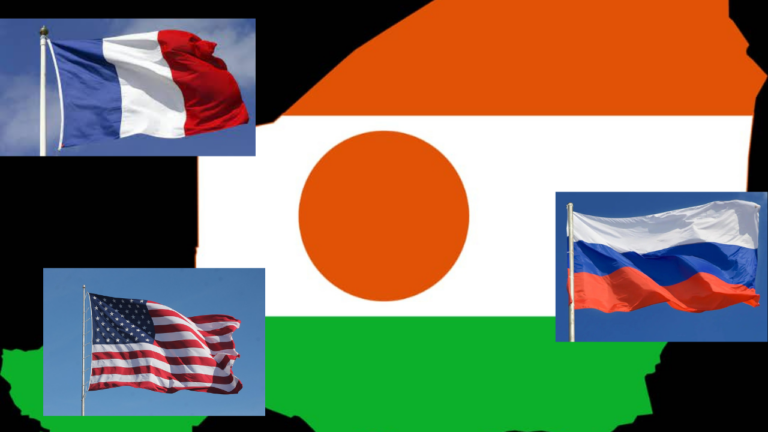
Although the Russian government had, in the immediate aftermath of the coup, condemned the development, demanding Bazoum’s release by the junta, thousands of supporters of the new military government responded to the threat of military force issued by ECOWAS on Sunday, July 30 by staging a sometimes violent protest in front of the French Embassy in Niamey, the country’s capital. The demonstrators, who voiced anger over colonial ruler France’s influence over the country, chanted in support of Russia and its ruler, Putin.
The French flag was burnt by the mob, and according to reports by CNN, amid chants of “Long live Russia!”, “Long live Putin!”, “Down with France!”, the protesters tore down a plaque identifying the French Embassy, marched on it and then replaced it with Russian and Nigerien flags.
France, Western nations fret over coup
It is indeed troubling times for France, especially, and other Western nations, whose influence in Africa is being continuously eroded by anti-democratic forces which are bent on upending historical alliances and relationships.
Niger was a French colony until its independence in 1960. France has maintained a strong influence on the West African country and its natural resources ever since.
Niger hosts a French military base and is the world’s seventh-biggest producer of uranium, a fuel which is vital for nuclear power. A greater volume of the country’s uranium deposits goes to Europe, particularly France. Bazoum was a staunch ally of the West in the fight against militant Islamists. He was also seen as a strong economic partner of Western nations. His election in 2021 was Niger’s first democratic transition of power since independence in 1960.
Ousted Niger Republic President Mohammed Bazoum
However, attacks by Islamist jihadists escalated in Niger after he came to power, and there is a belief among citizens that the French is not doing enough to help the country. Rather, France has been accused of only being interested in exploiting the country’s mineral resources. The anti-French sentiment, a major driving factor in the Niger coup, also contributed to the successful military overthrow of democratically elected governments in neighbouring Mali and Burkina Faso.
Once they took power, Mali’s military rulers embraced the Wagner Group after first forcing out French troops. The junta then pushed for the departure of thousands of United Nations (UN) peacekeepers. Burkina Faso’s military government has also grown close to Russia and expelled hundreds of French forces.
Bazoum’s government regularly banned anti-French protests, which became regular in the country after he approved the redeployment of France’s Barkhane forces to Niger after they were ordered to leave Mali. The presence of French troops in Niger, in addition to the rising cost of living and poor governance, was a major complaint against Bazoum’s administration.
French President Emmanuel Macron was quick to condemn the coup, describing it as “completely illegitimate and deeply dangerous to Nigeriens, Niger, and for the entire region”. Macron demanded the “liberation of President Bazoum and the restoration of the constitutional order” while also backing sanctions and any other measures taken by ECOWAS and the AU. France, alongside other members of the European Union (EU) equally cut off financial support to Niger, one of the world’s poorest countries.
But it appears that the colonial power is now being forced to retreat from its former colony.
Following the attacks on its embassy in Niamey, France authorities, on Tuesday, July 1, commenced preparations to evacuate French and other European nationals from the country.
The United States (US) joined France in condemning the coup, with Secretary of State Antony Blinken going further to warn the military junta that “hundreds of millions of dollars of (US) assistance was at risk” if Bazoum was not reinstalled as President. According to a statement from the US State Department, Blinken also called Bazoum severally to pledge America’s “unflagging support” to the deposed President. Like France, the US also backed the sanctions advanced by the AU and ECOWAS against the coup leaders. On July 26, the European Union (EU) suspended all security assistance to Niger, further announcing it would no longer provide financial support to the country. “This unacceptable attack on the integrity of Niger’s republican institutions will not remain without consequences for the partnership and cooperation between the European Union and Niger, in all its various aspects,” the EU’s foreign policy chief Josep Borell said.
Russia’s allies back coup leaders
While the Western nations fret over the coup in Niger, Russia’s profile has continued to rise in the country. BBC reported that since the July 26 coup, Russian flags have suddenly appeared on the streets of Niger.
Russia has not publicly endorsed the coup. But Putin’s allies in the sub-region have backed Niger’s military rulers.
Although he led an armed rebellion against the Kremlin in June, Prigozhin and his Wagner Group could still be advancing the interests of the Russian government, as happened in the Ukraine war. At the end of the uprising against the Kremlin, Prigozhin and his troops agreed to leave Russia and head to Belarus but, according to CNN, the Wagner Group leader was seen in St. Petersburg, Russia’s capital, on July 27, meeting with an African leader on the sidelines of a summit between African nations and Russia.
Prigozhin speaking out in defence of the coup could as well be Russia backing the military junta, by proxy.
Yevgeny Prigozhin Image credit/ Politico.eu
But the most telling indication of Russia’s direct, or indirect, influence on the state of affairs in Niger came on July 31, when the military governments of Burkina Faso and Mali warned that any military intervention against the coup leaders would be considered a “declaration of war” against their nations. The military governments in the two countries forged alliances with Russia after overthrowing pro-Western democratically elected governments. In a clearly coordinated move, the pro-Russia military rulers of Mali and Burkina Faso issued the warning in a joint statement read out on their national televisions. The warning was in apparent response to the threat by ECOWAS of possible deployment of military force against the coup leaders.
“Any military intervention against Niger would be tantamount to a declaration of war against Burkina Faso and Mali,” the two countries warned. They added that such action could result in disastrous consequences that could destabilise the entire region. Mali and Burkina Faso did not stop at that. They declared that they have refused to apply the “illegal, illegitimate and inhumane sanctions against the people and authorities of Niger”, thereby undermining the measures taken by ECOWAS and members of the international community against the coup.