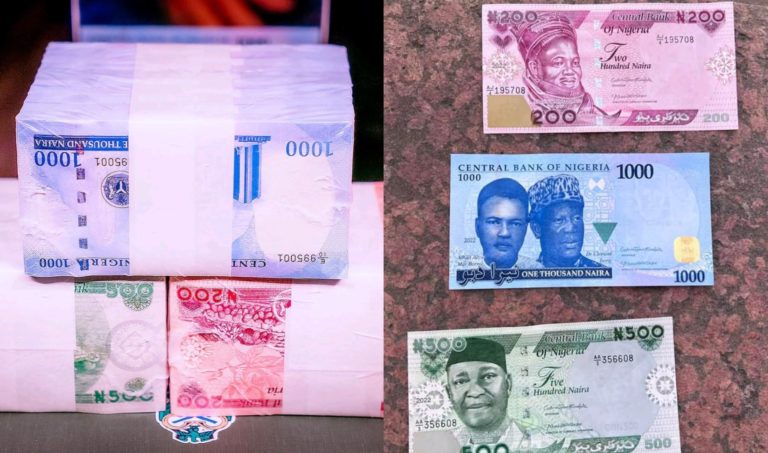
THE Governor of the Central Bank of Nigeria (CBN), Godwin Emefiele, said the newly redesigned naira notes are already in banks for issuance.
Emefiele, in multiple tweets in CBN’s official handle, gave the information on Friday, December 9 while on a visit to brief President Muhammadu Buhari on the naira redesign and the recently reintroduced cashless policy.
The apex bank governor clarified, in the face of criticisms, that the currency redesign and cashless policy were not targeted at anybody but were for the good and development of the Nigerian economy.
On poor performance of banking apps and about 40 per cent unbanked Nigerians, Emefiele urged Nigerians to embrace electronic channels available for banking and financial service transactions in Nigeria.
He also advised Nigerians to take their old N200, N500, and N1,000 notes to the banks before the January 31, 2023 deadline.
It has been reported that Nigerians had already deposited about N2 trillion of the notes being rested in banks, with commencement of issuance of the newly redesigned currency a few days to take-off.
The apex bank had announced its plan to redesign certain denominations of the naira at its Monetary Policy Committee (MPC) meeting on October 26.
It had set December 15 as the official start date for the circulation of the new naira notes, which the President officially unveiled on November 23.
JAMES Onuh was still trying to figure out how to move some of his properties when he heard that the boat transporting his wife and two-year-old baby alongside other residents to the nearest village had capsized as a result of Flooding.
Onuh, unfortunately, lost the two-year-old child to the flood while the wife was saved. The situation became more frustrating when the child’s dead body couldn’t be recovered immediately. Onuh explained that it took him a few days to recover the baby.
The flood in Ijiwo village, one of the five villages surrounding Olam rice farm in Nasarawa state, lasted for about four weeks before they could relocate back to the village. Onuh had transported his wife and other children to a village of about 4 km away till the flooding disappeared.
James Onuh, one of the affected families who lost their loved ones to this year’s flooding.
Beyond the death of his child, the floods also washed his four hectares of farm away while also posing him and other family members to hunger.
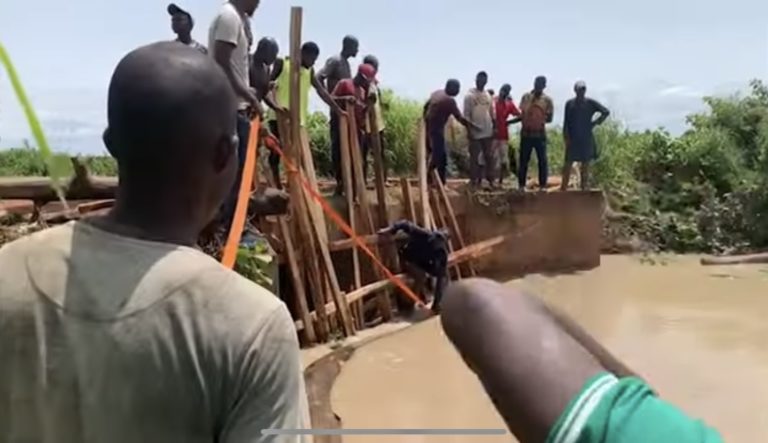
The flooding across the country left many villages to greater loss. Thousands of people in these communities have been displaced, farmlands submerged while many also lost their lives due to this year’s torrent flood.
The ICIR also gathered that Rukubi, Angulu and few other communities surrounding the Olam rice farms were greatly affected by the flooding incident that happened on October 10, 2022. The villages are located in the Doma local area of Nasarawa state.
According to a World Health Organization report, 11 of the 13 Local Government Areas (LGAs) in Nasarawa state were affected and 11 health facilities previously serving a catchment population of 17,401 are either partially or completely flooded.
As of September, Nasarawa State Emergency Management Agency (NASEMA), stated that no fewer than 361,000 persons have been displaced due to this year’s heavy rainfall.
According to the Executive Secretary NASEMA, Zachary Allumaga, the flood affected about 23 communities in seven local government areas of the state, while also noting that there is a high probability that more than one million people could be displaced by flood in the state before the end of the rainy season.
Known to be the worst flooding incident in the past 10 years, the climate disaster affected nearly all the states across the country, it has resulted in more than 600 deaths, and 2,776 persons have been injured.
Accordingly, over 123,000 houses have been damaged, and 181,600 houses were partially damaged as of October 31, 2021.
Olam rice farm – a casualty of the flood
Affected part of Olam rice farm in Nasarawa state.
On October 10, 2022, the news of Olam rice farm in Doma LGA came to the light to have lost about 4000 hectares of land and a few other properties to flooding.
Described as one of the biggest rice farms in the whole of West Africa, the farm produces thousands of tons of rice annually and employs more than 1000 persons from the neighbouring villages, making it an asset for the host communities.
The farm has an integrated rice mill with a processing capacity of 70,000 tonnes, thus, reducing Nigeria’s rice imports. Nigeria has for years been a net importer of rice, a major staple food item it is capable of producing. This is consumed virtually in every household, resulting in a growing dependency of imports.
During a visit to the farm in November, The ICIR can confirm that part of the farmland, which spans over 10,000 hectares, went underwater resulting in an estimated $15 million loss, said Olam Rice Farm Business Head and Vice President Anil Nair in a statement released in October.
Rice farm destroyed by the October 10 flood in Rukubi community, Doma LGA of Nasarawa state.
The statement said “Over $15 million worth of planted crops are under water as flood submerged 4500 hectares of Olam rice farmland in Nasarawa State”.
“The company recently upgraded its milling capacity from one hundred and twenty thousand (120) metric tonnes to two hundred and forty (240) metric tonnes annually as part of the company’s efforts to ensure food availability and security in Nigeria.”
Nair stressed that other damages due to the event includes dykes, canals and drainage worth $8 million.
The company’s Communication Manager, Elizabeth Nnoko, told The ICIR that the excess water from the heavy rain season and run-offs from River Niger and Benue resulted in severe flooding in the farm.
She said, “Excess water from the heavy rain season and run-offs from rivers Niger and Benue has resulted in severe flooding in Nasarawa state, ravaging local communities and displacing thousands of people from their homes.
“Flood waters have submerged farmland in the region, breaching 37km of dikes and drainage canals and submerging Olam Agric’s rice farm in Rukubi village, where 4,450 hectares were fully cultivated.”
Food price inflation looms
Food insecurity is aserious and growingproblem in Nigeria. It was gatheredthat 7 out of 10 Nigerians suffered from food inadequate in 2021.
The situation is worsened by the recent insecurity in the northwestern part of the country as many farmers and villagers have fled their farmland and houses due to the incessant attack on their lives.
However, this food price inflation has been worsened byannual flooding. Most parts of the country started experiencing flooding as of September 2022 due to the torrent rainfall, and as such the impact of these floods, according to areport, are set to surpass the events of 2012.
The rice harvest this year, which is mostly expected around November-December, will no longer be feasible for most farmers and thus, increase rice importation. Other food products cultivated were washed away.
Data from the Federal Ministry of Humanitarian Affairs, Disaster Management and Social Development revealed that 176,852 hectares of farmlands were partially damaged and 392,399 hectares of farmlands totally damaged.
The ICIR did an in-depth report on the devastating flood crisis in Nigeria, which can be read here
Imam Hassan said he lost about six million naira to the flood.
Imam Hassan, 48, is one of the affected farmers in Doma LGA. His 12 hectares of rice farm was submerged, leading to a loss of about six million naira. Hassan had invested about a million naira in the first quarter of the year.
“Now, a bag of rice is sold for 30,000 and I am expected to harvest 180-200 bags of rice before the end of october. If you calculate, you will get the total amount.
“I think the food price will go up a bit to cover for some of the losses even though I don’t have anything to harvest this year again, but hopefully, next year will be better.”
Experts who spoke with The ICIR, said floods in several sections of the country have exacerbated food insecurity, and the impact will be seen in the coming quarters.
In an investigation published by The ICIR, the Director, Centre for Climate Change and Development, Alex Ekwueme Federal University, a professor, Chuks Okereke, described climate change as a big threat to Nigeria’s economy that could cost the country $460 billion by 2050.
According to him, about 25 million people are at risk of flooding in the country, which could be worse in terms of unemployment, loss of assets, etc.
“As Africans, if we do not act, we are doomed. If we act in a way that is rash and not well thought-out, we will also be doomed…,” he disclosed during his presentation at the Centre for Journalism Innovation and Development (CJID), Climate Change Media Summit held in Abuja.
Also, a Flood Risk Consultant, Taiwo Ogunwumi, called for the need for the federal government to develop effective flood early warning mechanisms, especially through radio, farmer’s groups, and women groups.
He also advised the provision of river gauge and river discharge measurement instruments to keep the communities abreast of the changes in water levels.
Ijiwo community count losses, mourn relatives
Erisha Enogela (second by the right) with his siblings
Erisha Enogela, 31, is one of the people who lost their loved ones during the flooding. According to him, his mother died when they couldn’t provide her with routine treatment.
“My mother has been battling with diabetes since last year and we normally took her to hospital in the neighboring town for treatment.”
But on the day his mother died, Enogela and his siblings were trapped in the house due to the flood. The flood had taken over the whole community and made it difficult to take their mother to the hospital. Before the support team came to their rescue, Enogela had lost her mother.
“We transported her dead body to a Mortuary in one PHC centre. Until now, we haven’t buried her because the land is so wet. Hopefully, by next week, we will be able to do that.”
Ijiwo community is one of the most affected communities in Doma LGA of Nasarawa state as four children were reportedly drowned in flood, scores were displaced, many properties lost, and unverified hectares of farmland were destroyed.
According to the acting community head, Moses Oseh, the last time the community witnessed such an incident due to flooding was in 2012.
“All of us left our community for Rukubi village to stay for about five weeks. Some houses collapsed, we have children that died and our farmland was greatly affected.
“We cultivated maize and rice. For the maize, we were able to harvest small, but our entire rice farm was washed away by the river, we are now left with empty hands.
Ijiwo school affected by flooding. The incident has made the school shut down till further notice.
The ICIR also gathered that the only school for the community of over 1000 houses was destroyed by the flood, making it hard for students to resume. The school of about six classes has no chairs or tables.
Sources told The ICIR that there were tables and chairs before the flood that submerged their entire community.
Speaking further, Oseh hopes the government will look into their matter and provide them with funds to send their children back to school.
“We heard that ASUU has called off the strike, but we can’t send our children to school. All the farm products we relied on have been destroyed, and it will be hard to pay for their dues.
“We can’t even do that because we hardly get something to eat. It has been hard since we came back from the primary school that we were camped in.”
Rukubi farmers battle loss, hope to get loans to restart life
Prior to the devastating floods that wrecked the farming part of the community in October, Edo Paul used to harvest about 50 bags of rice and earn millions of naira to feed and take care of his family. But, like many others in the Rukubi community, they were left with nothing to depend on due to the floods that washed away farmlands in Doma LGA of Nasarawa state. They now have to do menial jobs to at least prepare for next year’s rainy season farming.
Edoh Paul
Some of them who spoke to The ICIR said they will get a loan to cultivate and plant new varieties of crops.
The 32-years old Paul, said he has been depending on his farm since he graduated from Keffi state University in 2012. He had searched for a job to aid his farming business but got no positive response and had to forgo the hope of getting a government Job.
“As you can see, I graduated from Keffi University in 2012 but there’s nothing to show for it. Until a few years back, I had been hopeful of getting a job but there was no job anywhere. No one to assist us, we just have to work on our farmlands. Since then, I have been farming rice and maize to take care of my family.”
“But since October, I have been struggling to take care of my family because my farm was under water for weeks. The entire farm and the neighboring farms were affected.
The Rukubi community leader, Dan Suleiman Elamoseni, also bemoaned the unfortunate and devastating effect of the October flooding in the community. According to him, the houses were not affected but the places designed for farming were flooded.
Rukubi community’s leader, Dan Suleimon Elamoseni
Fifty-four-year-old Elamoseni added that his community members lost hundreds of bags of rice due to the flood.
“The last time my community witnessed this kind of situation was in 1975. That was the year the Lagdo dam in Cameroon was completed. That year’s flood was the only one comparable to this flood in my life.
“The whole farmland was covered by water and the neighbouring communities were greatly affected too. But with the help of Olam farm, some of the affected places were relocated to our Primary school . They were here for almost one month, and some even left last week.
“In Rukubu, we recorded no casualties, but Otiya village recorded about three deaths.”
Doma LGA chairman reacts to accusation of embezzlement
The Chairman of the affected Local Government Area, Usman Seriki Abdullahi, has been accused of looting the relief fund and provision for the affected communities.
The allegation was raised by the Rukubi community head, Elamoseni who disclosed that a sum of four million naira which was given to them by the State Governor, Abdullahi Sule, was nowhere to be found, despite the dying situation they found themselves in.
“Our state governor sent some cash with some other things for us here, but the LGA chairman stole the money. The Money is about four million.
“The money was offered to us as a relief fund when the governor came here but it was looted,” Elamoseni said.
When contacted, the LGA chairman, Abdullahi, said the money that was released to him by the state government is three million naira not four million naira as claimed by our source.
“The Governor in the first instance, didn’t give me four million to give to them. The governor paid a visit to the affected areas, and I was there as the chairman and before then we have made assessments-went around the communities. Normally when the governor pays a visit to any community, most times he gives directly to people but in this case, he made available three million naira and the community that was affected by the flood wasn’t just Rukubi. Rukubi is a town, and there’s what we call Rukubi ward, and we have Afanaja ward, and then we have Alaje ward.
Stating how the money was distributed, Abdullahi said: “The areas that were affected by flood Doma south constituency were Afanaja and Rukubi wards. In Doma north, the Alaje was also affected. In Rukubi and Afanaja wards, 18 communities were affected. In Alaje ward, 12 communities were affected. But the level of devastation in those communities was not equal. Some of the communities amongst the affected areas got N100,000; some got N50, 000 depending on the number of people we have there.
“I set up a committee to carry out the distribution, I didn’t do it myself. And the committee went there with the community representatives which were about five people per community-The disturbing head, village head, the chairman of the immediate community, youth’s leader and women leader of that community and the councillor of that ward was in the committee that went for the distribution.”
He also disclosed that the most affected area, which is Rukubi and Afanaja got “close to 1.6 million, and the committee had what we called the logistics-transport and security. While the other community, Alaje ward, also had its own- about 12 communities and they were given about N50,000 because the level of devastation in those communities wasn’t as much as the other ones.This is how the money was spent. And part of it, the traditional council there which is made up of district head and village head and whatever in those areas were also part of the sharing.”
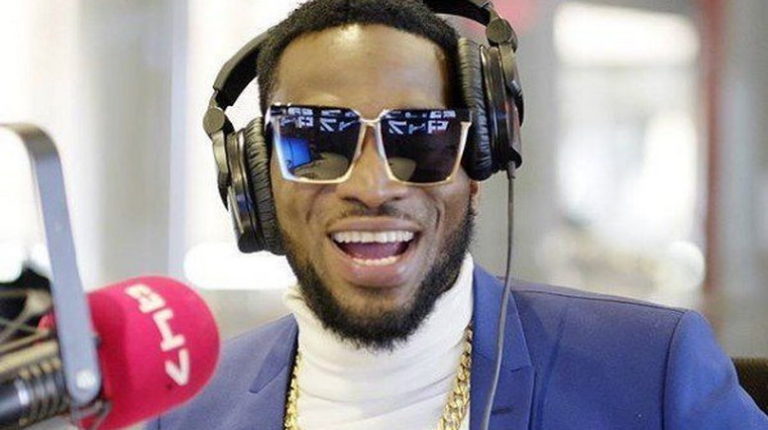
THE Independent Corrupt Practices and other Related Offences Commission (ICPC) has freed Popular Musician Oladapo Oyebanjo, also known as D’Banj, after almost 72 hours in custody.
D’banj’s lawyer, Pelumi Olajengbesi, announced the development on Friday,
He said the musician was released on self-recognition.
Olajengbesi, in a statement, said D’Banj, who the anti-graft Agency arrested on December 6, was innocent of the allegations of fund diversion trailing him relating to the social empowerment programme ‘N-Power Scheme’.
The statement partly reads, “After 72 hours of unfair detention and false allegation against Mr Daniel Oladapo (D’banj), the Independent Corrupt Practices and other Related Offences Commission (ICPC) on Friday afternoon released the famous singer.
“It is instructive to note that the ICPC released D’banj on self-recognition after the agency could not find anything incriminating on him.
“Nigerians must be told the truth that D’banj is clean and have no criminal or fraud record. It, however, is an embarrassment to the entire country that such a huge allegation of N900 million fraud against a public figure without any evidence.
“The ICPC Chairman, Bolaji Owasanoye (SAN) and the entire officers of the ICPC must be deeply sad and embarrassed also that their decent organization was used for such shameful publicity against an innocent man.
“Only a few organizations and persons stood and waited to verify the claims. This form of media trial is evil.”
The lawyer demanded that the Minister of Humanitarian Affairs, Disaster Management and Social Development, Sadiya Farouq, disclose the identity of the government officials D’banj allegedly collaborated with and provide details of the N-power funds reportedly traced to the musician’s account.
“The Minister of Humanitarian Affairs, Disaster Management and Social Development, Sadiya Farouq, who claimed to have instructed the ICPC to detain D’banj, must now be ready to explain to the world the money traced to his account and the amount,” Olajengbesi added.
Earlier on Thursday, Olajengbesi said the Singer had cooperated with the Commission during its investigation.
He added that D’banj has also demonstrated a shared zeal to help the Commission make its impassioned and honest findings on the matter, as he is interested in clearing his name.
The ICIRreported that the ICPC on Tuesday detained D’Banj over allegations of diversion of millions of N-Power funds in collaboration with some government officials.
The singer was detained at the ICPC Headquarters, Federal Capital Territory, Abuja, before his eventual release on Friday.
THE Nigerian Bar Association (NBA) has warned against malpractices in the forthcoming general elections.
NBA President Yakubu Maikyau gave the warning in a statement released to mark the International Anti-Corruption Day on Friday, December 9.
“One fundamental reason why this year 2022 Anti-Corruption Day is of significance to us in Nigeria is the opportunity it provides us to mark the event in the context of our forthcoming general elections. Electoral malpractice is a form of corruption which we tend to ignore and which deserves to be roundly condemned.
“Corruption of the electoral practices, be it in form of vote-buying or electoral violence, undermines the democratic practices, thereby circumventing the will of the people. This is, therefore, an opportunity for all of us as stakeholders to recommit ourselves to the patriotic duty of ensuring that the General Elections coming up in the first quarter of year 2023 is corruption free,” he noted.
Stating that the fight against corruption was not exclusive to security agencies and the judiciary, he encouraged citizens to get involved.
The NBA President, however, pointed out that the anti-corruption campaign should not violate human rights and the rule of law.
“Anti-corruption agencies must, therefore, not see themselves as special creatures who are above the law passed by the Nigerian people’s parliament. The rights of every citizen must be respected at all times and due process must be followed in our anti-corruption crusades,” he said.
Urging legislators to enact proactive and effective laws against corruption, he called on the executive arm of government to implement them without prejudice.
The United Nations General Assembly designated December 9 as International Anti-Corruption Day to raise awareness of corruption and fight against it.
Nigeria is facing the adverse effects of corruption and was ranked the 154th least corrupt out of 180 nations by Transparency International as of December 2021.
A witness, Shamsudeen Bada, has told a High Court in Kwara State how he was allegedly tortured to implicate former Senate President Bukola Saraki in the Offa bank robbery incident of April 5, 2018.
Bada, who is a former vice chairman of Irepodun Local Government Area (LGA) of the state, spoke on Thursday, December 8, at the ongoing trial over the robbery which led to the death of at least 17 persons, including nine police officers.
Recall that five suspects — Ayoade Akinnibosun, Ibikunle Ogunleye, Adeola Abraham and two others — were charged to court by the police for criminal conspiracy to rob the banks, murder of nine policemen and other citizens, and illegal possession of firearms, following the robbery incident.
Bada recounted his experience when the trial of the suspects in the robbery resumed at the Kwara State High Court sitting in Ilorin.
He said his torture was overseen by men of the Intelligence Response Team (IRT) of the Inspector General of Police (IGP) led by DCP Abba Kyari, who along with four others is now standing trial for alleged drug trafficking offences preferred against them by the National Drug Law Enforcement Agency (NDLEA).
The witness said the IRT operatives told him their instructions were “directly from the IGP” when his family threatened the police with a court case.
He said the IRT operatives promised him while in detention that he would be freed if he named Saraki as the sponsor of the robbery, adding that one of the robbery suspects, Ayo Akinninbosun, was shot in the leg when he declined to indict Saraki.
“After he was shot, my health started deteriorating. DCP Abba Kyari brought some nurses to treat me. Before I was eventually released, the police officers gave me conditions that I must not grant any press interview, I must not go to court and I should quit politics,” he said.
The witness told the court that his arrest was politically motivated as a means to deal with the Saraki camp. “They needed to tag it with something to nail them, hence Offa robbery became their option which was a month after the robbery saga,” he said.
The prosecuting counsel later sought an adjournment to obtain a document that he said was not brought to the Court and the case was subsequently adjourned to January 16, 17 and 18, 2023, for continuation of cross-examination by the prosecution and trial.
SHEHU of Borno, Abubakar El-Kanemi, has described the insurgency in the country as the handiwork of foreigners who penetrated the North-East under the pretense of seeking Quranic education.
El-Kanemi spoke at a town hall meeting organized by Yateem Faqueer Global Foundation in Abuja on Thursday, December 8.
“Borno has witnessed so many things, both good and bad. Boko Haram is something meaningless, mindless and without any sense of direction as none of the holy books, neither the Quran nor the Bible commands you to disrespect others, burn, or destroy their property. And I want people to understand that Boko Haram was never founded or initiated by people from the North-East zone. It is something they just brought to us out of nowhere.
“Honestly, we have suffered, the people have suffered. The palaces of our emirs were destroyed, and some of them were killed, including other traditional rulers, and religious leaders and so many other people were killed. There are numerous issues in the North-East. But before we had this administration, out of the 27 local governments in Borno, 17 were under the control of Boko Haram. But now, no local government in Borno is under the control of Boko Haram.”
Former Chief of Army Staff, General Alwali Kazir (retd), refuted insinuations that the bandits and other armed criminal gangs operating in parts of the country were the offshoots of Boko Haram insurgents in the North-East, saying that apparent ideological differences separated them.
However, he recommended both kinetic and non-kinetic approaches in addressing the problem.
Also speaking at the event, the Chairperson of the Foundation, Hajiya Yagana Hassan, said the mission of the humanitarian organization was to serve humanity and to provide sustainable economic assistance to communities affected by insecurity to help them fight extreme poverty amongst other challenges.
Human rights activist and lawyer, Femi Falana, has faulted the 48-hour ultimatum issued by the Department of State Services (DSS) to the Nigerian National Petroleum Company (NNPC) Limited and oil marketers to end the lingering fuel scarcity in the country.
The DSS had on December 8, through its spokesperson, Peter Afunanya, vowed to go after stakeholders in the oil sector if the fuel queues did not disappear after 48 hours.
However, Falana faulted the ultimatum in an interview on Channels Television on Friday, December 9.
Falana stressed that NNPC is charged with the constitutional responsibility of supplying petroleum products to all parts Nigeria but the organization has failed to deliver.
“The business of supplying fuel to all parts of the country is the duty of the NNPC and if the NNPC is failing. The government has the responsibility to call them to order and relieve them of their duties,” he said.
“As you know, every year, at the end of the year – once it is Christmas – there must be an artificial scarcity of fuel. The ultimatum will not work because there is no sanction for impunity in Nigeria.
“We must run this country in line with the provisions of the law if the police cannot maintain adequate security, the president is empowered to bring the military.
“This agency is a secret agency- if there is a problem they should submit a report to the President, we cannot have a country where everybody does what he likes.”
The lawyer noted that it is not the responsibility of the DSS to stop fuel scarcity.
“The DSS goes around arresting people. It is not the constitutional responsibility of the organization because it is not listed in the terrorism prevention act,” he added.
Falana emphasized that the continuous presence of long queues at filling stations could lead to “serious security problems and sabotage the nation’s economy”.
He, however, charged the DSS to conduct thorough investigations against perpetrators of fuel scarcity and prosecute them.
INCUMBENT President Goodluck Jonathan was in the black book of the United States (US) government when then-President Barack Obama addressed Nigerians through a video message days before the 2015 general elections.
In an unprecedented move, US leader Obama urged Nigerians to turn out and participate in the elections. The 2015 general elections was first scheduled to commence on February 14, 2015, but the Independent National Electoral Commission (INEC) postponed it by six weeks to March 28, mainly due to the poor distribution of Permanent Voter Cards (PVCs), and also to curb ongoing Boko Haram insurgency in the North-East.
The US and United Kingdom (UK) had frowned at the postponement of the election. US Secretary of State John Kerry warned the Nigerian government against using security concerns as a pretext for impeding the democratic process. British Foreign Secretary Phillip Hammond also cautioned Nigerian authorities, stressing that Nigerians should not be denied the opportunity to exercise their democratic rights.
The general elections eventually commenced on March 28 but days before the polls, on March 23, 2015, Obama addressed Nigerians in a two-minute 31 seconds video.
“Hello, today I wanna speak directly to you, the people of Nigeria,” the US President started his address.
After commending Nigerians for winning independence from colonial rule and freedom from military dictatorship, turning the country’s diversity into strength and working hard to build the largest economy in Africa, Obama stressed: “Now you have a historic opportunity to write the next chapter of Nigeria’s progress by voting in the upcoming elections.”
Although Obama did not directly tell Nigerians to vote Buhari, the APC candidate, his message implied that Nigeria is better off with the retired army General.
Buhari was seen as a more capable hand, and the US wanted him to take up the onslaught on the terror group.
Obama, in the message, said successful elections and democratic progress will help Nigeria to stop Boko Haram, which he identified as the urgent challenge facing the country.
“Boko Haram wants to destroy Nigeria and all you have built. By casting your ballot you can help secure your nation’s progress. I am told there is a saying in your country: To keep Nigeria as one is a task that must be done. Today I urge all Nigerians, from all religions, all ethnic groups and all regions, to come together and keep Nigeria one. And in this task of advancing the security, prosperity and human rights of all Nigerians, you will continue to have a friend and partner in the United States of America,” Obama concluded.
The message was clear.
Buhari eventually won the election. The extent of the impact of the intervention of the US government on the outcome of the election cannot be determined but it is certain that the White House made moves to influence the poll. Jonathan acknowledged the US influence in his book, ‘The Transition Hours’.
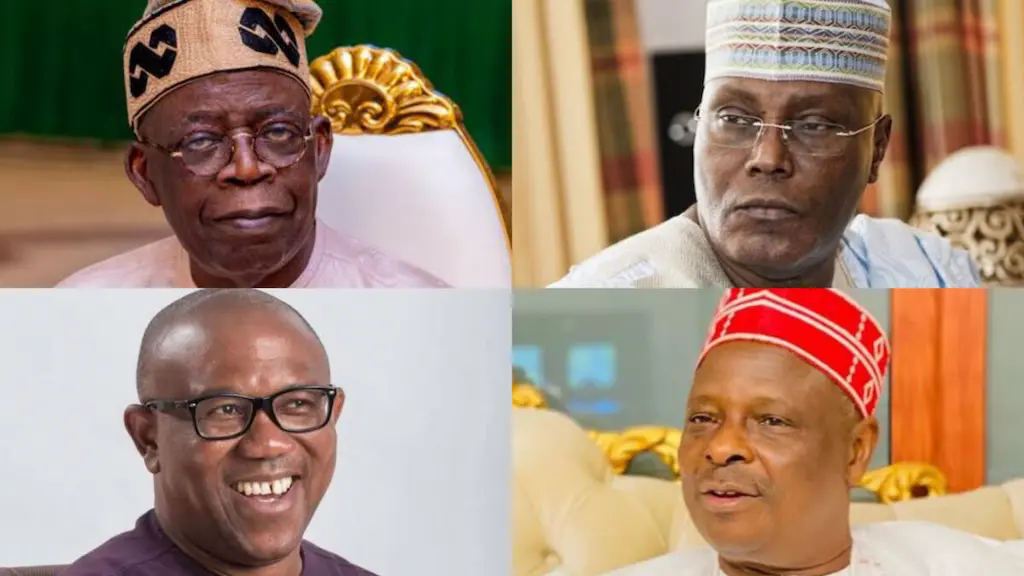
About eight years after, Nigeria is set to elect Buhari’s successor. The leading candidates are Bola Tinubu of the ruling party, the APC, Atiku Abubakar of the PDP, Peter Obi of the Labour Party (LP) and Rabiu Kwankwaso of the New Nigeria Peoples Party (NNPP).
America, Britain will not want another Buhari in 2023… Diplomat
At the moment, there is no clear indication that the US, and the UK, Nigeria’s colonial master – two countries that exert considerable influence on Nigeria – are backing any of the candidates.
But, in an interview with The ICIR, a Professor, and former Director General of Nigerian Institute of International Affairs (NIIA), Bola Akinterinwa, noted that the US and the UK would be seeking to protect and promote their interests in Nigeria by trying to influence the outcome of the 2023 presidential election.
Bola Akinterinwa
And while it is not certain that the super powers are backing any candidate, one thing is clear, according to Akinterinwa. The US and the UK will not want another Buhari in 2023.
“The US was very critical in the election of Buhari in 2015. They ensured that they frustrated Jonathan at that time but now that Buhari is there he has shown himself to be very incapable. He has not been able to secure the country. People voted for him in the belief that being a retired Army General he will bring his experience to bear in neutralizing terror. But he has not. Under Buhari there were several diplomatic confrontations in terms of purchase of Tucano military aircraft, there were too many disagreements at the level of US and Nigeria. Now the US will not be interested in having another Muhammadu Buhari in the form of whoever, whether it is Tinubu, Atiku or Obi. So they must be interested (in the outcome of the presidential election)”, Akinterinwa said.
“Due to their interests, yes, they (US and UK) will want to influence (the outcome) because they don’t want a government that will be hostile. They don’t want a government that will endanger their investments in Nigeria. They want a government that will protect their economic interests,” the seasoned diplomat added.
Tricky affair
While the Americans and the British seek to influence the outcome of Nigeria’s presidential elections, influencing actual voting is a tricky affair. A lot of factors are responsible for this. The factors include the economic situation in the country and diplomatic restraints.
So, the influence exerted by the foreign powers is usually subtle and indirect.
Shedding further light on this, Akinterinwa said: “In Nigeria, because of the poverty level, when you give people money, they will vote. So if the enemy of the UK or US gets to the polling booth and he is settled with the vote-buying virus, they will vote. So it is very difficult for foreign countries to influence voting at that particular level.
“What the US usually does is to organize a training program, especially for media professionals, or provide assistance in terms of electioneering, in terms of election materials, in terms of how to protect human rights, how to avoid violence, and so on and so forth. They do this before elections and generally media men are encouraged to be part of the observation teams so they will be able to report. So you see, indirectly, they (US/UK) are influencing.”
The influence can also take the form of ‘clandestine’ operations. Akinterinwa observed that the super powers can help their preferred candidates with financial assistance.
“On the matter of voting, they can still control, to a very minimal level. For instance, due to the high poverty level, it is always about money, it is very possible for a country to empower the candidate they want to support financially for such candidate to be able to distribute money.”
Double strategy
However, while the Americans and the British may have preferred candidates in the presidential election, they will not put all their eggs in one basket. As Akinterinwa explained, the super powers usually extend support to different candidates, who have been identified as potential winners of the election. So, ahead of the 2023 election, the Americans and the British could simultaneously extend indirect support to LP’s Peter Obi, APC’s Bola Tinubu, PDP’s Atiku Abubakar and NNPP’s Kwankwaso.
The objective is to ensure that, at the end of the day, whoever emerges winner is on their side.
Akinterinwa described this approach as ‘double strategy’.
“Due to the situation in Nigeria, I can tell you that the US and the UK are most likely to say a candidate like Peter Obi than having support for Atiku or Tinubu and a host of others. And the reason is not far-fetched. You know when we have diplomatic representations in Nigeria, their main job is to observe what is going on and report back home. They know quite well that you have a candidate whose national impact is yet to be established but it feels like this candidate has better potential.
“But what is normally done in diplomacy is that governments do not always engage in putting all their eggs in the same basket. It is never done. This is what the UK and America normally do. And in this case they can support Atiku, and they can also support Tinubu, quietly, with different approaches. So that whoever wins, America and the British will never be the loser.”
He added, “The West, particularly the US and the UK, are always seeking to influence elections in such a way that whoever is elected will be a friendly person. They wouldn’t want any pro-Chinese person to be elected, neither will they want somebody who has sympathy for Russia. If they identify a candidate who will protect their interests, they will do everything they could, secretly, to support such candidate.”
Atiku, Tinubu hold meetings with American, British officials
Already, some of the leading presidential candidates have been holding meetings with American and British government officials ahead of the election.
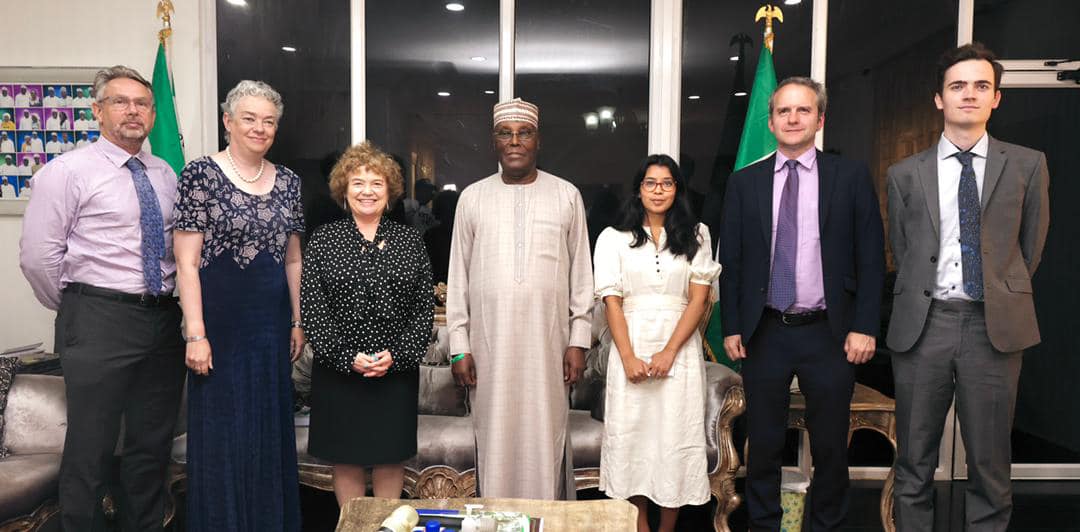
PDP candidate Atiku Abubakar with a delegation of British government officials led by High Commissioner to Nigeria Catriona Laing on August 1 in Abuja
Atiku said,“We discussed a wide range of issues from the economy to education, security, electoral reforms and improved collaboration between the UK and the Nigerian governments on finding lasting diplomatic common ground on issues that mutually benefit both countries.”
In October, the PDP candidate also embarked on what his campaign team described as a “working visit” to the US. There were reports that Atiku, during the visit, lobbied top US State Department officials, as well as influential members of the US Congress, to solicit support for his presidential bid.
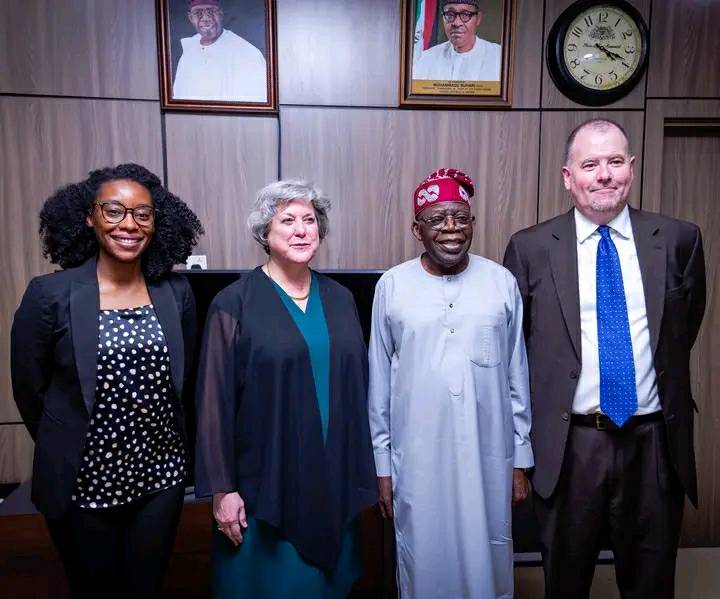
On September 22, APC candidate Tinubu held a meeting with the US Ambassador to Nigeria, Mary Beth Leonard, and Deputy Chief of Mission, Rolf Olson. The meeting was held at the APC Presidential Campaign Council office in Abuja. Earlier, on September 5, Tinubu also met with UK High Commissioner, Laing.
APC candidate Bola Tinubu met with a US delegation led by US Ambassador Mary Beth Leonard and US Political Adviser Rolf Olson in Abuja on September 22
Chatham House provides window for candidates to woo international community
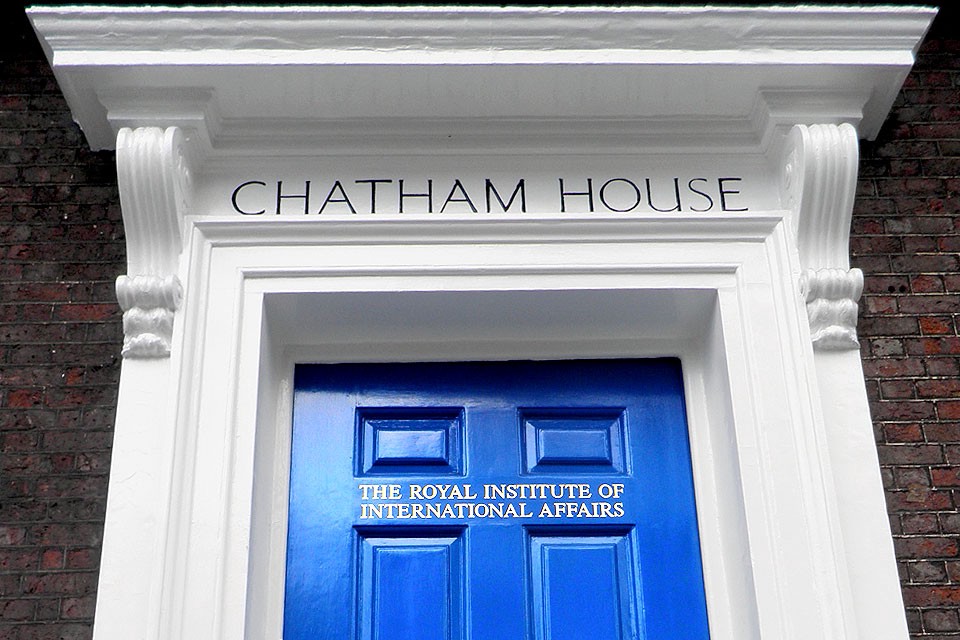
Although Nigerians in the Diaspora do not participate in Nigeria’s elections, Chatham House, in London, UK, has become the centre stage of campaigns for Nigeria’s presidential poll. Also known as the Royal Institute of International Affairs, Chatham House is an independent policy institute headquartered in London. Its stated mission is to provide commentary on world events and offer solutions to global challenges.
In recent times, leading presidential candidates regard Chatham House as a platform to woo the international community, showcase themselves on the international stage and also prove to Nigerian voters that they have an international pedigree.
Ahead of the 2023 presidential election, APC candidate Tinubu has followed Buhari’s example by unveiling his plans for Nigeria at Chatham House on December 5.
Chatham House, London. Image courtesy: medium.com
The LP candidate Obi is to address Chatham House on January 16, 2023, following further invitations extended by the organisation to other leading candidates for the 2023 presidential election. Atiku of the PDP and Kwankwaso, NNPP, will also appear at Chatham House on yet-to-be-specified dates. Atiku was not a presidential candidate when he spoke at Chatham House in 2018.
Speaking on the significance of Chatham House in contemporary Nigerian presidential elections, Director of the Centre for Democracy and Development (CDD), Idayat Hassan, noted that an appearance at Chatham House is now regarded as a prestigious occasion since Buhari’s address at the venue in 2015.
Hassan, in an interview with The ICIR, also observed that Chatham House provides a wide platform that encompasses Nigerians back home and members of the international community.
“When speaking at Chatham House, you are not going to have only Nigerians but the international community will also participate. There will be businesses, think-tanks and researchers and some Nigerians will get to understand who the candidates are and what there agenda is all about,” Hassan said, adding that the candidates see the outing as an opportunity to impress not just Nigerians back home and those in the Diaspora, but also the international community.
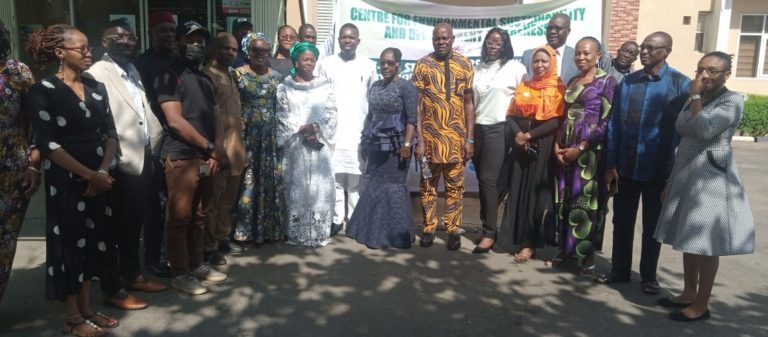
A GROUP, Centre for Environmental Sustainability and Development Awareness (CESDA) has partnered with the European Union (EU) and British Council to end open defecation in Abuja.
The partnership was part of activities to promote Water, Sanitation and Hygiene (WASH) programmes in collaboration with other relevant stakeholders in the Federal Capital Territory (FCT).
The Executive Director of CESDA, Olusola Babalola, said during the event on Thursday, December 8, in Abuja, that persistent outbreak of cholera and reported cases of rampant open defecation in the FCT prompted the partnership.
According to him, the country has witnessed about 3,000 deaths in the past 10 months due to the scourge of Cholera caused by open defecation.
“Presently, Nigeria is leading global demographics in open defecation as outbreak of cholera is becoming alarming with close to three thousands deaths recorded in the last 10 months in Nigeria,” Babalola said.
“Unfortunately, efforts to stem the tide of open defecation even in the FCT have not yielded much. This blight has among other issues, put Nigeria in negative limelight in comity of world nations.”
He said all the relevant stakeholders had agreed to work in synergy as part of efforts to end open defecation in the territory.
Part of the efforts, he disclosed would include setting up of WASH clubs across secondary schools in the FCT to drive the campaign.
This, he noted, would enable better sensitization against open defecation.
In attendance during the meeting were representatives of the international partners, Federal Ministry of Health, Federal Ministry of Water Resources, FCT Health and Human Development Secretariat, FCT Rural Water Supply and Sanitation Agency (RUWASSA), National Orientation Agency and Market Women Association.
In her remarks, the Deputy Director of FCT RUWASSA, Chy Obrike noted that collaboration by government agencies and NGOs was key to addressing the health challenges in Abuja.
She said it would help stakeholders to effectively capture the WASH needs of the people.
Obrike commended CESDA’s plan to set up WASH clubs in schools while lamenting poor sanitation in several schools in the FCT.
“Its good what CESDA is doing to focus on schools. That will fill a gap. Because we have found with dismay that some schools don’t have WASH facilities. The gap goes down to how we execute projects in this nation without putting sanitation and hygiene into context”.
President Muhammadu Buhari had on November 20, 2019 signed an Executive Order 009 entitled, “The open Defecation-Free Nigeria by 2025 and Other Related Matters” to eliminate the practice of open defecation nationwide.
The commitment to end open defecation is in line with the United Nations Sustainable Development Goals (SDGs).
But findings from 2021 Water, Sanitation and Hygiene National Outcome Routine Mapping (WASHNORM), revealed that the situation of WASH services in the country remained far from achieving the SDG targets.
According to the findings; “only 10 percent of the population have access to complete basic water, sanitation, and hygiene services, using the global JMP definitions. Those living in rural areas are three times more disadvantaged than those in urban areas”.
While reviewing the nation’s environmental regulations, the Executive Director of Social-Economic Research and Development Centre, Tijani Abdulkareem, said there was need for more responsible actions to be taken by both stakeholders and the entire public.
“It is only stringently enforced laws that could provide solutions for the myriad of environmental problems daily confronting the nation.This can only be possible if policy objectives of the extant laws are adequately promoted by enforcement agencies”, he added.
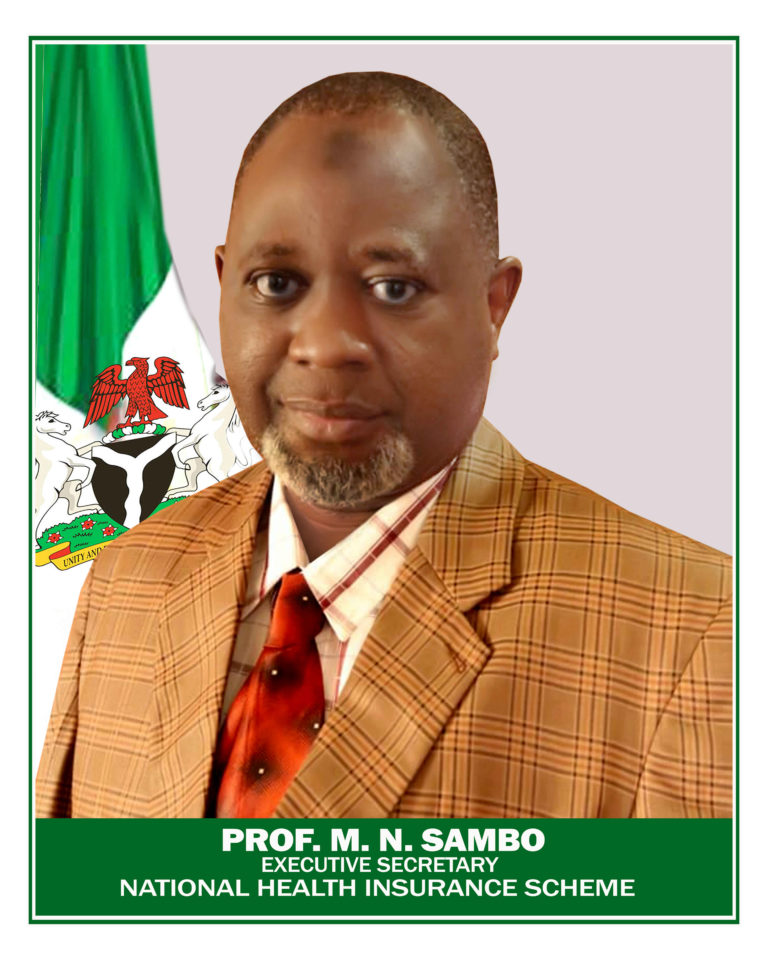
THE National Health Insurance Authority (NHIA), formerly known as the National Health Insurance Scheme (NHIS), ran its offices in northern Nigeria with only one nurse for several years, the agency’s Director General, Mohammed Sambo, a professor, has revealed.
Sambo said the agency employed non-health workers in its northern offices, which slowed down its operations.
He disclosed this while addressing the Association of Nigeria Health Journalists (ANHeJ) at its sixth annual conference in Akwanga, Nasarawa State, on Friday, December 9.
Represented by Emmanuel Ononokpono, Public Affairs Manager at the NHIA, Sambo said he had employed 190 health professionals to boost the NHIA’s operations since his appointment in 2019.
He said, “In NHIS offices, we had just one nurse. That meant that the man who read History or Mass Communication would be the one to access the hospital to tell whether this is a stethoscope or not. That worsened the situation at that time.
“So, Prof. had to find a way and engage in a very transparent manner 190 medical persons, five in each state across Nigeria, doctors, nurses, pharmacists and (medical) laboratory scientists.
“Now, we don’t have to send people from the head office to go to the states to conduct quality assurance again; the state offices can handle it.”
Sambo recollected how politicking and wranglings almost consumed the agency under his predecessors, resulting in the public losing confidence in the organization.
He also said the former NHIS could not build offices in any part of the country, making it pay rent for its 38 offices nationwide.
“We were deploying ICT equipment. Whenever the house owners said we should go, we must dismantle those things and move with them.”
Sambo also said the government did not audit the NHIA account for five years before he took over in 2019 because of a crisis.
Besides, he explained that every chief executive of the agency tried to change the NHIS Act to make health insurance compulsory in the country, but they didn’t succeed.
He said his efforts to change the NHIS Act succeeded after three attempts.
“You can’t have universal health coverage without making it compulsory. The Act gives hope to 83 million vulnerable Nigerians that cannot afford to pay for healthcare.”
He questioned why the government could not allocate at least an oil block to the 83 million vulnerable to fund health insurance in the country.
“If the government could give oil blocks to individuals, why can’t it give to 83 million vulnerable Nigerians? A retired General told us some time ago how he sold his oil block for $500 million.”
While decrying how the NHIA covers only 15 million Nigerians out of nearly 220 million, Sambo pledged that “the agency would continue to work until the NHIA becomes the envy of all Nigerians. If you go to the UK, the NHS is the emblem of health care delivery”.