Home Blog Page 1680

The new VAT combat is a protest

0

By Eric TENIOLA


THE actions of Chief Nyesom Wike (57) governor of Rivers state and Mr. Babajide Sanwo-Olu (56) governor of Lagos, have made us take another look at the issue of taxation in Nigeria. Specifically, the actions of these governors and their states of Assembly and the southern governors that met recently, have reawakened our thoughts on the issue of the Value-Added Tax (VAT). Tax simplification is not simple.

The tax system is too complex and too complicated. The concept of tax complexity turns out to be quite elusive when one tries to pin it down. Very difficult to understand. What the governors have done so far is that they have ignited a flame out of emotions. No one knows how long it will burn out. The Supreme Court and its interpretation will not be the final arbiter on the issue. In the end, some state governors may realise later that they have been shortchanged. If it’s not too late, let the sleeping dogs lie. One thing seems certain, there will be duplication of taxes in this country and the people might not be truly sure of whom to pay their tax to, is it FIRS or state functionaries. The average Nigerian will be financially strangulated.

There will be an emergence of tax enforcers or tax brigades who will be worse than political thugs or Motor Park touts. It will lead also to over taxation and will cripple various businesses in the country. And in a country where unemployment is high, where super inflation is on the increase, with insecurity all around, debt profile keeps rising, bad roads, bad medical facilities, the system itself may collapse.

For some time now, we have been debating on how to share the bread, (FIRS collected 1.53trillion naira on VAT alone last year), no one is talking about how to bake the bread. If we are not careful, very soon, there will not be any bread to share on the table.

I am aware that the current VAT war is a protest on the central government and its certain policies of exclusion, partisanship, nepotism, ethnicity, non-consultation and unfairness. To top it all, the central government has been lackadaisical, indifferent and slothful to some areas in the country in an arrogant manner. In some instances the central government has been turning deaf ears to genuine advice and appeals treating its citizens like conquered and captured people. And that is not good for a fragile country like Nigeria.

Albeit, all relationship goes through hell, rare relationships get through it. A relationship is like a house, when a light bulb burns out, you do not go out to buy a new house. You fix the bulb.

Protest movements are often synonymous with inspiring leaders. Lack of leaders may exacerbate tensions and violence when protesters have no one to provide direction on how to confront the authorities. Interestingly, the leaders of those protesting against the centre today, were themselves products of the centre itself.

The present chairman of the governors’ forum, Dr. John Olukayode Fayemi (56) from Isan-Ekiti in Oye Local Government in Ekiti state served as Minister of Solid Minerals Development from 11 November 2015 to 30 May 2018.


Read Also

Chief Nyesom Wike (57), an Ikwerre from Rumuepirikom in Obio-Akpor, Rivers State served as Minister of State for Education from 14 July 2011 till 2014. The present governor of Benue state, Mr Samuel Ioraer Ortom (60) from Guma Local Government Area of Benue State was Minister of Industry, Trade and Investment from 11 July 2011- 25 October 2015. As for Arakunrin Oluwarotimi Akerodolu alias AKETI (65), SAN, from Owo in Owo Local Government Area of Ondo state, he has always been a chronic fighter.

If these governors and many others are rebels today, the Central Government made them so.

I am one of those who believe that the arrogance of the Central government is creating problems in this union called Nigeria. The matter could have been solved if there was a strong dialogue and a line of communication between the central government, state and local governments.

There are different types of taxes in the country today. We have the Personal Income-tax Act (PITA), the Companies Income tax Act(CITA), the Petroleum Profit Tax Act(PPTA), Value Added Tax Act(VATA), Education Tax Act(ETA), National Automobile Council Act, Customs, Excise Tariffs, etc (Consolidation Act) and the Sugar Development Council Act.

The subject of discussion is the Value Added Tax (VAT).

The Value Added Act decree of 1993 was promulgated by General (rtd.) Ibrahim Babangida (80) GCFR. In fact it was part of the military legacy. The programme was first introduced by the first Minister of Finance under General Babangida, Dr. Kalu Idika Kalu (82), from Ebem, Ohafia in Imo state.

In his 403 page book titled “LETTING A THOUSAND FLOWERS BLOSSOM”, Dele Sobowale narrated how VAT came to be. He said “VAT was one of Dr Kalu Idika Kalu’s unpopular proposals and for which he would have been lynched if the economic illiterates dominating discussion in the media could lay their hands on him. It was not even accepted by the majority of the cabinet members. On the day General Babangida adopted the proposal, Dr. Kalu was invited as was usual before such monumental decisions were made, to defend the initiative. The matter was thrown open for discussion. Dr. kalu’s reliable supporters—Chief Samuel Oluyemi Falae (82), Dr. Chu S.P. Okongwu (87), Alhaji Abubakar Alhaji (83), Professor Jubril Muhammad Aminu(82) and Professor Bolaji Akinwande Akinyemi (79)—constituted a small minority. The rest went after Dr. Kalu Idika Kalu’s with every verbal arsenal at their proposal. Suddenly, General Babangida stopped the discussions and started to summarise in a way that indicated that he had accepted the minority view. But, he was also politically sagacious enough to realize that it would be a tough sell. So, when he mentioned one of the sticking objections of those against, Dr. Kalu raised his hand. It was fortunate that sitting next to him was Professor Jubril Aminu who kicked Dr. Kalu under the table and asked him to put down his hand. Later, Aminu, warned him by saying “When the boss apparently adopted your proposal you have nothing more to say.” That was how VAT came to be.

According to the Value Added Tax decree, item 40 (distribution of revenue) states that notwithstanding any formula that may be prescribed by any other law, the revenue accruing by virtue of the operation of this Act shall be distributed as follows, that is—(a) 15% to the Federal Government (b) 50% to the State Government and the Federal Capital Territory, Abuja and (c) 35% to the Local Governments.

In 1992, General Babangida appointed a study group headed by Professor Emmanuel Chukwuma Edozien (1937-2019), the late Ojiba of Asaba. It was this group that established the Federal Inland Revenue Service (FIRS) as the operational arm of the Federal Board of Inland Revenue and set up revenue services at other tiers of government—States and Local governments.

In the same year, 1992, General Babangida also established another study group on indirect taxation headed by Dr. Sylvester Uzor Ugoh(90) from Umuokrika Ekwerazu; Alii- azu-Mbaise in Imo state, which culminated in policy shift from direct to indirect/consumption tax (VAT evolved). To most Nigerians, Dr Ugoh is mostly remembered as the running mate of Alhaji Bashir Othman Tofa (74) in the June 12, 1993 Presidential election. But he was more than that, he was an outstanding Economist. He had his education at Holy Family College, Abak, 1947-1951, University of New Hampshire, Durham, New Hampshire, USA, 1955-1959, Harvard University, Cambridge, Massachusetts, USA, 1959-1961, 1963-1964, deputy director, Economic Development Institute, University of Nigeria, Nsukka, 1966-1972, executive director, SKOUP and Company (Management Consultants), 1973, member, Constituent Assembly, 1977-1978, Minister of Science and Technology, 1979-1982, Minster of Education, 1982-1983 and detained between 1984 and 1985. The reports of Professor Edozien and that of Dr Ugoh were submitted to General Babangida. Afterwards General Babangida then setup the implementation committee on VAT headed by Chief Emmanuel Itoya Ijewere (75), a Chartered Accountant. Chief Emmanuel Itoya Ijewere started his accounting career in 1965 with Coopers and Lybrand. He is a past President of the Institute of Charted Accountant of Nigeria, also past President of Directors and past President of the Nigerian Red Cross Society.

Upon being elected in 1999, President Olusegun Obasanjo, GCFR, invited Professor Adedotun Oluwole Phillips to submit a comprehensive paper on taxation in Nigeria for implementation.

President Obasanjo then appointed a taxation expert Mrs Ifueko Omoigui-Okauru as Chairman of the Federal Inland Revenue Service (FIRS). President Obasanjo effected certain reforms in the taxation policy in the country. The main objective of the reform programme was to “operate a transparent and efficient tax system that optimizes tax revenue collection and voluntary compliance”. The reform programme was charged with the responsibilities to diversify the revenue base from petroleum-related taxes; treat taxpayers in a fair and responsible manner; promote investment in a diversified economic base in order to promote further economic growth; simplify procedures and policies so that compliance is enhanced; reorganize the tax administration to increase effective compliances, reduce the compliance cost to taxpayers and make it more supportive of taxpayer services; promote integrity by both tax administrators and taxpayers and provide a reasonable allocation of responsibilities for fiscal matters between the partners in the federal system. Other objectives of the reform program include a shift in relative emphasis from income to consumption taxes i.e. indirect tax; a revised comprehensive personal income tax regime; modernized accounting and derivation for taxable profit for companies Income tax; restricting the number of tax instruments available to sub-national governments, as well as how these taxes are administered while ensuring that such governments have access to reasonable own source revenue; modernizing the FIRS and/or the Joint Tax Board so that it is equipped to administer the reforms in an effective manner and obtain financial and administrative autonomy for FIRS to make it more effective and efficient.

President Obasanjo then submitted a bill for the establishment of the Federal Inland Revenue Service (FIRS) to the National Assembly. The bill was approved in the Senate on February 20, 2007, presided over by Senator Ken Ugwu Nnamani (72) from Enugu, then of the Peoples Democratic Party (PDP).

The Bill was also passed in the House of Representatives on February 21 presided over by Alhaji Aminu Masari (71) who hails from Masari village of Kafur local government, Katsina State of the PDP. Alhaji Aminu Masar is today the governor of Katsina state. The two houses jointly passed the bill and it was signed into law on April 16, 2007. It was jointly signed into law by President Olusegun Obasanjo, GCFR, and the Clerk of the National Assembly, Alhaji Ibrahim Nasiru Arab.

The highlights of the bill state that this Act may be cited as the Federal Inland Revenue Service (Establishment) Act, 2007. A192 Federal Inland Revenue Service (Establishment) Act 2007 No. 13 SCHEDULES FIRST SCHEDULE LEGISLATION ADMINISTERED BY THE SERVICE 1. Companies Income Tax Act Cap. 60 LFN, 1990. 2. Petroleum Profits Tax Act Cap. 354 LFN, 1990. 3. Personal Income Tax Act No. 104, 1993. 4. Capital Gains Tax Act Cap. 42 LFN, 1990. 5. Value Added Tax Act 1993 No. 102, 1993. 6. Stamp Duty Act Cap. 411 LFN, 1990. 7. Taxes and Levies (Approved List for Collection) Act 1998 No.2, 1998, 8. All regulations, proclamation, government notices or rules issued in terms of these legislation. 9. Any other law for the assessment, collection and accounting of revenue accruable to the Government of the Federation as may be made by the National Assembly from time to time or regulation incidental to those laws, conferring any power, duty and obligation on the Service. 10. Enactment or Laws imposing Taxes and Levies within the Federal Capital Territory. 11. Enactment or Laws imposing collection of taxes, fees and levies collected by other government agencies and companies including signature bonus, pipeline fees, penalty for gas flared, depot levies and licenses, fees for Oil Exploration License (OEL), Oil Mining License (OML), Oil Production License (OPL), royalties, rents (productive and non-productive), fees for licenses to operate drilling rigs. Fees for oil pipeline licenses, haulage fees and all such fees are prevalent in the oil industry but not limited to the above listed. SECOND SCHEDULE Sections 3(4) SUPPLEMENTARY PROVISIONS RELATING TO THE BOARD Proceedings of the Board I. Subject to this Act and section 27 of the Interpretation Act, the Board shall have power to regulate its proceedings and may make standing orders with respect to the holding of its meetings, and those of its committees, notices to be given, the keeping of minutes of its proceedings, the custody and production for inspection of such minutes and such other matters as the Board may, from time to time determine. 2.-(1) There shall be at least four ordinary meetings of the Board in every calendar year and subject thereto, the Board shall meet whenever it is convened by the Chairman, and if the Chairman is requested to do So by notice given to him by not less than four other members, he shall convene a meeting of the Board to be held within 14 days from the date on which the notice was given. Sections 2, 25 and 68. Federal Inland Revenue Service (Establishment) Act 2007 No. 13 A193 2 Every meeting of the Board shall be presided over by the Chairman and if the Chairman is unable to attend a particular meeting, the members present at the meeting shall elect one of them to preside at the meeting. In fairness, some of the reforms projected by the President have been implemented by the FIRS. To their credit, the past Chief Executive of FIRS, from Mr. Babatunde Fowler who served from August 2015 to December 9, 2019, to the present Chairman, Alhaji Muhammadu Mamman Nami appointed on December 9, 2019, have been forthcoming in their revenue collection drive. Just like last year alone, the organization collected 4.95 trillion naira.

There have been arguments as to the type of revenue the FIRS could collect or not. There are those who still insist that the state governments are entitled to a certain percentage of what the FIRS collect in their states.

In the view of Mr. Olumide Fusika, SAN,1. Section 162(10) of the Constitution defines public revenue. It is any income or returns accruing to or derived by the Government of the federation from any source (which, of course, would include taxes) 2. Section 162(1) of the constitution provides that public revenue derived as income tax proceeds of military and police personnel, staff of foreign affairs ministry and residents of the FCT belongs exclusively to the FGN. All other public revenue must be paid into the Federation Account for sharing among the FGN, the States and the LGs. 3. Section 162(2) prescribed that sharing from the federation account pool shall be done using a formula prescribed by the RMAFC and approved by the National Assembly on the principles of population, equality of States, internal revenue generation, landmass, terrain, and population density. However, public revenue derived directly from any natural resources shall first apply the criteria of derivation of not less than 13% to the host state. 4. Outside public revenue directly derived from natural resources, the derivation principles is further prescribed in Section 163 of the Constitution. That section provides for the application of derivation principle to the sharing of public revenue derived from taxes and duties listed in the exclusive legislative list. By section 163(b) where such tax or duty is collected by the FGN or any federal authority, then there shall be paid to each state a sum equal to the proportion of the net proceeds of such tax or duty that are derived from that state. 5. The tax items under the exclusive jurisdiction of the Federal level of the Federation are Stamp duties and taxation of incomes, profits and capital gains (items 58 and 59 of the exclusive legislative list). 6. In the concurrent legislative list, item 7 provides that in the exercise of its powers to impose any of the said prescribed taxes, the National Assembly may provide that the collection or the administration shall be carried out by the Government of a state or other authority of a state. Since the use of “May” in this section isn’t mandatory, the National Assembly chose to confer the authority to collect and administer them on the FIRS, which in turn remits what it collects to the federation account where the FGN distributes, obviously without strict observance of the constitutionally prescribed derivation principle of 100% of the net proceeds (that is, what remains after administrative costs of collection) to the states where the duty it tax are derived from.7. The judgment of the FHC, P/H Division, is simply that the taxing powers of the FGN are those listed in items 58 and 59 of the exclusive legislative list (apart from PAT from the category of personnel exclusively reserved to the FGN under section 162(1) of the 1999 constitution). VAT (that is, taxes on sales and consumption) is not one of them. 8. If for reasons of ease of collection and administration, the FGN (National Assembly), with the buy-in of the States, has made an Act to regulate the collection of VAT in order to prevent the confusion that leaving each state to make its own law on it that should ordinarily be all well and good. But going beyond that to appropriate or use what is collected whimsically without regard to constitutional order is the crux of the matter.

At the time the VAT decree was promulgated by General Babangida in 1993, there was little input from the state governors. There could not have been any input because at that time we were operating a rigid military administration, even appointments of governors at that time was a military posting. At that time military governors could not travel outside of their state capital without the approval of the office of the Chief of General Staff or else they will charge for treason. Even common allocation of plate numbers for governors was part of the schedule of the Chief of General Staff, Admiral August Akhabue Aikhomu (October 20 1939- 17 August 2011) from Irrua, Isan in Edo state. I remember while serving as Press Secretary to three military governors in Ondo state (Major General (rtd) Babakayode Ekundayo Opaleye, Commodore (rtd.) Olabode Ibiyinka George and Rear Admiral Sunday Abiodun Olukoya (1947-2021) between 1986 and 1992 which is now made up of Ondo and Ekiti states, the plate numbers of their cars at that time was GHQ22.

When the National Assembly passed the FIRS Act, it did not provide or prescribe a new formula for the sharing of the proceeds. Apparently, this was in recognition of the fact that the Constitution already covered the field by the unambiguous stipulation of its under Section 163 (b) What the Assembly did in the Bill was to allow the Revenue Mobilisation Commission to work out the formula without disregarding the constitutional parameter. Unfortunately the Commission, oblivious of this constitutional prescription, relied on the existing formula promulgated by General Babangida’s decree. Albeit, the ball is in the court of the central government to resolve this issue through dialogue. The issue could not have degenerated to this level if there had been enough dialogue between the central and the state government. Fortunately, the constitution has provided where this issue and other issues could be resolved. There is a council called the National Council of State which the President could summon for a meeting at any time.

The Council of State consists of the following persons: President, who is the Chairman; Vice-President, who is the Deputy Chairman; All former Presidents of the Federation and all former Heads of the Government of the Federation; All former Chief Justices of Nigeria; President of the Senate; Speaker of the House of Representatives; All the Governors of the states of the Federation; and Attorney-General of the Federation.

The council has the following responsibilities: Advise the President in the exercise of his powers with respect to the:-National population census and compilation, publication and keeping of records and other information concerning the same; Prerogative of mercy; Award of national honours; The Independent National Electoral Commission (including the appointment of members of that Commission);The National Judicial Council (including the appointment of the members, other than ex-officio members of that Council); The National Population Commission (including the appointment of members of that Commission); and advise the President whenever requested to do so on the maintenance of public order within the Federation or any part thereof and on such other matters as the President may direct.

The last schedule of the Council could deal with issues of the VAT and other contentious issues currently dividing the country.
Police arrest five suspects for supplying fuel, food to terrorists in Katsina

0

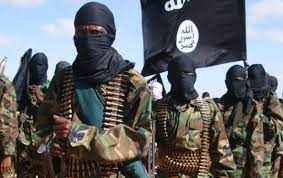
KATSINA State Police have arrested five people, including a native of Niger Republic, suspected of providing terrorists with fuel and food.

This was disclosed in a statement released by the Police Public Relations Officer (PPRO) in the state Gambo Isah on Tuesday.

Isah said the 32-year-old was arrested on his way to the forest while transporting fuel in a gallon with his vehicle.


READ ALSO:

Police retirees protest in Niger, say they have been reduced to beggars

Controversial water resources bill is toxic, anti-people – CSOs

Katsina imposes cattle travel ban


He noted that four other people, who were residents of the state, were also arrested for similar actions and had confessed to providing terrorists with petrol.

“Nemesis caught up with the suspects when they were all arrested along Katsina – Jibia road while on their way into the forest,” Isa said.

The PPRO also confirmed the arrest of a 30-year-old man from Zadam village in Katsina for supplying bread to terrorists in the forests.

“After several warnings by both community leaders and security agencies asking him to stop supplying bread to bandits in the forest, the suspect was subsequently arrested with some quantity of bread concealed inside a sack while trying to enter the forest,” he said.

Katsina State has witnessed a rise in kidnapping, banditry and terrorism in recent times.

Due to rising insecurity, the state government has limited sales of fuel to a maximum of N5000 per motorist. The government also prohibited buying of petrol in gallons within the state in August.

Only two fuel stations were authorised to sell fuel to the residents across several local government areas of the state.

Buhari’s govt not interested in naming, shaming terrorism financiers – Femi Adesina

2

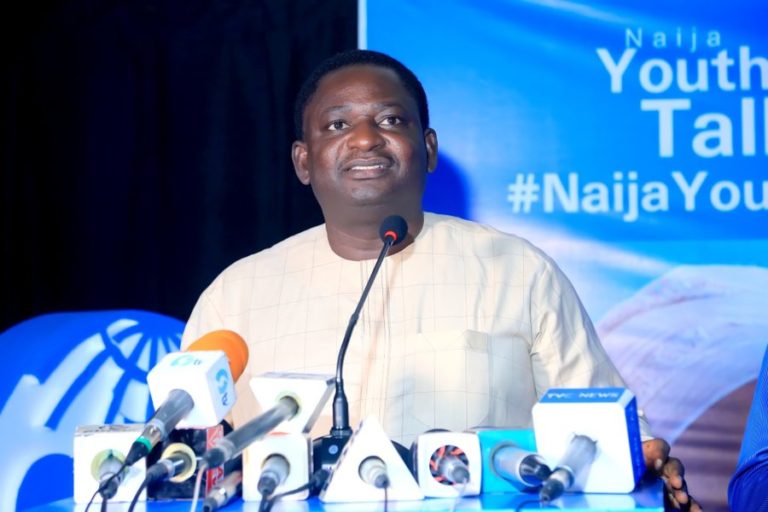
THE President Muhammadu Buhari’s administration is not interested in naming or shaming sponsors and financiers of terrorism, Presidential Spokesperson Femi Adesina has said.

Adesina stated this on Channels Television’s Politics Today on Monday.

Rather than publicly naming and shaming the culprits, Adesina said the Federal Government was only interested in bringing them to justice.


READ ALSO:

Lai Mohammed claims Nigeria is winning terrorism war, but exaggerates success

Buhari’s govt keeps mum as Nigerians in UAE suffer discrimination, visa restrictions

Six Nigerians listed among global financiers of terrorism


“Naming and shaming would not be the motive, rather bringing malefactors to justice would be it,” he said.

“Nigeria is not interested in naming and shaming anybody, rather it wants to bring them to justice.

“The United Arab Emirates has brought some names and the Attorney General of the Federation has responded to that matter, saying that in due course, all these people would have their days in court.

“Rest assured that these people (terror financiers) would be tried before justice and justice would have its way.”

He also said that the Economic and Financial Crimes Commission (EFCC) and other related agencies were investigating the allegations against suspected terror funders in the country.

Adesina’s comments came after the United Arabs Emirates (UAE) named six Nigerians among financiers of terrorism globally.

The six Nigerians include Abdurrahaman Ado Musa, Salihu Yusuf Adamu, Bashir Ali Yusuf, Muhammed Ibrahim Isa, Ibrahim Ali Alhassan and Surajo Abubakar Muhammad.

Controversial water resources bill is toxic, anti-people – CSOs

… Demand fresh bill

CIVIL society organisation (CSOs) and concerned stakeholders in the water sector have described as toxic and anti-people, the proposed National Water Resources Bill which is being re-introduced in the National Assembly (NASS).

Corporate Accountability and Public Participation Africa (CAPPA) and the Amalgamated Union of Public Corporation Civil Service Technical and Recreational Services Employees (AUPCTRE) said it should be totally discarded.

They said if passed, it could lead to privatising the water sector, thus worsening an already poor access to potable water.

Speaking during a national town hall meeting on the bill held in Abuja,  Executive Director of CAPPA Akinbode Oluwafemi said on September 3, 2020, the group wrote to President Muhammadu Buhari explaining concerns over the bill and the need for a new submission that would truly speak to water needs of Nigerians.

Similar concerns, he noted, were shared by the Afenifere Yoruba Socio-Political group, the Ohaneze Ndigbo, the Ijaw Youth Council (IYF), the Southern and Middle Belt Forum and Pan Niger Delta Forum (PANDEF), including the Nobel Laurette Professor Wole Soyinka asking that the bill be jettisoned.

He said CAPPA earlier commissioned experts to do a clause-by-clause analysis of the bill to expose “the booby traps deliberately inserted to ensure it delivers privatization to Nigerians. And the group also exposed how the Bill is antithetical to the attainment of the Human Right to Water.”

However, he queried why sponsors of the bill were trying to reintroduce it despite that it was voted against last year at the National Assembly.

Soyinka, particularly, disclosed that the nation would be doomed if the controversial bill scaled through the parliament.

Access to water is a human right – AUPCTRE

The AUPCTRE National President Benjamin Anthony frowned at the rationale behind the Federal Ministry of Water Resources’ insistence on sponsoring the bill.

Describing water as a human right, he shared a similar position that the bill would drive the nation into water privatisation

“What Nigerians disagreed with should not be forced to their throat. The water resources bill will drive us to privatisation. So, what is life if we cannot speak out that our rights must be given to us.”

The keynote speaker, Prof. Sofiri Joab-Peterside, in his lecture themed, Resource Management Dialogue within a Federal State Versus National Water Bill, disclosed that Nigerians were already responsible for providing some basic needs such as housing and electricity, saying that asking the public to get a license to use water had remained a major concern.

The privatised electricity sector, he emphasised, failed most Nigerians as there was no significant improvement.

He said, contrary to a provision of the proposed bill, federal legislation would not authorise payments for someone interested in drilling boreholes in states, except the Federal Capital Territory (FCT).

He recalled the position of the Benue State Governor Samuel Ortom, who also argued the bill was against the Land Use Act, saying that it was an indirect means of land grabbing to grant the pastoralists free access to river basins.

On July 15, at the commissioning of the Zobe Regional Water Supply Scheme in Dutsin-Ma, Katsina State, Buhari asked the NASS to quickly pass the controversial bill.

On November 3, 2017, the bill was introduced to the last Senate and it passed the second reading on November 22, 2017.

It was introduced to the House of Representatives on May 4, 2017, and scaled through both the second and third reading on July 6 and December 19, respectively. The Senate eventually struck out the bill but efforts are being made to re-present it to the federal lawmakers.

The House of Reps, under the leadership of Femi Gbajabiamila, had directed the bill should be published in the House gazette for reconsideration. He gave the directive after a rowdy session on September 30.

The Minister of Water Resources Sulaiman Adamu also insisted on the water bill. He said it would attract private sector investment and drive efficiency in the 37 water resources agencies which he described as inefficient.


Demand for people-driven water bill

Meanwhile, the groups demanded that the new water bill should be ‘community inspired’ and reflect consultations with Nigerians from the initial stages through the entire process at the National Assembly.

They asked the Federal Ministry of Water Resources to “respect genuine wishes of the people expressed through the media and other public channels and stop its promotion of the toxic National Water Bill.”

“The Federal Government should embrace public sector solutions in addressing the water challenges of Nigeria including the Public-Public-Partnership model and National Water Trust Fund which have been tested and found effective in other climes.

“Privatisation, including the PPP model of water privatisation has been proven to be a false solution worldwide that will only enrich a few and burden our people with endless debts and increase in poverty.

“Need for comprehensive data on both water infrastructure investment and access to aid planning for the now and the future.

“Government at all levels should embrace democratic decision-making in addressing water shortages. Women and vulnerable groups should also be accorded priority in plans to guarantee access.”

They vowed to remain resolute in their demands for collective good of all Nigerians. Water infrastructure, they stressed, should be managed by the government and not privatised.

“The Nigerian government must invest in public infrastructure and embrace democratic, participatory, and transparent management of water investments that fulfill the human right to water through the public sector. On our part, we will continue grassroots and legislative engagements to ensure that the will of the people is respected.”

FG to reconsider South-East candidates who missed 2021 WASSCE

0

south-east
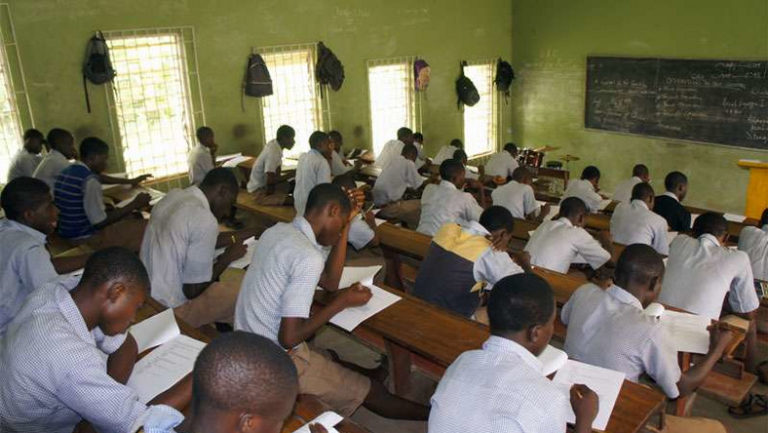
THE Federal Government said it would consider candidates who missed the 2021 West African Senior School Certificate Examinations (WASSCE) in the South-East region of the country.

According to the News Agency of Nigeria (NAN), this was stated by the Ministry of Education’s Permanent Secretary Sonny Echono in Abuja on Monday.


READ ALSO:

Buhari’s govt not interested in naming, shaming terrorism financiers – Femi Adesina

MDAs’ debts to Discos worsen financial stability for power sector

Umahi floating in imaginary presidential interest – PDP


According to Echono, apart from September 13 when some hoodlums invaded a school in Njaba Local Government Area of Imo State to stop students from taking exams, the exercise had been peaceful across the country.

He noted that the ministry would put modalities in place to ensure that the candidates who missed the examination were given other opportunities to write it.

“We are very pleased that all around the country, examinations are going on peacefully as we have a total of over 19,000 exams centres across the country with over 1.57 million registered candidates.

“Besides the disruptions we had on Sept.13 in the South-East where some candidates were stopped from doing the exams, it is a peaceful examination.”


READ ALSO:


He expressed his satisfaction with the conduct of the examination, stating that the ministry would not hesitate to punish as many as were found engaging in malpractices.

“We are complying with all the standards and ethics of examinations. We are pursuing very hard more cases, incidence or possibilities of examinations malpractice because we have a zero-tolerance for examinations malpractice.

“We shall punish any person found culpable and ensure that sanity is restored in our system,’’ he said.


South-East

Sanwo-Olu signs Lagos’ anti-open grazing bill into law

0

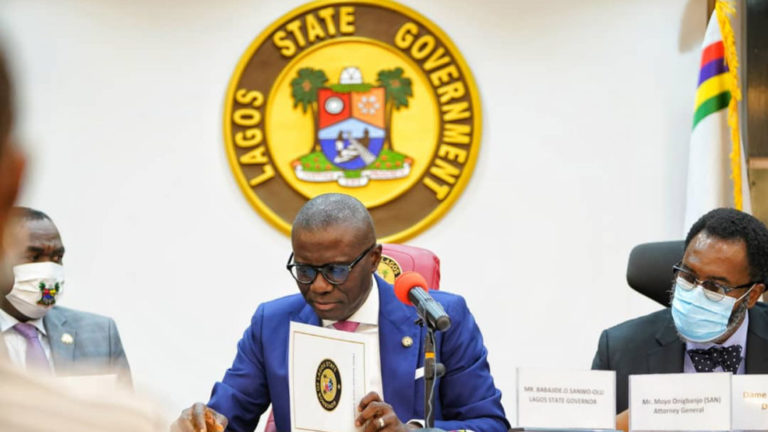
LAGOS State Governor Babajide Sanwo-Olu has signed the state’s anti-open grazing bill into law.

The bill was signed by the governor at the statehouse on Monday.

It was passed after a clause-by-clause consideration by the State House of Assembly on September 9.


READ ALSO:

VAT: Rivers, Lagos economies were built with contributions of other states -Masari

Lagos will implement VAT law despite appeal court order -Lawmaker

Five years after, herders disregard restrictions on open grazing in Abuja


The law recommends a 21-year jail term for gun-wielding herdsmen in the state.

Lagos State has joined 12 other states, including Ondo, Ekiti, Oyo, Osun, Ogun, Rivers, Cross River, Bayelsa, Akwa Ibom, Ebonyi and Abia, to implement an earlier agreement by the southern governors in July to ban open grazing in the region.

Other states that are yet to implement the agreement includes Imo, Anambra, Delta and Edo States.

MDAs’ debts to Discos worsen financial stability for power sector

0
  • Discos debts To Nigerian Bulk Electricity Trading (NBET) now N500 billion
  • Discos transfer burdens to ordinary citizens

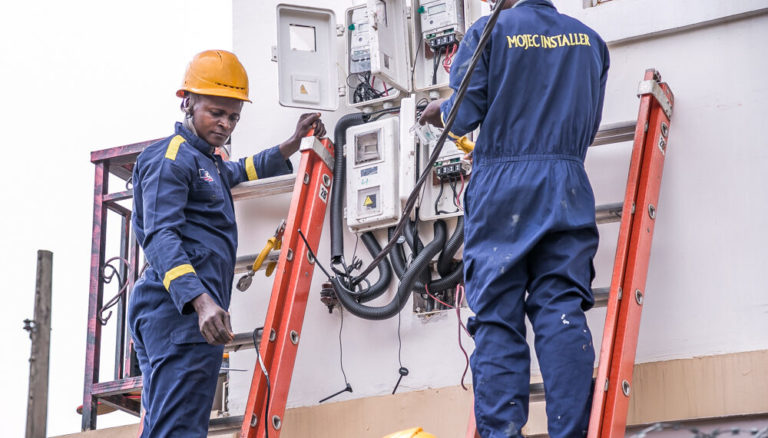
MINISTRIES, Departments and Agencies (MDAs) at Federal, State and Local Government levels; Armed Forces and Security Agencies, owe Electricity Distribution Companies (DISCOs) billions of Naira.

However, unlike ordinary businesses or individual consumers that get disconnected from the power supply for failure to pay bills, they enjoy continuous access to power supply, despite huge electricity debts affecting the operations of DISCOs.

The failure of the DISCOs to recover these debts or cut off the defaulting MDAs and institutions from the power supply has persisted, despite reminders by the Nigerian Electricity Regulatory Commission (NERC) on the rights of the companies to disconnect MDAs that refuse to pay bills.


READ ALSO:

Non-constitution of TCN board, weak policy implementation mar tenure of sacked power minister

One out of 10 people without electricity access lives in Nigeria -World Bank

INVESTIGATION: Southwest communities live in darkness despite FG’s huge investments in electricity


Rather than pay up, the MDAs have employed a strategy of disputing the debts and calling for audits and reconciliation of bills over several years.

Consequently, the DISCOs owe other power sector stakeholders and have transferred the cost to ordinary citizens through a combination of estimated billing and other unfair practices.

How much do various MDAs owe electricity distributors?

As of July 2021, The ICIR found that Federal, State and Local Government MDAs owe DISCOs up to N202 billion. The MDAs debts were classified into verified and unverified debts.

According to the Association of Nigerian Electricity Distributors (ANED), the Federal Government has verified N48 billion as MDAs’ debts, while N61 billion is yet to be confirmed. This does not include the estimated N93 billion owed by Armed Forces and Security Agencies in Nigeria.

For a comparative scale, this debt exceeds the total amount released by the Federal Government to the Ministry of Health in five years (2015-2019), which is almost N158 billion.

Records obtained by The ICIR from ANED show that the Nigerian Army owes an estimated sum of N48.9 billion naira in electricity charges. The Nigerian Navy owes N11 billion, the Nigerian Police Force owes almost N6.6 billion, and the Nigerian Correctional Service (NCoS) owes N1.1 billion between 2015 to 2020.

Other MDAs include the Ministry of Interior with a debt of almost N3 billion, the Ministry of Education owing N2.4 billion, the Ministry of health owing over N855 million, the Ministry of Finance; N443 million and Ministry of Justice; N112 million.

MDAs in Nigeria have an annual budget for electricity usage under their recurrent expenditure, which is passed into law by the National Assembly.

Between 2015-2020, electricity charges for the Nigerian Navy were over N1.5 billion, N3.4 billion for the Army, N780 million for the Nigerian Police, while the NCoS got N614 million.

The National Assembly also approved N214 million for the Ministry of Education, over N547 million for the Ministry of Finance, N272 million for the Ministry of Justice, N140 million for the Ministry of Health and N69 million for the Ministry of Interior.

Approved Electricity Budget and Debts of Some MDAs

A Freedom of Information (FOI) request was sent to the nine MDAs listed above, demanding details of how much they received for electricity charges from 2015 to 2020.

However, at the time of filing this report, none of the MDAs had responded to the FOI requests sent out on July 22.

The FOI Act establishes the right of a person to request and access information in the custody of government institutions.

According to Section (4) of the Act, information requested should be made available to the applicant within seven days of receiving the application.


Debts by MDAs, Army and security agencies overwhelm power sector

The refusal of MDAs, Armed Forces and Security Agencies to pay electricity bills has had damaging effects on the Nigerian power sector.

The debts have worsened liquidity concerns for electricity companies and contributed to the decline in development within the sector.

The power sector has remained in financial crises and frequent need of intervention funds from the government. This has contributed to poor service delivery as Nigerians continue to record decreasing access to electricity.

In April 2021, the World Bank described Nigeria as the country with the least access to electricity in the world, having dropped below The Democratic Republic of Congo.

A country of over 200 million people, Nigeria currently distributes only an average of about 4000MWs of electricity instead of at least 200,000MWs. Only about 57 per cent of Nigerians are connected to the erratic electricity grid.

Executive Director, ANED Sunday Odutan had earlier identified MDA debts as a major reason for inefficiency in power supply and the liquidity challenges faced by DISCOs.

“Ministries, Departments and Agencies are owing to the DISCOs, and this is the same monies that they are expecting us to remit,” he said.

Technical Specialist ANED Akin Akinpelu also noted that the debts owed meant the DISCOs would deliver less energy to Nigerians.

“The continued failure to pay bills by MDAs leave several DISCOs in severe cash flow constraints as deductions are being made towards market remittance without considering MDA debts.

Less energy will be delivered into the market as DISCOs seek to reduce their exposure as much as possible,” he said.

MDA debts also increase the Aggregate, Technical, Commercial and Collection (ATC&C) losses recorded by the DISCOs.

The ATC&C losses that affect the sector’s efficiency, revenue, and expansion capacity are exceedingly high in Nigeria and have resulted in investors’ unwillingness to finance the industry.

General Manager, Corporate Communications of the AEDC Bode Fadipe confirmed to The ICIR that huge debts had sabotaged advancement within the electricity sector.

“The debt of a company is its asset. So when you withhold the asset of that company, it means you deny the company the opportunity of maximising the benefits that are accruable from that asset.

“So when MDAs and other customers owe, a fundamental effect is that they are slowing down the progress rate of the sector generally,” he said.

The inability of the DISCOs to recover these debts has also negatively affected other members of the value chain as the indebtedness of energy distributors to the Nigerian Bulk Electricity Trading (NBET) has reached N500 billion mark.


How small scale, individual consumers bear brunt of MDA debts

Apart from its debilitating effects on the electricity sector, huge MDA debts also negatively impact small-scale energy consumers.

Its role in inflating ATC&C losses result in higher charges as the losses are infused into consumers’ bills during tariff reviews. It is also reflected in the exorbitant amount paid by customers who still receive estimated bills.

Former Chairman, Nigerian Electricity Regulatory Commission Sam Amadi, describing MDAs’ debts as a significant part of the ATC&C losses, told The ICIR that the colossal amount owed often leads to higher tariffs for electricity consumers who pay their bills and poor quality of service.

“If the DISCOs do not have the capacity to finance investment and maintenance because of large MDA debts, it means that the consumers will receive poor quality of power. So the tariff fails because they are not getting money. They are not investing in operations, maintenance and expansion services.

“It means that the burden of payment falls disproportionately on those who are paying because that loss is ploughed back to the tariff. The consumers are paying more,” he said.

Mary Ugwoke, who owns a shop in Jahi, Abuja, told The ICIR that there had been an apparent increase in the amount she pays for electricity in the past couple of years.

Fadipe also said debts hamper expansion in services rendered by DISCOs to consumers.

“Over a period of time, I’m supposed to improve the service I give to you. Non-payment of bills for services rendered delays development and is also hurtful to you as a consumer,” he said.


Why we cannot disconnect MDAs, armed forces & security agencies from electricity supply – ANED 

While local consumers and small businesses are disconnected when they fail to pay, MDAs, Armed Forces and Security Agencies still enjoy power supply from DISCOs.

Speaking with The ICIR, Power Technical Specialist Akin Akinpelu said they could not disconnect them due to the sensitivity of their activities and the risks involved.

“If you remember the explosion that happened in Ikeja Cantonment, they said it was because the ammunition was not kept under the right temperature. It’s just like saying you want to go and disconnect a hospital because they are owing. You don’t do that.

“Many of these installations you cannot just disconnect them. There was a time IBEDC went for such disconnection in Ogun State. They beat up the manager in that area,” he said.

In 2016, there were talks on the disconnection of MDAs from the power supply, but the Executive Director, Research and Advocacy of ANED Sunday Oduntan discredited the speculations, saying the DISCOs would instead resolve the issue with the government.

The Federal Government had indicated an interest in verifying and paying off debts owed by MDAs a few years ago.

In 2017, former Minister of Power, Works and Housing Babatunde Fashola said that N26bn had been approved by the Federal Executive Council (FEC) to offset verified debts. But Akinpelu told The ICIR that the approved amount was not disbursed as promised.

“The verified one announced in 2017 by Fashola, no money was paid. They just announced that the Federal Executive Council had approved the payment of N26bn.

It was not supposed to be paid to the DISCOs but to NBET so that NBET can write off some of the DISCOs’ debts with that amount, but there was no instrument, no papers, just sheer talk,” he said.


MDAs, DISCOs disagree on debts

Chief Maintenance Officer for the Electricity Unit at the Ministry of Education Kayode David said the ministry does not owe their electricity distributors.

David argued that the Education Ministry had paid all its debts since 2017, and DISCOs do not keep records of payments made by their consumers.

“From the available records, all the money the Ministry owed was cleared in 2017. The Ministry was made to clear them before the process of deducting our bills from the source began.

“I remember last year December we had problems with them at AEDC. We went there with all our documents. But when we got to AEDC, they didn’t have any documents. They don’t have records,” he said.

Also, the Director of Press for the Ministry of Health, Segun Adetola, when contacted by The ICIR, said he was unaware of the debts owed by the Ministry and could not speak on it.

“Sorry, I have no idea about it, and I cannot talk about it,” he said.

A spokesperson for the Ministry of Finance, Charles Nwodo, also said he was on pre-retirement leave and could not speak on the matter.

Other MDAs contacted by The ICIR refused to speak on the debts.


Resolving MDAs Armed Forces, and Security Agencies Debt

In a bid to solve the financial crisis in the power sector, especially debts owed by MDAs, Armed Forces and Security Agencies, energy experts have advised DISCOs to provide proof of debts to hasten verification by the government.

Former NERC Chairman Sam Amadi said to ensure payment of the debts and avoid passing financial burdens on other electricity consumers. Discos are expected to run a diligence check to identify particular debtors with proof of why and how the bills cannot be collected.

To prevent the recurrent transfer of debts to consumers, Amadi urged DISCOs to establish which debts qualify as real losses and prove them. He said that regulators should commit DISCOs to collect debts which they ought to recover.

“Collection losses shouldn’t be very high if the DISCOs were doing their work: if they were metering people and improving on their consumer data. It should be going down quickly, and the regulators should be able to say, ‘you can do better in this area; we can’t keep transferring these debts to consumers.’

But if you keep transferring it to consumers, there is no incentive to do better. We’re going to be stuck on this high tariff,” he said.

Also, the National Secretary, National Electricity Consumers Association of Nigeria (NECAN) Uket Ekpo Ubonga told The ICIR that MDAs’ debts were exaggerated.

He argued that it was an attempt to deceive the public and urged DISCOs to provide evidence of the debts as a first step in resolving the issue.

“The first money all the DISCOs were supposed to collect was the bill beginning from 1st November 2013. But they have been collecting debts up to the 80s. Fashola said, go and bring the debts; let’s do debt verification. How many DISCOs have done that? Let them show proof of indebtedness,” he said.

He also called for the employment of more competent officials within the sector to resolve the electricity challenges in the country.

“Those figures are manufactured to hoodwink a regulator that is inept, incompetent, and does not have capacity. They sit down in Abuja here, and whatsoever the DISCOs write and give to them, they take it.

“NERC governance structure in the power sector is non-existent. It is weak. You can’t pick people who are incompetent to man a place like NERC. How do you think the system will operate?” he said.

Executive Director at ANED Oduntan noted that discussions are currently ongoing between the government, investors, and other stakeholders over resolving challenges the power sector faces, including MDAs’ debt.

“There are problems with MDAS’ debts since 2013 when we came on board, but in the past couple of months, there have been some genuine, high-level discussions between the federal government and our investors. Those discussions aim to solve the problems in the sector, including the issue of MDA debts,” he said.

Akinpelu also confirmed a verification process to ascertain debts owed by local and state governments and differentiate them.

“The Federal Government is working on repayment of historical debts and centralised future payment from source,” he said.

Though similar discussions have been held in the past, results are expected from the government’s audit committee to reconcile the challenge of MDAs’ debts in December 2021.

This report was facilitated by the Wole Soyinka Centre for Investigative Journalism (WSCIJ) under its Regulators Monitoring Programme.

Plan to amend constitution over VAT is dead on arrival -Akeredolu

0

ONDO State Governor Rotimi Akeredolu said the attempt to amend the constitution to move value added tax (VAT) to the Exclusive List in favour of the Federal Government was dead on arrival.

He stated this during an interview on Arise News Channel on Sunday.

The governor noted that VAT was within the powers of state governments and the Southern Governors Forum which he chairs, noting that they had taken the position to pursue fiscal federalism.


READ ALSO:

The new VAT combat is a protest

VAT: Rivers, Lagos economies were built with contributions of other states -Masari

Southern governors back states’ collection of VAT


He said that even if the governors of each state agreed to the idea, the amendment would not scale through in various state houses of assemblies.

He said that the country was practising more of a unitary system than the statutory federalism.

“The issue of VAT, looking at the constitution, is under the purview of the states. Southern governors have taken a decision to pursue fiscal federalism. I am a lawyer. This is not a tax that is under the purview of the Federal Government.

“We, the southern governors, clamour for true federalism and true federalism includes fiscal federalism. There is no room for equivocation. Southern governors have taken a decision. They know that the constitution did not give them the power to collect VAT and that is why they are clamouring for the amendment of the constitution.

“That amendment will be dead on arrival. Even if the governors agree to amend the constitution, the houses of assembly in the various southern states will never approve it. The amendment must follow a laid down process.

“We are supposed to be a federation, but we have been operating unitary government, rather than the federal arrangement. That plan to amend the constitution over VAT will fail.”

Controversies have continued to grow across the country after a Port Harcourt Federal High Court ruled last month that the Rivers State Government had the powers to collect VAT within its territory.

In response through its house of assembly, Rivers State has enacted the state VAT law and immediately expressed readiness to enforce the judgment beginning from this month.

Last week, Lagos State followed suit by enacting and signing the state VAT bill into law.

The state joined Rivers as a co-defendant in an appeal filed by the Federal Inland Revenue Service (FIRS) against the Federal High Court judgement.

But an Abuja Court of Appeal has ruled that all parties in the matter should maintain status quo.

Last Tuesday, Rivers State Government asked the Supreme Court to set aside the ruling of the Court of Appeal.

It also asked the apex court to order that the substantive appeal by the FIRS and all other processes be heard and determined by a new panel of the Court of Appeal.

On Tuesday, Ogun State joined the race as the bill to legalise VAT collection passed the second reading in the state house of assembly.

The Southern Governors Forum (SGF) has expressed support that VAT should be collected to engender fiscal federalism.

Many Nigerians have said that the current VAT face-off will set the nation on the path of fiscal federalism.

VAT: Rivers, Lagos economies were built with contributions of other states -Masari

0

KATSINA State Governor Aminu Masari has said that the economies of both Rivers and Lagos states will be nothing without the contributions of other states in the country.

Masari, who stated this during a recent interview, said states agitating for the control of value-added tax (VAT) in their respective domain were joking.

He said all states benefitted from each other in the revenue equation and no one should look down on another because of those configurations.


READ ALSO:

Plan to amend constitution over VAT is dead on arrival -Akeredolu

Delta House of Assembly passes anti-open grazing bill

VAT: Supreme Court is independent, won’t compromise -CJN


“What is Lagos without the rest of Nigeria? The market Lagos is boasting of is dependent on the larger part of the country. Benin Republic has a port, Togo has a port, do they have the population to back up the ports? Without us providing the demand part, what will be Lagos?” Masari said.   

“VAT serves them and us. We provide the bulk of the market because without the rest of the states, what is Lagos or Port Harcourt?

“Any state that thinks it can survive in isolation is joking. We provide the demand that makes Lagos what it is.”

Controversies have continued to grow across the country after a Port Harcourt Federal High Court ruled last month that the Rivers State Government had the powers to collect VAT within its territory.

In response through its house of assembly, Rivers State enacted the state VAT law and immediately expressed readiness to enforce the judgment beginning from this month.

Last week, Lagos State followed suit by enacting and signing the state VAT bill into law.

The state joined Rivers as a co-defendant in an appeal filed by the FIRS against the Federal High Court judgement.

But an Abuja Court of Appeal has ruled that all parties in the matter should maintain status quo.

Last Tuesday, Rivers State Government asked the Supreme Court to set aside the ruling of the Court of Appeal.

It also asked the apex court to order that the substantive appeal by the FIRS and all other processes be heard and determined by a new panel of the Court of Appeal.

On Tuesday, Ogun State joined the race as the bill to legalise VAT collection passed the second reading in the state house of assembly.

The Southern Governors Forum (SGF) has also expressed support that VAT should be collected to engender fiscal federalism.

Many Nigerians have said that the current VAT face-off will set the nation on the path of fiscal federalism.

ISWAP carrying out massive recruitment -Army

0

THE Nigerian Army have said that the Islamic State of West African Province (ISWAP)  is carrying out a massive recruitment exercise in the North-East.

Director of Army Public Relations Onyeama Nwachukwu disclosed this at the headquarters of the Theatre Command, Operation Hadin Kai Maimalari, during a tour in Maiduguri, Borno State, on Sunday.

According to him, the dreaded terrorist organisation was carrying out the recruitment to replenish members who surrendered to the Army recently.

He called on members of the public to be on the lookout within their immediate environment, adding that it was crucial to engage media organisations to block ISWAP’s recruitment.

“I will like to mention that the ISWAP, very recently, has been depleted by the surrendering of their members, as well as a conflict between them,” he said.

“They’ve embarked on what I will call a massive recruitment drive, and I consider it very important to engage the media to block this recruitment.”

Nwachukwu noted that the military would not rest their oars in the fight to end insurgency and insecurity in the country.

In August, the Army claimed that the terrorist organisations were overwhelmed with palpable fear.

It noted that the terrorist organisations had resorted to media propaganda to douse the tension caused by the recent surrender by most of their members.