Home Blog Page 1958

#EndSARS protests: Sanwo-Olu imposes 24-hour curfew in Lagos

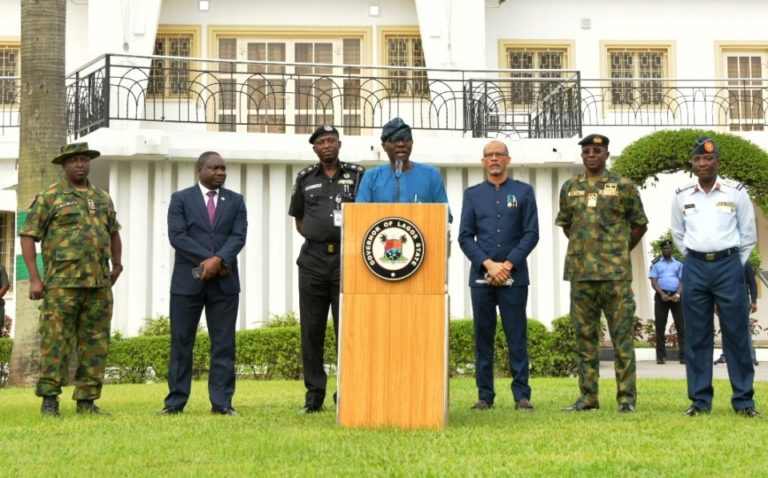
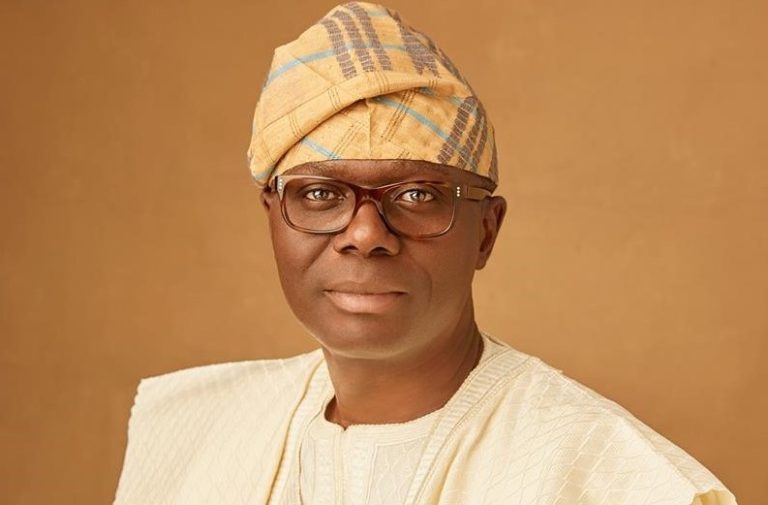
BABAJIDE Sanwo-Olu, the Governor of Lagos State on Tuesday imposed a 24-hour curfew in the state, following reports that suspected ‘thugs’ have hijacked the #EndSARS protests.

Sanwo-Olu stated in a press release he signed, that the curfew would kick off from 4 pm, October 20, adding that nobody except those providing essential services is to move around the state.

“I, therefore, hereby impose a 24-hour curfew on all parts of the State as from 4 pm today, 20th October 2020. Nobody, except essential service providers and first responders, must be found on the streets,” the statement read in part.

The Governor also expressed how the peaceful #ENDSARS protest had degenerated into a security matter threatening the well-being of the citizens.

“I have watched with shock how what began as a peaceful #EndSARS protest has degenerated into a monster that is threatening the well-being of our society. Lives and limbs have been lost as criminals and miscreants are now hiding under the umbrella of these protests to unleash mayhem on our State,” said Sanwo-Olu who Sanwo-Olu had appealed to the protesters to embrace dialogue for the resolution of their agitations.

“As a government that is alive to its responsibility and has shown a commitment to the movement #ENDSARS, we will not watch and allow anarchy in our dear state.”

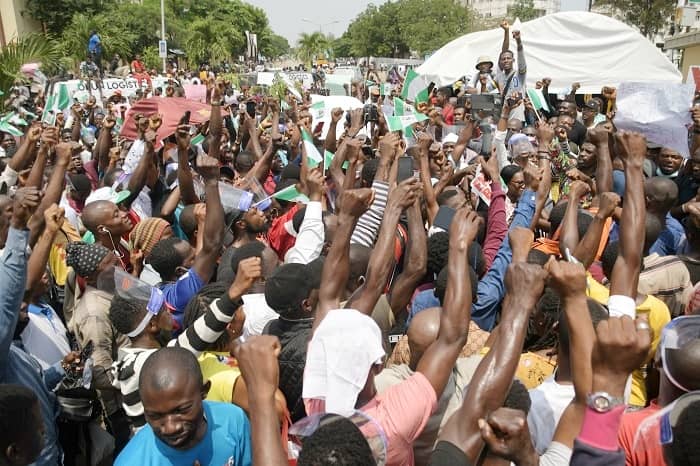
For 12 days, Nigerian youths have taken to the streets everyday to demand police reform. They have also asked the government to ensure that justice is served for all who have been victims of impunity displayed by officers of the disbanded Special Anti-Robbery Squad (SARS).

Their demonstrations, both online and offline, have gained the attention of the international community after Nigerians in the Diaspora also joined the protest.

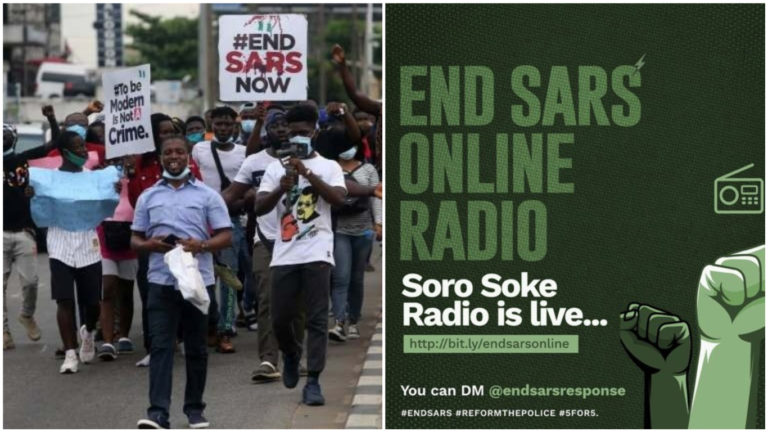
Meanwhile, the protesters have launched two online stations in a bid to bypass traditional media censorship.

The two stations named ‘Soro Soke’ and ‘Radio Isiaq’ were launched Saturday with the aim of educating Nigerians on the objectives of the protests as well as to pass information and updates on protests holding across different locations.

Lagos government suspends school activities over ENDSARS protests

THE Lagos State Government has ordered the suspension of activities in all public and private schools in the state due to the ENDSARS protests.

Folasade Adefisayo, the Lagos state commissioner for education issued the directive on Tuesday, noting that the safety of the pupils and students, parents, and all staff working in schools is paramount.

Adefisayo called on parents to keep an eye on their children in order not to allow them to be used as willing tools in the hands of those who might want to hijack the protests to unleash terror in the society.

She added that schools are to utilize other means of distance teaching and learning i.e radio, television, and online media as they did during and post the recent COVID-19 lockdown.

The commissioner stated that a new date of resumption for all classes would be communicated to the public in due time.

Many Nigerian youths in Lagos, Abuja and other states have for more than ten days taken to the streets to demand an end to police brutality and reforms.

While the protestants began the protest through demand for the disbandment of the now-defunct Special Anti-Robbery Squad (SARS) of the Nigerian Police Force, other demands including compensation of victims of police illegal killing and brutality have set in.

However, some Nigerians who do not share the same sentiment with the protestants have attacked the protestants in Lagos and other parts of the country where there is the presence of ENDSARS protesters while some have used the opportunity to perpetrate other crimes.

On Monday, some hoodlums, disguised as ENDSARS protesters attacked a Maximum Prison yard and freed some inmates in Edo state.

According to reports, the hoodlums also attacked three police stations and carted away guns and ammunition.

Godwin Obaseki, the governor of Edo state in response to the attack has imposed a 24-hour curfew in the state.

“While the government of Edo State respects the rights of its citizens to undertake legitimate protests, it cannot sit idly when hoodlums have taken laws into their hands to cause mayhem on innocent citizens and the state,” a statement by Osarodion Ogie, Secretary to the State Government read.

Ogie, in the statement, said all schools and businesses in the state are to be suspended until calm is restored in the state.

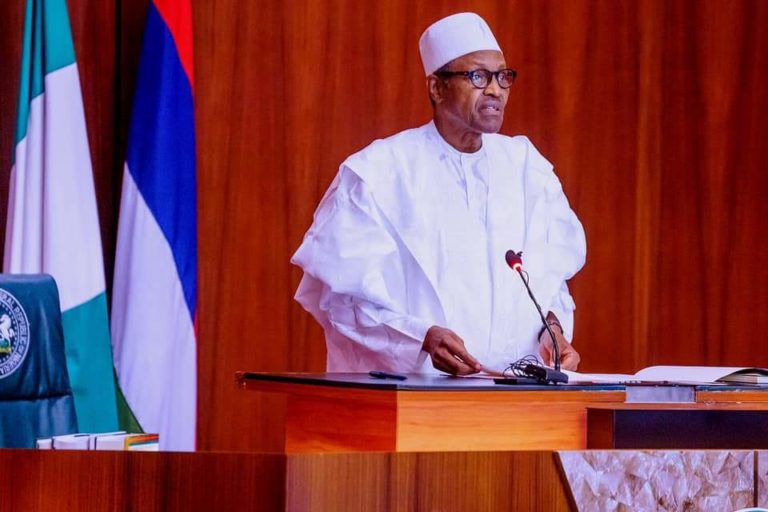
If only Buhari had acted with dispatch

0

By Ayodele AKINKUOTU


“REST In Pieces” was the title of a comprehensive report released in March 2005 by Human Rights Watch on Police Tortures and Deaths in custody in Nigeria.

The investigations, which produced that report were conducted in three cities, Enugu, Lagos and Kano. Some 50 people, victims and witnesses, were interviewed. In its preamble, the summary of the report noted that “Since the end of military rule in 1999, Nigeria, under President Olusegun Obasanjo, has moved to take an increasingly influential position in Africa.”

Aside from his moves to broker peace in regional conflicts, the report noted the important steps he took in combating corruption and reviving the Nation’s economy. Sadly, the report noted that the Nigerian government had failed to show the same determination in “addressing human rights abuses, in particular, widespread and persistent violations perpetrated by the security forces, most notably the police, military and other law enforcement agencies”.


READ ALSO:

For a nation just recovering from the brutish era of 16 years of military rule at the time, that report was a clarion call to Nigeria to put its Fundamental Human Rights House in order. Obasanjo himself saw fire in that era, and only narrowly missed death by the whiskers.

But, as usual with such reports, the 2005 report must have been presented to an appropriate agency of the Federal Government, which would have promised urgent action immediately. In such matters, though, that is the end of the story. For, the report was dumped along with others preceding it, to gather dust.

Last year, a similar fate befell another report prepared by the Nigerian Human Rights Commission, NHRC. Interestingly, the report was based on the findings of the Presidential Panel on the Special Anti-Robbery Squad, SARS, constituted in August 2018. The panel was mandated to investigate allegations of human rights violations and abuse of office against SARS and the Nigeria Police Force.

The panel sat in the six geo-political zones of the federation; received 113 complaints on alleged human rights violations from across the country and 22 memoranda on how to reform and restructure the notorious SARS and the Nigeria Police in general. It completed the assignment within 10 months and submitted its report to President Muhammadu Buhari in June 2019. That is some 16 months ago. Some of its recommendations, according to media reports in the wake of its submission to the President, were the renaming of SARS and the creation of state and local government police. Ha! If only Buhari had acted with dispatch.

Other notable recommendations were the dismissal of 37 police officers and the prosecution of 24 others. The Inspector-General of Police, IGP, was asked to unmask 22 officers accused of the human rights violations of innocent citizens.

Furthermore, various sums of compensation were to be paid by the Police to 45 complainants by the Police; apologies were to be tendered in five other complaints, and the police were asked to obey court orders in five others. If only Buhari had acted with dispatch.

On the day he received the report, the President directed a three-man panel made up of IGP Mohammed Adamu, inspector general of police, Dayo Apata, Federal Solicitor General, and Tony Ojukwu, Executive Secretary of the Nigerian Human Rights Commission, NHRC, to review the recommendations and submit a White Paper within three months. That White Paper must have been presented to the President in September 2019, some 13 months ago. Perhaps, if only Buhari had acted with dispatch, today the youths would not have taken to the streets in several cities to demand the disbanding of the Special Anti-Robbery Squad.

Since its submission, and while it was gathering dust on a shelf in Aso Rock, several Nigerians have been extra-judicially eliminated by the Police and other law enforcement agencies.

For instance, within the first few weeks of the nationwide lockdown due to the COVID-19 pandemic, the Nigerian Human Rights Commission reported that 18 people were extra-judicially killed by the police. Their offence was a failure to comply with lockdown restrictions.

Currently trending on social media is a long list of some of those who have been killed in the last 10 years in the course of their encounters with the police. Here, we will only mention four persons on that list that could have been alive today if Buhari had acted on the report submitted to him last year with dispatch. In the course of a minor misunderstanding with the police, Musab Sammani was killed in Kano last December; In February, 21-year old Tiamiyu Kazeem, a professional footballer died in Shagamu when he fell out of a police van and was overrun by a speeding vehicle. His death sparked a protest which resulted in the loss of five other lives; and in May, 16-year old Tina Ezekwe was hit by a stray bullet from the gun of a drunk policeman who fired at a bus driver who refused to bribe him at a checkpoint; and during the Eid-el Kabir festival in August, Ayomide Taiwo, aged 20, was shot by another drunk SARS official in Osun State for refusing to settle him adequately.

These untimely deaths are aside from the many lives that have had been lost in the last few days to the violent repression of protesters by the police. In fact, in Lagos, the police even shot one of their own. Thus, if the President had acted on the report submitted to him last year, the nation could have avoided the current heartaches from extrajudicial killings. And Buhari would not have needed to sympathise with the family of Jimoh Isiaka, who was the first casualty in the several killings of protesters by the police in Ogbomosho, Oyo State.

While high-handedness by the police is as old as Nigeria, it gained ascendancy under military rule, when soldiers decided to teach “bloody civilians” how to behave. And cumulatively the two military eras lasted for 29 years.

However, not a few thought civil rule in 1999 would herald a breath of fresh air. How wrong they were. The failure of the Obasanjo presidency to champion the upholding of the citizens’ human rights informed the report, “Rest In Pieces” in 2005.

That report called attention to how the police and other law enforcement agencies breached observed in the breach, their rules of engagement. To them, constitutionally guaranteed human rights and international laws on the same are mere academic exercises. If only then President Obasanjo had acted with despatch on the suggested police reforms in that report.

For, three months after that report was submitted to his government, a bizarre extrajudicial killing by the police took place in Abuja, the Federal Capital Territory. That was in June 2005. Five spare parts traders, Ekene Isaac Igbe, Chinedu Meniru, Paulinus Ogbonna, Anthony Nwokike, Ifeanyi Ozor, and the latter’s girlfriend, Augustine Arebu were extrajudicially executed by the police. They were alleged to be armed robbers. The case, popularly called the APO Six, became celebrated in the media. After their murder, they were hurriedly buried in two shallow graves behind a police station.

Unfortunately, as the police themselves know, there is no perfect crime.

A judicial panel of inquiry set up by the President unravelled the mystery surrounding their cold-blooded murder. A senior police officer, Danjuma Ibrahim, then a Deputy Chief Superintendent of Police, had an altercation at a nightclub with the APO Six on the night of June 7. He left the nightclub in fury, only to lay an ambush for the unlucky six at a nearby police checkpoint. Although two locally made pistols were planted by the police in the car Peugeot 406 the victims rode in that day, a ballistic expert discovered the pistols had not been used in the previous six months. It turned out, the pistols were recovered two weeks earlier by the police from an investigation scene in an Abuja hotel. Thus putting a lie to the police claim that the APO Six died in a shootout.

A policeman, Anthony Idam, who was ready to spill the beans as to what transpired was poisoned and died a day before his appearance at the panel. That is not all. The District Police Officer in charge of the APO Police Station, where the gruesome killings were committed done escaped from a cell, where he and the others were being held. For all we know, he is still at large.

The panel recommended the trial of all the policemen involved. Those arraigned were Danjuma Ibrahim, Othman Abdulsalami, Nicholas Zakaria, Ezekiel Acheneje, Emmanuel Baba and Sadiq Salami. The trial lasted all of 12 years, at the end of which two of them, Achejene and Baba, were sentenced to death in 2017.

In spite of the convictions, and the payment of three million Naira compensation to them, the families of the APO Six did not agree that justice had been fully done. Their reason? Danjuma Ibrahim who was the one who accused the victims, and not only engineered the planting of guns in their vehicle but supervised the gruesome murder is now an Assistant Inspector General of Police.

The APO Six, and many others like them, died because Nigerian policemen are not only fond of undue profiling of the youths, but abuse their office to settle personal scores. Their mindset is captured in a recent interview aired on Africa Independent Television, AOT, as reported by the Vanguard newspaper. The interviewee was Vandelan Tersugh, a retired commander of the dreaded but now disbanded SARS.

According to him, “I stop you on the road, and I want to have a look at your phone. I want to have a look at your Facebook. I don’t think I’ve committed any crime… I have seen you with a car, and now I have assessed your age, and I know in Nigeria how difficult it is for someone who is 20, or 30 to start having a car worth seven million naira.”

While many would agree with Tersugh, not a few would point out that against the backdrop of his narrative, the Nigeria Police is conducting business in the 21st century with the mentality of the 19th. And the major reason is the systemic failure that has become endemic in the Nigerian State.

Right from the way and manner of recruitment, the training, deployment, welfare on the job and conditions of service, the system is full of hiccups. A top police officer once revealed that because of poor records keeping of the forensic data of criminals, many former convicts have inadvertently found their way into the Force. So, what can a nation expect from such elevated criminals now armed by the State which they once violated all its norms? And at times, atrocities perpetrated by some policemen and other law enforcement agents make them look like an army of invaders.

Nigerians want to take consolation in the fact that the bad eggs are few. In his Twitter feed recently, President Buhari asked Nigerians “to recognise that the vast majority of the men and women are hardworking and diligent in performing their duties.”

One celebrated officer is Abba Kyari, a Deputy Commissioner of Police, DCP, and commander of the Intelligence Response Team. His Unit has performed wonders in the fight against kidnappers. For that feat, he was honoured by the House of Representatives recently. And in an interview with The Sunday Sun, Kyari struck the heart of the matter mater as to what ails the police.

In his words, “We actually need support from the government because, for more than 30 years, the Nigeria Police Force has not gotten the kind of funding that it needed. We have deficiency in so many areas. And many of the logistics that we needed to work with are not on the ground.”

That is one area the latest presidential panel on police reforms, which begins work shortly, anchoring its work on the White Paper submitted to President Buhari last year, cannot ignore. Many Nigerians eagerly look forward to their review and its speedy implementation by President Buhari.

* Ayodele Akinkuotu, former Editor – in – Chief of TELL, writes from Lagos

Nigerians risk arrest, prosecution for peddling ‘fake news’ as Army embarks on Operation Crocodile Smile

SOCIAL media users in Nigeria are in for troubled times with the introduction of a ‘cyberwarfare’ component in this year’s edition of the Nigerian Army’s annual Operation Crocodile Smile. 

Operation Crocodile Smile, an annual military exercise conducted by the Nigerian Army since 2015, will commence on October 20 and end on December 31.

The Operation, this year, will feature cyberwarfare exercises which, according to the Army, was designed to identify, track and counter negative propaganda in social media and across cyberspace.‎

It will be the first time the Army will include cyber warfare exercise in the Operation, which usually involves patrols, deployment of checkpoints, surveillance and general security-beef-up in parts of the country.

Already, there are concerns that Operation Crocodile Smile is targeted at the ‎ongoing #EndSARS protests across the country but the Army has said there are no link‎s between the protests aimed at putting a stop to police brutality and the timing of the operation.

But, in response to enquiries by the ICIR, the military authorities have shed further light on the ‘cyberwarfare’ exercise which will take-off across the country on Tuesday, as part of Operation Crocodile Smile.

‎Acting Director of Army Public Relations, Col. Sagir Musa, ‎told our correspondent on Monday, October 19, that the cyberwarfare exercise is mostly aimed at combating ‘fake news’ and other socio-economic crimes associated with the cyberspace. ‎

“It is aimed at enhancing the peace and security of Nigeria and its citizens,” Musa said.

Asked how the army intends to go about the cyberwarfare, Musa explained that the Cyberwarfare Command of the Nigerian Armed Forces will detect and neutralise fake news and also tackle other criminal activities that are perpetrated through the Internet.

According to him, the Army would be more concerned with fake news that undermines Nigeria’s security.

“Fake news that have the capacity to breach the security of Nigeria will be acted upon by the Cyberwarfare Command of the Nigerian Army,” he said.

Individuals, or groups, who are found to be peddling fake news through any of the social media platforms would be arrested and prosecuted.

Going by Musa’s explanations, the Army will not only detect and neutralise fake news, it will also go after those behind the fake news reports.

The Army spokesman said, “The people behind the fake news will be handed over to the necessary agency for prosecution.”

The introduction of the cyberwarfare exercise in this year’s Operation Crocodile Smile is coming on the heels of earlier attempts made by the Nigerian government to introduce legislation against fake news in the country.

‎The infamous Social Media Bill, officially known as the Protection from Internet Falsehood and Manipulation and for other related matters bill 2019,‎ which proposed ‎steep fines or jail time for spreading what the government deems as fake news‎, was widely opposed by Nigerians who feared that it could lead to censorship and a crackdown on dissent.‎

‎The proposed legislation sought to give government regulatory control over conversations on social media platforms‎, and individuals whose posts are thought to threaten national security or diminish public confidence in the government could be arrested. Authorities could also cut the Internet access of those that violate the regulation.‎

Although supporters of the Social Media Bill said it was meant to protect Nigerians from misinformation that threaten national security, those who opposed the proposed legislation argued that it would muzzle free speech.‎

Penalties for breaking the social media law, according to the draft bill, include a fine of up to ₦300,000 or three years imprisonment for individuals and ₦10 million for corporate organisations.‎

‎The Nigerian government’s fear of ‘fake news’ was further highlighted in a recent lecture where Information Minister, Lai Mohammed, canvassed a national policy on social media usage‎, and also made a case for a campaign against fake news as an aspect of the national security programme.

‎Mohammed said the topic of the lecture – ‘Fake News, Hate Speech and National Security in Nigeria’ – which he delivered at the National Defence College‎, in Abuja, on October 15, was informed by “what we are facing in Nigeria at the moment”.

He added, “‎Social Media platforms are now the preferred medium for reaching millions of people with whatever ideas, including subversive or anarchic ideas, hence it is the platform of choice for the purveyors of fake news and hate speech. The advent of the Internet as well as the introduction of smart phones have democratized access to and dissemination of information in a very profound way. Anybody with a smartphone and data can access the Internet and disseminate whatever he or she feels like from his or her comfort zones.”

Quoting a report by a Social Media marketing platform, Hootsuite, which was published by Pulseng in August 2019, Mohammed noted that Nigerians spend an average period of about three hours 17 minutes on the Social Media each day, which is higher than the global average of three hours 14 minutes.

The report also noted that WhatsApp is the most active social media platform in Nigeria, with 85 percent of users, followed by Facebook with 78 percent. Instagram is third with 57 percent while Youtube is fourth with 53 percent.

‎”The fact that the Internet is unrestrained and the absence of a policy or Act of Parliament to regulate its use, at least for communication purposes, makes the platforms susceptible to abuse,” the minister said while observing that “willful circulation of fake news can put the lives of the citizens in danger and put the very existence of a nation in jeopardy‎”.

Interestingly, Mohammed had, in the lecture also noted that‎ “Originally conceived as protection against military attack, national security is now widely understood to include non-military dimensions, including the security from terrorism, minimization of crime, economic security, energy security, environmental security, food security, cyber-security, etc.‎”

The submissions made by Mohammed in the October 15 lecture at the National Defence College, and the announcement by the Army that the Operation Crocodile Smile would feature a cyberwarfare exercise, suggests that the Federal Government is becoming increasingly concerned over what is going on on the social media in the country.

The statement released by the Army to announce the commencement of Operation Crocodile Smile had said, “The Exercise is deliberately intended to be all-encompassing to include cyberwarfare exercises designed to identify, track and counter negative propaganda in the social media and across the cyberspace.”

‎While the military authorities have said that the Operation is not targeted at the #EndSARS campaign, mass movements against government policies are usually mobilised through social media, and most times involve the broadcast of unverified, viral messages which the government might deem to be fake news.

The military operation is also likely to involve a clampdown on all manner of cybercrimes, including fraud, going‎ by Musa’s explanation that the Army’s Cyberwarfare Command would also act on socio-economic crimes associated with the cyberspace.

Internet fraud, popularly known as ‘Yahoo Yahoo’, is one of the most ‎common socio-economic criminal activities associated with the cyberspace in Nigeria. Before it was disbanded, the Special Anti-Robbery Squad (SARS) of the Nigeria Police Force was known to go after suspected Internet fraudsters, or ‘Yahoo boys’.

At the moment, it is not yet clear how the Army intends to go about the operation against ‎socio-economic criminal activities associated with the cyberspace‎, including Internet fraud.

But Musa stressed that the Cyberwarfare Command of the Nigerian Army has the capacity to undertake the exercise.

The ‎cyberwarfare exercise‎ in this year’s Operation Crocodile Smile ‎is the first of its kind to be conducted in the history of African armed forces, according to the Nigerian Army.

The operation will also include a positive identification component aimed at identifying Boko Haram terrorists fleeing from the North-East and other parts of the country as a result of the ongoing operations in the various theatres of operations especially in the North-East, North Central and North Western parts of Nigeria.


#ENDSARS: Sanwo-Olu appeals for dialogue, inaugurates Judicial Panel of Enquiry

0

Babajide Sanwo-Olu, the governor of Lagos State, has appealed to the youths demonstrating against police brutality in the State to embrace dialogue for the resolution of their agitations.

Sanwo-Olu said on Monday, that the state government had shown sincerity and willingness to address all concerns raised by the protesters, given the actions taken so far, including the constitution of the Judicial Panel of Inquiry and setting up of compensation funds for the victims.

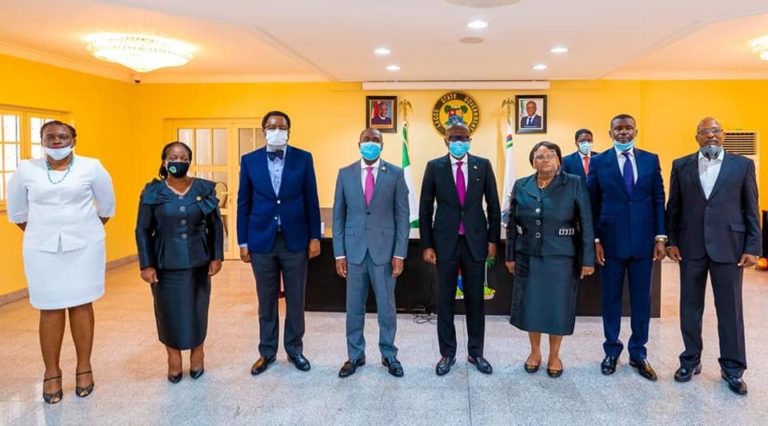
Sanwo-Olu made the appeal during the swearing-in of members of the Judicial Panel of Inquiry and Restitution at the State House in Marina.

The Governor’s appeal came on the heels of the violent dimension assumed by the #ENDSARS protests in some parts of the State.

Reiterating his solidarity with the protesters’ demands, Sanwo-Olu said the pain expressed and concerns raised were genuine and legitimate. This, he said, prompted the Federal and States’ governments to immediately acquiesce to some of the demands, while setting process in motion to implement other changes demanded.

The Governor urged the protesters to be part of the process of implementing the reforms they clamoured for in the police, stressing that continuous blocking of roads, Government and private offices would slow down the procedure of implementing their demands.

“We have shown unprecedented commitment to the complete overhaul of the Nigerian Police. The inauguration of this Judicial Panel of Inquiry is only the first step in a long line of reformative actions that will lead to a thorough revamp and reorientation of the Nigeria Police. I believe that some of the actions we have taken should, to a large extent, show our sincerity and willingness to address all your concerns,” he said.

“Let me reiterate that I am on the side of the young people out there. I understand your pain and I know your concerns are genuine and legitimate. While we are able to immediately acquiesce to some of your demands, some others will require time. We ask you to bear with us as we dutifully work on your demands.

“I will, therefore, like to renew my appeal to you to suspend the protests and create an atmosphere for the resolution of all pending demands. I encourage everyone brutalised by the disbanded SARS, including the families of those who died, to present their case before this tribunal.”

Sanwo-Olu said he believed the task of reforming the police was achievable, but required the input and cooperation of the youth to accomplish the task.

He commended the cohesiveness of the “resilient” young people who stood their ground in the last two weeks. Their tenacity, Sanwo-Olu said, has made the much-desired change in the policing system become inevitable.

Speaking about the judicial panel, the Governor said he was convinced that its outcome and recommendations would open a new chapter in police-citizen relationship.

He promised that the State Government would ensure that all wounds are healed, justice served to victims of abuse, and guilty police officers prosecuted.

Members of the panel are Doris Okuwobi, chairman; Ebun Adegboruwa, (representing the Civil Society); Taiwo Lakanu (a retired Deputy Inspector General of Police); Patience Udoh (representing the Civil Society); Olutoyin Odusanya (Director, Lagos Citizens Mediation Center); and the representative of the Human Rights Commission.

 #ENDSARS: Delta inaugurates Judicial Panel of Enquiry

0

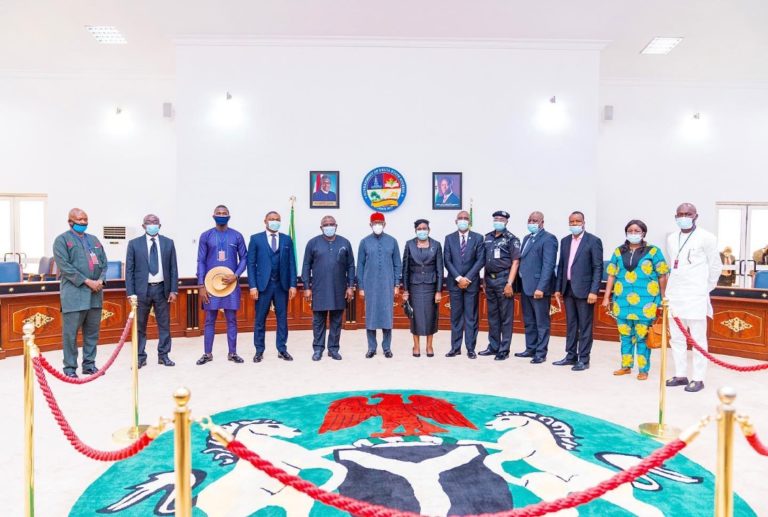
THE Delta State Government has inaugurated an eight-member Judicial Panel of Enquiry to investigate allegations of police brutality and extra-judicial killings in the State.

Ifeanyi Okowa, the state governor, who inaugurated the panel in Asaba, the state capital, on Monday said the inauguration of the panel is a step by his administration to bring restitution and healing to the victims of police brutality in the state.

“With my inauguration of the Judicial Panel of Enquiry on Police Brutality and Extra-Judicial Killings today in Asaba, we have now started the process of bringing restitution and healing for the families and individuals that have suffered under the now-disbanded #SARS,” he said

“Over the past week, the world has watched as Nigeria’s youth have laid their simple demand at the doors of leaders across the nation. With two words: ‘#EndSARS’, our youth have drawn attention to the brutality meted out on them by those who are sworn to serve and protect.

“This is why, today, in-line with my administration’s commitment to always listen and act, we are establishing this judicial panel to investigate all complaints of police brutality and extrajudicial killings across Delta State.”

The panel which has three months to complete its assignment was tasked by the governor to work very hard to ascertain the validity of claims brought before it and also make necessary recommendations and remedies to the state government.

“The terms of reference of this committee are straightforward, but the work ahead will be quite demanding. However, I still charged the committee to work assiduously to ascertain the validity of all complaints and make recommendations on the appropriate compensation and remedies.

“Make no mistake, this is a national emergency that requires us to meet an urgent demand. Therefore, this panel has been given an initial period of 3-months to complete its work and submit a report. I pray that God guides all the members of the panel as they embark on this crucial assignment.”

According to a statement by Chiedu Ebie, Secretary to State Government, the panel has Justice Celestina Ogisi (retd) as Chairman and Omamuzo Erebe as Secretary.

Other members of the panel are AIG David Igbodo (retd), Mr Harrison Gwamnishu representing the youths, Comrade Godwin Oyovweadjebore representing students, Mr Freedom Atsepoyi and Ambassador Eris Jewo–Ibi representing the civil society groups and Mr Nicholas Osadolor representing the Human Rights Commission.

#EndSARS: Police fire teargas, bullets at protesters in Abuja

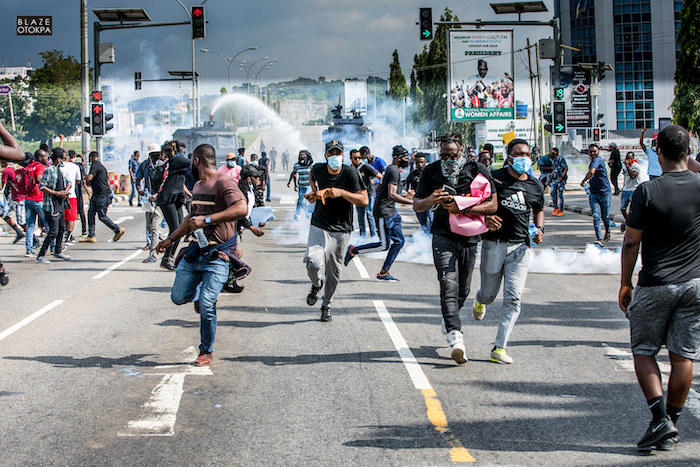
A NUMBER of #EndSARS protesters have been reported injured from live bullets fired by officers of the Nigerian Police Force at AYA junction in Abuja on Monday.

The protesters had been marching to different parts of the city before the police intercepted them along Mararaba-Nyanya road at AYA roundabouts, Cable reports.

Protesters were also fired teargas by police officers at Power House in Asokoro, reports reveal.

The #EndSARS protests have been ongoing for 11 days, with hundreds of youths taking to the streets to demand an end to police brutality in the country.

As protesters remain resolute in their demands and remain on the streets, there have been several reports of attacks initiated by suspected sponsored thugs.

On Monday, reports from Benin City, Edo State capital indicated that some suspected hoodlums hijacked the ongoing #ENDSARS protest in the city, attacking the Maximum Prison yard along Sapele road, and freed some inmates.

Crusoe Osagie, Special Adviser on Media to Godwin Obaseki, Governor of Edo State, confirmed to newsmen that the hoodlums engaged in guns battle with security operatives at the prison.

“The hoodlums are currently exchanging fire with the security personnel at the Maximum security prison in Oko, Benin City,” Osagie said.

Since the protests began, there has also been a record of deaths of at least a dozen protesters.

The Christian Association of Nigeria (CAN) has condemned attempts to stifle the peaceful protests by #ENDSARS protesters in the country.

The association made this known in a statement signed by Samson Ayokunle, the CAN President on Monday.

“We condemn in strong terms every attempt being made to stop or disrupt the peaceful protest which is lawfully allowed and guaranteed by the 1999 Constitution (as amended),” said CAN.

Protesters have remained undeterred, with the protest gaining the attention of the international community.

Jack Dorsey, founder, and CEO of Twitter tweeted on Wednesday in support of the #EndSARS movement and also shared a link soliciting financial donations for the protest.

Our lawyer did not resign to join ENDSARS protest, says EFCC

THE Economic and Financial Crimes Commission (EFCC) says it has distanced itself from a report trending in the social media regarding one Dominic Akpan who claimed he resigned from the agency to join the #ENDSARS protest.

This is contained in a statement signed by Wilson Uwujaren, the Commission’s Head of Media & Publicity on Monday.

According to EFCC, Akpan claimed to have resigned from the employ of the Commission to join the #EndSARS Movement due to undisclosed “ugly experiences” he had within the Commission for his action.

The Commission claimed that although Akpan was with the Commission for a year, he was a corps member.

“The EFCC wishes to inform the public that Akpan is not a staff of the Commission. He merely served as a National Youth Service Corps (NYSC) member in the Port Harcourt zonal office of the Commission from November 2019 to October 16, 2020, when he completed his national service,” the Commission said.

EFCC added that Akpan, therefore, could not have resigned from the EFCC to join the #End SARS Movement because he was not a staff of the agency.

The Commission further noted that ‘the stunt by Akpan is nothing but crass opportunism, adding that it is an attempt to achieve selfish objectives through the popular protest.

The anti-graft agency further urged members of the public to disregard another report with claims that the Commission’s website had been hacked.

“Though there were attempts, over the weekend, to compromise the website by some cyber criminals the attacks were successfully repelled, the EFCC website is up and running,” EFCC stated.

Protesters launch Soro Soke, Radio Ishaq to amplify #EndSARS protests

FOLLOWING 11 days of consecutive street protests against police brutality in Nigeria, protesters have now launched two online stations in a bid to bypass traditional media censorship.

The two stations named ‘Soro Soke’ and ‘Radio Isiaq’ were launched Saturday with the aim of educating Nigerians on the objectives of the protests as well as to pass information and updates on protests holding across different locations.

Soro Soke which means ‘Speak up’ in Yoruba language has been adopted as a symbol to indicate freedom of expression which has become the backbone of the ongoing protests.

Soro Soke radio will also serve as a platform to report missing persons during the course of the protests.

Describing the essence of Radio Isiaq, a Twitter user identified as Timi said it is “is a non-profit public radio created to amplify the voices of change in Nigeria through direct civic engagement, education, advocacy, and all creative and peaceful expressions of our discontent.”

Obiageli Ezekwesili, a former  Minister of Education commended the initiative on Twitter, describing the move by Nigerian youths as incredible.

“I heard our innovative young ones of the #EndSARS protests have just launched an online radio station? Wow! These ones na real Fire Generation! #GenerationIncredibles. Now I can relate to the kind of Joy that made Baby John leap in the womb of Elizabeth in Luke1v41,” her post read.

Setting up radio stations, is another way in which the protesters have communicated their resolve to see the end of police brutality in the country.

The protesters continued with their campaign against police brutality raising over 62 million in monetary donations to sustain the protests across different states in Nigeria.

The youths also came together to donate towards purchasing a prosthetic leg for a fellow protester identified as Jane Obiene, who joined many to march in Abuja.

Meanwhile, over 162,000 Nigerians have signed a petition demanding the immediate arrest of Mohammed Adamu, Nigeria’s Inspector General of Police (IGP), by the International Criminal Court (ICC).

The petition raised by one Amadi Chima accused the IGP of committing crimes against humanity, following the killing of #EndSars protesters by police officers in at least three states in Nigeria.

CAN condemns attempts to stop peaceful #ENDSARS protests

THE Christian Association of Nigeria (CAN) has condemned attempts to stifle the peaceful protests by #ENDSARS protesters in the country.

The association made this known in a statement signed by Samson Ayokunle, the CAN President on Monday.

“We condemn in strong terms every attempt being made to stop or disrupt the peaceful protest which is lawfully allowed and guaranteed by the 1999 Constitution (as amended),” said CAN.

CAN noted that the association is monitoring the protest while they called on the Nigerian military and police to desist from intervening in the protest.

“We are monitoring the #EndSARS protests nationwide and we are praying that their unprecedented efforts to have a decent society will not be in vain.

“We call on the Military and Police to resist the temptation to intervene in a civil protest in order to avoid the harvest of deaths. We have had enough of mass burials without fighting a war in the recent past,” the statement read.

Ayokunle commended the protesting youth for advocating the reform of the police either through #EndSARS protests or Prayer Walks nationwide for embracing a peaceful approach.

“We are not unaware of your sacrifices; time, money and other risks in your quest for a reformed Police and an egalitarian society.

“CAN acknowledges and appreciates your patriotic agitation in a peaceful manner despite the pockets of attack against you either by the Police or some hired thugs to disrupt the exercise,” Ayokunle said.

On solutions to the demands of the protesters, Ayokunle issued recommendations to the federal and state governments.

CAN said the governments should immediately inaugurate a Judicial or Quasi-Judicial panel with representatives of the civil society at all levels with a view to bringing all the criminals in uniform to book.

The religious association stated that the Nigerian President, Muhammadu Buhari should immediately send an Appropriation bill to the National Assembly for the compensation of all victims of police brutality and other extrajudicial killings in the last ten years.

CAN further recommend that a background check should be done on fresh recruitment into the police, each of the 36 state governors including the FCT minister should set up a committee to dialogue with the representatives of the protesters to douse the tension in the country, the Inspector General of Police should suspend the implementation of the establishment of SWAT until sanity is restored.