Home Blog Page 1157

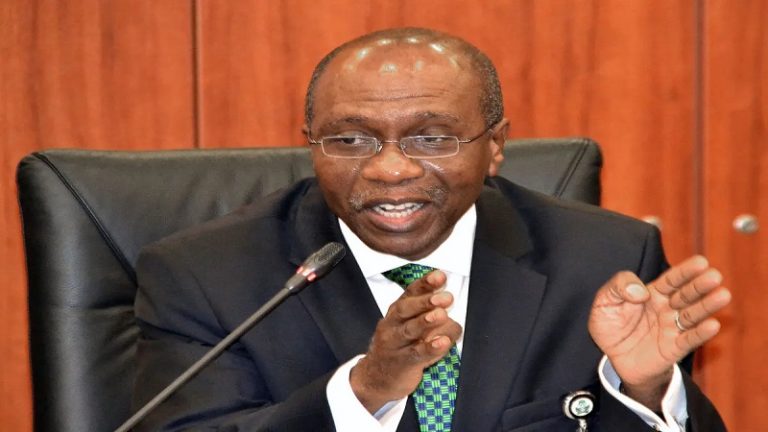
Reps summon Emefiele, kick against cash withdrawal limit

THE House of Representatives has kicked against the new policy introduced by the Central Bank of Nigeria (CBN) which limits cash withdrawals by individuals and corporate entities.

The lawmakers also summoned CBN governor Godwin Emefiele over the new policy which is scheduled to take effect on January 9, 2023.


READ ALSO:

Naira redesign: CBN imposes limit to cash withdrawals in banks

CBN damning verdict forces panic withdrawals at First Bank

Naira redesign: CBN recovers N1trn old notes

Reps summon Emefiele, kick against cash withdrawal limit


The CBN had on December 7 issued a memo through the Office of the Director of Banking Supervision, Haruna Mustafa, directing all banks and other financial institutions to ensure that weekly cash withdrawals by individuals and corporate entities do not exceed N100,000 and N500,000, respectively.

The CBN governor is to appear before the lawmakers on Thursday, December 15.

The summons followed a motion of urgent public importance moved by Aliyu Magaji, representing Dange Shuni Constituency, Sokoto, during plenary on Thursday, December 8.

Several lawmakers expressed concerns that the policy would have adverse consequences on businesses and Nigerians who are excluded in the financial system.

The ICIR reported that the Nigeria Employers Consultative Association (NECA) also kicked against the policy, saying the N100,000 cash withdrawal limit announced by the CBN will cripple businesses.

Reacting to the policy, Director-General of NECA, Wale-Smatt Oyerinde, in a statement released on Wednesday, December 7, said the CBN did not consider the adverse effects the withdrawal limit will have on the economic activities of Nigerians.

The statement noted that the 5 and 10 per cent processing fees for withdrawals above the new thresholds were “traps” to make money at the expense “of individuals and businesses who desire to withdraw their hard-earned money”.

“As usual with the Central Bank of Nigeria (CBN), the Bank announced a new naira withdrawal policy without extensive consultation with organised businesses and those that will be directly impacted by the policy. This new policy is diversionary and a mere distraction from the critical issues that are affecting the Nation.

“With the inflation rate hovering around 20 per cent and over 100 million Nigerians in multidimensional poverty, the best that Government should do is not further cripple the economic activities of Nigerians. It is no gainsaying that the livelihood of many individuals and enterprise would be impacted,” the statement added.


Contempt of court in Nigeria – what the cases of three convicted security officials tell us

0

By Abiodun Odusote, University of Lagos

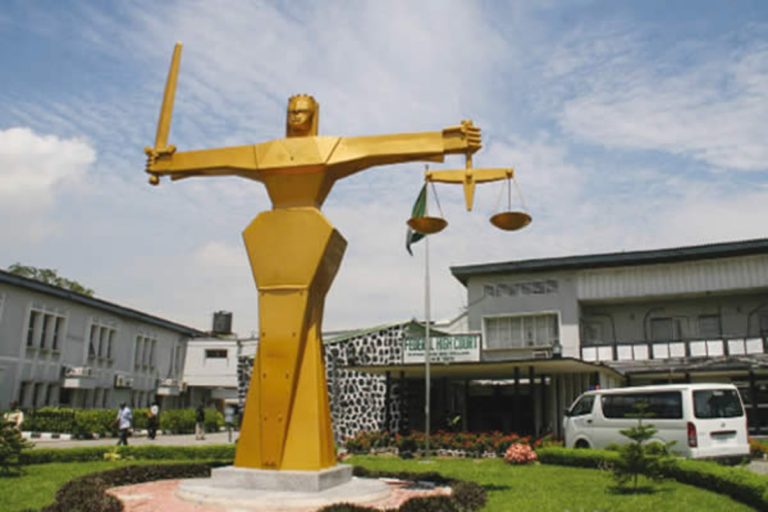
THREE security chiefs in Nigeria were convicted of contempt of court in November 2022 after failing to comply with various court orders.

This is the first time that officials at this level have been held to account in this way. The Electronic and Financial Crimes Commission chairman, the inspector general of police and the chief of army staff all ignored orders to rectify errors they made in their duties. The Conversation Africa asked constitutional law expert Abiodun Odusote to weigh in on the implications of flouting court orders.

What is contempt of court and under what circumstances can a public officer be convicted for contempt in Nigeria?

Contempt of court is an affront to the authority and dignity of the court. One form it can take is disrespectful behaviour in the presence of the court – like rude gestures, shouting or interrupting the judge.

Another form it can take is breach of a written court order, including wilful disobedience or disregard of a court order. The person violating the court order is convicted of contempt and sentenced to terms of imprisonment or payment of a fine.

Like any other Nigerian, public officers have no immunity against contempt proceedings. The only exceptions are those who enjoy constitutional immunity while in office, including the president, the vice president, and governors and their deputies.

What is your view on the convictions of the three security chiefs in November?

The convictions are good for the rule of law and democracy. Democracy and the rule of law are inseparable concepts that make it possible for modern societies to function effectively and thus guarantee peace, harmony and egalitarianism. The rule of law allows democracy to thrive because law is the collective will of society, making possible equal rights, social order and justice.

I’m happy the courts have had enough of top government functionaries who fail to comply with court orders.

The chairman of the Economic and Financial Crimes Commission was originally ordered by the court to return to an applicant his Range Rover and the sum of N40 million (US$89,680). The commission had accused the applicant of corrupt practices. The chairman failed to obey the court order and was therefore convicted for contempt.

The inspector general was sentenced to three months in jail for disobeying a court order to reinstate and compensate a police officer who had been unlawfully retired.

The chief of army staff was also jailed for contempt for failure to obey a court order issued on 12 October 2022 in a suit between a citizen and the governor of Niger state, north-central Nigeria.

The police claim not to have been aware of the court order. This seems unlikely, because of the legal process that has to be carried out.

Before contempt proceedings can begin, the registrar of court issues two forms. The first form notifies the person of the court’s order. The notice says that flouting a court order is criminal and that it may attract sanctions from the court. The second form notifies the person that a contempt proceeding is about to be initiated against him. It gives the person the opportunity to comply with the order of the court to avoid sanction.

Under what circumstances can people not comply with court orders in Nigeria?

A court order must be obeyed until it is set aside on appeal. The court held in Nigerian Electricity Regulatory Commission v Barrister Toluwani Yemi Adebiyi (2017) that a person who has been convicted for contempt may ask for permission to appeal against the conviction and give reasons for the appeal.

He may argue that the judge did not follow proper procedure in convicting him, or that the court does not have the power to convict him, or that the court exceeded its powers in convicting him.

What does ignoring orders indicate for the rule of law in Nigeria?

Ignoring any order of the court undermines democracy and the rule of law. No one should be above the law. Orders of the court should be obeyed immediately until set aside. Disobedience of a court order is an affront to the rule of law and democracy. Section 72 of the Sheriffs and Civil Process Act provides that the court can detain a person in prison until he or she has obeyed whatever parts of the order are supposed to be performed immediately.

So the consequences of ignoring a court order are grievous. It is even worse to ignore a contempt order. A contempt order is an order of a court after a party has been found guilty of ignoring court orders. It actually baffles me how this can happen, because the person who is found to be in contempt of court should ordinarily attend the court session when the order of the court is to be pronounced, and should be taken to the correctional facility on conviction and sentencing. Any appeal should be filed after the conviction order has been complied with.The Conversation

Abiodun Odusote, Senior Lecturer, University of Lagos

This article is republished from The Conversation under a Creative Commons license. Read the original article.

2023: LP promises N80,000-N100,000 minimum wage for manual workers

THE Labour Party (LP) has said it will implement a minimum wage of N80,000-N100,000 for manual workers if it wins the presidential election in 2023.

The Deputy National Chairman of the party Ayo Olorunfemi disclosed this in an on Channels TV on Thursday, December 8.

Olorunfemi said the party is planning to implement a new minimum wage of between N80,000 to N100,000 for manual workers across the country.


READ ALSO:
Labour Party accuses APC of sponsoring violence against its members in Lagos

2023: Labour Party accuses APC of political violence

Osun Labour Party governorship candidate defects to PDP

Gunmen attack Osun Labour Party governorship candidate


“It depends on the nature of the job that would be given out. For instance, when you take a cursory look at the manual labourer out there, he does not take less than N2,500-N3,000 per day which is still not okay as far as the reward system is concerned. If you divide N3,000 by six hours, you will be talking about N500 per hour,” he said.

“So, when you benchmark that against what we have now, certainly, you would be talking of something within the range of N500-N1,000 per hour depending on the nature of work, and at the end of the day, someone can effectively say that he can make up to N4,000 in a day. And when you multiply N4,000 in a day by 20 or 25, we are talking about N80,000 or N100,000 in a month for somebody who works very hard.”

The Labour Party chieftain further stressed that the party would prioritize the security of life and properties to foster sustainable development in Nigeria.

“The first thing we are going to do is to make sure Nigeria is secure, without security there is no prosperity.”

He blamed the All Progressives Congress (APC) the Peoples Democratic Party (PDP) for the high level of insecurity in the country and urged Nigerians to reject the two parties in the 2023 general elections.

Nigerian doctors in the Diaspora move to address brain drain

0

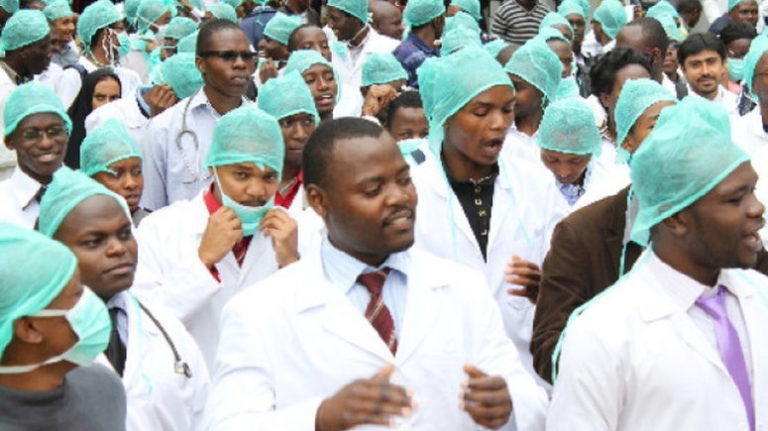
NIGERIAN doctors in the Diaspora, under the aegis of Doctors for Change (DFC), have come together to proffer solutions to the brain drain in the country’s health sector.

Speaking at a convention held in Lagos, the convener of the group, Dr. Babaseyi Oyesola, said the DFC is a brainchild of his desire to bring solutions to the numerous challenges affecting the health sector in Nigeria.

According to him, the group’s objective is to create a pathway for Nigerian doctors in the Diaspora to come home and contribute their quota in improving the poor state of the sector.


Read Also:

The ICIR reported that hundreds of health workers, including doctors and nurses, have left Nigeria for greener pastures and that the country lost nearly 9,000 doctors to the United Kingdom (UK) and other countries in three years.

Also speaking at the event, President of the Healthcare Federation of Nigeria, Dr. Pamela Ajayi, highlighted the challenges facing the industry while appealing to the government to create an enabling environment through favorable policies to encourage doctors in the Diaspora to come home.

Also, the Medical Director of The Bridge Clinic, Dr. Toyin Ajayi, commended the convener for putting together such a platform for doctors of Nigerian origin training and practicing across the globe to come together and collaborate on how to move the country’s health sector forward.

In her pre-recorded goodwill message to the group, the chairman of the Nigerian in Diaspora Commission (NIDCOM), Abike Dabiri-Erewa, assured the DFC that she is prepared to work with them.

Dabiri-Erewa called on more doctors in the Diaspora to consider how they can be part of the group.

Driver dies as Makinde’s convoy crashes

0

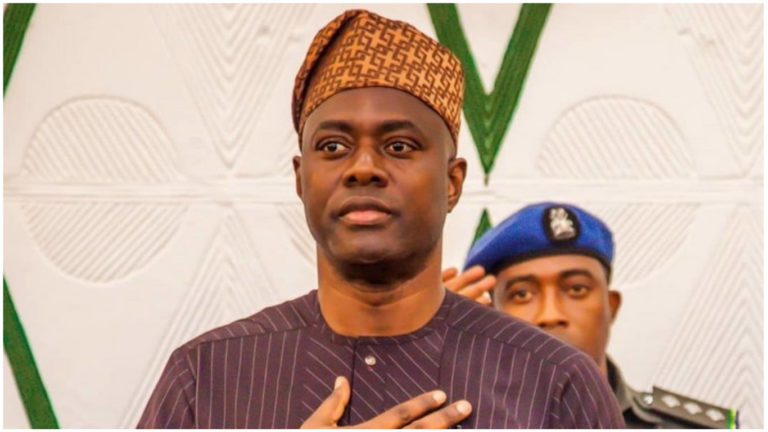
A DRIVER reportedly died in a fatal crash involving the convoy of the Oyo State governor Seyi Makinde.

Three other persons sustained various degrees of injury in the accident.

According to The Nation, the accident occurred when the governor was returning to Ibadan from the Saki area of the state on Tuesday, December 6.


Read Also:

He had gone to attend a town hall meeting with members of the Peoples Democratic Party (PDP) ahead of his second reelection bid in the 2023 general elections.

The driver, identified as Ramon Mustapha, was said to have died on the spot after he was flung out when his vehicle with the code name “Zebra 4” landed after somersaulting several times.

It was gathered that the driver might have been saved had he used his seat belt.

A source who was reportedly in the convoy told the newspaper that the driver’s head was smashed during the accident, leading to his immediate death.

The remains of the driver were later buried at his residence in Amuloko, Ibadan on Wednesday, December 7, according to Islamic rites.

The ICIR made several calls to the governor’s spokesperson, Taiwo Adisa, but they were not answered. He also did not reply to a text message sent to him for comments.

Corruption: Whistleblowers are victimised in Nigeria’s public sector – Coalition

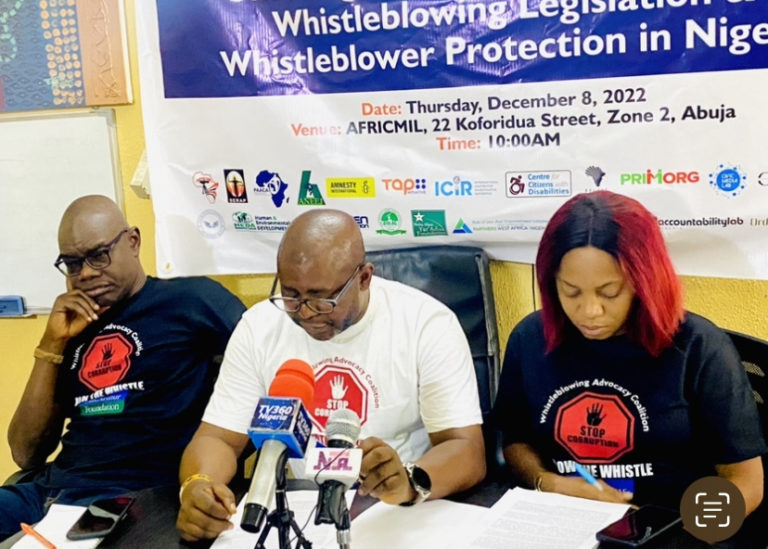
THE Whistleblowing Advocacy Coalition (WAC) has said whistleblowers who report acts of corruption in Nigeria’s public sector are being harassed and victimized at their places of work. 

The Coalition disclosed this on Thursday, December 8, during a press briefing on ‘Whistleblowing Legislation and Whistleblower Protection in Nigeria’ in commemoration of the ‘International Anti-Corruption Day 2022’ in Abuja.

According to the Coalition, some of the whistleblowers are denied salary for refusing to participate in corrupt acts.

“We note that unlike in the early stages of the whistleblowing policy when people showed tremendous enthusiasm about submitting reports which resulted in frequent recovery of looted public funds, there has been a noticeable severe reduction in people’s interest in passing on information to the anti-corruption agencies.

“The major reason is that the whistleblowing policy which this administration introduced six years ago has remained a policy, with no framework for protecting whistleblowers who are continually subjected to all kinds of punishment for reporting fraud and corrupt practices in their offices.

“Many whistleblowers in the public sector have been visited with adverse actions ranging from dismissal, suspension without pay, denial of salary and promotion, intimidation, harassment, etc. Even to exercise the right to refuse participation in corrupt acts attracts punishment from the management of public institutions.

“Thus, because workers see that their colleagues who report crime or refuse to be part of a crime are being victimized without any form of protection, many of them are discouraged from making disclosures of wrongdoing even when they see one,” a statement released by the Coalition said.

The whistleblowers’ organisation said it has taken significant steps to resolve the issue with civil society and media partners who have a passion to curb corruption in the country.

The Coalition, at the event, disclosed that it came up with what is known as ‘The Abuja Declaration of Action on Whistleblowing Legislation and Whistleblower Protection in Nigeria’.

According to WAC, the Abuja Declaration features two major highlights which include “the recognition of whistleblowing as not just a mechanism for addressing fraud and illegalities, but also as a right of freedom of expression which is a fundamental human right that needs to be fully protected”.

It noted that people have a right to both speaking up and speaking out without any hindrance.

“The second feature is the unanimous endorsement of a strong Coalition of duty bearers to intensify the campaign for an urgent realization of protection legislation.”

The Coalition expressed hopes that the Whistleblowing Bill would be considered at the Federal Executive Council (FEC) meeting and sent to the National Assembly for passage before the 2023 General Elections.

“However, this Coalition will not wait for them. Our resolve is to, as quickly as possible, use the Abuja Declaration as a tool of engagement with all tiers of government, but especially the National Assembly towards having this bill passed and having a law before the tenure of this administration ends in 2023,” the group added.

3,050 illegal masts uncovered in Abuja

0

THE Federal Capital Territory Administration (FCTA) Department of Outdoor Advertisement and Signage (DOAS) has said 3,050 illegal masts and towers have been uncovered in Abuja since the inception of the unit.

The Director, Babagana Adam who disclosed this while addressing journalists in Abuja on Thursday, December 8, explained that only 320 masts and towers were certified in Abuja.

According to him, the administration lost about N500 million revenue to masts erected without approval in the territory.


Read Also:

He explained that some companies only paid for permit and refused to pay the processing fee of N1.5 million before going ahead to erect their masts and towers, a development which he described as an illegal arrangement.

“We have lost about N500 million revenue to illegal masts and towers in the territory,” Adamu said.

“The permit for erecting a mast is N20,000, the processing fee is N1.5 million. But many don’t pay, they only pay for the permit and go ahead erecting their masts and towers.

“We discovered this when some communities laid the complaint to the National Assembly that the noise from the towers was affecting them and need to be addressed.”

According to him, most of the mobile subscribers only applied without paying the requisite dues.

Police launch manhunt for woman who burnt parents in Lagos

0

THE Lagos State Police Command has launched a manhunt for a 52-year-old woman who set her parents ablaze at their residence in the Okokomaiko area of the state.

Lagos State Police spokesperson Benjamin Hundeyin said the incident was reported in a phone call to the police by the younger sister of the culprit on November 20.

While identifying the culprit as one Aileremolen Izokpu, who is currently at large, Hundeyin noted that the woman drugged her aged parents with sleeping drugs and set them ablaze while they were asleep.


Read Also:

“One person reported at the station that on November 20, 2022, around 3 pm, he received a phone call from his younger sister, Osemudiame Izokpu, that his elder sister, Aileremolen Izokpu, 52, allegedly drugged their parents, Michael Izokpu, 85, and Priscilla Izokpu, 80, with sleeping pills and set them ablaze while they were asleep,” he said.

The police spokesperson revealed that the victims were rescued to a nearby hospital with severe burns for treatment, but the father died, while the mother is still unconscious.

He noted that detectives visited the scene of the incident and as well as the hospital where they inspected the injured victim and the corpse of the deceased father.

Hundeyin added that the corpse had been deposited at the Badagry General Hospital’s morgue for an autopsy while efforts are being intensified to arrest the fleeing suspect.

Police stolen vehicle reporting portal fails to work 24 hours after launch

THE NIGERIAN Police Force’s stolen vehicle reporting portal is yet to work effectively 24 hours after launch.

The portal was launched on Wednesday, December 7, by the Inspector General of Police, Usman Alkali Baba, as a platform for Nigerians to report cases of stolen vehicles as preventive measures to tackle vehicle theft.

Front page of the Police stolen vehicle reporting portal

Force Public Relations Officer Olumuyiwa Adejobi said the digitalized platform – Central Motor Registry (CMR) – completed and commissioned by the IGP is situated at the Force Headquarters in Abuja.

He said the platform launch followed the “IGP’s quest to ensure a digital environment for policing the country for robust and more proactive measures in crime prevention, investigation, and prosecution”.

“The newly digitalized Central Motor Registry Command Centre will make it possible for members of the Public to report vehicles stolen from as far back as 1st January 2018 and yet-to-be-recovered to input the vehicle details on the online platform to serve as a reliable data point for the possible recovery of the vehicle.

“The platform will also process motor vehicle information to support police operations and efforts toward enhancing national security,” the police spokesperson said.

Adejobi also asked Nigerians and other residents in the country to take advantage of the platform at https://reportcmr.npf.gov.ng to upload their vehicle information on the website with effect from December 7 2022, as a security step for preventing cars from being stolen and re-registered.

Members of the public with vehicles stolen from as far back as January 1, 2018, and yet-to-be-recovered, were asked to input relevant details on the online platform to serve as a reliable data point for the possible recovery of the cars.

The platform would also process motor vehicle information to support police operations and efforts toward enhancing national security.

Meanwhile, as of the time of filing this report, several attempts to visit the site to see how it works were unsuccessful.

The portal refused to open after asking the user to input their identification number. Several other users have also reported a similar experience.

However, attempts to get a reaction from the Nigerian Police spokesperson Adejobi were unsuccessful as he did not pick up his calls or respond to messages sent to his phone.

Disinformation in Brazil election: Lessons for Nigeria ahead of 2023 polls  

FOR fact-checkers across the world, election season comes with an enormous task, as it is often characterised by misinformation and disinformation. And the October 2022 second run-off election in Brazil isn’t an exemption.  

Supporters of the major contenders in Brazil’s 2022 presidential election – incumbent far-right President Jair Bolsonaro, seeking another term in office, and his left-wing rival Luiz Inácio Lula da Silva, a former president – have polarised the South American country with misinformation and disinformation.


READ ALSO:

2023: Nigerian fact-checkers warn politicians against misinformation

ICIR unveils FactCheckHub to combat fake news, disinformation

Nigeria FactCheckers’ Coalition to be part of Arise News presidential town hall debates

Ministry of Health trains media, health professionals on infodemic management


The country’s electoral umpire declared Lula da Silva winner of the keenly contested election, according to Time magazine.

According to DataReportal, there were 171.5 million social media users in Brazil in January 2022; that is equivalent to 79.9 per cent of its total population of 214.7 million as of January 2022. The report added a caveat: “it’s important to note that social media users may not represent unique individuals.”

In essence, more than half of the country’s population likely made their voting decisions based on what they read, watch or listen to online.

A 2022 study by UK’s Reuters Institute for the Study of Journalism and the University of Oxford found that more than 70 per cent of Brazilians think disinformation is a problem on Facebook, WhatsApp, Google and YouTube. TikTok also played a role in the increasing digital disinformation in Brazil’s election.

From claims about corruption, Covid-19, deforestation, guns, organised crimes, Satanism and Cannibalism etc, Brazilian fact-checkers at LupaAFP ChecamosAos FatosBoatos.orgComprovae-FarsasAgência Pública and Fato ou Fake, among others rose up to the task of sharing factual information and debunking fake news to reduce “the impact of lies in the election.”

As CNN reported, “Distrust has been exacerbated by a bitter campaign season, marked by intense misinformation campaigns and name-calling on both sides.”

“Authorities in Brazil have ramped up efforts to remove inaccurate information from social media websites, even setting up their own platform to debunk some of the accusations. But the effort sparked cries of censorship among supporters of Bolsonaro, who have faced more investigations of alleged misinformation dissemination than those backing Lula,” it added.

Like Brazil, President Muhammadu Buhari-led Nigerian government in October 2022 said misinformation aggravates insecurity and distrust between his government and the Nigerian populace.

Nigeria is witnessing floods of misinformation on its cyberspace, especially across social media platforms, where supporters of the leading presidential contenders are influencing online conversations and political campaigns ahead of the African nation’s 2023 general elections.

The top three presidential candidates in next year’s election in Nigeria are Bola Ahmed Tinubu of the All Progressives Congress (APC), Atiku Abubakar of the Peoples Democratic Party (PDP) and Peter Obi of the Labour Party.

Over the last few months, fact-checkers at The FactCheckHub, like their counterparts in Brazil, have debunked posts and videos spread on social media by purveyors of misinformation and disinformation, which oftentimes are partly supporters of the trio.

From an old video of Tinubu working out, to a video of Dino Melaye (Atiku’s spokesperson) ‘supporting’ Peter Obi and a popular Nigerian music artiste, Charly Boy, making false claim about October 1 rally held by Peter Obi’s supporters, Nigeria’s internet users population of 109.2 millions (as of January 2022) are battling with how to make informed decisions regarding who will represent them in the next democratic administration.

The presidential candidates are not left out in sharing misinformation among the populace. The FactCheckHub had earlier published analysis on false claims made by AtikuTinubu and how Obi repeatedly quoted wrong figures in public. Recently, one of the trio shared a misleading photo that went viral.

This prompted the formation of the Nigerian Fact-Checkers Coalition (NFC) which consists of three International Fact-Checking Network (IFCNsignatories, civil societies and newsrooms working together to curb the spread of misinformation and disinformation before and during the next Nigeria’s election.

The NFC members include the Africa Check; FactCheckHubDubawa; International Centre for Investigative Reporting (ICIR); Centre for Journalism Innovation and Development (CJID); Centre for Democracy and Development (CDD); FactsMatterNG; The Cable; Daily Trust; Premium Times, Digital Africa Research Lab and The Insight.

Formed in June 2022, the coalition in August wrote an Open Letter to Nigerian politicians calling them to shun misinformation in their campaigns and public speeches.

Also, on September 6, 2022 the coalition hosted an election disinformation conference with the theme: Nigeria’s 2023 Election: Curbing Information Disorder where panelists tasked all political stakeholders, diplomatic communities and tech giants such as Facebook, Twitter, WhatsApp etc to help Nigeria in her fight against election misinformation and disinformation. Panelists at the event also raised concerns over state-sponsored misinformation in the country ahead of the polls, while tasking media organisations to fact-check their reports before disseminating to the public.

The coalition members, among others, are educating the Nigerian electorate and providing them with media literacy information, thus arming them with truth ahead of the elections.

Beyond these, The FactCheckHub also amplifies published fact-checks by producing snackable social videos in three major Nigerian languages – HausaIgbo and Yoruba – to educate our regional audience in their local languages.

This targets the rural audience who have little, semi-formal or non-formal education spread across the villages in the entire country and border communities of other neighbouring countries who speak similar languages, such as the Hausa-speaking Niger communities in northern Nigerian borders and Yoruba-speaking Cotonou (Côte d’Ivoire) communities in Western Nigeria etc.

Unlike in Brazil where the nation’s Superior Electoral Court became the protagonist in the battle against election misinformation, Nigeria’s electoral umpire tasked media organisations to step up their fact-checking efforts to tackle misinformation head-on.

Though the Nigerian government has made several attempts to pass a bill regulating social media usage in the country, it has been met with stiff resistance from the civil society, media, and ordinary Nigerians.

Just as “Disinformation is obviously a major problem for Brazil’s democracy,” according to analysts, the Nigerian fact-checking community, including the media needs to synergise efforts in advancing media literacy to ensure transparency and fairness in the electoral process by providing the Nigerian electorate factual information at all times.

Similarly, they must ensure that they closely monitor the factual accuracy of what is said by all political candidates across the country without bias; be it in the form of radio and Television ads, debates, speeches, interviews or press releases published in newspapers or shared on social platforms.

They must also seek and secure the unwavering commitment of social media platforms to fighting fake news in Nigeria, beyond mere photo-ops and rhetoric.