Home Blog Page 1160

2023: APC campaign council faults Peter Obi’s manifesto

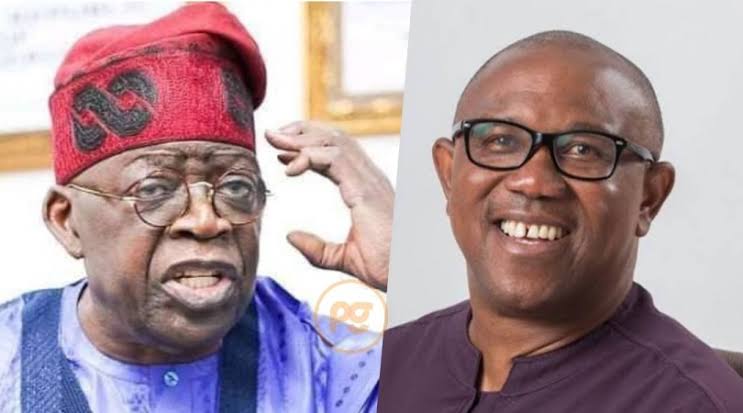
THE All Progressives Congress (APC) Presidential Campaign Council has faulted the manifesto of Labour Party (LP) presidential candidate, Peter Obi.

Obi released his manifesto titled: ‘It’s POssible: Our Pact with Nigerians’, on Sunday, December 4.

A statement released on Tuesday, December 6, by the Director of Media and Publicity of the APC Presidential Campaign Council, Bayo Onanuga, said Obi’s manifesto was full of fallacies and wrong statistics.

The statement added that the document was void and promised Nigerians nothing new.

“We are glad that the Labour Party and its presidential candidate, Peter Obi, finally released their much-awaited policy document after contradictory statement on the same.

“After perusing the document which is very high on graphics and demagogic rhetoric and short on substance, we have come to the conclusion that the document is empty and vacuous.

“Obi document contains no grand policy initiatives and options to excite right thinking Nigerians. It was silent about how Obi wants to achieve his high objectives. Instead, it will set alarm bells ringing in the south-south and North-East as Obi promises to engineer the transition of Nigeria from a fossil fuel dependency to climate and eco-friendly energy use,” the statement said.

Picking holes in the manifesto, the statement added, “One of the fallacies contained in the document, which Obi has often repeated to his followers, is that Nigeria is a failed state. We wonder whether the Labour Party candidate sometimes bothers to check the meaning of a failed state and whether the country he dreams to govern falls into the mould of Yemen or Somalia, where institutions of government have lost total control of their societies.

“Another fallacy is Obi’s claim that Nigeria recorded modest gains between 1999-2015, the PDP years, even when all verifiable evidence points to the contrary. The Labour Party candidate simplistically diagnosed Nigeria’s problem as ‘elite capture’, which is self-indicting as he and his running mate, who he styled ‘new breed’ are members.

“He claims incompetent leadership has divided the nation, playing up religious and ethnic sentiments. Another self-indictment as the hallmark of his campaign has been to jump from one church to the other, positioning himself as a ‘Christian candidate’ and inciting the church against the current APC government.”
Nigerians in the Diaspora ask court to stop 2023 general elections

0

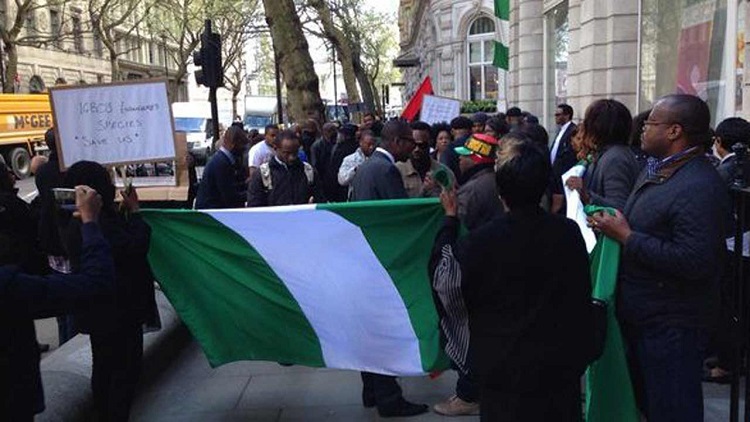
SOME Nigerians in the Diaspora have asked an Abuja Federal High Court to stop the 2023 general elections.

President Muhammadu Buhari and the Independent National Electoral Commission (INEC) were listed among respondents in the suit filed by the plaintiffs to seek enforcement of their fundamental rights to vote in the country’s elections.

The plaintiffs in the suit are Chikwe Nkemnacho, a barrister, and Kenneth Azubuike Nkemnacho, who are both resident in the United Kingdom (UK).


Read Also:

According to them, they instituted the suit on behalf of other Nigerians in the Diaspora, worldwide.

In the suit marked FHC/ ABJ/ CS/2119/2022, filed by their lawyer, Augustine Temfeh-Nkemnacho, the plaintiffs asked the court to stop the President and INEC from further proceeding with the 2023 electioneering process.

They also asked that INEC’s voter register and bio-database be updated to accommodate them as registered voters.

INEC, the chairman of the electoral commission, the President of the Federal Republic of Nigeria and the Federal Republic of Nigeria, are the 1st to 4th defendants, respectively.

The plaintiffs claimed they are entitled to participate in the electoral process and asked the court to order that they be registered to vote in 2023 and all elections wherever they are domiciled worldwide in line with sections 13, 14, 42 and 17 of the 1999 Constitution.

Also, the plaintiffs sought a declaration by the court to the effect that there is still sufficient time for INEC to comply with provisions of sections 13, 14 and 15 of the 1999 Constitution.

Justice Inyang Edem Ekwo, who is to hear the suit, has fixed January 19, 2023, to allow the defendants to file their respective responses.

2023: Reactions as Reps Majority Leader threatens violence against Nigerians who refuse to vote APC

0

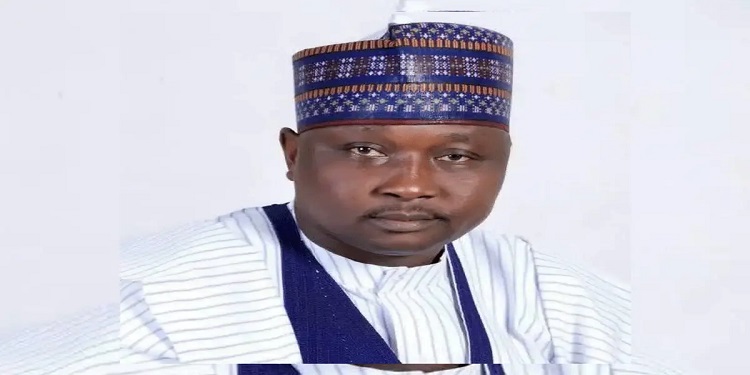
TWITTER users have reacted to a video which captured the Majority leader of the House of Representatives, Alhassan Ado Doguwa, threatening to engage in electoral violence in the 2023 general elections.

In the video currently trending online, Doguwa was caught threatening violence against anyone who refused to vote for the ruling All Progressives Congress (APC).


Read Also:

Video credit: Leadership Newspaper

Speaking in the Hausa language, Doguwa told his supporters that anyone who refused to vote for his party, the APC, should be dealt with.

“On the election day, it is either a person votes for APC, or you are dealt with. On the election day, vote for APC or you are dealt with,” he said.

Doguwa added, “When I speak, you answer me.In Doguwa, it is either you vote for APC…” The crowd responded, “Or we deal with you.”

The ICIR could not verify where and when the video was recorded.

Doguwa’s comments have generated a lot of reactions on Twitter, as many people have accused him of promoting violence.

A Twitter user Rinu Oduala tweeted, “This is the person we Nigerians watched being voted as a House Reps member.”

Another tweep, @DrealAdo, tweeted, “They’re preparing for war, not election. We must be ready too to beat them in their game.”

@ikimij wrote, “If Nigeria was a sane country, DSS should’ve brought this man in for thorough investigation. They are busy running errand for Aisha Buhari while neglecting a visible terrorist.”

@chukwukerechid also wrote, “A politician threatening the people that it is either they vote them, or they will be dealt with. We call on you to investigate this video and take a decisive action to deter others.”

@AyoAkinlo tweeted, “Hon. Doguwa, who has been in the Reps since 1999, has always positioned himself as thorns in Democracy’s flesh. His manner of approach is such that intends to coerce others into bowing to his views and styles, meaning that he is intolerant of positions that are contrary to his own.”

The Independent National Electoral Commission (INEC) and the security agencies have urged Nigerians to eschew violence for a peaceful election in 2023.

PDP raises alarm over alleged plot to buy up PVCs in Rivers

0

THE RIVERS State Chapter of the Peoples Democratic Party (PDP) has raised the alarm over alleged moves by top politicians to buy up the permanent voter cards (PVCs) of eligible voters in the state.

The Spokesman of the PDP Presidential Campaign Council in Rivers State, Lenoonu Nwibubasa, revealed this to journalists on Tuesday, December 6, in Port Harcourt.

“We are here to inform Rivers people about a sinister plot, already hacked by top politicians in Rivers State, to buy up the permanent voter’s cards of our citizens in order to deny them the opportunity to vote.


READ ALSO:

PVCs collection starts December 12, include weekends – INEC

Ogun PDP asks INEC to reprint burnt PVCs with immediate effect

65,699 PVCs destroyed as hoodlums attack INEC offices in Ogun, Osun 

PVCs: INEC’s deadline will disenfranchise 30 million Nigerians – Peter Obi supporters


“This is ongoing in every local government; top politicians in every local government have been briefed to ensure that they buy up voter’s cards from members of the public,” Nwibubasa claimed.

Nwibubasa, therefore, warned PDP members in the state that “under no condition, including threat and financial inducement,” should they relegate their constitutional rights to exercise their franchise in the 2023 general elections by selling out their PVCs.

The spokesman further called on the Independent National Electoral Commission (INEC) Resident Electoral Commissioner in the state, to take necessary measures to halt the alleged plot.

Nwibubasa added, “Reports reaching us is that those PVCs will not get to the owners and they are going to seize them, ensuring that they disenfranchise Rivers people.

“This is because they are aware that Rivers people are fully committed to voting the presidential candidate of the Peoples Democratic Party, Alhaji Atiku Abubakar.

“And because there is nothing else they can do to stop Atiku in winning Rivers State, they have taken over this criminal plot, very unconstitutional, very barbaric, to buy up PVCs and to receive PVCs in bulk from INEC officials and, therefore, deny Rivers people the opportunity to vote their rightful choice.

“We are calling again on the INEC Chairman to please, again, beam your searchlight on Rivers State. As the distribution of the PVCs is continuing, we want to be sure of proper monitoring that the PVCs get to rightful owners.”

CONUA to sue FG over withheld salaries

0

The Congress of University Academics (CONUA) has vowed to sue the Federal Government for withholding eight months salaries of its members.

In a statement released by its National President, Secretary and Publicity Secretary, Dr Niyi Sunmonu, Dr Henry Oripeloye and Dr Ernest Nwoke, respectively, on Tuesday, December 6, CONUA faulted the Ministry of Labour and Employment, headed by Chris Ngige, over the issue.

The Federal Government has refused to pay university lecturers for the period they downed tools, between February 14 and October 14.

The ICIR reports that the Federal Government registered CONUA, a splinter group from ASUU, on October 4, in what many believed was a ploy to stop recurring striking ASUU.

CONUA’s registration followed the government’s threat that it would not pay ASUU for work not done.

While ASUU insisted its members would continue the strike, CONUA said it disagreed and informed the government of its decision to work.

This newspaper also reports that multiple news platforms had claimed the Federal Government had begun to pay CONUA for the eight months the ASUU strike lasted.

One of the reports quoted the Head of Press and Public Relations at the Ministry of Labour and Employment, Olajide Oshundun, saying CONUA members would be paid provided they were not part of the ASUU strike.

The government had paid the lecturers pro rata in early November. The lecturers described what they got as a half-salary.

The payment sparked protests among the two unions, though CONUA hoped it would get the eight-month backlog. ASUU has continued to protest since early November, but the government has maintained its position.

In the statement, CONUA said the government knew its members did not declare any strike nor were involved in the eight-month ASUU strike, which shut down the university system nationwide

The group added: “CONUA formally made its non-involvement in the strike known to the Federal Government in a letter addressed to the Minister of Labour and Employment, Dr Chris Ngige, in April 2022.

“In the letter, we made it clear that because CONUA constituted a separate and independent union in the university system, our members did not call for any strike. This was followed by a press conference in Abuja on August 19, 2022, at which it was categorically stated that CONUA was not part of any ongoing strike and that the “No Work No Pay” principle ought not to apply to members of the union.

“CONUA’s expectation is that due to the express and categorical declaration, the government would seamlessly release our members’ outstanding salaries when it resumed the payment of salaries to all university staff in October 2022. But to our dismay, CONUA members were also paid pro-rata salaries in complete disregard to the fact that we were indeed shut out of duties by the strike.”

The group said it wrote to the Accountant-General of the Federation and the Ministry of Labour and Employment, reminding them that it was an error to lump its members with those who went on strike.

It also expressed shock that the government failed to pay its members’ backlog salaries with their November salary.

According to the group, the government’s action contravenes Section 43 (1b) of the Trade Disputes Act CAP. T8, which notes that “where any employer locks out his workers, the workers shall be entitled to wages and any other applicable remunerations for the period of the lock-out and the period of the lock-out shall not prejudicially affect any rights of the workers being rights dependent on the continuity of the period of employment”.

Buhari asks Senate to confirm Ahmad, Adamu as CBN deputy governors

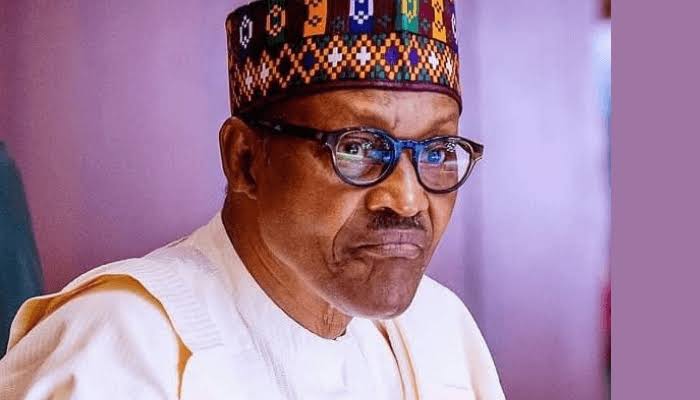
PRESIDENT Muhammadu Buhari has submitted the names of Aishah Ahmed and Edward Adamu to the Senate for confirmation as deputy governors of the Central Bank of Nigeria (CBN).

Ahmed and Adamu were first appointed as Deputy Governors of the nation’s apex bank in charge of the Financial System Stability and Corporate Services Directorate, respectively, in March 2018.

Buhari’s request was conveyed in a letter read during plenary by Senate President Ahmed Lawan on Tuesday, December 6.


Read Also:

The President asked the Senate to screen, ratify and confirm the nominees to serve for a second and final term at the CBN as deputy governors.

The request was in accordance with the provisions of Section 8(1) (2) of the Central Bank of Nigeria (CBN) (Establishment) Act 2007.

Ahmed was first appointed as the CBN deputy governor in 2018.

“As Deputy Governor in charge of Financial System Stability, she is responsible for leading the effort to promote a sound financial system in Nigeria; one of the principal objects of the Bank as specified within the CBN Act,” the CBN stated.

She was Executive Director of Retail Banking at Diamond Bank PLC and has 22 years of experience as a corporate executive and finance expert before her CBN deputy governorship appointment.

Adamu, who graduated from Ahmadu Bello Unversity, Zaria, Kaduna State and bagged a BSc degree in Quantity Surveying, is a fellow of the Nigerian Institute of Quantity Surveyors and the Institute of Credit Administration.

He began his career with the Unified Public Service (UPS) in 1983 and was initially nominated for the CBN governorship position in 2018.

According to the CBN, Adamu, who has spent 25 years in the service of the apex bank, is “innovative, people-oriented, personable, visionary, and creative with the courage to engage, inspire and influence people into collaborative action for the collective good”.

In another letter addressed to the Senate, also read on Tuesday, Buhari requested the confirmation of Ambassador Ayuba Ngbako from the Federal Capital Territory (FCT) as a member of the Revenue Mobilization Allocation and Fiscal Commission (RMAFC).

AfDB’s Adesina seeks bonds commitment from Africans in diaspora

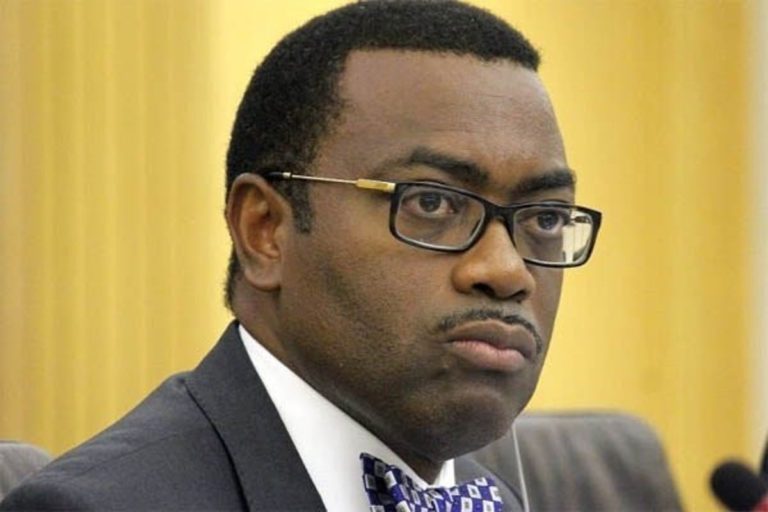
THE president, African Development Bank Group (AfDB), Akinwumi Adesina, has made a case for diaspora funds that target developmental projects in Africa.

Akinwunmi emphasised that Africans in the diaspora were critical to Africa’s economic development as they constituted the continent’s largest financiers through remittances.

He stated this at an event, ‘Development Without Borders: Leveraging the African Diaspora for Inclusive Growth and Sustainable Development in Africa’, organised by the bank, in collaboration with the African Union Commission, the International Organization for Migration, and the African Continental Free Trade Area Secretariat.


Read Also:

The AfDB president was quoted in a statement the bank issued today to have said at the event, “The value of remittances from the African diaspora doubled from $37 billion in 2010 to $87 billion in 2019, reaching $95.6 billion by 2021. Yet official development assistance to Africa in 2021 was $35 billion, or 36% of the remittances from the diaspora. Egypt and Nigeria are among the top 10 remittance recipients globally, with $31.5 billion and $19.2 billion respectively in 2021.”

Adesina stressed that Africans in the diaspora had become the largest financiers of Africa, with the funds from them not being debts.

“It is 100% gifts or grants, a new form of concessional financing that is the key for livelihood security for millions of Africans,” he explained.

He further noted that while remittances had helped to meet financial, food, education, and health needs, as well as serve as countercyclical sources of finance and social protection, more can be done to tap into these remittances for Africa’s development.

“We must eliminate the Africa-premium charged on remittances, as the cost of remitting funds to Africa is twice what it is for South Asia. We must tap the massive opportunities offered by diaspora bonds,” he said.

He described diaspora bonds as an effective instrument to harness remittances for the development of Africa. But despite its great potential, he added, only four African countries (Ethiopia, Kenya, Ghana, and Nigeria) had successfully issued diaspora bonds, often with mixed results.

According to Adesina, the flow of remittances to Africa was high, rising, and stable, while offering huge opportunities to serve as collateral to secure financing for African economies.

He urged African countries to securitize remittances to promote investments, especially for infrastructure on the continent, stressing that the diaspora can offer a lot more than remittances and investments.

He said, “They have skills, knowledge, know-how, exposure to the world of business and investments, science, the arts and technologies that can help boost the human capital for Africa’s development. They can help build world-class universities, and can be mentors for the new generation of Africans.

“That is why all governments in Africa should prioritize affairs of the diaspora. African countries should establish ministries of the diaspora to give policy priority to the specific needs of the diaspora, as well as expand the investment opportunities for them through special incentives.

“The diaspora should also be allowed to vote. If they can send money that powers their home economies, they should also help decide the future of the economies of Africa. As Africans in the diaspora, you can look to the African Development Bank to partner with you on this journey to transform Africa.”


Why Buhari’s Executive Order cannot stop misappropriation of local government funds by governors

0

STATE governors’ misappropriation of local government funds, as recently alleged by President Muhammadu Buhari, will not stop with a sheer Executive Order from the President, but by proper constitutional amendment, analysts say.

President Buhari had in May 2020 signed an Executive Order to grant financial autonomy to the judiciary, legislature, and local government councils.

Delivering a speech at an event hosted for members of the Senior Executive Course 44 (2022) of the National Institute for Policy and Strategic Studies (NIPSS) at the Presidential Villa, Abuja, the President came hard on governors over what he alleged was their maladministration of resources at the local government level.


READ ALSO:
Buhari asks Senate to confirm Ahmad, Adamu as CBN deputy governors

Atiku can’t see Buhari’s achievement because he lives in Dubai – Lai Mohammed

Student critic apologises to Aisha Buhari, deactivates social media accounts

SERAP sues Buhari, AGF, SGF over alleged mismanagement of ecological funds


Buhari attributed the stunted development at the third tier of government to the governors’ questionable actions on LGA funds.

Besides Buhari’s remarks, the Minister of Budget and National Planning, Clement Agba, had said at the end of the last Federal Executive Council meeting that the high poverty rate in the country was due to the governors’ inability to complement the efforts of the Federal government in its fight against poverty.

Agba had alleged that governors had abandoned 72 per cent of the nation’s poor residing in rural communities, while expending state resources on the capital cities.

Informed analysts, reacting to the development, described the blame trading by the Federal and state governments as “political rhetorics”, which they said can only be solved with proper devolution of powers, and stopping the idea of joint accounts by state and local governments.

“There is need for proper devolution of powers through constitutional amendment to free the state assemblies and the local governments. Until you do this, true democracy cannot be practised in the states,” a public affairs analyst and development expert, Law Mefor, said today in Abuja.

Mefor: There is need for proper devolution of powers

Mefor stressed that state governors had become “emperors” at the sub-national level, controlling the state and local government structure to the detriment of real democracy.

“Take the case of Governor Wike for instance, the money he’s throwing around everywhere he goes, was it appropriated by the state Assembly? It is not. Such funds are supposed to be appropriated by the State Assembly, going by the details of the 1999 constitution,” he said.

He argued that if the President really wanted to rescue the situation, he has to propose an Executive bill that would abrogate the 1999 constitution, which allows joint accounts for state and local government funds.

Mefor said, “The President is waking up too late in the day, as far as I’m concerned. He has up to six months to submit an Executive bill. Let it be one of the legacies he is leaving behind to lessen the Nigerian masses’ sufferings.”

Also, the Lead Director, Centre for Social Justice, Eze Onyekpere, said that the Federal and  state governments were frittering away huge amounts of money, and urged them to “stop trading blame and do the right thing.”

According to Onyekpere, a lawyer and specialist in development economics, the critical challenge was at the state level, where he said the governors were like emperors.

Onyekpere: Federal and state governments frittering away huge sums of money

He said, “As a leader of the party, especially now that we are in the political season, you must be in the governors’ good books. If you are not, you may not be returned to your post. He selects the principal officers and other officers at the state Assembly. If you fall out of line, your colleagues will impeach you.

“We may be deceiving ourselves, if we claim that what we have at the sub-national is real democracy.”

An economist and public affairs analyst, Kelvin Emmanuel, told The ICIR that the Nigerian governance structure both at the Federal and sub-national structure was not living up to expectation.

“When the governors know that constitutionally they are entitled to these funds, they do whatever they like with the money. They are not properly checked by the state Assembly because the governor is the leader of the party in the state and controls the party structure,” Emmanuel said.

He agreed with the power devolution idea, saying it would make many states become competitive and lessen what he called the “feeding bottle federalism” being enjoyed by some states.


US moves to win over Africa as China takes lead on trade

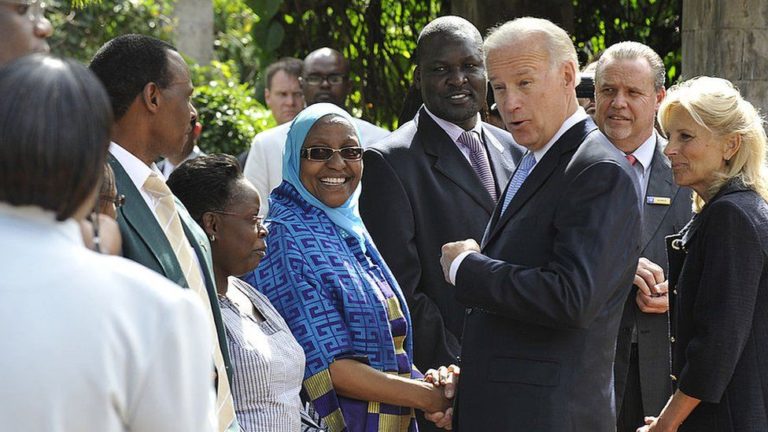
PRESIDENT Joe Biden will host the second United States-Africa Leaders Summit in Washington DC next week to reinforce the US-Africa commitment to democracy, mitigate the impact of COVID-19, respond to the climate crisis and amplify Diaspora ties. 

Some 50 African leaders are expected to attend the two-day conference, which starts on December 13.

Senior policymakers say talks will focus on economic engagement, human rights, food security and climate, with an emphasis on partnerships that demonstrate an intention to go beyond strategic geo-political interest.


Read Also:


The White House will also seek to offer reassurance to African governments concerned by a perceived decline in relations with the US.

A former under-secretary at the US Department of Commerce, Gilbert Kaplan, said the key objective of this conference “should really be to enhance trust between African leaders and the United States”.

“Africa is faced with some of the biggest governance challenges on the globe,” President of the Cameroon People’s Party and the first woman in the nation’s history to run as a presidential candidate in 2011 Kah Walla said.

“We need government that is functional, competent and innovative, and what we are getting instead is the US and a global international system that is supporting autocratic and dysfunctional governments. We can’t continue in this way,” she added.

Africa’s 54 nation states span six time zones and the continent’s population of 1.4 billion is on course to make up a quarter of the global population by 2050.

It boasts the youngest demographic in the world, a potentially huge labour resource for private sector investors seeking to expand in manufacturing and processing

But despite the continent’s tremendous economic potential, the US has lost substantial ground to traditional and emerging partners, especially China which surpassed the US as Africa’s largest trade partner in 2009, with total bilateral trade reaching more than $254 billion in 2021, a 35 per cent rise from 2020.

A member of the World Economic Forum’s Regional Action Group for Africa, Landry Signé, told a Senate sub-committee on Africa last year that while recent trends indicate that the US engagement with the region has cooled down, “it has not and should not cede its relationship with the region to other powers”.

The first United States-Africa Leaders Summit was held by President Barack Obama in 2014.

US agency kicks against Nigeria’s exclusion from religious freedom violators list

THE United States Commission on International Religious Freedom (USCIRF) has expressed outrage at the exclusion of Nigeria and India in the latest designations of “Countries of Particular Concern” (CPCs) under the International Religious Freedom Act (IRFA), by the US Department of State.

In its 2022 Annual Report in April, USCIRF recommended re-designation of the 10 CPC countries, and also recommended CPC designation for Afghanistan, India, Nigeria, Syria and Vietnam.

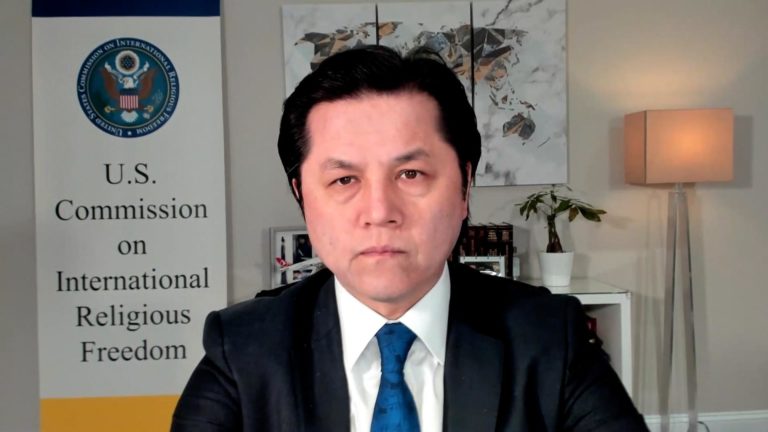
USCIRF’s chair Nury Turkel said in a statement that there was no justification for turning a blind eye to both countries’ particularly severe religious freedom violations, which clearly meet the legal standards for designation as CPCs.


Read Also:

“USCIRF is tremendously disappointed that the Secretary of State did not implement our recommendations and recognize the severity of the religious freedom violations that both USCIRF and the State Department have documented in those countries,” Turkel said.

He added: “The State Department’s own reporting includes numerous examples of particularly severe religious freedom violations in Nigeria and India.”

Pursuant to IRFA, the State Department re-designated 10 countries as CPCs. The countries are: Burma, China, Eritrea, Iran, North Korea, Pakistan, Russia, Saudi Arabia, Tajikistan, and Turkmenistan.

The State Department also added Cuba and Nicaragua to its CPC list, which had previously been on the Department’s Special Watch List (SWL).

Since the issuance of its 2022 Annual Report, USCIRF said it has consistently shared its recommendations with the U.S. Department of State and Congress.

USCIRF’s recent publications include updated reports on Religious Freedom Conditions in IndiaBlasphemy Laws in NigeriaViolence and Religious Freedom in Nigeria, and held hearings on AfghanistanNigeria, and Nicaragua.