Home Blog Page 1184

2023: Again, Tinubu denies ‘Islamisation’ agenda

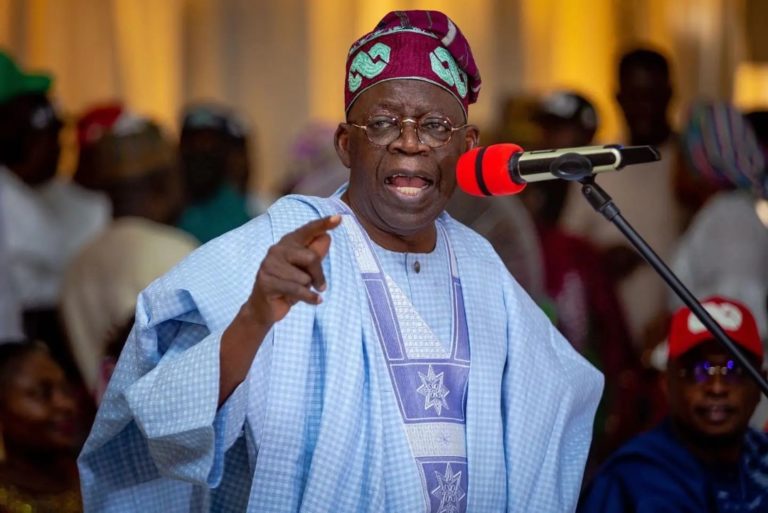
PRESIDENTIAL candidate of the All Progressives Congress (APC) Bola Tinubu has once again cleared the air on the party’s Muslim/Muslim ticket.

Tinubu, on Wednesday, led a high-powered delegation to meet with the officials of the Christian Association of Nigeria (CAN).

Recall that on July 20, the former governor of Borno State, Kashim Shettima, was unveiled as the vice presidential candidate of the APC.


READ ALSO:

Osinbajo congratulates Bola Tinubu on victory at APC presidential primary

Lawyer drags Tinubu to court over alleged certificate forgery, age falsification

NBC fines Arise TV for publishing fake INEC statement on Tinubu’s alleged US drug trafficking case

INEC denies investigating US drug trafficking allegations against Tinubu


The development had since generated debate and reactions among Nigerians with many speculating that the APC has an agenda to ‘Islamise’ the country.

In a bid to douse tension in the Christian community, Tinubu noted that his presidential ambition does not have any religious coloration.

He said he has no plan to suppress Christians.

According to him, he chose Shettima because the country is faced with urgent challenges that only a progressive government with strong hands can handle.

“Choosing a Christian running mate would have been easy but that is not the case. We have urgent challenges that do not depend on religious leanings but on the best of hands that can address it,” he said.

Responding, CAN President Archbishop Daniel Okoh stressed that the association is praying for the continuous peace, unity and prosperity of the country.

He added that CAN want the presidential candidates to come up with policies and programs that will address the concerns of Christians.

Construction of dams will mitigate flooding – Delta commissioner

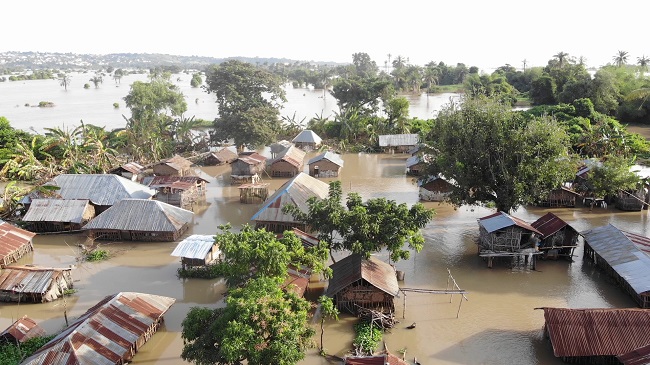
DELTA State Commissioner of Information Charles Aniagwu has said the introduction of in-land waterway transportation and dams would mitigate flooding problems, generate electricity and increase productivity in the country.

Aniagwu said this in an interview on Thursday.

He said the adoption of in-land waterways and the construction of dams would boost economic development by fostering commerce and facilitating the movement of goods, services and people in Nigeria.


READ ALSO:

Nigeria: Poor economy, flooding raise October inflation to 21.06%

VIDEO: The harrowing tales of Kogi residents escaping flooding to biting hunger

Flooding: Bayelsa extends school resumption date

Flooding: 96 persons die,1.3 million displaced in Bayelsa


“The Federal Government should take steps to dam the river Niger and river Benue to prevent flooding and generate electricity”, he said.

“We noticed that many states have difficulty carrying out agricultural activities during the dry season but with dams that would have ended the lack of water and prevented the magnitude of the flood that would cause trouble to Nigerians.”

Speaking on the recent floods in the country, the commissioner noted that the vulnerable members of the society, especially poor farmers, were at the receiving end of the disaster.

“The amount of money the Federal Government spend is enough to go a long way in preventing this annual flood, individuals have lost a lot of valuables much more than the government has spent.

“When the flood commenced farmers were faced with no other choice than to harvest their crops because they couldn’t wait to lose all but at the end of the day they had to harvest cassava that are not mature, you are not going to get value for the money.

“Imagine if we had prevented this how many billions we would be saving,” he said.

Terror alert: Ghana apologises over advisory warning against travel to Abuja

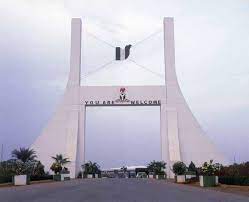
THE Ghanaian government has denied issuing an advisory to warn its citizens against non-essential travel to Abuja, Nigeria’s Federal Capital Territory (FCT).

Ghana also apologised over the purported travel advisory.

The travel advisory which circulated on Wednesday, November 16, purportedly issued by Ghana’s Ministry of Foreign Affairs and Regional Integration (MFA), advised Ghanaians to “avoid non-essential travel to Abuja over security” threats.

A copy of The travel advisory described as unauthorised by Ghana MFA

However, in a swift reaction on Thursday, November 17, Ghana’s Ministry of Foreign Affairs and Regional Integration, in a letter published on its official Twitter page, said it was unaware of any security threat in Abuja.

A copy of the letter from Ghana Ministry of Foreign affairs denying security threat in Abuja

The Ministry also disowned the travel advisory.

In a statement titled: ‘Travel Advisory. Re: Security Update In Abuja’, the Ministry apologised and said the travel advisory issued on Wednesday was not authorised.

The statement read, “The Ministry of Foreign Affairs and Regional Integration wishes to refer to the travel advisory published this evening, Wednesday 16th November 2022, advising against non-essential travel to Abuja and wishes to state that the statement was unauthorised.


READ ALSO:

UK reverses warning against travel to Abuja but says risks of terror attacks remain

Terror alert: Germany, Ireland, others warn against travel to Nigeria

Terror alert: Canada, Australia warn against travel to Abuja

No DSS advisory to Buhari warning against Muslim-Muslim ticket – Presidency


“The Ministry is not aware of any threat targeted at Ghanaians who continue to live in harmony with their Nigerian brothers and sisters.

“The Ministry of Foreign Affairs and Regional Integration regrets any inconvenience this may have caused to the travelling public.”

The ICIR had reported that the United States had on October 23 issued a travel advisory to its citizens, warning against non-essential travel to Nigeria, particularly the Federal Capital Territory (FCT), Abuja, over threats of terrorist attacks.

The United Kingdom (UK), Canada, Australia, Germany, Turkey and Ireland also issued similar advisories to their citizens, warning against non-essential travel to Nigeria.

The warnings brought about apprehension and increased tension among the residents of Abuja and neighbouring cities.

The US subsequently directed its non-emergency staff to immediately leave Nigeria.

The directive came barely three days after its authorities warned that there was an elevated risk of terror attacks in Nigeria, especially in Abuja.

Nigerian authorities, through the National Security Adviser, Babagana Monguno, Minister of Information, Lai Mohammed and Chief of Defence Staff, Lucky Irabor, however, condemned the alert and insisted that there was no cause for alarm and that they were working to avert any security threat.

Naira redesign: EFCC promises 5% reward for information on hidden money

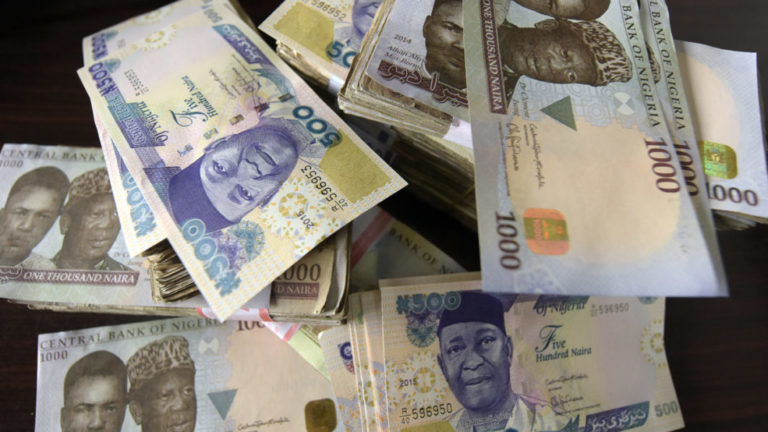
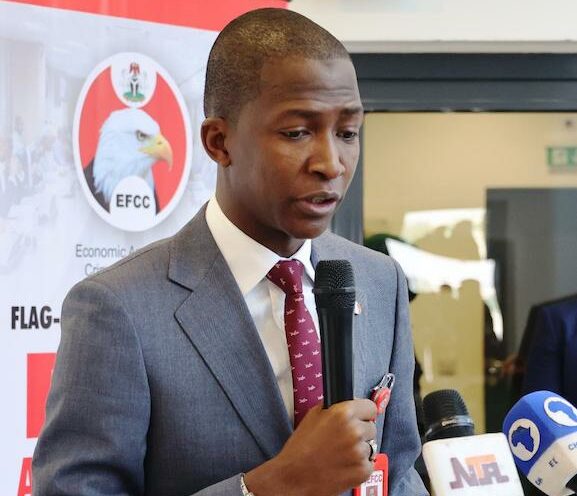
THE Chairman of the Economic and Financial Crimes Commission (EFCC) Abdulrasheed Bawa has promised financial reward for information on persons hoarding naira notes.

Whistleblowers will be rewarded with five per cent of the funds recovered, according to the EFCC boss.

Bawa disclosed this in an interview with the Deutsche Welle Hausa Service on Wednesday, November 16.


READ ALSO:

Kano State govt excludes Ganduje from govs that stashed away naira notes

Three govs who stashed naira notes in houses plan to pay salaries in cash – EFCC

Minister of Finance, CBN governor at loggerheads over redesigning of naira notes

Here are ways redesigning the naira notes will affect you


“We are also calling on Nigerians and even non-Nigerians that all channels are accessible. If anyone knows someone who hid suspicious money, they should alert us and we will investigate it; when we investigate the money and get it, the whistleblower also gets five per cent,” he said.

Bawa also said the redesign of the naira was not politically motivated.

According to him, the move was targeted at returning hidden public funds to the banks.

He noted that the government wants to force people who hid money at home to deposit them in bank accounts.

“There is no political motive behind this; some people siphoned and hid public funds and that is why we want them to bring them out.”

Bawa explained that President Muhammadu Buhari gave the go ahead to the Central Bank of Nigeria (CBN) having evaluated and accepted the idea.

“These public funds were embezzled and we want them to return them. We have not told anyone not to bring this money out. What the government said was to deposit the money into bank accounts, or else sanctions may follow, ” he said.

Quoting legal provisions, the EFCC chairman stated that the redesigning of the naira is expected to be done after every eight years.

“Nigeria has 20 years without redesigning, almost 80 per cent of the naira is not in the bank and the CBN is in the hands of people. So how can the government succeed? How can a country get 25 per cent of foreign exchange which is a benefit from its currency in 10 days?”

The EFCC chairman noted that the naira redesign may crash the dollar to N200.

“Maybe with this, the dollar may crash completely to even N200, who knows?” he said.

The CBN had on October 26, announced plans to redesign the naira, citing concerns of “illicit” funds in circulation, which it said bandits and kidnappers had been exploiting in perpetrating their crimes.

The ICIR also reported that the CBN’s plan to redesign selected currency notes of N200, N500 and N1,000 would come at a huge deficit cost to the economy, according to sector experts.

The report stressed that the Federal Government is struggling with a huge debt deficit and would likely borrow massively to fund the currency redesigning, which the experts argued, would deepen inflationary pressure on Nigeria’s currency.

The CBN will be introducing the redesigned notes into the financial system on December 15, 2022, and has also given January 31, 2023 as the expiry date for legal tender of the notes being rested.

Obasanjo advocates girl child education

0

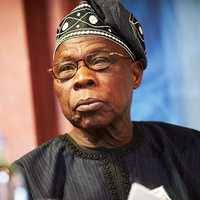
FORMER President Olusegun Obasanjo has expressed support for girl child education while lambasting those against the empowerment of the female gender.

Speaking at this year’s World Diabetes Day that took place at the Olusegun Obasanjo’s Presidential Library’s main auditorium, in Abeokuta, Obasanjo emphasised the need for contentment in every human endeavour, saying it could reduce the chances of getting diabetes.


READ ALSO:
Spend Your Money On Girl-Child Education, Not Mosques – Kano Emir Tells Northerners

Here’s how an NGO is offering hope to children with down syndrome, other disabilities in Sokoto

INVESTIGATION: Government questionable priorities fuel prevalence of out-of-school children in Akwa Ibom state

Children’s Day: Is Nigeria doing enough for her future leaders?


Narrating his childhood experience, he remembered how his younger sister was suddenly pulled out of school which made their development into adulthood different.

This made him resolve to ensure and always do whatever he can do for the girl child education.

“The culture in some parts of the country where the male child is given preference over the female child is an idea and culture that must be killed. Woe betides anyone who attempts to relegate my eldest child Iyabo. Iyabo will crush such a person be he or she,” he added.

However, he reiterated that, he remains an advocate of the education of every Nigerian child.

Undeserved assault on the bureaucracy

0

By Eric Teniola

OF all the mistakes made by the military, none is greater than the 1975/1976 assault on bureaucracy in this country.

It was termed THE GREAT PURGE by the media at that time. But that action destroyed the robust Civil Service system and since that time this country has lost its way. In any national development there is no alternative to a robust civil service system. Tampering with the bureaucracy is the foundation for total collapse of the government itself.

The military indulged in playing the civil service like a sporting event without knowing that it will lead to the decay and the rot we are witnessing now.


Read Also:

Bureaucracy means “the civil servants, the administrative functionaries who are professionally trained for the public service and who enjoy permanency of tenure, promotion within service-partly by seniority and partly by merit”.

Bureaucracy, meticulously, is also professed to be apolitical. This basically insinuate that a bureaucrat is not to have a political agenda of his own but preferably, faithfully effectuate the policies of the government of the day. It also has another and presumably more important meaning and that is: a civil servant’s allegiance and adhesion should be to the Constitution of the land and not to any political party, politician, etc.

Public bureaucracy is a very invigorate element of the development process. Bureaucratic capacity adjudicate what will get done, when it will get done, and how well it will get done. The dexterous capacity of the bureaucracy to implement labyrinthine economic and social development plans, the higher the development potential of that society.

Bureaucracy epitomizes the most consummate and rational way in which one can codify the human activity and that methodical processes and standardized hierarchies are indispensable to maintain order, maximize efficiency, and eliminate favoritism.

A bureaucracy is ostensible to be impersonal. This predominantly, means that a bureaucrat is anticipated to be guided by objective premeditation while ensuing rules and regulations in the scheme of implementing opalescent policy measures and directives. In other words, a bureaucrat or a civil servant or a government official regardless of the name we choose to call him by – is not putative to be guided by his idiosyncratic whims and fancies, biases and prejudices in the dispensation of his official duties.

These are what we are told that bureaucracy stands for by Dr. V. Pardha Saradhi.

Inspite of the purge of 1975, what positive thing have we achieved since then? Discipline erring officers but don’t collapse the system. In an attempt to discipline certain officers, what was done in 1975/1976 was to collapse the system in itself. We fought a civil war between 1967 and 1969 and we fought that war without borrowing a kobo but the success of that war could be traced to a robust civil service that was in existence at that time. No doubt the military officers went to war as foot soldiers but the backup energy was provided by the bureaucracy. In case we forget, Mr. Nowa Omoigui made a comprehensive report on the efforts of bureaucracy before and after the civil war. He wrote that “for the ten months of the Gowon regime, there was no federal cabinet. Permanent Secretaries who dealt directly with Gowon headed Federal Ministries. In the confusion of the weekend of July 29, 1966, the birth of his government at the Ikeja Barracks had been partially mediated by a group of federal permanent secretaries. These included Abdul Aziz Attah, Phillip Asiodu, Allison Ayida, Musa Daggash, Ibrahim Damcida, HA Ejueyitchie, Yusuf Gobir, BN Okagbue and others. Other prominent federal public servants included the Chairman of the Public Service Commission, Alhaji Sule Katagum. Along with others, as well as the British and American envoys, these men counseled caution in the heat of the events that were unfolding”.

These pre-war grand strategic and political machinations aside, the federal civil service played a complex role during the war, alternately being viewed as an ally or irritant by the front-line military. Civil servants suggested the establishment of security and civil defence organisations in various states, tapping into logistic resources provided by various ministries. They counseled the promulgation of many war-time decrees, such as the Public Security Decree (No. 31 of 1967) which outlawed the private possession of weapons and ammunition, and the Military Courts (Special Powers) Decree (No. 4 of 1968) designed to enforce discipline among federal troops. A whole variety of Trade disputes emergency decrees were also promulgated to settle wartime trade disputes. Mr Gray Longe, who later became the Head of Service, recalls that initially there was an Armed Forces Committee on the Procurement of Supplies. This committee included the Deputy Permanent Secretary at the MOD, along with the Army QMG, Air Force Logistics Officer and specialised differences between service needs. This Committee gave way to a purely military Joint Supplies Board to reconcile competing requests. Then in October 1969, apparently in response to abuses in the system, as well as competition between Army Divisions (who were each doing their own thing), Gowon created a central Procurement Committee that would make recommendations to him on the basis of input from the Joint Supplies Board. However, initial offers for weapons, ammo and supplies were to be channeled directly to the Service Chiefs and the Director-General of the Armed Forces Medical Services.

But there were other angles. The mobilization of personnel and resources across the country was stepped up at an unprecedented rate. For example, control of monetary and banking policies were more tightly controlled by the Federal Executive Council. The Central was empowered to purchase, sell, discount and rediscount Treasury Bills and Treasury certificates in order to increase borrowing power of the government at war. When the consortium under the Standard Charter of Britain became reluctant to do so (because of wartime risks and export disruptions), the CBN was also directed to finance produce-marketing boards. Mr. I.J. Ebong, then Deputy Permanent Secretary of the Ministry of Finance, chaired the first wartime propaganda committee.

Civil Servants even participated in some military operations. When Lagos was threatened by the Biafran invasion of the Midwest and West, initial holding action was achieved by the destruction of the Shasha Bridge on Mile 82 of the Ore road. However, the subsequent epic battle of Ore on August 29, 1967, at which eastern troops advance towards Lagos was decidedly reversed, was conducted with disused old colonial maps of tracks in the area. The maps were provided by a surveyor in the civil service who passed them on to the Deputy Permanent Secretary at the MOD. Such vital intelligence enabled the encirclement and destruction of eastern troops in that sector. To limit the utility of internationally exchangeable money allegedly looted by secessionists from the vaults of the Central Banks in Enugu, Port Harcourt and Benin, the Federal Government changed the Nigerian Currency in 1968. As various localities were recaptured by Federal Forces, normalcy administration loans were granted to help reactivate local industries.

Civil Servants in the Foreign Service traveled to numerous countries all over the world on diplomatic missions in support of the war effort.

The civil service helped to enforce import control policies to conserve foreign exchange, and all civil servants contributed to what was known as the Compulsory Savings Scheme and Armed Forces Comfort Fund. Relying on the strategy of deficit financing, the Federal Ministry of Finance made funds available for the prosecution of the war. Recurrent expenditure for all arms of government except the MOD was restricted. Credit facilities were liberalized. Promissory notes were used more frequently. Treasury certificates were issued, beginning in 1968. The Statutory limit to issuance of Treasury Bills was raised again and again. In fact the funds used for early reconstruction efforts in 1970 came from such sources. Yet these were the same people that the military turned their guns of retirement on between August 1975 and November 1975 when the Chief of Staff of the Supreme Military Council by then, Brigadier Olusegun Obasanjo, formally signed a statement that the clean up exercise was over. In spite of the statement we are feeling the ripples of the purge till today. It was a dark period. Now let me go personal. In 1975, I was a senior reporter in THE NIGERIAN HERALD under the management of Aremo Olusegun Osoba (83) who took over from Chief Abiodun Aloba alias Ebenezer Williams. I remember I was in my office on October 3, 1975, of THE NIGERIAN HERALD, owned by the Kwara state government, at Adamasingba area of Ibadan, Oyo State, when Alhaji Raheemi Olajire Aliu, who later became Oyo State Chief Information Officer, then Press Secretary to the Military Governor of Western stat6e, Colonel David Medayese Jemibewon (81), summoned newsmen to the Agodi office of the governor. When we got there, we were handed a press release, which contained the retirement of six High Court Judges of Western State. They were Mr. Justice Adegboyega Ademola of the Western State Court of Appeal, Mr. Justice Olu Ayoola, Mr. Justice Adewale Thompson, Mr. Justice S. A. Abina, Mr. Justice F. B. Wickliffe and Mr. Justice O. Odumosu. We confronted Colonel Jemibewon on that day on why the six judges were retired. The Governor could not give any cogent reason for the retirement of the Judges.

The premature retirement of Justice Ebenezer Olufemi Ayoola astounded me because I covered his court as a reporter in THE NIGERIAN TRIBUNE in 1972 before joining THE NIGERIAN HERALD.

In those days your first assignment as a reporter was to cover the court. And my then news editor, Mr. Fola Oredoyin assigned me to the court at Iyanganku in Ibadan. I found Justice Ayoola to be radiant and effulgent.

After his retirement, Justice Ayoola from Ilesha became Chairman of Nigerian Monthly Law Report between 1975 to 1979. I do not know the criteria adopted by the military in retiring him. The same applied to others.

One of the judges retired, Justice Adewale Thompson became the Commissioner of Justice and Attorney-General of Oyo State in 1979.

On September 18, 1975, the Secretary to the National Electric Power Authority, Alhaji Adamu Atta (October 18, 1927 – May 1, 2014) was retired along with 58 others.

Four years later, Alhaji Adamu Atta was elected the governor of Kwara State. On August 19, 1975, the then Chief Justice of the Federation, Dr. Taslim Olawale Elias (11 November 1914 – 14 August 1991) was retired and a non Nigerian, Sir Justice Darnley Alexander (28 June 1920-10 February 1989) born in Saint Lucia in the West Indies was appointed as Chief Justice of the Federation. The same Justice Elias was elected as the President of the World Court at the Hague in the Netherlands in 1982. On September 12, 1975, five Federal Permanent Secretaries were retired. They were Chief Phillip Chikwuedu Asiodu (88), Alhaji Tatari Alli, Alhaji Ibrahim Damcida (1933 – 2012), Chief J.A. Adeyeye and Mr. F.M.C. Obi.

On August 2, 1997, the same federal Military Government defrozed the bank accounts of Chief Asiodu and Alhaji Damcida. Four years later, the same Alhaji Abubakar Tatari Ali (1929 – 28 May 1993) was elected the Governor of Bauchi state. On September 22, 1975, the Governor of Central Bank, Dr. Clement Isong (20 April 1920 – 29 May 2000) was retired and replaced with Alhaji Adamu Ciroma (20 November 1934 – 5 July 2018).

Four years later in 1979, the same Dr. Isong was elected the governor of Cross River State. In January 1993, the same Chief Phillip Asiodu was appointed the Minister of Petroleum Resources by Chief Earnest Shonekan, GCFR and in 1999, President Olusegun Obasanjo, GCFR, appointed Chief Phillip Asiodu as the Chief Economic Adviser.

One could see that the retirement exercise was not carried out in good faith. The exercise of 1975 institutionalised corruption in the system. Civil servants became jittery at that time about their future. They started looking inwards on how they and their families could survive. Suddenly they realized that their jobs could no longer be permanent. Since then we have not left that stage. Whereas if the procedure had been followed and the Federal Civil Service Commission has been involved, the guilty ones in service could have been penalized without disrupting the total system of government.

Take a cue from our colonial masters -The British and even India, China and Australia, none of them has tampered with the Civil Service System. There is a common saying that says “soldiers go, soldiers come, barracks remain”. In developed countries of the world, politicians come, politicians go but the civil service remains.

The purge of 1975 destroyed the careers of many public servants. It even affected their families. Some recovered while some carried the scars of the wound of retirement to their graves. There was hardly any home in this country that was not affected. As often mentioned let me refer to one example.

According to Wikipedia, Sir Samuel Layinka Ayodeji Manuwa, CMG, OBE, M.D. (1903–1976) was a pioneering Nigerian surgeon, Inspector General of Medical Services and former Chief Medical Adviser to the Federal Government of Nigeria. He was the first Nigerian to pass the FRCS and he obtained the postgraduate Doctor of Medicine degree from the University of Edinburgh in 1934. In 1966, he was elected president of the World Federation for Mental Health.

As Inspector General of Medical Services, he contributed immensely to the establishment of the University College Hospital (UCH), Ibadan, the first medical school in Nigeria. He later became a pro-chancellor and chairman of the governing council at the University of Ibadan. Throughout his career, he sought and worked for the improvement of basic health services in the rural areas of Nigeria.

He returned to Nigeria in 1927 after finishing his studies on tropical medicine and joined the colonial medical services as a medical officer. He subsequently became a surgeon specialist and senior specialist in the service, where he gained acclaim as a skilled surgeon. Though he received various offers for administrative positions early on, he continued his surgical work for more than 18 years. While practicing as a surgeon, he invented an excision knife to treat tropical ulcers.

In 1948, he lifted his embargo on administrative positions when he became the deputy director of medical services. In 1951, he was made the first Nigerian director of medical services and subsequently the Inspector General of medical services. In 1954, he became fully involved with the Nigerian public service when he was appointed the Chief Medical Adviser to the Federal Government of Nigeria. He later went on to become a member of the Privy Council of the Federation of Nigeria, President of the Association of Surgeons and Physicians in West Africa and the first Nigerian Commissioner of the Federal Public Service Commission.

As Inspector General of Medical Services, he worked assiduously for the establishment of a University Teaching Hospital in the country. The result was the creation of UCH, Ibadan”.

In September 27 1975, he was retired and was given two weeks’ notice to pack out from the government quarters in Ikoyi allocated to him since 1953. Sir Manuwa had nowhere to go to. In the end he packed some of his things to a house in Surulere, Lagos. The stress and humiliation was too much for him to bear. He died six months after his retirement. There were several examples of public servants who had the same experience as Sir Manuwa. The tragedy of it was that there were no queries issued to these public servants before their retirement. In short they were caught unawares. Till today both the military and the civilian governments have indulged in sudden retirement of public servants.

The assault on the bureaucracy is even more alarming in Federal Civil Service today. The Ministers now control their ministries as if it is their personal empire without regards to Rules and Regulations. There is the case of a female Minister who appointed her daughter as personal assistant and directed all those connected with the ministry to take instructions from her daughter instead of the Permanent Secretary. Regulations, I am told are no longer followed. There is lack of co-ordination among various organs of government. Today if the Ministers do not humiliate the bureaucrats, it is the members of the National Assembly that constantly humiliate them, also especially at committee hearings. I read in the media recently, a Minister suspended the Managing Director of a parastatal under him. The Minister got the President’s approval to probe the Parastatal before suspending the managing director. On his own, the Minister constituted the committee to probe the managing director. No one is defending corrupt officers but regulations must be followed and I asked myself in all of these and many instances, where is the Federal Civil Service Commission or the office of the Secretary to the Government of the Federation or the office of the Head of Service of the Federation? If any punishment is to be carried out in Federal Public Service, these three must be involved. I remember in the year 2000, the Head of Service, Mr. Abu Obe, circulated revised editions of the Financial Regulations and public service rules. The regulations and the rules are commandments which public servants must constantly adhere to. Since 1976 when the Financial Regulations were last reviewed and published, the conduct of Government business has undergone many transformations. From the mid 1980s especially, anyone with the slightest idea about how the machinery of good government should work, would have noticed that the time-tested ways of conducting Government business have degenerated and fallen apart. Compliance with the Public Service Rules and Financial Regulations has been jettisoned and instead, regimes of indiscipline, disorder and arbitrariness were established. All the elements that enhance efficiency, reliability and continuity of the system have been tampered with, resulting in major and severe setbacks for the conduct of Government business. Government business was operated as if laws and rules no longer existed to govern the way and the manner public funds were expended. Public funds were disbursed illegally without recourse to the Financial Regulations; facilities of the Central Bank of Nigeria (CBN) and the Nigerian Security Printing and Minting Company (NSPM) were recklessly abused; and the Contingencies Fund was used without regard to the rules governing its operation. The Public Service Rules and Financial Regulations were comprehensively reviewed in 2006 as part of President Olusegun Obasanjo, GCFR, Public Service Reforms when he appointed Dr. Goke Adegoroye (71) from Akure, as pioneer Director General of the Public Service Reform Bureau.

A substantial number of public officers behave as if there are no rules and regulations that govern their conduct. This attitude has of recent been compounded by the seemingly deliberate and sustained acts by the Heads of Governments of military regimes to destroy all systems of proper conduct. Our laws have always been very clear; public affairs must be conducted according to stipulated rules and procedure. There must be no doubt that these rules apply to all public servants including the President. Accordingly, the attention of all public officers is invited to the very first Rule, which stipulates that: “These Rules apply to all servants except where they conflict with specific terms approved by the Federal Government and written into the contract of employment or letter of appointment. In so far as the holders of the offices of the President, Vice President and others mentioned in Section 84(4) of the Constitution are concerned, the Rules apply only to the extent that they are not inconsistent with the provisions of the Constitution of the Federation in so far their conditions of service and any other law applicable to these officers are concerned”. Public Service Rules by themselves will not lead to good governance if they are not backed by political will and the preparedness of government to impose total adherence to these Rules to promote public good.

I am aware that certain public officers have been accused of corruption and embezzlement, in fact Alhaji Ahmed Idris, the former Accountant-General of the Federation is among of those accused. Even his predecessor, Jonah Ogunniyi Otunla is also accused of the same offence. Recently, the Permanent Secretary in the Ministry of Labour and Productivity, Mr. Clement Iloh was jailed four years for a similar offence. There are many more also accused of similar charges and whose cases are still pending, they cannot be more than one percent of the entire Civil Service.

But like others who are corrupt, these are cases that could be likened as exception and exception cannot prove to be the rule.

Oil output: Nigeria takes 4th position, falls behind Libya, Algeria, Angola in October

0

NIGERIA has struggled to meet its oil production quota in October, taking the fourth position after Libya Algeria and Angola.

The Monthly Oil Market Report (MOMR) released by OPEC on Monday, November 14 stated that Libya drilled 1.163 million barrels per day and Algeria produced 1.060 million bpd, while Nigeria’s oil output stood at 1.024 million bpd in October.

The additional 77,000 bpd Nigeria recorded in the month under review was said not to be enough for the country to regain its position as Africa’s biggest producer.


READ ALSO:

Again, Nigeria fails to meet OPEC oil production quota, with 927,000 bpd August output

Oil theft: Nigeria’s daily oil production drops to 972,324 barrels in August

Atiku says he will sell refineries, stop oil theft if elected President


According to the report, Nigeria’s roughly 1 million bpd was a far cry from its average of 1.493 million bpd in 2020 and 1.323 million in 2021.

This was said to have been impacted by the devastating rains and floods that affected 31 of Nigeria’s 36 states, resulting in a significant loss of land, lives and livelihoods.

According to OPEC, record-high inflation continues to persist, even after a recent rate hike by the central bank.

OPEC noted that September’s annual inflation rate accelerated to 20.77 per cent from 20.52 per cent in August.

It stressed that upward price pressures were mainly caused by supply disruptions amid widespread flooding and higher import costs.

The cartel said that there was a significant monetary component behind the inflationary spiral.

“A sustained accumulation of outstanding business suggests that hiring activity could continue in the months ahead. However, the inflationary pressures are suppressing consumption spending, which might weigh on the growth of household volume consumption,” it added.

OPEC cuts global oil demand forecast as crude oil production drops in October

0

THE Organisation of Petroleum Exporting Countries (OPEC) has made a further cut to its global oil demand growth forecast.

OPEC’s projections for both 2022 and 2023 have now been reduced by about 100,000 barrels per day (bpd).

OPEC Monthly Oil Market Report (MOMR) released on Monday, November 14 stated that this year’s growth was pegged at 2.55 million bpd, compared with a previous forecast of 2.64 million bpd.

According to OPEC, the downgrade was underpinned by the extension of China’s zero-covid restrictions and “some economic challenges in OECD Europe that have weighed on oil demand.”


READ ALSO:

Again, Nigeria fails to meet OPEC oil production quota, with 927,000 bpd August output

OPEC to consider 600m Africans without electricity in energy transition plan

NNPC confirms death of Barkindo, OPEC Secretary-General

How inability to meet OPEC quota, subsidy payments, oil theft increases Nigeria’s economic risks


This was as the Chinese government last week stressed the need to stick with its zero-covid policy, calling for more targeted restrictions.

Even with the expectation that global oil demand next year would be supported by the containment of covid-19 in China and by geopolitical improvements, OPEC cut its growth forecast to 2.24 million bpd, from 2.34 million bpd.

The cartel reduced its 2022 forecast for oil supply growth from non-OPEC producers by 30,000 bpd to 1.9 million bpd, with upwards revisions for Russia and Latin America.

“It should be noted, however, that considerable uncertainty remains with regard to Russia’s liquids output in (the fourth quarter of 2022),” OPEC said.

Meanwhile, OPEC’s crude oil production dropped by 210,000 bpd in October compared to the previous month.

The development came after the cartel and the wider OPEC+ group reversed the small output increase in September.

All 13 OPEC members, including Venezuela, Iran and Libya who are not part of the OPEC+ pact, recorded an average of 29.49 million bpd crude oil production in October, This Day reported.

OPEC’s production has been predicted to decline further in the coming months, following the reduction made by the OPEC+ alliance to its collective target by 2 million bpd for November.

Arrest of bureau de change operators done to sanitise Nigeria’s FX market – EFCC

0

THE Economic and Financial Crimes Commission (EFCC) said the recent arrest of some bureau de change operators across the country was done to sanitise Nigeria’s foreign exchange market.

The Commission’s Director of Operations, Abdulkarim Chukkol, stated this on Monday, November 14, 2022, while fielding questions at a broadcast programme organised by the Nigerian Television Authority (NTA).

Chukkol, who represented the EFCC Executive Chairman, Abdulrasheed Bawa, spoke on the topic ‘Sanitizing Ungoverned Operators in the Forex Sector.’


READ ALSO:

Naira redesign: EFCC promises 5% reward for information on hidden money

EFCC can’t prosecute me, Ondo Speaker tells court

More governors on EFCC watchlist – Bawa

EFCC arraigns man for issuance of N5m dud cheque


According to him, EFCC’s arrest of BDC operators and currency speculators in the parallel market was not indiscriminate but a product of intelligence.

He said, “At the EFCC, we work with intelligence and with other stakeholders; and when we talk of illegal forex operators you cannot just invite people on the street. Even though sometimes you could, generally you do not have a choice but to make arrest.”

He stressed that the Commission considered foreign exchange malpractice as an economic crime against the Nigerian state, adding that the Commission as far back as 2016 established a full-fledged section known as Foreign Exchange Malpractices Section.

Chukkol noted that the section had for over 10 years maintained visible presence at all airports in the country to checkmate incidences of bulk cash movement outside Nigeria, which he described as “another aspect of this menace.”

He said that through the Commission’s presence at the major gateway into the country, many arrests of cash smugglers were made and humungous sums in foreign currencies recovered.

“Some were arrested with excess of $6 million, others with $2 million, and we know that these huge sums were not meant to be used in buying goods, but were stolen monies being laundered out of the country,” he said

He added that EFCC not only recovered some of these monies, but secured their forfeiture to the federal government, while the culprits were prosecuted.

He emphasized the need for active inter-agency and stakeholders’ collaboration, pointing out that many of the over 6,000 registered BDCs do not belong to the Association of Bureau De Change Operators of Nigeria and, are, therefore out of the orbit of regulators.

“The CBN guidelines are clear regarding returns by BDCs, but how many of them do this?” he asked.


Troops kill notorious bandit leader, others in Kaduna

TROOPS of the Nigerian Army have killed a notorious bandit leader, Kachalla Gudau, in Kaduna State.

Gudau was among the bandits neutralised during a clash with soldiers at Kankomi on Sunday.

Kaduna State Commissioner for Internal Security and Home Affairs, Samuel Aruwan, who disclosed this in a statement on Wednesday, said Gudau was killed when soldiers repelled an attack led by the notorious bandit himself, “ending his ignoble reign of brutality and evil”.

According to Aruwan, the remains of the notorious bandit who was said to have links with other notorious kingpins across the North-West and North-Central states were retrieved by his followers in the Kankomi forest where he bled to death.

Aruwan further disclosed that credible sources reported that after Gudau’s remains were retrieved, a large number of bandits under his command buried him in a location said to be around Kaku forest situated in Kaso general area of the Chikun LGA of the state.

According to him, the identity of another of the neutralised bandits, whose remains were found by the troops, had been confirmed as ‘Rigimamme’, one of Gudau’s trusted criminal aides.

Gudau, according to security reports, played leading roles in the joint kidnappings of students and expatriates in Kajuru, Chikun and Kachia councils, aside from the killing of kidnapped citizens and victims who resisted abduction.

Added to these nefarious activities, he was engaged in coordinated attacks on herder settlements, disposing them of livestock, which made him the illegal possessor of large herds of cattle. These he regularly traded for amounts running into millions of naira.

He also made deals for illicit drugs and acquisition of sophisticated arms and ammunition.

The high point of his cattle rustling spree came in the first and second quarters of 2022, when in Kajuru LGA alone, Gudau and his partners rustled 1,600 and 3,332 cattle respectively, a total of 4,932 cows stolen in the first six months of 2022.

“With the ongoing aggressive kinetic operations, Gudau’s cattle rustling — in Kajuru LGA particularly — began to wane, as 132 cattle were rustled in the third quarter of 2022 (the period spanning July, August and September).

“The heat of the kinetic operations which denied his bandits freedom of action may have prompted the attack on the military base in Kankomi, where he met his waterloo.

“The resolve of Governor Nasir El-Rufai to pursue the containment of terrorism, and all forms of crime threatening the security and safety of citizens, remains unshakeable. The government of Kaduna State under his watch will continue to support security forces on all fronts.

“The inglorious end of Kachalla Gudau is a welcome development and a clear statement that those who pose a threat to security and safety will certainly have a date with history, and will be made to face justice or their bitter end, no matter how distant it might seem,” the statement released by Commissioner for Internal Security and Home Affairs Aruwan said.