Home Blog Page 608

ICPC tracks N219.84bn in MDAs, constituency projects

0

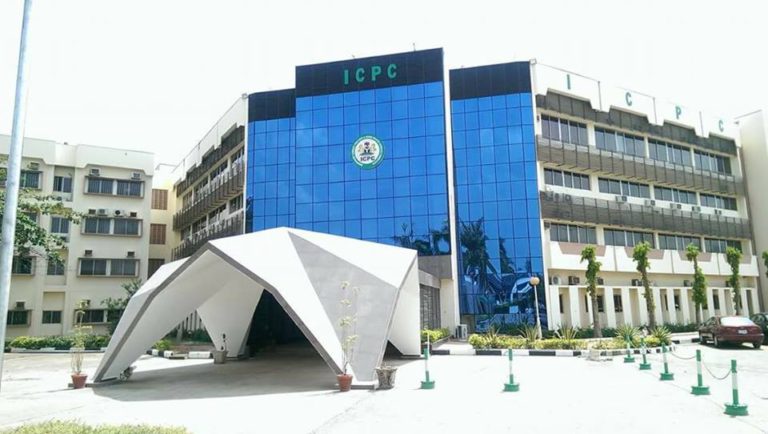
THE Independent Corrupt Practices and Other Related Offences Commission (ICPC) has tracked N219.84 billion to contractors and ministries, departments and agencies (MDAs) of the federal government.

The infractions involve 1,355 contractors and 176 MDAs.

At a media briefing with journalists in Lagos State on Monday, April 29, the ICPC Chairman, Musa Aliyu, said the findings resulted from the commission’s ‘Phase 6 of the Constituency and Executive Project Tracking Initiative (CEPTI).

“The Constituency and Executive Projects Tracking Group (CEPTG) has tracked a total of N219,843,922,945.48 across 176 ministries, departments, and agencies (MDAs) since its inception in 2019.

“This tracking exercise focuses on critical sectors like education, agriculture, healthcare, and infrastructure, spanning 26 states and the FCT across all 6 Geo-political Zones,” he said.


Read Also:


The ICIR reports that the initiative is to ensure government funds are directed towards impactful projects that benefit the most vulnerable Nigerians.

According to the ICPC boss, the phase 6 tracking exercise, which commenced in November 2023 and continued through the first quarter of this year, is ongoing.

He promised to make the final report public.

“Finally, we want to assure Nigerians that ICPC in discharge of its enforcement mandate is committed to adherence to the rule of law and international best practices in the investigation and prosecution of persons suspected to have committed corrupt practices,” Aliyu said.

The CEPTI, conceived in April 2019 as a preventive and intervention measure, is initiated to tackle corruption and, among other things, engender good governance, transparency, and accountability within the body polity. It focuses on how well monies allocated to critical sectors by the government are utilised.

Having investigated some infractions identified on funded projects, Aliyu hinted that the commission had instituted cases against some suspects.

In his presentation, the head of the Constituency and Executive Project Tracking Department (CEPTG), Jimoh Sulahiman, said 1,721 government-funded projects were tracked within the phase 6 tracking cycle and that the commission was conducting further investigations into some infractions discovered.

He pointed out that the infractions included underperformance, shoddy execution, abandonment and certification of projects when not completed.

Sulahiman said ICPC recovered N163 million in cash and N515.3 million in assets and had saved the government N30 billion cumulatively.

He noted that some contractors had returned to sites to perfect projects valued at N30 billion.

He explained further that N220 billion was appropriations for all the tracked projects, and N285 was the contract value of all the projects tracked.

Appropriation for the tracked projects was N19.55 billion in 2020. It increased by 42 per cent to N92.72 billion in 2021 and by 47 per cent to N107.58 billion in 2022.

“A total of 1,721 projects were tracked within the focal sectors of education, water resources, agriculture, power and health, energy, and roads. These projects were awarded to a total of 1,355 contractors in 176 MDAs,” Sulahiman stressed.

In 2020, appropriation for the tracked projects was N19.55 billion, which increased by 42 per cent to N92.72 billion in 2021 and by 47 per cent to N107.58 billion in 2022.

Several reports on constituency projects by The ICIR point to shoddy execution by government agencies, contractors and their cronies at the detriment of the masses and the nation’s development.

NUPRC offers 12 oil blocks for sale in fresh bid round

0

THE Nigerian Upstream Petroleum Regulatory Commission (NUPRC) has announced that it has begun processes for the 2024 oil bid round with 12 oil blocks and five deep offshore assets from last year’s bid exercise.

Also, the commission disclosed on Monday, April 29, that it had started its ‘due diligence’ on Renaissance Consortium’s planned acquisition of Shell Petroleum Development Company (SDPC) onshore oil assets for $2.4 billion.

The commission’s chief executive officer, Gbenga Komolafe, spoke at two separate events in Abuja: the maiden NEITI House Dialogue and a workshop organised to streamline the issues in the proposed divestment of the SPDC’s participating interests.


Read Also:


Komolafe, who said the oil bids would be concluded by January 2025, stated that the new green field oil blocks on offer included six acreages located on the continental shelf, four deep offshore blocks, and two onshore blocks in the Niger Delta.

He explained that the commission had put in place regulations to create a conducive investment environment by ensuring regulatory certainty, vacating entry barriers, and promoting global competitiveness.

He stressed that the licensing round would be conducted in a fair and competitive bidding process that is non-discriminatory.

He noted that some of the criteria required for acquiring the blocks included technical competence, financial capacity, and viability.

“The licensing round that we put in place is designed to enhance quality data sets and is going to be conducted in a fair, transparent, and competitive bidding process and in a non-discriminatory manner as stipulated in Sections 73 and 74 of the Petroleum Industry Act (PIA).

“It is gratifying that in the last three years, you will see the growth of revenue generation by the commission. The commission has successfully been meeting and surpassing the revenue targets set by it, and that equally speaks to the transparent approach in revenue reporting by the commission,” he added.

Komolafe, at one of the events, informed that the 2024 licensing round, as described in the Petroleum Industry Act (PIA), would commence at the end of this month.

He said the commission generated N4.344 trillion in revenues in 2023, a 15 per cent increase from N3.78 trillion generated in 2022, N2.9 trillion in 2021, and N2 trillion in 2020.

The NUPRC also began its ‘due diligence’ on Renaissance Consortium’s planned acquisition of SDPC onshore oil assets for $2.4 billion.

In January this year, oil giant, Shell agreed to the transaction, announcing that when the deal is completed, the oilfields would be operated by the new group, comprising ND Western, Aradel Energy, First E&P, Waltersmith, and Petrolin, a Swiss firm.

However, Shell, which has operated in Nigeria for over six decades, stated that the federal government’s approval was still required for the deal to be consummated.


CBN raises Customs duty by 14% despite calls for fixed rate

The Central Bank of Nigeria (CBN) has again dashed importers’ hopes by raising the exchange rate for Customs import duty by 14 per cent.

The CBN made the decision and ignored calls for a fixed rate to moderate rising inflation, which is currently at 33.1 per cent.

The Nigeria Customs Service (NCS), through the CBN, has consistently fixed the exchange rate to reflect the official market rate on the Nigerian Autonomous Foreign Exchange Market (NAFEM) window, hence the regular changes in rate.

In previous reports by The ICIR, experts called for a fixed rate to moderate the rising price of goods and rising inflation.

However, the CBN has kept changing the rate, which has affected the rising prices of commodities by businesses.


Read Also:


Information obtained from the official trade portal of the Nigeria Customs Service (NCS) shows that the apex bank raised the Customs FX duty rate from N1,164.84/$ to N1,327.35/$ on Monday, April 29.

This represents a 14 per cent increase in rate compared to the old rate of N1,164.84/$ previously used for the opening Form M and an increase of N162.51 on a dollar needed to clear goods at the port.

This means that importers opening Form M on Monday, April 29, required more money to pay import duties than those who opened Form M at the weekend.

The naira had its worst run since the devaluation in January, falling 7.8 per cent to N1,339.23 on Friday, April 26, from N1,234.49 at the beginning of the week, according to data by FMDQ Securities Exchange.

The naira appreciated to N1,280/$ Saturday, April 27, an 8.57 per cent gain compared to N1,400/$ Friday, according to multiple sources.

Commenting on the development, the Chief Executive Officer of the Centre for Promotion of Private Enterprise (CPPE), Muda Yusuf, said Nigeria needed to de-emphasise revenue generation because too much emphasis on revenue causes growth, job creation, and development to suffer.

He said fiscal authorities needed to stabilise rates to give policy support to critical sectors of the economy and also give breathing space to investors without burdening them with too much taxation.

“A volatile customs duty rate instead of a fixed rate is not good for business and trade,” Yusuf said.

The Director-General of the Manufacturers Association of Nigeria (MAN) Segun Ajayi-Kadir who also spoke on the development told The ICIR that the association was rooting for N800/$ as basis for the import duty calculations. This, he said, would make businesses make proper projections and have a moderate cost of production, which would bring down the cost of the end product.

“We have been engaging the government on this because if we keep having price uncertainties with the import-duty rates, the higher prices will be passed on to the consumers, leading to low sales. The disposable income of Nigerians is low, and prices are up.”

He suggested that the fixed rate would lead to a moderate cost of production and raw materials inputs, and it would bring down the cost of end products and increase the volume of sales.

“More production and sales means more revenue for the government and overall moderate inflation,”he added.

Months after series of kidnapping, can FCT conquer the scourge?

0

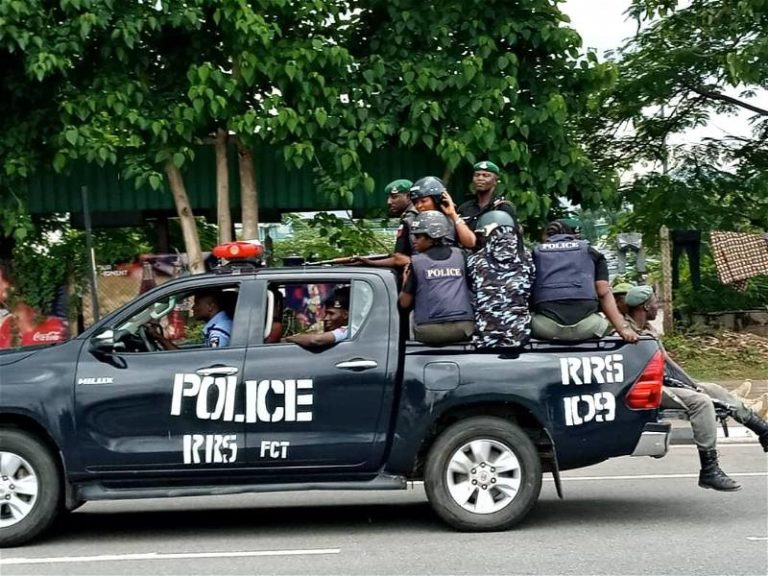
THE year 2024 did not start on a pleasant note for some residents of the FCT and its environs as the disturbing surge in kidnappings, extended into the new year from the previous year.

This reality sent shockwaves through FCT communities and fueled widespread anxiety across the country.

As the capital city of Nigeria reels from this relentless surge in kidnappings, residents of Abuja confront a harrowing reality of insecurity, prompting urgent calls for action from authorities.


Read Also:


The kidnap of Najeebah and her sisters came to limelight when the family cried out for help to crowdfund a ransom of 60 million.

They had been kidnapped in their home on January 9 2024, along with their father after their uncle was killed. The bandits released their father, demanding that he should raise N60 million as payment before Friday, January 12 2024, to free his daughters.

Nigerians were asked to donate whatever they had into a bank account to raise the ransom, but not enough was raised.

After a week of them in captivity, the death of the eldest sister, and an increase of the ransom to 100 million, Nigerians expressed their anger towards the lackadaisical attitude of the government and security operatives towards the situation.

A former minister of communications and digital economy, Isah Pantami came under fire for aiding the ransom payment after the compulsory linkage of phone numbers with National Identity Number (NIN) during his tenure as minister which he claimed would solve insecurity in the country.

The six girls were released on Saturday January 20, 2024. But like other insecurity cases in the country, it wasn’t the last in the FCT and its environs. In the following weeks, at least there were three different kidnap cases and ransom crowdfunding increased.

Over 23 residents in Dei-dei community located off Kubwa-Zuba expressway were abducted, mostly taken from three housing estates in the area. Similarly barely 48 hours after the kidnappers’ attack at Dei-Dei, two children, alongside nine adults, were also whisked away at Gbaupe village, behind Aco Estate, along Airport Road in Abuja.

Some weeks later, the FCT police command orchestrated the arrest of a popular kidnapper in Abuja, Chinaza Philips. The FCT minister Nyesom Wike also announced a cash prize for whoever finds the kidnappers which prompted the police force to make more arrests.

While some security experts think that this approach would make the citizenry assist in the search of kidnapped victims and employ caution in the neighborhood others think that this approach would only make individuals fake kidnaps when they know there is a bounty involved among other security concerns.

Speaking with THE ICIR, a security analyst with SBM intelligence, Emeka Okoro highlighted that while the approach of offering rewards to individuals for assisting security operatives in apprehending criminals, the technique is not without issues. He stated that offering incentives can promote cooperation, but there’s a chance they will be abused for nefarious purposes.

‘Over time, the bounty approach has emerged as a means of rewarding individuals for aiding in the capture of criminal activities. While it plays a major role in crime prevention, the practice is not without its problems. On one hand, offering incentives encourages collaboration; on the other hand, there’s a risk of inducement being exploited for personal gain.’ 

‘To maintain its effectiveness, security agents should not rely solely on this approach. Instead, they should focus on educating citizens about the significance of providing accurate and reliable information to law enforcement agencies.’ He stated

The executive director of Elixir Trust foundation, Emmanuel Ikule, noted that the bounty  reward for individuals is just going to be a means for embezzlement of funds while victims of the attacks are neglected.

He noted that the bounty approach can’t be sustained  as security operatives should be mandated to carry out their primary role and be punished for failure to perform.

After some arrests were made, there was a decrease in the outcry in the FCT but it upsurge in other parts of the country like, Kaduna as The ICIR reported that over 100 school children were abducted on March 7 2024.

The ICIR had earlier reported in January that over 380 persons were kidnapped between December 2023, and January  2024, across Nigeria under President Bola Tinubu.

Okoro stated that while observing that the significant kidnappings in Abuja have temporarily decreased, it is not safe to say that it is over as there are still issues of thefts and robberies in the city.

‘While it’s possible that major kidnappings may have temporarily subsided in Abuja, it would be unwise to declare an end to the threat, as those responsible might be on a brief hiatus, potentially gearing up for future incidents. Despite a decline in high-profile abductions, the city is still grappling with ongoing issues such as minor thefts, ‘One Chance’ robberies, armed robberies, and home break-ins across various areas of the FCT,’ he stated.

He also attributed the cause of the recent kidnappings in the north to economic, political and religious factors.

‘The causes of the current wave of kidnappings in northern Nigeria are complex and multifaceted, involving factors such as economic challenges, political instability, and tensions within the region. Socioeconomic issues, chief among them is poverty and lack of opportunities, can contribute to the rise in criminal activities. Additionally, ethnic and religious dynamics, along with weak law enforcement, may also play a role in the security challenges faced in the region,’ he noted.

Ikule also shares the same views as Okoro while adding that porous borders is also a major factor.

‘Neighbouring countries have heard about our story and since our borders are open, criminals just mobilise and find someone who is their spokesperson and the work of collecting millions starts,’ Ikule stated.

To forestall future security breaches in the Federal Capital Territory (FCT), they both noted that beefing up the security is essential which involves strengthening and enhancing the monitoring systems and security operatives.

‘Implementing a comprehensive security strategy is very important. This involves enhancing surveillance systems, strengthening law enforcement, improving intelligence sharing, and investing in cybersecurity measures for critical infrastructure. Additionally, engaging the community and public awareness campaigns can contribute to creating a more secure environment. Regular training for security personnel and staying updated on evolving security threats is essential for effective prevention.’ Okoro stated

‘The functions of security agencies differ, each should be made to concentrate in its area of jurisdiction, specialisation, so that those failing would be known and something can be done to improve them. They can share intel that supports and improves the work of their fellow agencies.

‘The FCT like each state needs a Central Tech -Hub that monitors the environments with the help of cameras, cam-coders, a central forensic lab with forensics that aids investigation of cases” Ikule highlighted.

Despite increasing budgets on security, Nigeria’s insecurity lingers

THE ICIR’s data journalist, Kehinde Ogunyale, evaluated the budgets approved for seven security institutions in Nigeria between 2019 and 2023 and juxtaposed them with data on insecurity in the country. The findings showed that while the expenditures for these formations have consistently grown, killings and incidents connected to insecurity have also been on the rise.


On December 25, 2023, more than 100 people were killed as a result of a bandit attack on 15 communities in Bakkos and Barkin-Ladi Local Government Area (LGA) of  Plateau state. More than 200 houses were razed to the ground at dawn of that Christmas Day.

The attacks lasted for two days despite distress calls placed to the military for intervention during the dreadful incident. Two months after the massacre, no justifiable explanation have been issued by the government or the military authorities. 

Just like Plateau state, several other states in Nigeria, specifically in the northern region, have reported horrifying attacks that led to the deaths of people in local communities with little or no intervention by security operatives.


Read Also:


These brutal killings have raised questions on how the government and security agencies tackle lingering insecurity crises in the country.

Over the last five years, data gathered by The ICIR from the Armed Conflict Location & Event Data Project (ACLED) revealed that more than 44,000 people have been killed in various insecurity crises that rocked Nigeria.

The figure is almost the total projected population of Ifedayo LGA in Osun state, one of Nigeria’s 774 LGAs. 

Most of these killings were carried out by non-state actors like bandits, terrorists, and secessionist groups. There were also inter-communal clashes with attendant casualties.

Many of these incidents could be prevented or contained in civilised climes where budgets for insecurity are judiciously expended and requisite infrastructures are available to the security forces to contain such onslaughts. 

Available data show that there has been a consistent increase in the number of attacks and killings reported within the years under study in Nigeria. 

This data contradicts the promises by former President Muhammadu Buhari and President Bola Tinubu, inaugurated in May 2023, to end insecurity in the country.

Also, the data conflicts with the expectations of Nigerians from the security operatives, whose responsibility it is to protect the country from all forms of external aggression and internal unrest and crimes. 

It is for these roles that the security formations receive yearly budgets.

What data say 

According to ACLED data,  44,779 people were killed in 20,398 incidents, collated from media reports, between 2015 and 2023. 

This is 16 per cent higher than the 38,515 deaths recorded between 2014 and 2018. 

By calculation, there are 1,826 days between January 2015 and December 2023. If the total number of deaths is divided by each day, this would mean an average of 25 persons were killed daily in the last five years.

Index 2019 2020 2021 2022 2023
Deaths 5,952 8,459 10,880 10,754 8,734
Incidences 2,440 3,932 4,547 4,836 4,643

(Insecurity data in Nigeria/ Source: ACLED)

Within the first three years under review, the death rates rose by 83 per cent from 5,952 people killed in 2019 to 10,880 killed in 2021. There was however a slight decrease to 10,754 deaths in 2022 and 8,734 deaths at the end of 2023.

The ICIR reported that despite a change of administration in 2023, insecurity has persisted with over 5,000 people killed in the first seven months of Tinubu’s administration which is higher compared to when Buhari came into power in 2015. 

Budgetary provision for security units

In a separate development, The ICIR examined the expenditure of seven security agencies and findings showed that the budget allocation to these units and ministries increased as insecurity persisted.

The examined parastatals are the Nigerian Army, the Nigeria Security and Civil Defence Corps (NSCDC), the Nigeria Airforce, the Nigeria Navy, the Ministry of Police Affairs, the Defence Headquarters and the Ministry of Defence Headquarters.

Between 2019 and 2023, N7.71 trillion was released to these seven units. 

MDA 2019 2020 2021 2022 2023
NIGERIAN ARMY N228.42 billion N463.41 billion N510.64 billion N580.59 billion N665.12 billion
NSCDC N89.17 billion N91.48 billion N91.36 billion N110.01 billion N117.72 billion
MINISTRY OF DEFENCE (MOD HQTRS) N27.37 billion N22.16 billion N21.52 billion N21.01 billion N62.69 billion
NIGERIAN NAVY N101.39 billion N130.81 billion N136.06 billion N173.03 billion N189.79 billion
NIGERIAN AIRFORCE N114.84 billion N136.42 billion N140.13 billion N184.78 billion N200.42 billion
DEFENCE HEADQUARTERS N5.21 billion N44.42 billion N35.36 billion N80.94 billion N86.11 billion
POLICE FORMATION & COMMAND HQTRS 366,133,777,795
MINISTRY OF POLICE AFFAIRS N409.39 billion N455.13 billion N783.86 billion N838.06 billion
Total N932.53 billion N1.30 trillion N1.39 trillion N1.93 trillion N2.16 trillion

(Note: The police command became a ministry in 2020)

Further analysis showed that over the past five years, the allocation of the Army increased by 191.19 per cent, NSCDS rose by 32 per cent and the Airforce budget jumped by 74.53 per cent. Also, the budget for the Navy increased by 87.19 per cent, the Defence headquarters budget rose by 1550.5 per cent and the Ministry of Defence budget jumped by 129.1 per cent.

Meanwhile, the Police command had a budget of N366.13 billion in 2019 after which it became a ministry in 2020. Between 2020 and 2023, the ministry’s budget increased by 104.7 per cent. 

In 2024, Tinubu increased the allocation to 11 security agencies and ministries by seven per cent. Despite these increases, insecurity has grown to become Nigeria’s greatest challenge. 

The ICIR documented several insecurity reports in the North, South-East and other states within the country. 

Expert reacts

The Lead Director for the Centre for Social Justice,  Eze Onyekpere, told The ICIR that  Nigeria did not operate a result-based budgeting system where allocations were tied to critical deliverables.

According to Onyekpere, the security sector ought to have a benchmark where public resources are linked with high-level results.

He said, “There is a continuum called the planned policy-budget-continuum. You make plans, policies and laws and the next step is to put resources behind them, which is through the budget. The security agencies need more effective supervision and the government and civic society need to demand value for money.”

Recently, the Minister of Information and National Orientation Mohammed Idris, disclosed that the federal and state governments have agreed on creating state polices as part of efforts to reduce insecurity in the country

2024 UTME: 76% of 1.8m candidates score below 200

0

THE results of the 2024 Unified Tertiary Matriculation Examination (UTME) have been released.

It shows that just 24 per cent of the 1.8 million candidates whose results have been released scored above 200.

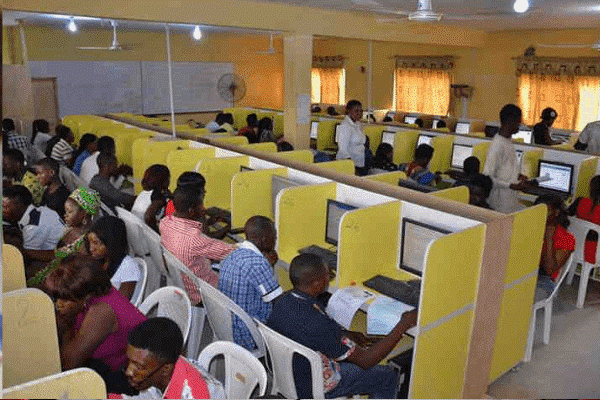
The outcome, disclosed on Monday, April 29, during a press briefing at the Joint Admissions and Matriculation Board (JAMB) headquarters in Bwari, Abuja, by JAMB’s registrar, Ishaq Oloyede, revealed that more than 1.94 million candidates registered and participated in the examination across 118 towns and over 700 centres nationwide.

The examination, which began on Friday, April 19, and ended on Monday, April 29, saw 80,810 candidates absent out of the 1,989,668 candidates registered for the exams.


Read Also:


This means that 1,904,189 candidates sat for the UTME within six days of the examination.

The JAMB registrar said the results of 1,842,464 candidates had been released, while 64,624 candidates had their results withheld for possible infractions.

Meanwhile, out of the 1.8 million results released, where the maximum score obtainable was 400, Oloyede stated that 8,401 candidates, representing 0.5 per cent of the total, scored 300 and above.

Oloyede further broke down the results, noting that “77,070 scored 250 and above; 439,974 scored 200 and above while 1,402,490 scored below 200.”

Although the examination body has yet to release the cut-off mark for the 2024/2025 academic session admissions, 140 was set for the 2023 admission into universities and 100 for polytechnics and colleges of education.

However, institutions, including universities, have the liberty to raise their individual minimum points higher than the agreed benchmark.

Over the years, several universities have set their minimum benchmark around 180-200, with some also admitting students who scored 160 and above in the UTME.

While this shows that many students who score below could still stand a chance of getting admitted to some of their preferred universities, many Nigerians on social media have shown their displeasure over candidates’ performance.

Some of them described the result as ‘bad’ and ‘worrisome’ while also calling on the candidates to prioritise education.

NFF appoints Finidi George as new Super Eagles head coach

1

THE Nigeria Football Federation (NFF) has appointed Finidi George as the new head coach of the Super Eagles.

According to a statement released on Monday, April 29, the 52-year-old former Real Betis and Ajax Amsterdam forward was given the reins of the nation’s senior men’s team after the NFF Board approved the recommendation of its Technical and Development Committee the appointment.

Following the Super Eagles’ remarkable run to the final of the 2023 Africa Cup of Nations in Cote d’Ivoire, the Super Eagles gaffer at the tournament, José Santos Peseiro, a Portuguese, stepped down, and Finidi George, who had worked as his assistant for 20 months, took over as temporary coach.


Read Also:

The former Super Eagles player, George, oversaw two friendly matches in Morocco last month as interim manager. 

The team won 2-1 against Ghana to snap an 18-year winless drought but then lost 0-2 to Mali.

“George, a member of the so-styled ‘Golden Generation’ that won the 1994 Africa Cup of Nations tournament in Tunisia and emerged as the second most entertaining team in Nigeria’s debut at the FIFA World Cup finals in USA the same year, won 62 caps for Nigeria, including featuring at the 1994 and 1998 FIFA World Cup finals,” the NFF said in the statement.

Considering George’s remarkable career, the NFF statement highlighted his achievements, which include “gold, silver and bronze medals from the 1992, 1994, 2000 and 2002 AFCON tournaments.”

According to the statement, one of his most unforgettable experiences was assisting the late Rashidi Yekini in scoring Nigeria’s first-ever FIFA World Cup goal against Bulgaria in Dallas, USA, on June 19, 1994.

 Within the next five weeks, the new Super Eagles manager’s primary responsibility will be to lead the side to victory in two key 2026 FIFA World Cup qualifying matches against South Africa and the Benin Republic.

“The matches are must-win encounters, with the Super Eagles lagging behind in third place in Group C of the African campaign behind Rwanda and South Africa,” the NFF stated.

How social media turn ‘digital oil’ for Nigeria content creators

IN recent years, using digital platforms has shifted from simple personal connections and information sharing to a tool for making money and earning a living.

For many Nigerians, social media platforms have become digital oil, according to Standard, a firm supporting corporate institutions to grow faster through technology.

Oil is the mainstay of the Nigerian economy, supporting the nation before its independence in 1960.

Individuals appear to be turning social media platforms into ‘oil wells’ to make fortunes.

People commonly referred to as creators now share content on social media platforms to earn money.

These items are presented in various formats, including articles, videos, and photos.


Read Also:

Nigerian creators react as Twitter begins ads revenue payment

ICIR partners UNILAG, UNICAL on countering misinformation

Twitter will charge $8 monthly for account verification – Musk


Some content creators have many followers and audiences and are commonly called influencers.

As influencers, these creators frequently earn fortunes from their content by promoting businesses and brands and receiving payment from some social media platforms they use.

Creators’ earnings are influenced by factors such as their follower count, audience engagement, and content type.

However, even those with smaller following can generate consistent and substantial income by cultivating a personal brand on social media.

The creator industry lacks a standardised pricing model due to variations in niches, strategies, and experience levels.

Subscription models offer creators a reliable income stream, with platforms like Patreon, Fanfix, Fanvue, Fourthwall, and OnlyFans being popular choices for publishing exclusive content.

In Nigeria, there has been an increase in content creators’ population following the COVID-19 lockdown in 2020, which made most people free from work.

As a way of engaging themselves, many Nigerians resorted to making short videos of their families and how they coped with the lockdown. The experience from this activity has since translated into content creation for many.

Many young citizens have turned to content creation as a source of income. Some people do it as a side hustle, while others work full-time. The activity comes with different techniques, including the use of vernaculars and the official lingua franca – the English Language.

The content creation industry is growing throughout the country, providing several opportunities for people and businesses. Young people, entrepreneurs, and other business owners are making ends meet by capitalising on the country’s rapidly developing digital ecosystem and rising need for fascinating content.

In this report, The ICIR spoke with some content creators and influencers who shared their journey as creators and their challenges.

“The current state of content creation is really encouraging. It is thriving with different creators on different platforms dishing out good quality content, as we can see on YouTube, TikTok, Instagram and even X (formerly Twitter). People are really delving into content creation, making money from their talents and passion”, says Lois Aniefiok.

Aniefiok, a content creator and influencer who has been actively creating content on social media platforms for about seven years, shared her journey with The ICIR.

Content Creator/Influencer, Lois Anirfiok’s X page

“I started actively creating content in 2017. This was when I realised I was a content creator in copywriting and visual content. Before that, I had an active audience on Facebook, although my account was not monetised. I then moved to Twitter, I was still able to get engagement on my posts, and that was when I started making money from social media,” she said.

According to Lois, the sector is influenced by various factors, including how internet accessibility, everyone being able to use any social media platform they choose because there is no licencing and the country’s high unemployment rate.

She noted that another driver is the monetisation aspect of content marketing, adding that the world is becoming increasingly digitalised, with many people creating and consuming content.

Assessing the market size and growth potential, Lois told The ICIR that it is largely determined by a creator’s niche, audience size, monetisation opportunity in that niche and brand collaborations.

“Content creators are narrowing down their contents to different niches, which is good because it gives room for growth. Brands are accepting content marketing more, which makes collaboration easier and for every niche, there is an audience,” she said.

Lois also shared that creators in Nigeria and worldwide earn through ad revenue, brand partnerships, sponsorships, workshops, and in many other ways. For her, Lois noted that the brands she had worked for approached her and the average pay currently is between N150k and 400k. She added that “content creation can serve as a full-time job, all a creator needs to do is invest in good tools and take courses”.

A lifestyle content creator, Lauretta Ebube, who has also been in the business of content creation for about five years, told The ICIR that she started influencing on Twitter before delving into visual content to become a lifestyle creator on other platforms.

“I started in 2019, then on Twitter as an influencer. I had lots of followers. Brands started reaching out to me and also gave room for friendship with other people in order to get referrals. Then in 2020, I started creating relatable video content and posting on Instagram, TikTok and YouTube,

I also started getting promotion deals from various brands,” she said.

Content Creator/Influencer, Lauretta Ebube’s Instagram page

Lauretta stated that there was an upsurge in content creation since people continued to earn money by sharing content. Besides, marketers are eager to pay influencers to promote their businesses.

When asked how she lands clients, she told The ICIR, “They mostly approach me. But I’m planning to start reaching out more because that is how to get your money up.”

Regarding her earnings, Lauretta said, “I can’t really say because it depends on what the client wants. It’s not a lot of money per client, but at the end of a good month, I can earn between N300k-N500k. It can be more with all my socials.”

When asked if she sees herself becoming a full-time content creator, Lauretta responded, “Yes, it can happen, but I’m not sure I have that confidence yet.”

Lauretta also shared her thoughts on the resources needed to succeed as a content creator, suggesting “creating tools, content creating and editing classes, tutorials, etc.” would be helpful.

Many creators who make money from content creation face a variety of challenges, including algorithm problems from some social media platforms and interacting with their followers, while others find it difficult to collaborate or work with businesses, particularly those with less follower count.

Edo governor Obaseki announces N70,000 new minimum wage

0

The Edo State Governor Godwin Obaseki has approved a new minimum wage of N70,000 for civil servants.

The governor revealed this while commissioning the new Labour House in Edo state on Monday, April 29.

He said the new salary would be implemented from May 1.


Read Also:

The state government further confirmed the commencement date of the new minimum wage in a press statement issued on the government’s official X account on Monday.

“The Governor made this declaration while commissioning the Labour House, which is second to none, and regarded as the most magnificent Labour House in Nigeria, built by the Governor Godwin Obaseki-led administration, and named after a foremost labour unionist in the country who hails from Edo State, Comrade Sen. Adams Aliu Oshiomhole.,” the statement partly reads.

In May 2022, the governor announced a minimum wage of N40,000 for the state civil servants.

Obaseki made the announcement in Benin, the state capital, while delivering his 2022 Workers’ Day address.

He said his government would continue to prioritise the welfare of Edo workers and equip them with the capacity and environment they needed to deliver efficient and quality service to the people.

He urged the workers in the state to take advantage of opportunities offered by his administration in the agricultural sector to increase food production in the country

The ICIR reports that the federal government and the NLC are negotiating a new minimum wage to address inflation and other economic challenges in the country.

The National Bureau of Statistics (NBS) reported that in March 2024, the inflation rate increased to 33.2 per cent from 31.7 per cent in February. Moreover, food inflation increased from 30 per cent in February to 31.7 per cent in March.


Documentary Film Fellowship open for Nigerians

THE StoryMi Academy, in collaboration with the French Embassy in Nigeria, launches the second edition of the StoryMi Documentary Film Fellowship.

This six-month programme offers intensive training for filmmakers.

Selected fellows will gain invaluable skills through workshops and mentorship, network with industry professionals, receive support in developing their documentary proposal, and receive a grant to produce their short films. They will also get a chance to attend a prestigious international film festival.


Read Also:


All travel and accommodation costs for in-person sessions and film festival attendance will be covered by StoryMi Academy.

Nigerian documentary filmmakers, ages 20 to 35, can apply for a fellowship. 

The deadline is May 3.

To check for eligibility click here

To apply click here