SOCIO-ECONOMIC Rights and Accountability Project (SERAP) has urged the Group Chief Executive Officer of the Nigerian National Petroleum Company Limited (NNPCL), Mele Kyari, to account for allegedly missing USD$2.04 billion and N164 billion oil revenues.
The SERAP said the allegations were documented in the 2020 Auditor-General of the Federation’s report published in December 2023 and made available to the public recently.
The organisation noted that the unavailability of the said revenues had done further damage to the nation’s economy and contributed to very high levels of deficit spending by the government.
In a statement released on Saturday, February 17 and signed by its deputy director Kolawole Oluwadare, SERAP called on Kyari to name and shame people responsible for the revenue and hand them over to appropriate anticorruption agencies.
“Without the full recovery and remittance of the missing USD$2.04 billion and N164 billion oil revenues, the dire economic situation may worsen, and Nigerians will continue to be denied access to basic public goods and services.’
“The Auditor-General has for many years documented reports of the disappearance of public funds from the NNPC. Nigerians continue to bear the brunt of these missing oil revenues.”
The statement added that the revenues disappearance reflected a failure of NNPCL accountability and the organisation’s disregard for the values of accountability and transparency.
It further stated that Nigerians were entitled to know the whereabouts of the funds.
The SERAP argued that Nigerians’ rights to restitution, compensation, and a guarantee against repetition would be advanced by maintaining accountability and transparency in the handling of oil revenues, stressing that the monies might have been diverted into private pockets, denying the government the funding needed to carry out its activities.
Citing sections 13 and 16 from the Nigerian Constitution, SERAP said the sections impose clear responsibility on the NNPCL to conform to.
“Nigeria has made legally binding commitments under the UN Convention against corruption to ensure accountability in the management of public resources. Articles Five and Nine of the UN Convention against Corruption also impose legal obligations on the NNPCL to ensure proper management of public affairs and public funds. These commitments ought to be fully upheld and respected,” said the organisation.
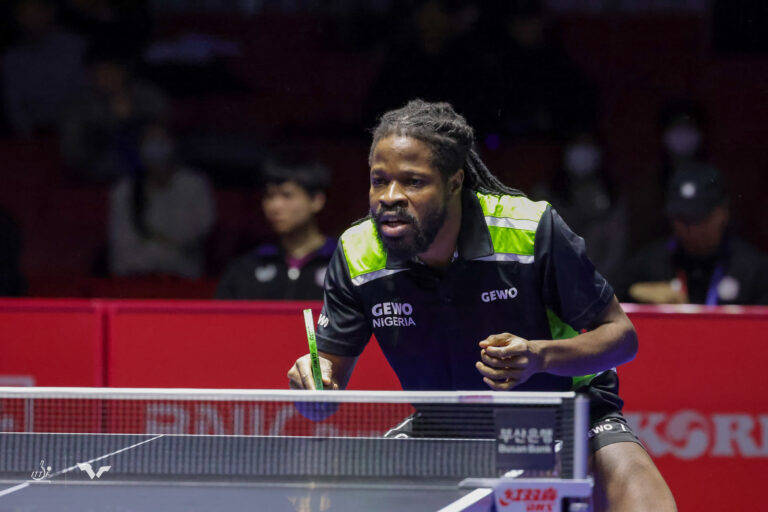
NIGERIA’S table tennis teams have been knocked out of the ongoing International Table Tennis Federation (ITTF) World Team Table Tennis Championships in Busan, South Korea.
The Nigerian teams in men’s and women’s categories were ruled out of contention after losing six of their eight group-stage matches.
Nigerian women’s team, pitted against Germany, Slovakia, Poland, and Mexico in group three, could not continue in the tournament after losing three out of the four group-stage matches.
The players, Edem Offiong, Ajoke Ojomu and Esther Oribamishe began their performance at the tournament after losing 3-0 in their first match against Mexico.
They could not match the strength of the Mexicans.
Similarly, during the second and third matches against Slovakia and Germany, the Nigeria women’s team could not pick a point, losing 0-3 in the two encounters.
Although one match against Poland is left to be played on Tuesday, February 20, previous poor results showed that Nigeria’s team is at a disadvantage in getting to the next round.
Also, Nigeria’s men’s category displayed an unimpressive performance, losing three of their four group-stage matches.
Their first match had a mild drama when the country’s poster boy Quadri Aruna was absent, crediting walkover to the opponent- Japan.
Aruna’s absence took a toll on the men’s team after other players, Olajide Omotayo and Bode Abiodun, could not douse tension, suffering a 3-0 and 3-1 defeat to Chinese Taipei and Madagascar.
Meanwhile, the men’s last group match against the Czech Republic is billed to be held on Monday, February 20, at the Busan Exhibition Convention Centre (BEXCO).
Nigeria’s woeful performance on the world stage is becoming a recurring decimal. The ICIR reported how the Nigeria teams lost at the group stage during the World Table Tennis Championships held last year in Lagos.
Also, this year, The ICIR reported how Nigerian table tennis players lacked quality sporting facilities and exposure to improve their games.
THE Economic and Financial Crimes Commission (EFCC) currently handles several corruption cases in Nigeria, with many involving prominent people.
While some cases are in court, others are still being investigated.
In this report, The ICIR’s Bankole Abe looks at some pending cases with the EFCC, which involve prominent Nigerians.
Newly appointed chief of staff (COS) to Kogi state governor, Ali Bello
Ali Bello, the newly appointed chief of staff (CoS) to Kogi State Governor Usman Ododo, is on trial for money laundering.
Bello, a nephew of the immediate former governor of the state, Yahaya Bello, was among the appointees announced by Ododo on Saturday, January 28, shortly after he took the oath of office in Lokoja, the state capital.
Ali Bello, Nephew to former Kogi state governor Yahaya Bello and current COS to Governor Ododo
The ICIRreported in December 2022that the EFCC arraigned the new CoS, said to be the immediate past governor’s nephew, before a Federal High Court in Abuja in December 2022.
He was arraigned before a judge, James Omotosho, alongside one Dauda Suleiman on a 10-count charge of alleged misappropriation and money laundering.
The commission stated that the accused, including one Abdulsalami Hudu, a cashier at the Kogi State House of Assembly now at large, took N10.2 billion out of the state’s coffers for personal use.
However, the accused entered a “not guilty” plea to the accusations.
Ruling on the bail request by the accused, the court granted the request in the sum of N1 billion apiece, along with two sureties who must provide N2 billion bonds and landed property worth N500 million each.
The court also ordered that they be remanded in prison pending when they fulfil their bail conditions.
The case was then adjourned till February 6, 2023.
On February 8, 2023, the EFCC arraigned Bello alongside Abba Adauda, Yakubu Siyaka Adabenege, and Iyada Sadat for allegedly misappropriating over N3 billion (N3,081,804,654.)
The presiding judge, Obiora Egwuatu, ordered that the defendants be remanded at a correctional centre pending the ruling on their bail application.
They were later granted bail of N500 million each with two sureties in like sum.
Suspended minister of Humanitarian Affairs, Betta Edu
Earlier this year, the EFCC questioned the suspended Minister of Humanitarian Affairs and Poverty Alleviation, Beta Edu, over alleged N585 million fraud.
The former minister arrived at the commission’s headquarters for interrogation in Abuja on Tuesday, January 9, according to the anti-graft spokesperson, Dele Oyewale.
Suspended Minister for Humanitarian Affairs and Poverty Alleviation, Betta Edu
President Bola Tinubu suspended the embattled doctor-turned-politician on Monday, January 8, after public outrage against her alleged diversion of public funds amounting to N585 million.
Suspended NSIPA Cordinator, Halima Shehu
On January 3, the EFCC arrested and detained the suspended National Coordinator of the National Social Investment Programme Agency (NSIPA), Halima Shehu.
Former National Coordinator of the National Social Investment Programme Agency (NSIPA), Halima Shehu.
Shehu was detained over the ongoing probe of N37.1 billion allegedly laundered in the Ministry of Humanitarian Affairs, Disaster Management, and Social Development under former Minister Sadiya Umar-Farouk.
A source within the EFCC confirmed to The ICIR that Shehu was at the commission’s headquarters in Jabi, Abuja, where she faced interrogation.
The source revealed that Shehu was indicted in the alleged N37.1 billion fraud at the ministry because she was the national coordinator of the Conditional Cash Transfer Programme, where the fund was declared missing.
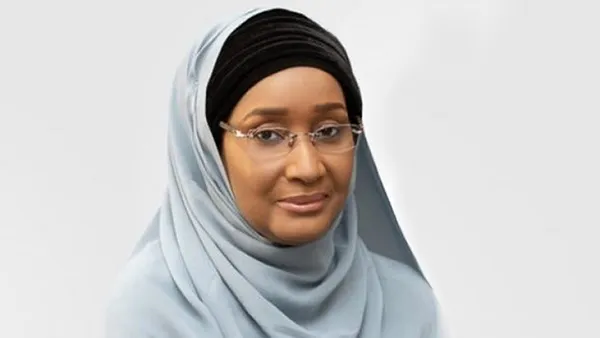
Former Humanitarian minister Sadiya Umar-Farouq
Former Minister of Humanitarian Affairs, Disaster Management and Social Development Sadiya Umar-Farouq presented herself to the EFCC for investigation on Monday, January 8, 2024.
The EFCC spokesperson, Dele Oyewale, confirmed this to The ICIR shortly after she arrived at the commission.
Umar-Farouq has been the subject of investigations by the EFCC following allegations that she laundered N37.1 billion through a contractor, James Okwete.
Former Minister of Humanitarian Affairs, Disaster Management and Social Development Sadiya Umar-Farouq
According to a report, at least 53 companies were traced to the contractor, who was said to have used 47 firms for Federal Government contracts amounting to N27.4 billion.
The former minister denied any relationship with the contractor, describing the allegations as malicious attacks against her.
Umar-Farouk headed the Humanitarian Ministry during former President Muhammadu Buhari’s tenure. She was succeeded by Edu, who was also kicked out of the ministry over sleaze allegations.
Former Accountant-General of the Federation, Ahmed Idris
The EFCC arrested Ahmed Idris, the former Accountant-General of the Federation, on May 16, 2022, for misappropriation of funds through bogus consultancies and other illegal activities using proxies, family members and close associates.
Former accountant-general of the federation, Ahmed Idris
During the proceedings in February 2024, the Federal Capital Territory (FCT) High Court adjourned Idris’ trial to March 20.
The former AGF is being tried alongside three others by the EFCC for alleged diversion of N109 billion.
Former governor of Anambra State, Willie Obiano
A former governor of Anambra State, Willie Obiano, was arrestedon his way out of the country in March 2022 for allegedly diverting Anambra state funds for personal use.
The EFCC arrested him at the Murtala Muhammed International Airport in Lagos State hours after he handed over power to his successor, Chukwuma Soludo.
At the resumed hearing before Inyang Ekwo of the Federal High Court in Abuja on January 23, Obiano pleaded not guilty after the charge was read to him.
The case has been adjourned till March 4 for the commencement of trial.
Former Niger governor Babangida Aliyu
The EFCC dragged a former governor of Niger state, Babangida Aliyu, to the Court of Appeal to set aside a no-case ruling granted him and a former chairman of the Peoples Democratic Party (PDP) in Niger State, Tanko Beji.
This was disclosed in a statement signed by the commission’s head of media and publicity, Dele Oyewale, on Thursday, January 18.
Aliyu and Beji were issued a no-case ruling by Abdullahi Mukailu of the Niger State High Court, Minna, on December 7, 2023, in an alleged N4 billion fraud case.
The EFCC had filed a seven-count charge bordering on conspiracy, abetment and criminal breach of trust before Aliyu Mayaki, now a retired judge, against the former governor, Beji and a former Commissioner for Environment and Chief of Staff to Aliyu, Umar Nasko.
Former Minister of Power Olu Agunloye
The anti-graft agency arraigned the former Minister of Power and Steel Development, Olu Agunloye, before a Federal Capital Territory (FCT) High Court in Abuja.
The EFCC made this known in a post on its X account on Wednesday, January 10.
Agunloye served as minister under former President Olusegun Obasanjo between 1999 and 2003.
On December 13, the commission declared him wanted over an alleged $6 billion fraud.
He was later arraigned on a seven-count charge bordering on fraudulent contract awards and official corruption.
The matter is currently in court.
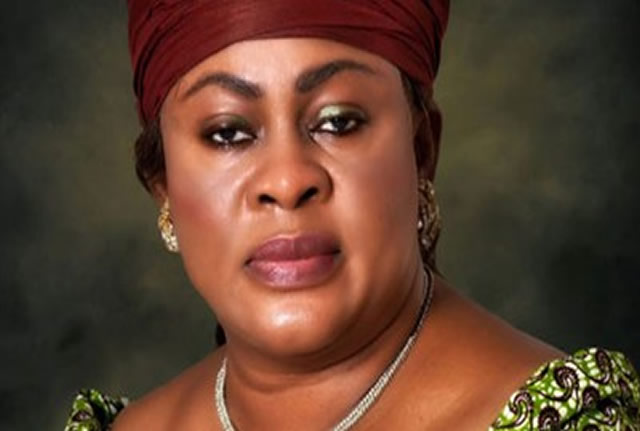
Former Minister of Aviation Stella Oduah
Three years after filing a charge, the EFCC finally arraigned a former Minister of Aviation, Stella Oduah, her ex-aide, Gloria Odita and seven others over alleged N5 billion naira fraud.
They were arraigned before an Abuja Federal High Court presided by Inyang Ekwo on Friday, July 21, for money laundering, conspiracy, and maintaining anonymous bank accounts.
Former Minister of Aviation Stella Oduah
Other defendants include Chukwuma Irene Chinyere, Nwosu Emmanuel Nnamdi, Global Offshore and Marine Ltd, Tip Top Global Resources Ltd, Crystal Television Ltd, China Civil Engineering Construction Corporation (CCECC) Nigeria Ltd and Sobora International Ltd.
The EFCC alleged that Oduah misused government funds worth an estimated N5 billion while serving as a minister.
The FHC/ABJ/CR/316/2020 charge was first filed in 2020.
The Court mandated that the prosecution of Oduah and others accused of laundering nearly N5 billion be handled by the office of the Attorney General of the Federation (AGF).
The case was postponed until October 17 that year for trial.
At the resumed hearing, the court rescheduled it the trial.
The trial judge, Ekwo, adjourned the case due to the defendant’s absence.
At the resumed hearing on November 14, 2023, the new Attorney-General of the Federation (AGF), Lateef Fagbemi, took over the case.
Ekwo then adjourned the matter until March 28 this year.
Impeached Speaker of Ogun State House of Assembly, Olakunle Oluomo
The impeached Speaker of the Ogun House of Assembly, Olakunle Oluomo, was on Monday, January 29, arraigned before a Federal High Court sitting in Abeokuta over alleged misappropriation of public funds running into N2.5 billion.
Oluomo was arraigned alongside two other officers of the assembly, Dayo Samuel and Adeyemo Adedeji.
The crime was allegedly carried out by Oluomo in 2022 when he served as the Assembly Speaker before 18 out of 26 lawmakers removed him as Speaker earlier in January due to accusations of embezzlement, haughtiness, egregious wrongdoing, conceit, bad leadership style, lack of focus and transparency, and inciting members against one another.
Shortly after the three entered the dock on January 29, the judge discovered that the EFCC’s lawyer could not appear in court.
Former Speaker, Ogun State House of Assembly, Olakunle Oluomo
However, the judge, Agatha Okeke, postponed the case till February 29 and March 1.
The ICIRreportedthat the EFCC arrested Oluomo on September 1, 2022, at the Murtala Muhammed International Airport, Ikeja, Lagos, and took him to its Lagos office, where he was detained until he was released on administrative bail.
Oluomo is accused of conspiring, forging documents, and stealing more than N2.5 billion.
WHEN Alex Obiegbu relocated to Lokoja, Kogi state, in 1999, he intended to start a block industry business that civil workers in the Ajaokuta steel plants ( 29 kilometres away) would patronise. Little did he know that 12 years after he would be accumulating a loss of 15 million annually due to flooding.
The 66-year-old man had acquired a five-plot of land just by the roadside in Ganaja village, with several types of industrial equipment to run the block business. Until 2012, Obiegbu had yet to encounter floodwater.
“When I came here, it was a virgin land full of animals, and I got a bulldozer to clear the land, then started my business, which was going fine,” he said.
By 2012, when flooding hit different parts of Nigeria, including Kogi state, Obiegbu lost some sections of his lands. This created a gully that allowed water to penetrate his industrial building when it rained. During the 2022 flooding, the building collapsed.
Like Obiegbu, Sergeant ThankGod, 67, who lives in Adankolo, another community in Lokoja, had his house submerged by flood twice within a decade. Every year during the rainy season, ThankGod spends money to renovate some affected parts of the building.
Both aged men told The ICIR that they have no other place to relocate despite the havoc flooding has caused them.
Sergeant ThankGod, Kogi flood victim, standing in the from of his home
Flooding has become a predominant climate and environmental crisis in major parts of Nigeria, but residents living in riverine communities, especially in Lokoja, the conference point where the River Niger and River Benue meet, face this crisis annually.
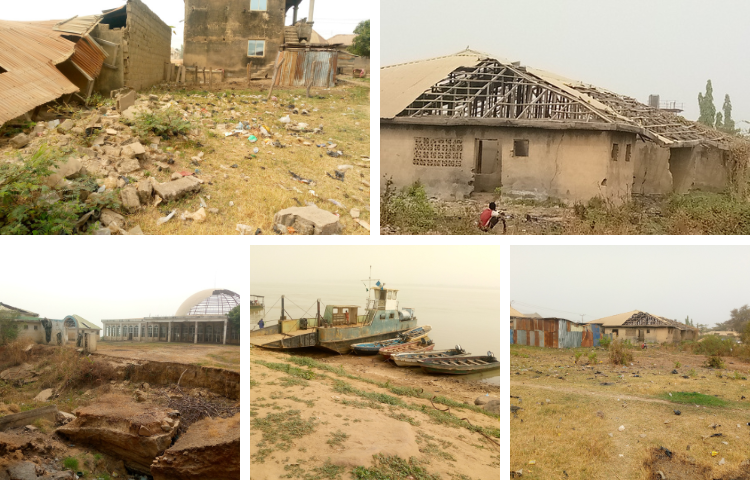
The ICIR visited various riverine communities like Ganaja village, Kabawa, 500-unit housing estate, Kpata, Idom and Gadumo, and observed how flooding had destroyed buildings and caused gullies in some parts of these communities.
Residents told The ICIR that during the rainy season, between July and October, sea level rise causes incursion into these communities.
Extreme rainfall, exacerbated by climate change during the rainy season, can increase the density of the sea, leaving communities within the region to suffer catastrophic effects.
A study by the University of Plymouth published that much of the Nigerian coast is low-lying with the consequence that a one to three-metre rise in sea level can affect human activities in these regions.
Reoccurring flooding in Kogi
Within a decade, Nigeria was hit by flooding twice, in 2012 and 2022. Thousands of people were reportedly displaced, including houses and lands submerged under water.
In Kogi state, according to the National Emergency Management Agency (NEMA), 623,900 people were displaced, and 152,575 hectares of farmland were destroyed in 2012.
Also, in 2022, flooding affected over 514 communities, displacing 471,000 persons with 24 deaths recorded.
This is coming despite the government’s allocation of N234.21 million in three years to erosion control and ecological funds received by the state through the Federal Government’s monthly allocation.
List
2021
2022
2023
Budget
N26,908,430
N106,300,000
N101,000,000
Ecological fund
N634.67 million
N667.38 million
–
(Kogi State Government 2023 Approved Budget – Expenditure by Economic Classification)
Residents living in riverine communities in Lokoja confirmed to The ICIR that flooding is an annual occurrence and efforts put in place by the government to mitigate the crisis are not sustainable.
The residents also said that the damages in communities like Adankolo, Adankolo New Layout, Ganaja junction behind the Federal University of Lokoja, Ganaja village and 500-unit housing estate started since 2012.
“We do not sleep. During the rainy season, our attention is always on the water area because we are close to the water”, a resident in Adankolo New Layout said.
‘Nowhere to go’
During the flooding in 2012, a resident of Adankolo New Layout, David Akale moved his family, including his elderly parents, from his house to a rented apartment far away from Lokoja.
He repeated the same act in 2022, but, this time, he decided to live there. When Akale could not sustain the annual rent of N250,000 for a two-bedroom flat, he moved back to his house in Ganaja junction.
“It told on me and my parent and became traumatic. Opposite me, you will notice that some houses have already been submerged. This used to be a flat land in 2009, but the inflow of water created this gully,” he said.
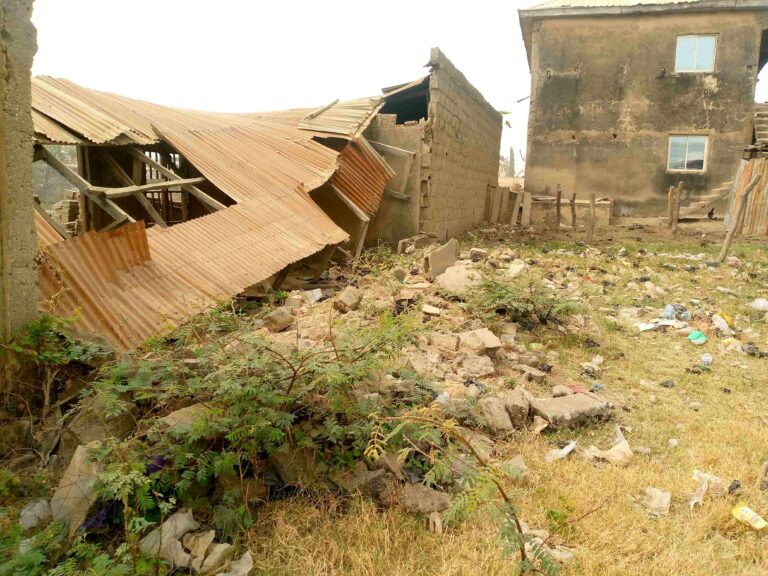
Dilapidated buildings in Kogi state due to flooding/ Kehinde Ogunyale
To control the flood, Akale constructed a concrete fence around his house, but according to him, “water must always find its way.” He said that many residents around his community build high fences and walls to stop the water penetration, but annually, when rain falls, the fences collapse.
For Omotosho Orimolade, 74, not only was his fence destroyed in 2012, but the flood pulled down his four-bedroom flat. He rebuilt the house in 2013, and by 2022, the building collapsed again.
“When the flood came, it covered the house. We did not see anything. We were told to wait until the flood subsided, and when it did, it [the flood] pulled down my house”, Orimolade said.
Now, Orimolade lives in a rented one-room flat with his daughter, just beside his collapsed house.
How the government responded
In 2013, the Kogi state government built a housing estate [now referred to as the post-flood housing estate] to accommodate flood-related victims. However, residents in these affected communities alleged that non-victims had occupied the estate. Several reports attested to the claim, as victims told The ICIR that government officials demand huge amounts from them before they can get an apartment.
The ICIR reached out to the Public Relations Office for Kogi State Emergency Management Agency, Olaoye Ibrahim, who refuted the claims, saying most victims, despite being allocated a home in the estate, relocate back on the motive that the communities are their ancestral home.
Another effort by the state government was building a concrete boundary that extends from the Kabawa community to the Kpata community in 2022 but residents also claimed that sometimes the water overruns the boundary, causing incursion into the communities.
“I have been staying in this community for six years. If the flood comes, all these places will be full of water,” Ibrahim Aisha, who lives in Kpata, said.
Dilapidated buildings in Kogi state due to flooding/ Kehinde Ogunyale.
Also, the residents said that the state government collected names of victims during the two major flood events, promising to give cash, but this was never fulfilled.
“Some foreigners came to quantify my land and promised to give me N12 million. Later, we were told that the money would be given to the government, and since then, we have not heard anything,” Obiegbu said.
There was also a reported allegation of mismanagement of N34 billion meant to dredge the River Niger by the former Minister for Transportation, Rotimi Amaechi. Residents said this would have helped affected riverine communities.
Adapting to the flood
With no support from the government, Obiegbu moved most of his industrial equipment to a separate store and stayed back at his dilapidated building, hoping to sell off blocks that had been moulded.
Meanwhile, ThankGod constructed 80-centimetre wooden shelves that can hold some of his household appliances. Sometimes, just like Aisha, he lives in the floodwater.
A flood risk consultant, Taiwo Ogunwumi, told The ICIR that one of the solutions that can be set up ahead of future flood occurrences is the development and communication of a clear evacuation plan for those living in this riverine area, which includes designated shelter at some meters farther to the river.
He said, “It should be noted that the federal government and few state governments are trying their best in terms of early warning and the provision of relief after the disaster, but I believe it is high time for us to prioritize preparedness and mitigation and not just disaster response. There is a need to check and monitor the action of the State Urban and Region planning departments and other land use departments by ensuring that they are performing their quota of restricting the building or settlement at meters close to the river.”
A lecturer of Geography at the Federal University of Lokoja, Adewale Olatunde, said that the state and federal government needs to do proper channelization of water, including drainage channels, away from the community adding that the floodwater ought to be beneficial to the state rather than a crises to communities.
*This report was sponsored by the Centre for Journalism Innovation and Development with funding support from the Public Diplomacy Section of the U.S. Embassy, Abuja.*
THE Olu of Owode-Egba, Oba Kolawole Sowemimo, in Obafemi/Owode Local Government Area of Ogun State, has been suspended by the Egba traditional council for openly defacing the naira at a social function.
The monarch had been warned earlier by the National Orientation Agency (NOA) after a video of him decorating a Fuji musician, Wasiu Ayinde Marshall, popularly known as K1, with knitted naira notes had gone viral.
According to the NOA, the monarch’s action contravened Section 21 (3) of the Central Bank of Nigeria Act 2007 as amended, which stipulates that spraying of, dancing, or matching on the naira or any note issued by the bank during social occasions or otherwise, constitutes abuse and defacing of the naira or such note and shall be punishable under the law by fines or imprisonment, or both.
The ICIR earlier reported that an actress had also been arrested for allegedly spraying new naira notes at a party.
The monarch was reportedly suspended on Friday, February 16, 2024, at the Egba Traditional Council February statutory meeting, chaired by the Alake of Egbaland, Oba Adedotun Gbadebo.
Announcing the monarch’s suspension, Olowu if Owu, Oba Saka Matemilola, said that Sowemimo should not be invited or seen at any government or public function as a traditional ruler and, for three months, should not receive any payment.
The committee made its decisions after examining the viral video.
Responding, Oba Sowemimo noted that the council’s decision was fair.
“I totally accept the verdict of the council because it is the person that we love that we chastise, so I am good with the decision… when I was asked if I had anything to say, I stood up and apologised for whatever I had done wrong and the suspension which was earlier announced to be for three months without salaries was reduced to two months,” he stated.
THE Sokoto State Judicial Commission, set up by the incumbent governor, Ahmed Aliyu, to investigate the immediate past administration of Aminu Tambuwal, has indefinitely shifted the date for its interrogation.
At the initial date for interrogation billed to be held today, Saturday, February 17, the immediate past governor was seen at the commission of inquiry alongside some of his executive members during his time as the governor via a post on his social media handle.
The ICIR gathered that Tambuwal was not given an audience before the panel as he was asked to return on another date.
The Senator representing Sokoto South Senatorial District shared the information via ‘X’ handle @AW Tambuwal.
Part of the post read, ”Earlier today, I appeared before the Justice Mu’azu Abdulkadir Pindiga-led Sokoto State Judicial Commission of Inquiry instituted by my successor, H.E Ahmad Aliyu Sokoto.
“I was accompanied by my legal team and some officials of my administration, including the ex-SSG, Muhammad Mainasara Ahmad, ex-Chief of Staff, Muktar Magori, ex-Attorney General, and Commissioner of Justice, Dr. Sulaiman Usman, SAN, among others.”
He boasted of his record while leading the state and described his appearance at the panel as a symbol of respect for the rule of law.
“Our track record of integrity in public service speaks for us, always.
“In leading the younger generation, we must instil in them utmost respect for the rule of law and constituted authorities,” he wrote.
The roles of the commission are, to examine the sales and auctions of government assets, including all official vehicles of State and Local Governments, all plants and machineries of state and Local Governments, to ascertain the government bank account and amount realised from the sales and auctions of government assets and examine the various allocations of lands throughout the state.
Others are plots of land allocated to individuals and bodies of persons whether corporate or unincorporated in the Sokoto new city, all carved-out plots, and all government houses sold or auctioned, to ascertain the government bank account and the amount realised from the sales and auctions of government houses and to do any other thing that is deemed relevant and necessary for the discharge of the commission’s assignment.
THE 2020 Audit report published by the Auditor General of the Federation has accused 101 federal government ministries and institutions of unaccounted funds totaling N149.36 billion.
The audit report complies with the provisions of the 1999 constitution of the Federal Republic of Nigeria.
Section 85(5) of the 1999 Constitution of the Federal Republic of Nigeria, (as amended), states that “the Auditor-General shall, within ninety days of receipt of the accountant general’s financial statement, submit his reports under this section to each House of the National Assembly and each House shall cause the reports to be considered by a committee of the House of the National Assembly responsible for public accounts.”
Cut-Crossing Issues on 2020 Audit report
The report identified 23 issues ranging from unaccounted funds, irregular payments, overpayment to contractors, non-remittance of statutory taxes, non-deduction of statutory stamp duty, and others.
The highest misappropriation reported was N37.2 billion in government revenue not accounted for, N29.1 billion extra-budgetary expenditure, N24.2 billion irregular payment for allowances and N15.1 billion paid vouchers not presented for audit.
Some others include N225.3 million for overpayment to contractors, N74.9 million for using public funds for private functions, N463.2 million for violation of the e-payment policy of the federal government, N775.9 million for irregular possession of government vehicles, and others
The report, which was recently released, is coming three years after the financial year of the 2020 budget. By this release, the federal government has failed to comply with the Fiscal Responsibility Act (FRA) provisions, 2007.
Section 49 (1)of the FRA, 2007, says that “the Federal Government shall publish their audited accounts not later than six months following the end of the financial year”.
The last audit report released by the Office of the Auditor General was the 2019 audit report in August 2021, 10 months behind the financial year.
Also, the International Public Sector Accounting Standards (IPSAS) Paragraph 69 explains that ongoing factors such as the complexity of an entity’s operations are not sufficient reasons for failing to report on a timely basis.
Cut-Crossing Issues on 2020 Audit report
The Programme Officer, of Paradigm Leadership Support Initiative (PLSI), Abdullahi Adebayo, told The ICIR that untimely releases of Audit reports have a lot of negative consequences on the country’s growth, such as untimely review of this report by the Public Accounts Committees (PAC) of the National Assembly, lack of implementation of the recommendations of the auditor general and the resolutions of the PAC on recovering the unaccounted funds, loss of public funds etc
He said, “If these funds are to be recovered, I am certain it is going to play a huge role in the nation’s budget, especially in funding some significant projects in the Education, Health, Agriculture, WASH, and Environment sectors.
“It is becoming a routine now in Nigeria. Unfortunately, this can’t help us achieve the desired development as the African giant nation and the need for FG to ensure a speedy enactment of the Federal Audit Service Bill to guarantee the independence of the Supreme Audit Institution in Nigeria.”
THE European Union (EU) has disclosed plans to invest €37 million to boost hydropower, solar for health care facilities, and rural electrification with isolated and interconnected mini-grid projects in Nigeria.
The EU Ambassador to Nigeria, Samuela Isopi, disclosed this during a visit to the Minister of Power, Adebayo Adelabu, on Thursday, February 15 in Abuja.
She was accompanied by the new Head of Cooperation of the EU, DE Luca Massimo, and the Programme Manager on Energy, Godfrey Ogbemudia.
During the visit, the ambassador spoke on the EU’s various intervention programmes in the power sector, noting that “the current support would cover small hydropower, solar for health care facilities, rural electrification with isolated and interconnected mini-grids project, circular economy in power sector project. The projects will commence this year.”
Isopi requested the Minister to attend an upcoming launch of two projects funded by the EU and implemented by the United Nations Industrial Development Organisation (UNIDO) in Nigeria.
Responding, the Minister, who received the ambassador in the company of his Chief Technical Advisor, Adedayo Olowoniyi, lauded the EU for the support given to Nigeria and said the nation expected more to enable it to address the enormous challenges in the sector.
He identified liquidity issues as the main problem that the government was trying to resolve. He said that the market would only be sustainable and run efficiently when there is a cost-reflective tariff in place.
Besides, he promised to work with the EU on its programmes, especially on Small hydro and state electrification.
A container truck on Saturday, February 17, crushed three people to death in Mowe on the Lagos-Ibadan expressway.
It was gathered that the accident occurred when the container slid off the truck with number plate T-1563 LA, killing the three victims inside a Howo truck without a number plate.
According to a statement by the spokesperson of the Ogun State Sector Command of the Federal Road Safety Corps (FRSC), Florence Okpe, the incident resulted from reckless driving leading to loss of control of the vehicle.
Okpe said the FRSC rescue team’s effort to save the victims – the driver and two passengers – was abortive, adding that the victim succumbed to death due to various degrees of injuries sustained.
She added that the deceased had been deposited at a morgue in Sagamu.
“The FRSC operatives at Mowe carried out a rescue operation at about 0107 hrs on Lagos-Ibadan Expressway around Mowe involving two vehicles (trucks) with registration number T-15636LA Bluebird and a HowoTruck with no number on it.
“Three persons were involved, all male adults, and they were all killed by the container that fell and rested on the occupants of the HOWO truck. The suspected cause of the crash was dangerous driving and loss of control.
“The operatives tried to rescue the trapped victims, but unfortunately, the driver and two other people in front of the vehicle died. The dead bodies were taken to Idera Morgue, Sagamu,” the FRSC said.
She advised motorists to drive safely, stressing that the interests of other road users must always be taken care of to avoid accidents.
A former Deputy Governor of Edo State, Lucky Imasuen, has withdrawn from the All Progressives Congress governorship primary election billed to hold today, Saturday, February 17, 2024.
Imasuen declared his withdrawal hours going into the election race, reducing the contest to ten aspirants.
It could be recalled that earlier 12 aspirants declared their interests to contest for the party’s flagbearer ahead of the governorship scheduled to hold September 21, 2024.
But one of the aspirants, Pastor Osagie Ize-Iyamu, announced his withdrawal from the race yesterday.
Giving a reason to toe the line of Ize-Iyamu, Imasuen said he succumbed to the party’s leadership preference of zoning the governorship position to Edo Central Senatorial District.
“I have come to the conclusion that since members of our National Working Committee, in their wisdom, have expressed their preference for zoning the governorship position to Edo Central Senatorial District, it is wise to align with the decision of the party,” the letter read partly.
He thanked his supporter, describing the decision as bitter pill to swallow, assuring his support of the eventual winner.
“I am immensely grateful for your unwavering support and belief in me, throughout this journey. Your dedication and passion have been the driving force behind my campaign.
“While this decision was not made lightly, I trust that you will understand, and continue to support our party, as we work together towards our shared goals.
“From the foregoing, I am ready to support whoever emerges as our candidate in the primary election,” the letter read.
Other aspirants include
A former Minister of State, Budget and National Planning, Prince Clem Agba.
Hon Anamero Dekeri; a member of the South-South executive committee of the party.
Blessing Agbomhere; retired Permanent Secretary in the Federal Ministry of Agriculture.
Ernest Umakhihe; the member representing Edo Central Senatorial District.
Sen Monday Okpebholo; Businessman.
Engr Gideon Ikhine; former governor.
Senator Oserheimen Osunbor, and
Former state chairman of the party Col David Imuse, retd.
A Former Executive Director, Finance in the Niger Delta Development Commission, NDDC. Major General Charles Airhiavbere retd;
Member representing Ovia Federal Constituency, Hon Dennis Idahosa.