THE Ekiti State Governorship Election Petition Tribunal has dismissed the petition filed by candidate of the Social Democratic Party (SDP) Segun Oni, against the victory of Biodun Oyebanji of the All Progressives Congress (APC) in the June 18 gubernatorial poll.
Oyebanji, who is currently the state governor, had polled a total of 187,057 votes to defeat Oni, who came second with 82,211 votes.
According to the result announced by the Independent National Electoral Commission (INEC), the Peoples Democratic Party (PDP) candidate, Bisi Kolawole, came third with 67,457 votes.
However, Oni, on July 7, filed a petition at the tribunal to challenge Oyebanji’s victory.
He hinged his case on alleged rigging by the APC candidate through voter inducement, and bypass of the Bimodal Voter Accreditation System (BVAS) at some polling stations.
Oni also challenged the authenticity of the WAEC certificate presented by the APC deputy governorship candidate, Monisade Afuye.
But in the judgment delivered on Thursday, December 29, in Ado-Ekiti, the tribunal dismissed the petition.
The Justice Wilfred Kpochi-led panel noted that Oni’s petition against the return of Oyebanji and Afuye, respectively, “failed woefully head or tail.”
The tribunal also resolved all issues in contention against Oni and his party, the SDP.
The 2022 National Multidimensional Poverty Index report by the National Bureau of Statistics states that 133 million Nigerians are multi-dimensionally poor. This is more than half of the country’s 206 million estimated population.
Interestingly, 42 per cent of the multi-dimensionally poor population live in urban centres as such they are often plagued with homelessness, as they cannot afford the cost of paying rent in the urban centre.
“My Life is a Tragedy”
A bricklayer, Friday Idoko is one of such person. He lives in an uncompleted building in Abuja, the nation’s capital.
Idoko and his family have been living in the uncompleted building around Durumi for three years.
Friday Idoko/ Credit ICIR
While speaking to The ICIR, Idoko sighed and said, “My life is a tragedy”.
“Living in an abandoned building like this was not my wish years back, and it has been misery. I feel despondent when I see my children growing up in a place like this, but I cannot control my fate. I have guilt feelings occasionally because they don’t have the chance to enjoy the goodies other kids are enjoying”, he stated.
“If I’m earning more, I would have moved my family away from this building; this is not a livable place to raise one child.”, he added.
Idoko earns, on average N25,000 monthly as a bricklayer, but this is only when there is construction work ongoing. At the time The ICIR visited him, he has not worked for two months.
Living in an uncompleted building has numerous challenges, he said, include theft and having to deal with the rainy season.
“The rainy season is the worst; we (the occupants) are always ready to pack the remains of water that enters our rooms. During those times, it is extremely difficult to sleep with my two eyes shut, especially when my children feel cold or at night when my children are feasted upon by mosquitoes,” he stated.
“I am Surviving for Survival’s Sake”
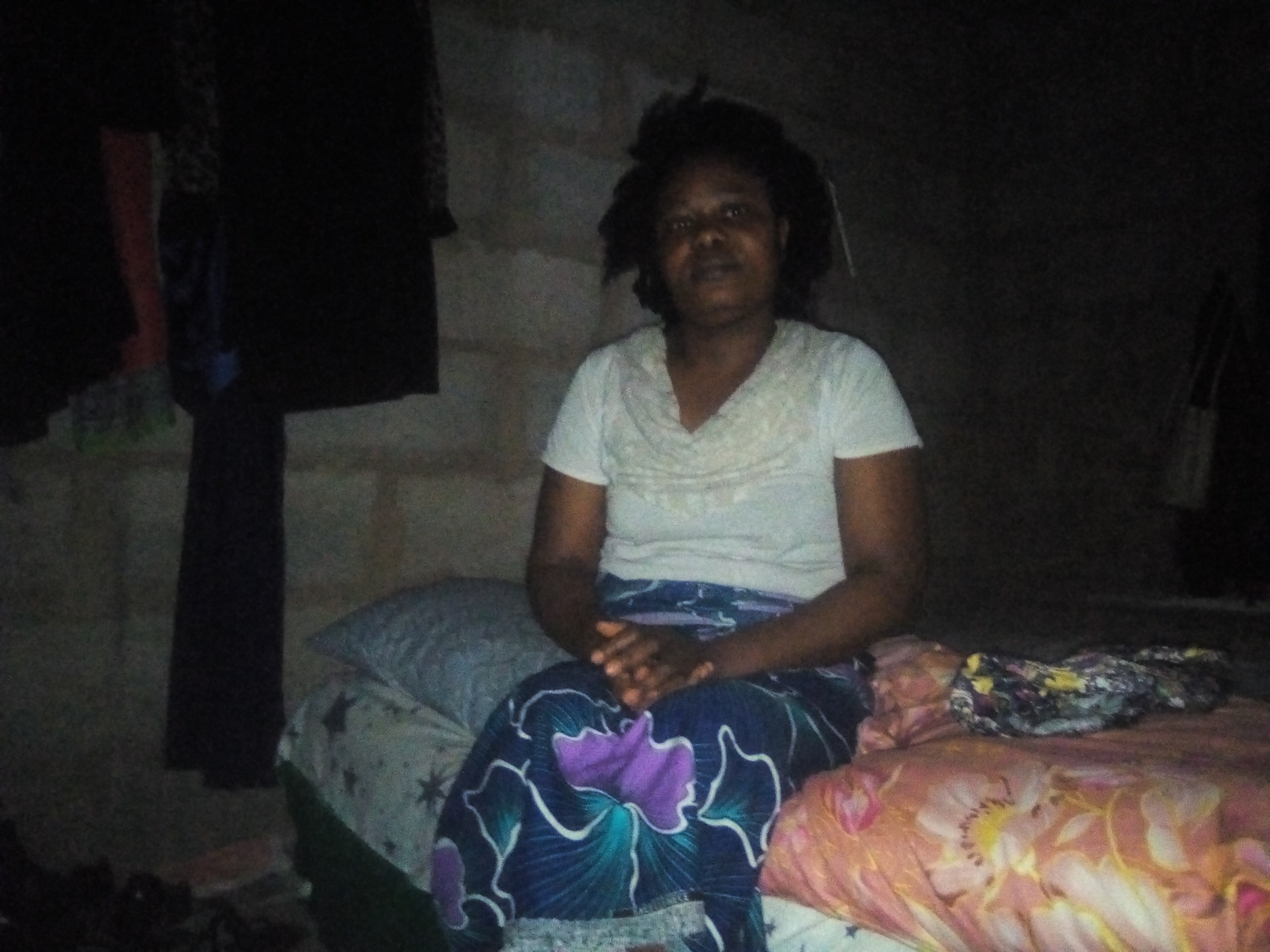
“This Life has been so frustrating” is the first sentence, Abigail Jacobson, a 34-year-old mother of two, said while speaking with The ICIR.
Abigail Jacobson/ Credit: ICIR
Jacobson said she became homeless when her house was demolished by the Federal Capital Territory Administration (FCTA).
“They made me homeless because they demolished everything that I had worked for. Almost all my properties were destroyed along with the FCTA demolition in March,” she said as she dabbed the tear that trickled down her cheek.
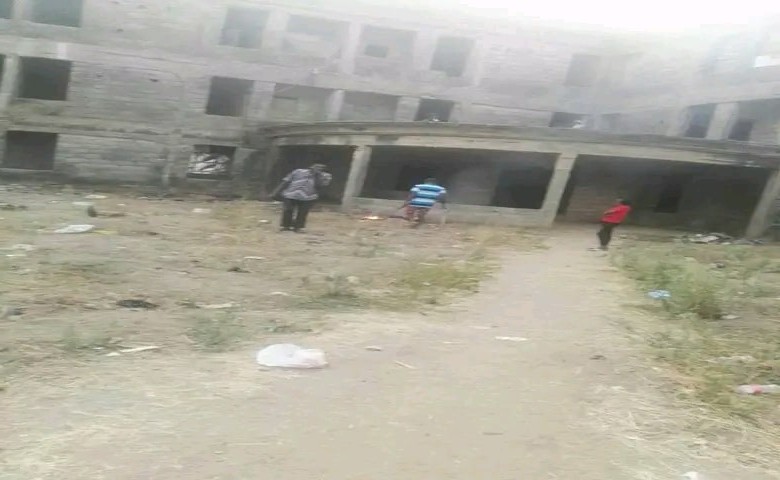
Uncompleted residential building in Durumi Area 1
The FCTA routinely carry out demolition exercises on illegal, poorly constructed/sited and unapproved houses and buildings. In 2022 alone over 1000 houses were demolished across Abuja communities like Utako, Mpape, Bassa-Jiwa village, among others.
Living in uncompleted buildings is not rent free
Jacobson explained that securing and staying in an uncompleted building is also not without its financial burden.
She said they still have to pay rent as well as fix windows, doors and, in some cases, do a makeshift roof.
“Even this building (the uncompleted building where she now lives) is not free. We pay a sum of N40,000 despite the sad reality that it is substandard and unsafe,” she stated.
Jacobson also worries about raising her kids in the environment, “There are different kinds of people here, and I’m being careful who my children mixed with.”
Jacobson is aware that it’s not healthy to live in such an environment surrounded by refuse dumps, “We know, but we don’t have a choice what can we do? she asked.
Jacobson earns N60,000, but most of it goes for transportation, health expense and feeding; there is nothing left to pay for standard housing.
“To get the least priced minimum of one bedroom flat or self-contain apartment, I would need at least N100,000 to N150,000”, she explained.
Her kids are out of school. She cannot afford to pay school fees, but she is not relenting. She has enrolled them to learn vocational skills instead.
“They are already learning vocational skills, which is different from the plan I had for them”, she said sadly.
Her immediate concern right now is getting another place to live. The uncompleted building where she lives has been sold. The new owner wants to resume construction.
One wrong investment and it’s homelessness for David
Chris David sorting some files inside the abandoned car/ Credit ICIR
Donning his purple long-sleeve shirt, black jeans and a pair of black slippers, David Chris, a forty-six-year-old man who works in the hospitality industry, sits on a wooden bench pondering and recounting how he got to this place.
David lives in an abandoned car in front of an uncompleted building in Utako village. It was not always like this for him.
“I invested some amount with my friend. Unfortunately, the business turned out to be fake,” he said.
He said he used all his savings which he estimated to be around N3.5 million.
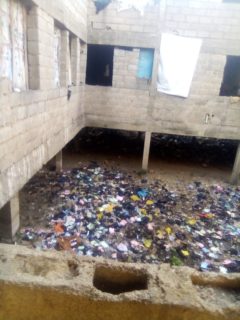
Rooms and heaps of refuse/ Credit ICIR
The business was supposed to do with the supply of hydroengineering equipment, after six months, he realised he has been duped by the friend.
David complains about the filthy state of the environment.
“Although I sleep in an abandoned car outside the structure, however, I still take precautionary measures. To prove my point, if you go inside the building (pointed towards the main entrance) you will see faeces on the floor as you walk down, heaps of refuse on corridors and even beside where some people sleep, it is disgusting, but what will people do”, he said.
Utako village is an urban slum in Abuja metropolis.
Weeks of close observation by The ICIR reporter show that many residents practice open defecation, and people sleep and wake anywhere – under wooden tables, inside kiosks, unenclosed facilities, and in deserted buildings.
Amidst the filthy and unhygienic environment, some of the occupants deal in the food business.
“Sadly, we have people who prepare food for sale, and they still do that in this same environment without cleaning up where they cook. It is even inappropriate to cook in this environment,” he reiterated.
David, aside from the health implications of living in such an environment, they also have to deal with law enforcement as the facility harbours prostitutes, drug addicts, and criminals.
“There was a time security operative raided this structure, and many of us were accused and detained, and we had no choice but to bail ourselves. It is a pathetic experience that I don’t like to recall,” he narrated.
They are the victims of the system- Environmental Expert
Reacting to the plights and conditions of the residents of uncompleted buildings in Abuja, The Director of Programmes, Corporate Accountability and Public Participation Africa (CAPPA), Philip Jakpor said most of the people who live in uncompleted buildings and facilities are victims of the system.
snapshot of a food vendor/ Credit ICIR
“These people are victims. They are victims of a system that does not make room for the lower class of society to be able to have decent housing, so those who can not afford the luxury of a normal apartment end up utilizing the uncompleted building.”
“Some of these houses do not have roofs, windows and doors and these are people who ideally cannot afford expensive accommodation, although we have people who use it as their launching place for nefarious activities either to smoke, drink, prostitute or rape and sell illicit substances and constitute a nuisance,” he stressed.
“If these people get decent accommodation in town, I don’t think they will put themselves in trouble every day and it is the same with the people who end up patronising and exploring any uncompleted building.”
“We have people who live in faraway places, and they have to spend two-three hours on their way to get to work while some individuals can not bear the stress, so they resort to renting unconducive accommodation,” he added.
Jakpor stressed the need for the government to collaborate with the owners of uncompleted properties to protect the facilities to avoid being a hotbed of crime and a haven for criminals.
“If we have decent housing, people wouldn’t want to live there, so government should provide decent housing and ensure that the uncompleted facilities should be secured”.
THE Kaduna State Police Command has said it killed 21 bandits and rescued 206 abductees in the state in 2022.
The state Commissioner of Police, Yekini Ayoku, who made the disclosure while giving an account of the activities of the Command in the outgoing year, said 780 other suspects were also arrested for various criminal activities at different locations in the state between January and December 2022.
The police commissioner also disclosed that 49 rifles of different makes and 1, 359 rounds of live ammunition were recovered.
In addition, the Command also recovered stolen vehicles and operational motorcycles being used by bandits and other criminal elements to carry out their nefarious activities.
Ayoku also said that a total of 116 suspects were convicted for various crimes.
He attributed the successes recorded by the Command to the support of the Kaduna State Government, traditional rulers and members of the public.
THE Nigerian Labour Congress (NLC) and the Trade Union Congress (TUC) have listed conditions for the proposed review of the national minimum wage.
The Minister of Labour and Employment, Chris Ngige, had said the Federal Government will soon make a pronouncement on salary increase for civil and public servants to cushion the effect of rising inflation.
Reacting to the proposed review on Wednesday, Deputy President, NLC, Joe Ajaero, said government, employers and labour unions must meet to review the minimum wage before increment is considered.
He noted that prices of consumables had been on the rise and if not checked, any increase on the minimum wage might not be effective.
“As we speak now, the price of kerosene, cooking gas, a litre of fuel, any of this items, multiply their cost by 30 days, it is more than the current 30,000 minimum wage.
“It is not necessarily the amount of money or quantum you are going to put that will solve our problem. You have to check the rate at which this items are going up, or else within a day or two the money will be used up,” he said.
According to Ajaero, continuous rise in inflation will not assuage the devaluation of the currency and take-home pay of workers even though there is an increase in salaries.
He stated that inflation rate must be put in check by making it stay at a constant rate.
The Nigeria Bureau of Statistics (NBS) had earlier revealed that inflation rate jumped from 20.77 per cent in September to 21.09 per cent in October 2022.
According to NBS, the rising rate of inflation was caused by high energy costs, importation costs and surging food prices, among others.
On a year to year basis, in October 2022, the urban inflation was 21.63 per cent, 5.11 per cent higher compared to the 16.52 per cent recorded in October 2021.
Nigeria’s inflation rate surged to 20.52 per cent in August, the highest since September 2005.
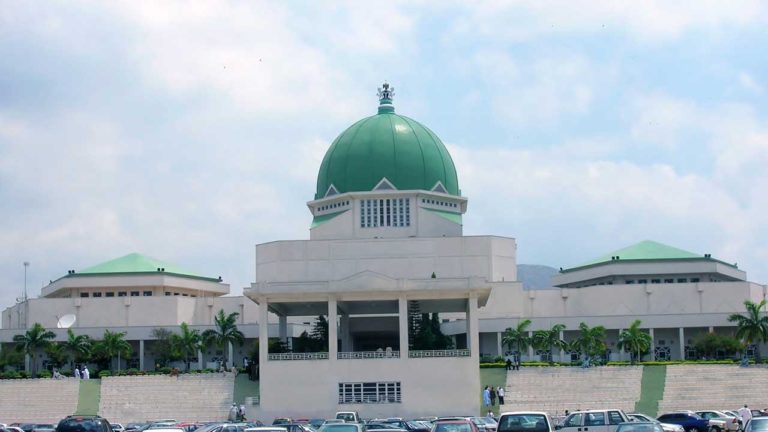
THE National Assembly has passed the Finance Bill, which proposes key reforms to specific taxation, customs, excise and fiscal laws.
The bill amends several laws, namely the Capital Gains Tax Act, Companies Income Tax Act, Personal Income Tax Act, Petroleum Profits Tax Act, Stamp Duties Act, Value Added Tax, and Public Procurement Act.
Presenting a report on the Finance Bill, the chairman of the Finance Committee, Solomon Adeola, said the bill was intended to enhance tax equity by bringing more economic sectors into the tax net and ensuring a fairer distribution of revenue receipts to all tiers of government.
The bill seeks to change the name of the Federal Inland Revenue Service (FIRS) to the Nigeria Revenue Service (NRS).
The board of the new NRS is to be headed by a chairman who is separate from the management. The management will be headed by a chief executive who will be known as the Commissioner-General.
The bill also increases the rate of the tertiary Education Trust Fund tax from 2.5 per cent to 3 per cent.
THE Economic and Financial Crimes Commission (EFCC) has concluded plans to conduct the sale of properties which are subject of Final Forfeiture Orders.
The concerned properties are alleged proceeds of corruption which were seized from their owners and forfeited to the Federal Government.
In a statement on December 28, signed by Head of Media and Publicity Wilson Uwujaren, the Commission said it had publicly announced the commencement of the auction exercise with an advertorial in major newspapers early in December, inviting bids for the properties.
According to the Commission, interested persons or organisations have until noon Monday, January 9, 2023, to submit their bids.
“The properties consisting of 61 Units of Luxury Apartments, Plots of Lands and Apartments across the country are being offered for sale in accordance with the Economic and Financial Crimes Commission (Establishment) Act, 2004, Public Procurement Act, 2007 and the Proceeds of Crime (Recovery and Management) Act, 2022.
“The distribution of the properties are 24 Units of a luxurious block of flats at Banana Island, Lagos; 21 Units of Luxury Terrace and Block of Flats at Thornburn, Yaba, Lagos; 16 Units of 4 Bedrooms Terrace Duplex at Heritage Court Estate, Port Harcourt,” the anti-fraud agency said.
Other properties include Apartments and Plots of Land in Lagos State; Apartments and Plots of Land within Abuja Metropolis; Plots of land and Apartment in Anambra, Ebonyi and Gombe States; Apartments and Plot of Land in Kaduna, Delta and Edo States; Hotel, Plaza and Apartments in Kwara State and Apartments and Plots of land in Cross River, Osun and Oyo States.
The Commission said the auction is open to members of the public except for individuals/ corporate entities who have been/ or are being prosecuted by the EFCC, Directors of such companies and employees of the EFCC.
The Commission added that a competitive bidding process is being adopted to dispose of the properties.
The bid forms can be downloaded from the EFCC website www.efcc.gov.ng and must be submitted alongside 10 per cent of the bid amount in Certified Bank Drafts payable to the Commission.
According to the statement, a successful bidder will be required to pay the 90 per cent outstanding balance of the bid price within 15 working days of the bid submission deadline, failing which the 10 per cent deposit becomes non-refundable, and the properties can be offered to other buyers.
Payments are to be made to EFCC through the Remita platform.
The statement added that individuals occupying any of the properties listed might be given the Right of First Refusal provided they have a valid tenancy agreement, have paid rent up to date, and must complete an Expression of Interest (EOI) Form, which can be downloaded from the EFCC website.
Bids for properties must be sealed and submitted in the designated box at the following address: Economic and Financial Crimes Commission, Plot 301/302 Institutions and Research District, Jabi, Abuja.
The deadline for submitting all bids is 12:00 pm, Monday, January 9, 2023.
All bidders and their representatives are welcome to be at the bid opening, which will take place at the Convocation Ground, National Open University of Nigeria, opposite EFCC Headquarters, Jabi, Abuja, from Monday, January 9, 2023, to Friday, January 13, 2023.
THE Inspector-General of Police (IGP) Usman Baba has recommended the suspension of Drambi Vandi, the officer who allegedly killed Lagos lawyer Omobolanle Raheem on Christmas Day.
Vandi, Assistant Superintendent of Police (ASP), attached to the Ajah Divisional Headquarters of the Lagos State Police Command, reportedly shot the female lawyer dead while returning from church with members of her family.
A statement signed by the Force Public Relations Officer, Olumuyiwa Adejobi, a Chief Superintendent of Police (CSP), on Wednesday, December 28, explained that the IGP’s recommendation was in line with the internal disciplinary processes of the Force and would subsist while the Police leadership wait for the detailed report on the incident.
Suspending the officer from the Force would create an enabling environment for necessary legal procedures to uphold justice in the case against him without interference, the statement further explained.
Vandi and his team, who were said to be extorting motorists near their station, allegedly asked the late lawyer and her husband to stop for a check of their vehicular documents.
While allegedly looking for a space to park their vehicle, the officer was said to have released bullets on the woman, leading to her death.
Other officers conducting the check with him took to their heels. Vandi was arrested, including his colleagues who fled and were taken into custody for interrogation.
But the Police said they would free those arrested with him because they were innocent.
Her death occurred barely three weeks after a police officer at the same police station shot dead 31-year-old Gafaru Buraimoh.
Police spokesman Benjamin Hundeyin in a tweet on Boxing Day said Raheem’s death was avoidable and unfortunate.
The Commissioner of Police in the state, Abiodun Alabi, has condoled and visited the bereaved family.
Suspension is without prejudice to the constitutional presumption of officer’s innocence – IGP
Meanwhile, the IGP said in the statement released by the Force on Wednesday that the suspension was without prejudice to the constitutional presumption of innocence in favour of the officer.
Baba reaffirmed the commitment of the Force to the rule of law and assured the public of his administration’s commitment to ensuring that justice is not just done but seen to have been done in the matter.
He appealed to the public to be calm, pledging that all hands would be on deck to ensure justice prevails and such an incident no longer recurs in the Force.
THE Senate, on Wednesday, approved the request by President Muhammadu Buhari for a N819.54 billion supplementary budget meant to fix infrastructure destroyed by floods across the country.
The request, the President informed, would form part of the 2022 Appropriation Act.
Buhari, in the letter read by the president of the Senate, Ahmad Lawan, said the request was meant for the capital expenditure component of the 2022 budget.
The approval has increased the 2022 budget deficit to N8.17 trillion, and the deficit-to-the gross domestic product ratio of 4.43 per cent.
This is coming at a time when government’s borrowing is rising and putting the nation’s economy at more risks.
Federal government’s domestic borrowing in 2022 alone has risen to N3.33 trillion.
To enhance the implementation of the projects listed in the supplementary bill, the Senate extended the lifespan of the N18.12 trillion 2022 budget to March 31, 2023.
The budget, in line with the provisions of clause 12 of the Appropriation Act and section 318 of the 1999 constitution, which stipulate 12 calendar months for implementation of budget in any fiscal year, ought to end on December 31, 2022, having started on January 1, 2022.
But Buhari, in a letter read in plenary last Wednesday, sought the amendment in the Act for an extension of the implementation period.
Buhari, in the letter read by Lawan, said, “I write to request your consideration for an amendment into the 2022 Act expression clause 12, as passed and assented to.
“The 2022 Appropriation Act states, in line with the provisions of section 318 of the constitution of the Federal Republic of Nigeria, this Bill expires after 12 months, starting from January 1 to the December 31, 2022, once assented to.
“The proposed 2022 appropriation supplementary budget submitted to the National Assembly for consideration, as well as recent 2022 capital releases to the MDAs are likely to be utilised before December 31st, 2022 due to the late release of the funds, which will lapse if the capital implementation is not extended beyond December 2022.”
THE House of Representatives has refuted claims by the President of the Academic Staff Union of Universities (ASUU) Emmanuel Osodeke that Speaker Femi Gbajabiamila deceived the lecturers into calling off their eight-month strike.
ASUU President Osodeke had, in an interview with a national daily, accused Gbajabiamila of deception.
Osodeke said the Speaker asked the union to call off the strike in October with a written promise that the government would, without delay, offset in full, the arrears of salaries owed members.
Reacting to the allegation, the Chairman of the House Committee on Media and Public Affairs, Benjamin Kalu, in a statement issued on Wednesday, December 28, stated that Gbajabiamila did not promise ASUU that lecturers would be paid for the period they downed tools.
In the statement titled ‘House of Representatives Response to Osodeke’s Allegations of Deception against Mr. Speaker,’ Kalu pointed out that the Federal Government legitimately withheld the salaries for the period universities were shut down.
Gbajabiamila had led the intervention in the lingering crisis between the Federal Government and the lecturers, leading to the calling off of the strike in October, after eight months.
Parts of the statement read, “On Tuesday, 27th December 2022, the President of the Academic Staff Union of Universities, Professor Emmanuel Osodeke, granted an interview, accusing the Speaker of the House of Representatives, Rep Femi Gbajabiamila, of using deception to convince the union to call off its strike action.
“He specifically alleged that the Speaker failed to deliver on his written commitment that the government would, without delay, offset the arrears of salaries owed to members of the union for the time they were on strike.
“For the record, at no point did the Speaker of the House of Representatives commit to offset the arrears of salaries owed to union members for the time they were on strike. The House of Representatives helped resolve the strike by making commitments to improve the welfare package of university lecturers and revitalisation funds to improve the infrastructure and operations of federal universities. These commitments are reflected in the 2023 Appropriation Bill, which includes N170,000,000,000.00) to provide a level of increment in the welfare package of university lecturers and an additional N300,000,000,000.00 in revitalisation funds.
“Furthermore, the House of Representatives continues to work with stakeholders – the Accountant General of the Federation and the Academic Staff Union of Universities to facilitate the adoption of elements of the University Transparency and Accountability Solution into the Integrated Payroll and Personnel Information System. This effort is being supervised by the Chairman of the House Committee on Tertiary Education, Rep. Aminu Suleiman.
“Professor Emmanuel Osodeke knows that the Federal Government of Nigeria is under no obligation to pay university lecturers’ salaries for the duration they were on strike. This is a settled matter in law. See S. 43(1)(a) Trade Disputes Act, Cap T8, Laws of the Federation of Nigeria (LFN).
“The Executive decision not to pay salaries to lecturers for the time spent on strike is warranted by the government’s legitimate interest in preventing moral hazard and discouraging disruptive industrial actions. Nonetheless, the Speaker has made interventions for an exemption in this regard, and Professor Osodeke is well aware of this.”
The House of Representatives spokesman further accused Osodeke of approaching negotiations with bad faith, noting that the ASUU leader’s attitude was one of the reasons the strike lasted for so long.
“Professor Osodeke’s bad-faith approach to negotiations and his affinity for political brinkmanship are significant reasons the universities were on strike for so long. His ongoing interventions continue to threaten the progress being made to preclude the possibility of further disruptions to the academic calendar of the universities.
“Therefore, I call on him, in his capacity as President of the Academic Staff Union of Universities to desist from making further misleading statements against the House of Representatives and the Speaker, Rep. Femi Gbajabiamila. There is no place for hostility and selfish agitation in this critical moment. This is the time for calm heads and steady hands, working together for the common good.”
THE National Drug Law Enforcement Agency (NDLEA) has given conflicting figures on the number of drug traffickers it arrested in two years.
However, the Agency spokesperson Femi Babafemi has said that it was an error.
At an award ceremony held on Tuesday, December 27, in Yola Adamawa state the NDLEA chairman Mohammed Marwa was reported to have said that 18,940 traffickers were arrested in two years.
Marwa also added that 3,324 offenders were convicted during the period.
However, The ICIR recalls that, in an address at an end of the year awards/commendation ceremony at the NDLEA headquarters in Abuja on December 20, Marwa disclosed that the agency arrested 23,907 traffickers and seized drugs worth over N450 billion within 22 months.
Marwa, while speaking at Yola, where he received an award of excellence from the Adamawa Honours Society (AHS), said the NDLEA secured 3,324 convictions, seized 5.4 kg of different control drugs and narcotic substances, and rehabilitated 3,326 drug abusers, within two years.
He stressed that the agency had recently acquired drug and lie testing kits, adding that intending couples should be tested for drug use before they get married.
“Drug test would determine the innocence or otherwise of couples and it will save marital relationships from collapse due to abuse of drugs,” he said.
Marwa noted that the NDLEA is working to achieve reduction in supply and the demand for drugs, noting that the development will reduce the high rate of drugs consumption in the country.
The NDLEA boss however, called on parents, community and religious leaders to intensify efforts in helping the agency to achieve a drug free society.
While commending the Adamawa House of Assembly for enacting laws against drug related offences, he also commended President Muhammadu Buhari, for supporting the agency in the fight against illicit drugs.
Meanwhile, on December 20, the same NDLEA boss reportedly disclosed that the agency has arrested 23,907 traffickers and seized drugs worth over N450 billion within 22 months, from January 2021 to October 2022.
Marwa disclosed that over 5.5 million kg of drugs were seized within that period, noting that 3,434 offenders were convicted.
“Within the period under review, the Agency arrested 23,907 drug traffickers, including 29 barons. Our seizure was over 5,500 tons or 5.5 million kilograms of assorted illicit drugs, which together with cash seized are worth over N450 billion.
“In these 22 months, we have record convictions of 3,434 offenders. We have equally made good strides in our drug demand reduction efforts, where the number of those counselled and rehabilitated is 16,114.”
The ICIR observed the discrepancy in figures released by the NDLEA in a period of two weeks.
Based on records obtained from the NDLEA, The ICIR had reported that over 6.2 million kilograms of different kinds of drugs were seized in the space of eight years by the agency.
The drugs seized are cocaine, heroin, cannabis, meth and some other psychotropic substances.
The report stressed that in 2021 alone, the NDLEA seized 3.4 million (3,480,368.80) kilograms of drugs while as of June 2022, the agency seized 176,818.08kg of drugs.
In the report, The ICIR also gathered that the NDLEA counselled 27,541 clients against the use of drugs between 2015 and second quarter of 2022.
After The ICIR pointed out the discrepancy, the NDLEA spokesman Babafemi said it was an error from a citation read before the presentation of the award to the agency boss.
He added that the figure was not from the agency boss.
He maintained that the accurate figure of arrested drug traffickers within the period in question is 23,907.
*Editor’s note: This report was edited to reflect the clarification from the NDLEA spokesperson Femi Babafemi.


![[SPECIAL REPORT] The realities of living in Abuja and homeless](https://www.icirnigeria.org/wp-content/uploads/2022/12/PICTURE-1-min-768x576.jpg "[SPECIAL REPORT] The realities of living in Abuja and homeless")






![[UPDATED] NDLEA gives conflicting figures on number of drug traffickers arrested in 2 years](https://www.icirnigeria.org/wp-content/uploads/2022/12/NDLEA.jpg "[UPDATED] NDLEA gives conflicting figures on number of drug traffickers arrested in 2 years")