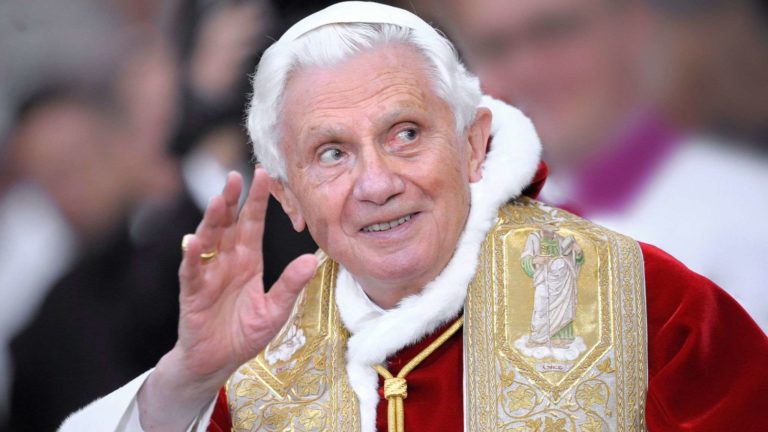
THE VATICAN on Saturday said Pope Francis will celebrate funeral for Pope Emeritus Benedict XVI on Thursday, January 5, 2023, in St. Peter’s Square.
The ICIR had reported that former Pope Benedict XVI died on the morning of December 31, 2022 at the age of 95.
“On Thursday, January 5, at 9:30 a.m. (0830 GMT) the funeral is expected to take place in Saint Peter’s Square, presided over by the Holy Father,” Vatican spokesman Matteo Bruni told journalists at a special briefing following the death of the first pontiff to resign in six centuries.
Pope Francis had last week disclosed during his weekly general audience that his predecessor was “very sick”, and asked for people to pray for him.
Most Catholic leaders comprising Cardinals, Archbishops and Leaders of various Dioceses had called for prayers following Pope’s Francis’ call for prayers for the now deceased Pope Emeritus.
For nearly 25 years as Cardinal, Joseph Ratzinger, who took the official name Benedict during his reign as the Pope, was the powerful head of the Vatican’s doctrinal office, then known as the Congregation for the Doctrine of the Faith (CDF).
Conservatives in the Church had looked to the former pope as their standard bearer and some ultra-traditionalists even refused to acknowledge Francis as a legitimate pontiff.
They had criticised Francis for his more welcoming approach to members of the LGBTQ+ community and to Catholics who divorced and remarried outside the Church, saying both were undermining traditional values.
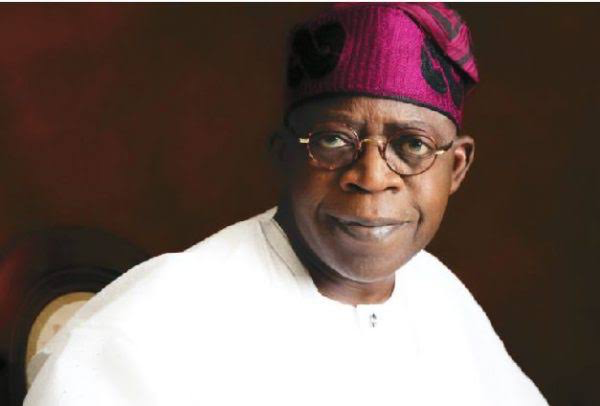
PRESIDENTIAL candidate of the All Progressives Congress (APC) Bola Tinubu has denied reports that he held a secret meeting with the G5 Governors of the Peoples Democratic Party (PDP) in London, the United Kingdom (UK).
There were reports that Tinubu had struck a deal with the rebel PDP governors in return for their support for his presidential ambition.
The reports followed the latest London trip by the G5 governors, comprising Nyesom Wike (Rivers), Seyi Makinde (Oyo), Ifeanyi Ugwuanyi (Enugu), Okezie Ikpeazu (Abia), and Samuel Ortom (Benue).
Reports of the meeting, and the alleged deal with Tinubu, had led to expectations that Wike’s preferred candidate will be Tinubu, the APC flagbearer.
But Tinubu has said he never held any meeting with the five governors in London.
Tinubu was also in London during the period the G5 visited the city. But his media team, in a statement released on Saturday, December 31, explained that he was in the British capital for a different reason.
The statement, signed by Tinubu’s spokesman, Tunde Rahman, described reports of the alleged meeting as ‘unsubstatiated’ and ‘figments of the writers’ imagination’.
“As usual with him (Tinubu) when the year is coming to an end to take time off his busy schedules, take a little rest and proceed to Saudi Arabia to observe Umrah (Lesser Hajj), Tinubu was in London during the week en route Mecca, Saudi Arabia.
“While in the United Kingdom, Tinubu noted some articles in some national newspapers in Nigeria, alleging a secret meeting was held in London between him and the G-5 governors who are members of the Peoples Democratic Party.
“These reports, to say the least, are not only in bad faith but also evil intentioned. They were published to advance the political interests of the writers and their sponsors,” parts of the statement read.
The statement noted that Tinubu is not bothered by the news reports nor by their sponsors “who are well known”.
“He is resolutely focused on his campaign objectives which are geared towards achieving victory in the upcoming presidential election in order to deliver the APC’s Action Plan aimed at giving Renewed Hope to our people in all facets of their lives,” the statement added.
File photo: Bola Tinubu
The statement stressed that the APC candidate is entitled to meeting any political actor or stakeholder that is important to his campaign and plans for the country and that desires to engage with him.
Providing highlights of Tinubu’s program in London, the statement said: “The truth with respect to his present itinerary is as follows, Tinubu came to London on Boxing Day Monday, December 26, 2022, to spend a few days preparing for his trip to Saudi Arabia. After spending some time in London, he has now proceeded to Mecca where he is at present observing Umrah. He is scheduled to return to the country within the next two days to continue with the campaign.”
“We would like to use this opportunity to advise those writing unsubstantiated articles and peddling rumours about him to desist forthwith,” the statement warned.
Leader of the G5, Wike, on Saturday, also denied reports of the high profile London meeting.
Wike spoke about the alleged meeting while flagging-off the construction of Eneka-Igbo Etche road, in Rivers State.
“I am not someone who will go and see somebody and hide. Hide for who? Who is that person that will threaten me? They said Wike had a deal with so, so, and so person. Meanwhile, no video, no anything. And some of you waste time listening to such things. Don’t you know when I want to do something, I do it? You don’t need to speculate.
“They said we had a meeting with so and so. What is your problem? Assuming there was a meeting, has Atiku not been holding meetings with governors of APC? Ask him. As he is in Dubai, don’t we know what is going on? So, why do you bother about us G5, that you said you can win without us? Leave us alone.”
Reports of the G5 governors alleged deal with Tinubu had rattled the PDP, leading to speculations that the party was planning to expel the five governors. It is looking very likely that the governors are not going to support the party’s presidential candidate Atiku Abubakar in the 2023 general elections.
But vice presidential candidate of the party, Delta State governor Ifeanyi Okowa downplayed the position of the G5 Governors.
Speaking at a campaign rally in Delta State on December 30, Okowa said God, rather than the G5 governors, would determine Nigeria’s next President.
Okowa also claimed that God has said PDP will win the presidential election. “God has said it that we, the PDP, will win this election. Many things may be happening now and people may be asking what about the G-5 governors. These governors are our brothers; everybody is important. But what God has said will happen, nobody can change it. So even if some of them decide to support APC, some will still remain with us because there will be division among them.”
While G5 governors are yet to strike any deal with Tinubu or any other presidential candidate, it appears that they have made up their mind on Atiku.
In an apparent response to Okowa’s comment that God will give power to the PDP in 2023, Wike said God does not reward the wicked and treacherous.
“Don’t be treacherous in life because you want power. God will never give power to the wicked. Our hands are clean; we have not done anything wrong,” Wike said.
The Rivers State governor lost to Atiku in the PDP presidential primary election, and was subsequently overlooked in the selection of the running mate. Wike, who pushed for the zoning of the presidential ticket to the South, had been on the war path with Atiku and the PDP leadership since then. He and the other members of the G5 are demanding the removal of party’s national chairman Iyorchia Ayu, and his replacement with a southerner. They claim Ayu himself, and Atiku, had agreed that a southerner should become the national chairman if a northerner emerge as the party’s presidential candidate.
Atiku and Ayu have refused to concede to the demand.
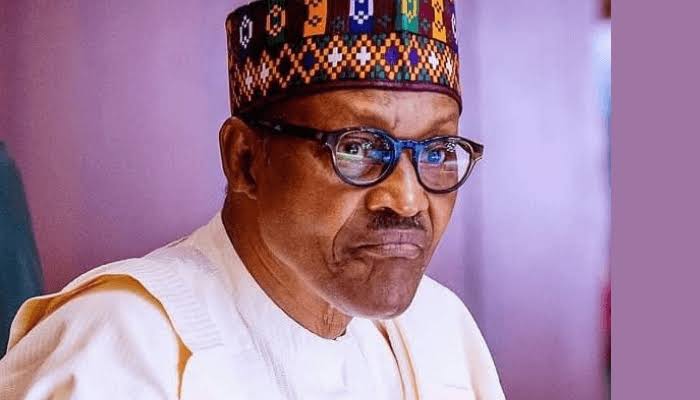
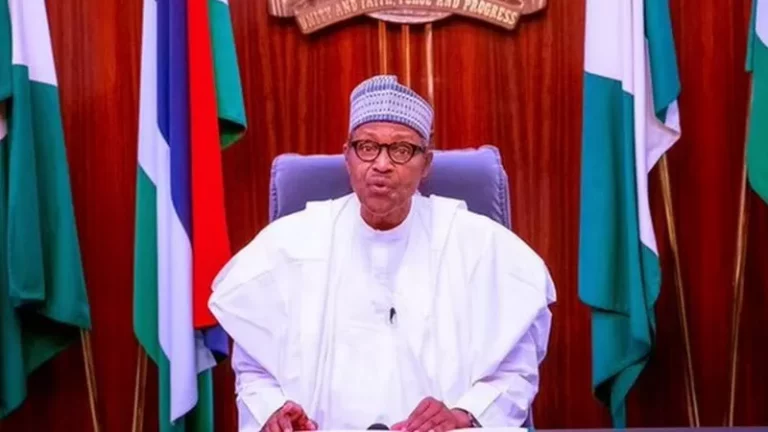
PRESIDENT Muhammadu Buhari has delivered his last New Year Message to Nigerians as their leader.
The message was the President’s eighth New Year speech since he assumed office on May 29, 2019, after his historic and unprecedented victory over the incumbent President Goodluck Jonathan.
Speaking on various issues, ranging from the economy, security, infrastructure, and the anti-corruption campaign, to the nation’s nascent democracy and the need to further cement the country’s frail unity, Buhari said he offered his best to the country.
“I offer my own personal felicitations, mindful of the various opinions and interpretations of our executive legacies.
“I welcome and accept both the accolades and criticisms in an equal measure, secure in the conviction that I did my best to serve our dear country Nigeria and I pray that the next President will also pick up the baton and continue the race to make Nigeria one of the leading countries of the world by the end of this century,” the President stated.
Describing his speech as valedictory, Buhari said his eight-year term of four years apiece “must necessarily come to an end”.
Buhari reiterated his promise to ensure a free, fair and credible election as Nigerians go to the polls in February and March 2023 to elect a new President and other leaders.
He appealed to the citizens, especially the electorate and politicians, to conduct themselves in manners acceptable to the law.
The President vowed to ensure that anyone who attempts to undermine the electoral process would face the full weight of the law.
He also appealed to the citizens to support the security agencies with intelligence that would help their operations against criminals and others whose activities threaten the country’s peace and unity.
Buhari boasted of his government’s success against insurgency in the North-East, banditry in the North-West and general routing of criminals by security forces across the country.
According to him, over 82,000 insurgents with their families surrendered to the Nigerian military.
He pointed out the resumption of the Abuja-Kaduna train attacked this year by insurgents as one of the successes recorded by his government.
Gains of #EndSARS protest
The President explained that the October 2020 #EndSARS protests across the country was yielding results with expected reforms in the Nigerian Police Force taking place.
The reform, he noted, is built on the Presidential Vision for Policing in the country.
He said his government framed the vision in a roadmap that transcends the tenure of his administration, and the vision is predicated on six principles, namely:
Building Trust and Legitimacy.
Leadership, Accountability and Oversight.
Technology and digital media d) Community Policing and Crime Reduction.
Officers Training and Education.
Funding, Officers’ Welfare, Wellness and Safety.
“This reform programme is very much in its foundational phase but has recorded noteworthy successes in improving police welfare and their emoluments.
“Other gains have been the ongoing training of 500 police cadet trainers to enable a better training regimen for the 2022 first batch of the 10,000 new cadets with an additional 10,000 set for 2023.”
He said the government was providing the police with equipment, welfare and other requirements to make them compete with their peers worldwide.
Economy
Buhari pledged to focus on maintaining and building economic growth through the national economic diversification agenda that supports the goal of national food self-sufficiency.
He said the government also prioritized building the country’s Gross Domestic Product (GDP) and sustaining the non-oil GDP growth surge.
The President identified the Nigerian Start-up Act as a huge step towards boosting job creation and supporting the entrepreneurial drive of the country’s youths.
He said despite the negative effects of COVID-19 and the Russia-Ukraine war, the nation had managed rising global inflation and subsidised power costs to buffer households.
The ICIR reports that with five months remaining to the end of his government, the President promised to solidify delivering key strategic priorities under the “SEA” (Security, Economy and Anti-Corruption) agenda on which he rose to power in 2015.
On security, he said the government would continue to engage, push back and dismantle the operations of internal and external extremist and criminal groups waging war against the nation.
The President said the government’s “ongoing infrastructure revolution” would see him deliver key national projects in power, rail, roads, ports and technology.
Anti-corruption
The President claimed that from 117 convictions in 2017, his government achieved 3,615 convictions in corruption cases as of December 31.
Describing the effort as a record in the fight against corruption in the country, the President restated his pledge to rid the country of all forms of corruption.
The ICIR reports that while many Nigerians see Buhari’s nearly eight years of leadership as a gross failure, others believe he offered his best as he said.
THE Nigeria Employers’ Consultative Association (NECA) has said that the upward adjustment in the premium rate for motor insurance is desirable to grow the economy.
The National Insurance Commission (NAICOM) had announced a new policy in a circular, titled, ‘New Premium Rate for Motor Insurance’, signed by its Director, Policy and Regulation, Leo Akah.
With the new policy, third party motor insurance policy will be increased from N5,000 to N15,000, with effect from January 1, 2023.
This is among other increases in rates as contained in the circular.
Many Nigerians had expressed worry on the hike, describing it as a mere avenue for the government to get more money from car users to boost its revenue as it seeks funds to implement the 2023 budget.
But NECA’s Director-General, Adewale-Smatt Oyerinde, reacting today to the increase in an interview, said, “In order to grow the economy, develop the industry and provide effective risk-mitigating services to the generality of Nigerians, it is our belief that a marginal adjustment in the current rate is desirable.”
Oyerinde noted that the Commission reserved the right, as provided in the extant law, in reviewing the rate.
He, however, said it was imperative for NAICOM to always carry stakeholders along in such review exercises, especially with the timing.
“It is worthy of note that the current rate has been in existence for over five years, while the cost of motor vehicles has increased exponentially.
“Coupled with the general price increase of goods and services, the Commission can be justified if there are guarantees for improved service delivery and a higher response rate from insurance companies,” he said.
Decrying the low rate of insurance awareness in the country, Oyerinde urged NAICOM to deepen engagement with critical stakeholders in order to promote the insurance culture in Nigeria, and also get buy-ins for its policy actions.
“In developed climes, the insurance industry plays a major role in national development as it serves as risk off-takers in cases of accidents and other mishaps,” he said.
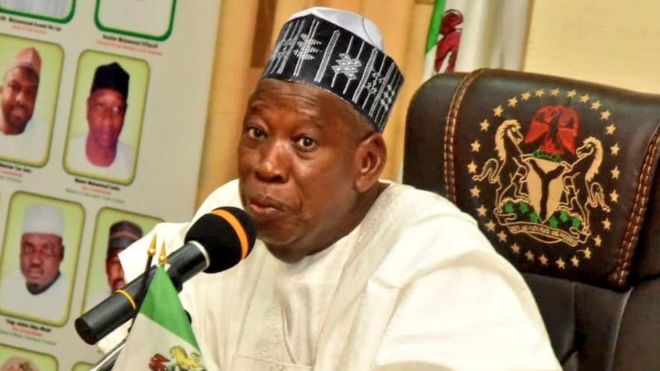
KANO State Governor Abdullahi Ganduje has sacked the state’s Commissioner for Religious Affairs Muhammad Adam, otherwise known as Baba Impossible, over alleged ‘disloyalty’.
This was disclosed in a statement released on Saturday, December 31, by the Commissioner for Information and Internal Affairs Muhammad Garba.
According to the statement, Adam was sacked for unguarded utterances and disloyalty to Ganduje’s government.
Adam was also accused of running his ministry like a private business, reducing work days in the week to three instead of five.
“Apart from operating without due consultation, Baba Impossible has not been loyal to the government. Already, Governor Abdullahi Umar Ganduje has sent to the State House of Assembly the name of a nominee in person of Dr Nazifi Ishaq Bichi of Bayero University, Kano, for screening and appointment as new commissioner for religious affairs,” the statement added.
The statement further described Adam’s attitude as unbecoming of a public servant.
The sack is with immediate effect.
Ganduje established the Ministry of Religious Affairs in 2019 and appointed Adam to over its activities. The Ministry was established to serve as a bridge between different religions in the state.
The governor also saddled the Ministry with the responsibility of resolving marital issues, managing Islamic agencies such as the Hisbah Board, Khubsi and Shariah Commissions and addressing street begging in the state.
IN 2022,133 Nigerians were pushed into different categories of poverty, suffering deprivations in food, shelter and healthcare services, a report released by the National Bureau of Statistics (NBS) in October stated.
The rise in the multidimensional poverty level was despite Buhari administration’s mantra to lift 100 million people out of poverty.
Also, 2022 witnessed a record double-digit inflation figure of 21.48 per cent in November, according to NBS reports, with currency problems that resulted in more distress for businesses and investors.
With inflation surging from 15.6 per cent in January 2022 to 21.48 per cent in November, the people’s earnings could not but be drastically affected and standard of living getting worse.
Informed analysts say a combination of weak leadership decisions and poor policy choices of the monetary and fiscal authorities contributed in putting more Nigerians into economic distress.
Some analysts who spoke with The ICIR said the incoming administration government must find a pathway to a long-term growth trajectory.
From the World Bank was a report that Nigeria’s economic growth slowed on the back of declining oil output and moderating non-oil activity.
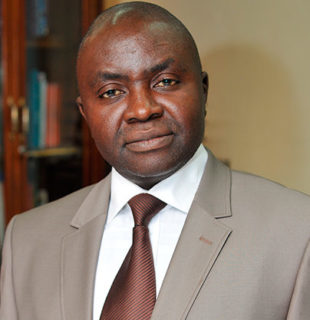
In the bank’s December 2022 report titled, ‘Nigeria’s Choice,’ its Country Director for Nigeria, Shubham Chauduri, stated, “It is urgent to address the key drivers of this decoupling and make reforms to strengthen Nigeria’s macro-fiscal framework.
“Nigeria has a choice to implement critical macroeconomic and structural reforms that can reduce crisis vulnerabilities and increase growth. Doing so will lift per capita incomes, sustainably reduce poverty and deliver better life outcomes for many Nigerians.
“Urgent business-unusual choices are needed to avoid a scenario in which up to 80 million working-age Nigerians do not have a full-time job by 2030 and up to 23 million more Nigerians could be living in extreme poverty.”
President Buhari: promised to lift 100 million people out of poverty but failed to
President Muhammadu Buhari had been, in his 2022 New Year message, effusive about his intention to secure the country and address its socio-economic challenges.
But insecurity and socio-economic conditions have since deteriorated. Budget deficits have ballooned to nearly 5 per cent of the gross domestic product, more than the 3 per cent recommended by the Fiscal Responsibility Act of 2007.
Also Nigeria’s abysmal revenue generation of about 9 per cent of the GDP, over 40 per cent of Buhari’s 2023 budget, is expected to be financed by surging debts.
Experts’ concerns and suggestions
Industry watchers hold that Nigerian economic managers lack proper implementation of even its policies.
“As at January this year, headline inflation was 15.60 per cent and rose to a peak of 21.47 per cent in November 2022. Meanwhile, food inflation consistently outpaced headline inflation and core inflation during the year,” the Executive Director, Centre for Promotion of Private Enterprise, Muda Yusuf, told The ICIR.
Yusuf: urges Federal government to boost productivity if it must drive growth
“For the basket of goods and services consumed by the average Nigerian, costs have accelerated by between 50 per cent and 100 per cent in 2022,” Yusuf added.
The inflationary situation was the worst in recent history and the impact on citizens and the SMEs was very devastating.
The World Bank pointed out the inflationary surge as a major concern.
It said, “Inflation has surged to 21.1 per cent year-on-year in October 2022, pushing as many as five million more Nigerians into poverty since the start of 2022.
“Fiscal pressures have intensified, exacerbated by the soaring cost of petrol subsidy, which will likely exceed N5 trillion.”
Despite higher oil export revenues, official reserves have fallen, and the currency market is severely distorted, undermining the business environment and investment.
The weaknesses in the macroeconomic policy framework are suppressing growth and making Nigeria more vulnerable to shocks.
Yusuf urged the Federal government to address rising inflation, stressing that “the monetary and fiscal authorities need to boost productivity in the economy to drive growth, stem depreciation of the naira, and address the illiquidity in the foreign exchange market.”
He warned Nigeria’s economic managers to minimise the monetisation of fiscal deficit.
“CBN financing of deficit should be strictly limited to the statutory threshold spelt out in the CBN Act,” he said.
Some other economic watchers say that continuous application of quantitative easing (lending to the government money that is not attached to value by the CBN) has created problems for the economy.
Kelvin Emmanuel, an economist, said lending the Federal government huge sums not backed by value as against what is prescribed by the Fiscal Responsibility Act pushes Nigeria into economic distress.
Emmanuel is worried on how Ways and Means violation by CBN impacts economy negatively
“The situation where the Federal government depends on the CBN as the lender of last resort to lend it money through quantitative easing has been severally violated through the Ways and Means Act of the CBN. The limit says 5 per cent of the previous year revenue of the previous accounting year, which is between $450-$500 million. The CBN has lent the Federal government many times more than this in violation of this Act,” Emmanuel said.
2022 data shows rising debt should worry Nigerians
According to the Debt Management Office (DMO), Nigeria’s total debt stock by the end of the third quarter of 2022 (Q3 2022) was N44.06 trillion, suggesting that the debt size increased by N1.21 trillion, from N42.85 at the end of the second quarter.
At the disaggregation level, external debt stood at N17.15 trillion (38.87 per cent of total debt), while domestic debt stood at N26.92 trillion (68.01 per cent of total debt).
The domestic debt comprises Federal Government debt of N21.55 trillion, and states’ (including the Federal Capital Territory) debts of N5.36 trillion.
The debt portfolio excludes the Ways and Means provided by the CBN, suggesting that the total debt stock presented by DMO is understated. The increase in the debt stock in the period under review was driven mainly by new borrowings by the Federal government to part-finance the deficit in the 2022 Appropriation Act.
According to a report from a research outfit, the Centre for the Studies of African Economies (CSAE), the high proportion of domestic debt suggested that the domestic financial market remains the primary source of borrowing for the government.
The CSAE explained, “This might result in the crowding-out effect, as government reduces funds available for private investors to borrow. Increased debt indicates that debt service would increase in the future, as well as tax payments.”
The research outfit advised the government to explore other innovative financing options like public-private partnerships to finance infrastructural projects. Also, the government, the Centre mentioned, needed to strengthen its revenue base by digitalizing the tax payment process and improving efficiency in tax collection.
Another major problems that confronted the country in the outgoing year are multiple exchange rates, and the rising fuel subsidy question, with its attendant fuel scarcity and long queues in major cities.
On the exchange rate issue, economic watchers maintain that the gap between the official and parallel markets gives room for round-tripping.
The World Bank, on April 21, 2022, warned the Nigerian government on the dangers of keeping petrol subsidies and maintaining multiple exchange rates.
The Washington-based lender said Nigeria should be wary of spending its resources on subsidies amid global economic shocks.
The president of the World Bank group, David Malpass, stressed at the International Monetary Fund (IMF) spring meetings in Washington DC on Thursday, April 21, 2022 that keeping subsidies and multiple exchange rates would have a huge cost deficit to the economy.
World Bank headquarters in Zurich, Switzerland
Malpass said that subsidies benefit the rich more, while expressing a concern that Nigeria would starve itself of funds for infrastructural development if it kept up with unsustainable subsidies.
He said, “We have encouraged the Nigerian government to re-think subsidies and multiple exchange rate systems in its foreign exchange management. Multiple exchange rate system is complicated and not as effective as it would be on a stable exchange rate.”
He encouraged Nigerian authorities to work towards having a stable exchange rate, which he stressed would encourage fiscal discipline and increase investment inflows into the country.
“Nigeria trade inflows are distorted with multiple exchange rates, but a stable exchange rate will improve it. Businesses and investment inflows will grow Nigerian economy alongside a stable exchange rate,” he said.
Apart from the World Bank, many analysts had warned the government over dangers of keeping the “unsustainable” subsidy.
A former chairman of the Major Oil Marketers Association of Nigeria, (MOMAN), Adetunji Oyebanji, told THE ICIR that subsidy is a misplaced priority by the government and a diversion of funds meant for infrastructure.
Oyebanji said, “There is no argument to justify subsidy payment, because we are spending away the funds for our infrastructural development. Labour does not have any justifiable reason to cow government to keep subsidies.”
Subsidy payments for the fiscal year of 2022 have seen the Nigerian government pass a supplementary budget of N4 trillion to that effect.
Government efforts, experts’ advice
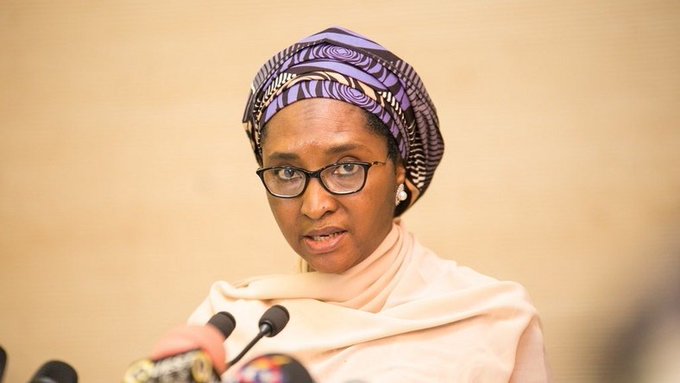
The Minister of Finance, Zainab Ahmed, said the government was making frantic efforts to address Nigeria’s economic concern.
Ahmed said, “On inflation, it’s a very serious situation where Nigeria’s inflation is now 23 per cent. The inflation in Nigeria has a number of components, one of them is imported inflation. Occurrences in other countries also affect Nigeria. For example, the war in Ukraine and Russia has an impact on Nigeria in the sense that some of the inputs for food production are affected. Also the decisions taken by the central banks in USA and Europe on monetary tightening also have an impact on their own level of inflation that also affects our country.
“But in Nigeria, we also have food inflation, and because of the high cost of diesel, we find this showing up in food prices. So when farmers produce their goods and they have to transport them to the market, the increasing cost of transportation is impacting the food prices. What the central bank is doing is continuing to monitor inflation by money tightening and mopping up liquidity.
“On the side of the government, the President has authorized the National Food Security Council, and we have held a meeting on how some support will be provided. The committee will be meeting again in the next couple of days to provide recommendations to Mr. President.”
A professor of Law at Baze University in Abuja and social critique, Sam Amadi, told The ICIR that anyone who wins next year’s election must strive to renew Nigerians’ hope in the economy.
“It is about steering the country on the path of long-term growth trajectory, devoid of the knee-jerk interventions that have become proxies to political jobbers, without proferring the needed solutions,” Amadi said.
MY fellow countrymen and women, a very happy and prosperous New Year to you.
1. First, I would like to thank and honour the Almighty who saw us through the year 2022 and has given us the opportunity to see another year. Each New Year is an opportunity to reflect on the past year, reposition, and move forward with the New.
2. As we celebrate the opportunity to be alive in the year 2023, we must also acknowledge the passing away of our brothers and sisters who didn’t make it into this new year. May their souls rest in perfect peace.
3. This year is particularly important to me because this message is in essence valedictory. After having the honour of serving you, my compatriots, for the last seven plus years, my tenure as your President in the most revered tradition of our ongoing and maturing democracy must necessarily come to an end. In the next five months, we would have gone to the polls and elected a new president along with new governors and a plethora of other elected officials at both the national and state levels.
4. All these electoral and democratic principles are working in concert because of the transcendent beliefs, beyond partisan politics, of you the great citizen of Nigeria. In addition is my personal commitment and executive promise to see to the letter that the 2023 elections being diligently conducted by the Independent National Electoral Commission will be free and fair. The collective electoral will and votes of Nigerians will be fulfilled, even in the twilight moments of my watch.
5. Reflecting on year 2022 allows us as a government to examine our legacies of successes and challenges. As we celebrate our wins and review obstacles, we all must understand that governance is a continuum, which still places a transitional responsibility on this administration to provide for the incoming government a non-partisan and objective roadmap for 2023. We as Nigeria; one country united under the will of God and actively growing as an indivisible entity, have been enabled year after year, decade after decade, to weather all stormy waters and emerge stronger and better where others have fallen and disintegrated. This has made us a unique nation across the globe and our continent.
6. In the year 2023, Nigerians go to the polls to exercise our right to vote and elect a new Administration; it is an important year for our country to ensure that we have another smooth transition of government, to whoever the people have decided upon. This administration’s landmark Amended Electoral Act will ensure that we have free and fair elections across the nation. We as Nigerians must also take responsibility to ensure we participate in ensuring that the 2023 elections are free and fair by not engaging in anti-state activities and other nefarious acts that may affect the run of the polls. We must also resist every attempt to be used by politicians to create unrest in any form to disrupt the elections. We, as government will ensure such activities are met with the full force of the law.
7. As our security agencies continue to make the country proud, we must continue to assist our patriotic forces by providing the much needed community intelligence. It is our collective responsibility to ensure that Nigeria remains safe and peaceful for us all. Therefore, we have a duty and obligation to support our troops and intelligence agencies by being alert and reporting anything suspicious. The fight against insurgency in the North-East region has continually recorded very clear wins in the past year. The Federal Government, and the Borno State government, have started the journey of returning internally displaced persons to their ancestral homes earlier taken by the insurgents. Also, over 82,000 insurgents with their families have surrendered to the Nigerian military. A number of surrendered insurgents are currently being processed by the rehabilitation (Operation Safe Corridor) programme. The fight against banditry, kidnapping and other crimes in the North-West and other regions is gaining momentum and showing very clear results. One of which is the resumption of Train Service along the Kaduna to Abuja corridor.
8. In the aftermath of the #EndSARS, our administration took heed and instituted the ongoing Police Reform programme based on a new Presidential Vision for Policing in Nigeria. This new vision is framed in a clear road map that transcends the tenure of this administration and it is predicated on six principles: a) Building Trust and Legitimacy b) Leadership, Accountability and Oversight c)Technology and digital media d) Community Policing and Crime Reduction e) Officers Training and Education f) Funding, Officers’ Welfare, Wellness and Safety.
9. This reform programme is very much in its foundational phase but has recorded noteworthy successes in improving police welfare and their emoluments. Other gains have been the ongoing training of 500 police cadet trainers to enable a better training regimen for the 2022 first batch of the 10,000 new cadets with an additional 10,000 set for 2023. In support of these reforms has been the provisioning of new material for the Nigeria Police to steadily improve on its constitutional responsibility to enforce law and order, protect lives and property as well as street level peace and security.
10. Despite the ongoing global economic crisis, we have been able to weather the storms. Inflation across the globe is at its highest, the Federal Government has been resolute through its economic interventions to remain above water during this period. 2022 brought a combined impact from ongoing wars and aftereffects of COVID-19. Though creating its own fiscal challenges, we have continued to subsidise our energy costs to buffer households from inflationary pressure of high energy costs. In 2023, we are focused on building on our Gross Domestic Product and sustain the huge surge in the non-oil GDP growth.
11. The Nigerian Start up Bill has been passed as an Act. This is considered a huge step in lowering our unemployment figures by boosting job creation and supporting the entrepreneurial drive of our youths. If you recall in my 2021 New Year speech, I had mentioned the need to secure the future of our youth recognizing that our young people are our most valuable natural resource, at home and abroad. In this regard, we worked with the legislature to develop an enabling law to turn their passions into ideas that can be supported, groomed and scaled across regions. 2023 will see the implementation of the Nigerian Start Up Act nationwide.
12. The year 2023 would, indeed, be a time when we would work to solidify on delivering key strategic priorities under our “SEA” – (Security, Economy and Anti-Corruption) Agenda. Some of the key priority areas we would direct our attention and strengths to include:
a. Focus on SECURITY; we will continue to engage, push back and dismantle the operations of both internal and external extremist and criminal groups waging war against our communities across the Nation. We will also focus on ensuring that free and fair elections would be held come February 2023. Our security forces are working in partnership to ensure the wins we have got in war against insurgency, banditry, secession and other crimes are sustained and more wins acquired.
b. For the ECONOMY; our focus would be on maintaining and building economic growth through the national economic diversification agenda that supports the goal of national food self-sufficiency and growth in non-oil sources. The ongoing infrastructure revolution by our administration will see us deliver the key projects across the Nation in power, rail, roads, ports and technology.
c. ANTI-CORRUPTION: On the anti-corruption drive of our administration, we have created new records in this fight, growing from 117 convictions in 2017 to 3,615 convictions as at December 2022. We as a government are committed to ridding our nation of all forms of corruption, through the collaboration with all the arms of Government to effectively prosecute this fight.
13. As we welcome the New Year, let us look with hope to 2023, a year to move forward as a nation towards unity, progress and prosperity. I offer my own personal felicitations, mindful of the various opinions and interpretations of our executive legacies. I welcome and accept both the accolades and criticisms in equal measure secure in the conviction that I did my best to serve our dear country Nigeria and I pray that the next President will also pick up the baton and continue the race to make Nigeria one of the leading countries of the world by the end of this century.
14. Long Live the Nigerian spirit of oneness, togetherness, and unity. Long Live the Federal Republic of Nigeria. A happy and prosperous New Year.
AS part of its vision to promote good governance through critical and accountability reporting, The ICIR Head of Investigations, Olugbenga Adanikin looks at some of the major investigations conducted in the year 2022, which held power to account even as the year officially comes to a close.
These reports span different sectors ranging from insecurity to economy ranging, from businesses to sports, health, governance, and human rights, including holding public servants and Politically Exposed Persons (PEPs) to account.
January
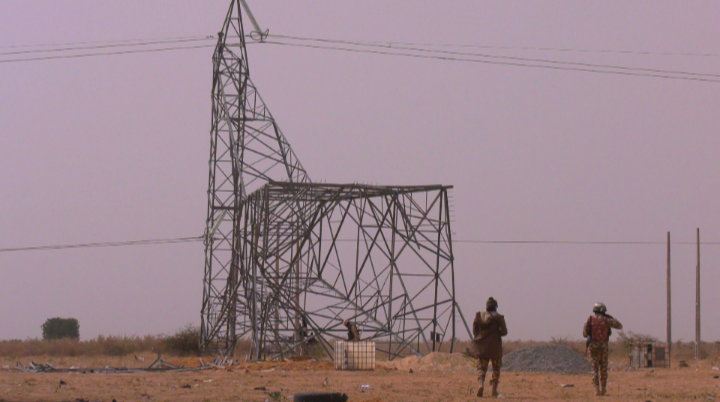
The ICIR commenced the year with a two-part special investigation – Maiduguri: Troubled City in Darkness. It documented how Borno State was left without power in the previous year of 2021 due to incessant terrorist attacks on the power transmission lines. These affected not only government and private businesses but also hospitals, and courts, among other public institutions denying them access to deliver governance to the people.
The 330kV Transmission Line destroyed along Damaturu-Maiduguri road, Borno State. Photo Credit: File Copy.
Second to that was a three-part investigation on how a multi-billion-naira solar-power investment project failed in three regions across the country. The report was more of probing several investments sunk into the sector in five years, its efficiency in boosting small businesses and achieving Nigeria’s commitment to the Climate Change Paris Agreement.
The Rural Electrification Agency (REA), following the report, agreed on some of the discoveries and promised to investigate the findings.
It pledged to sponsor a bill to effectively manage partners involved, or at most, work with the Nigeria Electricity Regulatory Commission (NERC) to address the loopholes.
This is despite the shoe exports to neighbouring countries and other parts of the country.
February
Following the spate of kidnappings, The ICIRtracked the ransoms paid to bandits even as the robbers claimed more territories. This became an important story that needed to be told for the government to find a sustainable solution to the trend.
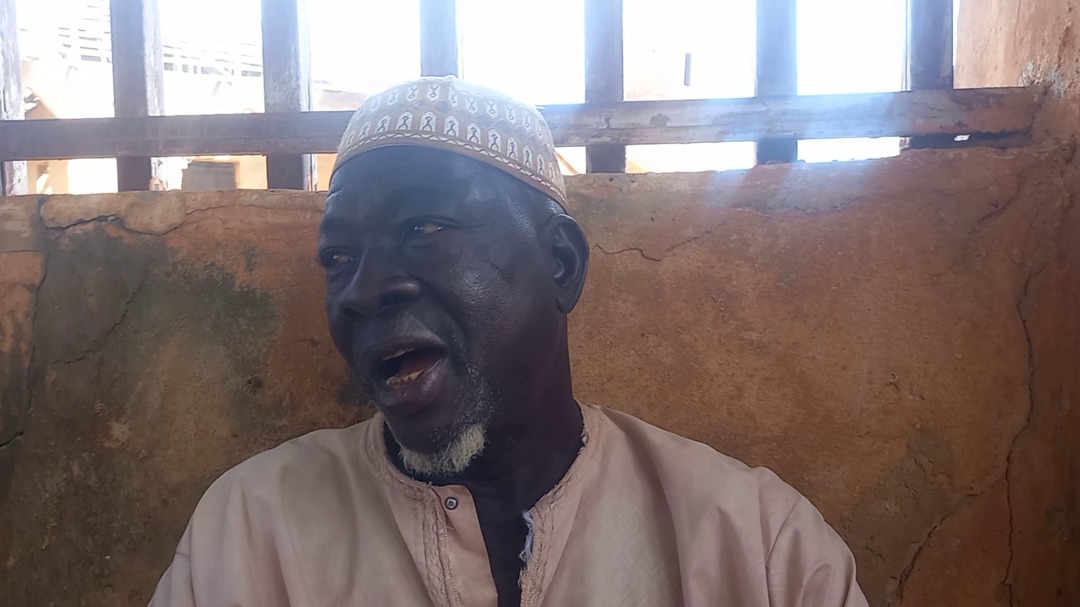
Bawa Yusuf abducted twice by kidnappers in Sokoto state. Source: File copy.
A similar story that focused on issues affecting the masses is tracking of fraudulent investment schemes – ViableX, Farm4Me, CEEPAS, among others and how they lured and extorted the public. While a number of the investors got a refund, some were compensated with landed properties, while others are waiting for full repayment.
The impact-driven story, thereafter, generated public reactions and attracted the attention of the regulatory agency – the Federal Competition and Consumer Protection Commission (FCCPC).
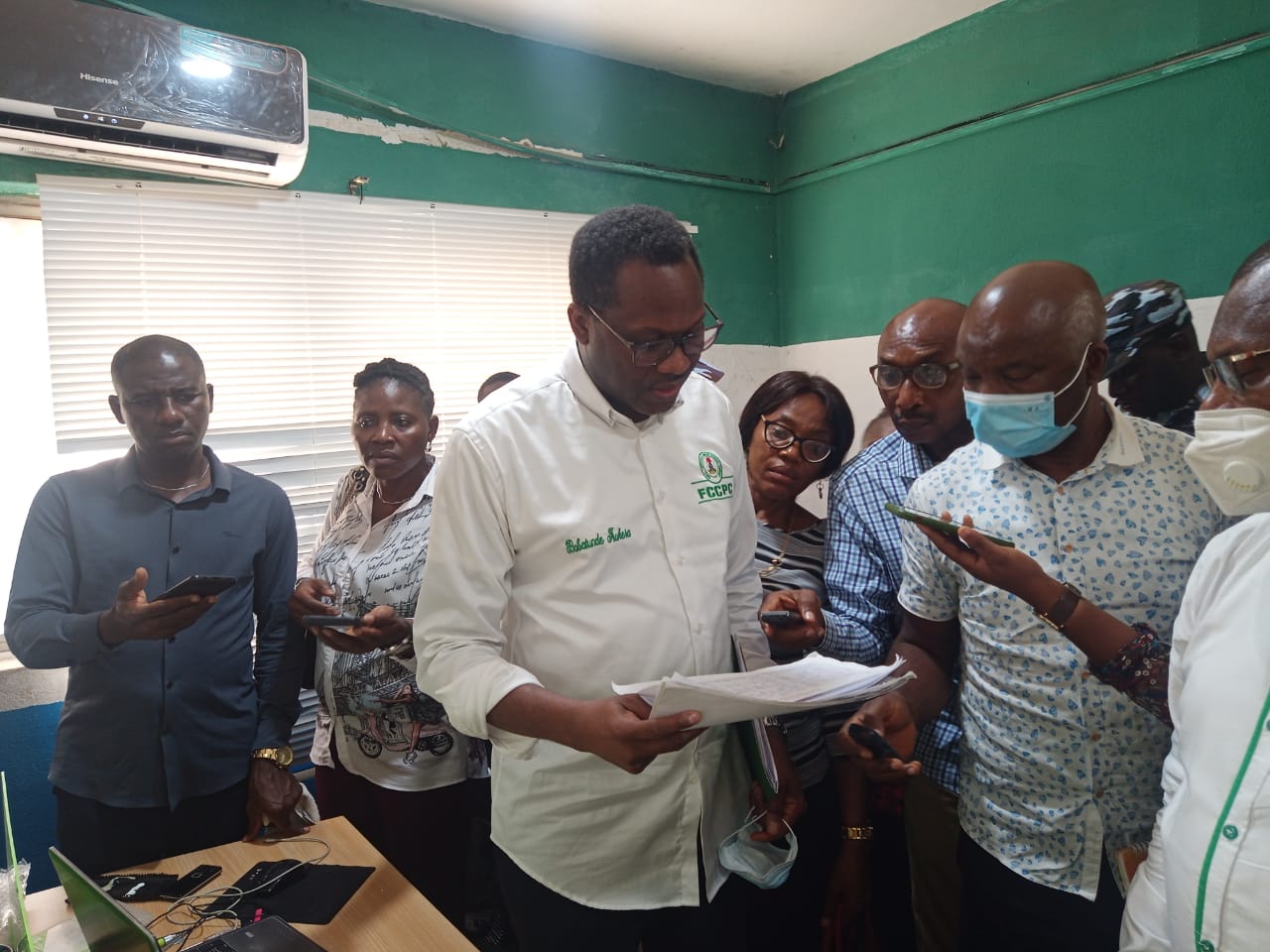
Babatunde Irukera examining documents of a loan app firm during the raid. Photo Credit: File Copy.
The brain drain story in the health sector following the COVID-19 pandemic exposed the vulnerability of the nation’s health sector. Published on March 30, the trend sadly still persists despite alarm from the Nigeria Medical Association (NMA) and a series of other investigations.
One of the most important stories in the month of April was the report documenting the pains of people living in Southern Kaduna in Kaduna State. The multimedia report revealed the cause of multiple deaths and other untold stories of the survivors. It is titled Harvest of Death: The pains of living Southern Kaduna.
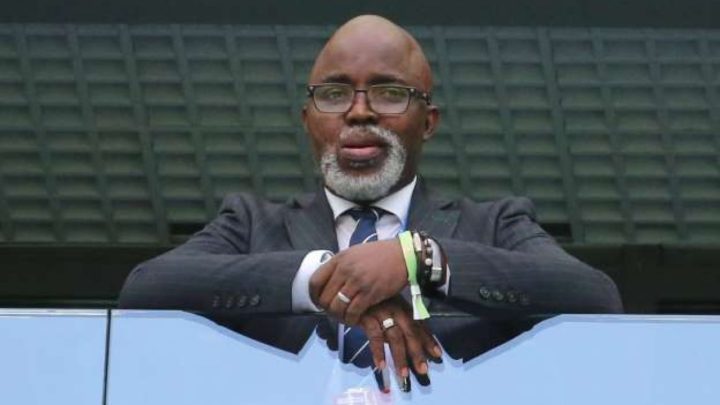
Beyond this was the report exposing a suspicious deal between the Nigeria Football Federation (NFF) and a ticket licensee during the Nigeria-Ghana return match.
The report uncovered NFF’s secret dealings and lack of transparency, raising concern about the slow development of the nation’s sports sector, especially football.
In addition, on April 16, The ICIR reported on the wrong practice adopted by members of the National Youth Service Corps (NYSC), falsifying medical reports to bypass the normal protocol of the scheme. Part of the gimmick is to feign illness, procuring medical fitness reports via WhatsApp groups and online vendors, but lots more can be read here.
The report was followed by intervention from the FCTA which took several steps to fix the situation.
June
The mass shooting and killing of a church congregation at the St. Francis Catholic Church on June 5, Owo, Ondo State, was probably the most important but sad news incident that dotted the month of June.
A protruded belly due to pregnancy. File for Illustration Purpose.
Spiced with a number of solutions journalism reporting, this newspaper revealed how a tuition-free school has been bridging the education gap of 100 children at the Abuja Internally Displaced Persons camp.
The month of August saw multiple in-depth stories on accountability reporting. One of those was the uncovering of poor sanitation in the home town of the Senate President, Ahmed Lawan, despite a multi-million-naira water facility. The issue of open defecation, thus, became rife.
The report – How Obafemi Awolowo Teaching Hospital Hid Details of N3.07 billion COVID-19 Awarded Contracts was one of the series to uncover wrongdoings of public office holders, and private firms in the COVID-19 contract awards. The report unveiled how the hospital got over N3 billion yet claimed it received less than N25 million during the pandemic.
Infograph on COVID-19 Funds Released to the Obafemi Awolowo Teaching Hospital during COVID-19. Source: Olugbenga Adanikin, The ICIR.
It triggered public engagements, especially from stakeholders in the health sector who, before the publication, were unaware of the huge interventions to the teaching hospitals and Federal Medical Centres (FMCs) in the country.
Other parts of the series include: At FMC Abeokuta, almost a billion-naira worth of COVID-19 medical intervention may rot away; How JUTH ignored procurement guidelines over N853 million COVID-19 fund; COVID-19: Over N22.58 billion shared among 21 teaching hospitals etc.
September
For decades, Nigerians willing to own an international passport issued by the Nigerian Immigration Service (NIS) were subjected to unfair treatments. The officers’ wrong attitude to work coupled with huge corrupt practices from the personnel, as a result, denied many life-time opportunities. Others spend months before eventually receiving the international travel document.
The report, shortly after, generated impacts. Some officers of the NIS were transferred out of state, while victims initially affected publicly announced receiving their international passports.
The leadership of the NIS, the Acting Comptroller-General (CG), Idris Jere, subjected himself to public scrutiny and responded to some of the issues through a twitter space with a special public debate on the atrocity.
In Akwa Ibom, a special report uncovered how primary school pupils were denied access to proper education, yet the state government spent billions of naira in procuring exotic cars which its value could provide about 244, 000 desks for the school children.
Still in the same month, the controversial Nigeria Social Insurance Trust Fund (NSITF) appeared on the radar of The ICIR, having accused of illegally deducting from the accrued salary increase of about 5, 000 staffers of the organisation.
Backed with exclusive documents and accounts of multiple sources, and visit to the office, the NSITF attempted to prevent the issue from becoming a public discourse. It eventually generated public discussions among other previous allegations against the Trust. A number of the issues were discussed at the parliament while the NSITF suspended further deductions as of the time of the report.
October
The ICIR did several in-depth reporting on the flooding that affected most states in Nigeria. The reports are captured here – Flood Series
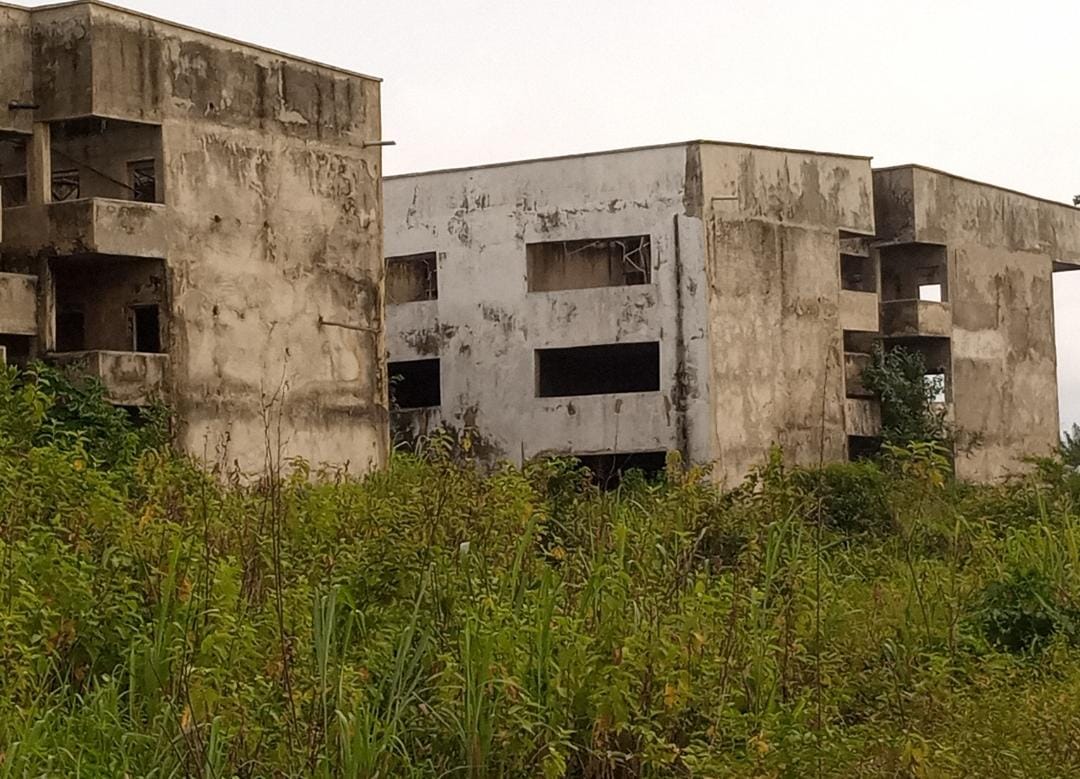
Abandoned Model School at Isara Remo, Ogun state. Photo: The ICIR. Credit: File Copy.
The ICIR also did series of reporting that looked into the Primary healthcare, the Midwives Schemes and the the Basic Health Care Provision Fund (BHCPF) revealed the impacts of the intervention. The series can be read here.
With about 20.2 million children, Nigeria accounts for the nation with the highest figure of out-of-school children. This report titled – How hidden fees contribute to out-of-school children in FCT re-emphasised the problem and the need to proffer sustainable solutions.
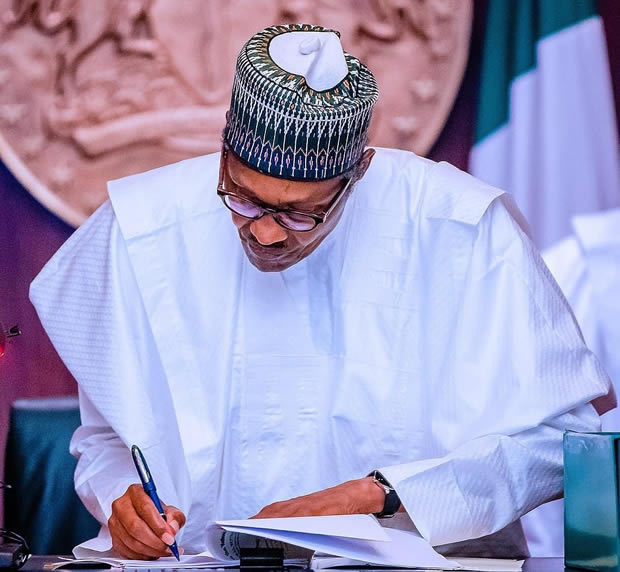
PRESIDENT Muhammadu Buhari is expected to sign the 2023 Appropriation Bill on Tuesday, January 3, 2023, barring any unforseen circumstances.
Senate President Ahmed Lawan confirmed this to State House correspondents on Friday after a closed-door meeting with Buhari at the Presidential Villa, Abuja.
Lawan revealed that he discussed some national issues with Buhari, including the President’s recent additional loan request, the legislature’s support to the Independent National Electoral Commission (INEC) ahead of the general elections and the 2023 Appropriation Bill.
He said: ”We are looking forward to Mr President signing the Appropriation Bill 2023, by the grace of God, on Tuesday.
“This is because we signed the document on December 29, having lost some time because of some anomalous figures we had in the Bill presented to the National Assembly.
“But thank God, both chambers passed the Appropriation Bill 2023 on Wednesday, and I’m sure that Mr President and his team, on the executive side, will work on what we have done.
”And the first thing on Tuesday, the first official working day of the year, I believe that Mr President will be signing the Appropriation Bill 2023.”
He lamented that the National Assembly would have passed the Bill a week earlier had it not been for irregularities.
“We are very pleased that we have been able to, in the last four years, ensure the passage of the appropriation bills in record time before every Christmas, and Mr President had always signed before the end of the year.
“This year, particularly, is because of the anomalous, very undesirable and unfortunate situation that we had to delay a little bit.
“You will recall that the National Assembly had to cut down its Christmas recess to come back on Wednesday for the sole purpose of passing the Appropriation Bill which we could have passed a week before. So all the same, there’s nothing that we missed,” he further stated.
According to him, the seamless working relationship between the executive and the legislature has regularised the signing of the appropriation bills since 2018, resulting in a “predictable January to December” budget cycle for the country.
On the 2023 general elections, Lawan pledged that the National Assembly would continue to assist and support INEC to enable it deliver credible elections.
“We also discussed the 2023 general elections. The current National Assembly has always supported the executive in terms of ensuring that INEC gets whatever is necessary for it to work to ensure that elections are supported, that INEC doesn’t lack in anything.
“So we have committed ourselves to ensuring that we give INEC whatever it needs for it to conduct a very free, transparent and credible 2023 general elections.
”We are here at all times between now and June 11 when our term will also expire as a legislature in the National Assembly.
“But before then, whatever INEC needs for 2023 to be a success, we will surely and certainly provide such support,” he said.
FORMER Pope Benedict XVI, who is of German origin and in 2013 became the first pontiff in 600 years to step down, died on Saturday, December 31, aged 95.
The former pontiff died in the Mater Ecclesiae Monastery in the Vatican where he had lived since his resignation, a spokesman for the Holy See said.
“With sorrow I inform you that the Pope Emeritus, Benedict XVI, passed away today at 9:34 in the Mater Ecclesiae Monastery in the Vatican. Further information will be provided as soon as possible,” the spokesman said in a written statement.
As normal with the death of a Pope, the Vatican normally announces commencement of a conclave (a meeting of Cardinals – high-ranking Church officials who gather in Rome to elect a successor).
However, there would not be a conclave in place, since the late Pope resigned in 2013 citing concerns of frail health. Pope Francis was elected afterwards and is currently thr reigning Pope.
Pope Francis had earlier in the week disclosed during his weekly general audience that his predecessor was “very sick”, and asked for people to pray for him.
Most Catholic leaders comprising of Cardinals, Archbishops and Leaders of various Dioceses have called for prayers following Pope Francis’ call for prayers for the now deceased Pope Emeritus.
For nearly 25 years, as Cardinal Joseph Ratzinger, Benedict was the powerful head of the Vatican’s doctrinal office, then known as the Congregation for the Doctrine of the Faith (CDF).
Conservatives in the Church have looked to the former Pope as their standard bearer and some ultra-traditionalists even refused to acknowledge Francis as a legitimate pontiff.
They have criticised Francis for his more welcoming approach to members of the LGBTQ+ community and to Catholics who divorced and remarried outside the Church, saying both were undermining traditional values.