THE Nigerian Army has debunked reports of the release of a female soldier identified as P. P. Johnson, who was abducted in the Aku-Okigwe area of Imo State.
There were reports that Johnson, who was abducted by suspected members of the proscribed Indigenous Peoples of Biafra (IPOB) on December 26 while visiting her grandmother, has been rescued.
However, Director, Army Public Relations, Onyeka Nwachukwu, has explained that the soldier is still being held by her abductors.
“The attention of the Nigerian Army (NA) has been drawn to some publications circulating in the social media insinuating the rescue of Johnson, who was abducted on Monday, December 26, 2022, while visiting her grandmother in Aku-Okigwe in Imo State, shortly after completion of her Cadet Training and subsequent commissioning as a Lieutenant into the Nigerian Army.
“The NA wishes to state that the information making the rounds is unsubstantiated as the officer is yet to be released or rescued from her abductors. Likewise, the video footage being circulated and associated with the rescue claim is an old video of the arrest of a suspect earlier effected by troops,” a statement released by the Army spokesperson on Friday, December 30, said.
While appealing to the public to disclose relevant information which would aid ongoing investigations into the soldier’s abduction, Nwachukwu noted that efforts were being made to rescue the abductee and apprehend the perpetrators.
There’s nothing quite like a new year to prompt us to take stock of our lives, our health, our goals – and our finances. Many people will start 2023 by contemplating how best to budget, plan and save. This is always a good set of aims, but it’s especially important in the inflation-prone and unpredictable economies we’re seeing all over Africa and the world.
But where should you start? What questions do you need to answer in creating a budget? Here are some tips that I’ve learned – not just as an economist, but as a research cost analyst and someone who keeps a budget too.
1. Understand the broader economic conditions
It is imperative that individuals keep themselves aware and up-to-date on the realities of their country’s economic landscape. You don’t have to be a professional economist, but keep an eye on new developments like free business registration, small business development funds and printing of new money notes. What is the current exchange rate? What’s the political landscape and what international factors, like the price of crude oil, are at play? You should also watch the inflation rate and have a sense of unemployment trends.
This economic awareness will prepare you to draft your own budget and you’ll have a sense of when external factors mean it’s time to revisit your plans.
2. Review your income sources
The ability to earn income is critical to sustaining livelihoods. Having a definite source of income is the bedrock of budgeting.
Some important questions you should ask about your income – and how you might budget with it – include:
What is my current income?
What do I use my income for?
Am I able to save, given my current income?
What proportion of my income do I save and what proportion do I spend?
Do I have the capacity to earn more than this?
How can I improve my income?
Your answers can help you to identify gaps or untapped potential. Those with irregular or unpredictable income should factor in the element of time-gap in their income, for effective budgeting. Time gap is when they are not earning income. And everyone should make allowance in their budgets for uncertainties like health issues, social engagements, inflation, unemployment, recession and price shocks.
3. Appraise your expenses
Expenses can be broadly categorised into “variable” and “fixed”.
Fixed expenses recur within a short period: housing, food, transport, medical costs, electricity, utilities, toiletries and clothing. Variable expenses are more long-term and irregular, such as investment in property or interest-yielding assets, and the purchase of machinery.
The main essence of revising our expenses is to analyse and possibly improve our spending habits. In reviewing our expenses, we can consider issues such as:
What is the proportion of consumption-savings ratio from my income? This is how much do I spend compared to how much I save.
What are my regular expenses?
What are my fixed, capital or investment expenses?
What are my extraordinary expenses that need modification?
Have there been emergency or extraordinary expenses?
A careful response to the issues raised above offers an occasion to re-evaluate the pattern and direction of our expenses. For instance, overspending, unplanned or extraordinary expenses can be identified. This can lead to an optimal, efficient reallocation of available resources.
4. Stabilise your finances through savings
Savings have been described as a financial stabiliser, given their potential to cater for urgent needs and create opportunities for investments.
Of course, savings have more value when they grow faster than the rate of inflation. Inflation erodes the value of savings. For instance, an amount of 300,000 naira (US$676) saved to purchase an autorickshaw today may be impossible in two months’ time with an inflation rate of 10% when the tricycle price rises to 330,000 naira (US$744). The reverse is the case when there is deflation.
Therefore, it is advisable to improve the value of savings through investments in interest-yielding assets such as stocks, shares, bonds, microfinance and production.
That’s not to say it’s always easy to save. Many income earners spend as they go, not seeing savings as part of their budgets. Harsh economic realities can also make it difficult – sometimes seemingly impossible – to save. But it’s not impossible: savings can be made in small amounts, through a daily, weekly or monthly contribution to collections, cooperative schemes or microfinance affiliations. For instance, a point of sale business in Nigeria can permit a daily contribution of 500 naira (US$1.13) over 25 work days, giving an average saving of 12,500 naira (US$28.18) per month.
The Point-of-Sale business started in Nigeria in 2013 when the Central Bank of Nigeria introduced the agent banking system. A POS agent operates and processes transactions through a POS service provider. Providers of such services include banks, microfinance banks and fintech companies.
5. Run a flexible budget
Once your budget is created, remember that it’s not set in stone. It should be flexible if anything changes in your life. For instance, an amount saved to buy a car can be invested in a promising venture buying shares through public offerings or private placements in multinational organisations like Nestle or Unilever.
Also, health emergencies or career advancement programmes can require taking some money out of our savings.
In all, budgeting should be flexible enough to incorporate exigencies, especially when catering for the current situation will culminate into a greater good.
They include five AK 47 rifles, four G-3 rifles, four locally made and one English pistol, 1160 exhibits, 202 live ammunition and 900 cartridges.
The police also recovered four vehicles, two generator sets, six empty G-3 magazines, Police, Civil Defence and Vigilante I.D Cards, ballistic vests, charms, filing machines and cell phones.
“On the 22nd of December 2022, at about 03:00hrs, operatives of the FCT Police Command attached to the State Criminal Investigation Department arrested the ten suspects. They are Ibrahim Umar, Nurudeen Yunusa, Muhammed Ahmed, Yunusa Ibrahim, Amodu Ahmed, Zakari Muhammed, Yusuf Ibrahim, Isah Labaran, Muhammed Mahammed, and Salihu Suleima,” Abubakar said.
The suspects were arrested at You and You Hotel, in the Sambisa Masaka Area of Nasarawa State, bordering the FCT.
In other separate operations, four suspects were arrested for robbery, while a 63-year-old resident of the FCT was apprehended for culpable homicide.
“The suspects were arrested for armed robbery and various degrees of notorious acts, which include robbing POS operators and hunting down everyone they suspect is in possession of money, especially in Maitama, Garki, Wuse and Central Area of the FCT.
“In a case of culpable homicide, a suspect, Taiwo Ojo, aged 63 years, killed one Mr. Philip Kura, burnt and buried the remains in a shallow grave in Bwari Area Council,” he said.
The Police also uncovered a hideout for kidnappers in the FCT and arrested two suspects -Anthony Udeh and Emmanuel Onuvu.
NIGERIA Health Watch offers entries for the third edition of the #PreventEpidemicsNaija Journalism Awards.
The #PreventEpidemicsNaija Journalism Awards honours journalists who have reported on all dimensions of epidemic preparedness in Nigeria in digital/print, audio, and video formats.
The organiser says the nominated article, program, or production should capture themes which communicate the many dimensions of epidemic preparedness in Nigeria, inform on the current state of epidemic preparedness in Nigeria, with a special focus on funding, and highlight and scrutinize budgeting and funding for epidemic preparedness in Nigeria.
The nominated article should also improve community awareness on infectious diseases, empower citizens to demand more funding for epidemic preparedness and hold power to account.
The article must have been published or aired between the period of January 1, 2022, to November 30, 2022.
The deadline for the submission of entries is January 2, 2023, and winners will be announced at an award ceremony on January 27, 2023. Interested applicants can apply here.
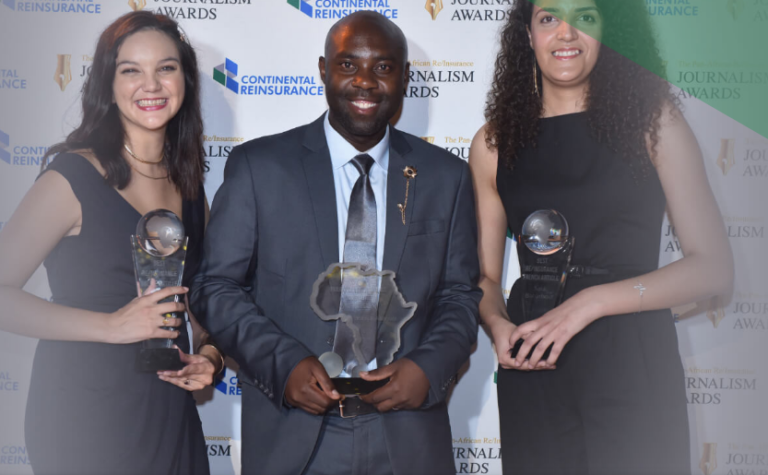
THE Pan-African Re/Insurance Journalism Awards, sponsored by Continental Reinsurance, seeks works that have raised awareness and understanding of the insurance or reinsurance sector in Africa.
The competition offers four awards: Best Re/Insurance Print Article (in English), Best Re/Insurance Broadcast (TV/Radio) Article (in English), Best Re/Insurance Online Article (in English), and Best Re/Insurance French and Arabic entry – Print, Online or Broadcast (Radio/TV).
Works can be an article published in print or online or a broadcast radio/television clip in English, French or Arabic. Entrants have to be based in an African country.
ASSISTANT Superintendent of Police (ASP) Drambi Vandi has been arraigned for the murder of Bolanle Raheem, a Lagos-based female lawyer.
Vandi shot and killed the lawyer on Christmas Day in the Ajah area of Lagos.
Following the arraignment before a Yaba Magistrate Court on Friday, December 30, Vandi was remanded in the Ikoyi Correctional Centre, Lagos State, till January 30, 2023.
The spokesperson for the Lagos State Police Command, Benjamin Hundeyin, disclosed this in a tweet on Friday.
“Drambi Vandi was, this morning, arraigned in court and has been remanded at the Ikoyi Correctional Centre till January 30, 2023 to give room for DPP advice,” Hundeyin tweeted.
The arraignment followed a one-count charge filed against Vandi on Friday by the Attorney-General of Lagos State, Moyosore Onigbanjo, SAN.
The charge read: “That you ASP Drambi Vandi on the 25th day of December 2022, at Ajah Road, along the Lekki Expressway, Lagos, unlawfully killed one Omobolanle Raheem by shooting the deceased in the chest contrary to Section 223 of the Criminal Law of Lagos State 2015.”
The Attorney-General appeared with the Solicitor General of Lagos State, Ms. Titilayo Shitta-Bey, the Director of Public Prosecutions, Dr. Babajide Martins, and the officer in charge of Legal, Nigeria Police Force, Lagos State Command, Yetunde Cardoso.
The prosecution team, led by the Attorney General, told The Chief Magistrate, Miss Adeola Olatunbosun, that the reason for the remand is to allow the police conclude its investigations into the matter.
Thereafter, the magistrate granted the request to remand Vandi at the Ikoyi Correctional Centre and ordered that the case file be duplicated and sent to the Director of Public Prosecution, Dr. Jide Martins, for legal advice.
The matter was subsequently adjourned to January 30, 2023 to await legal advice.
Vandi’s arraignment is coming a day after the Police Service Commission approved his immediate suspension.
The spokesperson for the PSC, Ikechukwu Ani, confirmed the development in a statement after the Inspector-General of Police, Usman Baba, recommended that Vandi be suspended for his actions.
The BETD Media Fellowship will enable journalists to attend the conference, talk to high-level stakeholders, connect with other BETD Media Fellows and join guided tours and side events during the Berlin Energy Week on March 26 to April 1, 2023.
Journalists interested in energy reporting can apply for a fellowship to cover this event.
The deadline for the submission of application is January 15, 2023. Interested applicants can apply here.
THE Republic of Egypt has been identified as the country with the highest number of jailed journalists in Africa in 2022.
This was disclosed in an annual report of The Committee to Protect Journalists (CPJ) published this month.
According to the report, although the number of jailed journalists slightly dropped this year to 21 from 25 last year, the North African country remains among the world’s top 10 jailers of journalists.
The country is trailing countries like Iran, China, Myanmar, Turkey, and Belarus, which were listed as this year’s top five jailers of journalists worldwide.
However, under pressure from the United States and the European Parliament over its human rights record, Egypt included some journalists in broader prisoner releases during the year but continued to detain others, among them Ahmed Fayez.
Fayez, an editor, was arrested for posting on Facebook that prison authorities are force-feeding another journalist, Alaa Abdelfattah, to keep him alive during his prolonged hunger strike.
In sub-Saharan Africa, Eritrea remains the region’s worst jailer of journalists, ranking ninth globally.
The report noted that the 16 journalists in various cells in the country had been held without trial or access to their families or lawyers for periods ranging from 17 to 22 years.
Eritrea is followed by Cameroon, with five journalists arbitrarily detained under an opaque judicial system that includes using military tribunals to prosecute newsmen, who are civilians under international law.
Last year, Ethiopia ranked a close second to Eritrea as the region’s worst jailer of journalists. It, however, released Natnael Gecho, the only journalist in its cells, earlier this month.
CPJ, however, noted that authorities have intermittently detained more than 60 journalists, most for prolonged periods without formal charges since the start of Ethiopia’s civil war in November 2020.
It stated that at least the five journalists being held in the Tigray rebel-controlled city of Mekelle were not listed in its report because their jailers were non-state actors, but they are a telling indicator of the dangerous conditions for reporters trying to cover the conflict.
In Rwanda, the CPJ expressed concerns over the continuous clampdown on dissenting speech within the country’s traditional media.
It highlighted that three of the four journalists behind bars in the country publish their work on YouTube. It noted that two of the YouTubers, Aimable Karasira and Dieudonne Niyonsenga (also known as Hassan Cyuma), have allegedly been subjected to torture and ill-treatment in prison.
The CPJ’s report found that 363 reporters were deprived of their freedom as of December 1, 2022 – a new global high that overtakes last year’s record by 20 per cent and marks another grim milestone in a deteriorating media landscape.
AS the year draws to a close, here are the highlights of some key issues in the judiciary and some paramilitary organisations – National Drug Law Enforcement Agency (NDLEA) and Nigerian Correctional Service (NCos) in the outgoing year.
The Judiciary in 2022
For most of the year, the Judiciary was at the forefront with various news that elicited reactions from the Public.
Chief Justice Tanko Mohammed’s resignation
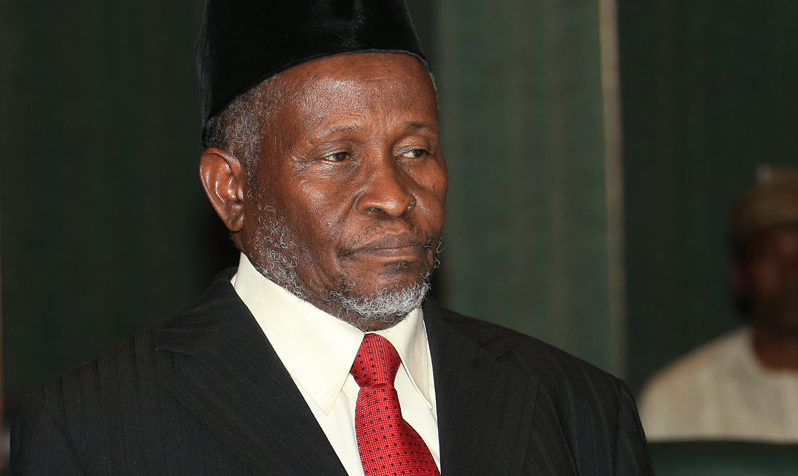
The Chief Justice of Nigeria (CJN), Tanko Muhammad, resigned as Chief Justice of Nigeria on June 19.
Former CJN, Ibrahim Tanko Muhammad
This came after a report that some of his colleagues accused Muhammed of diverting budgetary allocation of the Judiciary.
A few days after the reports, Justice Mohammed, 68, resigned on June 27, citing ill health, about 18 months before his retirement in 2023.
Buhari asks Senate to confirm Justice Ariwoola as substantive CJN
On July 26, 2022, President Buhari asked the Senate to confirm Justice Kayode Ariwoola, the next most senior Justice of the Supreme Court, as the substantive CJN.
The President later sworein Ariwoola as the substantive CJN in October.
Chief Justice of Nigeria, Kayode Ariwoola
The swearing-in occurred a day after Buhari conferred the national honour of Grand Commander of the Order of the Niger (GCON).
A judge in Akwa Ibom sends a lawyer to jail
In July, The ICIRreportedthat the Chief Judge of Akwa Ibom State Justice Ekaette Obot sent a lawyer, Inibehe Effiong, to jail for one month from the courtroom.
Justice Obot also ordered the arrest of a Premium Times reporter Saviour Imukudo, who was in the court to cover Effiong’s case.
Effiong was sent to prison after he objected to the presence of two armed police operatives in the courtroom.
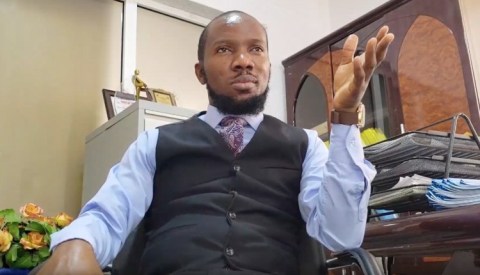
Human Rights lawyer, Inibehe Effiong
Effiong was releasedon August 26 from Uyo prison after spending 30 days for alleged contempt of court.
Court orders arrest, detention of Chief of Army Staff, Police IG and EFCC boss
On December 1, a High Court in Minna, Niger State, issued a warrant of arrest for the Chief Of Army Staff (COAS) Farouk Yahaya over alleged contempt of court.
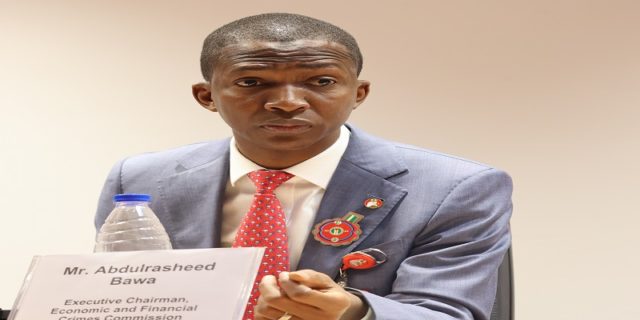
On November 8, a Federal Capital Territory High Court in Maitama also sentenced the Chairman of the Economic and Financial Crimes Commission, Abdulrasheed Bawa, to jail over contempt.
EFCC Chair, Abdulrasheed Bawa
Justice Chizoba Oji, in a ruling, said the EFCC failed to comply with an earlier court order.
However, on November 10, the judge vacated the committal order made against Bawa.
Similarly, on November 29, another Federal High Court in Abuja sentenced the Inspector-General of Police, Usman Baba, to three months imprisonment for defying a 2011 court order.
A former police officer, Patrick Okoli, who was forcefully retired from the Nigeria Police Force, filed the suit to reverse the action.
Justice Mobolaji Olajuwon made the committal order due to the IGP’s refusal to comply with an earlier court order in 2011.
However, in December, the court set aside its order committing the IGP to three-month imprisonment for contempt.
Student arraigned for ‘insulting’ Aisha Buhari on Twitter
In November, a student of the Federal University, Dutse Jigawa, Aminu Mohammed, was sent to the Suleja Correctional Centre, Niger State, for tweeting about the wife of the President, Aisha Buhari.
The student was arraigned at the FCT High Court No. 14 in Abuja for cyberstalking after he was picked up from his school and taken straight to the Presidential Villa, where he was allegedly brutalised, beaten, maltreated and humiliated by the police suspected to be men belonging to the Department of State Services.
He was accused of tweeting in the Hausa language that the First Lady was feeding fat on the poor people’s money.
He was denied bail despite pleading not guilty to the charges filed against him but was later released.
Nnamdi Kanu demands N20bn damages for alleged defamation
On November 22, the leader of the Indigenous People of Biafra (IPOB), Nnamdi Kanu, wrote to the Attorney-General of the Federation (AGF) and Minister of Justice Abubakar Malami, demanding N20bn damages for alleged defamation.
This was barely four days after the initial N20 billion suit filed by Kanu against Malami was discontinued.
IPOB leader’s lawyer Aloy Ejimakor said Malami’s claim that Kanu jumped bail despite a court order clearing him was libellous.
The IPOB leader has been in the custody of the Department of State Services (DSS) since June 2021.
Malami, when reacting to the judgement, said Kanu was discharged but not acquitted.
The FG subsequently filed an application seeking to stay the execution of the appellate court’s judgment, and the court granted the request.
A Federal High Court in Umuahia, Abia state, on October 26 had orderedthe Federal Government to return the IPOB leader to Kenya and pay him N500 million as damages for his illegal abduction and violation of his fundamental human rights.
Owerri magistrate’s court set ablaze
Hoodlums in December set Owerri magistrate’s court ablaze.
The development came barely 24 hours after hoodlums burned the Orlu High Court.
The perpetrators reportedly came with explosives, targeting a particular section of the roof of the magistrate court.
Nigeria correctional service (NCoS) in 2022
Kuje Prison attack
On July 5, 2022, gunmen attacked the Kuje Prison facility and freed hundreds of inmates, including suspected Boko Haram members.
President Buhari expressed concern over the incident and queried why gunmen could successfully “attack a security installation and get away with it”.
The attack generated widespread condemnation.
The NCoS said 879 inmates escaped from the Kuje Prison in a statement concerning the attack.
The NCoS Spokesperson Umar Abubakar said five persons, including an officer of the Nigerian Security and Civil Defence Corps (NSCDC) and four inmates, died during the attack.
The Islamic State in West Africa Province (ISWAP), a breakaway group of the Boko Haram terrorist group, claimed responsibility for the attack.
3,167 condemned prisoners on death row in Nigeria
In December, the Nigeria Correctional Service (NCoS) said there are 3,167 condemned prisonerson death row in Nigeria.
The number comprises 3,105 males and 62 females, according to
Abubakar added that the correctional centres currently have 19,140 male and 339 female convicts.
NDLEA in 2022
NDLEA declares Abba Kyari wanted
On February 14, the National Drug Law Enforcement Agency (NDLEA) declared the then-suspended head of the Police Intelligence Response Team (IRT), Abba Kyari, wanted over alleged drug offences.
Abba Kyari
In what appeared to be the biggest breaking news of that month, the Spokesperson for the NDLEA, Femi Babafemi, in a press conference, said its investigation revealed that Kyari was a member of an international drug syndicate.
He also accused Kyari of being wanted for pushing illicit drugs.
Kyari has been in and out of the court since then.
NDLEA arrested 23,907 traffickers, seized drugs worth over N450 billion within 22 months
The NDLEA said it arrested 23,907 traffickers and seized drugs worth over N450 billion within 22 months.
According to the Agency, the arrest and seizure took place between January 2021 to October 2022
The NDLEA chairman Mohammed Buba Marwa disclosed details of the Agency’s operations in Abuja on Tuesday, December 20.
891 women arrested for drug trafficking and related offences in 2022
From January to October 2022, the National Drug Law Enforcement Agency (NDLEA) arrested 891 women for drug trafficking and associated crimes.
Sa’adatu Abdulahi
This number, although negligible, when compared to the 11,710 males arrested within the same period, raised some concerns.
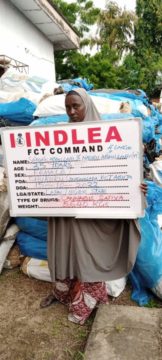
Earlier, a nursing mother was arrested when operatives of the Agency in FCT on Saturday, October 15, stormed a village known as Chukuku, and a nursing mother in charge, Sa’adatu Abdullahi, 35, was arrested.
In November 2022, NDLEA arrested a 56-year-old widow and mother of four, Ajisegiri Kehinde Sidika.
Also, in July 2022, a suspected drug trafficker, Opoola Mujidat, was arrested by the NDLEA at the MMIA, Ikeja, Lagos.
Expert opinion on the issue of women in drug trafficking
A senior lecturer in the Social Work department, Faculty of Social Sciences, University of Lagos (UNILAG), Fatai Adeshina Badru, in a chat with The ICIR, said the general urge to survive significantly affects women going into drug trafficking.
According to him, everybody wants to survive, but the means to achieve success is dynamic; some choose to do it legally, while some go the way of crime.
“They (women) are also contesting for Senators; they also want to live in Banana Island, they want to drive good cars and live well, this might trigger the urge to go into crime.
“Some are also lazy, they don’t want to work but want to eat and live big, so if an individual wants to get to that pinnacle, peer influence, social media influence, and others also play a part,” he stated.
He also blamed the low minimum wage for the increase in the high rate of women in drug trafficking.
In her contribution, the Lead Psychologist at The Sunshine Series, Aisha Bubah, said Nigeria is facing many challenges, which might have contributed to increasing the number of women in drug trafficking in Nigeria.
“For example, women and children are mostly the large victims of insecurity, conflict and we have quite a number of internally displaced women in Nigeria due to the insecurity in the North-East and some other parts of the country, and this leaves women often time as the breadwinners of the family, women who are displaced are affected by this conflict there are also at the socioeconomic disadvantage in the society these may now push them towards the likelihood of activities like drug trafficking to make ends meet,” she said.
She added that another factor is the high rate of sexual and gender-based violence against women and girls in our communities, which exposes them to high levels of stigma and discrimination. This can also lead to significant social and economic disadvantages.
According to Bubah, one of the implications that can emerge from women getting involved in drug trafficking is gender biases and stereotypes.
“You know women are still struggling to occupy spaces in our political spaces in work spaces, women are still fighting for equal rights, equal access to opportunities and with these, there are still some gender bias stereotypes that women can not hold a leadership position, women cannot function in a leadership role, so if we also have the biases that start stemming as a result of the engagement of women in drug trafficking, it can negatively impact that image,” she stated.
THE Nigerian Immigration Service (NIS) has said human traffickers now exploit the Economic Community West African States (ECOWAS) travel certificate to avoid security checks while carrying out illicit activities.
In a statement released by the Bayelsa State Command of the NIS on Thursday, December 29, State Comptroller Sunday James said the certificate is being exploited by traffickers because of the low level of suspicion on persons using it to travel within the ECOWAS member states.
“The Command noticed a sudden increase in the rate at which young people patronised the ECOWAS Travel Certificate and did a risk analysis and a checklist of the age group that goes for it, the reasons given for the travel and countries where the holders of the document frequent,” he said.
According to James, an additional document has been introduced for travellers to ECOWAS member states in a bid to further restrict illegal movement and strengthen security measures against human trafficking.
“It was on this ground that the unit directly responsible for the issuance, ECOWAS Unit, was tasked to add an additional security document to the requirement, called the Suspicious Travel Interrogation Form which has zeroed down to any suspected case and has yielded results,” James said.
He restated the organisation’s commitment to combating human trafficking and urged parents to be more vigilant before releasing children to relatives and other persons abroad.