A vigilante, who refused to disclose his name, said the suspect was sighted by members of the Miyetti Allah in the area.
He said, “They called the attention of our members attached to the motor park for assistance. He was apprehended and taken to our office, where he was searched and detained before being handed over to the police around 4 a.m.”
Reports say the sum of N103,000 cash was found in Bello’s possession, as well as three sticks of cigarette and a lighter.
The vigilante source stated that the Divisional Police Officer in Zuba personally came to the vigilante office with his men to pick up the suspect.
Attempts to get the response of the FCT Police Public Relations Officer, Josephine Adeh, were unsuccessful as she did not pick up her calls. She also failed to respond to a message sent to her phone.
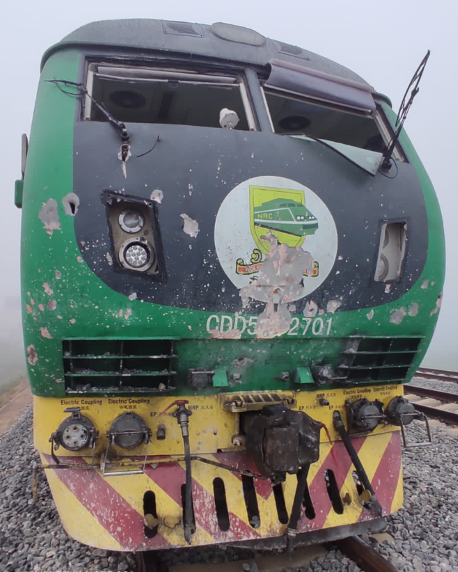
The ICIR reported that terrorists attacked an Abuja-Kaduna train in March 2022. Several passengers were abducted in the incident.
DOZENS of intending travellers were left stranded on Monday after staff of the Nigerian Aviation Handling Company Plc (NAHCO) embarked on a strike action, leading to the shutdown of the Murtala Mohammed International Airport, Lagos.
The workers, The ICIR understands, were protesting against poor condition of service and the failure of the management of NAHCO to increase their salaries.
The development disrupted both domestic and international flights.
Footage seen by The ICIR on social media showed stranded passengers at check-in counters in the airport as the airlines serviced by NAHCO suspended flight operations.
“BREAKING: Airlines Ground handlers on Strike @ Lagos Airport. No Departure Check in & No Arrival of Flights for now Departing Passengers Stranded.” pic.twitter.com/9YVOy1gJt6
A letter jointly written by the National Union Of Air Transport Employees (NUATE) and Air Transport Services Senior Staff Association Of Nigeria (ATSSSAN) indicated that the aggrieved workers had earlier notified NAHCO of their intention to down their tools since January 16, 2023.
In the letter seen by The ICIR, the unions said that it has been in negotiations with NAHCO since June 2022 for the review of their working conditions but they have met resistance from their employer.
“As you are all aware, our unions have been in negotiations with the Management of NAHCO for the review of current salaries since June, 2022 without any headway,” the letter reads.
“As all ultimatum issued by our unions have gone unheeded, and the management continues to play on our intelligence through scheduling of purposeless meetings, we have come to the conclusion that the management is clearly decided against harkening to our cries for fairness and equity, despite overwhelming evidence in support of our demand.
My cousin’s flight from America to Lagos through Qatar was on its way to Lagos this morning but has just turned back to Qatar because Nigerian aviation officials are on strike. pic.twitter.com/GRrLEwKZrC
“In view of the above, NUATE and ATSSSAN have no choice than to take definite steps to press home our demands.
“In the above regard, all staff of NAHCO are hereby directed to withdraw all services with effect from Monday 23rd January, 2023. This action shall be indefinite until otherwise directed by the Secretariats of the unions.”
The ICIR made several unsuccessful attempts to get comments from the management NAHCO.
AN inter-disciplinary journalistic initiative that reports on power and politics, Geneva Health Files, is looking for students, and/or interested experts and writers who can report on global health.
The program will help fellows gain hands-on experience in learning how global health journalism is crafted in Geneva.
The fellowship is intended to run from April 1, 2023, to October 1, 2023. This period is also subject to the availability of interested candidates.
The organiser says they are looking to work with people who may be interested in helping the team achieve two key and distinct objectives which are reporting and research activities: These could include working on specific reporting projects, attending webinars, and briefings, conducting research and analyses, and helping with certain aspects of the production process and supporting business development activities.
The tasks also include promoting Geneva Health Files among global health experts everywhere. This will mean reaching out to institutions, working on grant proposals, and curating the organisation’s work, maintaining the website and brainstorming on strategy, among other tasks.
The deadline for submission of the application is March 5, 2023. Interested applicants can apply here.
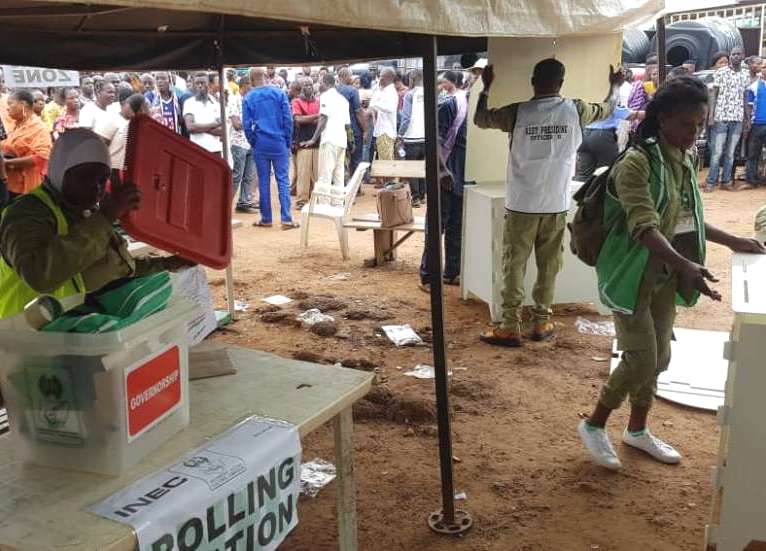
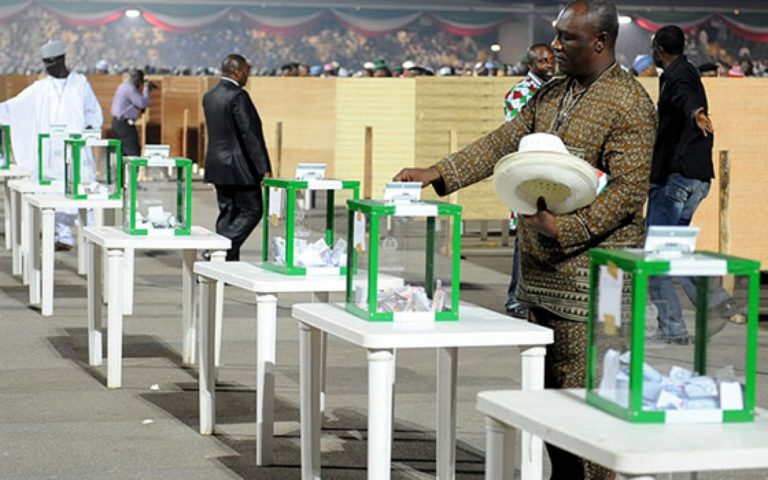
IN the last Ekiti state governorship election, the Centre for Democracy and Development, CDD, said its field observers documented 41 voting buying and selling cases at polling units across six LGAs.
These voters are offered a sum under a “See and Pay” fraud, in which a voter displays the thumb-printed ballot to a party agent standing by a polling booth.
Political pundits have said the Bimodal Voter Accreditation System (BVAS) machine that was introduced in 2021 can help reduce election rigging, and parties will resort to vote buying. The ICIR reported multiple cases of vote buying in Ekiti and Osun elections. Vote buying did not start with the introduction of the BVAS. This has led to different concerns stakeholders offering solutions.
Recently, a Twitter user, Nicholas Musa, has suggested modifying the voting process to curb the rise of the practice in elections.
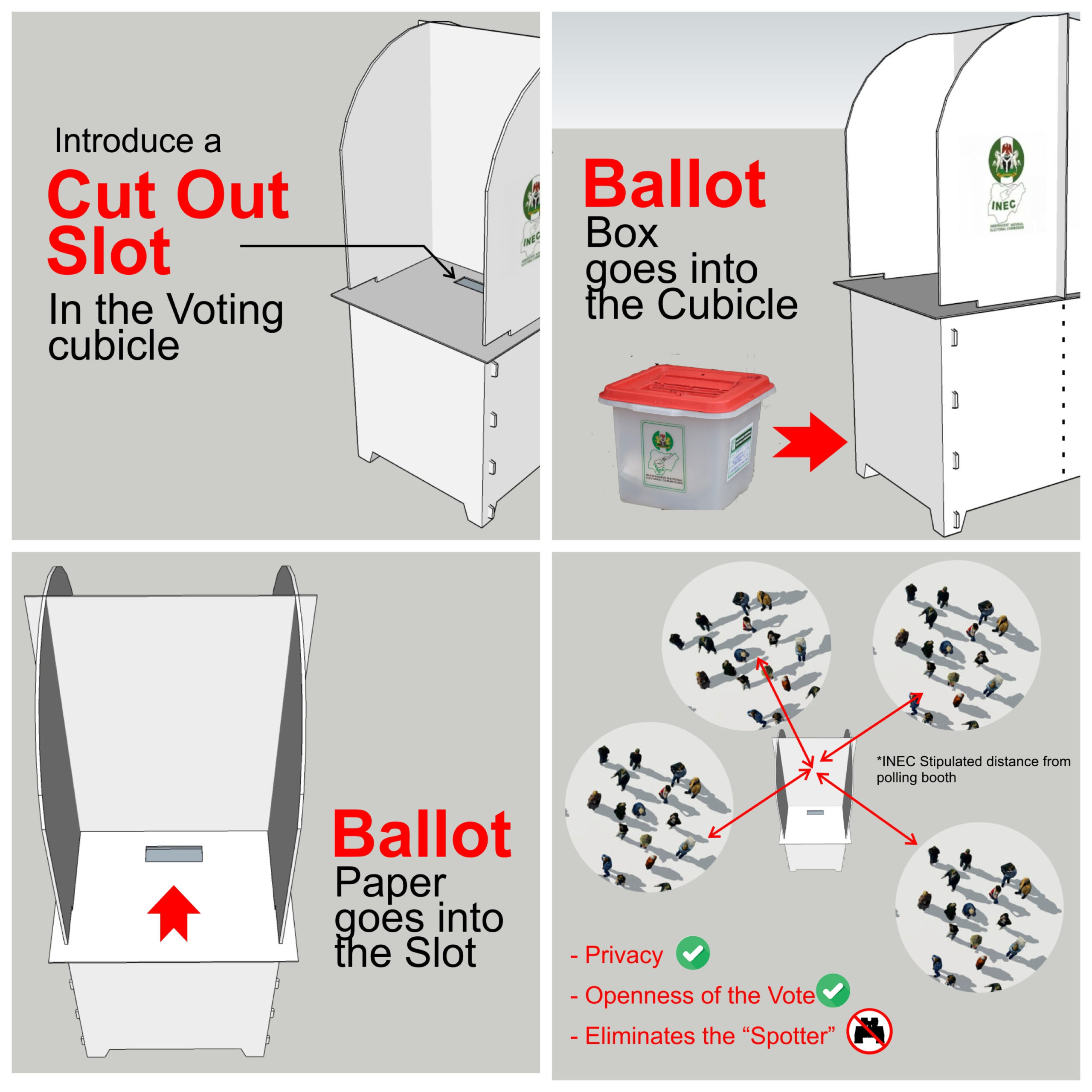
In a Twitter thread posted using on the handle @Nichmusa, Musa advised that the INEC merge the voting cubicle and the ballot box.
To do this, INEC will create a slot that can only fit the ballot slip on the cubicle. And place the ballot box underneath. With this, thumbprinting and vote-casting are in the same spot.
The entire process is enclosed and, according to Musa, eliminates the role of the ‘spotter.’
The ‘spotter’ is a party agent who confirms the candidate an electorate has voted for and signals an accomplice to finalise the exchange.
Musa said the spotter is the most vital agent whose role INEC can eliminate by this modification.
The modified process suggested
Musa told The ICIR that this proposed system tackles vote buying while incurring little or no cost.
“All that is needed has been procured or is already available. I’m only suggesting we switch the process. There is nothing extra to be procured.
“The only work required is sensitisation and an update to the training of Adhoc staff,” he said.
creating an opening (slot) on the thumb printing platform for votes to be cast. The ballot box is now enclosed beneath the voting cubicle. pic.twitter.com/F23lEF5OzK
He noted that this procedure would provide privacy and vote credibility.
Musa’s proposal is rational but here is why it won’t work.
It differs from the legal voting system
The process is different from Nigeria’s ballot system. Nigeria practices an open-secret ballot system, a modified open ballot system. It requires that the voter make their choice secretly and cast their vote in Public.
In this system, the electoral body accredits and releases ballots openly, after which the voter retires to a private space (the cubicle) to vote before inserting the slip in public.
The ballot paper should remain folded outside the booth.
According to the INEC spokesperson Festus Okoye, the Commission must do as the law dictates.
He said INEC is a product of the law and must strictly adhere to its provisions. Hence, INEC can only make such changes if included in the legal framework.
“The Commission is a product of the law and constitution. The electoral act is clear; it says that before the beginning of any election, the electoral act must show the empty ballot box to everyone present. And it must be placed in the full view of people till the elections are over. That’s why we call it an open secret ballot. You thumbprint in secret and vote in the open.
“Before the Commission can change anything, there has to be an amendment to the legal framework. What we are doing now is following the legal framework that the lawmakers have provided,” he said.
It impedes the transparency of voting
A senior programme officer for CDD, Austin Aigbe, also affirmed that casting votes privately is against the voting system.
He said the law allows thumbprinting in private, but voters must publicly insert the paper inside the box; to do so privately will affect the transparency of the process.
What can be done?
Aigbe advised that INEC position the voting booth and ballot box closely. This way, the slip is inserted almost immediately after thumbprinting.
He urged that paper should be folded outside the cubicle, with voters and spectators at least one meter away.
It will prevent the voters from displaying that ballot paper to anyone.
He, however, added that the electoral body, in the long run, can mitigate the issue of vote buying with electronic voting.
“It has to be with electronic voting because, inside the cubicle, you can’t tell if the voter casts a vote. They may decide to keep the slip in their pocket.
“But with electronic voting, the voter will thumbprint, roll out, and the machine will roll in another ballot immediately.
“Placing the ballot in the eyes of the public allows for transparency. Everyone can tell if the voter has voted correctly. Everyone can see the slip inserted in the box. But when it is don’t privately, no one can tell that. The voter can even insert multiple ballot papers.”
“To do this, INEC has to introduce electronic voting. The 2022 electoral act already gave INEC the power to raise any electronic device for the poll. So this is now within INEC’s purview.
“The electronic voting will be offline to prevent anyone from hacking into the system,” he said.
Effective measures are already in place — INEC
The INEC spokesperson, Okoye said the techniques adopted by the Commission are effective methods to curb vote buying.
He noted that INEC has prevented using cameras in the polling units and collaborated with security agencies to control the practice.
He firmly believes that the enlightenment of the voters on the need to avoid selling their votes is the most effective means of achieving this.
Festus said, “some of the measures we have put in place, like preventing cameras in the polling compartment. And collaboration with various security agencies will go a long way in curbing vote buying.
“But ultimately, the antidote is the enlightenment of the electorates. People must understand that PVC has power and potency.”
He added that the Commission is willing to experiment with other ways to improve the integrity of the voting process.
He affirmed the possibility of trying out new techniques after the 2023 election.
*Produced in partnership with the Centre for Democracy and Development (CDD) with support from Foreign and Commonwealth Development Office (FCDO).
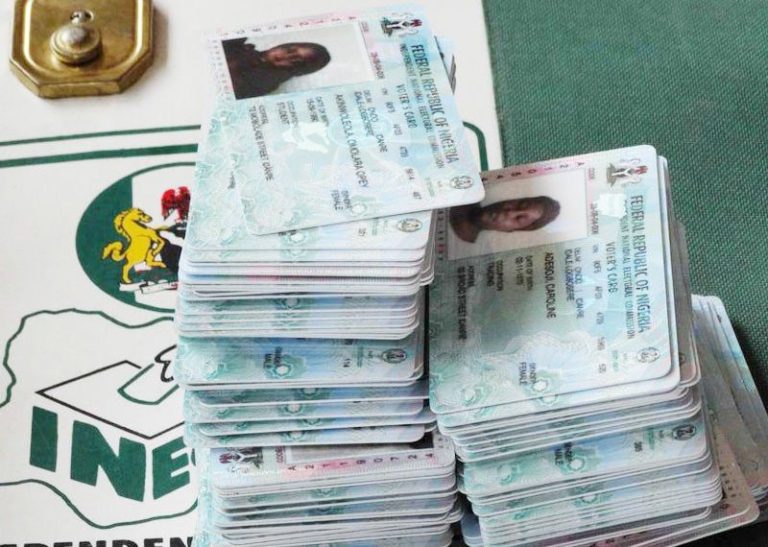
In a statement by the Chief Press Secretary to the Governor, Kunle Somorin, the government urged private organisations to also grant their workers time off work to collect their PVCs.
“Gov. Dapo Abiodun has graciously approved Tuesday, 24th and Wednesday, 25th January as work-free days to enable public servants collect their PVCs from their respective local governments.
“The governor enjoined executive members of public markets and private establishments to allow flexibility in their schedules, for residents to use the opportunity to visit INEC offices or collection centres where they registered to collect their PVCs,” he said.
Some other states have similarly declared work-free days to workers for PVC collection.
Cross Rivers state declared two work-free days, while workers in Lagos were given four free days for PVC collection.
INEC had extended the deadline for collection of PVCs by eight days. The deadline was earlier set for January 22, but has been shifted to January 29 to allow more registered voters collect the cards.
AS Nigerians inch closer to the February 2023 presidential election, the seventh since the current wave of liberal democracy formally started in 1999, there are at least 10 key issues that are likely to drive and determine the outcome. Political scientist, Jideofor Adibe, explores them all.
1. Ethnicity and regionalism
Four of the 18 presidential candidates in the election, regarded as the front runners, come from the three dominant ethnic groups in the country: Hausa/Fulani, Yoruba and Igbo.
Since the 1999 election, there has been an unwritten convention that presidential power will rotate every eight years between the northern and southern parts of the country. That’s why many individuals and groups from both the north and the south insist that President Muhammadu Buhari must be succeeded by someone from the south.
Some individuals and groups from the south-east further argue that because the zone has not yet produced a president, it should get its turn in 2023.
Some from the north-east, where Atiku comes from, equally argue that it should be their turn since the zone has not produced a national head since Tafawa Balewa, the country’s first and only prime minister, in the 1960s.
2. Religion
Just like ethnicity and regionalism, religion has always been an important tool of mobilisation and discord in Nigeria.
Since 1999 there has also been a careful balancing act to ensure that the president and the vice-president do not share the same religion. While the north is predominantly Muslim, the south is predominantly Christian.
This balance was upset when Bola Tinubu, a Yoruba Muslim, chose Kashim Shettima, a Kanuri Muslim and former governor of Borno State, as his running mate. Many Nigerians and groups, including the Christian Association of Nigeria strongly condemned the ticket.
3. Emergence of ‘viable’ third force parties
Until 2015, Nigeria’s political landscape was dominated by one party – the People’s Democratic Party. It was the only party strong enough to win presidential elections.
This changed in 2015 when the All Progressives Congress, a coalition of opposition parties, defeated the sitting president, Goodluck Jonathan. This heralded an era of a two-party dominant state.
The emergence of the Labour Party and the New Nigeria People’s Party seems to have changed the electoral dynamics.
Obi frames his campaign on anti-establishment rhetoric and is therefore able to attract a horde of frustrated young voters. As the only Christian among the four leading candidates, Obi may also benefit electorally from Christians opposed to Muslim-Muslim ticket of the ruling APC. At least three opinion polls showed him leading the race, though some have questioned the credibility of those polls.
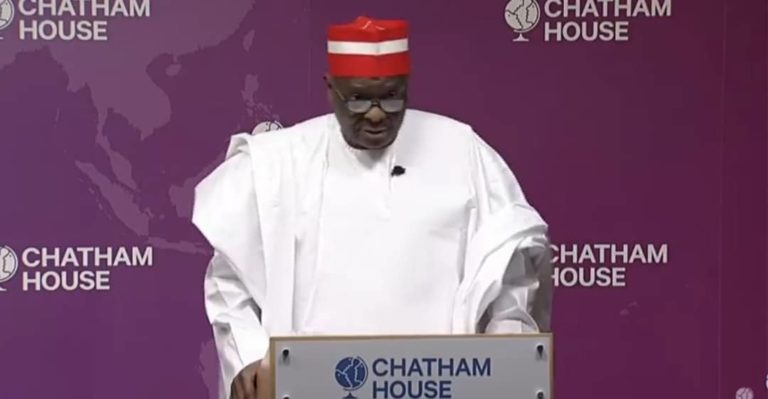
Kwankwaso, founder of the Kwankwasiya movement, is regarded as a grassroots organiser. He is believed to be popular with ordinary people in the north but is thought to lack a strong following in the south.
4. Burden of history
Obi’s candidacy has been endorsed by Ohanaeze Ndigbo, the pan-Igbo socio-political organisation, and some influential non-Igbo groups and individuals, including former president Olusegun Obasanjo.
In the south-east region, there is a deeply ingrained belief that there is a conspiracy to exclude the Igbo from certain key political positions in the country because of their role in the Civil War (1967-1970). This belief has helped fuel secessionist agitations. Though the political elite of the region have remained aloof or lukewarm to Obi’s candidacy, he is literally deified by ordinary people in the region who are excited by the “audacity” of his candidacy.
5. Presidential debates
In recent years, various groups have been organising debates for key political contestants in the country. Tinubu, touted as a master tactician by his supporters, has managed to evade these debates. After a speech to an audience in the UK in December 2022, he left it to his aides to respond to most of the questions he was asked.
I have argued elsewhere that presidential debates do not really affect the outcome of presidential elections. In fact leading candidates often refuse to take part in some or all of such debates. But Tinubu’s non-appearance accentuates suspicions about his health and several controversies around him.
6. Independence of the electoral umpire and the new Electoral Act
The general insecurity in Nigeria may make it difficult, if not impossible, to conduct credible elections in some parts of the country. That could affect the electoral fortunes of candidates who regard such areas as their strongholds.
8. Money
Money is crucial in any election, especially in Nigeria, where the high level of poverty means that people need financial support before they can even attend campaign rallies. Vote-trading has also become a prominent feature of elections. Despite measures to improve the transparency of the electoral system, it is likely that money will remain a big factor in the 2023 election.
9. Crises and schisms within the parties
Nigerian political parties tend to be special purpose vehicles for winning elections or positioning individuals for political appointments. That’s why there tends to be sharp divisions and crises within parties, even the smaller ones. The degree of cohesiveness of the frontline political parties will affect their chances in the election.
10. The unknown
In any engagement, there is always an unforeseen variable which may change the game. Military tacticians call it fog of war while the religiously inclined call it the Act of God. Until the votes are counted, a victor is announced and the inevitable court challenges are resolved, there is still the possibility of an event that could alter the election’s outcome.
THE Nigeria Peoples Party Presidential Campaign Council (NNPP-PCC) has said its presidential candidate, Musa Rabiu Kwankwaso, will not step down for any presidential candidate in next month’s presidential election.
NNPC-PCO spokesperson, Ladipo Johnson, made this known in response to a speculation that the former Kano State governor would step down for one of the front-runners in the February 25 presidential election.
Johnson described the speculation as a campaign of calumny being orchestrated by some political blocks.
He said, “The campaign of calumny is well orchestrated and comes from more than one political block! Ab initio, they initiated and carried rumours about Kwankwaso purportedly stepping down for their weak candidates.
“I pity these political jobbers as there probably is no easy way for them to sell their weak and ailing candidates who have passed their ‘sell by dates’, to Nigerians! I make bold to say that these so-called candidates should be taken off the supermarket shelf (off the political space). They have cost us enough.”
According to him, the political jobbers were attempting to push their narrative by using pecuniary means to entice solitary NNPP or Kwankwasiyya members who then stage “decamping shows”, claiming they had moved with hundreds of thousands of their members.
Urging that such political jobbers should not be taken seriously, he described the development as “laughable”, noting that there would be more of such shows as the “expired” politicians become more desperate as the elections draw closer.
“The RMK 2023 campaign is waxing stronger as we head into the last 30 days of the campaign. Our candidate has reached way over 400-plus local governments and is going into the only state he has not been to, to campaign in the coming days,” he said.
He noted that the NNPP had a clear strategic path to victory and Kwankwaso would win the election.
“It is certain that these expired politicians will continue to seek to buy the loyalty and votes of Nigerians and will not desist from their underhand tactics,” Johnson added.
He reiterated that the NNPP and Kwankwaso were contesting the elections to win, asserting that its presidential candidate had the competence, capacity, and political will to move Nigeria in the right direction.
He assured voters that Kwankwaso would deliver on the people’s mandate if elected as president.
THE National Drug Law Enforcement Agency (NDLEA) has seized 126.95 kilogrammes of cocaine and skunk at the Akanu Ibiam International Airport (AIIA), Enugu, and the Tincan seaport in Lagos.
The NDLEA said the drugs were concealed in herbal tea packs and imported vehicles by drug cartels from Brazil and Canada.
According to a statement by the spokesperson of the NDLEA, Femi Babafemi, at the Enugu airport, an Ethiopian Airline male passenger, Eze Christian Ikenna, 42, coming from Brazil via Addis Ababa, Ethiopia, was intercepted on arrival at the airport at about 12:30pm on Friday, January 20.
Eze Christian Ikenna Photo credit: NDLEA
“A search of his two bags revealed 19 big sachets, which he claimed to contain herbal tea but were later found to be cocaine weighing 16.20 kilograms.
“In the same vein, a joint examination carried out on a container marked TCLU 7799237 from Montreal, Canada, at Sifax Okota Bonded Terminal by NDLEA operatives attached to the Tincan Command of the Agency on Wednesday 18th January led to the discovery of 110.75kgs of cannabis indica concealed in two of the four vehicles in the container,” Babafemi said.
The statement added that deliberate efforts by the agency to cut access to illicit opioids paid off on Tuesday when a consignment of tramadol that NDLEA operatives had been tracking for some months was eventually traced to a warehouse at Greenfield Estate, Amuwo Odofin area of Lagos.
It read, “When the store was opened, a total of 1,645,560 pills of Tramadol 100mg, 200mg and 225mg were recovered.
“Another 60,000 pills of Tramadol 250mg were equally recovered from a wanted drug dealer, Diugwu Alphonsus, in the Bariga area of the same state day, while raids carried out in the Akala area of Mushin on Wednesday 18th and Friday 20th January led to the recovery of 781.7kgs of cannabis.”
The agency said its operatives in Osun State, on Friday, January 20, took into custody a blind 67-year-old grandfather, Aliyu Adebiyi, in whose house they found 234kg of cannabis at Sokoto village, Owena Ijesa, Atakumosa East LGA.
Aliyu Adebiyi Photo credit: NDLEA
“In his statement, he said a drug dealer kept the consignment with him for a fee of N6,000 per month and paid for three months upfront,” NDLEA added.
Similarly, a leper, Haruna Abdullahi, 45, alleged to be notorious for drug dealing, was arrested at Garko town, Kano, on Thursday, January 19, while 2.2kgs of cannabis and various quantities of Diazepam and Exol were recovered from him.
AT least 369 suspected lassa fever cases have been recorded in January 2023 by the Nigeria Centre for Disease Control (NCDC).
The Director-General of the NCDC, Ifedayo Adetifa, disclosed this to the News Agency of Nigeria (NAN) in an interview on Sunday.
According to NAN, Adetifa noted that of the suspected cases recorded between January 2 and 15, 2023, 105 had been confirmed positive.
The positive cases were spread across 10 states, which are Ondo, Edo, Ebonyi, Bauchi, Benue, Kogi, Imo, Oyo, Plateau and Nasarawa.
He also said that Edo, Ondo and Bauchi states were responsible for 84 per cent of the infections in the country, and seven deaths had been recorded.
While urging residents to keep their surroundings clean, he also advised against drying foodstuff by the roadside to avoid contamination.
“Block all holes in your house to prevent rats from entering. Cover your dustbins and dispose of refuse properly.
“Communities should set up dump sites very far from their homes to reduce the chances of having rodents within their homes. Store foodstuff like rice, garri, (cassava flakes) beans, corn and maize, in containers that are well covered with tight-fitting lids,” he added.
He also advised residents against self-medication in cases of infection, and urged health workers to observe standard precautionary measures.
“Healthcare workers should maintain a high index of suspicion for lassa fever. Be vigilant and consider a diagnosis of lassa fever when seeing patients presenting with febrile illness.
“Healthcare providers should report all suspected cases of lassa fever to their local government Disease Surveillance and Notification Officer for immediate access to healthcare,” he added.
He noted that efforts were being made to reduce lassa fever fatality rates in the country to less than 10 per cent, including the finalisation and validation of a five-year strategic plan and training of health workers, on response to the infection.
THE acting chairman of the Peoples Democratic Party (PDP) in Ekiti State, Lanre Omolase, has dismissed the dissolution of the Executive Committee of the party in the state by the Iyorchia Ayu-led National Working Committee (NWC).
The PDP had in a letter by its national spokesperson, Debo Ologunagba, dissolved the party exco in Ekiti on Friday, January 20.
Ologunagba stated that the party’s NWC dissolved the Ekiti exco following recent developments in the chapter, which he did not elaborate on.
He, however, explained that the decision was taken “after careful deliberations and extensive consultations, on behalf of the National Executive Committee (NEC) and pursuant to Sections 29(2)(b) and 31(2)(e) of the Constitution of the PDP (as amended in 2017).”
The spokesperson also said the party had approved the appointment of Sadiq Obanoyen, an architect, as the chairman of the caretaker committee.
The party’s National Assembly members in the state were also suspended.
Reacting, Omolase, in a statement on Sunday, January 22, described the decision of the NWC as an exercise in futility.
He said that he remained the party’s chairman in Ekiti State until a court of competent jurisdiction rules otherwise.
He stressed that the NWC’s decision to dissolve the exco ran foul of a subsisting court order that proclaimed him as chairman of the party in the state.
“I want to say, proclaim and declare that I am still the Acting Chairman of the PDP in Ekiti and only the court of law can say otherwise.
“The position of the court is that nothing must be done concerning the State Chairmanship of the PDP in Ekiti until final determination of a suit filed when two persons were laying claim to the chairmanship of the party.
“Apart from the fact that there is a subsisting court order backing my position, the National Working Committee does not also have powers to sack duly elected Exco members of the party at whatever level,” he said.
The PDP chieftain also condemned the suspension of the National Assembly candidates of the party in the state, noting that there was nowhere the candidates were invited to defend themselves and, therefore, did not get a fair hearing.
He added that the only problem the state chapter of the party had with the NWC was the composition of the Presidential Campaign Council (PCC) in which members of the Social Democratic Party (SDP) were accorded vantage positions.
He noted that the chapter’s position was that the SDP had National Assembly candidates whose elections will be held same day as that of the president, and the party was only interested in funding its candidates with resources from PDP.
He said several letters were written, even to the Presidential Candidate, Atiku Abubakar, on the chapter’s grievances but nothing was done.
“For the campaign rally, only two out of nine National Assembly candidates were involved. Even me, as the Acting Chairman, was totally ignored.
“It, therefore, appears funny and laughable to me that a National Working Committee that did not visit Ekiti during the last governorship election is now angry that we did not attend a presidential rally that we were never involved in its planning,” he added.