The grants are intended to support investigative projects that break new grounds and expose wrongdoing such as corruption, malfeasance or misuse of power in the public and private sectors.
FIJ has also launched two new grantmaking initiatives – expedited grants for urgent stories and follow-up grants for timely stories after initial investigations.
The maximum award is US$10,000, which should cover out-of-pocket expenses such as travel costs, document collection and equipment rental. The first half of the grant is given once an application is approved and the second half is paid when the project is complete.
Freelance journalists, staff reporters and media outlets are eligible for grants, and their investigations can be for print, online, or broadcast stories, books, documentaries, or podcasts.
Investigative journalists can apply for a reporting grant.
Proposals must come from Unutrd States-based reporters or journalists whose stories have a US angle, involving American citizens, government or businesses. Stories must be published in English.
Proposals must be submitted in English and include a detailed budget.
The deadline for the submission of the application is January 18, 2023. Interested applicants can apply here.
THE Federal Government has called on stakeholders to come together to find a lasting solution to farmer-herder clashes across the country.
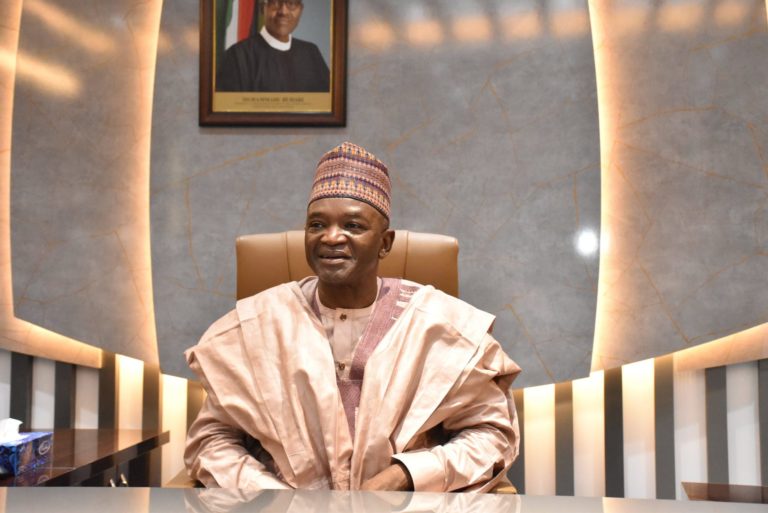
Minister of Agriculture and Rural Development, Mohammed Abubakar, made the cal at the opening session of the Regional Summit on Human and Climate Security Challenges and Farmer-Herder Conflict Resolution in the Livestock Sector.
Abubakar noted that the summit provided a critical platform for dialogue on the way forward to achieving peaceful coexistence between crop farmers and pastoralists.
He said the farmer-herder crisis has assumed dangerous dimensions lately, a development which he said calls “for deep introspection into determining the causes of the heightened and incessant attacks and seeking more innovative ways of addressing it”.
The minister attributed the surge in the age-long conflict to the complex interactions between the changing nature of the availability and access to natural resources (land and water) in the region as a result of the effects of climate change.
According to him, “the Northeastern region is witnessing the negative impact of the depletion of water in the Lake Chad on the livelihood of over 45 million people living in the Basin, including crop farmers, particularly livestock farmers, and other people living around the lake as they depend on it for their economic well being and sustenance”.
“Our desire as a nation is for the restoration of the lake in the sub-region to its former glory by recharging it and also preventing further shrinkage. This is evident in our various appeals to the international communities, development partners, and other allies of Nigeria and Africa for assistance,” he said.
He, therefore, tasked the summit to brainstorm, discuss and compare notes as national and regional stakeholders in the livestock industry and climate security sector and arrive at the common objective of promoting peace and security.
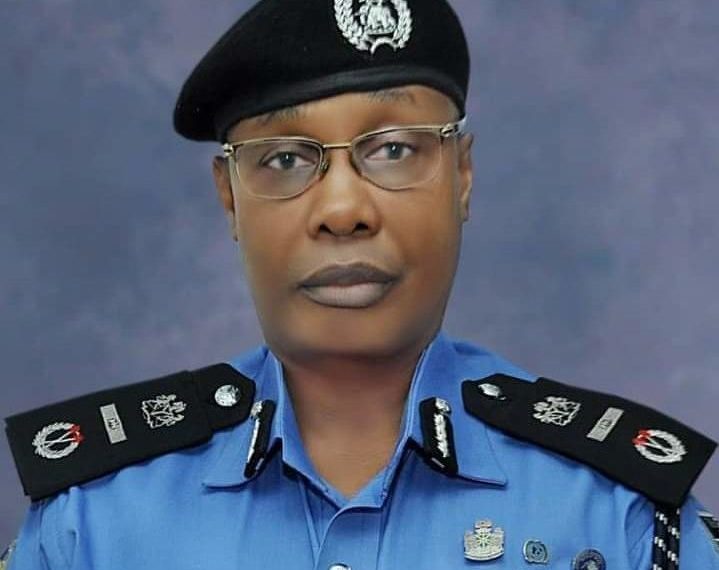
THE Inspector General of Police (IGP) Usman Baba has reiterated the commitment of the Nigerian Police Force (NPF) in synergy with other security agencies to secure the country during the 2023 elections.
The IGP gave the assurance in Ibadan, on Monday, December 12, at the opening ceremony of a four-day conference for Police Public Relations Officers (PPROs) across the country.
Baba spoke on the theme of the conference, ‘Strengthening Strategic Communication Towards Police Reforms, Security and Integrity of 2023 Election’.
He said the police and other sister security agencies would ensure that the elections are conducted in a free, fair and credible manner.
“The 2023 general elections will hold; we have done it before when people came up and raised different doubts about elections in Edo, Ekiti, Anambra and Osun states. We did it and recorded huge successes,” NAN quoted Baba as saying.
“We remain strategic in our actions and in synergy with other security agencies, there is nothing to fear about the 2023 general elections.”
There are concerns that violence may mar the elections, especially in the wake of attacks on facilities of the Independent National Electoral Commission (INEC) in Ogun, Osun, Ebonyi and Imo states.
According to INEC, the presidential and National Assembly elections are slated to hold on February 25, 2023.
The governorship and State House of Assembly polls will take place on March 11, 2023.
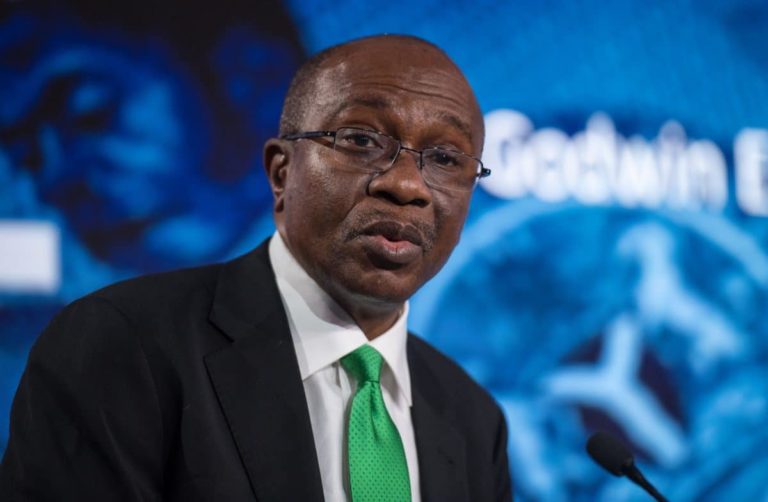
THE Central Bank of Nigeria (CBN) has concluded plans to float a national card scheme to enhance the payment system in Nigeria.
The CBN is partnering with the Nigeria Inter-Bank Settlement System (NIBSS) Plc and the Bankers Committee on the scheme.
CBN’s spokesman, Osita Nwanisobi, said the move was meant to promote inclusion and growth in the financial services sector via Nigeria’s central switch system, NIBSS, which provides an avenue to capture 42 million unbanked Nigerians.
Nwanisobi said, “The CBN recognises the significant benefits from delivering Africa’s first central bank-driven domestic card scheme, which, when delivered at scale, has the potential to become the largest in Africa, and one of the largest in the world.”
The Managing Director, NIBSS, Premier Owoh, had hinted at the last Banker’s Committee meeting in October that a national domestic card would be designed to help accelerate acceptance and efficiency, and reduce operating costs of cards in the country.
Owoh explained the card would be configured to manage the payment ecosystem and improve payment across Nigeria.
“The card will provide affordable pricing. Charges on the card will be lower because it will be charged in Naira and not in foreign currency,” he had said.
He explained that the card would be optimised for local content solely for the Nigerian market and support micropayment and credit, e-government, identity management, transportation, health and agriculture, regarding payment.
The NIBSS chief expected the scheme to reduce reliance on cash across the landscape, and promote the CBN’s cashless policy.
The card will have components like debit cards, credit cards and non-interest cards.
The ICIR reports that more than 42 million Nigerian adults live in rural areas that lack basic banking services. According to a 2021 EFInA study on trends in access to financial services in Nigeria, there are numerous gaps to fill in the rural areas populated by unbanked people excluded from the financial ecosystem.
The EFInA report shows that while 71 per cent of urban adults have bank accounts, only 40 per cent of those in rural areas have a formal account. In over 60 per cent of rural communities across Nigeria, there are no bank branches, agents or automated teller machines.
With the planned introduction of the card, Nigeria will be joining a growing list of countries like India, Turkey, China, and Brazil that had launched domestic card schemes and harnessed the transformative benefits for their respective payments and financial systems, particularly for the underbanked.
An industry fraud report by NIBSS detailed that in a nine-month period, fraudsters attempted attacks 46,126 times, and were successful on 41,979 occasions, representing a 91 per cent successful rate, and amounting to a N5.2 billion loss to bank customers.
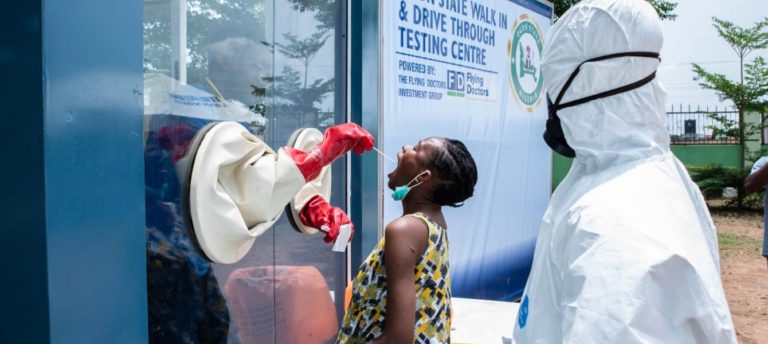
THE Nigerian government has approved the immediate relaxation of all COVID-19 safety measures and travel advisory, including the suspension of all pre-departure, pre-boarding.and post-arrival PCR test requirements.
The announcement was made in a statement released by the Secretary to the Government of the Federation (SGF) and Chairman of the Presidential Steering Committee on COVID-19 (PSC) Boss Mustapha, on Monday, December 12.
Mustapha said the approval granted by President Muhammadu Buhari followed the recommendations of the PSC based on clinical and laboratory evidence of a sustained reduction in COVID-19 infection/transmission across the country.
Consequently, all pre-departure and post-arrival PCR test requirements for all persons who are not fully vaccinated have been suspended.
“With the suspension of both the pre-boarding and post-arrival PCR tests, passengers will no longer be required to upload evidence of vaccination on the Nigeria International Travel Portal (NITP).”
The statement noted that all unvaccinated and partially vaccinated passengers are strongly encouraged to get fully vaccinated, and also get their booster doses.
However, passengers arriving in Nigeria will be required to complete a non-COVID-19 specific Health Declaration Form on the Nigeria International Travel Portal (NITP), while provision will be made on arrival for those who were unable to complete the form before departure.
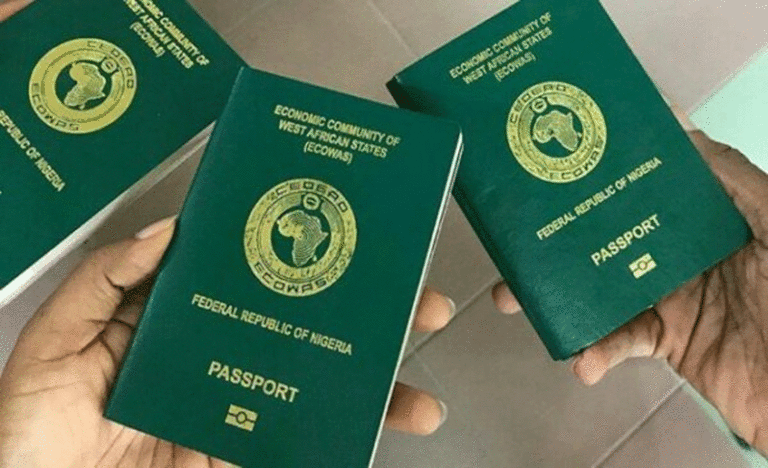
NIGERIANS abroad can now return to the country with expired passports.
This follows the approval of the boarding and entrance of Nigerians abroad into the country with expired passports by the Nigeria Immigration Service (NIS).
This was disclosed in a memo signed by the Special Assistant to the Comptroller General (Foreign Desk), DCI BM Lawal, for the Comptroller-General of the Immigration Service, Muhammed Babandede, and addressed to all heads of missions, immigration attachés, airports comptrollers and airlines.
According to the memo, all airlines are to allow holders of expired Nigerian passports to board without any hindrance.
The memo reads, “I am directed to respectfully present the compliments of the Comptroller General of Nigeria Immigration Service and notify all relevant authorities that the Federal Government of Nigeria has approved that Nigerians returning home can be admitted into the country with their expired Nigerian passports.
“Consequently, all Airlines are requested to allow holders of expired Nigerian passports to board without any hindrance.
“In addition, all Nigerian Diplomatic Missions abroad are kindly requested to circulate this information to airlines operators and border authorities of host countries for their necessary action.
“While forwarding the above for your information, please accept the assurances of the Comptroller General of Immigration Service.”
Minister of Interior, Rauf Aregbesola, had ordered the Nigeria Immigration Service to allow Nigerians in the Diaspora to return home with their expired international passports.
The directive followed complaints by some Nigerians abroad, who cried out that Nigerian Immigration officials in the United States and airlines prevented them from returning to Nigeria because of expired Nigerian passports.
History was made by Morocco, the first African and first Arab team to advance to a semi-final at the men’s football World Cup.
The Atlas Lions, endowed with impeccable organisation and defensive will, creative midfield passing, speedy offence and the rousing racket of its fans, broke the elusive World Cup glass ceiling against Portugal to face France in the final four in Qatar.
The sound of the Moroccan fans has become a lifeblood coursing through the first World Cup to be staged in the Arab world. As magical as Morocco’s win seems, one should not ignore the reality that no team has scored against them (save for an own goal while defeating Canada). The team has controlled the field of play all along, stamping its authority with unimaginable flair and controlled composure.
There are six notable forces that have driven their success.
1. Team spirit
Morocco has demonstrated the ultimate collective team spirit to eliminate higher ranked teams that boasted a generous supply of star individual talents – Belgium, Spain, Portugal. What Morocco lacks in stardom was compensated by sheer desire to win and technical application by the whole team.
Their quarter-final goal, coming after repeated defensive pressure, was scored in the 42nd minute. Some good touches led to Yahya Attiat Allah fielding the ball, controlling it and then sending a cross into the box. There, Youssef En-Nesyri seemed to rise forever above the outstretched hands of the tall Portuguese defenders, to head it in from the centre. The fluid passing was beautiful to watch, leaving Portugal bewildered and eliciting pandemonium in the stadium that rippled around the world.
2. Driven by history
Motivated by a desire to go past the quarter-final, Morocco had to learn from history. The last three African sides to reach World Cup quarter-finals – Cameroon in 1990, Senegal in 2002 and Ghana in 2010 – had gone out in the most painful manner, in overtime. In each of these cases, the African teams lacked the composure to see through their leads.
Moroccan fans created a joyful racket in the stadium. Francois Nel/Getty Images
The Atlas Lions defended with all of their hearts and then scored, preventing any possibility of overtime. Even injuries – and striker Walid Cheddira being sent off after a second yellow card – did not destabilise the defensive rhythm of the team. Portugal, including star player Cristiano Ronaldo, could not find the equaliser. From the beginning, the Moroccans looked determined that history would be made.
3. Defences win championships
Heading into the semi-finals, only Morocco and Croatia, who drew in the first round, remain unbeaten. In the round of 16, they eliminated Spain on penalty kicks, where their goalkeeper Yassine Bounou made huge saves to propel Morocco to the quarter-finals. The elimination of Portugal, just like Spain, came on the back of a solid defence that conceded no goals.
It is often said that defences win championships. If that’s the case then Morocco has the qualifications to win it all. But they must believe in their strengths and summon sufficient energy to defend for long stretches of time in the upcoming matches. So far, their ball possession has been 22% against Spain and 23% against Portugal, which speaks to their defensive discipline and efficient execution at scoring. The low possession percentages also show that having plenty of ball possession is not a guarantee for victory. However, taking leads also allows the team to narrow spaces, forcing the opposition to run more – and then be hit on the counter attack.
4. Fans are the 12th player
Morocco finds itself in the unique position of carrying the dual hopes of the Arab region as well as the African continent. The quarter-final felt like a home game for Morocco, with the team’s supporters dominating in the stands. The Moroccan fans cheered the team, jeered Portuguese players and relentlessly willed on their heroes.
After the final whistle, the stadium erupted as thousands jumped up and down, hugging and embracing. With fans acting as the 12th player for Morocco, it would not be a big shock if the Atlas Lions can dig deep and mount one more upset to make it to the finals. Out of the four countries remaining, Argentina and France are the only ones to have lifted the trophy. Croatia and Morocco are underdogs, but they are the people’s favourite teams in Qatar. Either of them could open a new chapter in the history of the World Cup.
Walid Regragui, Morocco’s head coach is lifted into the air by the team. Justin Setterfield/Getty Images
Historically, Morocco has been a trailblazer at the World Cup for Africa and were not fazed by Spain and Portugal. This team will present a difficult challenge for France in the last four on Wednesday.
6. Local coaching
If the Cinderella story continues, it will be because coach Walid Regragui has installed an effective defend-and-counter style that none of their opponents have come close to solving so far.
Regragui has ingeniously set up and steered the team to the semi-finals and, in the process, changed the false narrative that local African coaches are not equal to the task of masterminding team success at this level. Indeed Regragui’s side, despite missing West Ham’s Nayef Aguerd, Bayern Munich’s Noussair Mazraoui and losing captain Saiss to injury, has shown that an African coach can creatively harness both the skills and the wills of the players to achieve national glory.
Eyes on the trophy
The 2022 World Cup has been characterised by unexpected upsets and exceptional entertainment for fans. One of the goals of world football body Fifa is to continue growing the game.
Morocco’s qualification for a semi-final spot is a breakthrough in demonstrating that parity is emerging. There is a big portion of the world’s population that would erupt with joy and tears if team Morocco have their name engraved on the trophy.
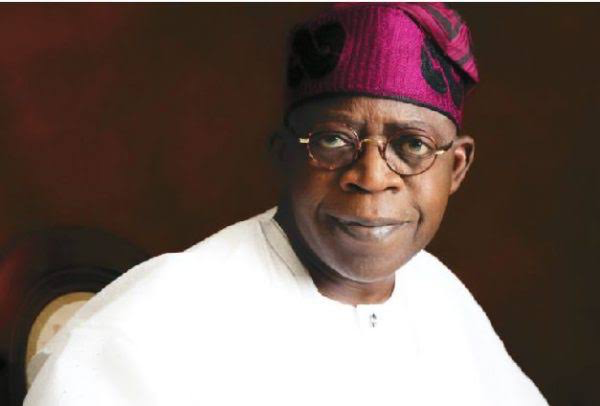
ONE of Nigeria’s 2023 Presidential election front-runner Bola Ahmed Tinubu has presented himself as the candidate to beat, claiming his opponents are no match for him.
In June of this year, the former governor of Lagos State won the All Progressive Congress (APC) presidential primary by a margin of 1,271 to 2,115 votes, defeating Rotimi Amaechi, the former governor of Rivers State and the minister of transportation, and the incumbent vice president, Yemi Osinbajo.
Called Jagaban by his admirers, Tinubu, in some quarters, has been dubbed the Svengali of Nigerian politics after playing an instrumental role in the election that brought the current APC-led President Muhammadu Buhari administration to power, ending the People’s Democratic Party sixteen years of rule in 2015.
Tinubu has been the subject of many controversies from the time he became Governor of Lagos in 1999. This year has seen a long string of stories about him, with controversies involving Tinubu, from questionable wealth, ill-health, allegations of certificate forgery and corruption, bagman to heroin traffickers and money-laundering ring investigation.
Tinubu and his team have refuted some of the accusations levelled against him.
In a recent interview with the BBC, Tinubu claimed that he acquired his wealth through several different investments.
In response to a question posed by the interviewer, Tinubu said, “Because you have got know how to analyse and how to ask questions, not in an accusatory format. Are they enemies of wealth? If they are not enemies of wealth, investment do yield. I have an example of Warren Buffet. One of the richest men in the country, in America and in the world. He started from stock buying and brokerages. I inherited great real estate. I turned the values around. I am not denying my wealth. I have not been… I was the most investigated, the most accused governor in the opposition up to, you know, for eight years. and up to until 2007. And since I’ve left the office, I’m still there, I have not taken any government appointment, no government contract.” (sic)
In response to the allegation he has a hold on the finances of Lagos State despite not being the Governor, he said, “Hey, excuse me, share what? Have they proven it? The world bank, IMF has investigated the record in Lagos. What’s wrong with them. It’s envy.” (sic)
The faces
This is a brief summary of some of the issues involving Tinubu.
Tinubu school records
During his first term as Governor of Lagos State, Tinubu was accused of not attending Government College Ibadan and Chicago State University, as indicated in his INEC form 001 filled when he contested the Lagos State governorship poll and that he also lied in the affidavit he attached to the INEC form, in which he declared that he lost his university degree certificate while he was in exile between 1994 and 1998.
The upshot: The Lagos State House of Assembly established a panel, as part of possible impeachment proceedings due to the allegation. The House, after investigating, dismissed all allegations against Tinubu.
Also, in response to the allegation, Tinubu presented the original copy of some of his certificates while he dismissed the allegations as baseless.
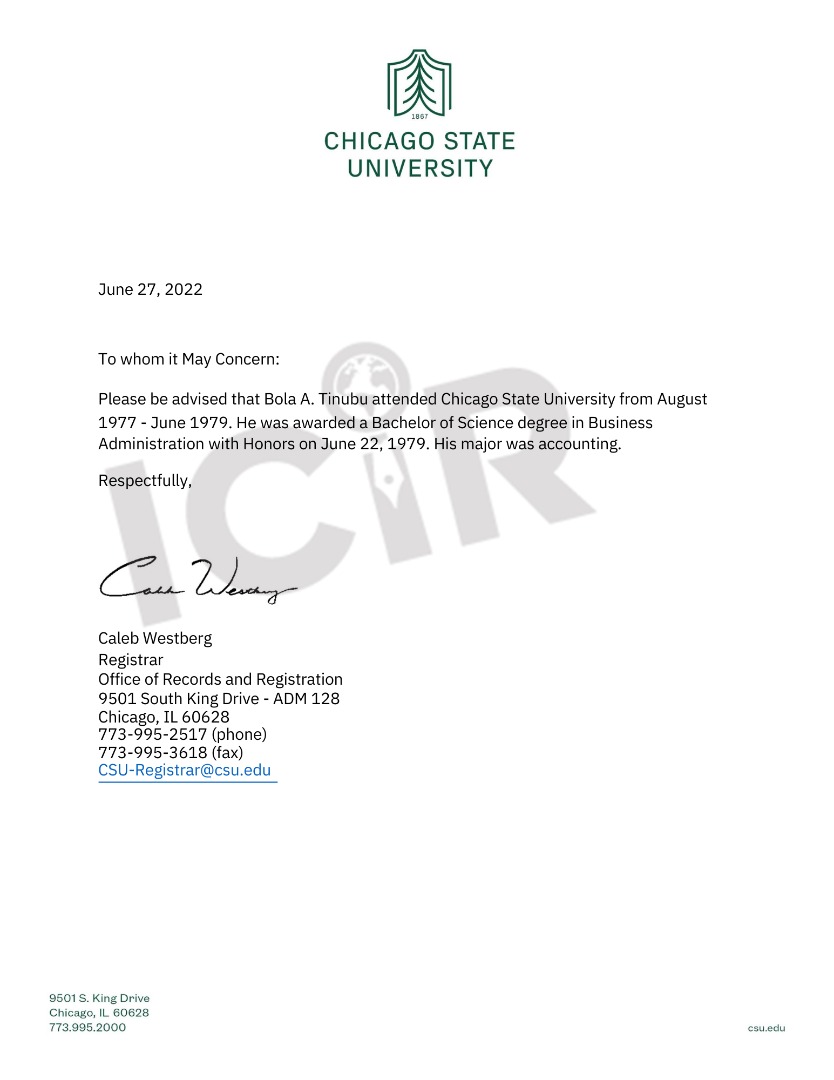
Regarding the claim that Tinubu did not attend Chicago State University (CSU), the university confirmed that a Bola A. Tinubu received a degree from the institution in response to a query from The ICIR.
A copy of the letter from CSU
According to Caleb Westberg, a registrar in the university’s Office of Records and Registration, Tinubu attended from August 1977 to June 1979.
Unlike when he ran for governorship, many media reports state that Tinubu did not include his primary and secondary school records in the form he submitted to INEC for his presidential bid.
“The documents showed Tinubu left the columns for his primary and secondary schools education unmarked”, a report by People Gazzette stated.
Another media report from Dail Trust states that Tinubu did not attach copies of the certificates, which he stated in an affidavit, had been stolen.
Tinubu’s CCT Trial
The former governor of Lagos State was accused of violating the constitution by allegedly operating foreign accounts while in office in 2007. In the charges brought against Tinubu by Code of Conduct Bureau (CCB) at the tribunal, he was charged with running ten foreign accounts between the time he served as governor, between 1999 and 2007, and the present.
The upshot: On the former governor’s second appearance before the tribunal in 2011, the three-person panel dismissed the case.
It held that “there is no significant basis to proceed against Tinubu as the charges were “defective and shoddy.”
The tribunal held that the charges did not disclose a prima facie case against the accused person as there was no proof of evidence attached to the charge.
Umar said the charges against Tinubu did not show that the accused persons held the accounts.
Tinubu accused of fraud, tax evasion – Alpha beta
In 2020, DAPO Apara, a Nigerian chartered accountant and former Managing Director of Alpha Beta, accused Bola Tinubu, a former Governor of Lagos State and National Leader of the All Progressive Congress (APC), of fraud and tax evasion.
Apara, in a 40-page writ of summons sighted by The ICIR issued by his lawyer, Tade Ipadeola, also accused Alpha-beta, a consulting firm and Akin Doherty, a former commissioner in the Lagos State, of money laundering, fraud, tax evasion, and other corrupt practices.
He also revealed how Tinubu, used one Adegboyega Oyetola, believed to be the former Governor of Osun State, as a front for the establishment of the firm.
Alpha Beta, which has an exclusive right to collect funds on behalf of Lagos State, is believed to be partly owned by Tinubu.
The consulting firm handles the computation, tracking, and reconciliation of Internally Generated Revenue (IGR) in Lagos State in return for a commission.
Apara had also earlier accused the former Lagos governor and the consulting firm of fraud and tax evasion. He had, in June 2018, written to the Economic and Financial Crimes Commission (EFCC) accusing Alpha Beta Consulting firm of tax evasion and fraud to the tune of over N100 billion.
The upshot: Apara, Tinubu, and the current Managing Director of the company, Akin Doherty, in January 2022, informed the High Court of Lagos State sitting at the Tafawa Balewa Square on Tuesday that had begun discussions on a possible out-of-court settlement following allegations that Tinubu ordered the transfer of over N20bn from Alpha Beta to some private business accounts.
US money laundering, bagman case
In July 2022, United States-based legal website, PlainSite.org, in a tweet, said traffic to its website experienced a surge resulting from files about Bola Tinubu’s money laundry forfeiture case dockets.
Based on traffic to PlainSite over the past week, Nigeria's interest in Bola Tinubu's money laundering past dwarfs global interest in Elon Musk. https://t.co/XSx9hr6CCo
The website had uploaded dockets of All Progressives Congress (APC) presidential candidate Tinubu’s money laundry forfeiture case files in the United States (US).
The files from 1993 recently became awash on social media.
PlainSite.org is a website that posts court documents and thus makes criminal records and case dockets on individuals or entities easier to find. The website is run by California-based software developer Aaron Greenspan.
In July 1993, when Tinubu briefly served as a senator, the US government filed a forfeiture lawsuit in Chicago against bank accounts in his name.
It was alleged, there was “probable cause” to believe they held the proceeds of heroin dealing. The case followed a probe by the Internal Revenue Service (IRS) and other agencies into a trafficking network involving Nigerian suppliers.
According to court filings, the IRS secured warrants in January 1992 to seize almost $2 million.
Tinubu settled out of court in September 1993, agreeing to give up $460,000 to the US government in exchange for the release of the rest of the money. Tinubu wasn’t indicted over the matter.
Also, in November, The ICIRreported on a 59-page court document seen by The ICIR alleging that funds in an account held in First Heritage Bank with account number 263226700 operated by Bola Tinubu represented proceeds of narcotics trafficking in violation of US laws and consequently ordered that the funds amounting to $460,000 be forfeited to the government.
Reports on Tinubu’s involvement in a 1993 drug and money laundering case resurfaced online in November with the emergence of a certified copy of the judgment delivered by a United States (US) District Court in Illinois, which ordered the forfeiture of $460,000 against the APC presidential candidate.
The upshot: The Media and Publicity Director of the Tinubu/Shettima Presidential Campaign Council Bayo Onanuga dismissed reports stating that the presidential candidate of the APC Bola Ahmed Tinubu had been indicted for drug trafficking.
Also, the Spokesman for the APC Presidential Campaign Council, Festus Keyamo said the $460,000 scandal linked to the party’s presidential candidate, Bola Tinubu, were tax deductions in the US and not proceeds from drug transactions.
Keyamo said the funds were deducted from one of the ten accounts linked to Tinubu as a tax on investments domiciled in US banks by the United States authorities in the early 1990s.
Health challenges
There has been health controversy surrounding Tinubu before he became the presidential candidate of the APC. In January 2022, Arise Television reported that Tinubu had left the country to rest.
According to the report, some unnamed sources familiar with the development also told the television that the 2023 presidential hopeful would use the occasion to attend to his medical needs in the United Kingdom, where his doctors reside.
In October 2021, Tinubu had said that he was healthy but undergoing ‘gruesome’ physiotherapy in London.
He stated this when he received members of the House of Representatives Northern Caucus who visited him in the United Kingdom.
The ICIR also, in a report in September 2022, titled, “What if Tinubu has Parkinson’s disease?”, looked at several videos online which captured Tinubu’s right hand shaking uncontrollably.
Tinubu, on other occasions, was assisted for balance by people nearby. Yet nobody could speak with certainty, at least for now, that Asiwaju is diagnosed with Parkinson’s disease.
The candidate also has not disclosed information about his health condition. When The ICIR contacted his campaign organisation in August for confirmation, mum was the word.
The ICIR also, in March, published a report, “Tinubu: Illnesses associated with shaky hands.”
In October, speculations about his health status became rife after the former governor of the Lagos State party suddenly postponed the inauguration of the Presidential Campaign Council (PCC) earlier scheduled for Monday, September 26, to Wednesday, September 28.
He was also conspicuously absent when eighteen political parties vying for elective positions in next year’s general election signed an agreement for peaceful conduct before, during, and after the polls on Thursday in Abuja.
The peace accord was put together by the National Peace Committee (NPC), co-led by former Head of State Abdulsalami Abubakar; Sultan of Sokoto Sa’adu Abubakar; Cardinal John Onayeikan; Bishop of the Roman Catholic Diocese of Sokoto, Matthew Kukah, and other eminent statesmen.
The upshot: Tinubu has denied the rumour that he is sick. In October, he posted a 7 seconds video on his official Twitter page following speculation about his health status. The former Senator, in a video posted on his official Twitter handle was seen working out on a stationary exercise bike.
“Many have said I have died; others claim I have withdrawn from the presidential campaign. Well… Nope. This is the reality: I am strong, I am healthy, and I am READY to serve Nigerians from Day One,” he said.
He has also said he is more than healthy to lead Nigeria if elected president.
Tinubu, addressing the Kano Business Community Council, which organised a dinner in his honour in the state, said he was not fighting a wrestling but running for the presidency.
The former Lagos State governor said he was smarter than those who accused him of ill health.
He said in a video clip, “Some ignorant people, I’ve been standing before you, I’m not running for hundred yards or 500 yards hurdle.
“I’m running for the presidency. I’m not competing in WWW wrestling. Even if I go out there and they say (he is) sick, I’m standing before you. Do I look like a sick man?
Alleged birth, and age inconsistencies
The former Lagos State has been accused of inconsistencies in his place of birth and age.
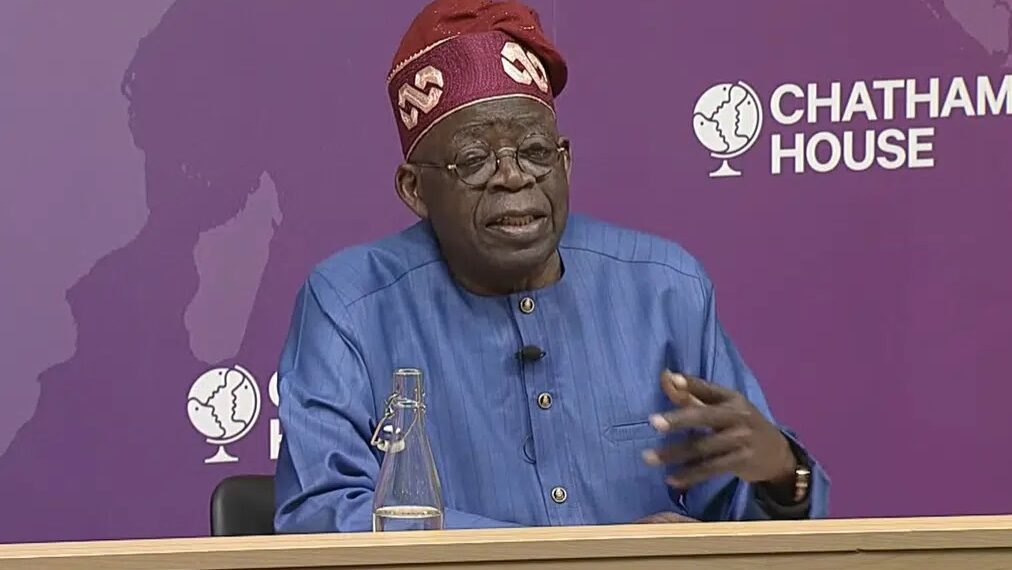
The Upshot: During his appearance at Chatham House in London, United Kingdom, Tinubu, in response to a question about the contradictions surrounding his early life, Tinubu referred to the enquiry as “inquisitive” and responded, “At the time of birth, I was dated March 29, 1952.”
Tinubu at Chatham House London
He said, “I’ve had a very good exposure in life, my record is consistent in the school, in the university, they (critics) are now convinced that they wasted their money and their time. The record is there, the transcript is there showing March 1952.”
The former Lagos governor dared anyone to approach him and request a DNA test while claiming to be a legitimate member of the Tinubu family.
“I am not claiming another father, I am Tinubu and Tinubu proper. If they want DNA, they could as well request it from us. One of them has even been accused of not being a Nigerian citizen. I didn’t touch that area.
“Equally, it remains the same, Deloitte, Chicago State University, where I graduated from, has attested to that.
“Now, I can announce that I have received my original replacement degree certificate from them.”
THE Major Oil Marketers Association of Nigeria (MOMAN) has urged the Federal government to consider a full deregulation of the petroleum downstream sector in phases.
MOMAN Chairman, Oluwole Adeosun, made the call today at a web training for energy journalists.
Adeosun said that the development was necessary to cushion the effects of the impact of the sharp rise in fuel prices on Nigerians.
He said that MOMAN would continue to work with other key stakeholders to ensure it ramps up supplies to retail sites and enable return to normalcy as soon as possible.
He added, “We envisage a rise in demand during the yuletide season and we are prepared to work round the clock to keep our stations running.”
Adeosun also said there was the need for the country to begin the process of price deregulation to reduce inefficient subsidy.
“If the country wishes to implement a subsidy, it must be in areas targeted to help those it should help. Such areas are agriculture and transportation, to reduce food price inflation and generate more jobs for Nigerians.
“In tandem, we must find a way to liberalise supply. We must bring transparency and competition into supply to ensure steady and more efficient supply at optimum prices,” he said.
He stressed that imported products must compete with locally refined products to find a meeting point between the need for local refining and competitively low but cost-recovered prices for Nigerians for sustainability.
“The dialogue with the Nigerian people needs to begin to identify, negotiate and agree on these areas and begin implementation to save the downstream industry.
“The industry has been in degradation and a free fall due to a lack of investment to maintain, renew and grow assets and facilities such as refineries, pipelines, depots, trucks and modern filling stations,” he said.
In a similar vein, the Independent Petroleum Marketers Association of Nigeria (IPMAN) had condemned the Nigerian government’s payment of subsidy, describing it as a good enabler of smuggling and long queues.
IPMAN further called for total deregulation of the downstream petroleum sector.
The National Operations Controller of IPMAN, Mike Osatuyi, who made the call, also indicted the Nigerian National Petroleum Company Limited (NNPCLtd) for using third party means in supplying its members petroleum products.
He pointed out that the NNPCLtd, being a key supplier of petroleum products and a competitor in the retail sales, was disrupting the supply chain market.
“What we are experiencing now is market fundamental pricing, but when we deregulate, we cannot be having these issues such as smuggling and arbitrary hike. Subsidy makes smuggling to survive because of price disparity with neighbouring African countries,” he said.
Osatuyi raised concerns on how the NNPCLtd supplies marketers fuel through third parties, which he said disrupts business and causes, together with price peg, long queues at filling stations.
He stressed that gaps in the fuel supply chain would continue if the government did not enforce subsidy removal.
THE Abuja Environmental Protection Board (AEPB) has said it would strengthen management of healthcare waste in the Federal Capital Territory (FCT).
This was disclosed in a statement by the AEPB Public Relations Officer (PRO) Janet Peni on Monday, December 12.
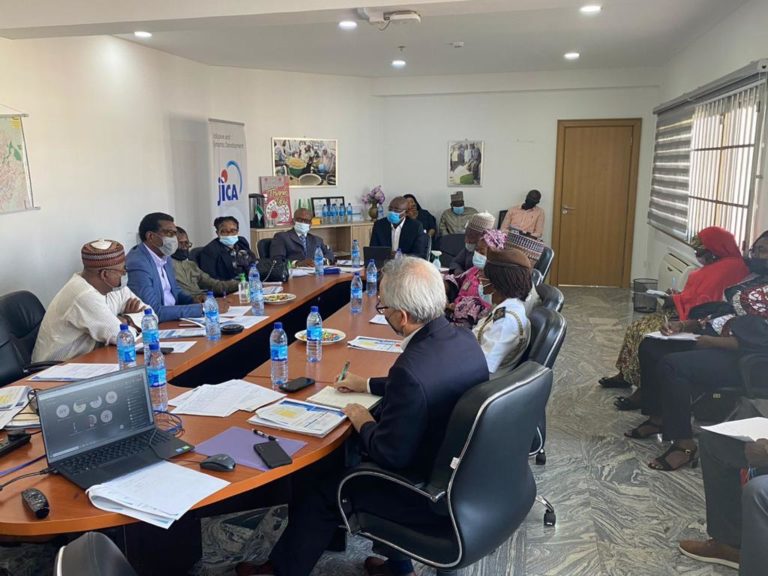
Peni noted that the Board would partner with the Japanese International Cooperation Agency (JICA) to manage the waste generated by hospitals in the FCT.
“A spike in healthcare waste generation was experienced due to the spread of Coronavirus Disease 2019, (COVID-19), which exacerbated the problem and also justifies AEPB request for assistance from the Japanese Government to strengthen the capacity for healthcare waste management also known as Dispatch of Advisors,” the statement said.
The partnership, which aims to improve collection and treatment of medical waste, began in September 2022 and will last till October 2024.
“The project will ensure that Dispatch of Advisors serve the purpose of verifying the effectiveness and efficiency of directions for improvement, which is indicated by the developed plan for proper separation, storage, collection, transportation, treatment and disposal of healthcare waste in the FCC based on the cooperation and collaboration with medical institutions and other relevant healthcare institutions in the FCT, through strengthening the capacity of counterparts.
“Furthermore, they will contribute to the improvement of healthcare waste management in FCT by disseminating the outputs and results of the Dispatch of Advisors to the Area Councils.”
The ICIR had reported that several factors were worsening waste disposal challenges within the FCT.
A shortage of garbage bins in the city has resulted in gutters and uncovered maintenance holes becoming alternative means of waste disposal by residents.
Peni had, however, told The ICIR that efforts were being made to address the waste challenges in the city.