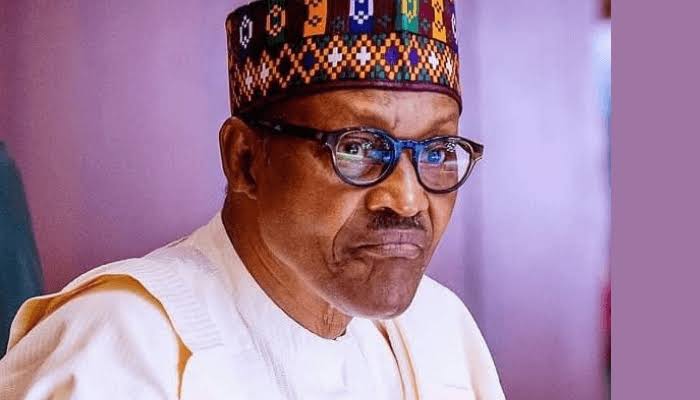
PRESIDENT Muhammadu Buhari is to be conferred with an award on peace and security by the Abu Dhabi Forum in Washington DC, United States (US).
Presidential spokesperson, Garba Shehu, who disclosed this in a statement, said the award was announced during the visit of the Forum’s Secretary General Al-Mahfoudh Bin Bayyah and his deputy, Bob Roberts, to the President in Washington on Tuesday, December 13.
According to Shehu, the award is in recognition of Buhari’s outstanding achievements in promoting peace and security.
He added that the conferment of the award was in line with the Forum’s work in fighting religious extremism and promoting peaceful coexistence and dialogue amongst all religions.
Speaking at the meeting, Buhari, who is currently attending a US-Africa Summit in Washington, commended the Foundation for promoting multi-faith dialogue across the world.
He said that Abu Dhabi Forum’s peace work is important to the world just as it is to Nigeria.
Buhari noted that Nigeria’s youths are the country’s promise for a better future, adding that solving their problems is the government’s priority.
He also spoke of the need to raise generations of youths devoid of religious extremism and bigotry, and urged the group to continue to target the young people who he described as the promise of the future.
The President added that although Nigeria has numerous problems, he had done his best for the country in the past seven years of his administration.
“Your work is very important in helping, especially the youth, to understand one another and at the same time, to be proud of their heritage,” he said.
“This great initiative by you will help future generations to plan well and live together in peace. On our part, we will continue to solve our problems, especially as they relate to the youth.
“We are big in size and population, facing many challenges, but in many areas, we are trying. In seven-and-a-half years, I have done my best.”
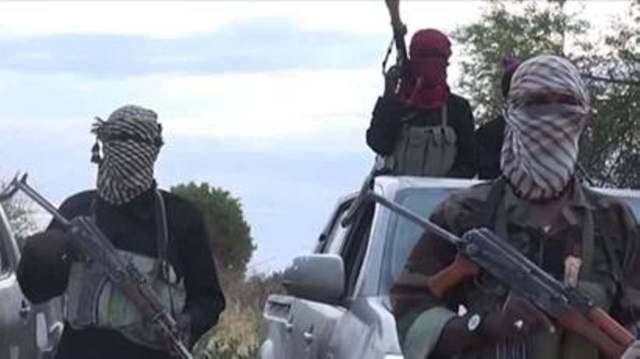
THE Ansaru terrorist group is running a parallel government in the Birnin Gwari Local Government Area of Kaduna State, a councillor in the area revealed on Wednesday, December 14.
Speaking on Channels Television, the councillor, Zubair Abdurra’uf, representing the Birnin Gwari Emirate, said the terrorist group has been extorting and terrorizing farmers and other villagers in the area.
Abdurra’uf expressed concerns that the terrorist group has taken charge of the area.
“We have a government within the government. The locals have no option but to take some of their issues to these terrorists for adjudication because of the absence of some of the institutions of government that will normally take care of these issues,” Abdurra’uf said.
“There are some areas within Birnin Gwari, particularly the eastern part, whereby the Ansaru administer the territory because they give directives to the citizens who are there and they decide what is to be done,” he added.
The councillor noted that residents of the area have become hopeless due to the activities of the terror group.
According to him, the terrorists have put a stop to formal education in the area.
“Most of the schools in the area are deserted because they (Ansaru) issued a decree that nobody should go to any school or have any form of formal education,” he said.
“The ideological conviction of Ansaru is not different from Boko Haram because the Ansaru are a splinter group of Boko Haram and whatever you see Ansaru do is in consonance with whatever Boko Haram are doing but only that the modus operandi of the two groups differ.”
Abdurra’uf explained that the residents pay the levies imposed on them by Ansaru with their farm produce or money.
Residents, particularly farmers, rely on Ansaru for protection against hoodlums, according to the councillor.
“They (residents) have their cattle confiscated; they have to pay all sorts of levies to the terrorists. They pay for the harvest. For every ten bags, they give two bags to all these bandits while they take eight away. Whether you pay money or not before the farming season, they would go to your farm and whatever they find there, they would (use to) feed their cattle.
“You see them pushing their cattle into these farms then (they will) block the farmers from access to their produce while the cattle eat everything.
“So, when the Ansaru offers help to these people, they take it because they don’t have the means to protect themselves. They have seen Ansaru as messiah that will eliminate these people (hoodlums) who capitalise on their inadequacy and lack of protection which is the primary responsibility of the government.”
NEMA Coordinator, Kano Territorial Office, Dr. Nuradeen Abdullahi, who disclosed the development, said the Nigerians arrived at the international wing of the airport at about 10:00 pm on board a Boeing 737-7K9 ASKY Airlines flight, operated by Ethiopian Airlines KP9 401, with registration number ET-ANH.
“The returnees were brought back to Kano under the care of the International Organisation for Migration (IOM), from N’djamena through a voluntary repatriation program.
“The program is meant for distressed Nigerians who left the country to seek greener pastures in various European countries but can’t afford to return when their journey became frustrating.
“Those received included 24 male adults, 23 female adults, and 58 children (33 females and 25 males). They are from Katsina, Kano, Adamawa, Borno, Yobe, and Taraba States among others,” he said.
Abdullahi added that the returnees will undergo a four-day vocational skills training, after which they will be provided with grants to become self-reliant.
He urged them to be advocates of the campaign against irregular migration.
The NEMA coordinator noted that the agency, between May and October 2022, received 560 stranded Nigerians from Agades, Niger Republic, and Sudan.
He advised Nigerians to avoid endangering their lives by traveling to seek greener pastures in other countries, noting that no country is better than Nigeria.
The Nigerian Immigration Service (NIS) had expressed concern over the alarming rate of emigration of Nigerians to foreign countries, describing it as a ‘worrisome phenomenon’.
The ICIR also reported that Nigeria has the largest number of migrants to the United Kingdom (UK), in the year ending June 2022 and has become the third-largest nationality group in the country.
The program aims to enhance journalists’ understanding of business, economics and finance.
Fellows can choose from two academic tracks: a Certificate in Economics and Business Journalism, or the Master of Arts in Journalism. They will also participate in off-the-record seminars and dinner meetings with corporate executives, economists and academics, and attend briefings and field trips to New York-based media companies and financial institutions.
The six-month LEDE Fellowship allows journalists to conceptualize and execute solutions journalism projects alongside other entrepreneurs committed to extending the reach of solutions journalism and becoming the face of its future.
Journalists worldwide who are interested in solutions journalism can participate in a fellowship and receive up to US$5,000.
During the fellowship, journalists will receive access to exclusive professional development sessions on storytelling, engagement, fundraising, equity and more.
The fellowship runs from January to July, 2023.
The deadline for submission applications deadline is January 4, 2023. Interested applicants can apply here.
THE Nigerian Police Force (NPF) has said it would hunt down those allegedly buying Permanent Voter Cards (PVCs) of registered voters ahead of the 2023 general elections.
The ICIR reported on Tuesday, December 13, that the Independent National Electoral Commission (INEC) had raised an alarm that some politicians were buying PVCs of voters to harvest their Voter Identification Numbers (VIN) ahead of the polls.
INEC National Commissioner, Mohammed Haruna, who made the allegation, warned politicians and unsuspecting Nigerians against the development.
He noted that no person would vote on election days without a PVC.
Although Haruna did not mention the politicians involved in the alleged act, the opposition Peoples Democratic Party (PDP) and the Labour Party (LP) have pointed accused the ruling All Progressives Congress (APC) of PVC-buying.
Both parties condemned the act, accusing the APC of weaponising poverty because it is desperate to retain power in 2023.
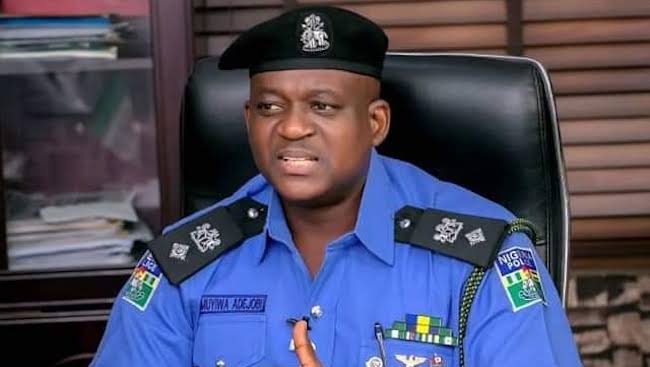
However, in a statement released on Wednesday, December 14, the Nigeria Police Force said it will go after PVC buyers.
The statement, signed by Force spokesperson Olumuyiwa Adejobi, said the Police will work with INEC to track those buying and selling PVCs.
“PCVs have never been displayed on any table in the market for sale,” he said.
“We will work with INEC to track down these perpetrators since INEC has more information about the development.”
Meanwhile, the Inspector General of Police (IGP), Usman Baba, has reiterated the commitment of the Police to synergize with other security agencies to ensure that the 2023 elections are conducted in a free, fair and credible manner.
“The 2023 general elections will hold; we have done it before when people came up and raised different doubts about elections in Edo, Ekiti, Anambra and Osun states. We did it and recorded huge successes,” he said while speaking in Ibadan on Tuesday, December 13.
“We remain strategic in our actions and in synergy with other security agencies, there is nothing to fear about the 2023 general elections.”
WHEN Walid Regragui was appointed as the head coach of the Moroccan national team in September this year, few would have expected a run this deep into the FIFA World Cup, his first tournament.
He is only the second Moroccan to take charge of the Atlas lions at the World Cup. Before him, Abdellah Binda led the team at USA 1994 but could not accrue a point in the group stage. The Atlas Lions ended the tournament with three one-goal deficits against Belgium (1-0), Saudi Arabia (2-1), and Netherlands (2-1).
Only those familiar with the 47-year-old’s exploits with Wyadad Casablanca, steering them to CAF Champions League glory, would have expected his accomplishments in Qatar. The Atlas Lions are into the Semi-Finals of the world cup, have beaten Portugal, Spain, and Belgium, and have only conceded one (own) goal all tournament.
These achievements are the fruits of hard work, collective spirit, and focused footballing investment into the Moroccan landscape over the past decade. Regragui, too, is reaping from years of grafting and professional development.
Walid Regragui during the FIFA World Cup Qatar 2022 quarterfinal match between Morocco and Portugal (via Getty Images)
Regragui’s history in the sport
His playing career spanned several European outfits: Toulouse FC, AC Ajaccio, Racing Santander, and Dijon-accruing 45 caps for his national team. In these, he accrued over 200 domestic league appearances and scored nine goals from right-back.
After retirement, Regragui embellished his experience with coaching experiences at Morocco (as an assistant coach), Fath Union Sport (a first division side in Morocco), a spell at Al-Duhail in Qatar, then at Wydad AC. He racked up over 300 appearances in these spells and boasted a win rate of over 60 per cent across his past three jobs.
In June this year, he was one of the twenty-three coaches who obtained the inaugural CAF Pro License Diploma — the highest qualification in coaching education in Africa. This badge is on par with the global elite qualifications and is reserved for coaches active at a professional level who have completed subsidiary licenses.
The first recipients of the CAF pro license (via CAF online)
Remarkably, twenty of the receipts were Moroccan coaches — a testament to the country’s commitment towards the sport. Senegal’s head coach, Aliou Cisse, and two-time CAF Champions League winner, Pitso Mosimane, were also recipients.
The recipients of this license became the forerunners of a new era of African football, making a name for themselves and striving to raise the continent’s ambitions.
The power of his words
Regragui has been vocal about barriers for coaches of colour in the larger football stratosphere and feels his exploits at the tournament will be a turning point.
He said “Ten years I am a coach, nobody looked at me. ‘No, it is impossible, he does not have the experience. Let’s look at somebody else’.”
Furthermore, he believes his commanding run in the tournament is a testament to his ability but notes that many others like himself are not given the opportunity.
“When people talk about experience, experience doesn’t matter, it’s skills. It doesn’t matter about your background, religiously or culturally speaking where you are from. It’s about skills,”Regragui stated.
When speaking to the media before Morocco’s win vs Portugal, he said, “There are moments in history that make people change their mind, but it is on us as African and Arab people to change history. At a certain point, this could happen.”
This is that moment.
Celebrations after Morocco’s win against Portugal in the quarter-finals
The Moroccan men’s national team are in the spotlight on the biggest stage. The world is paying attention to their accomplishments.
Significance of the match vs France
Today, the Atlas Lions face off against Les Bleus in a match with enormous cultural and political significance. They will be the first African and Arab nation to jog out onto the pitch in the FIFA World Cup semifinals. France is the defending champion and a former colonial master.
Moroccans make up nearly one-fifth of the immigrant population in France. Regragui and several others in the national team were born in France yet are pursuing the greatest footballing achievement with their ancestral countries.
Walid Regragrui’s journey with the Moroccan team and this match will be heralded as one of the most culturally consequential for millions.
Regragui has been referred to as ‘The Moroccan Guardiola’, analogizing his early dominance and tactical astuteness with that of prominent Manchester City manager Pep Guardiola.
However, with his most significant achievement yet, the Atlas Lion’s manager is now setting his narrative and thrusting the continent into the global limelight.
THE Council for Maritime Truck Unions and Associations (COMTUA) operating in the maritime industry has told the Lagos State governor, Babajide Sanwo-Olu, that four of its members are missing.
In a letter signed by the Vice-president of Operations Muideen Olapade, the group said that its members, in an attempt to restore sanity in the movement of trucks at Mile 2, came under attack from hoodlums suspected to be ECOMOG boys.
The truck owners alleged that the hoodlums, wielding illegal arms ranging from cutlasses, charms, firearms and all sorts of unlawful ammunition, attacked members of the association and injured some of them beyond recognition.
The group added that four members are still missing after the attack.
“Today, December 13, 2022, a large number of persons belonging to our association, while monitoring the activities and passage of trucks belonging to our members on the road, as well as ensuring members’ compliance to regulations stipulated for the purposes of easing the traffic gridlock around Mile 2 axis were met with strong oppositions from the hoodlums suspected to be ECOMOG boys led by one Hotwater.
“Till the time of this letter, about four of our members are currently missing,” the body said.
COMTUA said the hoodlums debased the presence of officers of the Nigeria Police Force and still attacked their members.
“It is worthy of note that Area E Command FESTAC of the Nigerian Police Force accompanied our members to Mile 2 prior to this unfortunate incident.
“However, despite the presence of the police, these hoodlums belittled the Nigerian Police, the Nigerian law and the legal system and said that no one would stop them from continuing their illegal activities cum criminalities,” COMTUA alleged.
The association claimed there is currently a breakdown of law and order and a series of injuries and harm done to persons and properties within the area.
The truck owners appealed to Sanwo-Olu to take quick action to come to their aid and restore law and order.
There is yet to be an end to the gridlock on the Apapa-Oshodi expressway in Lagos and adjourning link roads.as motorists still go through harrowing experiences each day to navigate their way to their respective destinations.
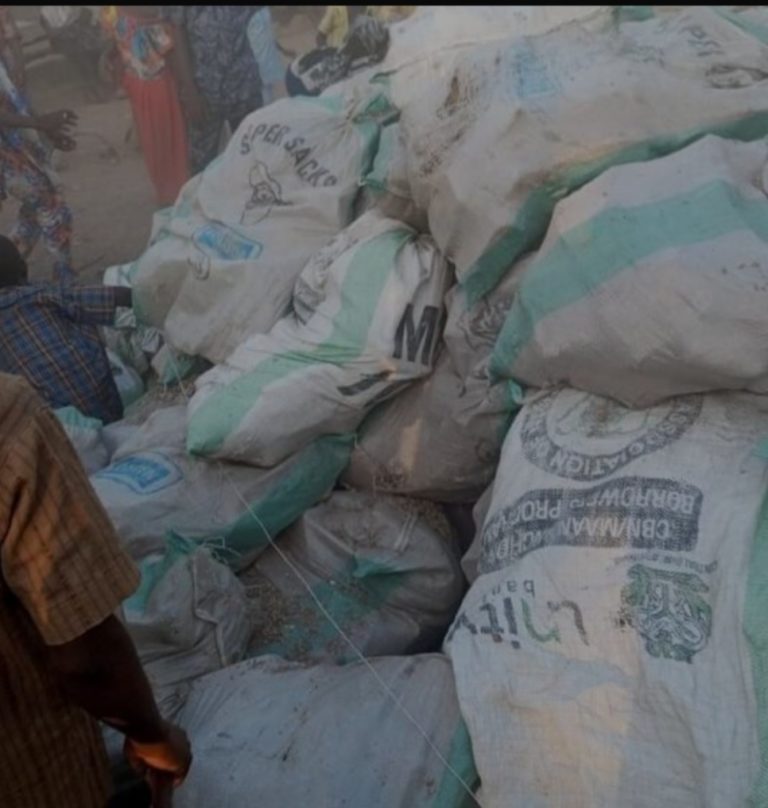
THE Benue State Police Command has reacted to a viral video showing bags of condemned naira notes discovered at a shop in Wadata, saying the shop-owner was licensed by the Central Bank of Nigeria (CBN) to be in possession of the notes.
According to a statement released on Tuesday, December 13, by the Public Relations Officer (PRO) of the Command Catherine Anene, the notes had been condemned by the apex bank as waste, and handed over to the shop-owner Isah Suleiman, to be used as raw materials.
“Police detectives sent on investigation to the scene recovered wasted papers in a shop close to Wadata Police Barracks, Makurdi.
“The owner of the shop, Mr. Isah Suleiman was invited for questioning and he tendered a licence issued to him by Central Bank of Nigeria (CBN) for waste management. He added that these wasted papers are usually gotten from CBN and processed in mosquito repellents.”
Anene also stated that the police had contacted the CBN for further investigations.
The Economic and Financial Crimes Commission (EFCC) also confirmed that the notes had been condemned by the CBN before being sold to Suleiman as waste.
A viral video had circulated across various social media platforms on Tuesday, showing bags of old naira noted discovered around the Police Barracks in the Wadata area of Benue State.
While basic education is free and compulsory in Nigeria, hidden fees demanded in government-owned schools hinder access to education for many children, worsening the current literacy crisis in the country.
THIRTEEN-YEAR-OLD Khalifa Abdullahi sat playing by a kiosk in Karon Majigi, a suburb within Nigeria’s Federal Capital Territory (FCT), on a sunny Monday morning.
Although Abdullahi was of school age, this had been his routine since he stopped schooling four years ago due to a lack of funds.
He told The ICIR that his father, a taxi driver, had an accident in 2018, and following the incident, neither he nor his siblings could continue their education.
“All my friends go to school. Many children in this area go too, but my brother and I do not go. My father said there is no money to pay our fees,” he said.
Khalifa Abdullahi
Confirming the story, Abdullahi’s mother, Khadijat, said it had been almost impossible to raise funds to enrol her children into any school, including those owned by the government.
She relocated from Kaduna with her husband and children in 2015 due to insecurity, and they earn a living through menial jobs.
“No child in this house goes to school. It is not that there are no schools around, but there is no money to send them to school. My oldest child was in school, but we could not afford to complete his education. He has been at home for the past four years,” she told The ICIR.
Every child in Nigeria has a right to basic education, governed by the Universal Basic Education Commission (UBEC) Act of 2004. It includes primary education and three years of junior secondary school.
Section 2 of the UBEC Act states that basic education should be compulsory and free.
“Every Government in Nigeria shall provide free, compulsory and universal basic education for every child of primary and junior secondary, school age,” the Act reads.
Though several government-owned schools exist across communities in the FCT, certain levies demanded from students are unaffordable for many Nigerian families.
Findings by The ICIR show that enrolling a child into most government-owned primary schools costs between N10,000 and N20,000, while junior secondary schools cost higher.
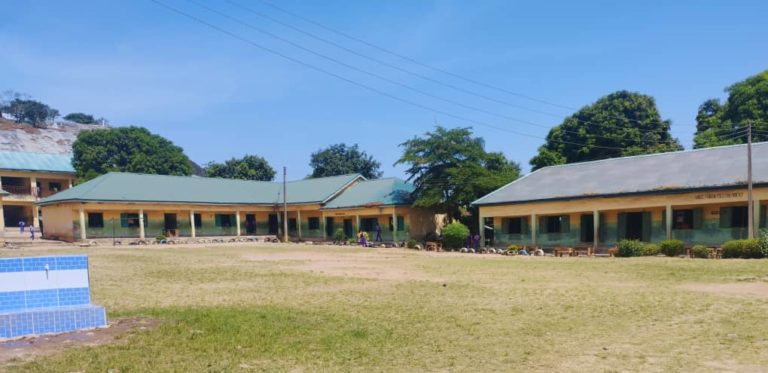
At the Local Education Authority (LEA) Primary School, Karon Majigi, enrolling a child as a fresh student into the primary section costs a total of N20,450.
During a visit to the school, The ICIR learnt that the sum covers registration which costs N500; Parents Teachers Association (PTA) fees, N1950; Uniforms, N2500; Pupil’s file N500; Online registration, N500; Sportswear, N2000 and some textbooks, among others.
Lea Karonmajigi
The school also demands an examination fee of N200 naira to conduct qualifying tests which determines what class the child will be admitted into.
Upon admission, children were also expected to resume with a moping stick and a small bucket.
It was a similar situation at the LEA Primary school, City Gate, Durunmi.
The ICIR discovered during a visit that enrollment into the school’s primary section costs a total of N18,600.
According to a list received at the school, the fees were broken down into registration which cost N1000, PTA, N1500; uniform, N3000; examination, N300; sportswear, N2000; online (registration), N300; Continuous Assessment, N500; and working materials, N1000.
Others on the list include a handwriting book which cost N600; security fee, N500 and another PTA levy, different from that earlier mentioned that cost N500.
Compulsory books, including Mathematics, English, Verbal and Quantitative Reasoning textbooks, summed up to N7400, bringing the total fees to N18,600.
At the LEA Primary School, Durunmi II, enrolment costs N25,400, which covers registration, uniforms, sportswear, relevant textbooks, a dozen exercise books, PTA fees and a Continuous Assessment book.
However, The ICIR also learnt that subsequent payments after enrolment are often less expensive as they are limited to PTA levies, which usually fall between N1500 and N5000, and the cost of books where necessary.
The situation is no different in other Area Councils within the FCT.
At the 1st UBE primary school, Pasali in Kuje, the sum of N10,000 is required as fees for new pupils. It covers registration, sportswear, school uniforms and a cardigan. This does not cover the cost of books, as parents are expected to source for books in the open market.
1st UBE Primary School, Pasali, Kuje.
In Nigeria, over 133 million people live in poverty, which is more than half of the estimated population.
The economic challenges faced by many families keep parents struggling to meet these fees, and, in most cases, they are left with no option but to withdraw their children from school.
A worsening literacy crisis
Nigeria has about 20.2 million children out-of-school, according to the United Nations Children’s Fund (UNICEF), the highest globally.
Several factors are responsible for the teeming population of children without education, including insecurity and poverty.
Rather than mitigate the effects of these challenges on education, hidden fees demanded in government-owned schools contribute to the number of Nigerian children without education.
Fourteen-year-old Fatima Aremu sells cold drinks by the Area 1 motor park. She told The ICIR that she had stopped attending school after her widowed mother lost her job.
“I finished primary school but could not continue because my mother did not have the money to pay the fees. She said I should stay at home for a while until she can afford it, but it has been more than three years now, and I am still at home,” she said.
This is worsened by the fees demanded for enrollment in secondary schools, which are often twice as much as those paid in primary schools.
Twelve-year-old Victoria John sells sachet water by Life Camp junction every day except Sundays to augment her family’s income.
She told The ICIR that her parents could not afford to pay tuition fees for herself and her siblings, so she was made to leave school so her brother could continue his studies.
“It is in primary six that I stopped; I’m about to enter JSS 1. She said she will send me to school next year if she has the money. Now, she has a lot to do with money, she has to pay my brother’s school fees first. He is in primary 3,” she said.
In the secondary school Junior Secondary School, Durunmi, the fees for enrollment into JSS 1 summed up to N28,450, which also covered several requirements, including Mathematics and English textbooks.
Students were also required to provide a big basket which cost an average of N2500 in the open market, and two bottles of hypo bleach, N1000 each, upon resumption.
Fees for the second and third terms were also less expensive, as it was limited to only PTA fees, which fall between 1500-2500 in the school.
For students seeking admission into the Junior Secondary School, Pasali, Kuje, the sum of N37,000 was required, which would cover school fees, N3,250, PTA N2,000, a pair of uniforms cardigan and sportswear N8900, online admission N2,500, fees for qualifying examinations N500, admission N1800, Textbooks N13,200.
Junior Secondary School, Pasali, Kuje.
The school also demanded implements, explained to mean a hoe, cutlass and detergent, which would cost N4,000, among other requirements.
At the Junior Secondary School Life Camp, prospective students were required to pay N19,200 for registration, PTA and other fees.
Physical items were also required, including a packet of refill markers, one basket, mopping stick and bucket each.
In the schools visited by The ICIR, no account numbers were given to pay these fees, as parents were required to pay in cash.
The ICIR also confirmed from some students that receipts were not issued after payment.
Punishable by law
Receiving payment from students in primary and junior secondary schools is a punishable offence under the UBEC Act.
According to section 3 of the Act, “the services provided in public primary and junior secondary schools shall be free of charge. A person who receives or obtains any fee contrary to the provisions of subsection (1) of this section commits an offence and is liable on conviction to a fine not exceeding NI0,000:00 or imprisonment for a term of 3 months or to both.”
But despite the provisions of the law, school authorities in the FCT still demand fees from children for basic education, making it beyond the reach of indigent citizens.
Chairman of the FCT Universal Basic Education Board (FCT-UBEB) Hassan Sule described these fees as illegal during an interview with The ICIR.
“PTA fees are between the parents and the teachers. But no head teacher or principal is allowed to collect any fees from any student. It is illegal. It is wrong,” he said.
He encouraged parents required to pay fees by authorities in government-owned schools to lay official complaints at the FCT-UBEB office.
Way forward
A significant reason why hidden fees exist in government-owned schools is the insufficient funding of the education sector.
While the international standard of funding for education, according to the United Nations Educational, Scientific and Cultural Organisation (UNESCO), is 15-20 per cent of a nation’s budget, Nigeria only designated 7.9 per cent of its budget for education in 2022.
In an interview with The ICIR, advocate for free basic education Joshua Arogunyo said to end hidden fees in Nigerian schools, governments in states across the country should make parents aware that basic education is free.
“First, the government should announce that enrollment for basic education is free and compulsory, and there are no fees attached. Let it be clearly spelt out that exam fees, result checking fees and others do not apply, and they are incurred by the government on behalf of the student,” Arogunyo said.
He also noted that the PTA had become an avenue through which students are extorted and urged the Ministry of Education to closely monitor the affairs of the association to resolve this.
“The PTA is not supposed to handle infrastructural development in schools or buy buses. It is supposed to be a meeting ground for parents and teachers. It is not their duty to build blocks of classrooms, it is the government’s responsibility because education is a right, except they are willing to,” he said.
He recommended that state governments should create toll-free lines or other reporting channels through which parents could lodge complaints when such fees are demanded.
“If there is that open communication, it will create transparency in the system such that schools, especially those who are merchants of hidden fees, will become more careful and cautious knowing that they could be reported at any time,” he said
Noting the role of insufficient funding, Arogunyo said the education budget should be improved upon and prioritised to encourage literacy in the country.
This report is a part of Youth Hub Africa’s Basic Education Media Fellowship 2022 with support from the Malala Fund and Rise Up.