Home Blog Page 606

Police arrest mastermind of Abuja-Kaduna train attack, recover 48 AK-47 rifles 

THE Nigeria Police Force (NPF), on Thursday, May 2, announced the arrest of Ibrahim Abdullahi, one of the suspects involved in the violent attack on the Abuja-Kaduna passenger train in March 2022.

The Force Public Relations Officer (FPPRO), Olumuyiwa Adejobi, disclosed this during a press briefing in Kaduna State.

According to Adejobi, Abdullahi, known as “Mandi,” was also involved in the abduction of students from Greenfield University in 2021. 


Read Also:

The Police spokesperson also revealed that 48 AK-47 rifles were found with the suspect during his arrest.

Adejobi said Abdullahi masterminded and participated in the kidnapping and murder of students of Greenfield University and most of the kidnappings along the Abuja-Kaduna highway.

He said the suspect was arrested based on credible information at the Abuja-Kaduna Road flyover by Rido Junction in Chikun Local Government Area.

He explained that the suspect confessed to being a leader of a kidnap syndicate terrorising the Kaduna-Abuja Expressway and ranked among notorious bandits like Dogo Gide and Bello Turji, who had terrorised the North.

He added that investigations were underway to determine his weapons’ sponsor(s) and supplier(s).

The ICIR reported in 2023 that another suspect linked to the Abuja-Kaduna train attack, Bello Yellow, was arrested by vigilantes in Abuja.

The suspect was reportedly arrested by vigilantes in the Zuba area of the Federal Capital Territory (FCT).

It was gathered that he was apprehended in the early hours of Sunday, January 22, when he alighted from a car around Dan-Kogi Motor Park.

A vigilante, who refused to disclose his name, said members of the Miyetti Allah sighted the suspect in the area.

Reports say N103,000 cash, three sticks of cigarettes, and a lighter were found in his possession.

The vigilante source stated that the Divisional Police Officer in Zuba came to the vigilante office with his men to pick up the suspect.

The ICIR reported that terrorists attacked an Abuja-Kaduna train in March 2022. Several passengers were abducted in the incident.

This organisation gathered that the terrorists used an improvised explosive device to derail the train.  

According to a passenger on the train, who was identified as Anas Iro Dansuma, the explosives destroyed the train’s engines around Katari to Rijana. 

Dansuma said the terrorists attacked the train and shot sporadically.

Pictures and videos from the attack seen by The ICIR show passengers who sustained injuries, while some parts of the train were destroyed.

Earlier in October 2021, terrorists attacked the Abuja-Kaduna train with explosives, forcing a suspension of operations on the rail line.

For years, Kaduna State has been the centre of violent attacks in Nigeria, with several incidents of kidnapping for ransom, attacks on villages and abductions.

In 2022, the Kaduna International Airport was attacked by terrorists and a staff of the Nigerian Airspace Management Agency (NAMA), Shehu Na’Allah, was killed.

Terrorists, numbering over 200, invaded the Kaduna International Airport located in Igabi Local Government, disrupting the operation and killing one security personnel of the Nigerian Airspace Management Agency.

The attack caused panic at the airport and reportedly grounded a Lagos-bound AZMAN aircraft scheduled to take off at 12:30 p.m.

FG extends application deadline for $10 billion diaspora fund

0

THE Federal Ministry of Industry, Trade, and Investment has extended the deadline for companies interested in managing the $10 billion diaspora fund to apply.

The deadline has been moved from May 6 to May 13, 2024.

The minister, Doris Nkeiruka Uzoka-Anite, disclosed this in a circular on Thursday, May 2, in Abuja.


Read Also:


Uzoka-Anite stated that the extension was designed to allow stakeholders additional time to adequately prepare their applications following the guidelines established for the fund.

The minister urged prospective applicants to utilise the extra time to complete their submissions, ensuring they are thorough and competitive.

“The Federal Ministry of Industry, Trade, and Investment wishes to inform all interested parties that the deadline for the submission of expressions of interest (EOI) for the Nigeria diaspora fund has been extended.

“The new submission deadline is May 13, 2024. This extension is intended to accommodate stakeholders who require more time to prepare their applications by the guidelines provided for the $10 billion Nigeria diaspora fund,” the minister stated.

She noted that the EOI was open to fund managers interested in developing and establishing a multisectoral, multilateral private sector-led investment fund.

“We encourage prospective applicants to use this additional time to finalise their submissions that meet the outlined criteria, ensuring comprehensive and competitive proposals. For further inquiries or additional information, please contact the Federal Ministry of Industry, Trade, and Investment during office hours (8:00 AM to 5:00 PM),” she further said.

The minister had earlier invited eligible firms to indicate interest in providing services as Nigeria diaspora fund managers.

The minister made the announcement on her X account.

She disclosed that the fund managers would be responsible for developing and establishing a multi-sectoral, multilateral, private sector-led investment fund to form the $10 billion Nigeria diaspora fund.


READ ALSO:


Last year, Nigeria was estimated to have received more than $20 billion in diaspora remittances, according to the World Bank.

Informed analysts said the fund could serve as Nigeria’s support facility and hedge fund, supporting Nigeria’s naira appreciation amid the current foreign exchange fluctuation.

“The fund will support the strengthening of Nigeria’s foreign reserve and serve as a hedge for Nigeria’s fluctuating exchange rate,” a development economist, Celestine Okeke, told The ICIR.

Economists disagree on adopting fixed rate for Customs duty

ECONOMISTS have expressed divergent views on adopting a fixed Customs duty exchange rate following frequent changes in the rate, which they believe are creating volatility and hurting the Nigerian economy.

The Central Bank of Nigeria (CBN) has adjusted the Customs duty exchange rate about 38 times since the beginning of this year.

In its latest adjustment, The ICIR reported that the CBN raised the rate by 14 per cent to N1,327.35/$ on Monday, April 29.


Read Also:


The report noted that the frequent changes significantly burdened the business community and dashed importers’ hopes.

As of May 1, the rate had jumped to N1,373.65/$ from less than N1,200/$ a few days earlier.

The frequent changes have led to high volatility in cargo clearing costs, worsening inflationary pressures and aggravating investment risk, especially in the real sector of the economy.  

In recent conversations, renowned economists Bismarck Rewane and Muda Yusuf differed on whether the apex bank could fix exchange on Customs duty.

Yusuf, the chief executive officer (CEO) of the Centre for the Promotion of Private Enterprise (CPPE), issued a statement on Wednesday, May 1, urging the apex bank to adopt a quarterly framework starting at the rate of N1,000/$ to minimise volatility in the Customs duty exchange rate.

He suggested that the adoption be carried out in line with the present administration’s commitment to bolstering investors’ confidence and driving economic growth. 

“Such framework should adopt a quarterly Customs duty exchange rate after due consultation with the fiscal authorities. We propose a commencement rate of N1,000/$  Customs duty exchange rate.  

“Consultation with the fiscal authorities is imperative because of the trade policy implications of such decisions. It is also consistent with the commitment of the present administration to effective coordination between fiscal and monetary authorities.”

Yusuf buttressed that it took a lot of work for investors to plan under these unstable circumstances as the situation has introduced unprecedented uncertainty and unpredictability to the international trade dynamics. 

According to him, investment risk has become elevated, planning has become difficult, risk management has become challenging, and investors’ confidence is being weakened.

He added that it was a double whammy for investors to grapple with volatility in the foreign exchange market and contend concurrently with high unpredictability in the international trade ecosystem, stressing that it differed from Nigeria’s current growth aspirations.

However, in his view, Rewane, CEO of Financial Derivative Limited, said fixing the exchange rate on Customs duty would mean returning to fixing the unregulated exchange rate market when he spoke on Channels Television on Tuesday, May 2.

He said, “I have listened to the question on Customs duty whether you can fix it.

“You cannot fix an exchange rate for a Customs duty. What you can do is take the average for the entire month and say that this is the average.”

“The CBN could set an average for the month,” Rewane said, adding, “but to fix it is the beginning of going back to fix the unregulated exchange rate. The free market system and price mechanism allocate resources efficiently. So, let’s not decide ourselves.”

Sexual harassment: Stakeholders urge institutions to make confirmed cases public

STAKEHOLDERS in Nigeria’s educational sector have urged tertiary institutions to publicise confirmed cases of sexual harassment in schools to encourage students further to report such incidents.

This appeal was made during a progress review meeting of Independent Sexual Harassment Prohibition Committees (ISHPCs) in various tertiary institutions held in Abuja on Monday, April 29.

The meeting was organised by the Anti-Sexual Harassment Advocacy (ASHA) Cluster, an initiative funded by Palladium.

READ ALSO:

Executive Director of Gender Mobile Initiative, Omowunmi Ogunrotimi, who spoke at the event, stated that making reports of sexual harassment cases handled by the committee regularly available to the school authorities and students would help victims know that their situations could be fairly treated if reported.

She also urged institutions not to mete out punishments that might be inadequate and, therefore, encourage perpetrators.

“When you say that you reduce the classes that lecturer is taking from ten to five because he committed an act of sexual harassment and you are still paying the person’s salary, you’ve reduced the person’s burden. That is an incentive,” she said.

Ubong Ekpe, who moderated the plenary session, also noted that resolving cases was a significant step in encouraging students to speak up, as unresolved cases give students no reason to come forward when abused.

“When there is closure to cases, it will bolster the confidence of students. If we have cases and someone is being reprimanded, someone is being punished, I think it will build confidence,” he said.

Others also agreed that the reluctance of students to report sexual harassment could only be changed over time through persistent sensitisation.

The Independent Sexual Harassment Prohibition Committee is part of the provisions of a bill for an Act to Prevent, Prohibit, and Redress Sexual Harassment of Students in Tertiary Educational Institutions and for Matters Connected Therewith.

Although the bill has yet to be passed into law, various institutions have proceeded to institute the committee as part of measures to curb sexual violence in schools.

Sexual harassment has remained a matter of urgent concern for Nigerians, especially parents and students of higher institutions.

About a week ago, a professor at the University of Nigeria, Nsukka (UNN) in Enugu State, was caught on camera trying to sexually abuse his student within the school premises.

Oga Lecturer also reported that at least 43 lecturers were indicted for sexual harassment between 2018 and 2023.

This report is republished from Oga Lecturer. Read the original report here.

NDIC raises insurance coverage for bank customers by 900‬%

THE Nigeria Deposit Insurance Corporation (NDIC) has increased bank customers’ maximum deposit insurance coverage to N5 million.

The NDIC’s managing director/chief executive officer, Bello Hassan, disclosed this at a press conference in Abuja on Thursday, May 2.

He said deposit insurance coverage for bank customers was raised from N500,000 to N5 million, representing a 900 per cent increase.


Read Also:


The “NDIC’s Interim Management Committee (IMC), during its 18th meeting held on April 24th and 25th, approved an increase in the maximum deposit insurance coverage levels for all licensed deposit-taking financial institutions with immediate effect.

“The maximum deposit insurance coverage has been elevated from N500,000 to N5,000,000. This change will now fully cover 98.98 per cent of depositors, significantly up from the current 89.20 per cent,” Hassan said.

The NDIC also increased the deposit insurance coverage for other financial institutions.

It raised the coverage for microfinance banks (MfBs) to N2 million from N200,000 to protect 99.27 per cent of depositors, compared to 98.76 per cent under the previous limits.

Primary mortgage banks’ (PMBs) coverage was increased from N500,000 to N2 million to ensure 99.34 per cent of depositors are covered, up from 97.98 per cent.

The corporation also adjusted the payment service banks (PSBs) coverage from N500,000 to N2 million, covering nearly all depositors at 99.99 per cent of the coverage. It increased mobile money operators (MMOs) to N5 million per subscriber.

The NDIC boss said, “In terms of the value of deposit covered, the revised coverage would increase the value of deposits covered by deposit insurance to 25.37 per cent compared with the current cover of 6.31 per cent of total value of deposits.”

Hassan said the revised coverage struck a strategic balance between protecting depositors and ensuring the financial system’s stability. The changes aim to extend protection to a larger percentage of the population, enhance financial inclusion, and mitigate the potentially destabilising effects of bank operations.

The ICIR reports that deposit insurance coverage is a system established by the government to protect depositors against the loss of their insured deposits, as the banking sector and other financial institutions that accept deposits from the public are vulnerable to liquidity and solvency problems, among other things, hence the need to protect customers’ deposits.

Police arrest 2 for child trafficking in Abuja

0

THE Federal Capital Territory (FCT) Police Command has arrested two women attempting to traffick five children.

The FCT Police Command’s public relations officer (PRO), Josephine Adeh, disclosed this in a statement released on Thursday, May 2.

Adeh said the suspects, Kulu Dongonyaro and Elizabeth Ojah, had escaped arrest by the Sokoto State Police Command when security operatives apprehended them in the FCT.


Read Also:


“The suspects who attempted to escape arrest from Sokoto police operatives were intercepted and arrested by FCT police operatives at Kagini junction, Abuja, while suspiciously conveying five children into the Federal Capital Territory.

“The FCT police command, in the spirit of oneness, has now handed the suspects and victims over to Sokoto State police command for further investigation and onward prosecution,” she noted.

Adeh also explained that the FCT Commissioner of Police (CP) Benneth Igweh urged parents to pay closer attention to their children.

“He also calls on residents to be vigilant and take advantage of the police emergency lines in reporting suspicious activities through: 08032003913, 08028940883, 08061581938, and 07057337653 PCB: 09022222352, CRU: 08107314192,” the statement read.

In February 2024, the FCT Police Command arrested three men who attempted to traffic 12 children.

The suspects had been conveying the children to Ogun state from Kaduna when the security operatives intercepted them.

Child trafficking has remained a significant challenge in Nigeria, with many young children sold into forced labour, prostitution, and other forms of exploitation.

A 2020 report by the United Nations Office on Drugs and Crime (UNODC) noted that Nigeria was a major source, transit, and destination country for human trafficking.

According to another report, 80 per cent of children forced into labour are victims of child trafficking.

Naira abuse: Cubana Chief Priest opts for out-of-court settlement with EFCC

0

POPULAR celebrity bartender and socialite, Pascal Okechukwu, also known as Cubana Chief Priest, is exploring an out-of-court settlement with the Economic and Financial Crimes Commission (EFCC) over a case of naira abuse against him by the commission.

He is the second celebrity to be charged for the crime this year after the popular crossdresser, Idris Okuneye, also known as Bobrisky was jailed for the same offence.

Cubana Chief Priest is being tried by the anti-graft agency at the Federal High Court in Lagos.

His lawyer, Senior Advocate of Nigeria, Chikaosolu Ojukwu, disclosed this to trial judge, Justice Kehinde Ogundare at the proceedings on Thursday, May 2.


Read Also:


The defence counsel also told the court that the parties had applied that the matter be settled under the provisions of section 14(2) of the EFCC Act.

Chikaosolu also said that if the EFCC confirms the position as true, then there would be a need to apply for a withdrawal of the defence’s preliminary objection to allow for reconciliation.

The EFCC prosecutor,  Bilikisu Buhari, confirmed the position as stated by the defence counsel and told the court that the commission was still considering the application.

Following this confirmation, the defence counsel then applied for a withdrawal of the preliminary objection, and with no objections from the prosecution, the court granted the same.

Justice Ogundare subsequently adjourned the case until June 5, for a report of settlement.

The ICIR, on April 17, reported the arraignment of Cubana Chief Priest before the court on three counts of allegedly spraying and tampering with naira notes during a social event at the Eko hotel in Lagos.

He had pleaded not guilty to the charge and was granted bail in the sum of N10 million with two responsible sureties in like sum each.

The court said the sureties must be gainfully employed with the federal government or state government and must not be less than grade level 16 officers.

The sureties are also to have landed property within the jurisdiction of the court and the documents of the property must be verified by the prosecution and the court.

He is also to submit his travel passport to the custody of the court.

The bail conditions must be perfected within seven days but in the meantime, he would be released to his lawyer who must give an undertaken to produce him in court for his trial.

Suspected killer of British-Nigerian teenager charged with murder

A SPANISH-Brazilian man, 36, identified as Marcus Aurelio Arduini Monzo, has been charged to court following the sword attack in Hainault, East London, on Tuesday, April 30.

The sword attack led to the death of a 14-year-old British-Nigerian teenager, Daniel Anjorin.

Monzo was charged with two counts of attempted murder, two counts of grievous bodily harm, aggravated burglary and possession of a bladed article On the order of the homicide division of the Crown Prosecution Service (CPS). He will appear at Barkingside Magistrates Court today, Thursday, May 2.


Read Also:


“The Crown Prosecution Service has authorised the Metropolitan police to charge Marcus Arduini Monzo with the murder of 14-year-old Daniel Anjorin, who was fatally stabbed in Hainault on Tuesday April 30. Our thoughts remain firmly with the family of the Daniel and all those who have been impacted by this horrific incident.

“We remind all concerned that criminal proceedings against the defendant are active and that they have a right to a fair trial. It is extremely important that there should be no reporting, commentary or sharing of information online which could in any way prejudice these proceedings,” said, the chief crown prosecutor for CPS London North, Jaswant Narwal.

The Metropolitan police said they were called on Tuesday shortly before 7 a.m. after a vehicle was reported to have collided with a house in Thurlow Gardens, Hainault, East London.

They noted that a suspect armed with a sword then stabbed people during a series of attacks, wounding two police officers, who sustained significant injuries, and two members of the public.

The suspect had hit a 33-year-old man before stabbing him in the neck, after which a 35-year-old man was then attacked inside a nearby property, causing lacerations to his arm, before 14-year-old Anjorin was killed.

Police arrived at the scene within 12 minutes of the initial emergency call and attempted to subdue the suspect using incapacitant spray and a Taser gun, but these had little effect.

The suspect seriously injured two police officers, both of whom required surgery on Tuesday and remain in hospital.

One of the police officers, a woman sustained serious injuries to her arm, narrowly escaping the loss of her hand. The assailant fled once more, prompting terrified witnesses to seek shelter in nearby residences until police eventually subdued him using a Taser.

Speaking on the demise of their late teenager, Anjorin’s family said he was “a wonderful child who was well-loved and hard-working, adding that his death left a gaping wound in the family.

“No family should have to go through what we are experiencing today,” they told the London newsmen.

Also, Anjorin’s heartbroken friends and schoolteachers described him as a “true scholar with a positive nature and gentle character”.

Daniel Anjorin was a pupil of Bancroft’s private school in Woodford Green, the school also attended by Nottingham attack victim Grace O’Malley-Kumar, who was killed in June 2023 after trying to save her friend, Barnaby Webber, from their killer Valdo Calocane.

Alia dumps Ortom’s Volunteer Guards, set to launch own outfit

BENUE State Governor Hyacinth Alia is to launch another local security outfit to complement the efforts of other security agencies in tackling insecurity in the state.

This is coming despite the launch of Benue Volunteer Guards (BVGs) in 2022 by the state’s former governor, Samuel Ortom.

The ICIR reports that Ortom had boasted that the outfit would save the state residents from frequent attacks by gunmen.

Sources said since Alia assumed office as the governor, nothing much had been heard about the Community Volunteer Guards.

Alia disclosed the launch of his new outfit during the All Progressives Congress (APC) expanded stakeholders meeting, held at Government House, Makurdi, on Wednesday, May 1.

The governor said the outfit would assist in securing Benue communities and enable rural farmers to access their farmlands without fear.


Read Also:

He stated that his administration was already working towards procuring Hilux vans and motorcycles for the outfit’s personnel to use for patrols across the state.

Meanwhile, a group under the aegis of Defenders of Democracy (DoD) has condemned the governor’s planned launch of the outfit, describing the move as a duplication of the existing guard and a waste of taxpayers’ money.

In a statement signed by its president, Amos Uchiv, in Makurdi on Wednesday, May 1, the group alleged that the government might use the security outfit to attack its political opponents.

Uchiv described the decision as ill-conceived.

He noted that the move was a waste of resources, which would have been channelled to other security agencies, even as he alleged that the governor might be planning to recruit the youths to harass his political opponents.

Uchiv urged Alia to reconsider the decision and work towards strengthening existing security structures, including the state Community Volunteer Guards and other conventional security agencies, for the greater good of the state.

Nigerian workers commemorate Workers Day in pains

0

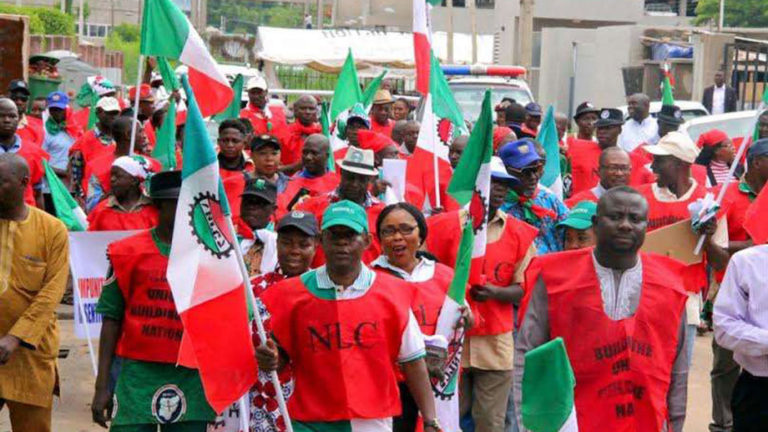
NIGERIAN workers join their contemporaries worldwide today, May 1, to commemorate 2024 International Labour Day, also known as Workers Day.

The Workers Day, backed by the International Labour Organisation (ILO), started in the 19th century when workers worldwide called for more equitable pay, shorter workdays, and better working conditions.

In Nigeria, workers from all industries, including the public and private sectors, celebrate it as a national holiday marked with marches, parades, speeches, and other events.


Read Also:

The day is for honouring the labour force and acknowledging their contributions to global and national economies.

Challenges confronting Nigerian workers

Poor wage is one of Nigerian workers’ biggest challenges. 

The current minimum wage is N30,000, but some workers still receive less than this amount, and several others are not paid when due.

Lack of adequate transportation also affects Nigerian workers. Many find it hard to commute to and from work due to the shortage of staff buses and the high cost of transportation.

This problem has been compounded since President Bola Tinubu removed the subsidy on petrol on the day he assumed office on May 29, 2023.

Another issue confronting Nigerian workers is the high inflation rate. Due to low wages, most workers find it challenging to pay for basic needs like food, housing, and medical care. The situation is considerably worse for individuals employed in the unregulated sector, where pay is meagre.

The National Bureau of Statistics (NBS) reported that in March 2024, the inflation rate increased to 33.2 per cent from 31.7 per cent in February. Moreover, food inflation increased from 30 per cent in February to 31.7 per cent in March.

In addition to the high inflation rate, Nigerian workers battle long working hours. Many employees work up to 12 hours a day without overtime compensation, which affects their health and general well-being, leaving them with no time for family or friends.

Many Nigerian workers lack access to social security programmes like health insurance and pension plans, which exposes them to financial shocks in the event of illness or injury. In places where these are available, they have been characterised by poor services and corruption.

Unfavourable working conditions also pose a great danger to Nigerian workers. Many workers are compelled to work in hazardous and unhygienic conditions. In Nigeria, factories still have inadequate safety gear and poor ventilation for their employees.

Labour’s demand

The federal government and the Nigeria Labour Congress (NLC) are negotiating a new minimum wage to address growing food prices and inflation.

A new minimum wage of N615,000 was demanded by the National Labour Council (NLC) and the Trade Union Congress (TUC) as the government has set up a committee for the new wage.

The labour unions agreed to continue with the status quo following Vice President Kashim Shettima’s formation of a 37-person panel in the Council Chamber of the State House in Abuja on January 30 on behalf of President Bola Tinubu.

The panel’s mandate was to recommend a new national minimum wage, and its membership included representatives from organised labour, the corporate sector, and both federal and state governments.

Government intervention

At various levels of government in Nigeria, major labour organisations like the TUC and the NLC are always at loggerheads with the authorities over issues that affect labour.

The government raised the minimum wage from 18,000 to N30,000 monthly in 2019, which many considered too low.

Perhaps Edo State workers can celebrate as their government approved a new minimum wage of N70,000 for them on Monday, April 29. 

Similarly, the Lagos State Governor Babajide Sanwo-Olu said no worker earned less than N70,000 in the state.

President Bola Tinubu, on Wednesday, May 1, reaffirmed his commitment to enhancing workers’ welfare.

In a Workers’ Day message released by his media aide, Ajuri Ngelale, Tinubu congratulated Nigerian workers and assured them of his dedication to improving their welfare and working conditions.

He also affirmed his commitment to providing the necessary tools for them to succeed.

He noted that he firmly believed that the custodians of the nation’s machinery deserved a fair wage and enhanced welfare.

The President had earlier approved a salary increase of between 25 per cent and 35 per cent for civil servants on the remaining six Consolidated Salary Structures.

The head of press, National Salaries, Incomes and Wages Commission (NSIWC), Emmanuel Njoku, announced the development in a statement on Tuesday, April 30.

According to the statement, the increase was to take effect from January 1, 2024.

Labour rejects wage increase

Reacting to the salary increase on Wednesday, May 1, while speaking on Channels Telivision’s Sunrise Daily, the President of the NLC, Joe Ajaero, described the decision as a ‘mischievous’ move.

Ajaero noted that the last minimum wage of N30,000 expired on April 18.

“I think the announcement now appears mischievous because there is no wage increase that the government is announcing. For them to announce it now is an issue that we are worried about at the NLC and even at the TUC,” Ajaero said.”

He added: “We have housing and accommodation of N40,000. We asked for electricity of N20,000 — of course, that was before the current tariff increase. Nobody can spend this amount currently. We have a utility that is about N10,000. We looked at kerosene and gas which is about N25,000 to N35,000.

“We looked at food for a family of six, that is about N9,000 in a day. For 30 days, that is about N270,000. Look at medical, N50,000 provided there will be no surgery or whatever.


Ajaero also stated that N20,000 was allocated for clothing, N50,000 for education, and N10,000 for sanitation.”

He said another bulk of the money was for transportation, noting that the workers stay on the fringes because of the cost of PMS, which amounted to N110,000.

“That brought the whole living wage to N615,000 and I want anyone to subject this to further investigation and find out whether there will be any savings when you pay somebody on this rate.”

New minimum wage will take effect from May 1 – FG

While addressing the concerns raised by the NLC on Wednesday, the federal government stated that although the Tripartite Committee on National Minimum Wage was yet to conclude its negotiations, workers would not incur any losses.

It added that the new minimum wage would take effect from May 1, 2024, as earlier agreed upon.

The Minister of State Labour, Nkeiruka Onyejeocha, stated this while addressing Nigerian workers at the May Day celebration in Abuja.

She expressed regret that the new national minimum wage wasn’t prepared before today but assured that extensive consultations were underway to expedite the compilation of the document.