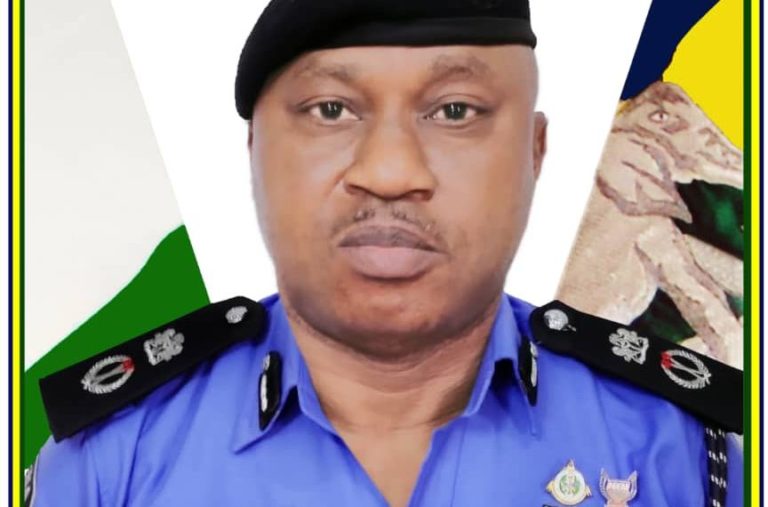
In the December 18 attack, the bandits also razed houses at Malagum and Kagoro communities in Kaura Local Government Area of Kaduna State.
An inter-denominational burial service was held for the victims of the attack on Thursday, December 22. Images from the burial were attached to a post on Facebook and other social media platforms by the Catholic Diocese of Kafanchan.
The post was captioned, ‘The inter-denomination burial mass/service of the victims of the Fulani herders attack at Mallagum, Kagoro, Kaura Local Government Area, Kaduna State, Nigeria on this day, Thursday, 22nd December 2022. May their souls rest in peace with the Lord’.
Social media users, who reacted to the.posts, expressed outrage over the killings in Southern Kaduna.
Official spokesperson for the Labour Party (LP) Presidential Campaign Council (PCC) in the North-West Ndi Kato was one of many Nigerians who reacted to the incident. She condemned the killings via her Twitter page.
“Kagoro is my mother’s hometown. Many of my relatives have left their homes and gone to seek refuge elsewhere. This is Christmas season, the happiest season in Kagoro, destroyed by genocide and hate. Our only fault is existing. God save Southern Kaduna,” Kato tweeted on Friday, December 23.
The ICIRreported that more than 28 people were killed during the attack in the Southern Kaduna communities on Sunday night.
However, the Catholic Diocese of Kafanchan posted a list of 40 names said to be victims of the attack.
The Southern Kaduna Peoples Union (SOKAPU) released a statement condemning what it described as the sluggishness of the security agencies in apprehending perpetrators of terror attacks in the region.
“Let it be put on record that in the hundreds of attacks that have put many parts of Southern Kaduna into ruins and thousands killed since 2014, we have not seen anyone arrested and brought to book over these heinous crimes against humanity,” SOKAPU said in the statement.
A former Senator Shehu Sani, in a tweet on Tuesday, December 20, noted that although insecurity was rife within the state and the region, the killings in Southern Kaduna were systemic.
“No part of Kaduna is spared of terrorist attacks, violence and kidnappings. However, the killings in Southern Kaduna by terrorists group is systemic; the people of that part of the state are also institutionally treated like the blacks under apartheid South Africa,” he tweeted.
Sani described the situation in Southern Kaduna as a daily tragedy in another post on Friday.
Terror attacks have persisted in Southern Kaduna over the years.
The ICIR published a documentary on the violence and attendant suffering faced by residents of communities within the region in April.
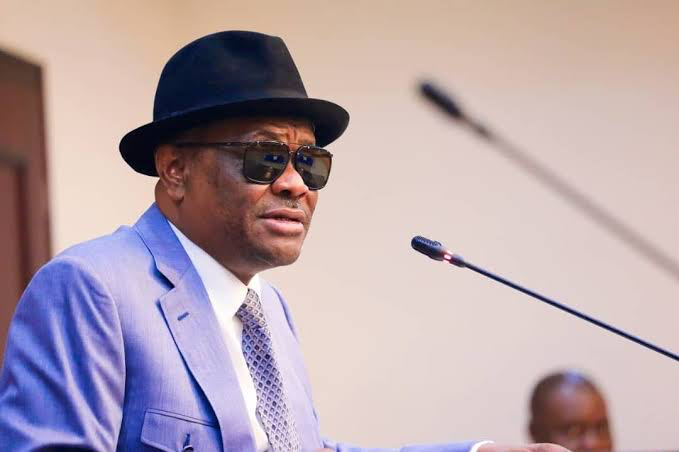
THE Rivers State governor, Nyesom Wike, has said he will reveal the presidential candidate to mobilize votes for in the forthcoming 2023 general elections in January.
This is coming barely three weeks after the governor promised members of the Rivers State chapter of the Peoples Democratic Party (PDP) that a decision on who they will vote for in the presidential election would soon be taken.
Wike, in an earlier address at the commissioning of the Rukpokwu-Igwuruta Link Road in the Obio-Akpor Local Government Area, had enjoined the people of the state to vote the candidates of the PDP in the governorship, National Assembly and State House of Assembly elections but kept mum over his choice for the presidential poll.
Speaking at the inauguration of Rumuokwurusi-Elimgbu Flyover in Rumuokwurusi town in Obio-Akpor Council, on Thursday, December 22, Wike said he would undertake a nationwide campaign tour to tell Nigerians the most preferred presidential candidate to cast their votes for in the forthcoming election.
According to him, Nigerians need to know a reliable candidate they can trust to deliver the needed national transformation.
“So, from January next year, I will campaign to my people on whom to vote for. All of you, who have been in suspense, wait, January is coming. Not only will I tell them where they will vote, I will move from state to state and tell them why they should vote for the people I think they should vote for.”
Wike added that the 2023 general election will be used to retire some politicians.
He lamented that some persons have caused societal ills due to their political inconsistency and wondered if they could, in good conscience, claim to be fair to Nigerians and are fit to lead the country.
He said; “Those of you, who have never been stable, you move from PDP to another party, and you moved from there back to PDP. Those of you who campaigned in 2015, telling Nigerians if they vote for PDP, they are voting for insurgency; if they vote for PDP, they’re voting for corruption; wait, all of us will reply. We will tell Nigerians this thing that you said. Where do you stand now? Is it the same PDP or a new PDP?”
He insisted that going into an election and winning the needed victory goes beyond appearances on television shows, casting aspersions on others and talking big.
He said: “All of you appearing on television abusing me, don’t waste your saliva again. January has come. All those of you who are telling Nigerians that you used to have 40 shoes, you used to have 50 wrist watches, time has come to convert those shoes and wrist watches to votes. It’s not to be on the podium and raise your shoes high. And raise your wristwatch high. Time has come to convert them to votes.”
Recall that Governor Wike, a member of the PDP, fell out with the party leadership after the presidential primary which he lost to former Vice President Atiku Abubakar.
The governor also fell out with Atiku, the party’s presidential candidate for reneging on the alleged promise to ensure the exit of the National Chairman of the party, Iyorchia Ayu, so that a southerner can lead the party for the sake of a “regional balance”.
Wike leads the G5, a group of PDP governors who are aggrieved with Atiku and the PDP leadership. They G5 governors include Samuel Ortom (Benue), Ifeanyi Ugwuanyi (Enugu), Okezie Ikpeazu (Abia), and Seyi Makinde (Oyo).
Ahead of the election, Wike has been associating with presidential candidates of other political parties such as Peter Obi of Labour Party (LP) and Bola Tinubu of the All Progressives Congress (APC).
Just recently, he promised to provide logistics support for Obi’s campaign. The Rivers State governor also hosted chieftains of the APC, including Kayode Fayemi of Ekiti, Rotimi Akeredolu of Ondo and Babajide Sanwo-olu of Lagos, in Port Harcourt.
Wike also held meetings with Obi and Tinubu in London during his trip to the United Kingdom.
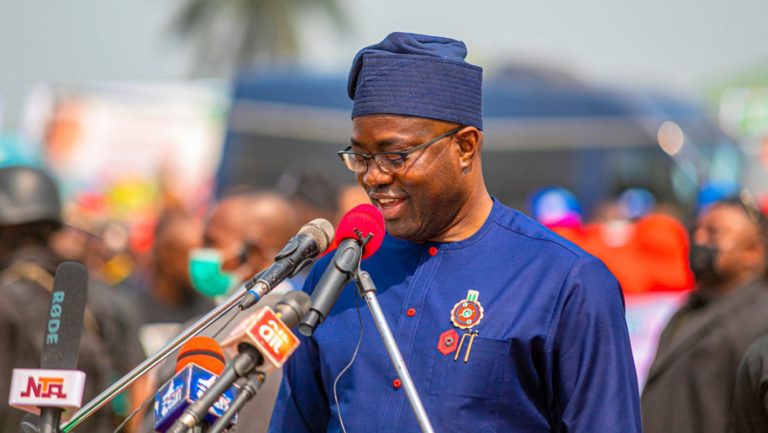
He said that the bonus was coming days after the government paid December 2022 salary and pension to the state’s workers and pensioners.
Adisa further disclosed that the state government has approved the payment of the ’13th month salary’, which would be paid on or before December 31, 2022.
“His Excellency has approved the payment of N10,000 to all pensioners in the state as Christmas Turkey bonus. It is a flat rate for all pensioners.
“The bonus is coming days after the state government paid the December 2022 salaries to workers and pensioners. The governor had equally approved the payment of 13th month salary, which is expected to be paid on or before December 31, 2022.
“His Excellency wishes that all retirees will enjoy a Merry Christmas.
“The bonus is a token of His Excellency’s appreciation and assistance to our aged and retired citizens, who had served the state meritoriously for decades.”
Makinde’s gesture is coming as various state governments continue to owe pensioners across the country.
In September this year, The ICIR published a two-part investigation on the non-payment of pensions to retired primary school teachers in Delta State.
The investigation titled: ‘In Delta, Okowa’s non-payment of primary school retirees is leading teachers to early graves’ detailed how school teachers are being neglected by the state government.
The report narrated how scores of retirees are battling life hardships, health challenges and emotional trauma due to losing loved ones to hunger and illness over the non-payment of their pension.
However, after the backlash that followed the investigation, the state governor, Ifeanyi Okowa, released N5 billion to pay the pension arrears for state pensioners, local government and primary school retirees.
THE presidential candidate of the All Progressives Congress (APC), Bola Tinubu has vowed to stop subsidising the cost of premium motor spirit (PMS), otherwise known as fuel, if elected President in 2023.
Speaking at a business luncheon in Lagos on Thursday, December 22, Tinubu said no amount of protest by Nigerians can stop him from removing fuel subsidy.
According to him, neighbouring countries and few Nigerians are the ones benefiting from the subsidy.
He said, “Nigeria will not continue to subsidise fuel consumption in neighbouring countries.
“How can we be subsidising fuel consumption of Cameroon, Niger, Benin Republic? No matter how long you protest, we are going to remove subsidy.”
The APC presidential candidate was restating the claim by the Nigeria Customs Service (NCS) which in 2021 said Nigeria’s subsidised fuel is being smuggled out of the country “in large quantities”.
The Controller-General of NCS, Col. Hameed Ali blamed the Department of Petroleum Resources (DPR) for establishing filling stations along the land borders against Custom’s advice.
Ali said the filling stations were responsible for the increasing volume of fuel being released by the Nigerian National petroleum Corporation (NNPC) as daily consumption.
“The issue of smuggling of fuel from Nigeria to the neighbouring countries is simply because of price differential. The prices outside our shores and borders are higher, and that is what attracts people to move this product outside. And this product is not only limited to Benin, Niger or Chad, it goes up to Mali,” he said.
Similarly, President Muhammadu Buhari in October affirmed that fuel subsidy will end in 2023 despite the “destablising effects” it will have on the economy”
“As we seek to grow our government revenues, we must also focus on the efficiency of utilisation of our limited resources. Critical steps we are taking include immediate implementation of additional measures towards reducing the cost of governance and the discontinuation of fuel subsidy in 2023 as announced earlier.
“Petrol subsidy has been a recurring and controversial public policy issue in our country since the early eighties. However, its current fiscal impact has clearly shown that the policy is unsustainable”, he said.
Meanwhile, it would be recalled that Buhari, Tinubu and other chieftains of the APC had taken to streets in 2012 to protest against the proposed removal of fuel subsidy by former President Goodluck Jonathan.
Following the protest that lasted some days, Jonathan was forced to reverse the decision.
This year’s competition aims to highlight the best data journalism done on any topic. It is expected that a large number of entries will be on the COVID-19 pandemic or the Russia-Ukraine war.
Works must have been published in 2022. The application is available in English, Spanish, Portuguese, Russian, French, Arabic and Chinese.
NWEKE Elu Oji health facility in Ezza North local government area is almost moribund; it boasts rickety wooden beds, no electricity, no water, and no other basic health care equipment.
The officer in charge, Regina Eze, is a midwife and the only staff present when NTA News visited. She says the dilapidation is because residents prefer visiting selected health facilities where they enjoy free services.
” If the government can help us, we will be okay. We don’t have beds, water, electricity. We are going to another place where they have solar energy to store our vaccines,” she says.
“I will like our facility to be selected to enjoy the BHCPF. If the government will help us to get what others are getting, it will be okay.”
The BHCPF she talks about is the Basic Health Care Provision Fund, enacted under the National health act 2014, which stipulates that 1 per cent of the consolidated revenue of the federation should be dedicated to health.
It has a specific objection of establishing at least one fully functional public or private primary health care facility in each political ward, among other objectives, to achieve universal health coverage.
According to data from the National Primary Health Care Development Agency, the BHCPF is designed to be a sustainable model for equity and financial risk protection for vulnerable populations by guaranteeing access to basic minimum package of health services.
Implementation of BHCPF in Ebonyi state
In Ebonyi State, the implementation of BHCPF started in the year 2020, with the state government paying the initial 25 per cent counterpart fund of hundred million naira that enabled the state to access the direct facility fund (DFF) in two tranches in 2020 to the tune of 601,500 as well as one and two tranches in 2021 and 2022 respectively, apart from the funds coming from other gateways.
However, the state is yet to pay another counterpart fund since then, according to the Focal Person BHCPF Ebonyi State, Leonard Alegu.
“Though the State government tried by paying the initial fund to make sure that both the agencies stand and also that we benefit from the BHCPF, so since after then, we have not been able to receive second counterpart fund though we have been writing and also soliciting making advocacies to make sure that the State pays because if the counterpart fund is paid, it will help us most especially in making sure that supervision is up to date,” he says.
“Because supervision of the activities is very important and apart from that supervision, the office set up, your office and logistics must be taken care of so those things are what we are grappling with. And again, the issue of human resource for health at least, getting the adhoc ones if it can assist us if the money is paid assist us to make sure that we augment the one that comes from the national.”
Out of the 171 selected facilities in Ebonyi State, 169 are fully functional and are benefiting from the basic healthcare provision fund, while two are not benefiting due to inability to meet up with the basic requirement.
Ezza North local government area
The five local government areas captured in this report are Ezza North, Izzi, Onicha, Afikpo South and Abakaliki local government areas of Ebonyi state.
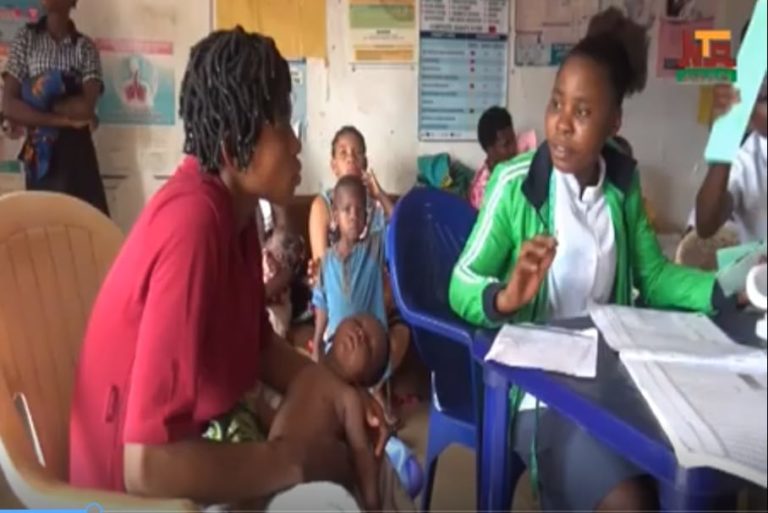
At the Maternal Child, Health Care Facility Okposi Umuoghara in Ezza North local government area, selected under the fund, women, children and patients of all ages were in their numbers,
The office is a plywood partition without windows. The facility has one midwife in charge Martha Nnabu who resides in one of the offices. The facility has only one toilet, which is in a bad shape serving both the staff and patients while most of the workers are ad-hoc staff.
The facility is in dire need of office expansion and professional health workers.
Bernadette Ngozika Aluma, director PHCDA in Ezza North local government area, she said the BHCPF has given women of the area the opportunity of visiting the hospital instead of chemists and quacks.
Aluma commended the prompt release of capitation to health facilities but decried the insufficient manpower in facilities. She further stated that the activities of the facilities are being monitored, although no funds are allocated to the team for monitoring and supervision, which sometimes limit their performance.
“We have LGA team comprising three persons, the A S [assistant superintendent], the M and E [monitoring and evaluation] and one other person. But we are handicapped. We are just struggling to manage and visit and see what they are doing not that we are carrying out supervision as it supposed to be to be frank because we don’t have the resources,” she says.
“For you to visit one health facility, you will definitely spend at least N3,000, and it is just out of your pocket.”
Izzi council area
The PHC Igbeagu in Izzi council area has five functional toilets. The facility does not have drug shelves and water. It has a few beds and one mattress on the floor of the male ward. It also has only two volunteer nurses working with the community health extension worker Mrs Monica Una who is in charge of the facility.
“We prepare what we core business plan after the preparation, we show it to our A S at the Local Government, he will vet it and approve it before sending it to the ministry and to primary health care agency where they will look at it will look at it very well and approve it, after the approval, they will approve the money,” says Una, explaining the centre’s spending process.
“When they approve it, with the WDC chairman and WDC committee, we will all sit down before preparing the business plan, we will all sit down and know the real need of the facility—the major challenge that we are about to face at the particular quarter. When they approve that money, there is someone they send from the local government to monitor what we are doing with the money.”
Chinenye Ogbuinya, pregnant and expecting to give birth soon, said she is happy with the services provided by the Igbeagu PHC.
“Since I began to come here, I have not had anything like regret. Since I began to go to hospital, I can say that this is the best place I have seen,” she says.
“It’s just somebody that directed me here, and since then, I am happy with the way they attend to me, the way they address me. They don’t neglect, and they don’t charge much that’s why I am here.”
PHC Onuebonyi on the other hand, has no toilet except one still under construction. It has no water and depends on the rain. The facility has a lab technician, a community health extension worker to assist, a community health officer, three volunteers and intern students. The beds are few, and the wards are unconducive.
“When we came here, here was a hall. It is the BHCPF that helped us demarcate everything here. Even drugs, seats, this tank and the toilet and bathroom which are still in progress. We even built a placenta pit,” says a volunteer community health extension worker (CHEW) Blessing Obasi, who stands in for the officer-in-charge.
The Director PHCDA Izzi local government area, Philomena Ibor said their major challenge is lack of human resource.
“It’s affecting all the selected facilities because the highest they will have in our own selected facilities is two, and they are CHEWs,” says Ibor.
“We don’t have nurses just as what you have said, the nurses/ midwives they employed as adhoc staff ran away because of non-payment of their allowance. So, we are feeling it so much, like in this place now, if the officer in charge goes to rest, nobody will help her.”
Despite the near success story of BHCPF in the state, one of the major challenges discovered in the course of this investigation is the unwillingness of some rural dwellers to enrol and access medical care in nearby health centres.
Onicha council area
NTA news witnessed a sad incident of a 12-year-old child who was rushed to Onicha PHC Egunkwo/Ezukwa ward and died a few hours later.
His parents had been self-medicating the boy only to rush him to the hospital at the last moment, and it was too late.
The PHC in question has four community health extension workers, three volunteers and one health attendant. The officer in charge of the PHC, Ugonna Eze, who is a community health extension worker, lamented that the roof of the facility leaks water. The facility has one general ward with one side closed off with plywood to make for a delivery room. It has no water and toilet while some rooms have no windows and doors.
“My challenge now is all our windows are just out, and the beds, even the ward,” she says.
“We don’t have enough accommodation. It is only that hall; then I used this plywood and demarcated it in case any woman delivers. If not for that board, it is open for even male and female, everybody.”
Oshiri PHC Nwodo Orgbu Ebia Ward in the Onicha council area is an old facility, with parts of the building almost dilapidated and not in use. The facility has six toilets with broken septic tanks.
Amas MDGS in Onicha council area, on the other hand, has two functional toilets for patients and staff, although the patients prefer open defecation. The facility, which has one senior and one junior CHEWs as well as one volunteer, also has a functional borehole, but its solar-powered fridge is not functional as of the time of filing this report because, according to the officer in charge, Bridget Nwota, the money to fix it is not available.
“My cold chain system has a fault. It is spoilt. For immunisation, I used to go outside here to get an ice pack and my vaccines before I can give immunisation,” says Nwota.
“If the government can help me to provide a solar fridge and solar light because it was working, but now, it is no longer working.”
The Director PHCDA Onicha council area, Mgbonshi John, said lack of manpower is their major challenge in the council area and commended the facilities for making judicious use of the funds they receive.
“The BHCPF is very important and very helpful to the healthcare delivery system in Onicha in particular, as well as other local governments. In the first place, some of the structures in dilapidated situation most of them are coming to normal shape.”
Afikpo South council
Amangwu PHC in Afikpo South council area is domiciled in an old structure with parts of the buildings in deplorable condition. The PHC has no placenta pit, no toilets and bathrooms. However, the PHC has one lab technician, a community health extension worker Mrs Ugwoma Inya Okoro, who is in charge and two volunteers who she says she pays from her salary.
The PHC is currently constructing a toilet through the BHCPF and has also constructed the culvert leading to the entrance of the facility.
Business plans are made and executed with all key players coming together, said the WDC chairman of the facility, Umemba Vincent Ejegba.
“The Ebonyi State Health Insurance Agency EBSHIA gave us N60,000 to N70,000 for three or four months, and it has not been constant, and that has been going on drugs. Formerly, it was monthly, but now they pay either twice or quarterly.”
At Owutu PHC, the story is not different as the facility boasts of having a community health extension worker Esther Uwaezuoke who is in charge and four permanent staff, one lab technician, one junior CHEW, two cemetery and sanitary keepers, as well as three volunteers. It has no functional toilet and depends on rain for water. The facility also lacks IV drip stands, sufficient beds and mattresses.
” If they can help us to maybe give us one borehole, it will be okay. Our fence has fallen down,” says Uwaezuoke.
“If they can help us to renovate it, it will be good because if we lock the gates at night, we will be having a lot of stress from the fence because we have people living here.”
Abakaliki local government area
The major challenges facing MCH Ekeaba, in Abakaliki local government area, include being in the middle of Ekeaba market and sharing space and toilets with the market. The facility needs to be fenced and separated from the market.
The facility needs more structures as it currently operates in a two-room structure and one adjoining room. It also has no water supply. The nurse/midwife in charge Chima Kindness Ogonna says the general ward and unconducive delivery room scare pregnant women from delivering in the facility after completing their ANC.
“We need to have a standard Postnatal ward as it stands now; this is the only ward that I have. A patient is staying there whenever I deliver, a post-natal woman that is not supposed to be here with other patients is also here,” says Ogonna.
“You can see my challenge. So, if possible, I need more rooms, at least five to have that my delivery ward, standard ward. I have two rooms for delivery and consulting and awaiting—that’s what I have here, but just small rooms, not standard ones. Some people will come around and I will now say, ‘let me orientate you’. They will say, ‘mummy this your room now’, you understand. It is already discouraging the person from coming to deliver. So, after managing ANC, you see her going to another place to deliver. Only very few persons deliver here, so you see my challenge.”
However, the chairman WDC Azuiyiudene/Urban ward Christopher Eze said the BHCPF has impacted positively on the lives of the people, especially the poor and vulnerable adding that the officer-in-charge works in partnership with the ward development committee before carrying out any project.
“So, we thank the Federal Government. We are using it judiciously. You can see the nurses, the people that are here waiting for patients to come, and it is the government that is paying them, and they are doing their work,” says Eze.
“Had it been you came here and you didn’t see them, I think you would feel embarrassed but you can see they are here doing their job in their normal time.”
The MCH Azuiyiokwu in Abakaliki local government area is an example of a typical PHC with a large expanse of land and state-of-the-art buildings with functional toilets for patients and staff.
But on the day NTA News visited, the staff who keeps the keys to the toilet was not on ground, and we could not assess its cleanliness.
The facility which competes with some secondary and tertiary health institutions in the state has a nurse/midwife in charge, six community health extension workers, two nurses, a visiting doctor and many students on industrial training. It also has a habitable on-site residence for health workers.
Others include a lab scientist with a functional laboratory as well as virtually everything a standard PHC needs. The officer-in-charge Odo Elizabeth, however, appealed that their ad hoc staff be fully employed for more efficient service delivery.
“It is really actualised in our facility, and as you can see the majority of the women are enjoying it, and that is why in a primary health care like this, you will be talking of 80 to 100 deliveries per month. The BHCPF is part of our success here.”
Government reaction
Responding to questions raised by NTA News from the local government areas, the Executive Secretary Ebonyi State Primary Health Care Development Agency, Catherine Barry Oko said the agency disburses funds to all health facilities as and when due.
“What they are doing now is s setting up of solar light in the facilities, which helps them for the solar fridge and every other thing for the facility to have light as far as the sunshine is on,” Oko says.
“So this is actually what they are doing with the money now, and then we are waiting for another tranche that will soon be paid to them before and they do anything with the money, they will prepare this business plan then we will go through it and discuss it.”
She expressed optimism that the ad-hoc staff will be absorbed as permanent staff when approval is given by the national primary healthcare development authority.
The State Commissioner for Health, Daniel Umezurike, said volunteers are recognised in primary health care with a provisio and are recognised by the ministry with the basic minimum experience to function.
Umezurike said despite the challenges, the BHCPF is serving its purpose and assured that Ebonyi State government will pay the remaining counterpart fund to ensure the continuity of the programme.
“With our governor, we don’t ever take last. So, because this project was implemented from 2021 and 2022 now,” he said.
“In 2021, the state government was able to pay the counterpart fund, and this year has not ended so we will still do that. And the salaries of the workers are also the responsibility of the state so when you check all these things and all the interventions we have done, you see that we are not even talking about the counterpart fund, we have surpassed that.”
The Executive Secretary of Ebonyi State Health Insurance Agency (EBSHIA) Uzoma Agwu said the agency can assist health facilities to address the shortage of manpower by sending doctors to them periodically.
And facilities can pay volunteers from the capitation they receive, she added.
“There is something we started. What I am doing for them. In primary health care centres, I tell them if you want a doctor you can tell us. We have doctors that are ready to mentor these centres. We are pleading with the government to provide manpower,” said Agwu.
But making the enrolment of community dwellers political and charging clients after enrolment are militating against the programme, said Agwu.
A FEDERAL High Court in Kano has declared Mohammad Sani Abacha as the duly-elected governorship candidate of the Peoples Democratic Party(PDP) in Kano State.
Mohammed is a son of former military dictator late General Sani Abacha.
The court presided over by Justice A. A Liman delivered the judgment virtually on Thursday, December 22.
Justice Liman nullified the primary election that produced Sadik Aminu Wali as Kano PDP governorship candidate and ordered INEC to erase his name and replace it with Abacha.
The judgment was postponed from noon to 4.00 pm on Thursday and delivered around 5:30 pm.
Justice Liman granted all the prayers of the plaintiff in the suit.
Abacha, the plaintiff, had, via originating summons, approached the court, praying it to declare him the winner of the PDP primary election conducted on May 25.
He also prayed the court to restrain INEC, its officers, agents and privies from further recognising Wali or any other person as the gubernatorial candidate of the PDP in Kano State for the 2023 governorship election.
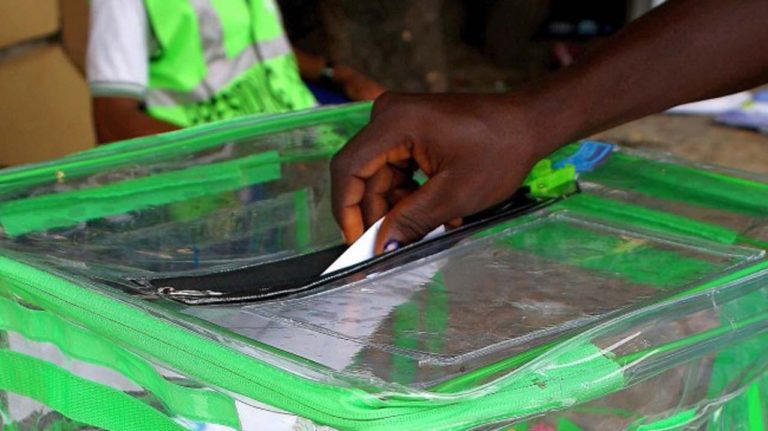
AHEAD of the 2023 elections, INEC registered a total of 9.5 million new voters. 76.5 per cent of them are young people between 18-34 years. The percentage of young people eligible to vote is about half of the over 93 million people registered to vote in Nigeria.
One would naturally expect that whoever will win the 2023 presidential election must be the favorite of the youth population. Political pundits confidently mock this expectation and assert that this population is active only on social media and will not do the real work of mobilising, supporting, and voting for a candidate they believe in.
Mobilise, support, vote are all verbs that are ascribed to an active citizen. Active citizens are members of a society who are inspired, motivated, and empowered to make a difference. According to these pundits, roughly 45 million eligible young voters are not active citizens.
A successful democracy relies on the everyday actions of citizens that help each other and society. Sometimes this can mean fundraising for important social issues, organising a protest against a government policy, participating in elections, engaging representatives, obeying laws and paying taxes.
Other times, this means making your community better through constructive engagements and by treating each other fairly and equally.
Civic participation, that is, the involvement of individual constituents or communities in local, state, and national government, is the bedrock of a succeeding democracy. Civic involvement can include voting, political activism, volunteering, and community engagement.
In this article, we will explore the push and pull factors that influence this reality for young people and the lessons we can learn and escalate as we daily draw closer to the 2023 general elections in February.
The pull and push factors
Pull factors are positive influences and realities that encourage and make it easier for young people in Nigeria to participate effectively in her democratic process. Push factors, on the other hand, are negative influences that hinder the effective civic participation of young people in the country.
These push and pull factors can be grouped into two categories –
A. Category by source
B. Category by nature
Categorised by source
Internal pull/push factors
External pull/push factors
Internal factors : These are the realities within the locus of control of the individual. They are usually internal to the individual. It originates from an individual’s understanding of their place in society and loyalty to that society.
Citizens who see civic participation as a path to economic empowerment, born into politically active/influential households, or have a strong sense of responsibility and activism to better their communities usually have a deeper sense of inspiration and motivation to be active citizens despite external pull/push factors.
In the same vein, some people will never be civically active in their communities, no matter how much they are influenced and encouraged.
External factors: These are the realities outside the locus of control of the individual. They are usually external to the individual.
Factors such as political violence, electoral malpractices, poor governance, social inequalities, and poor civic education are powerful push factors that limit participation.
Categorised by nature
Socio-cultural factors
Financial factors
Economic factors
Political factors
Socio-cultural factors: These are factors that are based on norms, trends, and tipping points existent in the realities of the community. This factor has one of the biggest influences on how members of a community relate with each other, the community itself, and the governance structures and laws they would prioritise.
The ENDSARS protest that rocked Nigeria in 2020 caused the biggest culture shift in how young people interact with power and its government and the high percentage of young people registered to vote in 2023. Other factors, such as gerontocracy and a culture of respect, are also noteworthy.
Financial factors: These are the push/pull factors around money and the economic power of young people. The rise of money politics as the primary form of effective political socialisation in the country is making the climb steeper for young people.
The practice of very high nomination forms, outrageously expensive campaign spending and vote-buying practices tend to make political participation too expensive for young people running for elective positions. YIAGA Africa noted a 6 per cent drop in youth candidacy from 2019 to 28 per cent.
Economic factors: These are the factors that influence the ability of members of the society to enjoy quality living conditions, access good nutrition and healthcare, education, and enjoy opportunities for social and economic mobility.
Economic condition/status is closely linked to apathy, poor, and/or optimal participation. Before exercising civic rights and obligations, people must first acquire the psychology of political thinking, consciousness, and rationality.
This will enable them to assert their rights, and participate meaningfully. The vast majority of young people in Nigeria are impoverished and unemployed. This has made them vulnerable to negative activities such as thuggery, vote buying, political bootlicking, cynicism, and money politicking. A lot more others have become politically apathetic as a result of their primary struggle to even survive.
Political factors: These are factors that revolve around the activities, laws, and policies of the government and how political power is gotten, wielded, and distributed.
Nigerian politics and political culture are based on patron-clientelism, in which those in power or with influence over the status quo will go to any length to maintain access, hold onto, and consolidate economic and political power. This is done through the deliberate formation of a pyramid of loyalists, with them sitting comfortably at the top. This practice limits good governance.
Other factors, such as unclear political ideology and orientation, absence of internal democracy within Nigerian political parties, and political oligarchy, stifle effective participation for Nigeria’s young population.
There are three key preconditions for civil participation among young people. They are;
Inspiration
Motivation
Empowerment
The effect that push and pull factors have on civic participation among young people is measured by the way it impacts any or all of the three preconditions.
As we draw closer to the elections, it is critical that stakeholders (candidates, political parties, Government, Media, INEC, NGOs, etc.) engage and prioritise activities that inspire, motivate and create the optimal conditions for the social and economic empowerment of young people in the country. Only this way can we begin to build the Nigeria we want.
Contributors: Ebenezer Wikina, Founder of Policy Shapers; Godbless Otubure, Global President of ReadyToLeadAfrica; and Sarah Egbo, Policy Lead at Gender Mobile Initiative
*This article is an excerpt from the first of a six-part series of a public conversation on youth civic participation under the “Accelerating Youth Civic Participation in the FCT”. A project by PROMAD Foundation, supported by LEAP Africa and funded by Ford Foundation and Macarthur Foundation.
Akinleye is the Impacts and Communications Officer, PROMAD
SUSPECTED killers of a United States (US) based Nigerian hotelier, Gbenga Owolabi, have been arrested and paraded by the police in Oyo State.
The suspects, whose names were not given, were paraded by the state Police spokesperson, Adewale Osifeso, at the State Police Headquarters, Eleyele, Ibadan, on Thursday, December 22.
According to Osifeso, the suspects were arrested after kidnapping another victim, one Waheed Hameed, a cattle dealer, on September 16.
He said that the suspected kidnappers, who have been causing terror in Ogbomoso, intercepted and attacked Hameed at a deserted location while armed with AK-47 rifles and other dangerous weapons before taking him to a thick forest in the state.
He said the suspects later contacted the victim’s relatives and demanded N1 million ransom before he could be released.
The Police spokesperson explained that when the Command got wind of the incident, it deployed all available resources to rescue the victim unhurt while the abductors were arrested.
“Operatives attached to the Monitoring Unit swung into action and in the process of combing the thick forest alongside local hunters and members of Vigilance group, they stumbled upon where the victim was held captive and rescued him unhurt.”
The Oyo Police spokesperson added that the victim, while narrating his ordeal to the police, explained that while the kidnappers were negotiating his ransom, they claimed responsibility for the death of Owolabi, saying they threatened to kill him like the hotelier should his ransom payment process get thwarted with the involvement of the police.
He stated that the victim also gave other useful information that later led to the arrest of three members of the kidnapping syndicate.
The hotelier, Owolabi, was abducted alongside Racheal Opadele, one of his workers who was a student of Ladoke Akintola University of Technology (LAUTECH), in the Aba area of Ogbomoso, in August this year.
The duo were thereafter killed by the kidnappers after a ransom of N5 million was paid.
In October this year, his corpse was repatriated and buried in Maryland, USA.
A STORY funded by the International Centre for Investigative Reporting (The ICIR) in collaboration with the Internationa Budget Partnership (IBP) has emerged as the winner of the 2022 Professor Chinyere Stella Okunna Ethical Journalism Award.
The award which is presented by Okunna, the first female professor of Mass Communication in Nigeria and matriarch of the Nigerian Union of Journalists (NUJ), was announced on December 21 during the NUJ end of the year party held in Awka, Anambra State.
The entry by Alfred Ajayi, a correspondent of Radio Nigeria, was adjudged the most outstanding out of 23 entries submitted for the award.
The report showed how Nigeria had so far recorded a maternal mortality rate of 917 per 100,000 live births in 2022 and an infant mortality rate of 56.220 deaths per 1000 live births, representing a 2.57 per cent decline from 2021 when the infant mortality rate was 57.701 deaths per 1,000 live births.
The Investigation also revealed how the poor remuneration of nurses and midwives affects the services rendered to the communities.
Speaking with The ICIR in an interview, Ajayi said he went to five local government areas – Awka North, Anambra East, Onitsha South, Ogbaru and Aguata, to document the travails of residents despite the insecurity in the regions.
“Interesting also is the fact that I joined the project in the month it would end. So, I had one month to produce this report and one other. It was not easy for me abandoning every other thing to pursue this, which took me to five local government areas including Awka, North, Anambra East, Onitsha South, Ogbaru and Aguata, where insecurity is particularly troubling. Less than five minutes after my arrival at Aguata PHC, gunshots rented the air from the military check point close by. They were merely announcing their presence to the hoodlums. However, my heart sank because I had earlier feared going there, but I needed to do that to get the report done.”
He added that he feels fulfilled, noting that he has lost count of many previous failed attempts.
Speaking on the challenges encountered in doing the report, he said, “Another challenge is having to pursue some of the people who could not be met physically on the phone until they are trapped down for the interview. I remember having to go back to one of the PHCs to collect the number of a midwife who left the job due to meagre pay. Her narration further enriched the report.”
He concluded by expressing his appreciation to The ICIR for the support and platform it afforded him in giving voice to the voiceless.
“Above all, it was a great experience, and I remain grateful to The ICIR for it. That report particularly drew attention. As of today, it has attracted almost a thousand views on FRCN website, which is not always the case.”
“My appreciation goes to The ICIR and IBP, which brought me into the health reporting project. I am particularly indebted to the Executive Director of The ICIR, Mr Dayo Aiyetan. This award is dedicated to my creator, my family and, like I said Mr Aiyetan, among other mentors.”