Home Blog Page 1143

Festive bulge: scientists offer advice on how to beat overeating

0

By Thomas C. Erren, University of Cologne; Philip Lewis, University of Cologne, and Ursula Wild, University of Cologne

Christmas and New Year are holidays with dietary excesses that many of us cannot control. This often leads to the “festive bulge”. As the holidays approach, could there be a recipe to contain this weight gain and pave the way to sustainable nutrition-based health at the same time?

There’s a lot of focus on what we eat and how much we eat – but what about when we eat?

Chrononutrition is the science of how timing affects our responses to nutrients. Scientific insights into when we eat suggest it may be worth exploring for better health.


Read Also:

While the idea of getting started on chrononutrition over Christmas can sound challenging, the guilty conscience that tends to follow feasting over the holidays may provide the needed motivation for the year ahead.

So for better health in the new year, why not try out time-restricted eating (TRE)? TRE is a type of intermittent fasting: a person eats all their meals and snacks within a particular time window, ranging from six to 12 hours each day. This implies 12 to 18 hours of fasting.

More and more research suggests that this kind of timing may have a significant influence on our health via interplays between our body clocks and nutrition.

As researchers with a focus on circadian biology, we have identified the festive season as a suitable starting point for a lifestyle change to time-restricted eating.

What is chrononutrition?

The basic idea of chrononutrition is that the body’s response to the timing of meals can promote well-being and health via the circadian timing system. This timing system refers to the internal 24-hour mechanism that primes our bodies for the challenges and stimuli of the 24-hour day. This includes when nutrients are likely to be consumed, how they are used within the body at a given time and how the body responds to them at a given time.

A rodent experiment in the 1930s led to a focus on counting calories and calorie-restricted eating. This dietary restriction extended the lifespan of rats in this case. It was subsequently shown in a wide range of species. The promise is large: if you eat less, then weight loss, better health and a longer life may follow.

The rodent experiment was followed by research into diets that foster health and prevent disease. Interest in “meal-timing, circadian rhythms and lifespan” was sparked by Franz Halberg (known as the father of American chronobiology), among others, in the 1980s.

These studies around food and behaviour take evolutionary considerations into account. For instance, rodents gain fitness when fed in a time-restricted manner. In contrast, human behaviour tends to involve more erratic eating patterns during the hours when people are awake.

Lifestyle changes

So what practical advice can we give on the occasion of Christmas and New Year from the 2017 Nobel Prize-winning field of chronobiology? The field gained recognition for its discoveries into how internal clocks organise our physiology and enable us to live in harmony with the external rhythms of day and night.

Findings from this field point to a simple lifestyle change: limiting when you eat to eight to 10 hours a day could protect you from developing obesity, or even lessen the negative health impacts of existing obesity. And time-restricted eating can work even if practised for only five days per week.

Importantly, if you can reduce a long habitual eating window (for instance, 15 hours) to a time-restricted eating window of eight hours, you are likely to benefit more than someone who reduces a habitual eating window of 10 hours to eight hours. Reductions in eating-time windows have already been found to help some overweight humans lose weight, sleep better and feel more energised.

Granted, much of the evidence comes from animal studies – and humans are certainly not big mice. Nonetheless, there have been no reports of detriments to this practice in humans. However, there has been one report of possible disadvantages to offspring in a pregnant animal model of time-restricted eating.

Late breakfast and early supper

Why not try what some studies suggest and start time-restricted eating over Christmas, or put it on your New Year’s resolution list?

To get started, consider having a late breakfast and an early dinner. Of course, if in doubt about the impact of time-restricted eating – or if you have medical or dietary restrictions, or are pregnant – talk to your doctors first for advice.

Beyond paying attention to calorie intake and food composition, “when we eat” is a relatively simple and potentially sustainable approach.The Conversation

Thomas C. Erren, Professor, University of Cologne; Philip Lewis, Research associate, University of Cologne, and Ursula Wild, Research Associate, University of Cologne

This article is republished from The Conversation under a Creative Commons license. Read the original article.
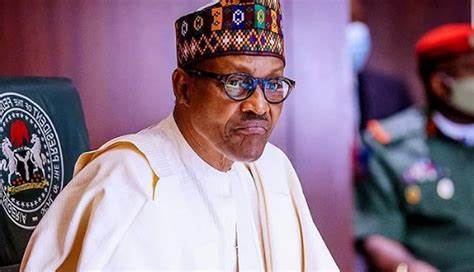
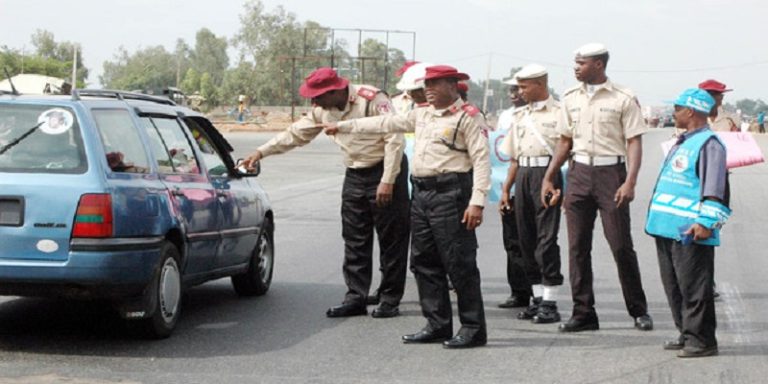
Photo by Femoree on Unsplash

Buhari warns Western nations against travel advisories on Nigeria

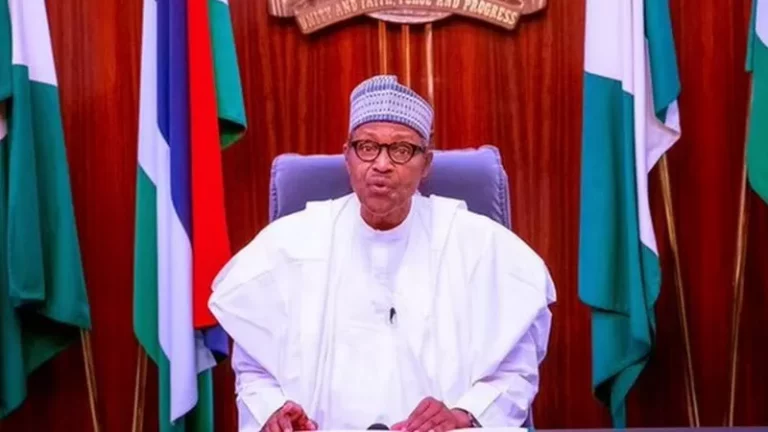
PRESIDENT Muhammadu Buhari has warned Western nations against issuing travel advisories on Nigeria.

The President handed the warning at an interactive session entitled, ‘A conversation with President Muhammadu Buhari of Nigeria’, co-hosted by the United State Institute of Peace (USIP), the International Republican Institute, the National Endowment for Democracy, and the International Foundation for Electoral Systems.


READ ALSO:

Airport Strike: Azman, Ibom Air issue travel advisories

‘Japa’: FG cautions citizens travelling to US, Europe

Terror alert: Ghana apologises over advisory warning against travel to Abuja

Terror alert: Germany, Ireland, others warn against travel to Nigeria


In a statement signed by his Senior Special Assistant on Media and Publicity Garba Shehu, on Saturday, the President recalled how Nigeria had battled insurgents and other non-state actors threatening its cohesion and peace, resulting in some countries such as the US, UK and Canada warning their citizens against embarking on non-essential travels to Nigeria.

“We are nonetheless winning the war and making significant progress in dealing with the threats to Nigeria’s and the Africa sub-region’s safety and survival.

“This steady progress is in spite of the negative reportage in international media as well as the nonchalant actions and attitudes of some of our friends and allies to sufficiently appreciate our efforts in the fight against terrorism.

“Rather than focus on negativity, which is what travel advisories have become, Nigeria, the sub-regions of Africa and the rest of the world can work more concertedly together to combat terrorism and prevent violent extremism, both of which are challenges to global peace and stability and not just Nigeria and Africa alone.”

The President noted that notwithstanding these attitudinal deficits from Nigeria’s friends and allies, the country was open to working with the international community and other development partners to enhance global security and stability.

He urged the United States to do more to improve the quality of governance in the West African sub-region, warning that the survival of democracy was being challenged in the aftermath of the democratic setbacks witnessed in Mali, Guinea and Burkina Faso recently.

The President also highlighted the gains of Nigeria’s investments in agriculture, infrastructure, security and democracy under his watch.

He said Nigeria’s agricultural revolution created over 13 million direct and indirect jobs in the last seven and half years of his reign.

The President said interventions in the agriculture sector driven by the Central Bank of Nigeria transitioned the country from being a net importer of rice, Nigeria’s staple food, to becoming self-sufficient in its production.

“This same scheme has financed the establishment and operations of our 50 integrated rice mills. It has also financed over 4.5 million smallholder farmers, ensured the cultivation of almost six million hectares of farmland, and almost 700 large-scale agricultural projects have been funded.”

The President also used the occasion to urge Western nations not to be in a rush to eliminate the usage of fossil fuels in a bid to ensure a healthy climate.

He recounted that as a member of the global community, Nigeria participated in several rounds of talks regarding climate change and various decisions emerging from COP26 and the recent COP27.

“But as I stated in my Washington Post article, there can’t be double standards, wherein Western nations use their influence and weight to turn the taps off global financing for fossil fuel transactions which are much needed by developing nations, yet when they feel the pinch, they are quick to turn on their coal-powered plants.


READ ALSO:


“We owe it to our people to create jobs and livelihoods, and we can’t accomplish this without maximizing our comparative advantage in energy to build up our manufacturing and industrial base.

“Therefore, stronger commitment needs to be made to the fund for climate adaptation and mitigation, if indeed there is intent to establish equity and fairness.”

Speaking on the 2023 elections, the President reiterated his commitment to ensuring free, fair and transparent elections, whose outcome would be largely accepted by the contestants.


Yuletide: FRSC warns against reckless driving on Lagos-Ibadan Expressway, 2nd Niger Bridge

0

AHEAD of the Yuletide season, the Federal Road Safety Corps (FRSC) has warned road users against reckless driving on routes such as the Lagos-Ibadan Expressway and Second Niger Bridge.

The Deputy Corps Marshal, Operations, Kayode Fanola, gave the warning while speaking on Channels Television’s Sunrise Daily on Saturday, December 17.

According to him, over the years, the FRSC has discovered that the last quarter of the year is when many vehicles are on the road.


READ ALSO:
We don’t use PoS to receive fines at patrol points – FRSC

FRSC advises travellers to shun Lokoja-Abuja highway for alternative routes

We haven’t started carrying guns – FRSC

FRSC to enforce ban on spy number plates


He noted that the good condition of the rehabilitated Lagos-Ibadan Expressway and the newly constructed Second Niger Bridge should not be an excuse for over-speeding.

“Don’t forget that this very period, apart from the festivities, is also the harvesting (season).

“We know that our people in the rural areas are farmers. This is the time that their agricultural products are coming out. So, a lot of vehicles that have been parked from January to September will come out because there is work for them. That is one major issue.

“You would agree with me that if a bus is carrying 14 passengers and they are all students, they have a lot of influence on the driver. They will tell the driver to play loud music, and they want him to speed. These are factors. We are conscious of this.

“This time around, we have put plans in place to ensure that we counter these problems that we’re aware of. For this year, what is unique about it is that major corridors have been rehabilitated to the extent that speed is going to be an issue for us, and we are prepared for that.

“For instance, the Lagos-Ibadan Expressway is like a Formula One track now; the road is virtually completed, and all barriers have been removed. The minister ordered that they should be removed, and the contractor has removed them, so the road is so free now.

“The traffic around Onitsha and Asaba is taking a different dimension now because the Second Niger Bridge has been opened. For the past two days now, people have been experiencing a smooth ride using the Second Niger Bridge, especially those that are going towards the eastern part of the country.

“We have put men and facilities in place to ensure that people are able to travel safely and they will be able to get to their destinations on time with less stress,” he said.

Fanola disclosed that there had been a high level of compliance with the enforcement of the speed-limiting devices first introduced in 2016 from passenger fleet operators and heavy-duty fleet operators, the primary targets of the safety policy.

Meanwhile, the FRSC has advised traders to desist from selling goods on highways to avoid unnecessary loss of lives, especially during the Yuletide.

The Acting Corps Marshal, FRSC, Dauda Biu, gave the advice in an interview with the News Agency of Nigeria (NAN) in Abuja.

Biu said that the advice was essential to prevent vehicles from running into those selling goods on the roads.

He expressed concern over the number of casualties recorded from crashes that involved roadside traders.

The Acting Corps Marshall noted that such sellers, apart from obstructing traffic flow, exposed their lives to danger on the roads leading to loss of lives and properties.

He added that such crashes could be avoided if the traders were cautious and desisted from trading along the road.

FUOYE declares lecture-free day after student hit by truck dies

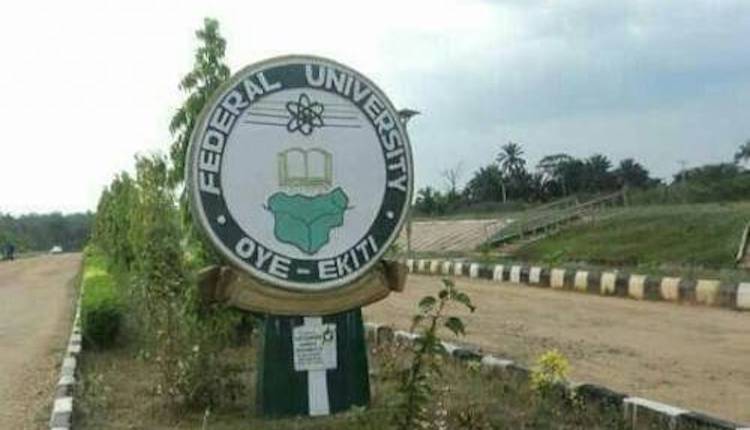
TODAY, Saturday, December 17, is a lecture-free day at the Federal University of Oye, Ekiti State (FUOYE).

The school management declared the lecture-free day to honour a student of the institution, Taiwo Gbolahan, who was hit by a truck along the Ikole-Oye highway, where the school’s two campuses are located, on Friday morning.

Gbolahan was a first-year student of the Department of Quantity Survey.


READ ALSO:

Senate orders reinstatement of sacked FUOYE registrar, bursar

FUOYE raises the alarm over alleged threat on vice chancellor’s life

FUOYE gets new VC after weeks of opposition

Search for FUOYE new VC gets uglier as group demands exclusion of 3 candidates


Wole Balogun, the Special Adviser on Media Matters to the Vice-Chancellor, Abayomi Sunday Fasina, a professor, issued a statement on the incident Saturday morning. The statement was titled ‘Condolence Message And Lecture Free Day’.

The university explained that it promptly responded by taking the deceased to the hospital and footing his bill.

“Immediately the news got to the university management that the accident occurred, we sent an ambulance and logistics to admit the deceased at Federal Medical Centre, Ido-Ekiti.

“His parents were informed, and his daddy was at the hospital. The university shouldered the hospital bill, and treatment for him began earnestly; it was when he was in the theatre that the unfortunate happened.

“The Vice-Chancellor and the entire university send their condolences for this unfortunate loss.

“Consequently, I wish to declare that Saturday, December 17, is hereby declared a lecture free-day as a mark of respect for the lost soul.”

The Vice-Chancellor appealed to the students in the university not to take laws into their hands but to remain peaceful.

Nigeria’s oldest President, Muhammadu Buhari, clocks 80

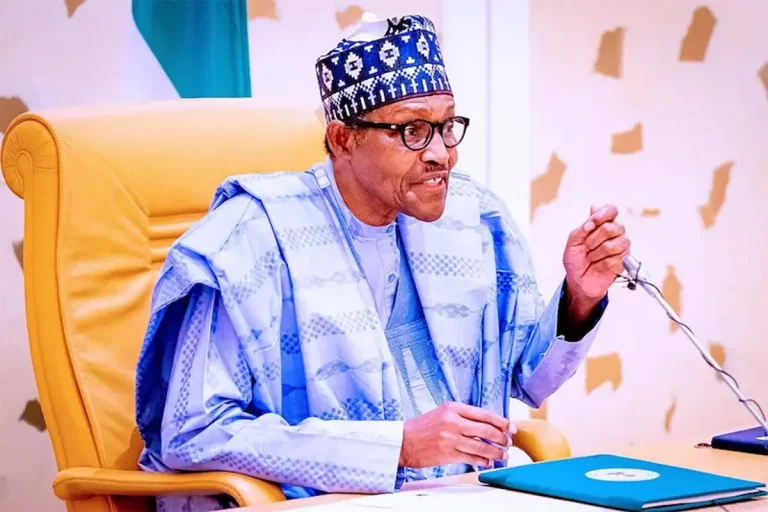
NIGERIA’s oldest leader, President Muhammadu Buhari, clocked 80 today, Saturday, December 17.

Prominent citizens, including the presidential candidate of the All Progressives Congress (APC), Bola Tinubu, Senate President Ahmad Lawan, and Speaker of the House of Representatives, Femi Gbajabiamila, hailed the Daura, Katsina-State-born leader.

Buhari served as a military Head of State between December 31, 1983, and August 27, 1985.

He took over as a democratically-elected President on May 29, 2015.

He is the first septuagenarian and octogenarian to lead Nigeria.

Buhari had challenges with his health shortly after he assumed office in 2015.

In 2018, The ICIR reported how he beat former President Yar’Adua’s record in seeking treatments abroad.

He has gone for many check-ups in London since the report was published.

The closest leader to him in age is former President Olusegun Obasanjo, who left office on May 29, 2007, at 60 years.

Nigeria has been led mostly by young military leaders, two of whom were in later years elected presidents (Obasanjo and Buhari).

Until Buhari took over power in 2015 as President at 73 years, all 14 leaders before him (with himself as a military leader) were below 60, including Yakubu Gowon (31 years) and Aguiyi Ironsi (42).

Though two of the four leading candidates in the 2023 presidential election (APC’s Tinubu, 70, and Atiku Abubakar of the Peoples’ Democratic Party (PDP, who is 76) are also above 70 years, many Nigerians are advocating for a younger President. But supporters of those above 70 say age does not affect a leader’s performance in office.

In his birthday message to Buhari on Saturday, Tinubu, in a statement by his Media Office signed by Mr Tunde Rahman, hailed the President for his commitment to nation-building and long years of patriotic service to the country.

He said Nigeria is lucky to have him as President.

The former Lagos State governor described Buhari as “a patriot, selfless and steadfast leader of uncommon zeal,” adding that “Buhari enlisted himself into the country’s service as a teenager who joined the military immediately after secondary school”.

According to Tinubu, Buhari could look back at 80 and be proud of his “unblemished record” of service to the nation throughout his military career as a soldier, platoon commander, General Officer Commanding, Military Governor, Minister of Petroleum, Head of State, Chairman of Petroleum Trust Fund and as the current leader of the country.”

“I heartily congratulate my President and my leader, Muhammadu Buhari, on the momentous and remarkable occasion of his 80th birthday. Our country is lucky to have this great man and dedicated public servant at this time. President Buhari has led an extraordinary life of service to Nigeria at every duty post with unassailable integrity. History will be kind to him and record his contributions to the progress, unity and stability of Nigeria in volumes.

“As a people, we are truly blessed to have a President who sees no higher honour than the opportunity to serve his people, a responsibility he has always carried with utmost dedication.

“We are proud that at age 80, this noble man, an officer and a gentleman, is still rendering his service, recording tremendous achievements, the country making remarkable progress under his leadership, and his steady hands gradually guiding the country to the Promised Land,” Tinubu added.

On his part, Gbajabiamila described Buhari as a beacon of hope whose footprints would remain indelible in the sands of time.

The Speaker explained that Buhari had made sacrifices for Nigeria and Nigerians over the years, especially in the last seven and a half years of his stewardship as a democratically elected President.

He said the President would be remembered as the Nigerian leader who brought infrastructure development closer to the people and a leader who allowed democratic institutions to operate unhindered.

Similarly, the Senate President, Ahmed Lawan, noted in his message eulogizing the President that Buhari’s life inspired millions of Nigerians.

He said as a soldier, military Head of State and democratically elected President, Buhari consistently fought for Nigeria’s unity, development and progress.

“As we approach the end of your tenure on 29th May 2023, you can rest assured that millions of Nigerians across our vast country genuinely appreciate your achievements in nation-building and strengthening the guardrails of democracy in Nigeria.

“The record of your administration in infrastructural development across the nation is unrivalled and will continue to speak for your stewardship long after your retirement.”

Obi condemns assassination of Imo LP assembly candidate

LABOUR Party (LP) presidential candidate, Peter Obi, has condemned the assassination of the party’s House of of Assembly candidate in Imo State.

The House of Assembly candidate for Onuimo Local Government Area, Christopher Eleghu, was assassinated by yet-to-be-identified gunmen on Friday, December 16. His house and cars were also set ablaze by the assassins.

The incident occurred some weeks after an LP women leader in Kaduna State, Victoria Chintex, was killed.


READ ALSO:
2023: APC campaign council faults Peter Obi’s manifesto

No elected federal official, appointee will earn more than civil servants – Peter Obi

2023: Peter Obi promises to increase power generation to 25,000mw by 2025

Peter Obi, Baba-Ahmed release manifesto, prioritize seven key areas


Obi condemned the incident in a statement released on Saturday, December 17.

He also called on the authorities to bring the perpetrators to book.

The LP presidential candidate said: “I am deeply disturbed by the evidently targeted killing of the Labour Party State House of Assembly Candidate for Onuimo LGA in Imo State, Hon. Christopher Eleghu, at his home. His house and cars were reportedly set ablaze.

“I condemn these heinous acts in the strongest possible terms. Such acts violate our spirit of security, civility and the recently signed Peace Accord. Federal and State security agencies must work assiduously to uncover those behind this killing.”

COVID-19: Over 60 million Nigerians fully vaccinated – NPHCDA

NO fewer than 60 million Nigerians of the target population for COVID-19 have been fully vaccinated, according to the National Primary Health Care Development Agency (NPHCDA). 

Dr. Adejoke Oladele of the NPHCDA revealed this on Friday, December 17, in Abuja, while presenting the COVID-19 milestones of the agency at the national evaluation meeting of achievements in COVID-19 vaccination in Nigeria.


READ ALSO:

COVID-19: NPHCDA launches mass vaccination strategy, site finder

NAFDAC, NPHCDA destroy over one million expired COVID-19 vaccines in Abuja

Nigeria vaccinates over 4.9m against COVID-19 — NPHCDA

COVID-19: We have vaccinated 3.9m Nigerians – NPHCDA


According to her, the number represents over 54 per cent of the target population.

“In collaboration with the United State Government, the World Health Organisation, the United Nations Children’s Fund, other international and local partners, and non-governmental organisations, the Nigerian Government has strived to ensure COVID-19 vaccines, routine immunisation, and other PHC services reach every corner of the country to ensure all persons receive basic health care.

“To date, over 54 per cent of the target population has been fully vaccinated, translating to over 60 million persons,” she said.

Oladele further disclosed that 65 per cent of the target population have received at least one dose of the COVID-19 vaccine, representing over 70 million Nigerians.

“In November 2020, with the guidance of the Presidential Steering Committee on COVID-19, the NPHCDA set up the COVID-19 Vaccination Strategy Group and Technical Working Groups comprising government officials, partners, and donors to drive the process of COVID-19 vaccination.

“The SG identified the target population for COVID-19 vaccination to be persons 18 years and above, which is 51.4 per cent of the population (111,776,503 persons). A national target of 70 per cent coverage was set for the end of the fourth quarter of 2022.”

She added that Nigeria received about four million doses of Oxford AstraZeneca vaccines from the COVAX facility in March 2021, stating that the Centre administered the first dose of COVID -19 vaccine to health workers in the National Hospital, Abuja, on March 5, 2021.

“Since then, the country has received over 127.5 million doses of Oxford AstraZeneca, Moderna, Pfizer, and Johnson & Johnson vaccines as donations from friends of Nigeria, COVAX facility, and purchase by the Federal Government of Nigeria via the African Union’s African Vaccine Acquisition Trust.”

Oladele added that the United States’ vaccine donation to Nigeria currently stands at 32.6 million doses among other support.

The top five performing states in COVID-19 vaccination as of December 14 are Jigawa, Nasarawa, Osun, Kaduna, and Kano, according to NPHCDA.

Court halts Lauretta Onochie’s confirmation as NDDC chairman

AN Abuja Federal High Court has granted an order stopping the National Assembly from screening and confirming Lauretta Onochie and Samuel Ogbuku as the Chairman and Managing Director of Niger Delta Development Commission (NDDC), respectively.

The presiding judge, Justice J. K. Omotosho, instructed that all actions on the matter be suspended pending the determination of the suit.


READ ALSO:

Buhari nominates Lauretta Onochie as NDDC board chairman

Lauretta Onochie’s rejection was victory for Nigerians, democracy -PDP

Lauretta Onochie’s nomination would generate controversy in future elections -Jega

PDP stages protest against Lauretta Onochie’s nomination as INEC commissioner at NASS


Among other things, the originating summons marked FHC/ABJ/CS/2294/2022 is seeking a restraining order on the National Assembly from screening and confirming the duo.

The plaintiffs, Edward Ekpokpo Esq., and Victor Wood, who are both representing the Itsekiri Leaders of Thought and Edward Omagbemi who is representing Omadino Unity Forum, all on behalf of the Itsekiri ethnic nationality, are challenging the nomination on the grounds that it is the turn of the Itsekiri to occupy the positions.

The first to sixth defendants in the suit are President Muhammadu Buhari, the Attorney General and Minister of Justice, Abubakar Malami; Senate President, Ahmad Lawan; the Speaker of the House of Representatives; Mrs Lauretta Onochie and Chief Samuel Ogbuku.

The suit filed by Ama Etuwewe, SAN & Co., demands that the provisions of the NDDC Act be followed in the nomination process.

It maintained that it is the turn of the Itsekiri ethnic nationality to produce the NDDC Board Chairman and MD as the highest oil-producing community in Delta State.

Buhari had in November nominated Onochie as the Chairman of the Board of the NDDC.

Onochie is currently the Special Adviser to the President on Social Media.

Buhari woos US investors, says Nigeria’s GDP grew by 3.54% in Q2 2022

PRESIDENT Muhammadu Buhari on Friday, December 16, urged United States businessmen to take advantage of “massive investment opportunities” in Nigeria, especially in the non-oil sector.

Buhari told the businessmen that Nigeria’s Gross Domestic Product (GDP) grew by 3.54 per cent in the 2nd Quarter of 2022.

Buhari spoke on Friday at a dialogue session with some US Investors, diplomats and experts from the private sector in Washington, DC.

“Nigeria’s GDP grew by 3.54 per cent year-on-year in real terms in the 2nd Quarter of 2022, which represents a sustained positive economic performance, especially for the Non-Oil GDP which fell by 4.77 per cent in Q2 2022 against Oil GDP that grew by -11.77 per cent,” he said.

Buhari noted that most sectors recorded positive growth despite the country’s challenges.

The President, who will be rounding up his second and last tenure in May 2023, said the outcome of his administration’s efforts and investments in Infrastructure Development and Refurbishment led to the reconstruction of 21 selected federal roads, totalling 1,804.6km.

“With regards to railways, sea and airports as well as energy, which are expected to facilitate movement of people, goods and services as well as sustain the stabilization of industries and their growth respectively.

“The outcome of government efforts are well documented in basic facts on Nigeria, which you can easily access for your education and use,” he told the US investors.

Buhari added that Nigeria, like other countries, including the developed economies, is facing economic challenges occasioned by the disruptions as a result of the COVID–19 pandemic and the ongoing war in Ukraine, as well as climate change.

According to him, despite these global challenges, Nigeria had witnessed seven consecutive quarters of growth after the negative growth rates recorded in the 2nd and 3rd quarters of 2020.

The meeting with the US investors took place on the sidelines of the 2022 US/ Africa Leaders Summit.

CBN cash withdrawal limit will collapse informal sector – ACF

THE Arewa Consultative Forum (ACF) has warned that the cash withdrawal limit introduced by the Central Bank of Nigeria (CBN) will lead to the collapse of the informal sector.

In a statement released by the Secretary-General, Murtala Aliyu, the ACF noted that the CBN might have the best of intentions while initiating the policy but failed to consider its extreme consequences on the informal sector.

The statement said, “Cash is the lifeblood of the underworld: difficult to trace and quite convenient for terrorists, money launderers, smugglers, vote buyers, etc.

“So, yes, the less cash available for all these criminals, as the CBN is trying to achieve, the better for law-abiding citizens.

“That said, we do need to remember that the road to hell is paved with good intentions. CBN officials may have the best of intentions while contemplating this policy but evidently failed to consider the unintended consequences of implementing it in the way they have planned; consequences that may be extremely grave.

“If the CBN insists on implementing this wholly unrealistic policy of restricting individual’s cash withdrawal from the banks to N20,000 per day and N100,000 for a week or N500,000 in the case of corporate bodies, it won’t be long before we suffer a catastrophic collapse of the informal sector of the economy.

“More than anyone, CBN knows that transactions in commodity markets, especially in the rural areas, are entirely cash-based.

“The villager that brings to the market his chickens, beans, onions, goat or cows does not typically have a bank account or Internet skills.”

The Forum maintained that cash remains the overwhelming medium of exchange for much of the country, particularly in the North.

“This should surprise no one as bank offices are largely unavailable even for people who are keen and have the skills to use them.

“Thanks to the decisions taken by the CBN, Nigeria today, despite its size, has the dubious record of having the lowest financial penetration in all of Africa, perhaps in the world.”

The ACF said under the prevailing circumstances, the CBN will do itself and the country a world of good if it invests more efforts at addressing the challenges.

The CBN recently announced a new policy that mandated banks and other financial institutions to ensure that over-the-counter cash withdrawals by individuals and corporate entities do not exceed N100,000 and N500,000 per week, respectively.

The revised cash withdrawal limits are contained in a CBN circular on December 6. The apex bank stated that the policy would take effect nationwide from January 9, 2023.